30 September, 2010

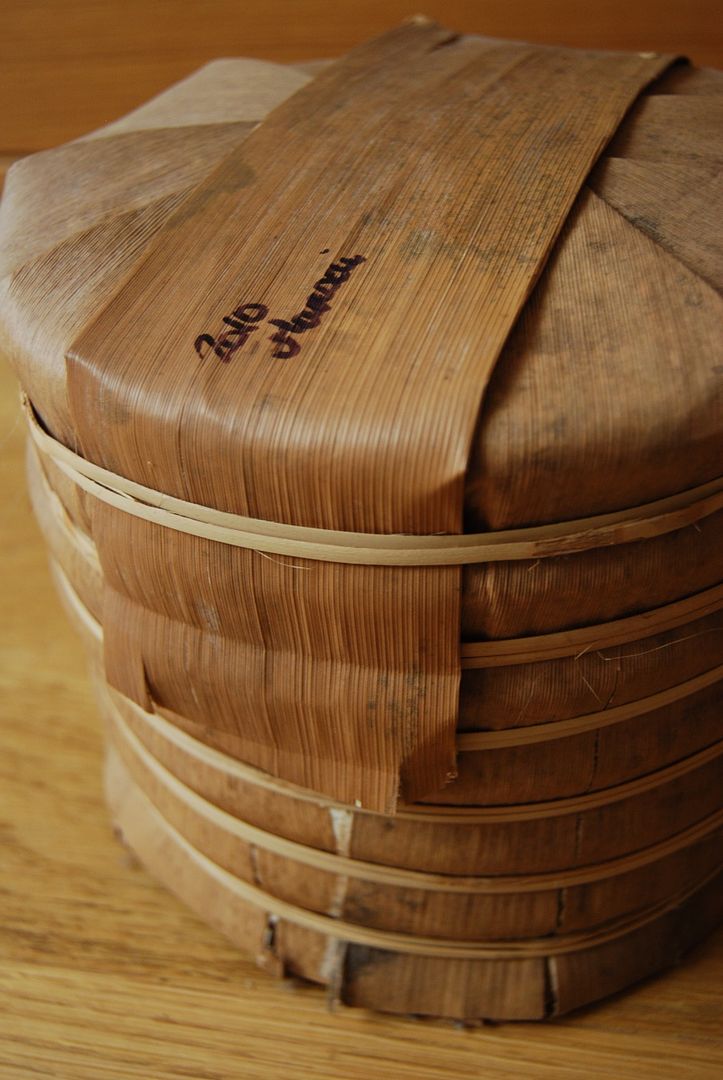
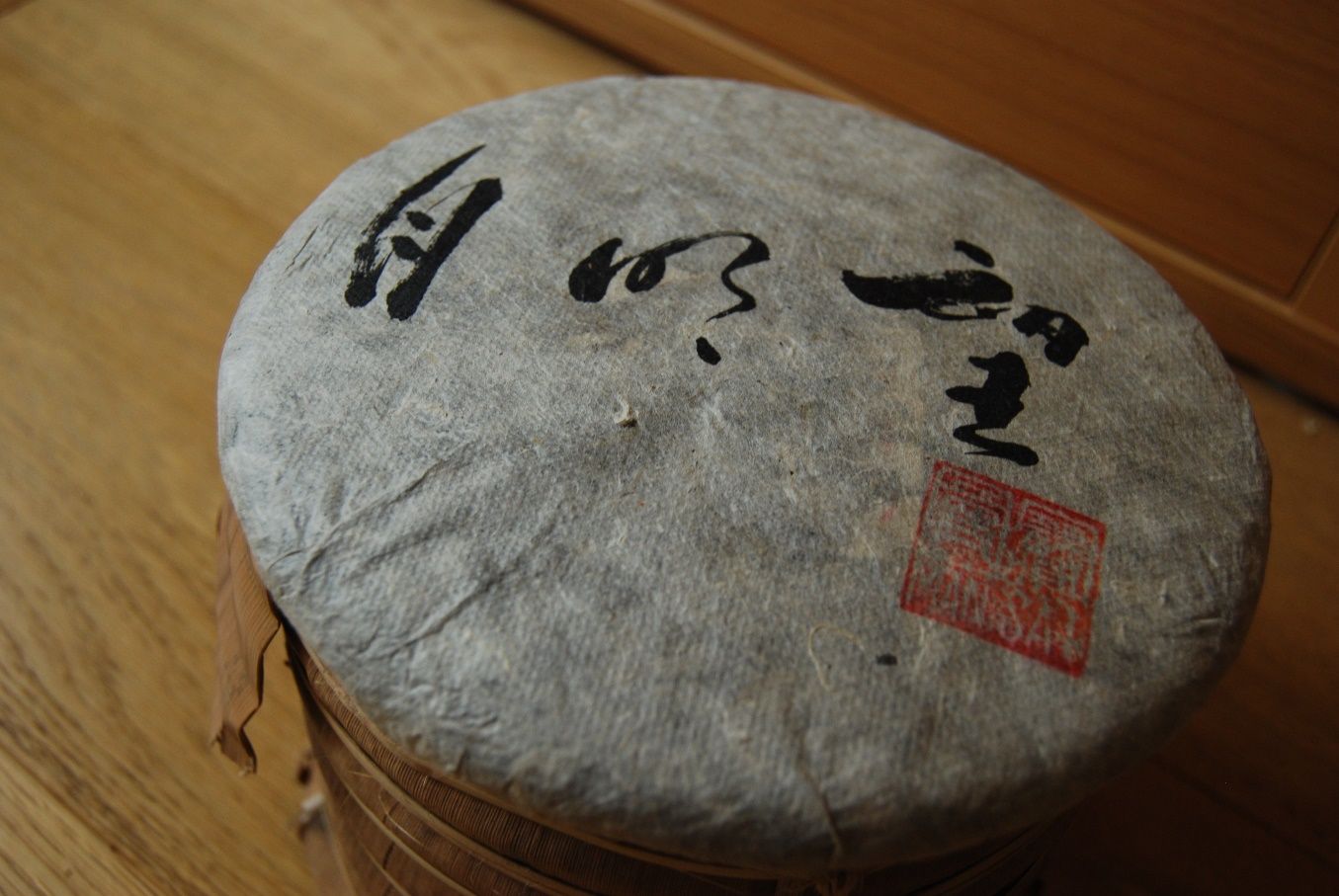
2010 Essence of Tea "Nannuo"

I got on very well with the Nannuo from Nada's previous, first tea years of productions (cf. the 2008 and 2009). This year, something is awry!


2010 Nadacha Nannuo


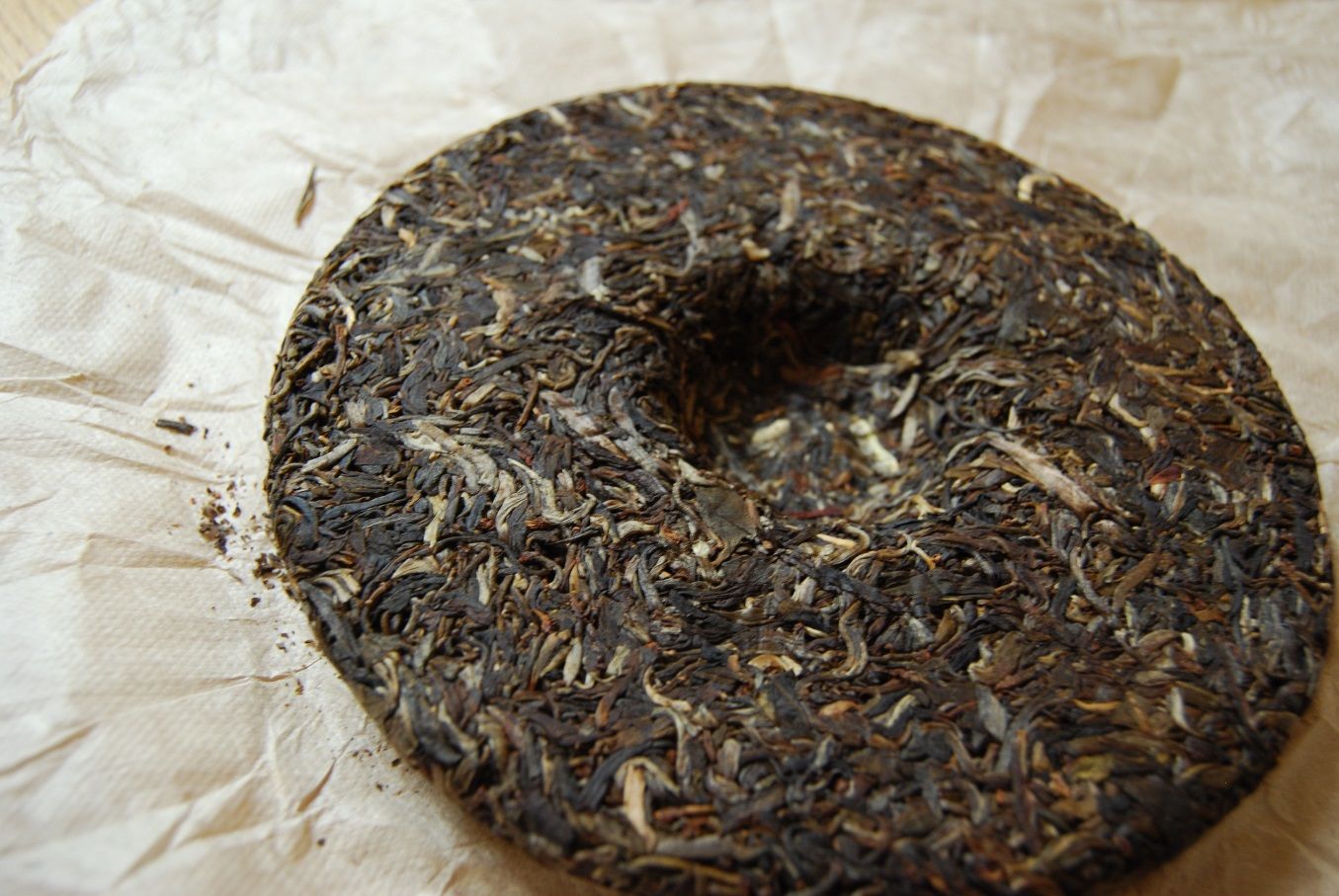
It has mixed leaves, including huangpian [yellow flakes].  The soup comes out pale yellow, and the scent, while sweet, is thin and quiet.  It is cooling on the lips, but provides no kuwei [bitterness].  It is accessible - but not a great tea, this year.


2010 Nadacha Nannuo


In fairness to the vendor, Essence of Tea, the product was originally withdrawn from sale - I'm not sure of its status now.  "A little weak and one-dimensional", remarked Lei.


2010 Nadacha Nannuo


Something is definitely afoot with this poor old tea.  Given that I recall reading from Nada's blog that he usually stays with the family that makes this tea, I can only assume that there has been some over-cooking or something similar.  There is a dry, ever-so-slightly burned character to the tea.  While not at all bad, it's not up to the usual standard.  Fingers remain crossed for the 2011 Nannuo, for a return to its sweet, wildly floral form.

In the words of Keats, "It's not right, but it's OK."

29 September, 2010

Ducks on the Li River

University Parks


ducks on the Li River
do not pay
two hundred yuan

27 September, 2010

2010 Essence of Tea "Banpen"

Heading out into the outer darkness, beyond the cakes that I most enjoyed this year from Essence of Tea, comes the "Banpen".


2010 Nada Banpen


As shown above, this is a pretty long-leafed maocha, and, like its siblings, it has a sweet, buttery aroma and produces a solid yellow soup, as illustrated below.

It is big and heavy, but quite reticent.  In many sessions with this tea, I just can't get much out of it.  It swells to give a large kuwei [bitterness] and huigan [returning sweet flavour after the swallow].

Perhaps most disconcertingly, I find it to be rather citric, and consequently tart in the mouth.  This isn't something that I enjoy in pu'er, and seldom buy cakes with such characteristics.


2010 Nada Banpen


As the infusions pass, the citric tartness dominates.  This is a "xiaobing", and so its price-tag of £20 doesn't seem too appealing to me, given the nature of the tea.  For just £5 more, one could have a full cake of the Mansai, Bangwai / Jingmai, or Manmai / Bada - and that's where my money was spent this year.

25 September, 2010

2010 Essence of Tea "Bulang"

Thinking back to 2009 (has it really been a year, already?), I described the 2009 Bulang from Essence of Tea
using the following illustration:


2010 Nadacha Bulang


This is my kind of tea.  Just like the 2009, this 2010 will rend flesh from bone in the most delightful manner.  It is, shall we say, quite strong.


2010 Nadacha Bulang


This cake was made from the same farm as the 2009, and looks the same: small, tippy leaves, with a heavy scent. Long, buttery, brutal.

Yellow soup, thick, heavy, fruity, grape-like - everything one could wish for in a Bulang, combined the aforementioned flesh-rending power.  Delicious.

2010 Nadacha Bulang


So why didn't this make it into my "top three" from this vendor, this year, following the Mansai, the Bangwai / Jingmai, and the Manmai / Bada? Simply, the price. It was an obstacle for me, and I will be sticking with my 2009 cakes. The quality of the offering is undoubted - if you didn't obtain the 2009, you may be in the difficult situation of trying to decide if £40 is a manageable price for this cake. That's a decision for each buyer to make on their own. I bought one cake, to compare against my 2009s.

24 September, 2010

Remote Village

Path in the Trees


remote village -
the stone from the mine
makes the gravestones

22 September, 2010

2010 Essence of Tea "Manmai / Bada"

During a previous period of house renovation, occurring at about this time last year, I spent ages drinking only in the office - usually a quite mundane Dayi "Badashan Organic". I have become quite accustomed to that particular cake, and found the 2009 Zhimingdu "Bada" to have similar grassy characteristics.

This 2010 Manmai / Bada from Essence of Tea is the third of the 2010 productions of which I bought a tong.  In fact, it's sitting in a big box in my office, because our house is currently undergoing a second wave of fundamental renovations...

2010 Nada Bada


This is a simple tea, being grassy like the other Badashan cakes I mentioned above, but it is redeemed by its cleanliness and its potency.  It is quite solid, with a leather and sweet nature that keeps my attention.  It cools the mouth, has a mildly effervescent texture, and feels, generally, very good in the mouth.

"Quite simple.  Nada's teas are always pure", notes Lei.


2010 Nada Bada


I initially disregarded this tea, due to its simple resemblance to the other Badashan cakes, but over repeated sessions, using more leaf, I was swayed by its constant, potent charms.  Be warned, this is an "elegant" tea, but I rather like it nonetheless.  After the Mansai and the Bangwai, this cake is a decent buy at the asking price of £25, if not quite up to the excellence of the former.

20 September, 2010

2010 Essence of Tea "Bangwei / Jingmai"

This is the second of three products from Essence of Tea of which I bought a tong, this year.  It comes in a close second to the Mansai.

Bangwei is in the Jingmai area, which is a region that I usually appreciate.  As always, the maocha looks delicious, and well-treated.  The aroma is a healthily strong green.


2010 Nadacha Bangwai


Highly energetic, clean, and sweet, this turns out a beautiful yellow soup (pictured below).  It is so very thick on the lips, with a resounding kuwei [bitterness] that swells and leaves the mouth watering long after the swallow.

I like Jingmai for its dry nuttiness, of which there is plenty to be found in this production: it reminded me somewhat of the skin that grows around hazelnuts, mixed in with its buttery sweetness.


2010 Nadacha Bangwai


As with the Mansai, I have no doubt from the contents of the cup that this is a product of good origin.  Old-tree tea is never rough, just clean, sweet, potent, and, somehow, just more.  More of everything.

"Powerful but complex", notes Lei.  It lasts very well, and is easily worth the £25 asking price, in my estimation.  This is good Jingmai.


Addendum
May, 2012


2010 Nadacha Bangwei


I haven't touched this tea since buying a tong (shown above).  Let's crack it open.


2010 Nadacha Bangwei


Some people love cakes from this vendor; others seem to dislike the vendor on principle.  I'm definitely in the former category.  

I notice with amusement that the village is misnamed on the above stamp, which caused the original version of this article to be similarly misnamed, and which I have since corrected.  The "wai" / "wei" confusion often gets me, too.  However, I think the name "Bangwhy" is much more funny than "Bangway", so I'll continue to have a place in my heart for the original misspelling.

This is a pretty cake:


2010 Nadacha Bangwei


I bought this tong at £25 / 357g cake, which is very good.  The cakes in 2011 were around £40something.  This year, 2012, they've increased by a similarly large increment.  This makes me appreciate my earlier acquisitions a little more.


2010 Nadacha Bangwei


The big question is: how is this tea coming on?  It's all very well for me to speak highly of these cakes if they turn out to be insipid, and poorly aging.  

Thankfully, everything I've bought from Nadacha appears to be going in the right direction.  The leaves have darkened in accordance with expectations, as they started off distinctly dark green.


2010 Nadacha Bangwei


It is clean, fresh and potent, with plenty of Jingmai character - a "hairy" sort of nuttiness that reminds me of the skin of hazelnuts.  You'll recognise it when you try it, I'm sure.  The endurance is really rather impressive: I brewed this for over 20 infusions, and it stayed potent, and, best of all, clean and well-made.  Whereas so many recent cakes crack apart and become rough and green, this Nadacha cake reminds me how it should be done: immense potency, combined with superb clarity of character.

Fantastic.  Bring on the 2012s.

19 September, 2010

Hometown Street

Alan Bullock Close


hometown street
I pass by unnoticed
in mask and hat

17 September, 2010

2010 Essence of Tea "Mansai"

We've been undergoing antenatal classes, recently, in preparation for our new arrival. Childbirth and childcare are alien fields to me, so any information is soaked up like a dry sponge.  Our antenatal nurse left a life-size, actual-weight infant doll in our house for us to practice changing nappies and so on.  I found myself reading my weekly periodicals with Proto-George on my knee.


Antenatal


The proprietors of Essence of Tea have also been hard at work, this year, working on their own range of cakes.  They range between decent to excellent, and I thought I'd open the batting with what I believe to be the best deal from this year's range - the "Mansai".


2010 Nada Mansei


The story of the tea is amusing: Nada seemingly had to cross a rope bridge to get to the village where this tea was made, in the disputed territories between Myanmar and the PRC, at the foot of the Bulang range of mountains.

Adventurous procurement aside, the tea itself, like most hand-made cakes from vendors, is very pretty.  The leaves, pictured above, are dark, fruity, and sweet.  We have some stems, and some broken leaves (seemingly from the aforementioned journey that these leaves took to reach the outside world).

I originally tried this tea as a maocha, and it was immensely smokey.  The bingcha version, happily, has seen that smokiness dissipate, making this one of two of Nada's teas from this year that I really love.


2010 Nada Mansei


I'm not really one for nancified, feminine, delicate teas.  I can't see them managing to stay the course of years, with their effete, louche, elegance.  I'm on the hunt for beefy, chunky, fat, chubby, sweaty, calorific, overweight, aggressively obnoxious teas.  It seems that my tastes differ from Nada's in this respect, because the majority of his products seem to be of the former variety.  Hence, this cake was something of a pleasure.

This Mansai is active from the start, containing a big, buttery scent and flavour.  The huge energy and cooling characteristics are testament to the excellent quality of it contents.  I detected a hint of dry-roasting from the wok, which Nada conceded.

It is a gripping, buttery-sweet monster, with a pure, monolithic kuwei [bitterness], and a similar huigan.  It is dry, like a good white wine, but also cereal-like, as with Lincang and other "outlier" teas.

This is one of three Nadacha cakes of which I bought a tong, this year.  At £25, I think it's the best value of the batch, in terms of what you get for your money.  The quality is not really up for debate.

15 September, 2010

2010 Essence of Tea "Zhengshan Xiaozhong"

Throughout my adult life, I have been on a tea-related quest, of sorts. 

I am in search of real lapsang souchong, of the kind that one finds in good hotels during afternoon tea.  "Lapsang" has a firm grip on the subconscious of my nation, being a charmingly smokey tea beloved of many good Englishmen throughout the years.  As a boy, I read that it was Tolkien's favourite tea, and I have consequently been hooked on it every since.


2010 Nada Lapsang
Our local arbitor of pinyin, Lew, would undoubtedly correct the vendor's spelling of "zhengshan"

It is a rare treat, because supermarket "lapsang" is simply low-grade hongcha scented with an artificial chemical.  It is much like Earl Grey, the charlatan of English teas, in that it is beloved, as far as I can tell, by people that enjoy watching actors from the Royal Shakespeare Company who should know better than to play space-captains in Star Trek.

Thus, we only get to drink good, real lapsang in hotels.  Lei and I sometimes head for a quiet session in our local (The Randolph), which provides afternoon tea in the manner of London's famous Savoy and Ritz.

I have bought lapsang from all manner of vendors, and all have been rough, chemically-scented affairs.  Where is my sweet, smokey favourite?  Does it even exist in retail vendors' stocks?


2010 Nada Lapsang
Beautiful hongcha leaves


I have long eyed the variety offered by Essence of Tea, and have been considering buying a small sample to see if it is "the real thing", though find myself pausing at the price.  By a stroke of luck, it seems that the network of Chinese wives have been sending one another tea, and so I found myself brewing this welcome treat immediately after its arrival. To Mrs. Nada, many thanks!  We are very grateful.  What follows are merely my own notes to myself, as recorded in my journal for information's sake - if you are the proprietor of Essence of Tea, or happen to be married to him, please feel free to stop reading at this point.


2010 Nada Lapsang


Anticipating a solid lapsang experience, I brought out our gaiwan, pictured above.  The result was a slick, mouthful of a brew, with a charmingly sweet hongcha aroma.  In character, it was similar: deliciously sweet, and elegantly delicate, as I find many of the teas from Essence of Tea.  

And therein, for me, lies the minor issue, as a man hunting for his long-lost lapsang.

2010 Nada Lapsang


This is a delicious hongcha, but it is not lapsang souchong.  Yes, I know that it was plucked by the thighs of young virgins from the finest tea-bushes in the Wuyi mountain range, and then was gently passed over the combusting branches of pine trees through which ambrosial scents whisper throughout the long, spring evenings.  It is an excellent "Zhengshan Xiaozhong".  It is first-class hongcha.

However, it is not lapsang souchong, as English culture has long appreciated it.  This is not to say that English culture has been raised on inferior product - merely that this particular variety is too light, not sufficiently pine-like, not sufficiently sweet-smokey, to be an Englishman's lapsang.

If I were to taste this in a line-up with, for example, a first-class Fujian "Bailin Gongfu", I don't think that I could tell the difference.  I really enjoy hongcha.  While I don't write about it very often, as I buy good quantities of it from Maliandao, which doesn't lend itself to interesting tea-articles, I spend quite some time with it.  This charming tea is, undoubtedly, just a hongcha, albeit a mighty fine one.


2010 Nada Lapsang
My hongcha pot (a Xishi from Teamasters) is my second-favourite pot, next to Zidu, my puer-pot

So, I retrieve our hongcha pot, and continue as if drinking Bailin Gongfu.  It lasts well, and provides much enjoyment, in its sweet, candylike, accomplished manner.

However, my quest for lapsang souchong continues...

14 September, 2010

Pick-Axe Stopped

Raindrops and Flowers


pick-axe stopped
I watch my waddling wife
bringing me water

12 September, 2010

2009 Yangpinhao "Mengku Yesheng Zhutong"

It is the season of mellow fruitfulness. My dear wife is fruiting nicely, and so is our garden...


Vegetables
Even the garden is growing its own fruits - mushrooms, in this case, pictured lower-right

Hand-selected, hand-grown, and hand-picked - just like good tea. The flavour and character of such products exceeds the mundane versions to such a great degree that I am left wondering why we eat anything else apart from home-grown vegetables, or drink anything else other than first-class tea. The answer is, of course, availability.

2009 Yangpinhao Bamboo


This "zhutong" [bamboo-tube] tea, kindly provided by Keng represents our first foray into such pu'er.  You may recall my aversion to novelty products, whether they be "braided leaves", wrapped in tangerines, or any other type of crazy packaging designed to attract the eye.  This one, however, has a charming rustic feeling, and so I attempt not to be (too much of) a grouch.


2009 Yangpinhao Bamboo


The design of the tong has clearly been considered well: tea may be extracted from the tube by inserting an implement into the groove that runs along its length, and then taking a quantity to the opening at one end.


2009 Yangpinhao Bamboo


A cylindrical section of tea pops out, along with perhaps one of the most potent scents in pu'er I have ever encountered: the entire room is filled with thick, sweet fruitiness.  It reminds me of the freshest of purple-leaf pu'er, with the fruitiness dial turned up to "11".


2009 Yangpinhao Bamboo


The small leaves look picturesque, and have been well handled - they are mostly whole, and have a healthy, furry sheen.


2009 Yangpinhao Bamboo


Such activity!  Pictured below is the yellow brew straight from the pot - it is almost green, when viewed in natural light, such is its freshness.  Thirty seconds in the air and it has visibly oxidised to the thick orange pictured above.  The transformation is quite remarkable.


2009 Yangpinhao Bamboo


I am left dazzled - such aroma and activity are really rather surprising.

The aroma and flavour of the tea are, however, quite heavily roasted.  "This reminds me of my roasted wheat tea", notes Lei, referring to the grains that she hand-roasts in a wok for afternoon (caffeine-free) drinking.  As a result, what could have been a walk through fresh, Mengku territory turned out to be a constant, fairly constrained wander through a roasted-maocha that tastes pleasantly sweet, but goes no further.

Thanks again for Keng for the opportunity to try such an interesting new experience.


P.s. To the 23% of my readers that use Internet Explorer: I recently loaded the Half-Dipper into IE to be surprised to see that the background doesn't scroll properly.  I hope that my recent fix for this works for you!  I apologise for not spotting it sooner - I usually use Firefox, which the remaining three-quarters of my readers seem to use, according to Google.  If you're an IE-user, then you should be all set, now.

10 September, 2010

Relaxing with the Familiar Scent of Male Urine

Before I turned thirty, the year didn't really affect me - winter or summer, it was all the same to me.  Since becoming a wizened old geriatric, the cycle of the year becomes more and more significant.  The changing rhythm of the year genuinely affects me.  Some ways subtle, some ways not-so-subtle.

Summer is a lovely time here - all the undergraduates have left, along with the need to teach them, and my days are filled with performing long-neglected experiments, writing up my results, and talking to interesting people about their ideas.  Some of the best ideas come from the newest graduate students, their minds uncluttered by what should and should not be done.  My interns from this summer have finished their placements (some even getting as far as writing their own academic papers from their short projects with me), and, for the next month at least, everything is calm and unhurried.  It is that feeling of utter quiet that you suspect can only be followed by a period of more hectic pace.


April 2010


For now, though, the streets have quietened down as the schoolchildren have started their new term. The university doesn't start Michaelmas term for another five weeks, which is five weeks that I hope to fill with a combination of welcoming our son into the world, finishing off our house's renovations so that he can be comfortable, and then, finally, writing a clutch of papers.


Pembroke


This year, I changed colleges.  It's the same university, but we have some 32 or so colleges within it*, which makes for a whole lot of confusion.  My new college is, ironically enough, one of the oldest colleges.  It's a lovely, quiet place - you step through the doors from the busy traffic of the street, and suddenly leave all the noise behind.  Maybe its quietness is partly responsible for The Hobbit and the first two books of The Lord of the Rings trilogy being written here.

*I believe Harvard was set up after our university-comprised-of-many-colleges model, but they didn't get past building more than one college; hence "Harvard College", where one reads undergraduate degrees, was, so I understand, the first of many originally-intended colleges.  The college system certainly has some advantages, it must be said, despite (or perhaps because of) the decentralisation.

During term-times, college has a certain hushed industry about it as students go about their tutorials, and the tutors go about eating their lunches and dinners ("never knowingly underfed" being our unofficial motto).  During the summer-time, when all the teaching staff are going about their research, the college is let out to bus-loads of visiting American students.  They seem to enjoy themselves for their few weeks; they learn languages and some humanities while they are here, getting a taste of what they insist on calling "Arxford".  They are a lively-minded bunch, who have little to do with us, except for the fact that they seem to yell at one another across the quads, shattering the peace.  Last week, a crusty old don stood up from lunch to close the parlour window, mumbling something uncomplimentary about our visitors.

However, nothing lasts forever - these visitors will soon be gone, in time for our new intake of undergraduates, and life will return to normal, renewing itself with the start of the new academic year.

The annual cycle is a lovely thing, and has a charming rhythm, like a trusty old clock.

Let's drink some tea.  (Please scroll to the bottom on arrival at the new page.)


2003 Quanji Bulang
Mothballs and Quanji

09 September, 2010

Gentle Touch

Willow Hideaway


gentle touch -
weeping willow branches  
stirred by sunbeams  

07 September, 2010

Teachums and the 2009 HK Henry "Mahei"

Recently, Lei and I were fortunate enough to be visited by our teachum who goes by the name of "Apache" in them there Interwebs.  Apache is our favourite biochemist in the land, despite the fact that he works in The Other Place.  Nobody's perfect.


2009 HK Henry Mahei


We marched through some fine brews of a 1960s Liu'an kindly provided by Essence of Tea (thank'ee again), which was smooth and enjoyable, and also enjoyed this 2009 cake from the Xianggang Hengli Tea Co., also known as "Hong Kong Henry".

Apache had bought this cake from Hong Kong's Lau Yu Fat Tea Shop [Liu Yu Fa Chazhuang to the non-Cantonese speakers] over the telephone, amusing us with stories about how the vendors weren't really very interested in selling a few cakes to a remote far-off island.  Most of their business is local, and the Internet apparently holds little interest for them - I sympathise, being something of a Luddite myself.


2009 HK Henry Mahei


I'm unsure if this "Hengli" is the same as the "Hengli" that produced the delicious 1997 Henglichang Bulang sold by Essence of Tea (where it is sold under the name "Henlichang").  I don't believe that these two entities are the same, as the "Heng" character is different in each case.  However, you never know.  As always, I look forward to being proven wrong, should you have any further insight, dear Reader.

My only previous exposure to this producer was the 2003 Menghai "Hong Kong Henry" 7542, sold by Houde.  Amusingly enough, that tea was dubbed the "Scholar Tea" by the owner of Houde, which simultaneously brought a smile to my face and a heaving, wrenching feeling to my stomach. 

You may be familiar with my feelings on the word "scholar" being used for the purposes of selling tea or books about tea, concerns of which I shall not bore you with any further.


2009 HK Henry Mahei


I wasn't thrilled by the 2003 Houde cake, but I may have been alone, as I remember that many folk have thoroughly enjoyed it.  I found it aggressively acidic, with little else of note apart from a background of molasses.  It deserves revisiting, however, as it has been three years since I've touched it.

This 2009 cake, if anything, suffers from completely the opposite problem.


2009 HK Henry Mahei


It is a charming cake, of that there can be no doubt.  Apache, Lei, and I enjoyed its sweet body, notes of leather and grain in the finish, and a pronounced cooling sensation.  However, the Hong Kong tea-world is abuzz with comments of this tea's gentility - is it too gentle to age?

On drinking this cake alone this morning, I came to the same conclusion: I had to use lots of leaves (200% of my normal amount) and employ long infusions to get some real character out of it.  Pushed this strongly, it starts to object by getting a bit cracked around the edges; show it a gentler hand and it peters out to a thin, sweet yellowness.

I will continue to experiment with this little fellow until I get the best out of it - thanks again to Apache both for the generous gift of this cake, and the more generous gift of your company for an afternoon.  Lei and I hope to see you again soon - perhaps we can arrange a "tea day" with some other UK-based drinkers, too.

05 September, 2010

Taobao Experiments: the 2001 Yuanyexiang "Gancang"

Taobao can be a cruel mistress.  Sometimes she waxeth wroth.

You may remember from an aeon ago that the 2001 Shuangjiang Mengku "Yuanyexiang" [yooan-yeah-shee'ang] cakes were super popular.  They came in shicang and gancang varieties.  The proprietor of Houde must be planning to put his child through college from the proceeds that these cakes generated for the 0.02 femtoseconds that they were in stock - kudos must be given to Dr. Li on knowing how to market to an audience.

Since that date, my estimation of the pair of teas has decreased in accordance with my experience (which is still, of course, humble).  While I find them to be enjoyable, they are not honest, raw shengpu, and I am now of the opinion they are certainly not worth the price that was being asked for them.  Again, no foul to Dr. Li, because it is every merchant's goal to sell products at a good price - it is their business, after all.  However, they are just Shuangjiang Mengku cakes.

With all that said, they still hold a certain cachet, or at least, a certain place of endearment in my heart.  During a Taobao purchase last year, my dear bratwurst-nibbling, sauerkraut-consuming, weissbier-quaffing friend, Hr. Dr. Kim and I decided to go 50-50 on a cake claiming to be the 2001 "YYX" Gancang.  We bought it from 乔韵茶行 [Qiaoyun Chahang], for Heaven-knows-how-much.  Fully expecting a fake, we went into the purchase with our eyes open, just for a bit of fun.

Ladles and jellyspoons, I present to you the findings of our investigations.


2001 Yuanyexiang Gancang

The (half) cake has sat on my shelf for over one year, and I recently found that rare combination of effort, time, and will required to sit down with it and give it the proper amount of consideration.

It looks exceedingly ropey.  The wrapper was almost shredded, which is how it was sent by the vendor - the vendor themselves had wrapped it in plastic, and our Taobao handler had then wrapped it in bubble-wrap for the journey to Europe.  The cake size looked about right, but the wrapper barely covered it due to its advanced state of knackerednicity.

Opening the cake, the neifei was similarly comic: it was heavily stained, as if to indicate prolonged pressing against the surface of a cake, and yet it was included almost loose - it appeared to have been a separate neifei tucked under one or two longer leaves as were available, rather than being pressed into the cake.  So, either it used to be pressed into the cake, had come loose, and had been gently tucked back in... or it was a fake cake, with a neifei tucked into it.

Presentation aside, the leaves are lovely, and are similar to my samples from Houde.  Clean, dark, dry, and mostly whole, they look the part.  The blend, as before, comprises both rusty tips and small-to-medium leaves, with the odd rare stem.

2001 Yuanyexiang Gancang


Out it comes - orange, sharp, and woody.  It is very clean.  However, it is not complex, and lacks the heavy tobacco that I remember from the original's processing.  Quite powerful, and with decent kuwei [bitterness], with long hints of red, woody flavours, it is actually quite enjoyable in and of itself.

Is it "YYX"?

"All signs point to 'no'", as the Oracle of Delphi once said.  While not worth the price that we paid, it is a bit of fun in its own right.

And so, to end where we began, learn ye well: Taobao can be a cruel mistress, and this day she hath waxeth wroth most mightily.

04 September, 2010

Summertime Branches

Winter at Home


summertime branches
leaves heavy with rain
and sparrows

02 September, 2010

2006 CNNP "Yun Tianxia Mengku Daxueshan"

A deadline passed recently, for which I was working very hard. I stayed in my lab until 10 p.m. for a few evenings running, which made for some long days. The deadline arrived, I gave a presentation, and life returned to normal.

The next morning, after the deadline, I was cycling up the hill towards my department, and had composed half-a-dozen haiku in my head before I had even reached my destination. The details of life returned to me, once more. Breezes, leaves, sunshine.  Surely, this is a sign that there is life after deadlines.


2009 Nadacha Dayuling


Back at home, the weather turning colder, and the leaves becoming tinged with red, I realised that autumn is not just threatening to arrive - it is here already.  Little signs indicate its presence: condensation on the windows in the morning, the last days of the punting season, my wife wearing Chinese leggings underneath her trousers.

Summertime is fading, and with it, my chances to enjoy my qingxiang wulong - I prefer to drink them in the warmer months, along with green tea.  So, to the last of my sample of "Dayuling" wulong, from Essence of Tea.  

It is, like the Houde and Teamasters versions of the same wulong, excellent.


2009 Nadacha Dayuling


I have long suspected that the greatest profits for on-line tea merchants are in (i) pottery, (ii) wulong, (iii) everything else, in descending order.  The products for the former two are untraceable, the margins are nebulous, and, more or less, one can charge what one wishes for pots and wulong.  It is no coincidence that I buy neither via the internet.

The world of pu'er sales, of course, is much more competitive - especially when it comes to selling modern pu'er.  The customer can simply look up the "real" price on Taobao, and suddenly one's margins appear for what they are.  There is little space for creative vendor marketing and consequently comfortable margins when it comes to such transparently-priced goods, and I appreciate transparency.  It is the defining factor of a mature market.


2006 CNNP Daxueshan


I can't imagine what the market for modern CNNP might be.  I suspect it is aimed at the mass of the Chinese populace for whom pu'ercha is something special, unknown, and unknowable.  Hence, there are now many brands that produce "friendly" (i.e., processed) cakes for immediate consumption by the general public.


2006 CNNP Daxueshan


This "Yun Tianxia" [charm/harmony everywhere under heaven] is probably some sort of special production, given its sweeping name.  I get the impression from personal experience that the taste of the average Chinese nouveau-riche tends towards the ostentatious.  Hence, the amusing vulgarities of "VIP" counters in most city banks, special private dining rooms in restaurants filled with loud large-screen televisions, and so on.  One isn't successful unless he is waving it in the face of his peers, it seems - this is precisely the opposite to English culture, which makes for endless fun when travelling the Mainland...


2006 CNNP Daxueshan


This cake certainly looks the part, however, and is made from beautifully long leaves.  The compression has been performed by hand, and it is easy to remove entire leaves from the bing.


2006 CNNP Daxueshan


I'm sure I don't need to bother you with my prejudice against modern CNNP.  This cake does not shake my assumptions about the brand, it being sour, moderately sweet, tangy, and straw-like.  It is not bad, per se, but it soldiers on through the infusions in an unchanging and unenthralling manner.

Thanks to Keng for generously providing Lei and me with the opportunity to try this cake.


In other news, Taobao Focus have recently provided me with a photograph of our latest order, collected at their warehouse in China, awaiting shipment to the UK:


Taobao Order
Tongs of Xingshunxiang and Dingxing prior to shipping, plus some unexpected additions!