Showing posts with label 2004. Show all posts

02 June, 2014

Enter the 36 Chambers

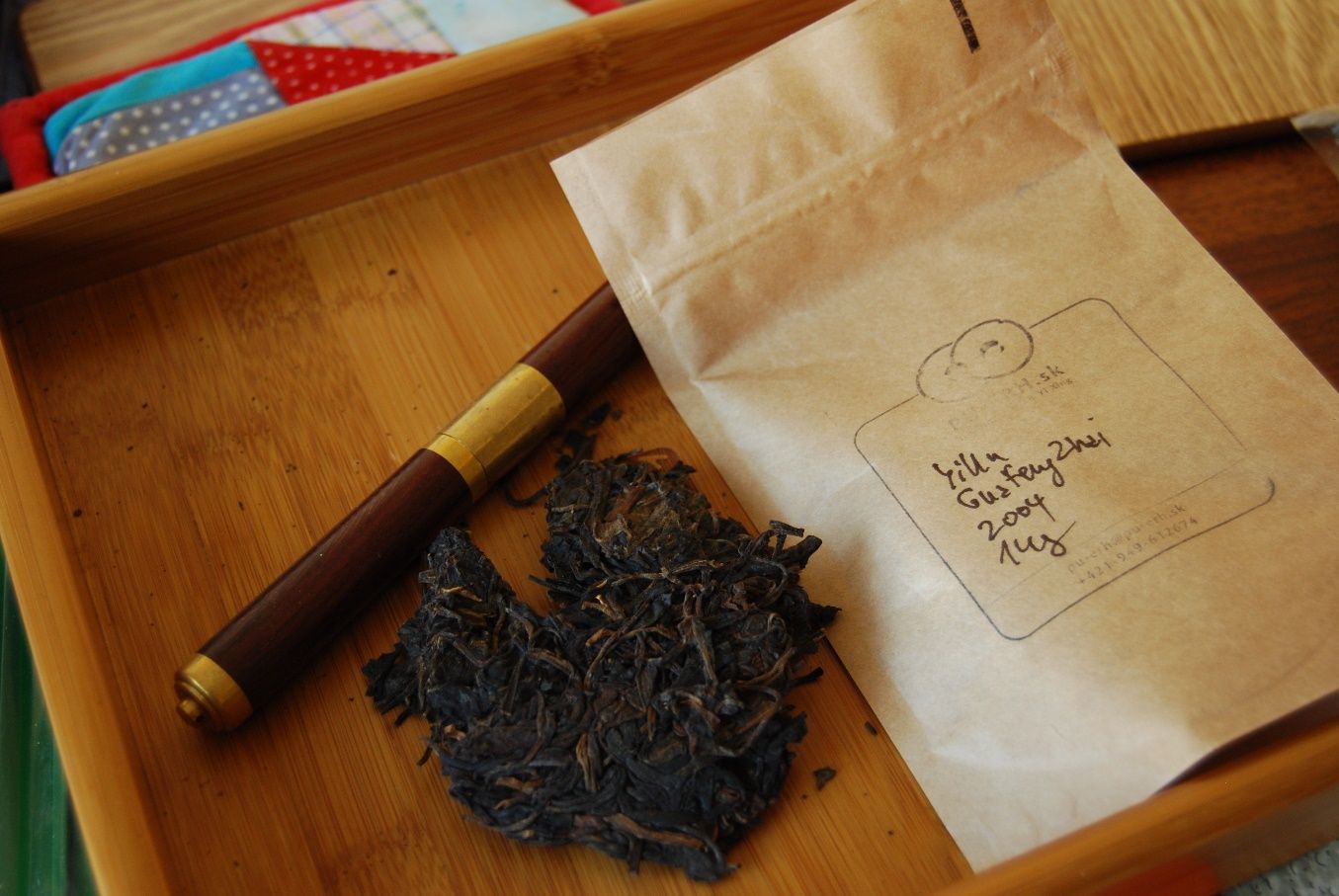
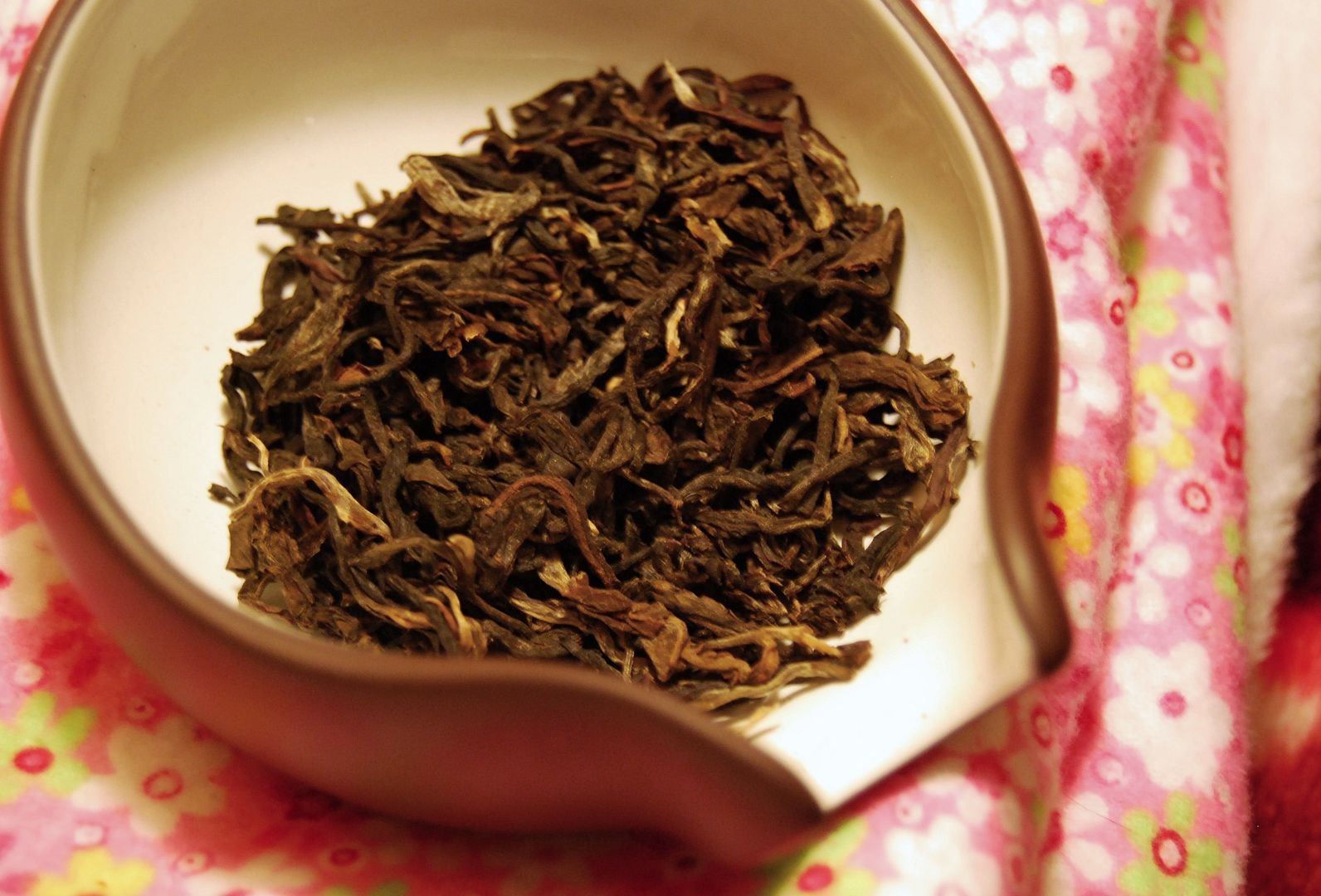
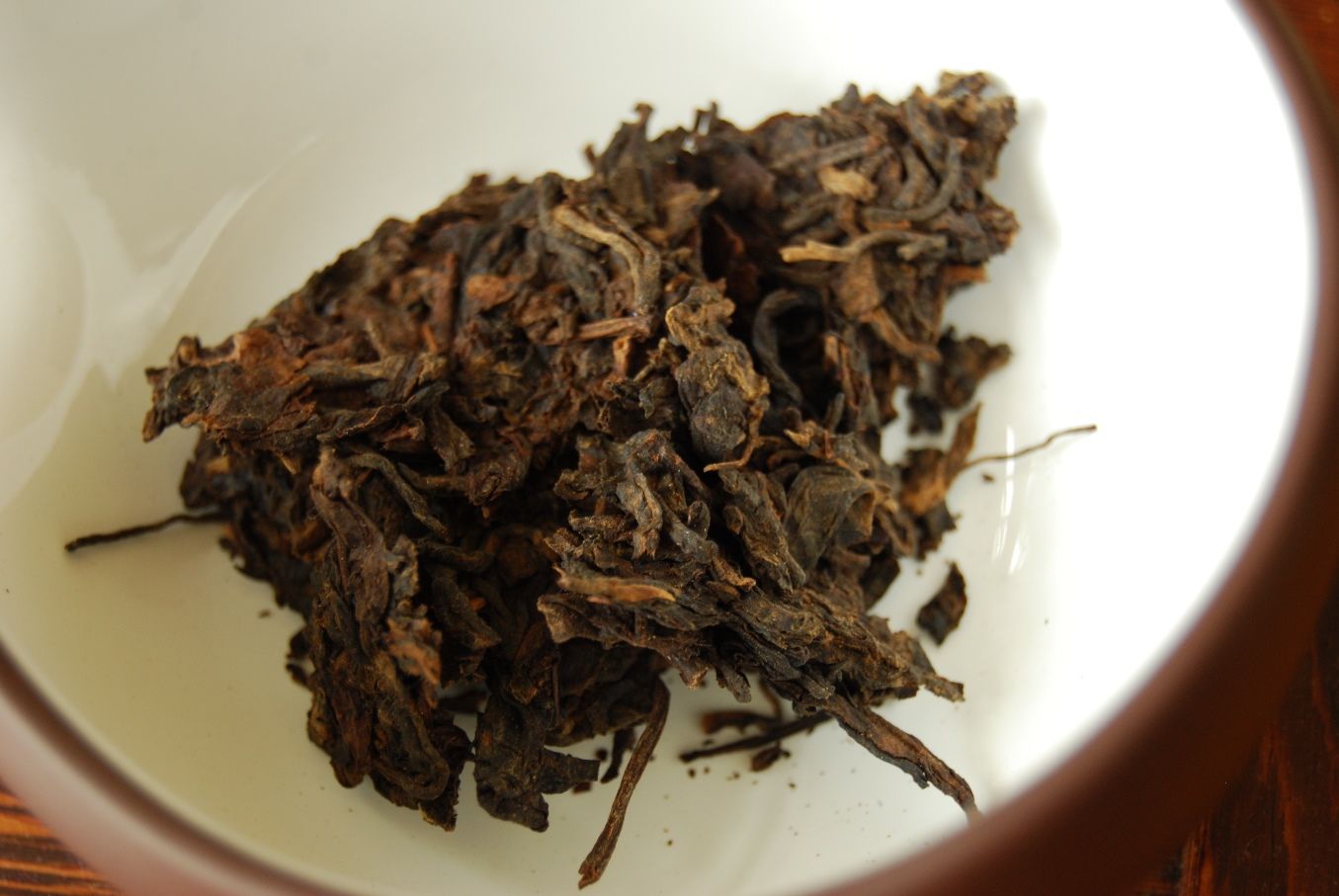
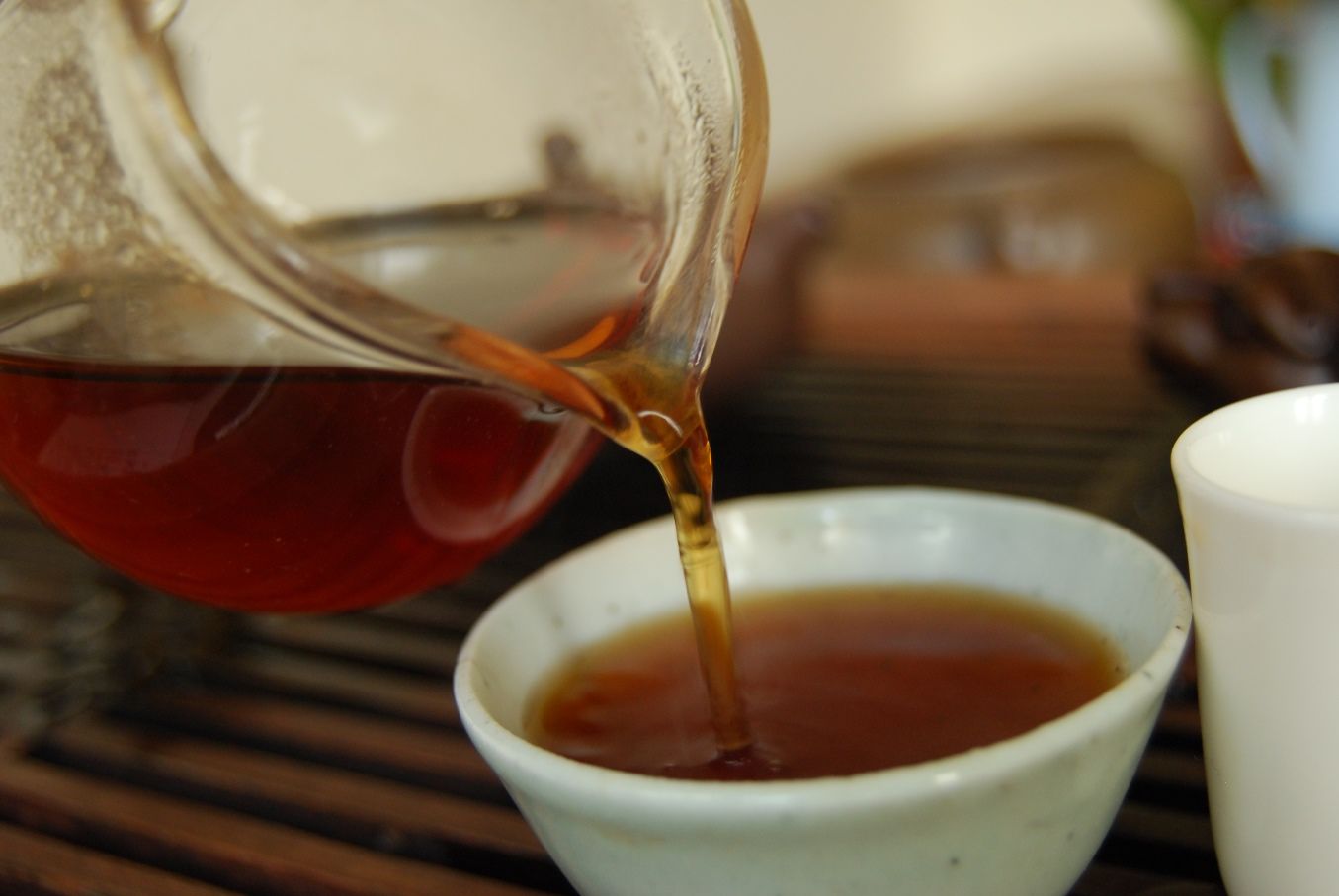
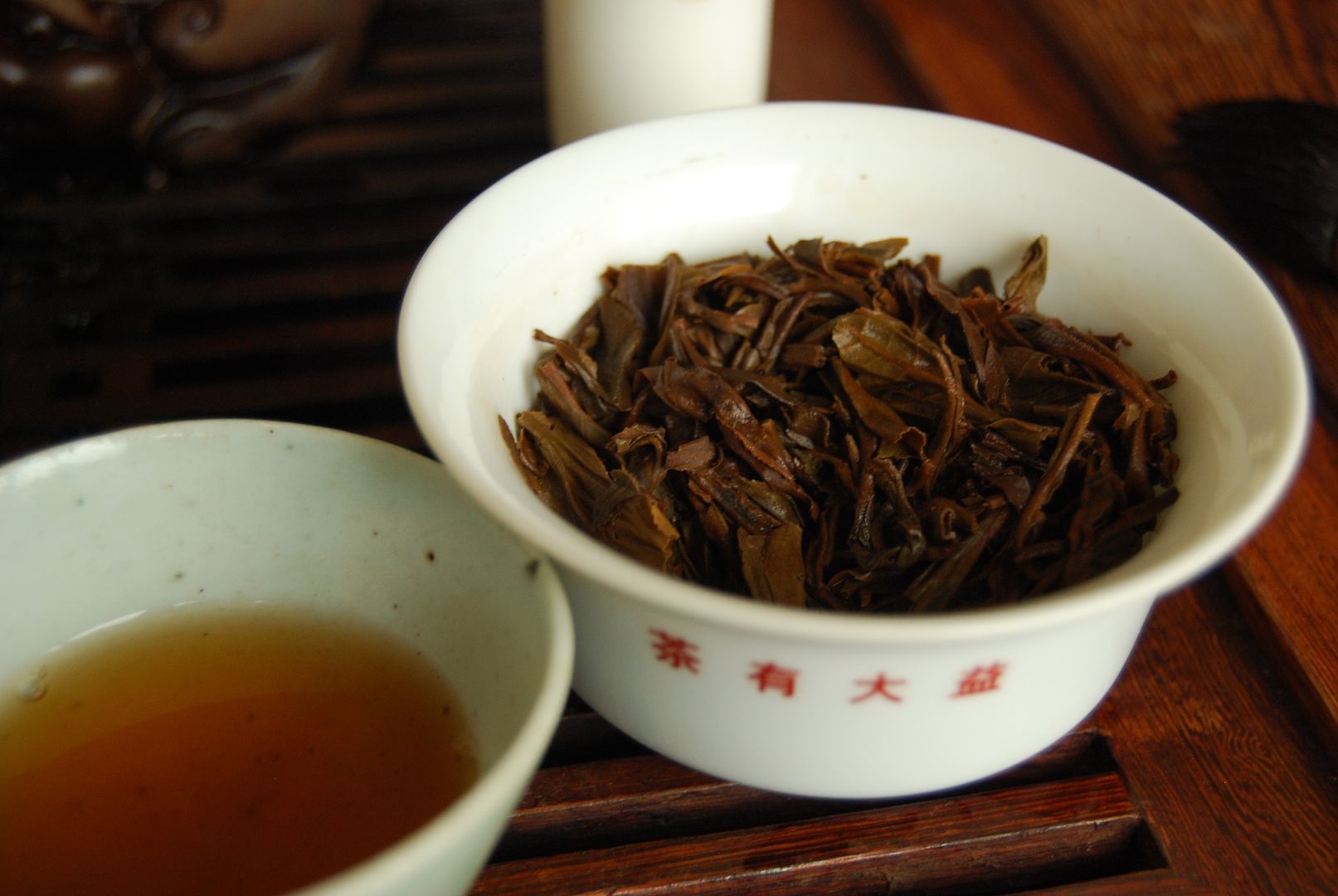
If this 2004 Guafengzhai cake from Pu-erh.sk were a track from classic album "Enter the Wu-Tang (36 Chambers)", then it would surely be Cash Rules Everything Around Me: it starts out friendly, but as we might later come to expect from Inspectah Deck*, it rapidly turns serious.  It is repetitive, it is caustic, it is bitter.  And before long, you realise that you've rather enjoyed it. 


*He's like that dude that'll sit there and watch you play yourself and all that right? and [he'll] see you sit there and know you['re] lyin[g].


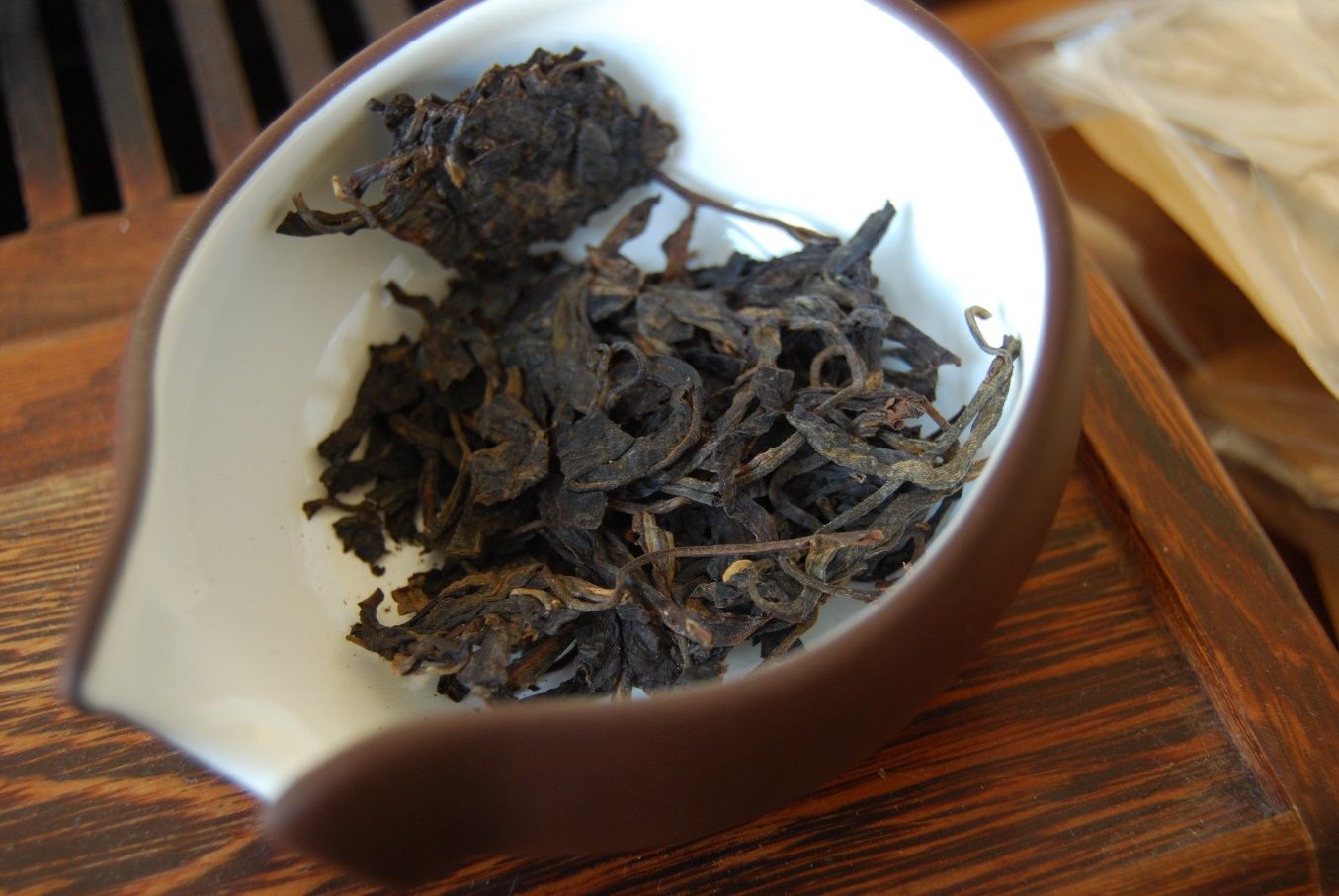
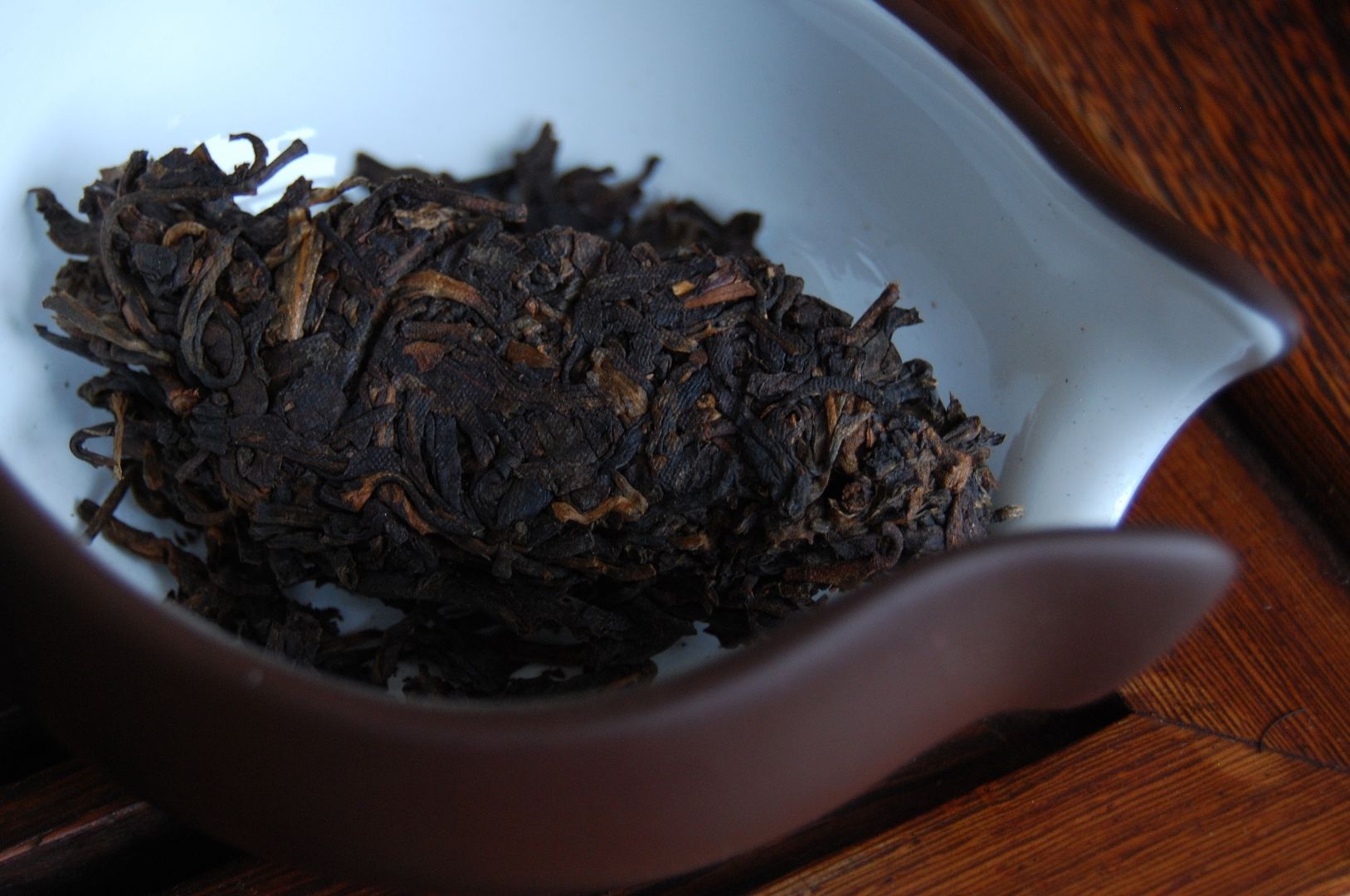
We may never know the Inspector's opinion on 'Banna region tea, but I suspect that he would be in approval of this Guafengzhai.  It is dark, loose, well-made, and has the rich scent of humidity.  My own cakes do not acquire this jungle-like humidity, and I always enjoy it when it comes my way.


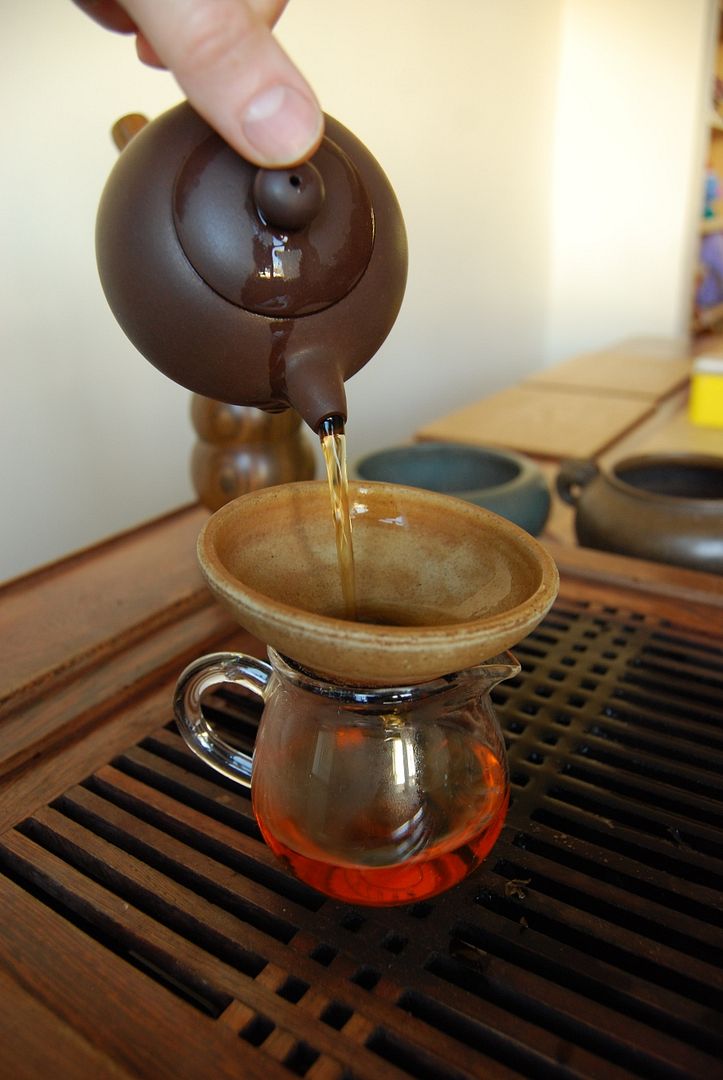
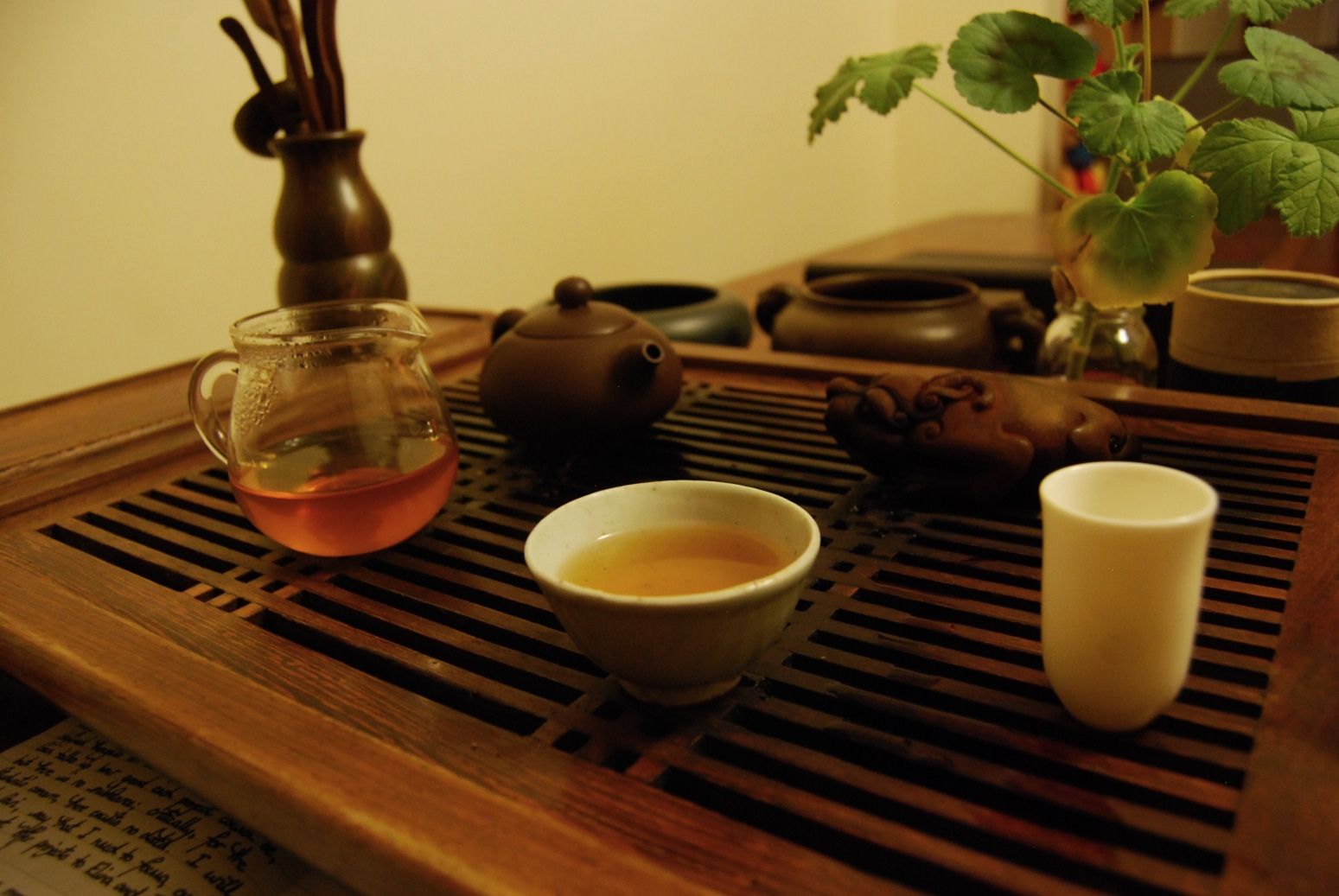
Like Cash Rules Everything Around Me, this Guafengzhai is built on a strong foundation of appealingly sweet notes: it has a big, bold characteristic in the wenxiangbei [aroma cup], and continues forever, over and over over.

Again, like "C.R.E.A.M.", it has a strange capacity to resonate with your expectations, and has the potency to endure well with the passing years.  Already aged to some degree (although, of course, less than the "36 Chambers"), the Guafengzhai has a traditional, powerful huigan.  It is not grand, but it is strong, and that counts for a great deal.


As you know, Gentle Reader, Cash Rules Everything Around Me is a duet with Raekwon the Chef*, and this Guafengzhai reflects his contribution: perhaps somewhat edgy, backward-looking, but without being too bitter.  It is an excellent balance.

Many thanks to Peter for the opportunity to try this excellent cake.

*He's always cookin[g] up some marvellous **** to get your mouth watering.


19 May, 2014

Revision Classes

Trinity term has a pleasant feeling: it is sunny, there are few lectures, and my undergrad students are either heads-down in revision or heads-down in their glasses of Pimms. It is a time of revision classes and the like, which led me to some revision of my own...

I have received a goodly quantity of positive feedback for my previous foray into the nether-regions of my shelves and I am, Gentle Reader, always configured for maximal response to positive feedback.  If that makes me an unstable system, then may my poles will always reside in the positive half of the s-plane.

I have been revisiting some of my old teas, with an emphasis on the more trustworthy, reliable cakes that I know will deliver the goods.  This makes my sample biased, and I am fine with that: the goal, after all, is for good sessions these days.

Perhaps the most pleasantly educational encounter in the list below was that of the 2005 Xiaguan: this was a cake that was as black as an investment banker's soul when it was young, but which has matured so pleasantly that I am now wondering how my other "black" Xiaguan cakes have turned out.

To the victor, the spoils:

2007 Changyai - Yichanghao "Yiwu": sweet, heavy, solid, and aging despite being sealed in plastic.

2003 Changtai - Qianjiafeng "Jinzhushan": excellent tea.  Orange, heavy, and long-lasting.

2005 Xiaguan "8653": modern "black" Xiaguans can age well, it seems.

2008 Shuangjiang Mengku - Muyechun "Laoshu Qingbing": basic pu'ercha dressed up with purple tones, this is aging slowly.

2008 Menghai - Dayi "8582": in preparation for the arrival of a large purchase of 2008 8582, I try some of my own cakes.  They are coming on nicely, and provide basic Menghai richness.

2004 Changtai - Yichanghao "Yiwu Zhengpin": red, malty, and smooth, this is "old fashioned" tea of a reliable kind.

As ever, the new notes have been appended to the original articles, linked above, and so I invite you to scroll down when opening these pages.

28 February, 2014

A Decade is a Long Time

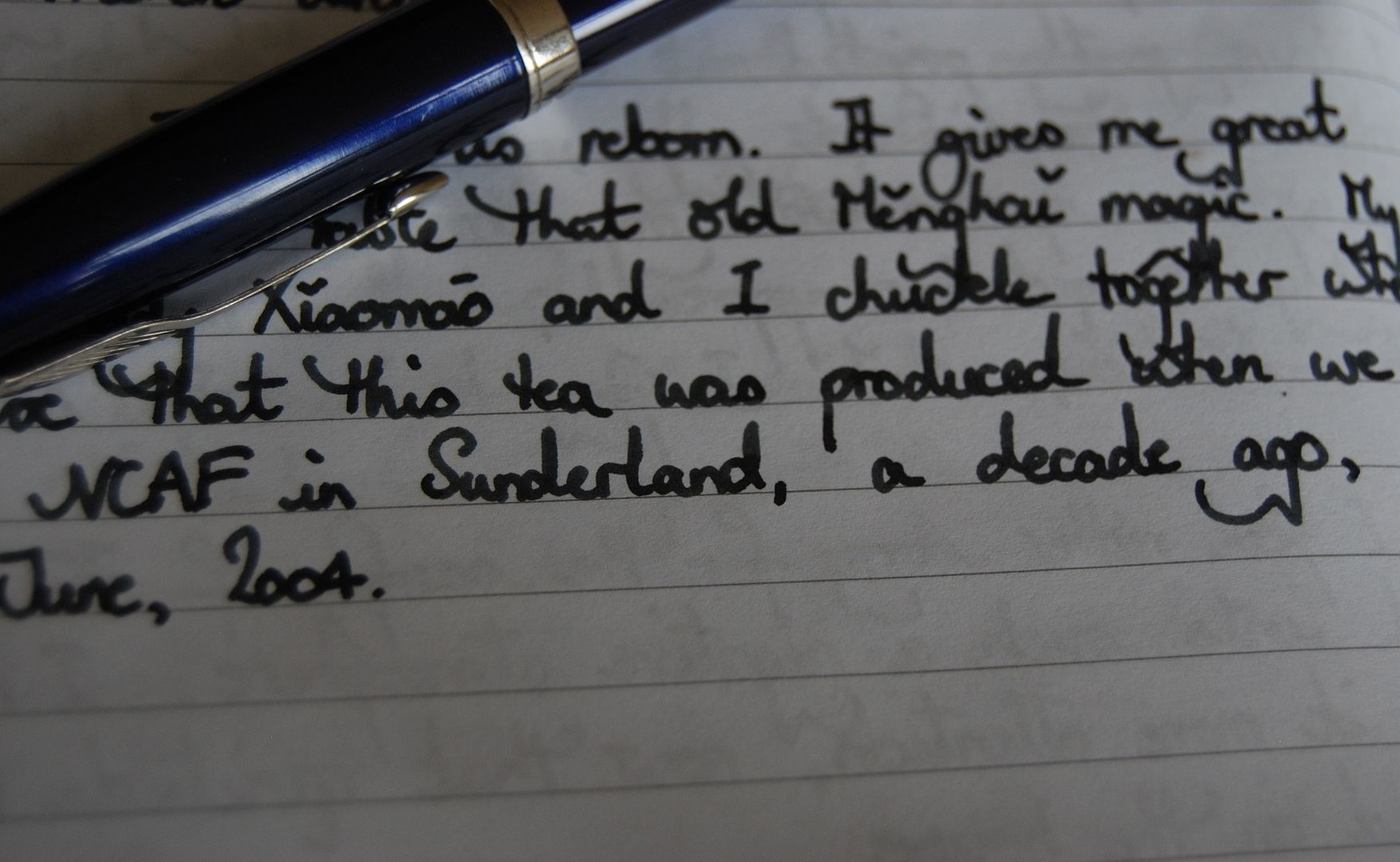
One decade ago, this tea was being produced, for example.  That particular summer was an especially interesting one, as far as I'm concerned, because it was then that I went to the "Neural Computing Applications Forum" and met a pretty girl whom I married one year later.  So, to go back to reminiscences of that summer is very welcome.


Whom should we thank for taking us back to that summer?  Jakub was the kindly provider.


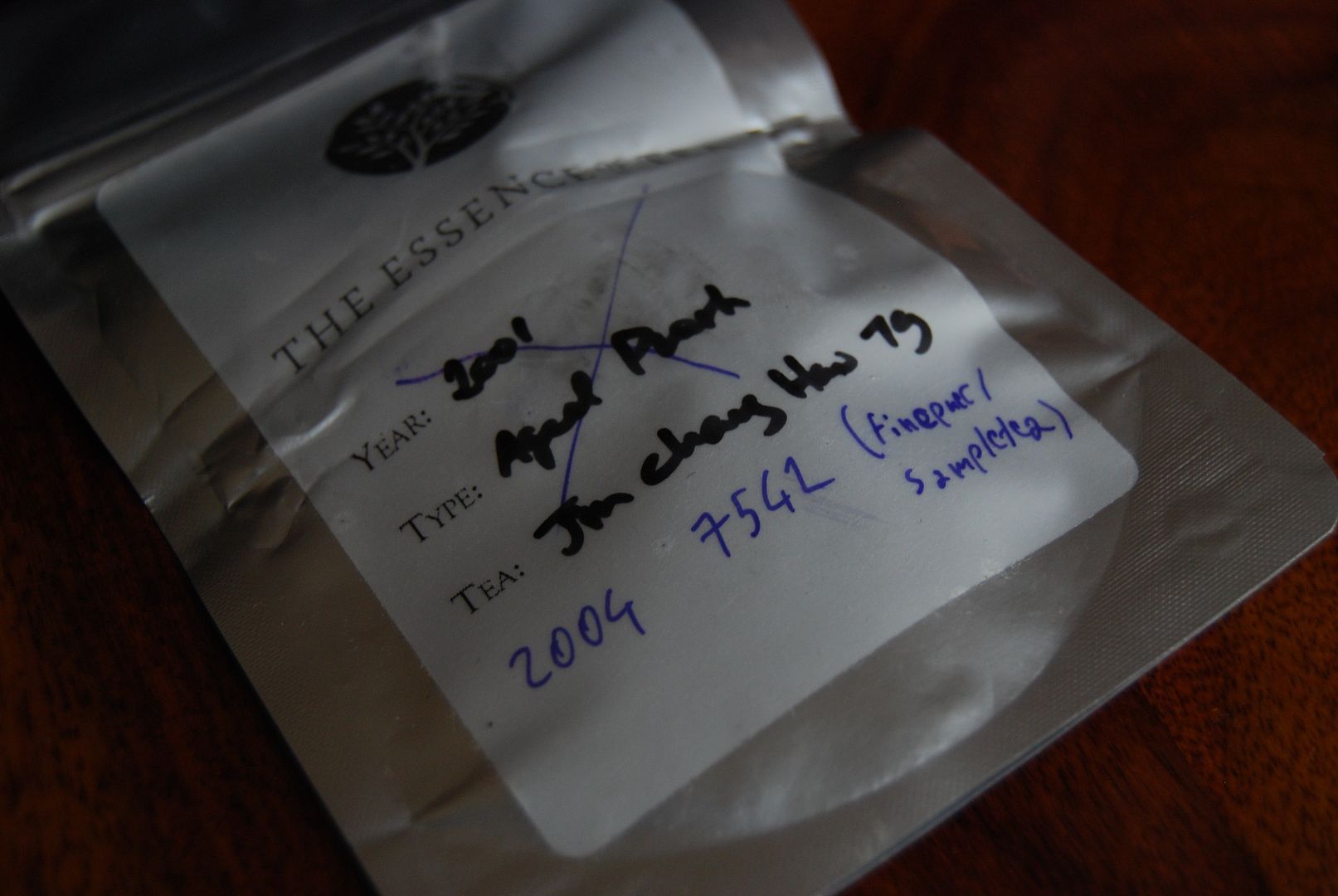
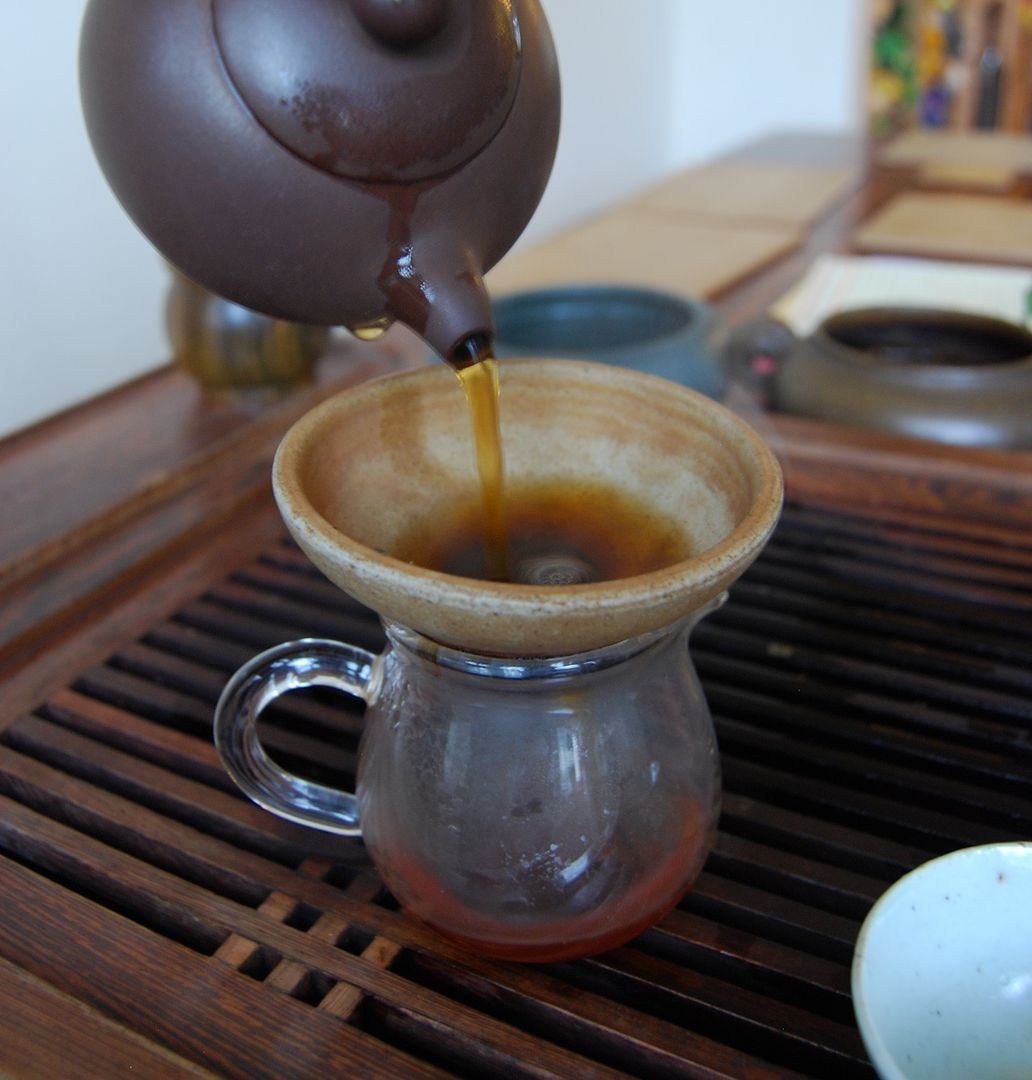
My only previous encounter with the 2004 7542 was during a mammoth 7542fest, with Apache, in which we attempted to drink our way through as many different years of 7542 as we could manage.  The 2004 example from that experiment was stored in Hong Kong until 2009, and was excellent.  This example, from Jakub (which may have come from Finepuer or Sampletea, as the label suggests in the first photograph for this article), is clean and red, with a fresh scent that suggests minimally damp environments. 


This session was most definitely "a game of two halves".  The first took place in the midst of absolute chaos.  I unwisely started a session while visiting family members began to kick up the mandatory fuss that accompanies such a visit.  The tea didn't get a very fair roll of the dice.  Later, in the quiet aftermath, I fired up the kettle for a second time - and was extremely well-rewarded.


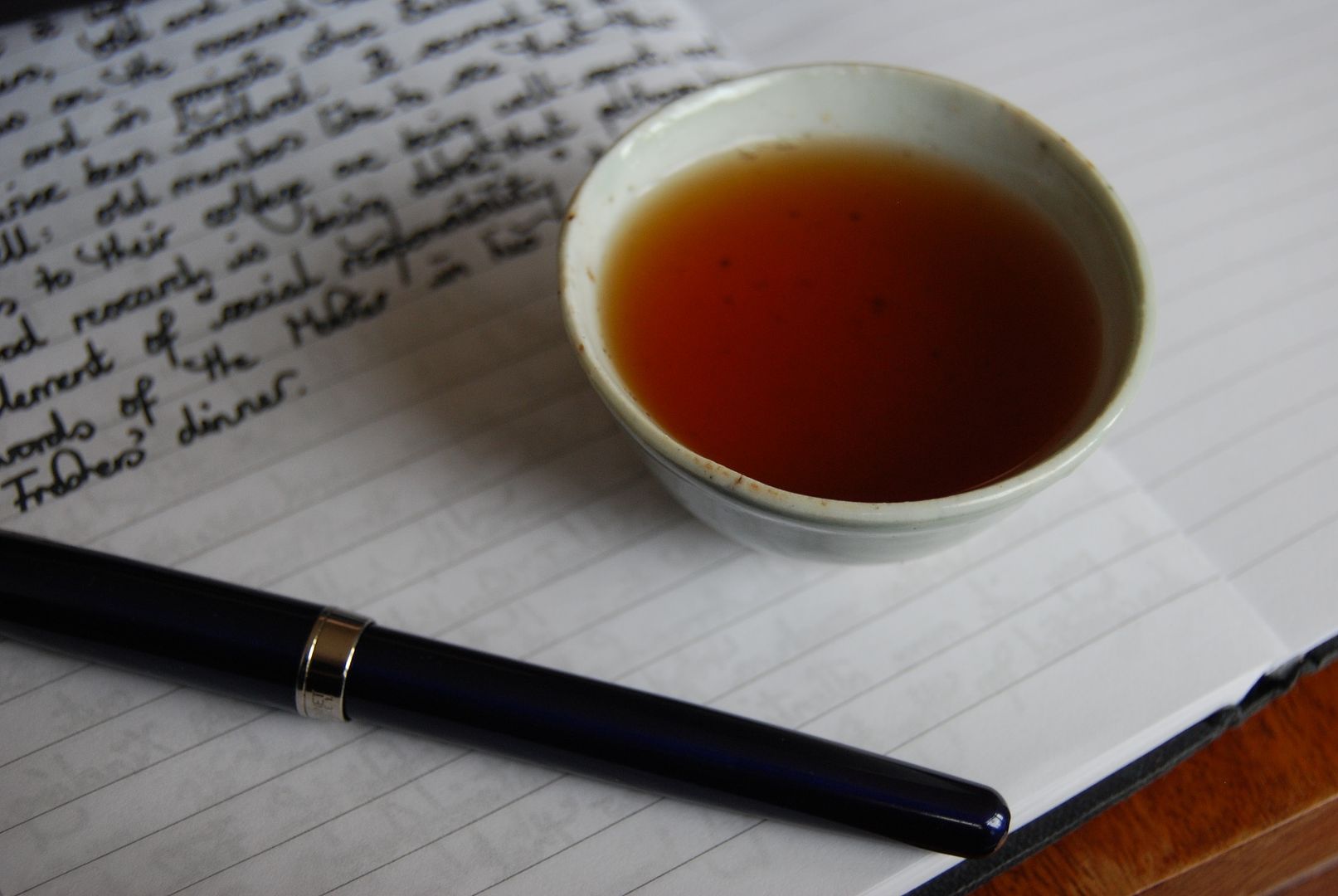
The dark red-orange soup of the tea, pictured above, was reborn.  The thrill of dense, sweet 7542 is not an exalted pleasure: rather, 7542 is strong and uncomplicated.  When the house became quiet, and the visitors and children had resumed their normal states, the 7542 began to shine.


I am always impressed by the sheer longevity of well-stored 7542; it seems robust to so many variables that would otherwise damage other teas.  It is like the boxer that just keeps on getting up, no matter how many times he is floored.  You have to admire the endurance and stamina of a tea like this.  In body, it remains thick; in kuwei [good bitterness], it remains challenging; in sweetness, it remains consistent.  It's not going to win a beauty contest, but it cannot be evaluated according to those metrics.  The 7542 is its own beast, and is entirely uninterested in your opinion of it.

That's something we have to appreciate.

24 February, 2014

Bodhidharma

In a recent plunge into my archives, I found a sample of 2004 "Jin Damo" from TG, a teachum from my native lands, East Anglia. This tea is, I think, from Postcard Teas, a most enjoyable London shop that I visited before.  From the latter article, you might see that I own a cake of 2005 "Jin Damo". Amusingly, I have absolutely no idea where it might be.


"Damo" is the Chinese name for Daruma / Bodhidharma, the monk responsible for bringing Zen (Chan) out of India, to China, and who is therefore known as the "first patriarch". "Jin Damo", then, is Golden Daruma! Such was the reputation of Daruma that the poor old second patriarch, Huike, allegedly had to cut off his arms before the master took his request for Zen tuition seriously. Among other legends associated with Daruma, one includes the master cutting off his own eyelids to prevent himself falling asleep in zazen (meditation). Subsequent layers of accreted legend have it that the eyelids, on hitting the floor, turned into tea plants. Tasty.  If I ever make a tea, it'll be called "Damo's Eyelids".


Comedy legends aside, this tea is attributed to the "Liu family" by Postcard Teas, which has later become an attribution to "Master Liu". You simply cannot be taken seriously in the business of selling tea, it seems, unless you are a "master". I see from its web-pages that Postcard Teas currently sells a pretty 2012 xiaobing for just £15, which seems potentially quite reasonable.

I cannot determine whether or not this cake is the same genre as that sold by TeaHub under the same name. If you have any insight, gentle Reader, it would be most gratefully received.


You may have concluded from the photography that this session started before the sun rose (hence the dodgy artificial lighting in the first image), proceeded through the dawn (in the second image), and concluded during the day (in the final image, accompanied by Xiaohu, my eldest son). That is not to say that this tea lasted that entire time under continuous brewing, merely that a father's duties are many and that continuous time at the tea-table becomes less possible in a manner that is inversely proportional to the number of offspring that one has.

The fragmented, small leaves are dark enough for a 2004 cake; the dry-scent of the leaves is unusually sweet - almost "cloying", as my notes have it. The resulting brews are clean and woody; there exists plenty of sweetness that penetrates into the deeper recesses of the mouth and throat, while the low soup has a reasonable thickness. The "flavour" is not enormous, but the energetic effect of the tea is felt by the body immediately. Damo would be pleased indeed with the stimulating consequences that is has on the attention span.

After a dozen infusions, this solid and respectable tea shows no sign of cracking. It remains heavy, low, chunky, and sweet. A rich tone begins to creep in underneath the constant sweetness after ten or so infusions, which is most welcome. I am quietly impressed, and am resolved to find my version of this cake for comparison.

Thanks again to TG for the excellent, and enduring, session.

18 November, 2013

Holidays in the Sun

I am guessing that Mr. and Mrs. Essence have been to Malaysia, because there follows a trio of genuinely delicious teas that all seem to have Malaysia in common.  I may be there (sadly, only on academic business) during the winter vac, and would be oh-so-delighted if my trip turned up any of these bad boys.


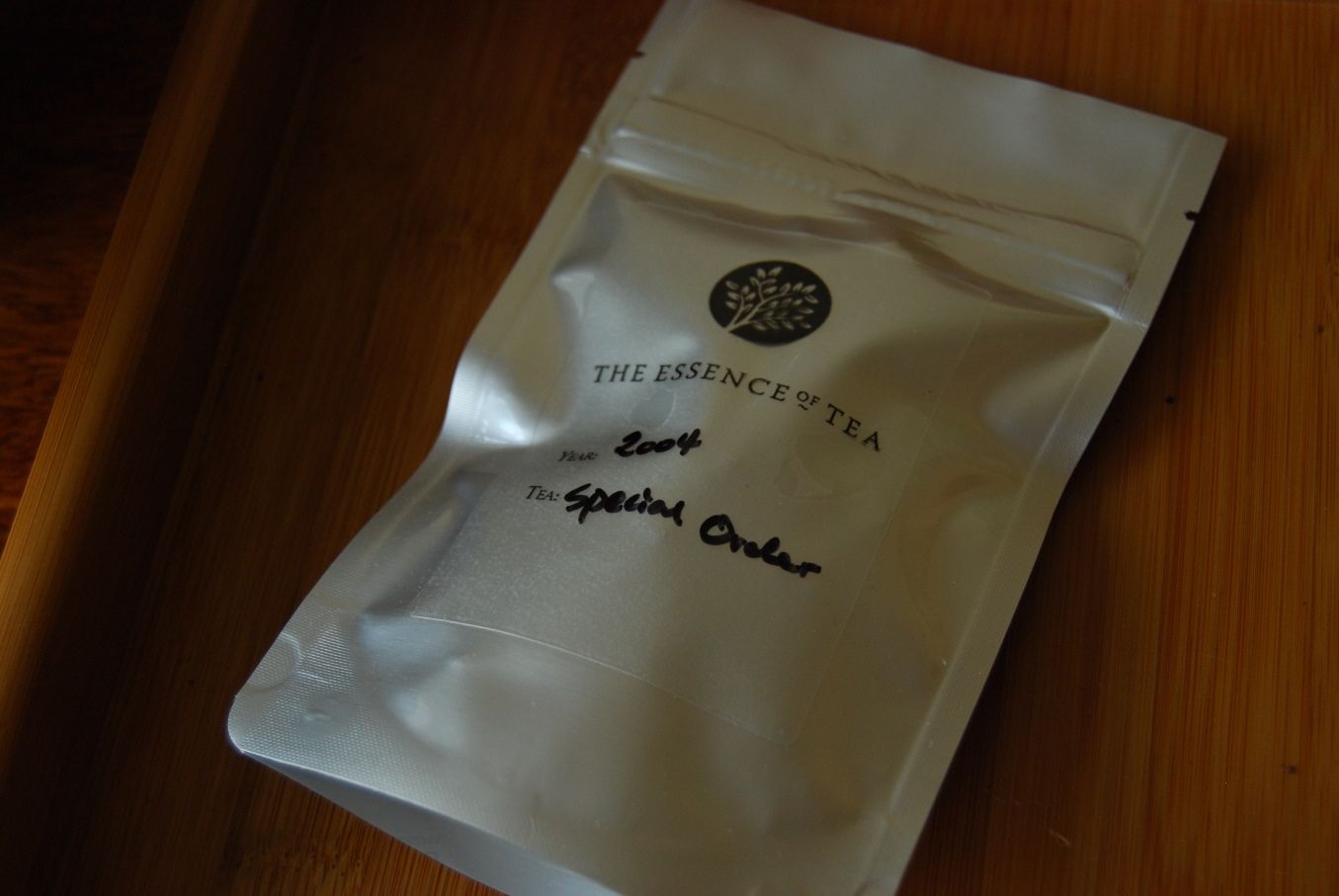
First out of the Malaysian starting stalls: a "special order" version of the standard 7542 recipe, which was given "humid" (heh) storage in Hong Kong before being wrapped and put out for sale for a year.  It was bought in 2003 and stored in Malaysia since then, which has, we are told, seen to dissipate the "dank, rancid skankiness".  (That quote may not quite be verbatim.)


Silly, silly me: I glanced at the price before drinking the tea, which is a capital crime.  No tea can live up to four-hundred-and-ninety-five pounds sterling, in my opinion, unless it is tremendous.  This is, invariably, a great way for me to feel extremely negative about a tea before the session has started, which is a completely daft thing to do.

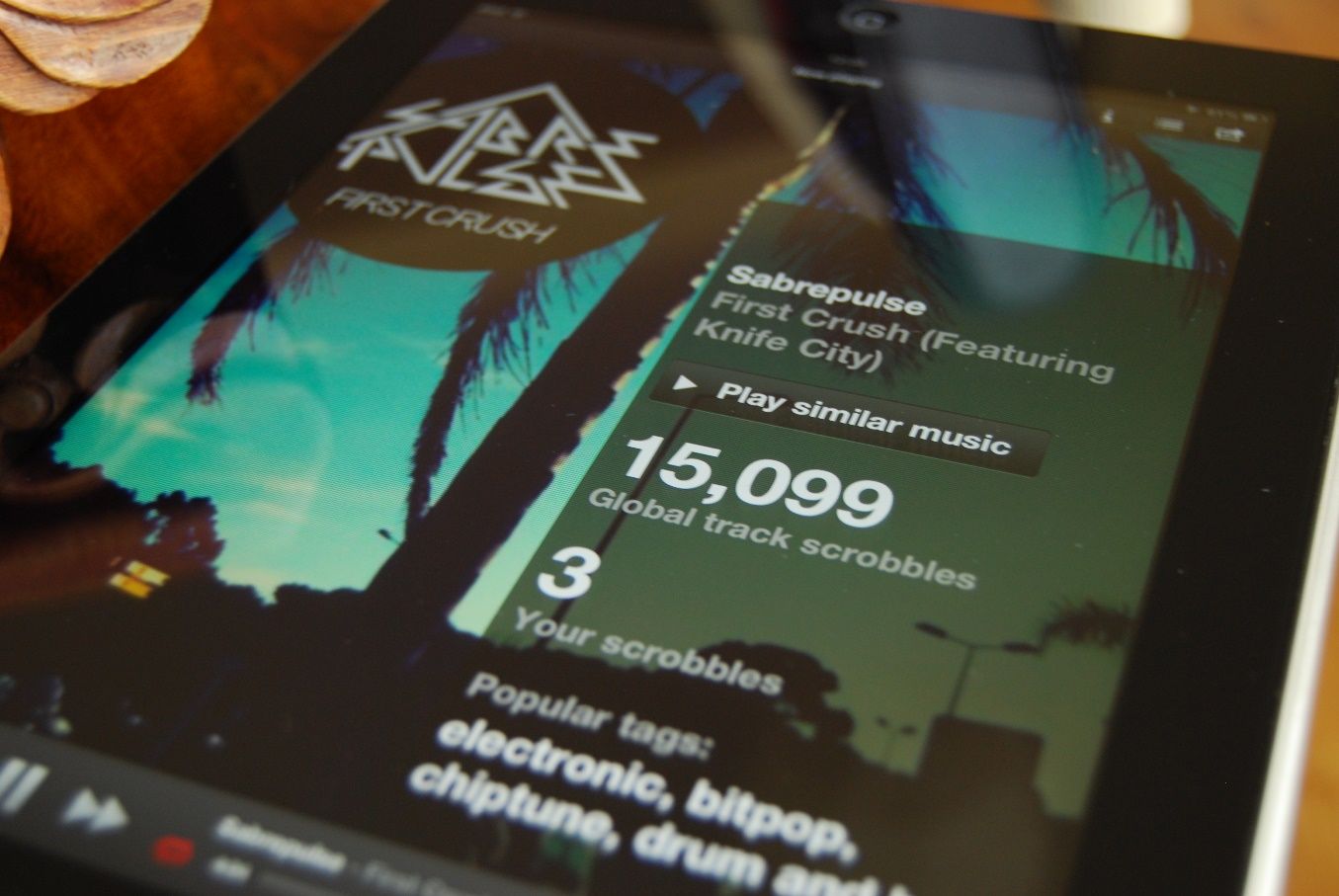
I try to rinse out those negative thoughts with some up-beat chiptune/dnb from Sabrepulse.  You should try the same, trust me.


Aural cleansing thus performed, I commence the libation.


I use the whole 10g sample, which results in a big, fat scent that is almost "plummy".  There is something of red dates about it.  "All signs point to yes", as the magic 8-ball might say.

Note to self: purchase magic 8-ball ready to answer student questions when they arise.

Note to reader: if you are from a culture that has no exposure to the magic 8-ball, it would behoove you to get your Google on.  You have NO idea what you're missing, in terms of human wisdom.


The mineral shicang [damp storehouse] character is present, but the decade in Malaysia has been beneficial.  The result is fresh and crisp.  It is, however, too late to buy cakes like this, due to the prices.  I need some further Sabrepulse thought-cleansing.


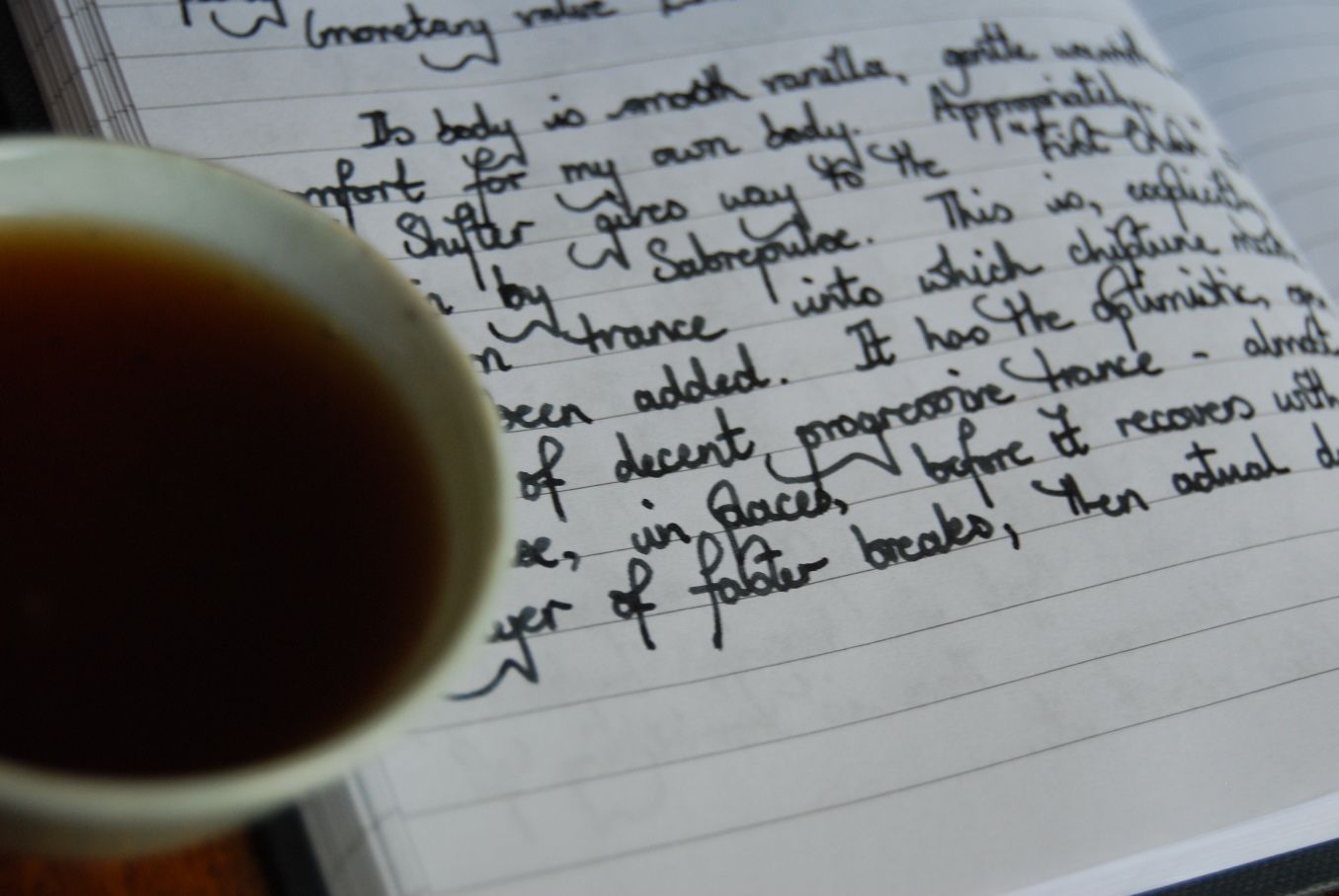
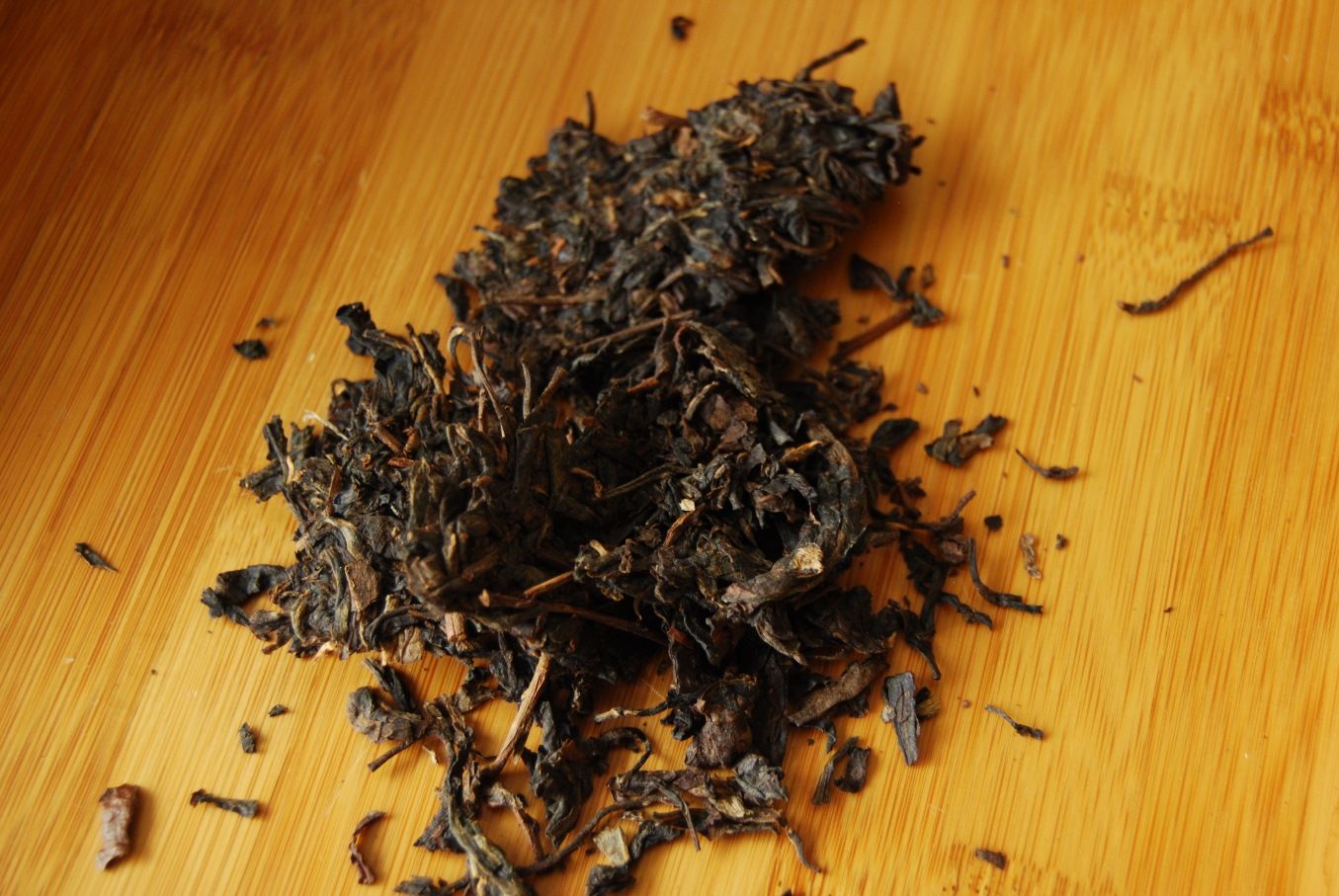
The body of this tea is smooth vanilla, gentle warmth, and comfort for my own body.  As you can tell from the photographs in this article, this is a fine, heavy, dark tea that is really very good.  The soothing and energising nature that it exhibits are fine indeed.  I just wish that I hadn't looked at the price before drinking it. 

Silly, silly me.


A cake without neifei [inner ticket], wrapper, or known region of origin, this enigmatic tea sells for  £76.  I really, really need to stop looking at the prices before I drink.


As its name suggests, it was ordered in 2004 by a Malaysian collector.  The leaves are dark and dusty, and have a very gentle scent of humid storage.


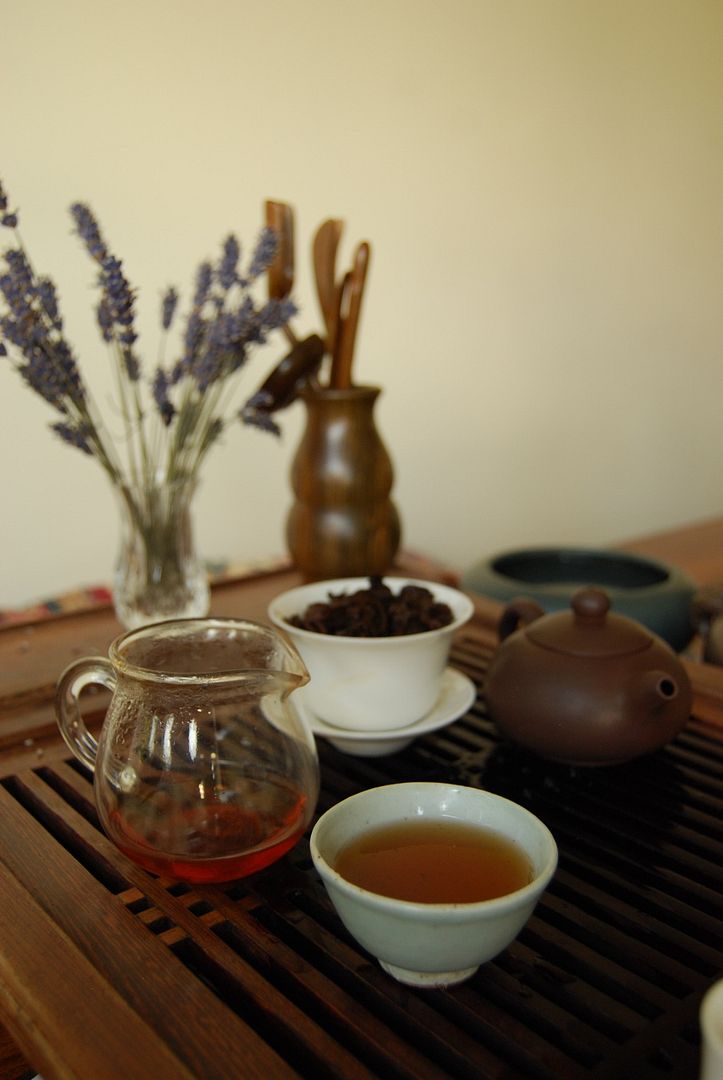
Likewise, there is little to detect in the wenxiangbei [aroma cup].  Its soup is a very heavy red-orange; the character in the mouth is energetic, but filled with the basic red malt of humid conditions, with little else available.  The kuwei [good bitterness] has been sacrificed in the fires of hot Asian storage in humid conditions.  It is, at least, thick and smooth, as Nada writes in his description of the product.  It is fair to describe this as "basic".


I find it to be heavy and calming on the day I tried it.  Looking at the date of its origin, 2004, I am reminded of June in that year, when I went to a machine learning conference just before I started my doctoral degree and met a pretty Chinese girl who was one year into hers.  We spent all night out on the beach, trailing wine-glasses and empty bottles as we returned to the conference hotel, which surprised the conference delegates.  We were married one year later.


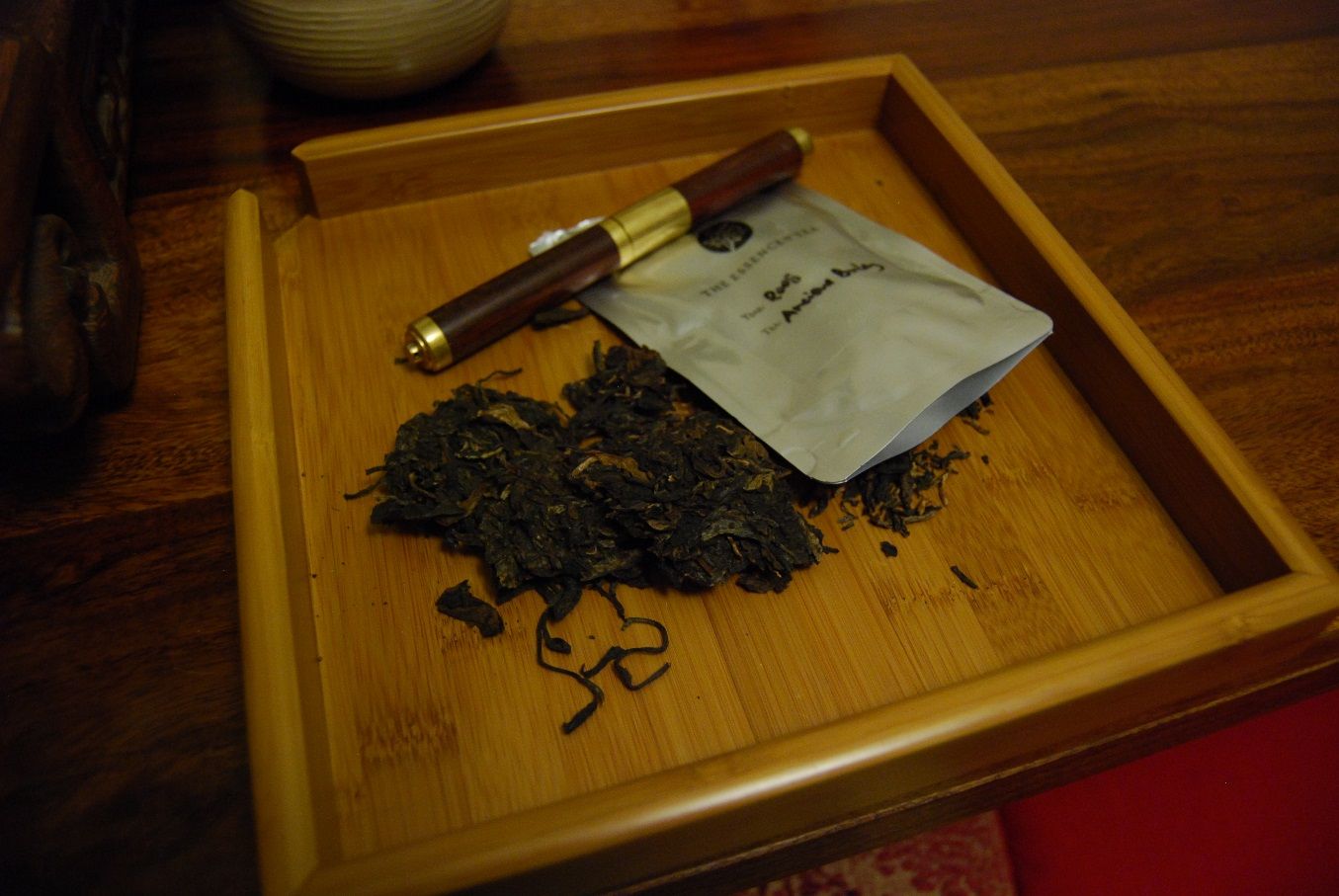
Now this could be more like it!  A "special order" from Bulangshan, from the year 2008, this was ordered from (and this may not be a surprise) a Malaysian.


The red-orange soup seems comforting at 5.36 a.m.  For some reason, I woke early, and decided to squeeze in a session before the morning routine of washing, feeding, playing with, and reading to children begins.


Malaysian storage has been good to this tea: it has a sharp edge of kuwei that has not been trampled into humid redness.  There is a strong, beefy body much beloved of Bulangshan, and it draws water into the mouth in "shengjin".  There is even some woodiness, something that I enjoy in the less heated storage of Singapore (and even here in England).  Its solid, thick texture immediately commends itself.


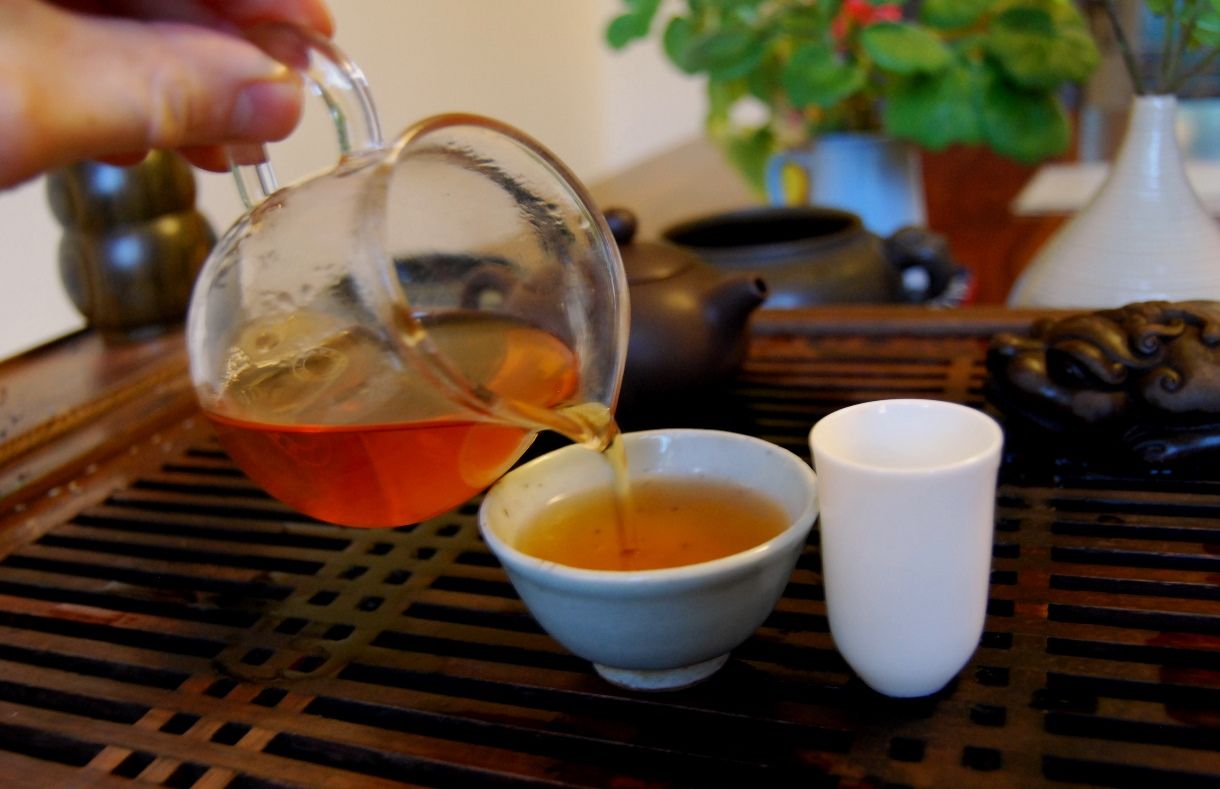
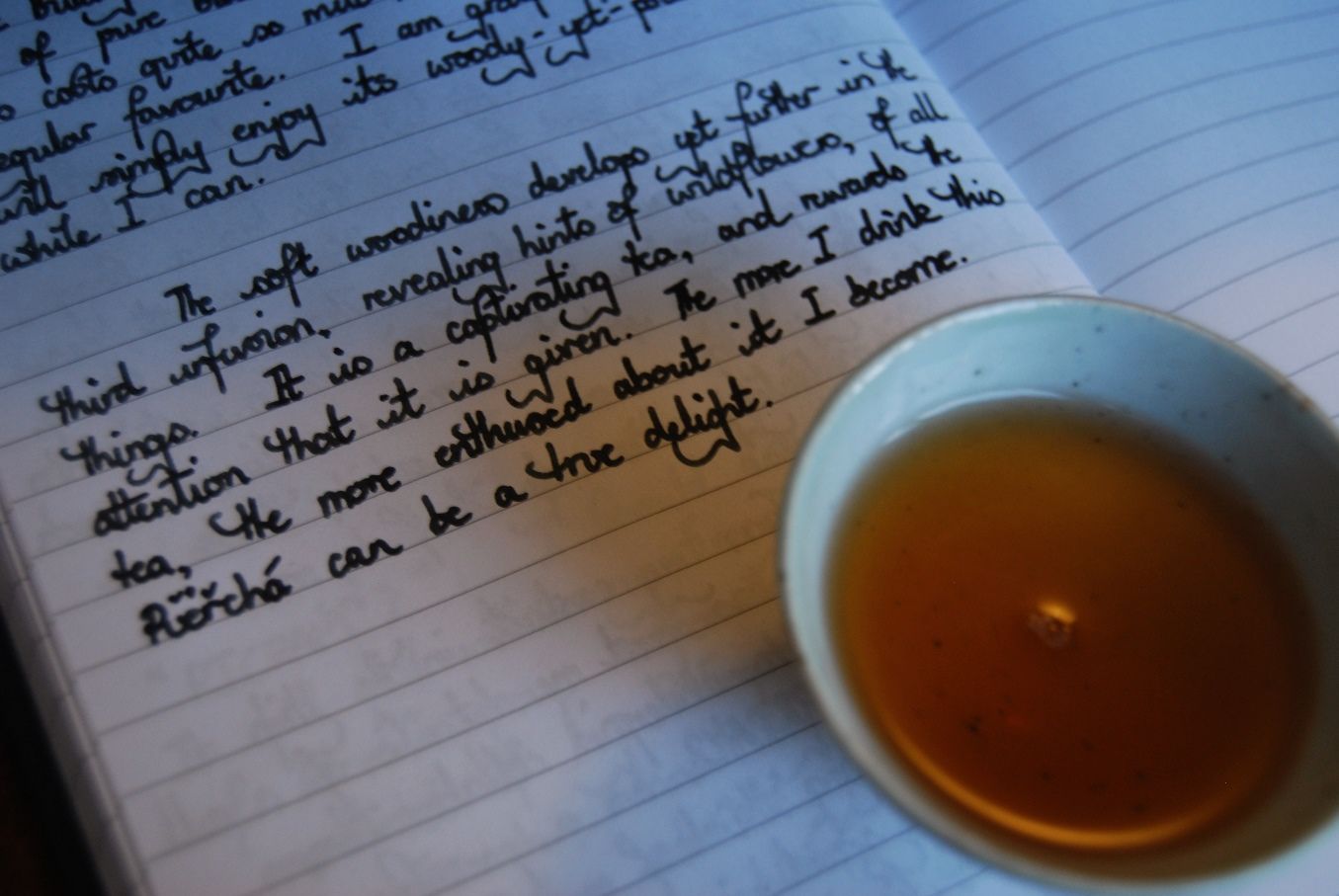
The soft woodiness develops yet further in the third infusion, revealing hints of wildflowers, of all things.  It is a captivating tea, and rewards attention.  The more I drink this tea, the more enthused about it I become.  Pu'ercha can be a true delight.  I won't spoil this tea with talk of prices.  It's a nice one.

- with thanks to Mr. Essence for the introduction to three Malaysia delights.

08 November, 2013

Progress Bar: 6FTM and Shuangjiang Mengku

I often get asked for recommendations...


At the risk of being fatuous, I recommend going back to 2006 and buying this cake for £9. It's great: humble, strong, and aging well.


While on the subject of cakes that taste as if they have been aged in Singapore...


...the 2004 Shuangjiang Mengku "Daxueshan" is just that, and a gracious gift from ST, when he visited me with his family during the summer. Thanks again both for the visit and for the delightful cake.

14 October, 2013

Three Unrelated Masterpieces

Some are born great, some achieve greatness, and others have greatness thrust upon them.

Let's thrust.


I write about three teas that appear in ascending order of disco.  I had several sessions, spread over the course of a week or so, and enjoyed the lot of 'em.

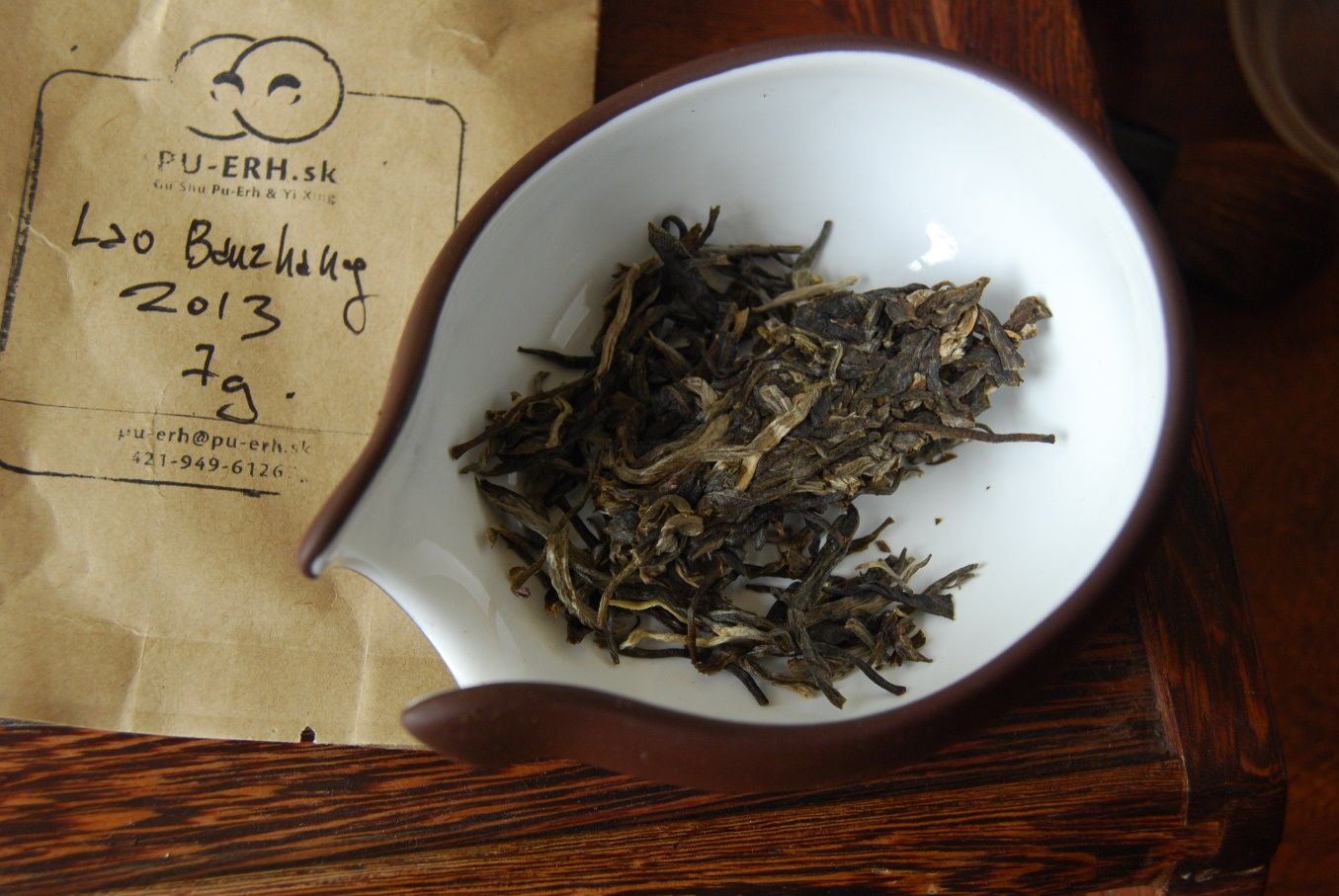
The first is a sample of a cake that Peter of Pu-erh.sk kindly provided.  This sells for 9 Euro per 7g, or a rather bowel-constricting 459 Euro per 357g.  That's a lot of Euro, for a 2013 cake.

(There are 100 Merkels to the Euro, and 100 Euros to the Bailout, making the price of this cake 4.59 Bail-outs.)


"NO - YOU'RE NOT CHINESE."

My (two-year-old) son speaks sternly to his English grandmother, who attempts to sing along with a Chinese cartoon that he is watching.  I chuckle quietly and go back to my tea.

The scent of this "LBZ" is long and full; in the mouth, too, it is big and strong.  Cakes from Laobanzhang became famous for a reason, apart from the market economics of the matter, and that is simply that the leaves taste great.  I enjoy the floral "top notes", along with a little butter, and a little sweetness.  It stays pollenated, dense, and full as the infusions pass and reminds me of the qualities of actual "LBZ".


Peter writes on his company's web-site that "many people say this is the best tea they have ever had."  That is quite a bold claim!  It is very good, that it must be said, but I cannot number myself among that multitude.  Perhaps you might like to grab a 7g quantum for yourself to see if you agree.

(Is it just me, or is 7g a little small for a quantum?)


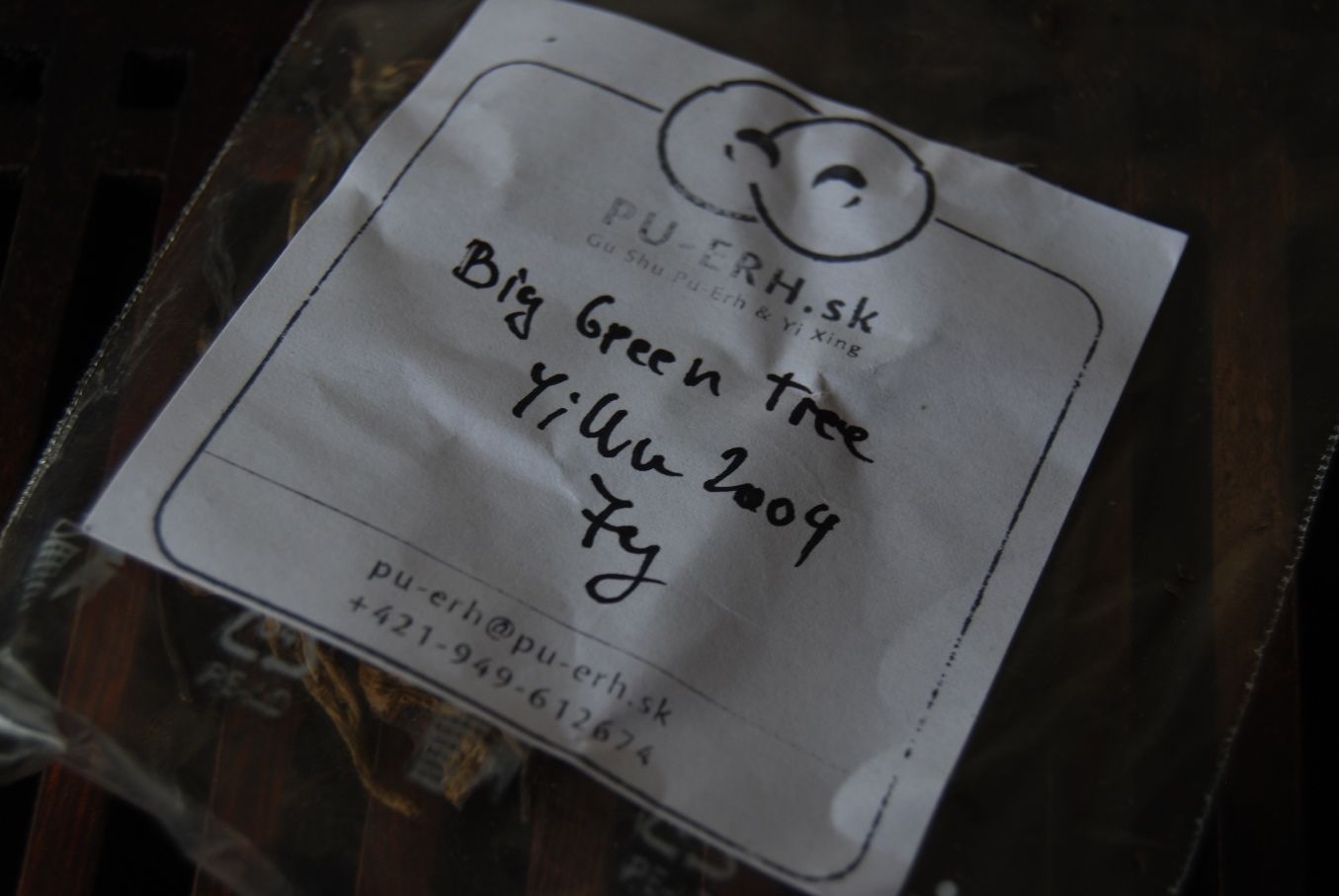
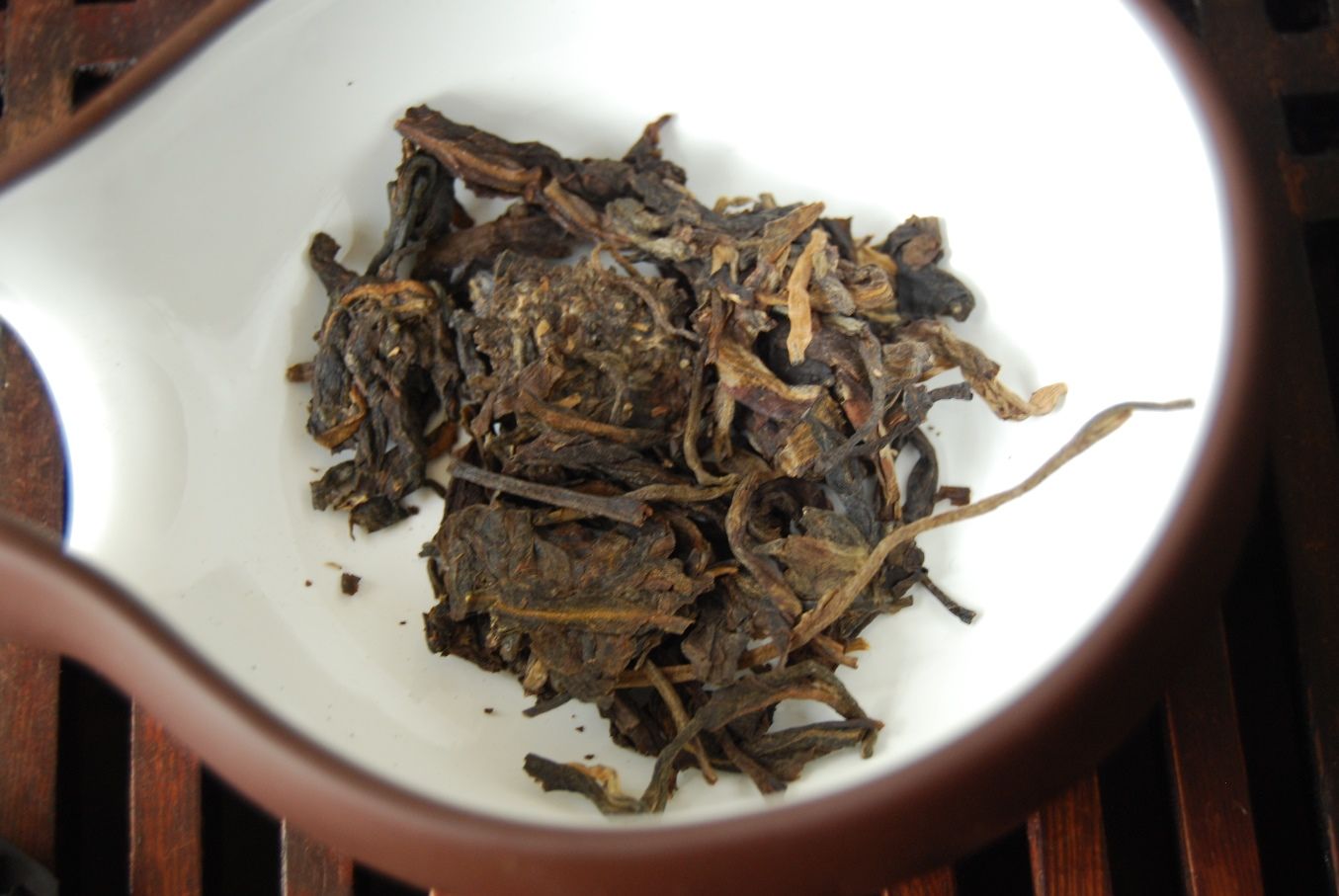
Second on the ever-ascending list of deliciousness comes a 2004 "Big Green Tree" (a.k.a. BGT).  I have previously loved the 2003 BGT, and even enjoyed a 2003 fake BGT.  I remain unimpressed by the 1999 blue-black BGT and the 1999 red-label BGT, comfortable in my heresy.


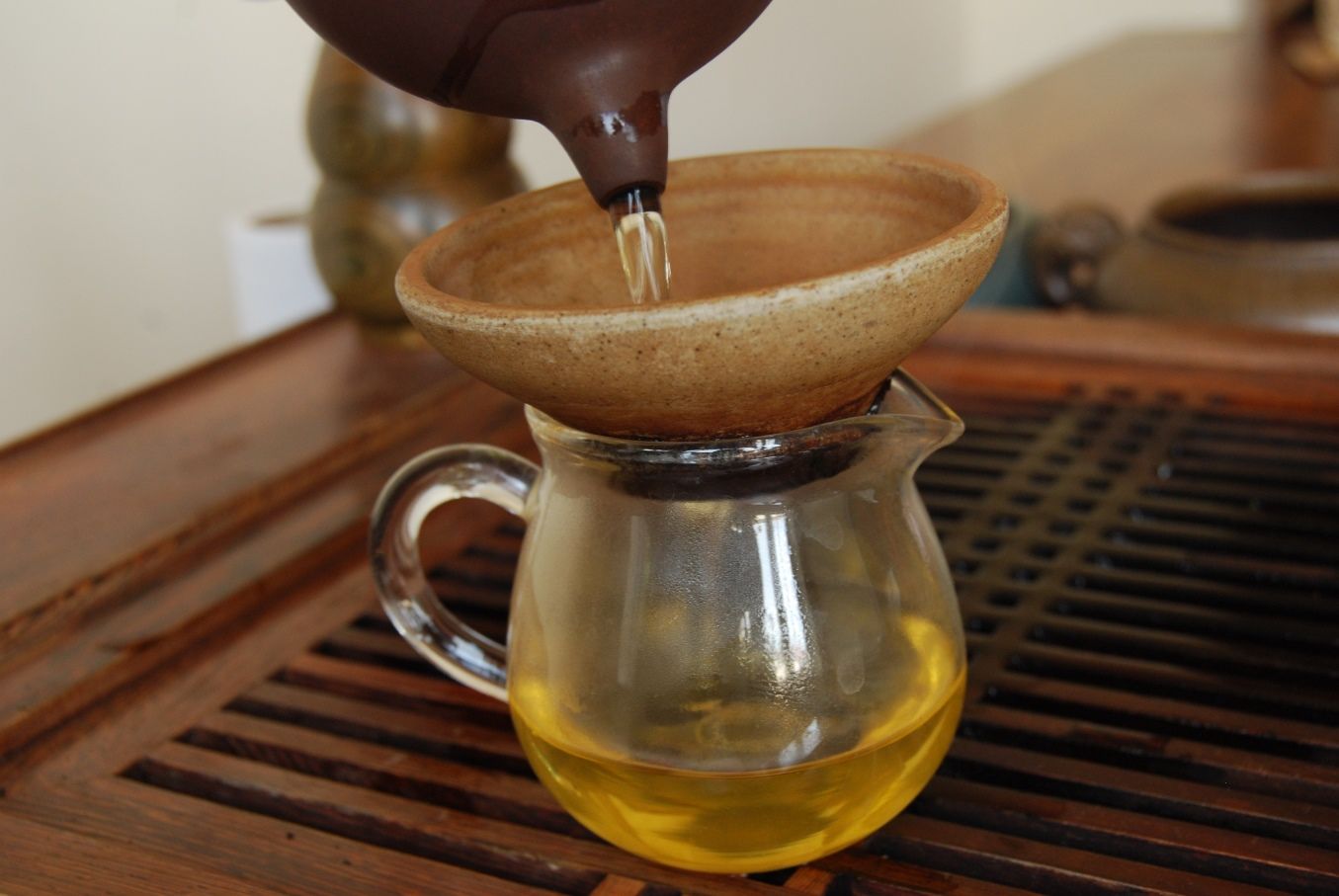
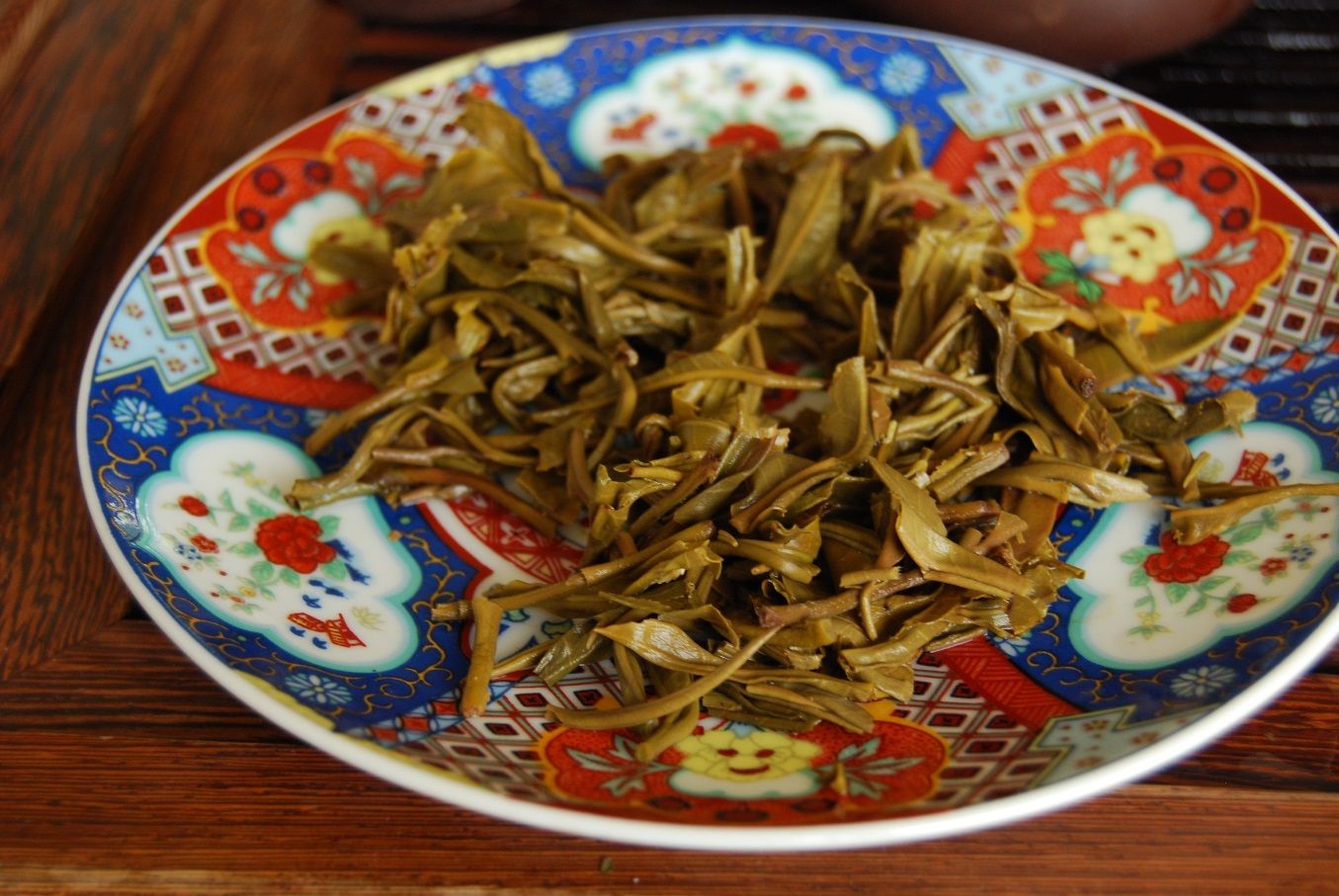
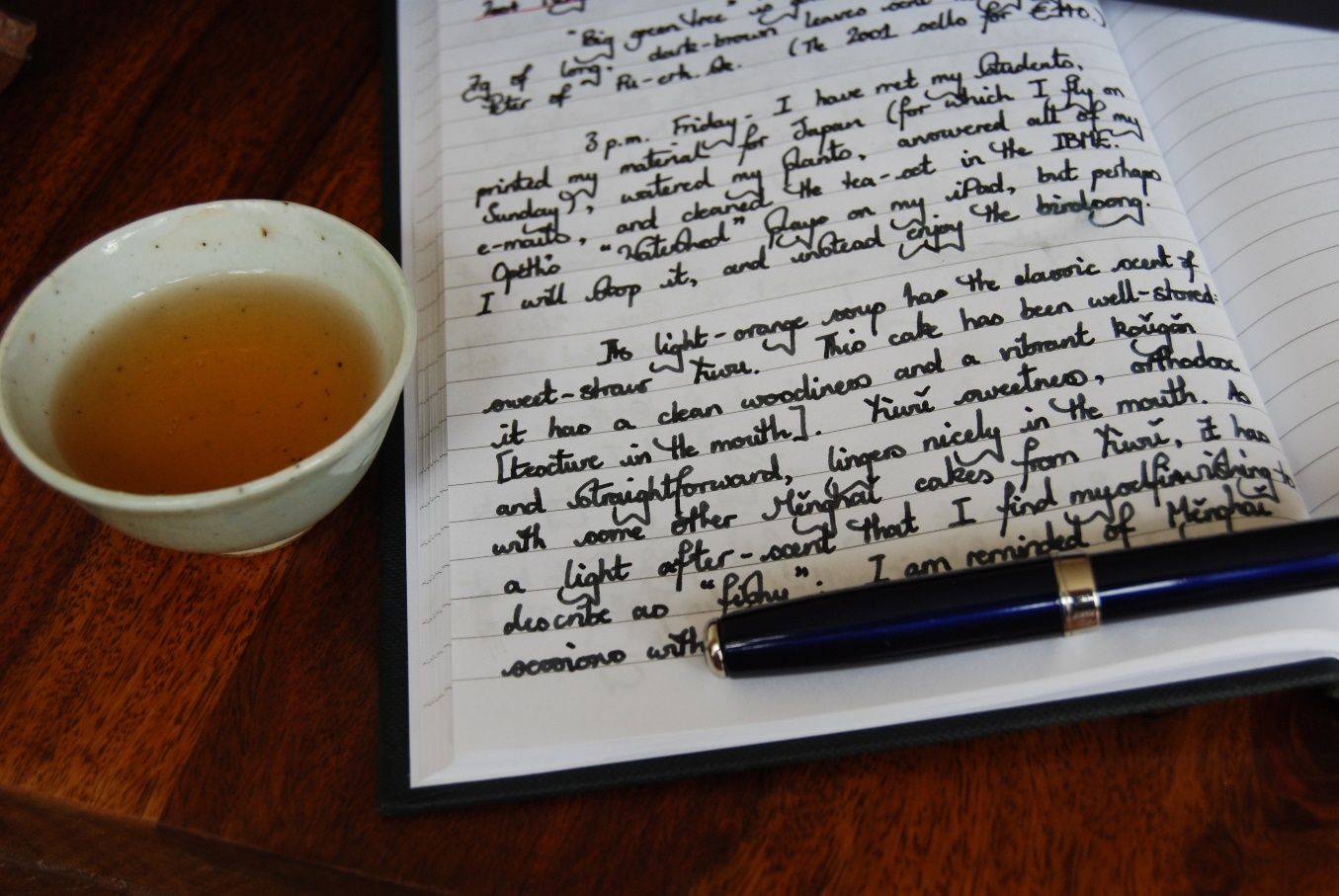
The light-orange soup has the classic sweet-straw scent of the Yiwu area from which this tea derives.  Peter writes that it was a special order, made for a customer in Taiwan by "an employee of Menghai Tea Co."


This cake has been well-stored; it has a clean woodiness and a vibrant kougan [texture in the mouth].  Yiwu sweetness, orthodox and straightforward, lingers nicely in the mouth.  As with some of the other Menghai cakes from Yiwu-region, it has a light after-scent that I find myself wishing to describe as "fishy".  I am reminded of Menghai sessions with Apache.


There is a density of "orange" at its centre, and hints of maltiness and oxidation, with a stable and incompressible flow of sweetness.  This is a well-made tea; it is strong, sharp, and cleanly woody.  It is a constant and stable pleasure on which my mind might rest on this cloudy June day (as was the time of writing in my journal when I first encountered this tea).

"It changes little, but perhaps does not need to do so."  For the price of 60something Euro, this is looking like rather a bargain.  Thanks to Peter for kindly providing both teas.


Strap on your dreadnought armour, fire up the titan, get your dropships ready: it's time for another session with tea from my Eldar companion from Singapore, "Elvin".


As has often been the case lately, I rely on these samples from Elvin to redress the balance.  Before drinking this tea, I had been battling through some anonymous and fairly terrible modern shengpu samples (not the class acts listed above), and needed some redemption.


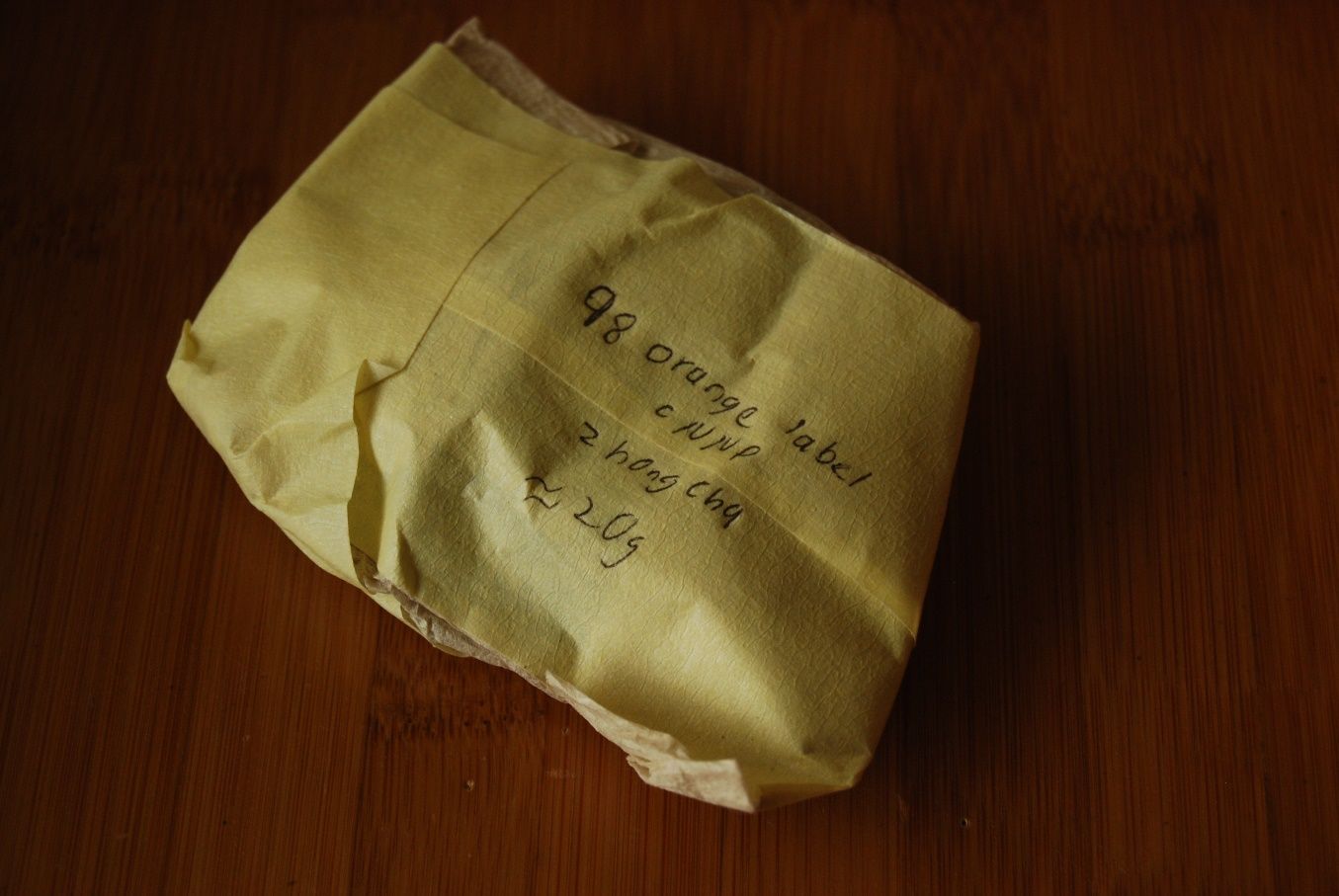
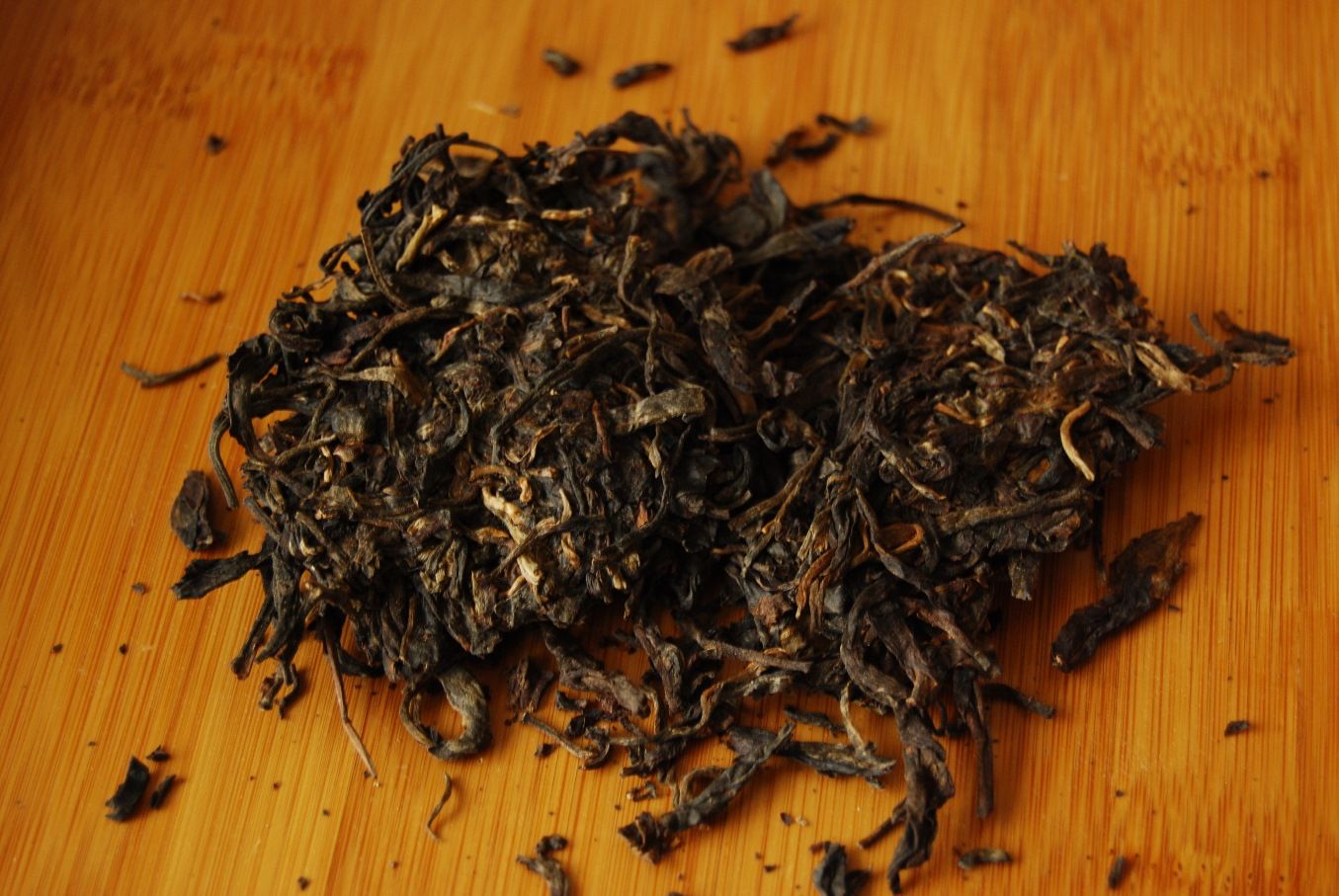
This '98 cake has long leaves, with the inviting scent of sharp humidity.  Singapore must be absolutely baking at the time of writing (late summer), and yet I went to two parties yesterday in full battle armour, including waistcoat and bow-tie.  I cannot imagine surviving if forced by the climate to wear shorts every day.


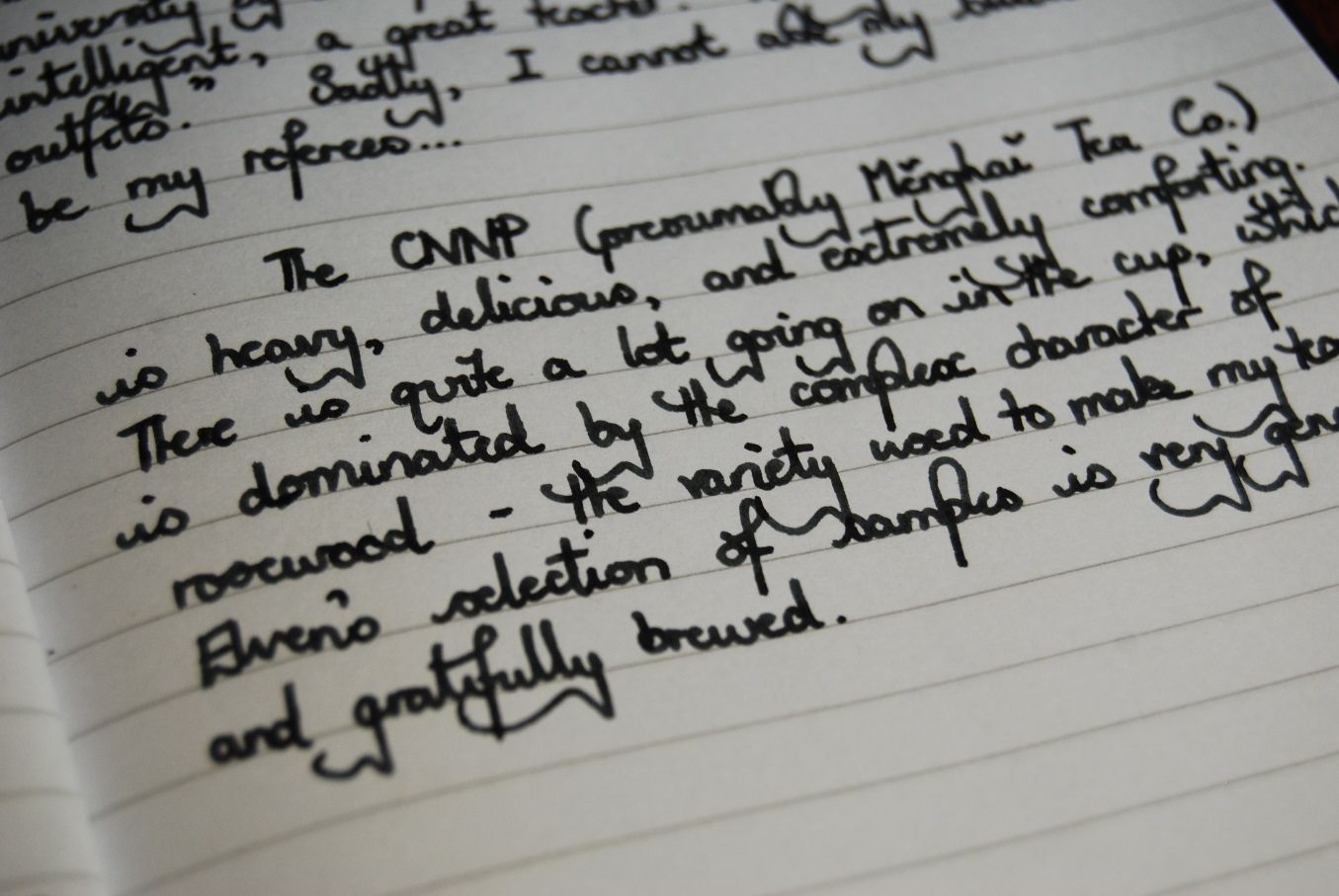
This is heavy, delicious, and extremely comforting.  There is quite a lot going on in the cup, which is dominated by the complex character of rosewood - the variety used to make my teatable, to be precise.


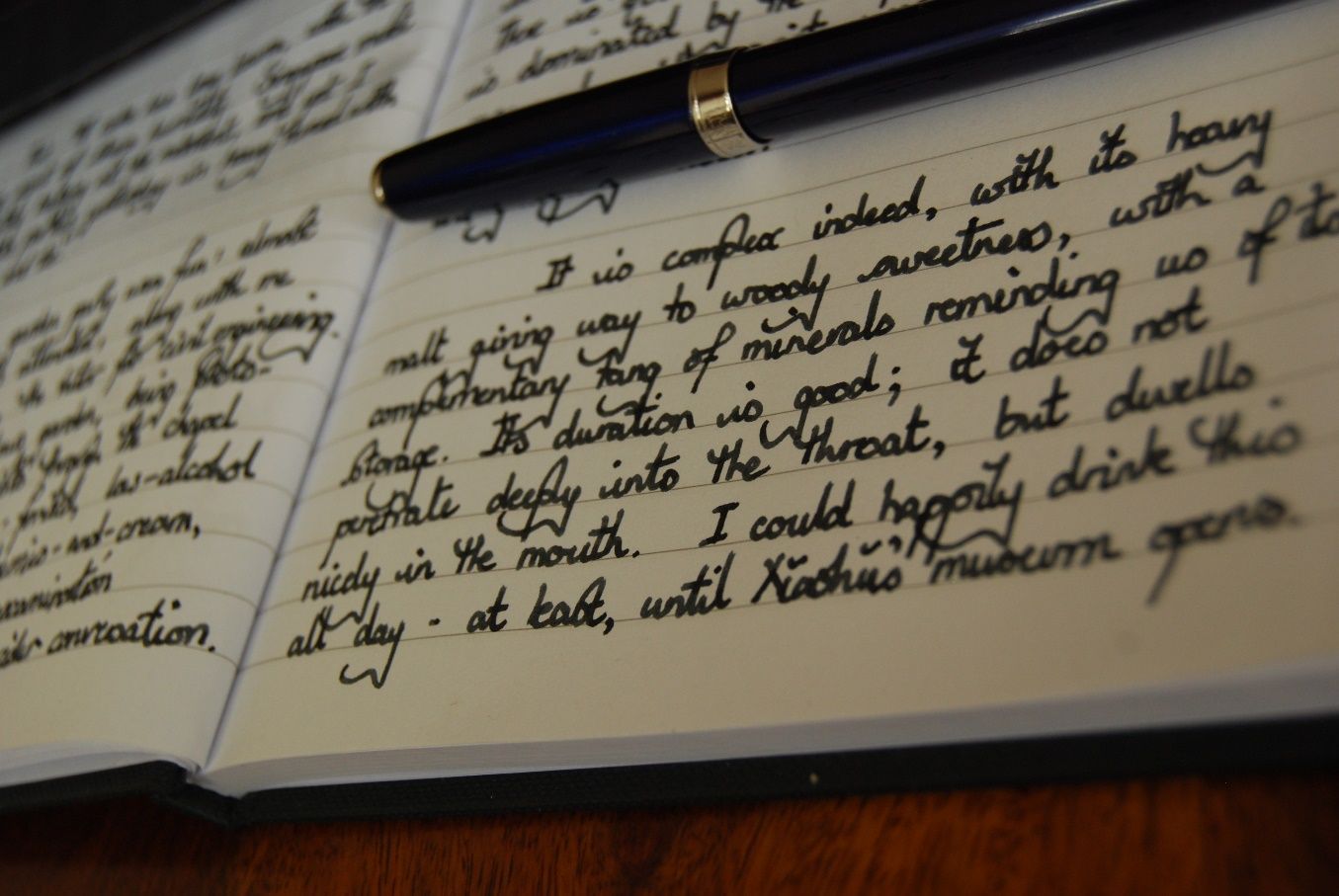
It is complex indeed, with its heavy malt giving way to woody sweetness, and with a complementary tang of minerals reminding us of its storage.  Its duration is good; it does not penetrate deeply into the throat, but dwells nicely in the mouth.  I could happily drink this all day.  At least, that is, until the museum opens - one of my eldest son's current favourite places to visit (after the swimming pool).


Looking back at my notes for this tea, I see page after page of battle-plans, laying out my presentation for an interview of some significance that I was going through at the time.  The notes from the tea are few and far between, but, where they exist, they are high in praise.  This tea is a rock-solid example of good CNNP.  A masterpiece indeed.

To Elvin, and to the Craftworld in which he roams the galaxy with his compatriots, I offer my sincere thanks.


Addendum
July, 2015

This is a Saturday morning session, on a date that has significance for many not of this country!  I am happily drinking the CNNP Orange, which is vivid and energetic.  It has a mineral, humid flavour that has settled and aged.  It is humidity, from a distance.

07 October, 2013

Sufficiently Bitter to Start a Car

I've been delving into my back-catalogue.


The 2007 "Menghai" from "12 Gentlemen" was infamous for both being rather costly, and exceptionally tight in its compression.  While the compression has not slowed its aging, it has caused a dramatic side-effect, at which the title of this article hints.  "Ick", has my journal.  This cake needs plenty more time on the shelf before it becomes drinkably.  I invite you to follow the link for my updated notes on this agonising, yet high-quality, cake.


The 2004 Shuangjiang Mengku "Bainian", on the other hand, is entirely drinkable and has aged magnificently.  It is woody, pine-like, and retains some of the zest of the youth from which it has clearly aged.  As far as "mainstream" tea goes, this straightforward cake is something of a gem.  Good ol' Shuangjiang Mengku, during this era, were famous for solid, inexpensive little numbers such as this.  Again, I invite you, Gentle Reader, to follow the link above should you wish to read the updated notes in full.

19 April, 2013

Ave, Apache, Pu'ercha Plenus

I hope that's the feminine singular nominative.  School was a long time ago...

Plenus or not, the big man rolled up at my place last week-end.  He was heavily laden.  I had bought 15 litres of water in preparation.  We were ready.


Tea with Apache


Apache, like everyone from Hong Kong (Kenny and GV, I'm looking at you), seems to have a long-standing relationship with The Fat.  And why not?  I've never been to the Fragrant Port, but would make calling in at the famous teahouse an essential part of my visit if ever it occurred.
The Fat does most things well, when it comes to tea, but I cannot say that I have ever tried their wulong before.


Tea with Apache

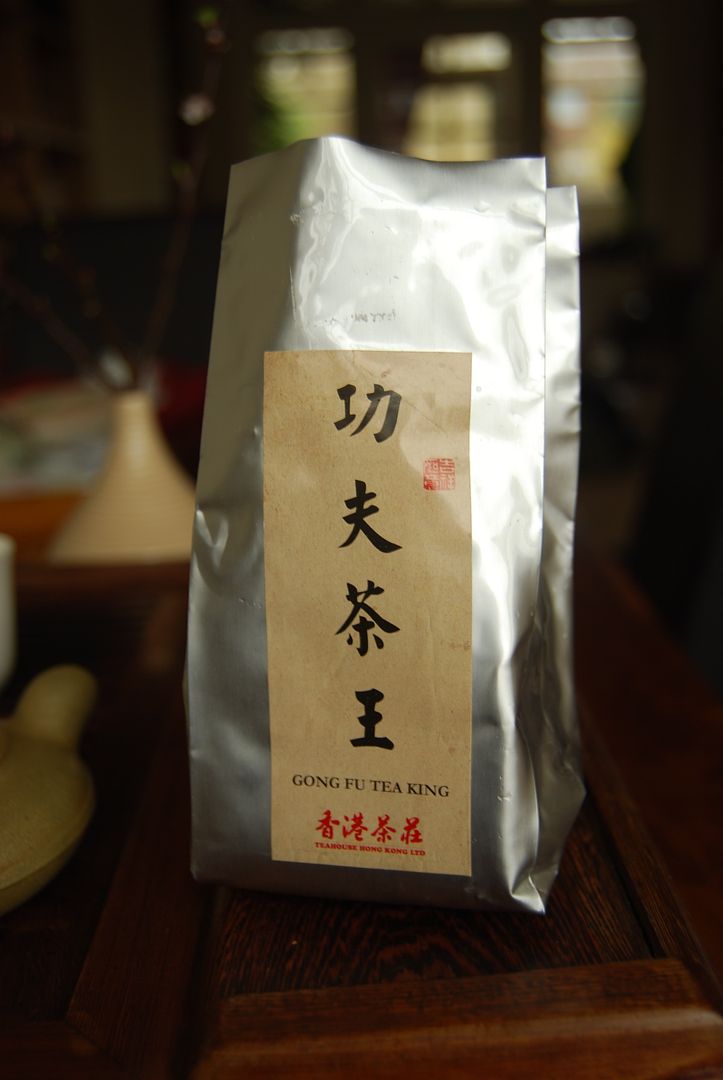
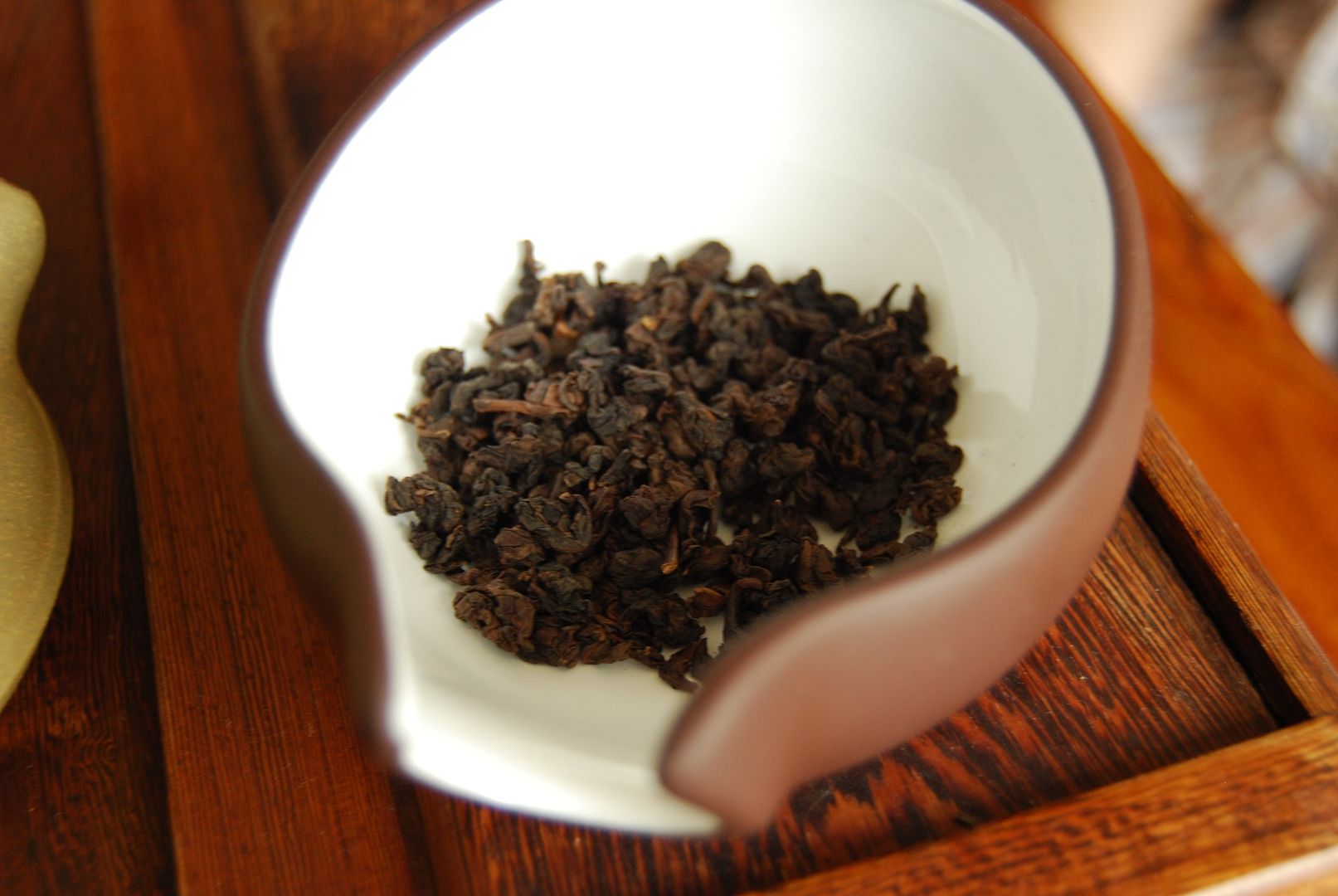
Pictured above, this is a miscellaneous "gongfu chawang" of which we know little, excepting the facts that (i) it is roasted, and (ii) it is still quite young.  This makes for a mighty fine wulong experience, and I even did the unthinkable and managed to find my roasted-wulong pot.  That little pot doesn't get much action.
This was, perhaps expectedly, a very good wulong: buttery, green, young - but smoothly roasted, without being heavy-handed.  A fine balance between light and dark, yin and yang, Force and Sith.  The running order for today's session was decided by Apache himself, and this was a great opener.


Tea with Apache
2003 Menghai Tea Factory "Qiaomu Laoshu" Cake

You may have read recently of Apache's hideous treatment at the hands of a vendor whose name cannot be named, in which we was peddled a fake 2003 Dayi Qiaomu Laoshu.  Keen to restore balance to the Force, Apache brought along a sample of the actual Dayi cake, provided by a friend of his from Guangdong province.


Tea with Apache
2003 Menghai Qiaomu Laoshu

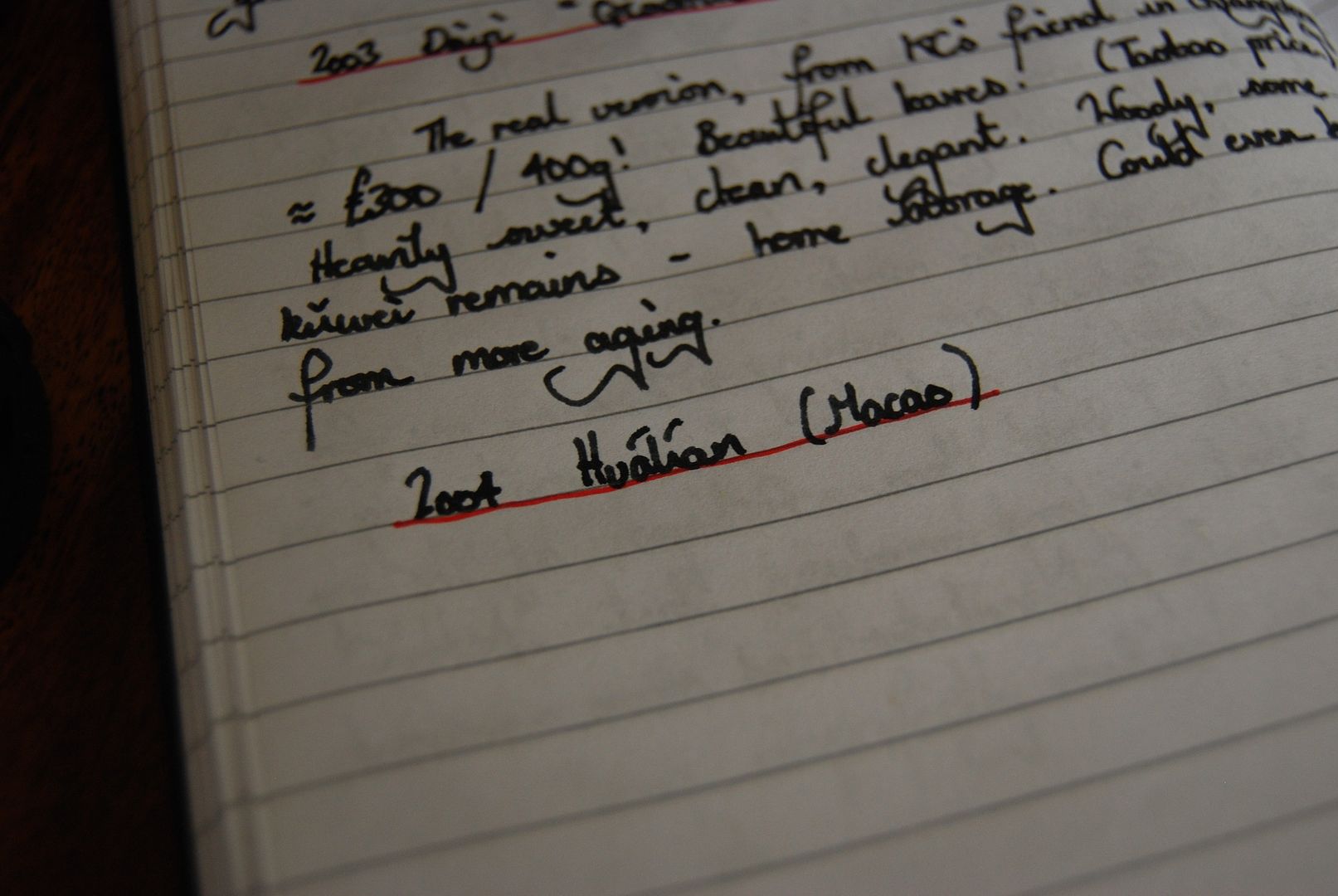
This version, pictured above, does not suck at all.  In fact, it is quite the opposite.  The leaves, pictured above, are separate, long, and very well-aged.  The Taobaowang price at the time of writing for this little baby is currently 300 English pounds (approx. 450 Amurcan) for a full cake.  It is not at all cheap, but exceedingly cheerful.


Tea with Apache


Clean, elegant, heavily sweet, and yet laden with kuwei [good bitterness] even after a decade of storage in south China - this is quite remarkable.  Heaven knows how delicious this will be after another ten years; it certainly has the strength to turn into something even more fine.  As it stands, it is woody, enduring, and darned solid.
Dayi special cakes have come under heavy (financial) speculation within the last half-year or so, and the prices are generally going through the roof for anything Dayi that isn't a standard recipe.  You may not have seen this in Western markets, because we tend to see just the basics (7542, 8582, etc.); the better "specials", however, are taking a huge pounding.  The case of the amusingly-priced 2011 Jin Dayi is one that you might have come across, for example.  Apache and I bought that by the tong about a year ago, and the price has since approximately tripled.

Speaking of overpriced speculation...


Tea with Apache


Hualian ("Waloon" in Cantonese?) is the teashop on Macao that is famous for the "1997 Hualian Qingzhuan" [green brick], allegedly made entirely of laoshu leaves.  This 2004 cake is more down-to-earth, but is supposedly more Banzhang material.


Tea with Apache
"Banzhangwang", anyone?


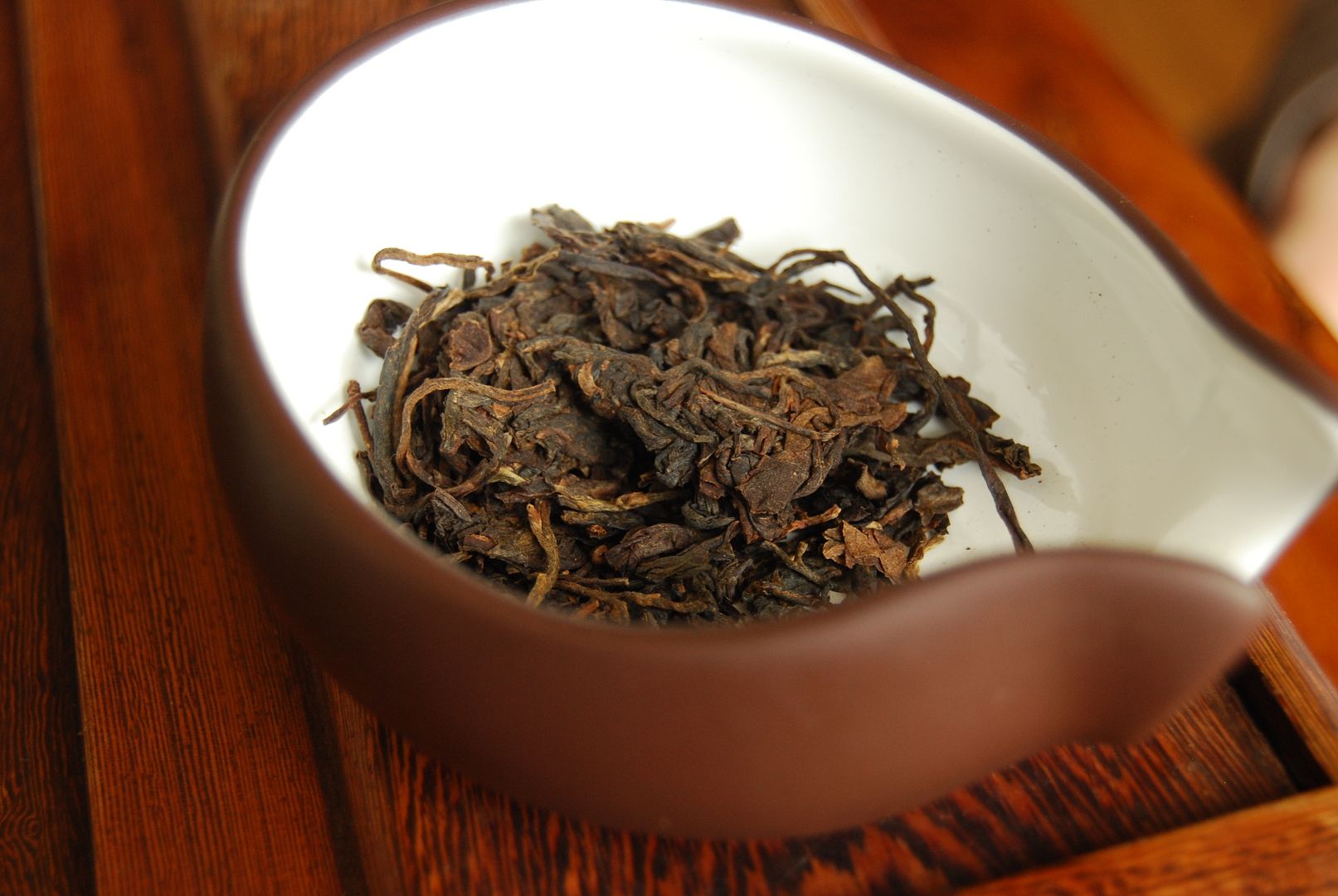
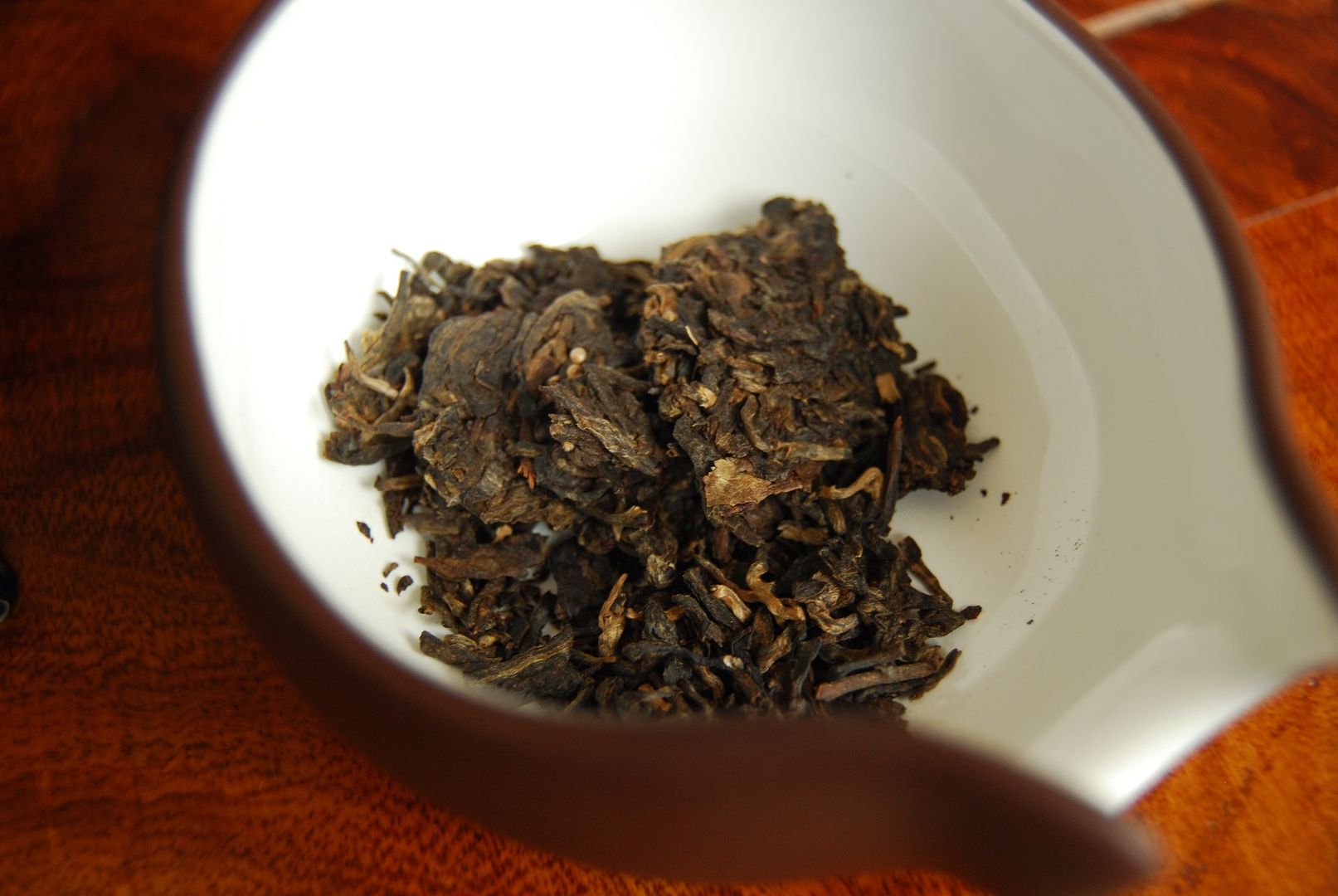
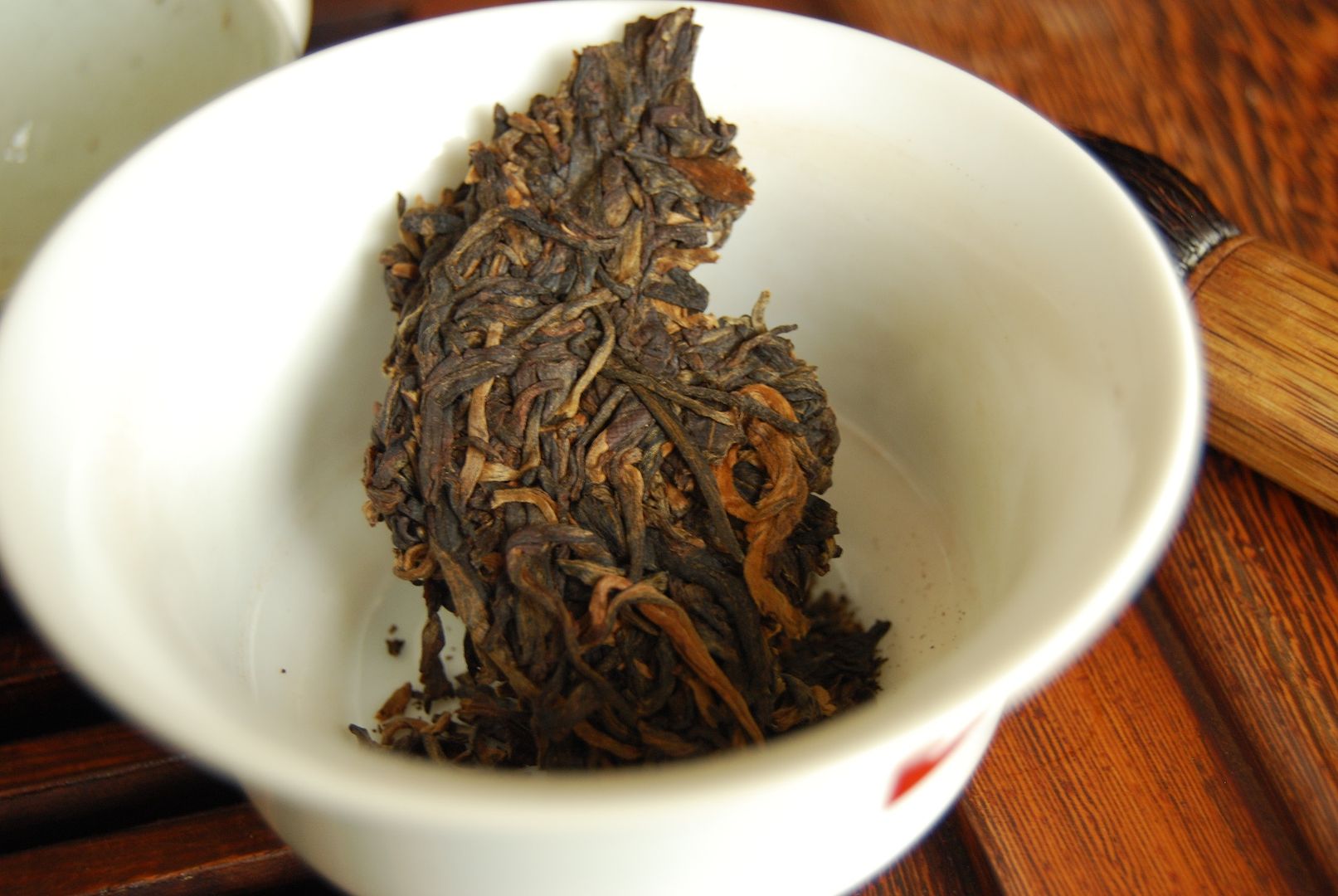
The leaves are small and crunched, as one might expect (pictured below).


Tea with Apache


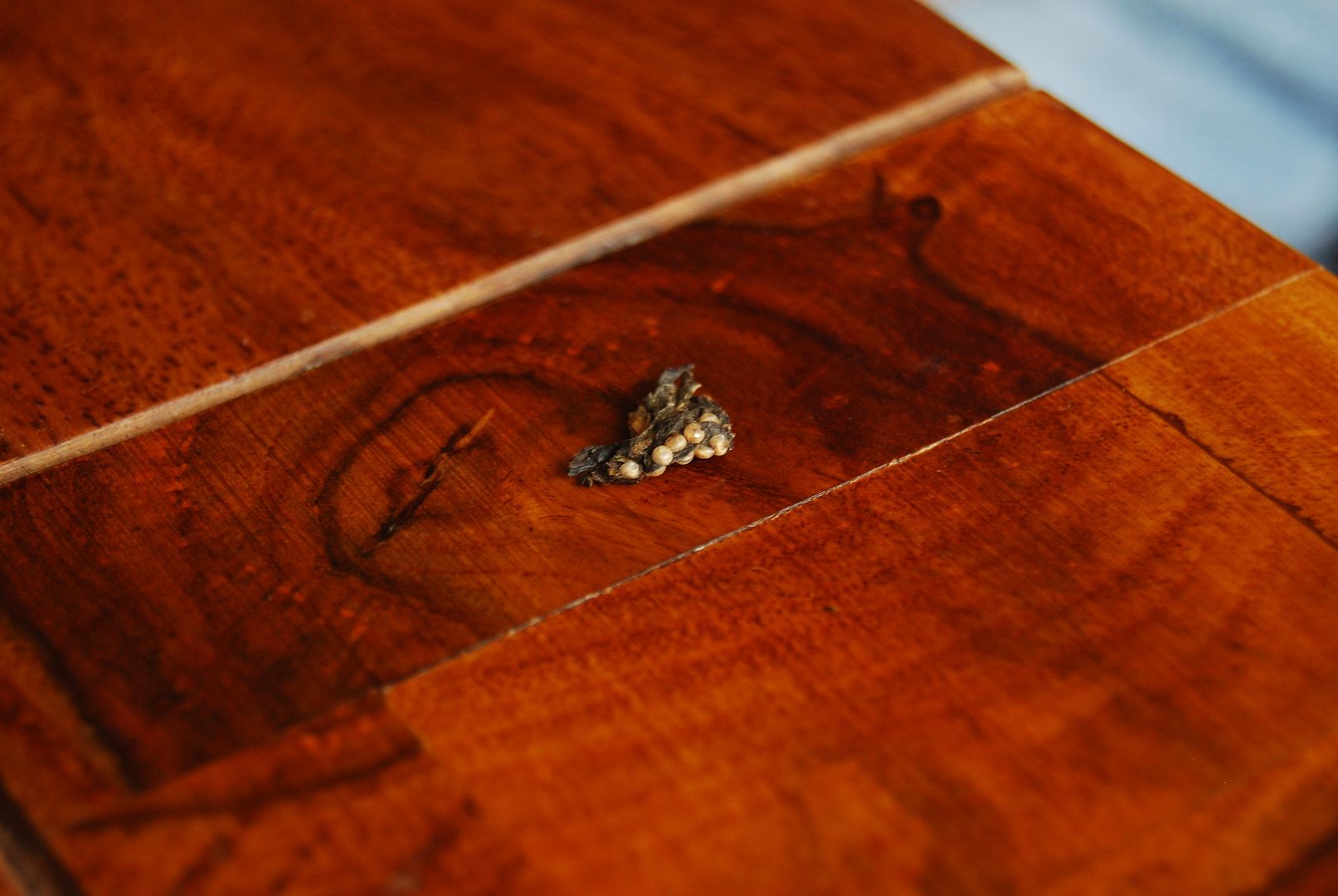
Interval: we discovered the following nestled inside the leaves of this tea.  We have absolutely no idea what these... pearl-coloured pods might be.  Tea-seeds?  Insect eggs?  You decide.  Either way, we chickened out and decided not to brew them.


Tea with Apache


Minus the worrying eggs, the actual tea was... pretty good.  It was lighter than the previous 2003 Qiaomu Laoshu, and quite obviously so.  There was good sweetness, and a decent body, but it was all rather underwhelming and quite straightforward.


Tea with Apache


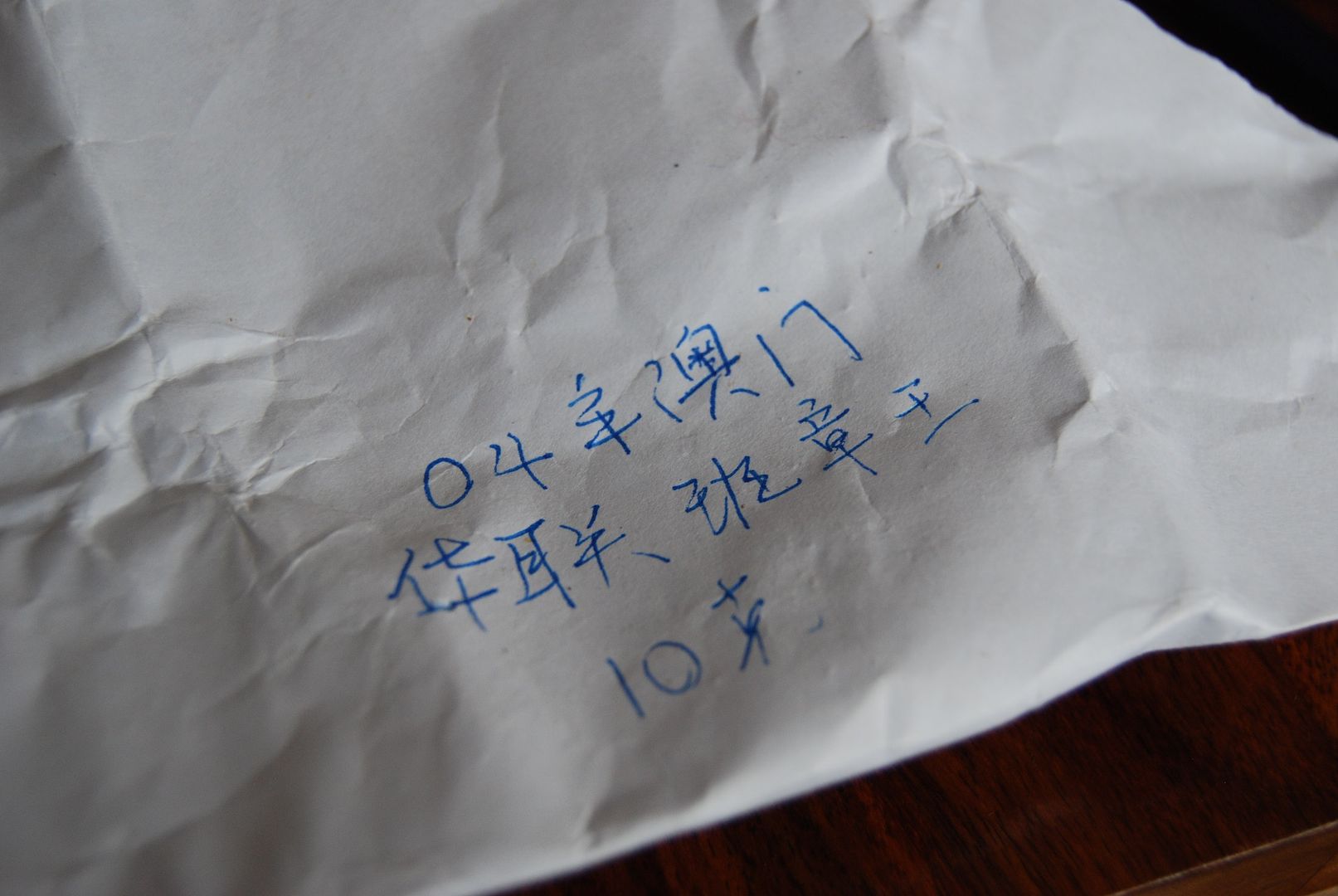
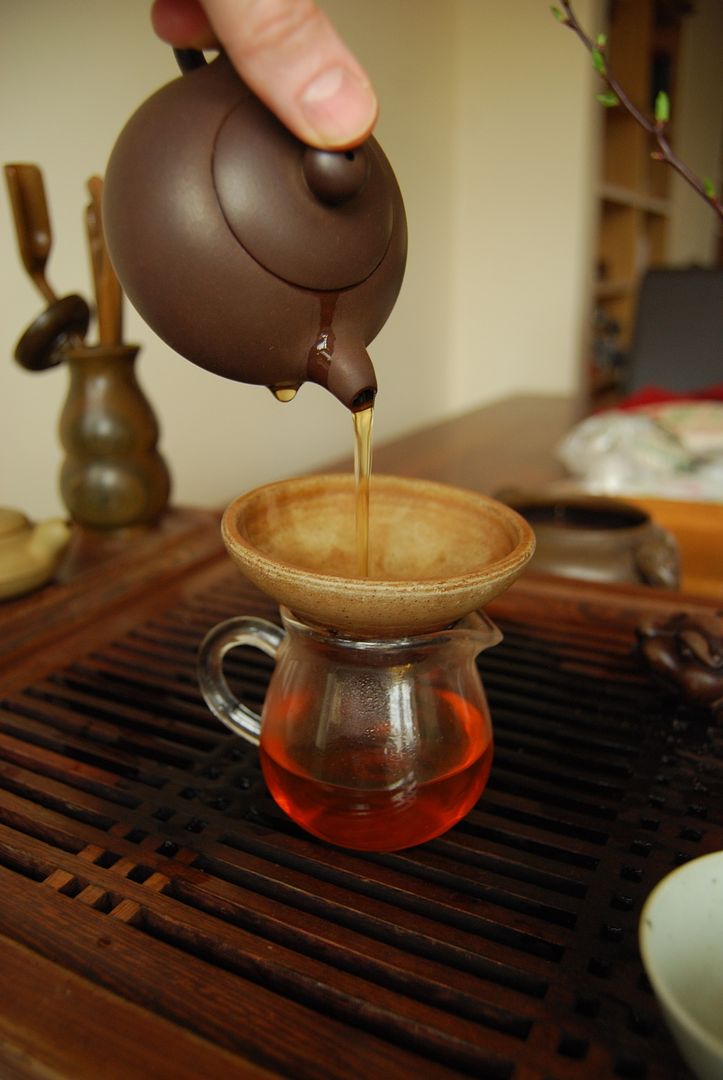
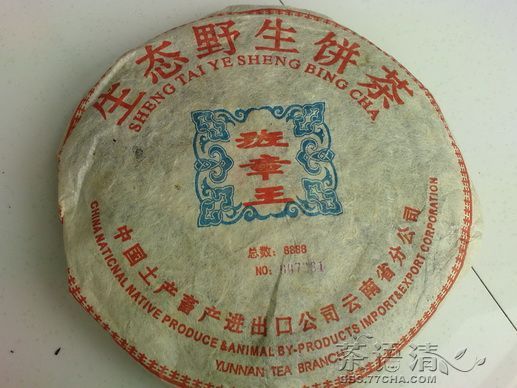
The soup, shown above, looks good, however.  For completeness, an image of the wrapper is shown below, where "Shengtai Yesheng" means "Natural Wild".  The former term is sometimes translated as "ecological", referring to the manner in which the trees are (allegedly) maintained.


2004 Hualian Shengtai Yesheng
Banzhangwang


The cake that we drank next I choose to omit from today's proceedings.  This is merely because we gave it short shrift, and I went on to enjoy it the next day.  So delicious was this unnamed tea, in fact, that I will write about it in another article.
So, instead, let us move on to the next cake after that: the 2003 Menghai "Chawang Qingbing":


Tea with Apache
Menghai Tea Factory 2002 "Chawang Qingbing"

This final cake is a heavy hitter.  It is The Real Thing, where you should pronounce the capital letters.

Tea with Apache


With my pot given over to That Mysterious Tea omitted previously, we parked this 2002 Menghai "Chawang Qingbing" in Apache's appropriately-labeled gaiwan.  It is one of those rather huge Dayi affairs that seems entirely suited to brewing this tea.
I rather like gaiwan brewing for the speed with which one can evacuate the water from the leaves.  Perhaps I should use one more often, but I do so love my little zisha pot, "Zidu", who brews 95% of my tea.

By the time Apache and I got into this tea, we had been going some three hours or so, and were rapidly reaching tea saturation.  Such a thing appears to be possible!  This 2002 Menghai reset the clocks: it was immensely solid, with a base of cement.  Density, infinite density!  Sweetness, strength, unfathomably long-lasting... a tea to drink again.
In fact, Apache did it the very great honour of taking it home to drink the next day, which is wise indeed.

"Top tier for the year in which it was produced", concluded Apache.  I could only agree.  You would have to search far indeed to find a better cake from 2002.


Tea with Apache


And then, it was all over.  I always enjoy these epic sessions with Apache, and learn a great deal each time.  My appreciation for the rarer Menghai "specials" has reached new heights... as has the price of these cakes, thanks to Chinese speculators.  Therefore, we must "make hay while the sun shines".

Such lovely hay it is, too.