"More tea?" says the kindly old porter with a grin...


Liming is a factory from the 1980s with a little history - they have already spawned a second company when, in 1993, a certain Mr. Huang Xudong (the manager) left to found the Nanqiao factory. It seems that in the tea business, you're not a real factory unless you've poached your personnel from somewhere else. One manager of Menghai (Mr. Zhou Bingliang) founded Haiwan, another Menghai manager (Mr. Ruan Dianrong) founded 6FTM, while a Menghai blender (Ms. Dong Guoyan) founded Mengyang Guoyan. I sometimes wonder who's left at Menghai.
This tea is from Bulangshan, famous for its brutal terroire. To add further kudos, it claims to be "qiaomu" [old/big tree] and "shengtai" [ecological - camphor trees instead of pesticides, &c.], recalling that qiaomu-claimed teas often contain more bitterness. Combine that with the fact that this is a tuocha, where high compression usually results in broken leaves, and so further increased bitterness, and I am scared of this tea before I have even unwrapped it.
This tea is from Bulangshan, famous for its brutal terroire. To add further kudos, it claims to be "qiaomu" [old/big tree] and "shengtai" [ecological - camphor trees instead of pesticides, &c.], recalling that qiaomu-claimed teas often contain more bitterness. Combine that with the fact that this is a tuocha, where high compression usually results in broken leaves, and so further increased bitterness, and I am scared of this tea before I have even unwrapped it.

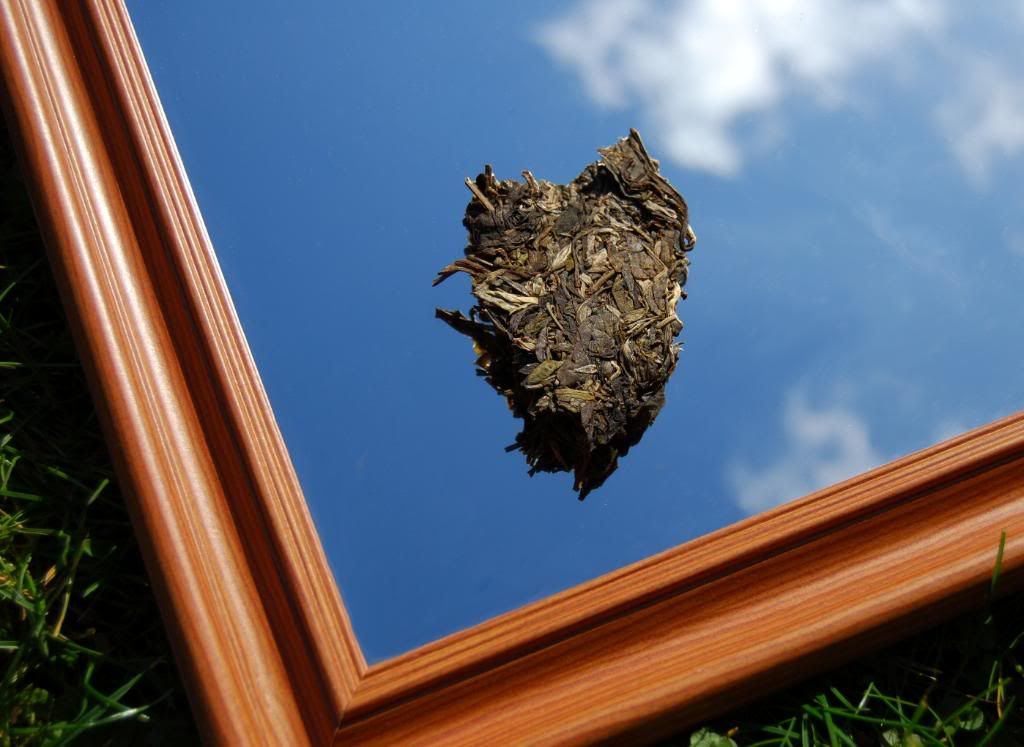
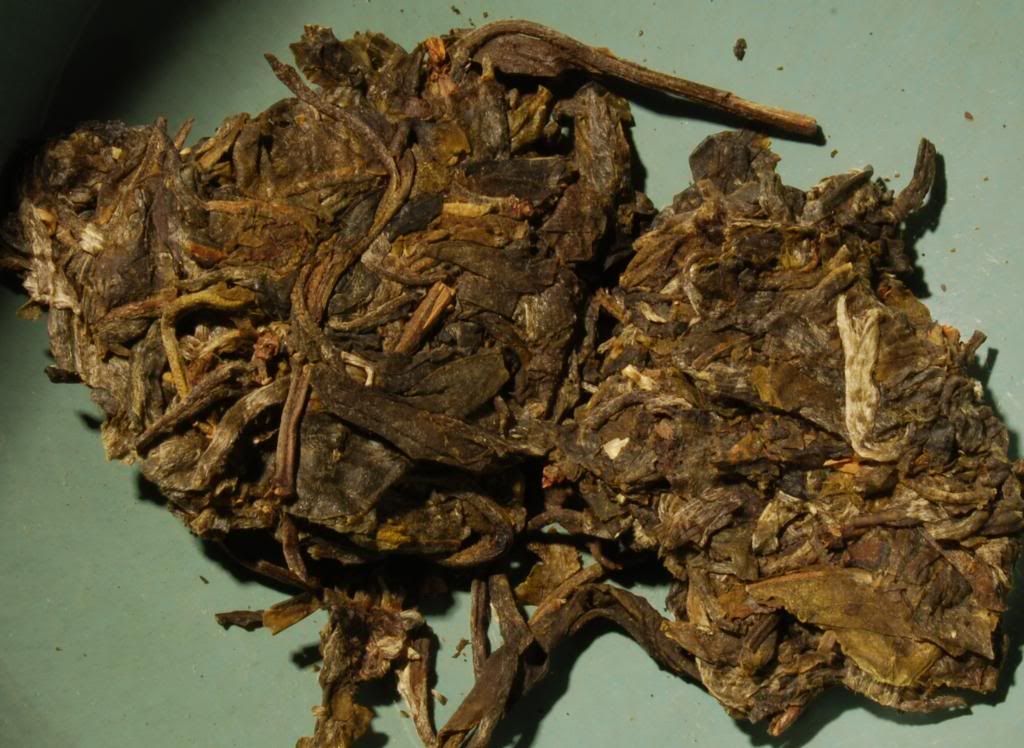
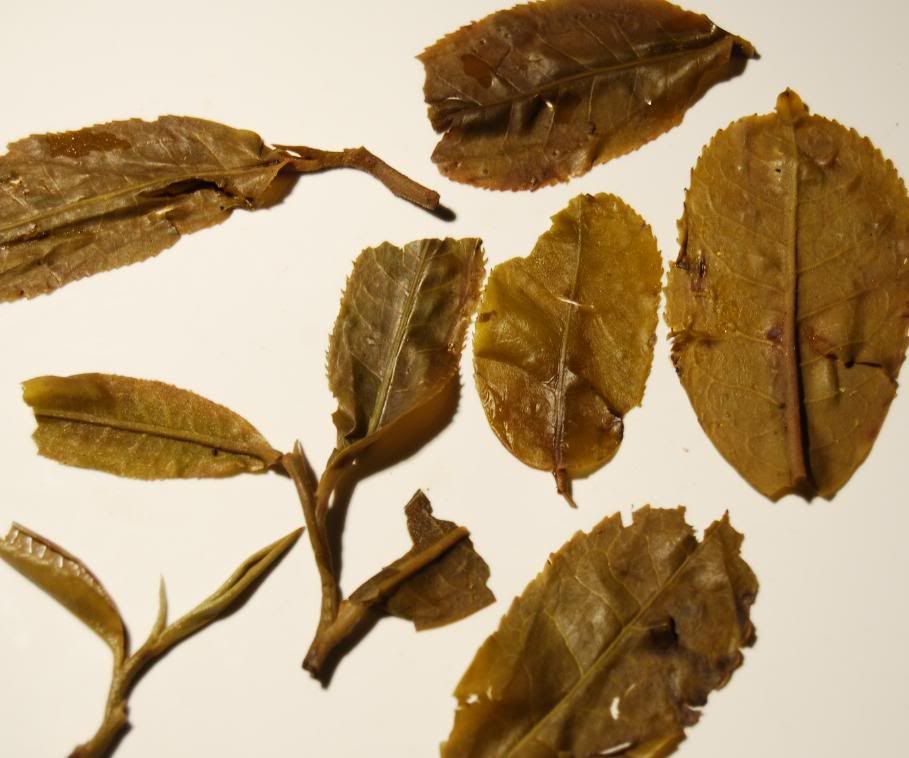
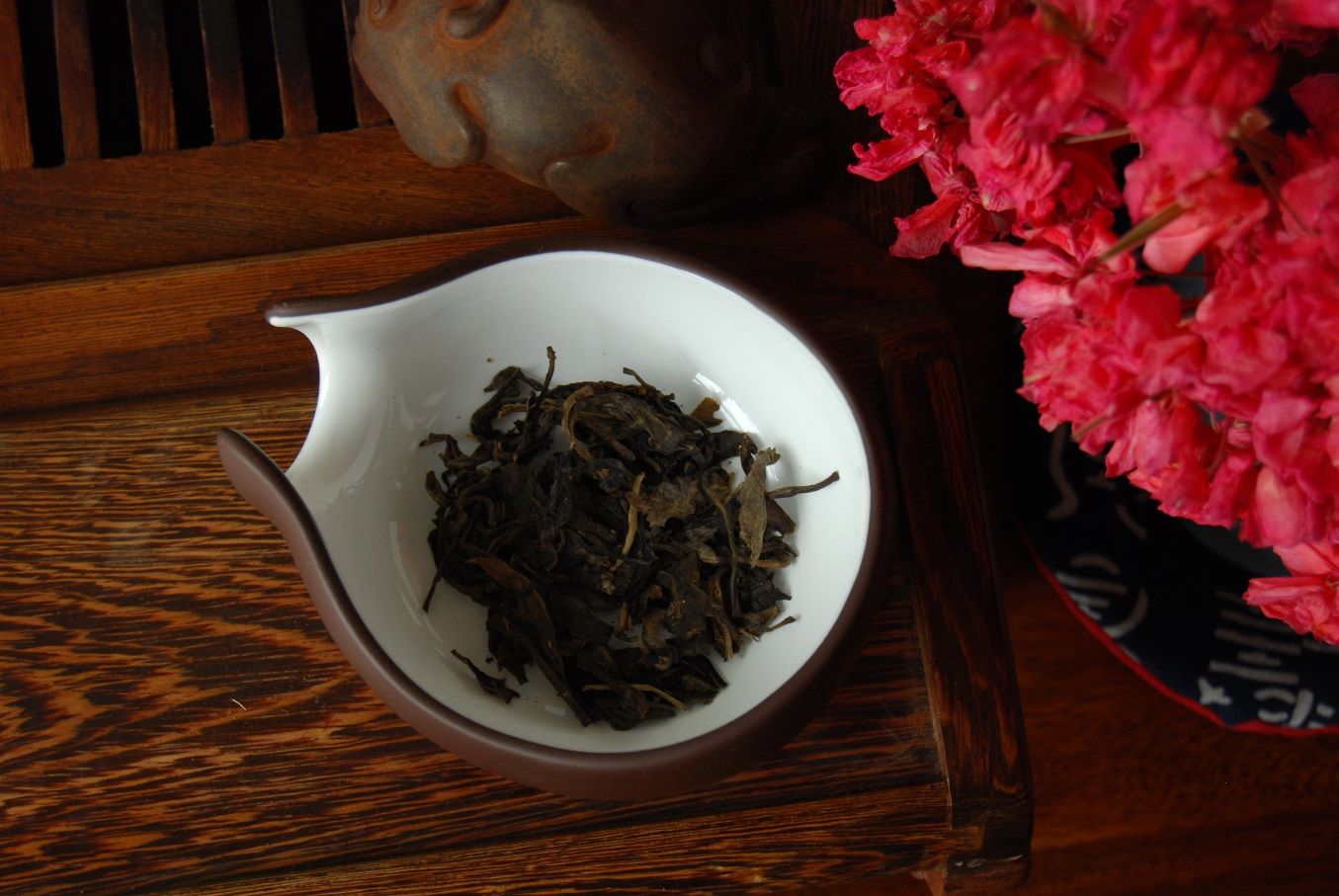
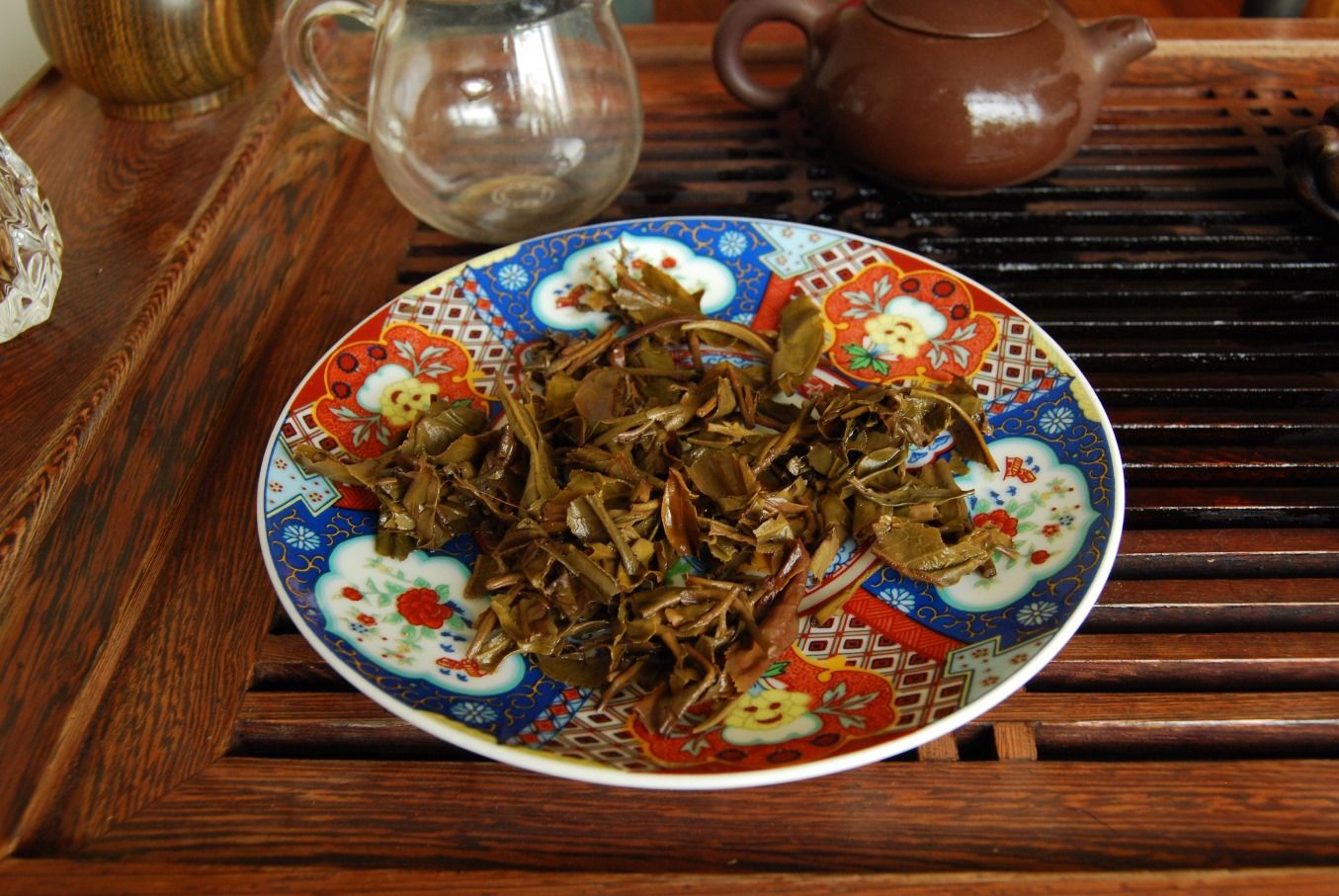
The leaves are small (above), as befits tuocha, combining fragmented baby leaves with tiny tips. This is fine by me - I don't need a pretty tea, and it's only in the last few years that producers have been concentrating on making their tea look attractive.
It's not easy to separate this tea into individual leaves, and to attempt it would surely bring untold destruction (and agonising bitterness), and so I settle with some small lumps in the pot. The aroma is exceptionally fresh and sweet - it almost jumps out of the chahe, and disperses rapidly around the room. Great stuff so far, but I'm still scared.
The unusually aromatic nature of the dry leaves continues in the wenxiangbei: the first stage of the aroma (the beidixiang, or cup-bottom-scent), during which the "high notes" of the scent are felt, is very long and candy-sweet. Eventually, these high notes evaporate to leave a similarly long second stage (the lengxiang, or cool-scent), where the "bass notes" are evident - sticky brown sugar, in this case. Does this translate into good character and endurance in the mouth?

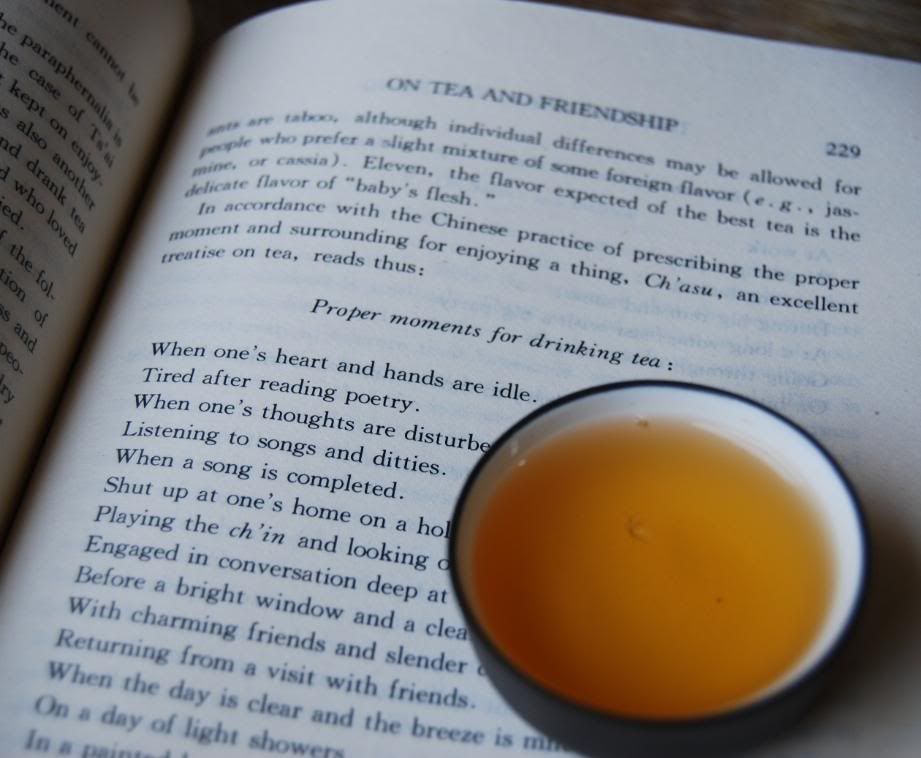
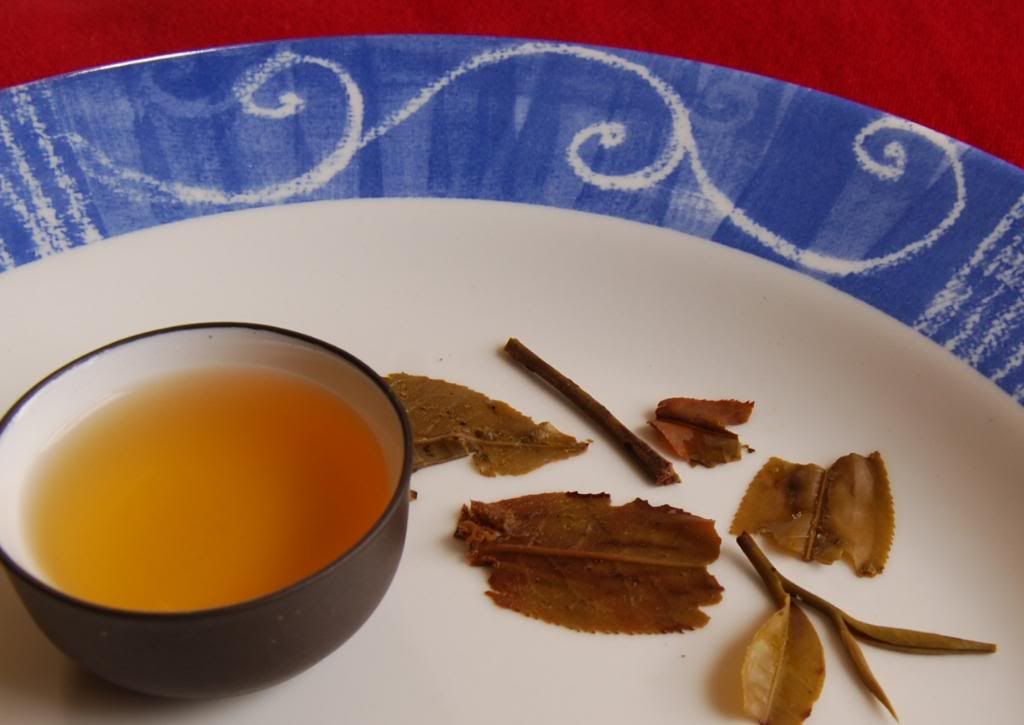
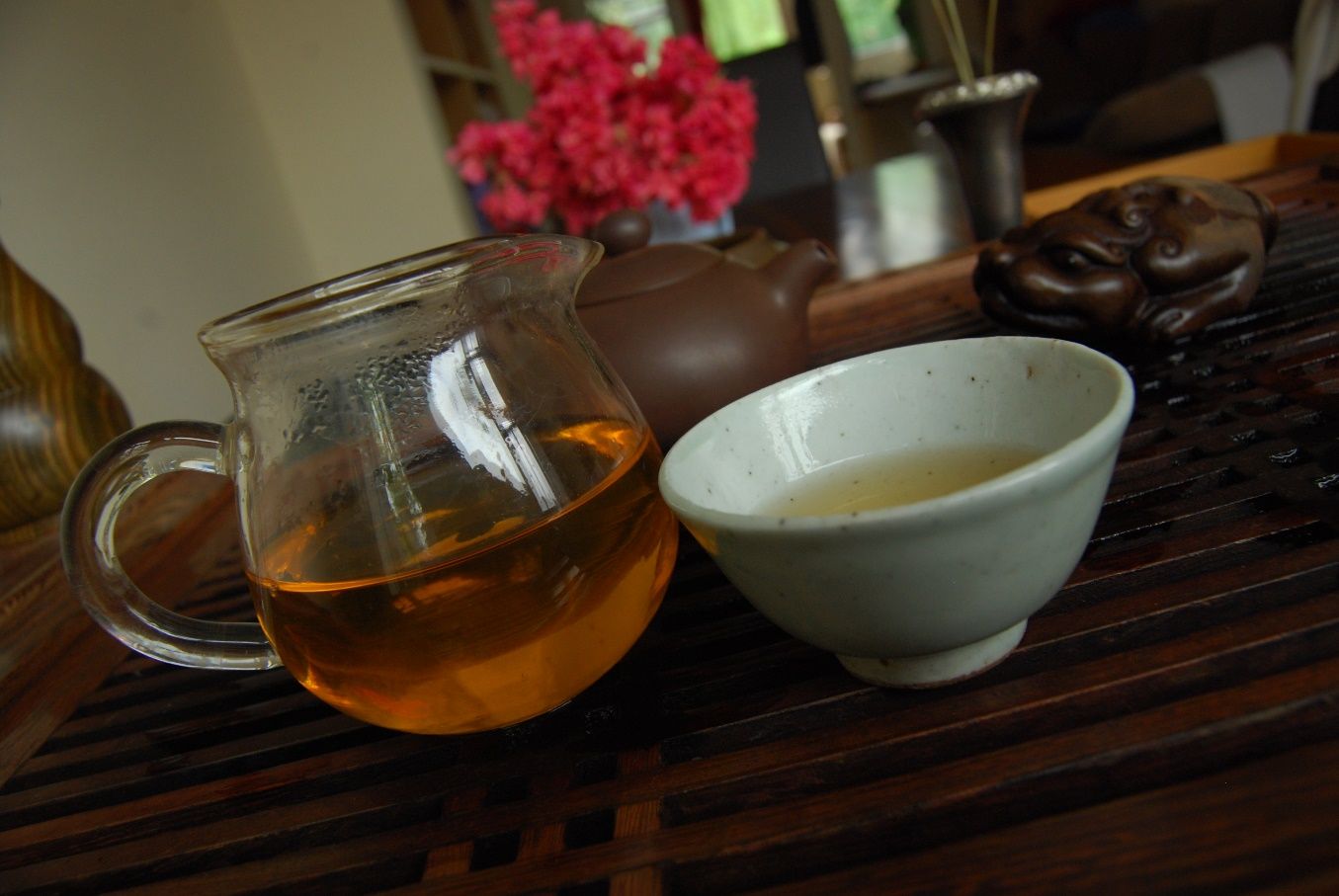
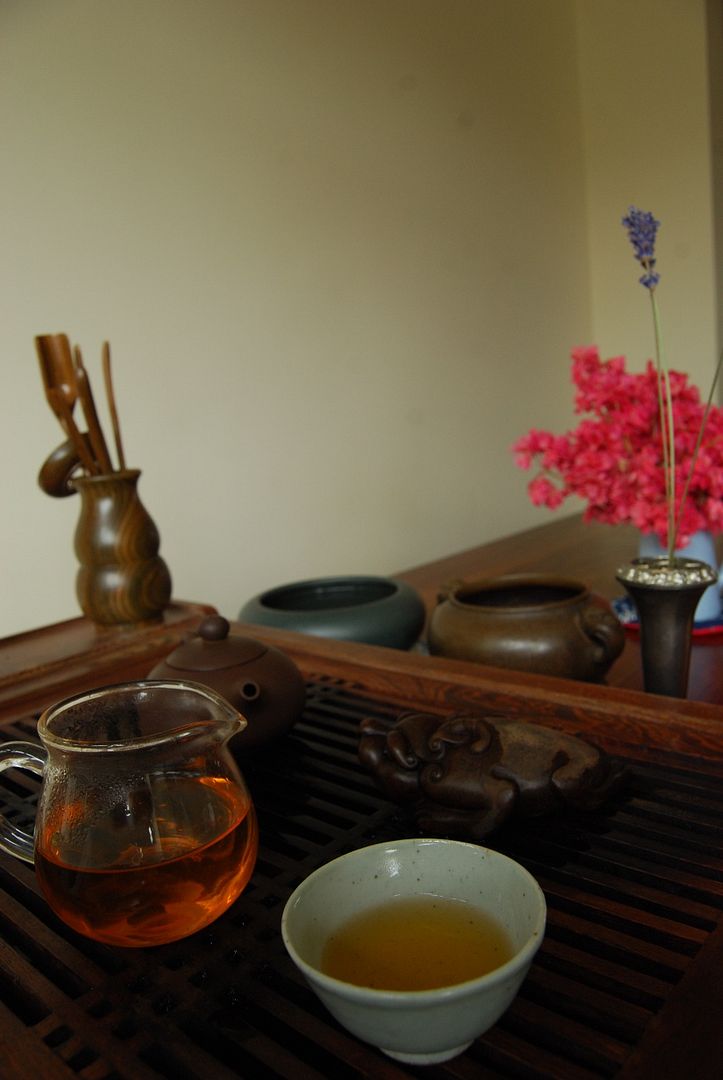
Indeed it does - there is a great deal "in the cup", even from the first infusion - I find this surprising, given that the tea has not fully separated out from its initial lumps; I was expecting a much thinner brew. Even the colour looks chunky, being a heavy yellow (above).
This is a dry, grain-like tea, with some of that lovely sourness that I associate with Bulang. Near the finish, there is a sweet smokiness akin to Germanic cheese.
As expected, there is plenty of acidity and bitterness, but (and this is the key factor for me) there is plenty of that complex grain-like flavour to accompany it.

This tea has to be respected, and brewed just right. The leaf quantity and infusion times are unforgiving: keep it short due to its potency, but not too short that it becomes thin. I make it out to the ninth infusion managing to balance the two extremes, and it pays dividends to be attentive.
This is a challenging tea, but a very well-made product. If your tastes run to the conservative in young shengpu, you might not want to spend much time on this. If, like me, you enjoy some rugged acidity alongside a heady mix of sour flavours, you might really enjoy this. I can believe that there is at least a portion of qiaomu-esque content in here.
Supremely energetic and brightening, yet without the caffeine-ache of coffee, this tea is at the same time soothing. That's the magic of pu'er.
(Pricewise: it's $40 from Royal Puer - worth a look, if you like a challenge. It's the Talisker of tuocha.)
Addendum
4 May, 2008
Revisiting this tea, it seems to have gone a little quiet. I have downgraded by "to buy" list from its original two tuo to just a single tuo.
I am reminded that the abrasive character of this tea is not to everyone's liking, as my dear wife noted that, "This tastes like unpleasantly overbrewed green tea."
Addendum
April, 2013
The price has increased from some $40 to $50 in around five or six years, which is not a great amount - and so, finally vindicated, I bought one tuocha, after so narrowly avoiding its purchase some years ago.

Liming Tea Co. is an old business, relative to the majority of pu'ercha tea factories, and yet their products do not attract a huge amount of attention. This can be an advantage, given that far inferior Dayi cakes are the current target of speculation.

Much better, indeed, is it for this tuocha to be aging quietly, away from the spotlight, and away from dramatic increases in price.

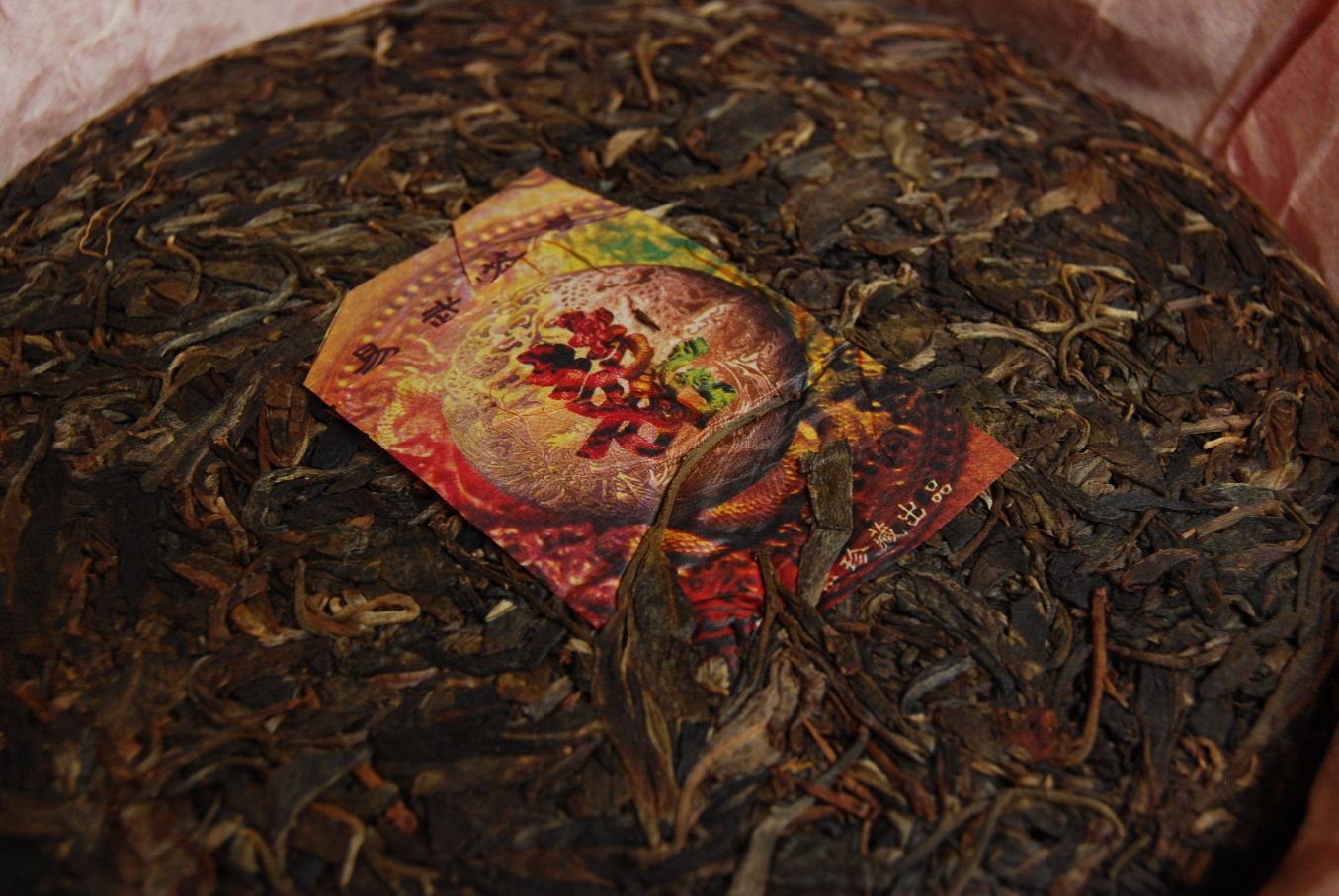
Now seven years old, even the highly-compressed tuocha leaves have felt the effect of aging. While the tight tuocha compression has slowed down the aging a little, there is a school of thought that believes tight compression, and therefore slow aging, can result in a better final product.
Whether or not this is true, we can certainly see that the converse, excessively loose compression, taken to its logical conclusion in the uncompressed maocha format, leads to eventualy dissipation of a leaf's qualities.

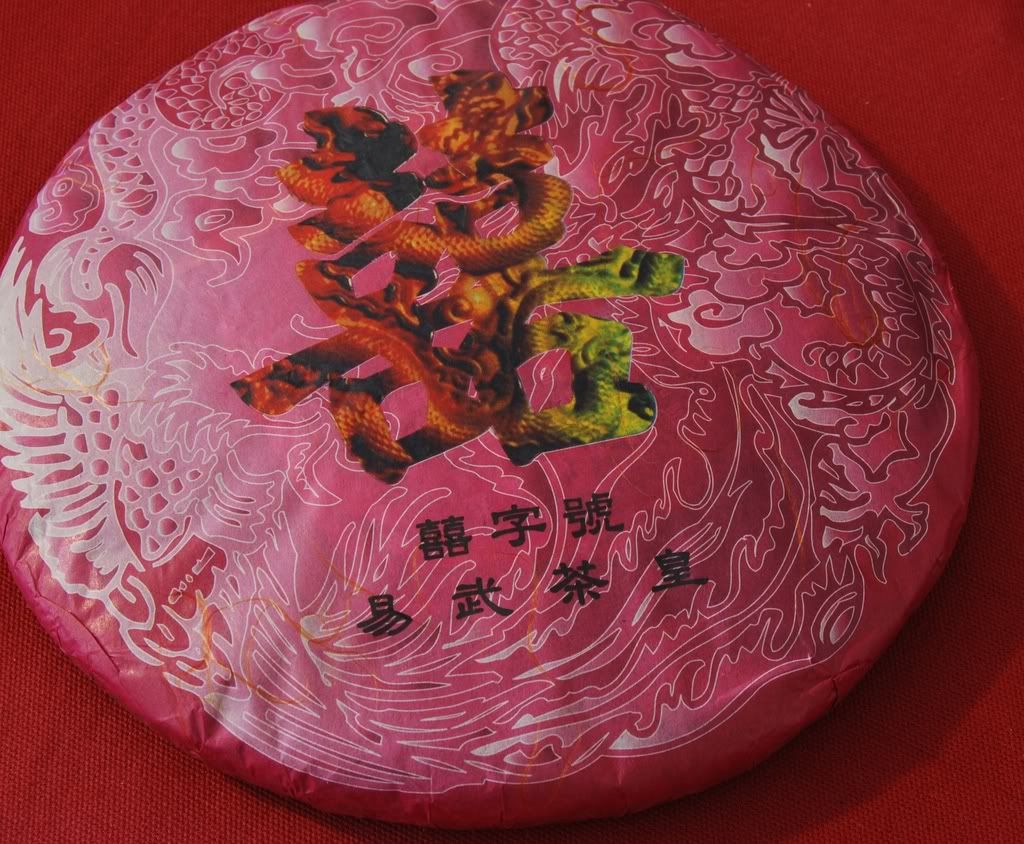
The aging effect is most obvious in the colour of the tips that have been pressed into the surface of the tuocha - they have adopted the gentle orange rustiness of age. Note that these tips do not run throughout the body of the tuocha, which is rather a silly, outdated practice presumably designed to make the tuocha look "better" than it actually is. However, I often find that excessively tippy teas do not age well, and so this lack of tips in the actual body is not a bad thing, as far as I am concerned.

The dry leaves have, oddly enough, retained the slight smokiness that I detected in 2008, and which is usually associated with the youth of a tea, soon to vanish with age. Perhaps its aging has indeed been slow...

The colour of the soup suggests that something has occurred in the intervening half-decade: it is darker orange than once it was, and the scent is strong, clean, and sweet.

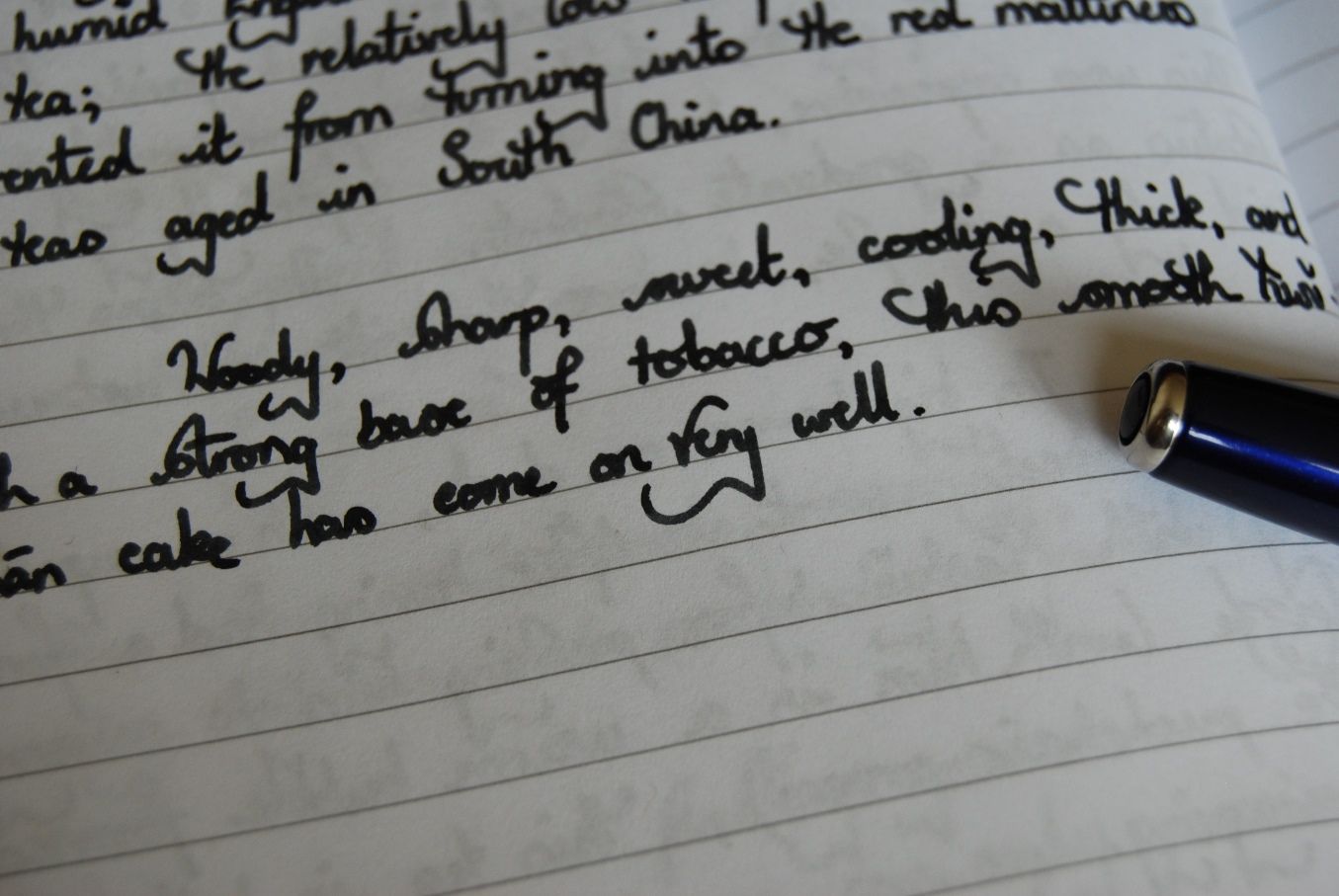
The character has changed likewise in the body of the soup, with the pure aggression of youth diminished, although not vanished. Much of the kuwei [good bitterness] has been exchanged for woody sweetness, reminding me of my own teas from this approximate age-range.

The base of molasses remains, which has been augmented by a reddened, malty character acquired from age, and which was largely absent in its youth. This is the "proper" malt, acquired from age and not introduced via cunning processing steps, and is a marker of its acquiring some age.
Overall impressions are of this sweet, molasses mixture combined with a now-dominant cooling sensation that has become much more pronounced over the years. It is sharp and potent, still, but far more drinkable, and has shown signs of genuine development.

What more can we expect from our teas? That this has acquired some age without acquiring a dramatic increase in price makes me slightly less guilty about having missed this sharp, potent little tuocha the first time around.

There is a certain catharsis in being reunited with this tea, after missing it by such a narrow margin all those years ago. I am encouraged to see that its storage (in south China) has only improved it, and that the obviously decent quality of its leaves has given it the evolution for which one would have hoped.
Straightforward, clean, strong, and very pleasant indeed - my old friend, the Liming Tuowang.