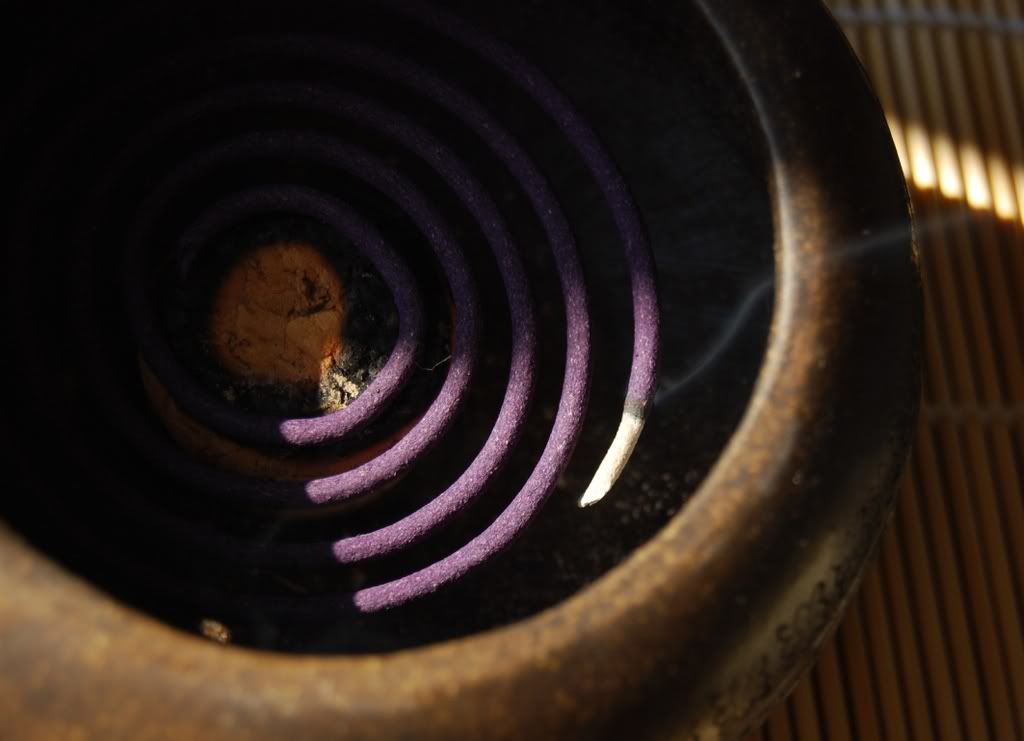
Novelty cakes! They are as consistently appalling as one might suspect: shupu wrapped in tangerine skins, rice-scented shengpu, hand-braided leaves. Maybe you've found some beautiful examples of such creations - I would love to be proven wrong - but my limited experience indicates otherwise.
(I would probably include cakes made from huangpian and pure silver-tip yinhao cakes in this, too, were I feeling less charitable.)
Such was my prior assumption when faced with this 6FTM cake, kindly provided by Keng, which has "crab's feet" [pengxie jiao]. Far from being cancrine tootsies, as one might otherwise expect from the name, these are vines that wind themselves around the trunk and branches of the pu'er tree.
How does throwing vines into one's pu'er change its character? Let's find out...

Ambassador, with your boxes of shengpu, you are really spoiling us
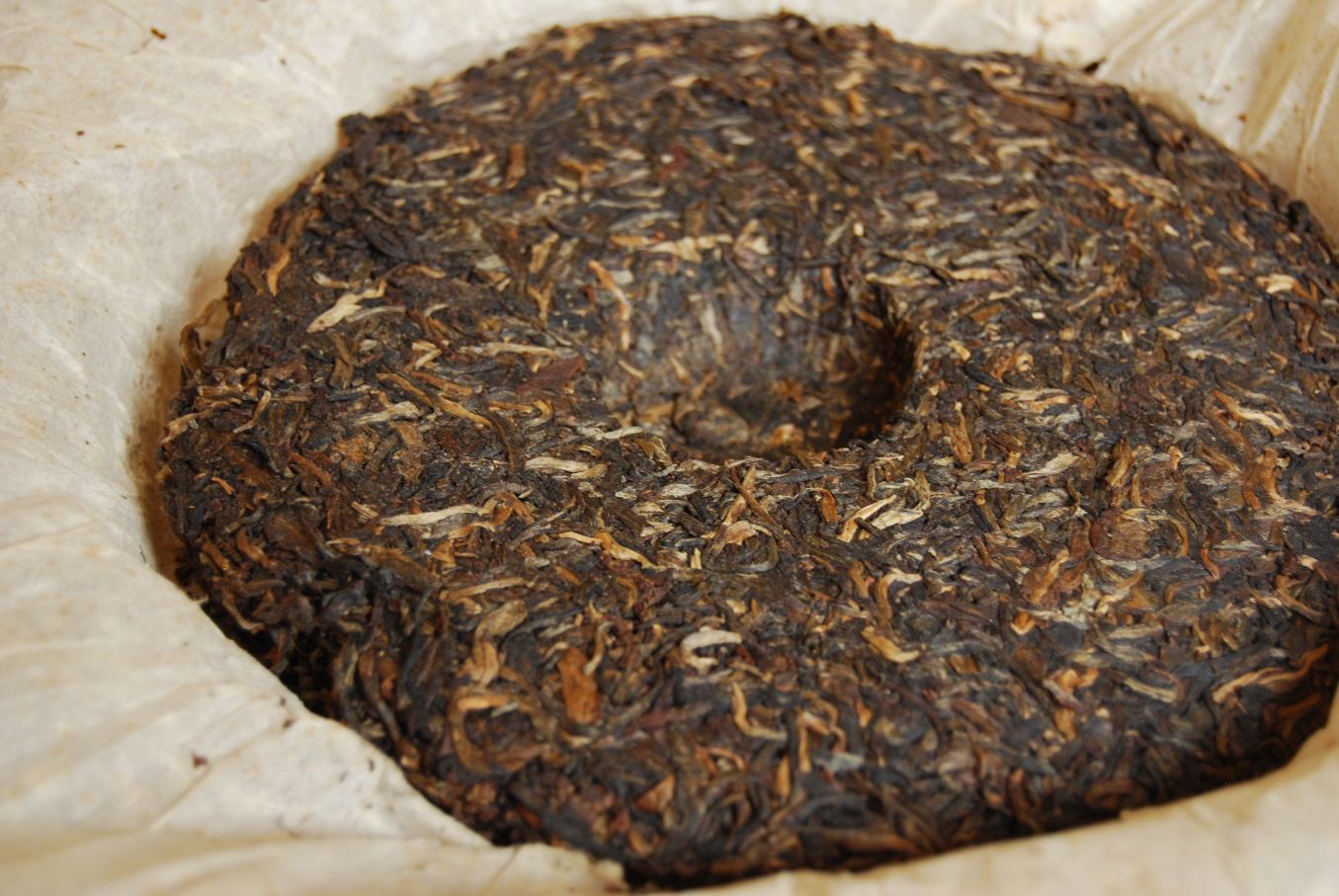
To be honest, unless the wrapper had told me, I would have thought this to be an entirely normal pu'er bing. Have a gander at the photograph below - do you see any crab's feet?

Stealthy crab's feet
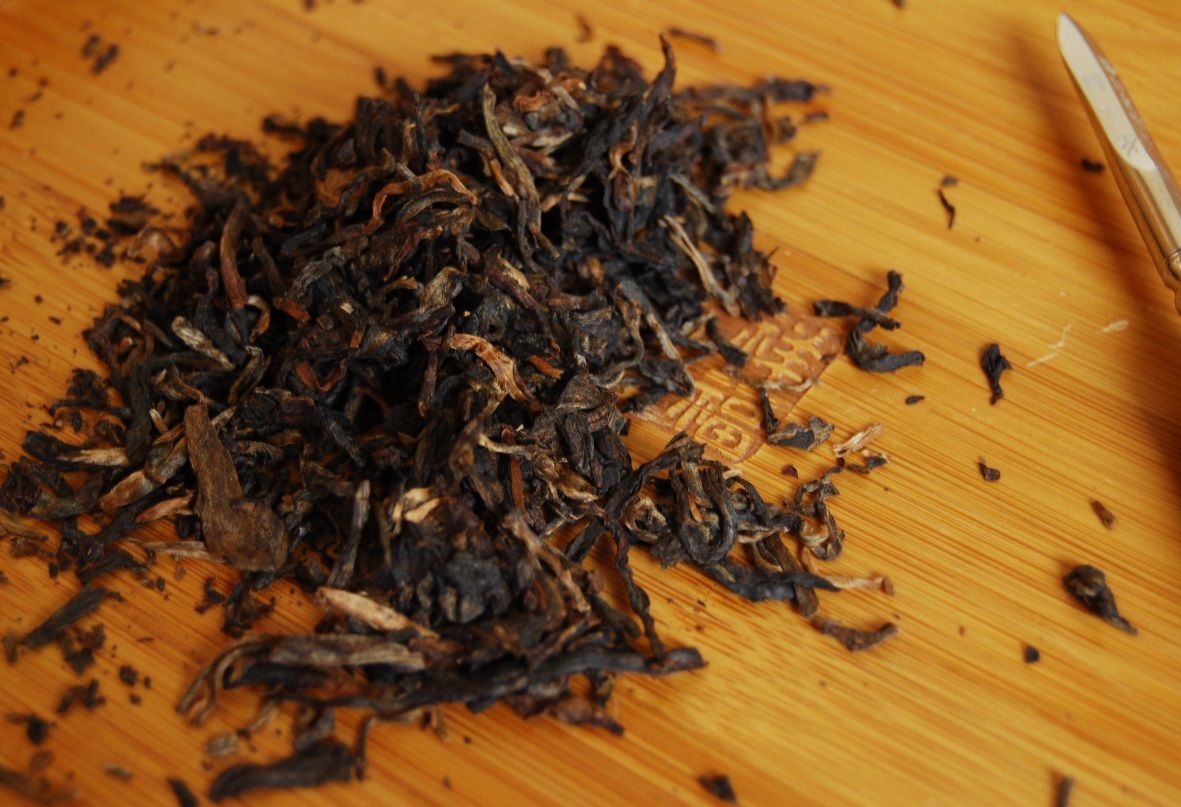
When the leaves are broken up, the additions are revealed: tip-coloured fluffy entities that blend into the other leaves. The majority of the bing is, I am glad to report, made of tea.

Good leaves, with a few other organisms thrown in for good measure
As far as the flavour goes, this is a very pleasant tea. It is sharp, woody, and powerful, not unlike the other older 6FTM cakes that I have described in previous recent articles. It is strong, vibrant, and properly raw. Maybe the crab's feet have contributed a little of the tar-like character that I associate with huangpian, but it's light - and rather complementary to the tea.

I am very pleased with these old 6FTM cakes. Happily, this crab's feet cake tastes more like good tea than a daft novelty production. It soldiers on and on (and on), and remains charming. Whoever has stored these cakes has done a very decent job. If only we could all be so fortunate with our storage...
I bought a trio of these cakes for £28 / bing from Keng, mighty teachum of Singapore. I'm rather glad that I did so.
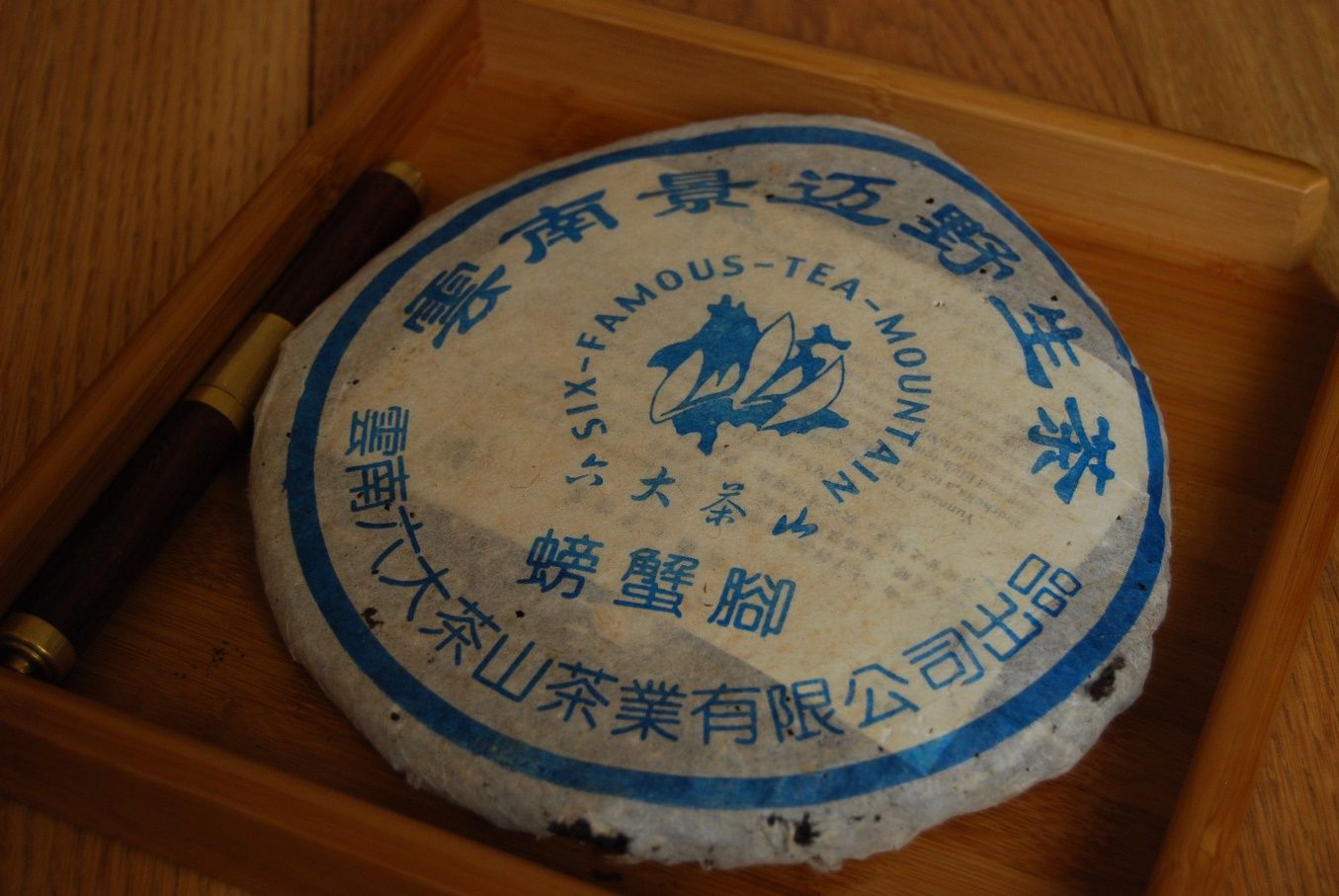
The cake is as aromatic as ever - the deeply humid Singaporean scent has aired a little after three years in England, and the colour is as before: dark, slightly orange.
The contribution of the pangxiejiao [crab feet] is shown below - they are a minority component in the blend. It turns out that this is a good thing, because there is a noticeably bitter contribution from them, which I am surprised that I missed during my session in 2010. It is a good addition - a little extra kuwei [good bitterness] in the finish, that rather reminds me of kudingcha (a tisane, very bitter as its name suggests).
Surprisingly, there is even a hint of Jingmaishan "lanxiang" [orchid scent] for which the region is known. The leaves are doing very well: they have the sharp woodiness of good, Singaporean storage.
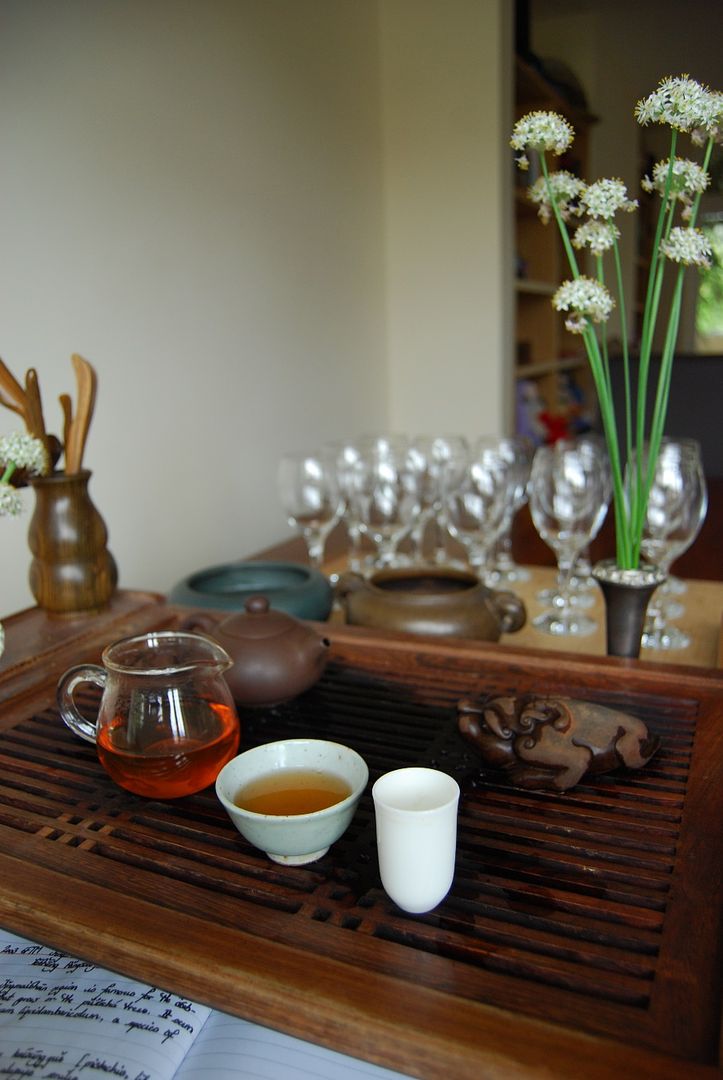
As before, the straightforward but potent charms of 6FTM are revealed in the sheer endurance of this cake, which soldiers on for many infusions while I write my journal. Pictured above, a visual clue that we are preparing for Xiaohu's birthday party - he is three already! That makes the 6FTM cake over triple his age. Both are very sweet and most enjoyable company...