Showing posts with label 2010. Show all posts

04 July, 2016

Strange Days

Warriors, poets, and warrior-poets: I bid you welcome.  I trust that all is well, with you and yours.  These are strange days indeed, but first, let's fire up the trusty ol' tetsubin before we get down to business.


I'm up before the dawn chorus, this morning, which gives me the opportunity and the means: we have a 2010 Mansai cake from Essence of Tea (nee Nadacha) on the table.  The sweet thrills of this cake rather take me by surprise; I wasn't expecting to be thrilled, at 4 a.m., and yet thrilled I appear to be.  Apricots, dried fruits, humidity, sweetness - I am enthused.

It is my ambition, in the coming months, to write up some of the (copious) notes that have accumulated, as accretion is wont to do, in my journals.  I beg your patience, with respect to their arrival, and your tolerance, with respect to their quality; there is a certain rustiness in my ability to write, but rust can be worn away with sufficient elbow-grease.  Let us grease together.

To say that these days are "strange" is not quite to do justice to the batsh*t craziness that seems to typify life at the moment.

We have come a long way together, you and I, on our respective warrior-poet journeys, have we not?  When the Half-Dipper was started, I was a humble graduate student; I was subsequently a humble post-doc; then, father to two mighty warriors (one of whom has just finished his first year at school!).  I remain humble.  As of ten days ago, I am "tenured", which is to say "sufficiently knackered so as to be put out to pasture".  My colleagues refer to me as "professor", which is both extremely unnerving and simultaneously alienating.  Even my old boss uses the title, although, it must be said, not without irony.

A few days later, my countrymen voted themselves out of the European Union.  Much ink has already been committed to this subject, and I will not bore you with my own opinion, suffice to say that literally every single person in my life (personal, professional, adversorial) is of the same mind on this subject, which appears to be on the other side of the argument from the majority of people in the country.

Imagine the Republican Party and the Democratic Party suddenly having no leaders, nor firm idea of what should happen next, and you have some insight into the substance of these recent times.

Balliol lunch
after the referendum -
sauerkraut noodles

Friends, let us shoulder our lances and our quills. It is time to drink some tea - surely, this is the only cogent response to these Strange Days.

26 May, 2015

YOU WIN OR YOU DIE

I have long searched for an accurate analogy for the life of an "early career academic" (for which one should of course read: "someone too ignorant to get a real job").  The nature of this life is well-documented - articles on the difficulties faces by the new generation attempting to secure a permanent academic position crop up quite frequently in the media.  It's a tough prospect, and one that a number of we tea-drinkers share.

I used to think that the situation for new academics was like unto a Ponzi scheme.  There are a very (very) large number of undergraduate students; our lives do not really touch theirs very much, except for whichever quantity of teaching one has to undertake (and which we are actively encouraged to minimise in favour of research) and for the occasional "final-year research project".

There is a smaller, but still quite large, number of graduate students.  These are those brave souls who have not quite had enough of university life, and think that they can tolerate a bit more edumacation.  These days, many grad students have a career outside university in mind - perhaps the majority, given the state of the media.

Next up the pyramid of what I once considered to be the Ponzi scheme, we have the post-doc.  This is a much smaller population than that of graduate students, and comprises people who are usually fairly serious about staying in their discipline (either in academia or industry).  The post-doc lives a vicarious, often nomadic, lifestyle, moving between fixed-term research contracts.  In the sciences, this usually means working in someone's lab.  It is a stage that I know well!

Next up the pyramid is the permanent academic staff, or what seem to be called "PIs" (principal investigators) by recent standards.  In the UK, this is more-or-less the top of the pyramid, with some internal gradation concerning shades of seniority.  Once you make it into this group, you generally stay there until retirement (financial temptations of the private sector notwithstanding).

(In the US, I understand that there is something analogous, but which involves the tenure process - there might be a substantial split between the number of assistant professors gaming for a smaller number of permanent spots, which would put the "safety" point even further up the pyramid.)


This is the 2002 Smoky LEE from Pu-erh.sk.  I love the capitalisation on LEE, which causes me to bellow the final word to myself, in my mind.


The Ponzi scheme is often used to describe this situation: there is no real value in the system, and it is propped up by one person making good on the situation of a larger number of other people.  Those people, in turn, can make good by having their own number of dupes.  And so it continues.

I bought this for some time, until I concluded that a Ponzi scheme only works if everyone has the opportunity to obtain a set of duped inferiors.  In a real Ponzi scheme, you are selling a nonexistent commodity to a set of people, which they in turn are each selling to others.  However, in the academic pyramid, this latter effect is not possible.  It cannot be considered a Ponzi scheme, because of this lack of flexibility to spread the risk ever wider.

For some time, then, I considered early-career academia to be like unto indentured servitude.


At 53 Eurobucks, this is a decent-value cake.  It has been stored in Guangzhou, and has maocha from Jiangcheng in Simao.  The rustic stems and (of course) bits of Chinese hair really emphasise the lo-fi nature of the cake.


It felt as if one would strive (and strive and strive) and, eventually, one might work up sufficient good karma to be made a freeman, which is to say be promoted to the top of the pyramid.  Put in sufficient effort, and freedom was attainable.

However, this analogy is equally as ill-fitting as that of the Ponzi scheme.  I have seen in those who have gone before me, many times, that there is striving aplenty only never to result in attainment of the ultimate reward.  There is no guarantee that hard work (and perhaps even genius, in some of their cases) would translate into being granted their (academic) freedom as their own independent, permanent researcher.

So, the indentured servitude doesn't cut it, either.

What, then, is the life of the early-career academic like?


It most obvious first impression is (quelle surprise) sweet smoke.  Its purity is remarkable, in that it has no cloudiness at all.  Thick and satisfying, the smokiness diminishes with each infusion, as does the memory of all of that Chinese hair in the maocha.  Perhaps the smokiness is an acquired taste but, as a lover of lapsang souchong, it is a taste that I have acquired.


The title of this article gives you my conclusion: it is none other than the Game of Thrones.

When you play the Game of Thrones, you win, or you die.

And there we have it.  After a certain point, everyone in the game is at least competent.  Incompetence tends to get weeded out earlier on in the process.  By the time you hit the main action of the pre-tenure game, everyone has proven themselves in battle.  Everyone is pretty good at what they do.  Everyone has a campaign or two under their belts.  Everyone has their own code by which they live, their own manner of operation, their own networks of informants and bannermen.

So what is it that makes the difference?  It's a good question.  There is no winning formula, and every early-career path is different.  Some mixture of ability, ruthlessness, patronage, knowing the rules of the game, and sheer willpower is often present.  However, Game of Thrones also teaches us that:

Gold wins wars, not soldiers.

It is a truism that cashmoney really makes the difference in the early stages (and perhaps all stages) of academia.  By this, I mean the sheer quantity of hardcore currency that one's research activity has attracted to date.


This is "Like 7542", and has just been released for 44 Merkeldollars at the Pu-erh.sk web-site.  It has a similar recipe to Menghai's mighty classic, and was stored in Yixing town.


This is not quite so bizarre as it sounds, as depressing at it might be.  Academic work is notoriously hard to "grade" outside one's own narrow field.  What is good research?  It is very difficult even for one's own university to answer that question, let alone ask people from outside.  In the absence of a set of realistic answers to that question, there are a number of proxy quantities: impact factors for journals, the number of citations one's work has attracted, etc.  However, even these vary tremendously from subsubdiscipline to subsubdiscipline.  It really is extremely difficult.  If everyone is at least good, how do you tell who is worth tenure, given that notorious variability in metrics between the tiniest differences in research fields?

Hence, shades of green is one means of determining some sort of proxy.  If a researcher is good, they have probably done good work, and that has probably been recognised by that researcher's peers, and they will have returned good reviews of, for example, academic grant proposals.  I note with some amusement / dissatisfaction that success with big grants tends to be followed by recognition.

Whether or not this is healthy is a different question; whether or not it promotes low-risk research that plays well to reviewers' expectations likewise.  It's not right, but is it OK?

The comic irony of this situation is that in many academic institutions, my own being one of them, one cannot write grant applications until one has achieved a permanent position - and attaining a permanent position is very difficult (arguably impossible) unless one has achieved success in research, by which accumulation of successful research grants is the oft-used proxy.

It is the perfect catch-22.


There is a (very) faint scent of sweetness about the small, dark leaves which certainly look the part of 7542.


Just like the real Game of Thrones, the truth of the situation is that it isn't all this bad.  After all, "if golds wins wars, not soldiers" then how come Robert Baratheon (a soldier) is king, whereas one of the Lannisters (a wealthy noble house) is not?

There are other ways to play the Game, and these vary so substantially that they provide the lack of certainty that exists in early academia.  Some of these actually include excellence in research, which is heartening.


Interestingly, the thick Chinese hair in this tea (there is always thick Chinese hair) is not black - rather, it is entirely white.  I imagine an ancient sage processing this cake, between cigarette breaks.  The flavour (of the tea, not the hair) is warm, and perhaps a touch malted.  It has welcome strength at the back of the throat, and I am pleased to feel that it stimulates the tongue.  This cake feels quite lively, and is noticeably mouth-watering.  Its body is reasonably solid; it tastes like a decent little-factory cake made from quite strong leaves.  There are no points of immensely substantive interest, but the whole is pleasant.


Now I'm not saying that university turns everyone into Machiavelli, but (!) it is instructive to observe the changes that take place between your average human on entering the Game (let's say at graduate student level, to read for a doctoral degree) and leaving.

New grad students are awesome, typically.  When they arrive, they can be rough in manners and tread on everyone's toes with big voices and clumsy natures.  Usually within one or two years, this has changed dramatically.  I see it every year: they become finessed, and it is a change that you can almost see occurring before your very eyes.

The game is playing them.


NOT FOR SALE JUST FOR FUN.  I knew a girl like that once.  This is a 2010 7542, and it came to get down.


How does it end?  It ends the same way it always ends...


The little leaves are surprisingly dark, but then I realise that this 2010 cake was made half a decade ago.  There is the reassuringly fishy scent of bone fide Dayi.  It takes a few infusions to open, but the result is sweet density on top of all that opening fishiness.  The character in the mouth is strong, and it endures particularly well in the throat.  I am as impressed as I am captivated.  It has a sharp, rosewood edge.  It wakes me up, and comforts me.


You win, or you die.


is that pink paint
dripping from the parked car
old cherry blossoms

27 June, 2014

Picture the Scene

Picture the scene: it's 3 a.m., your youngest son has finally gone to sleep, but you just cannot drop off.  You head downstairs to the tea-table, with a strong need for a solid, risk-free session.  You reach for your old drinking buddy, Douji.  What could possibly go wrong?


Technically, nothing did go wrong.  I got my required portion of gamma-glutamylethylamide.  It came in a warm solution.  That much was fine.


This is, bear in mind, the very basic blend from Big Douj.  This "blue" version of their Dadou recipe (hence the 2010 Douji "Landadou") used to be priced quite well, presumably in direct competition with the stable blends from Mighty Menghai (where the latter sold for something like $12 at the time).  The Dadou and Shengdou blends were always a little more than Dayi, but not too far removed.  For that, you landed some slightly better quality taidicha [plantation tea], in the Douji house style.  I happen to like both the Douji and Dayi house styles and, after consuming so many gazillions of gallons of each, I feel fairly well-acquainted with them.

The price is the biggest obstacle, now.  This Landadou is selling for the paroxysmal sum of nigh on 60 (sixty) American dollaren.  That really is simply too much - far more than even Dayi has inflated in the last, what, four years of this cake's age?


So, you gets your taidicha blend, you gets your Douji house style of rich base notes, you gets your basic endurance, and one or more huigans. But at sixty units of American currency? If anyone has paid such a price for Douji, I want to have words - private, quiet words - with you. I want to explore what kind of mind you have. I have to know how such a person can exist.

On the plus side, the remainder of the sample lasted ages in my lab, delivering basic sweetness for hours.

12 May, 2014

Cracking Open a Tong


A tong: let's open it.

(With thanks to NorberT and Tofu Miso for the suggestion.)

28 April, 2014

Discovering Ancient Samples

I plunged into a hitherto-forgotten zone within my tearegions, to discover a sample that looks as if (from the handwriting) that it may have been generously provided by either by South-American teachum, ME, or my eastern central Eurochum, TA.  Or maybe JT.  Or or or.


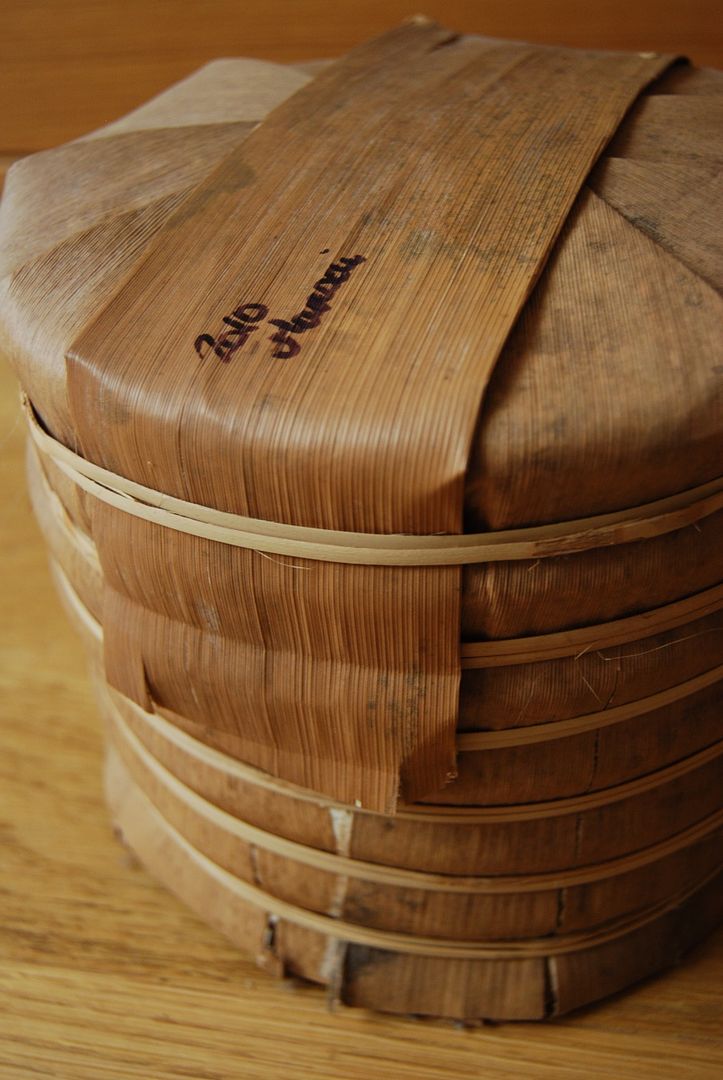
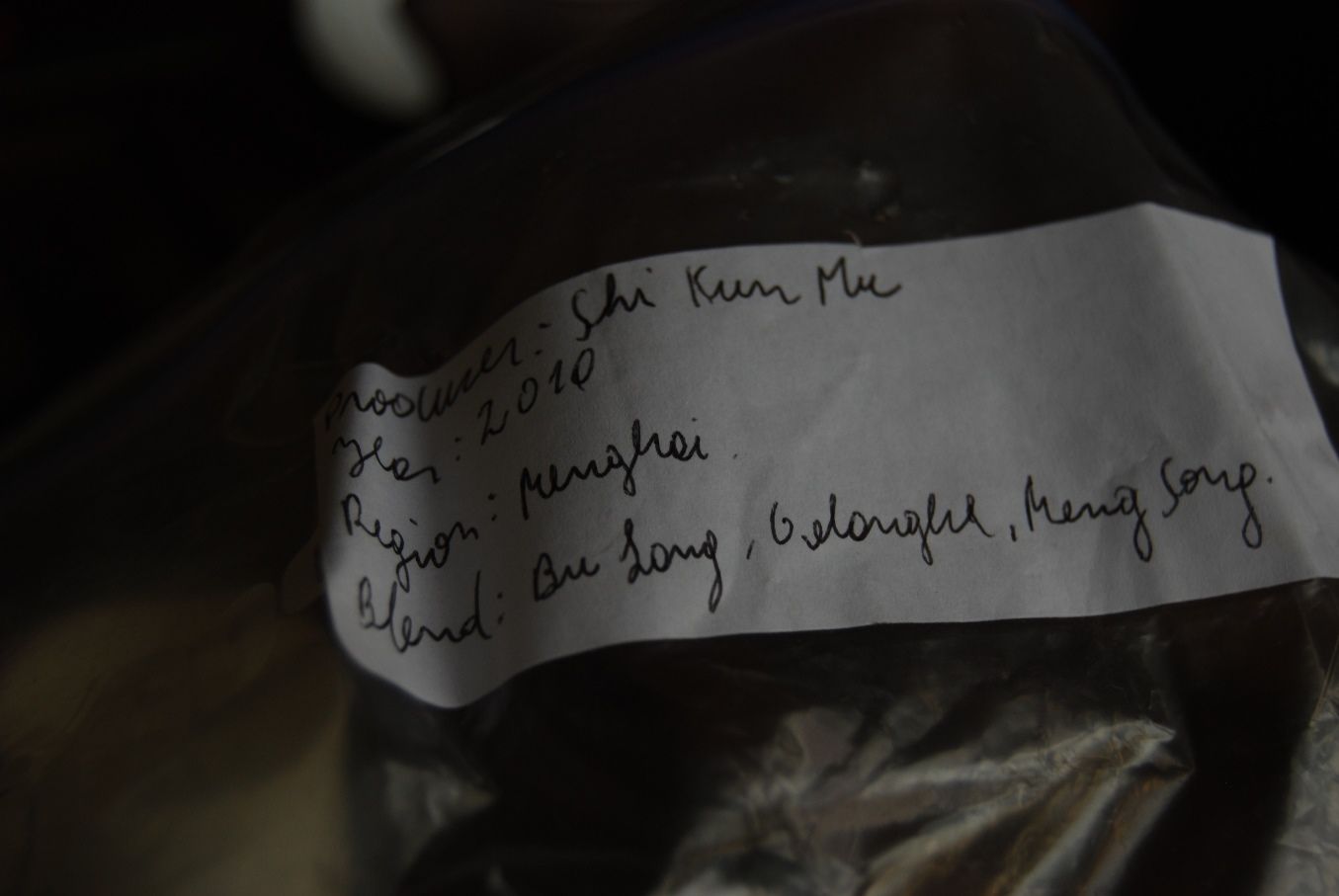
It is not at all easy to find information concerning the "2010 Shikunmu".  Its name looks vaguely Japanese, and some judicious Googling suggests that it was A Thing several years ago, despite now being completely unavailable everywhere.  Gentle Reader, if you happen to be sitting on a stash of facts concerning Shikunmu, I would welcome any data that you might be able to throw our way.  

"I cannot build a house without bricks - I need data!"


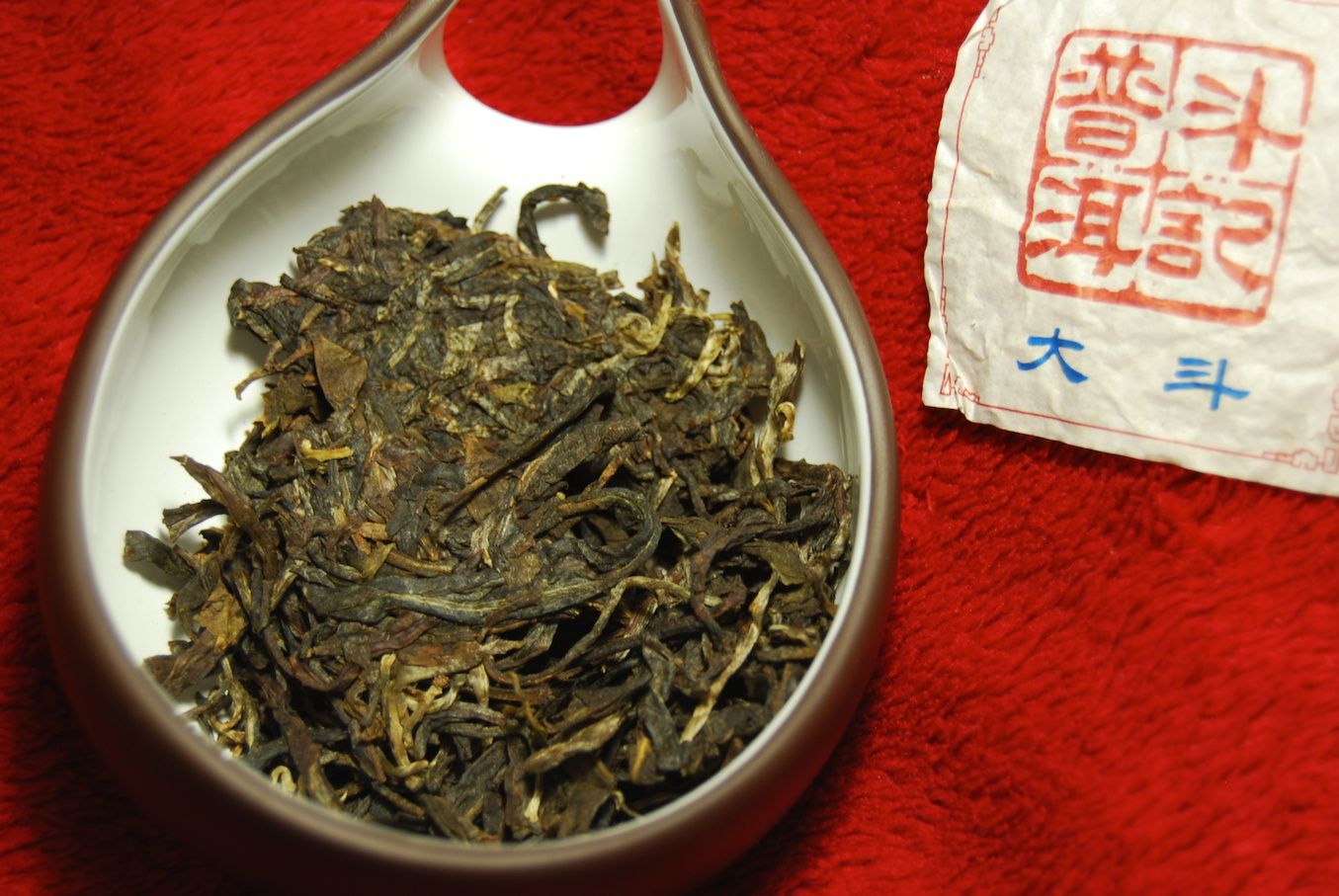
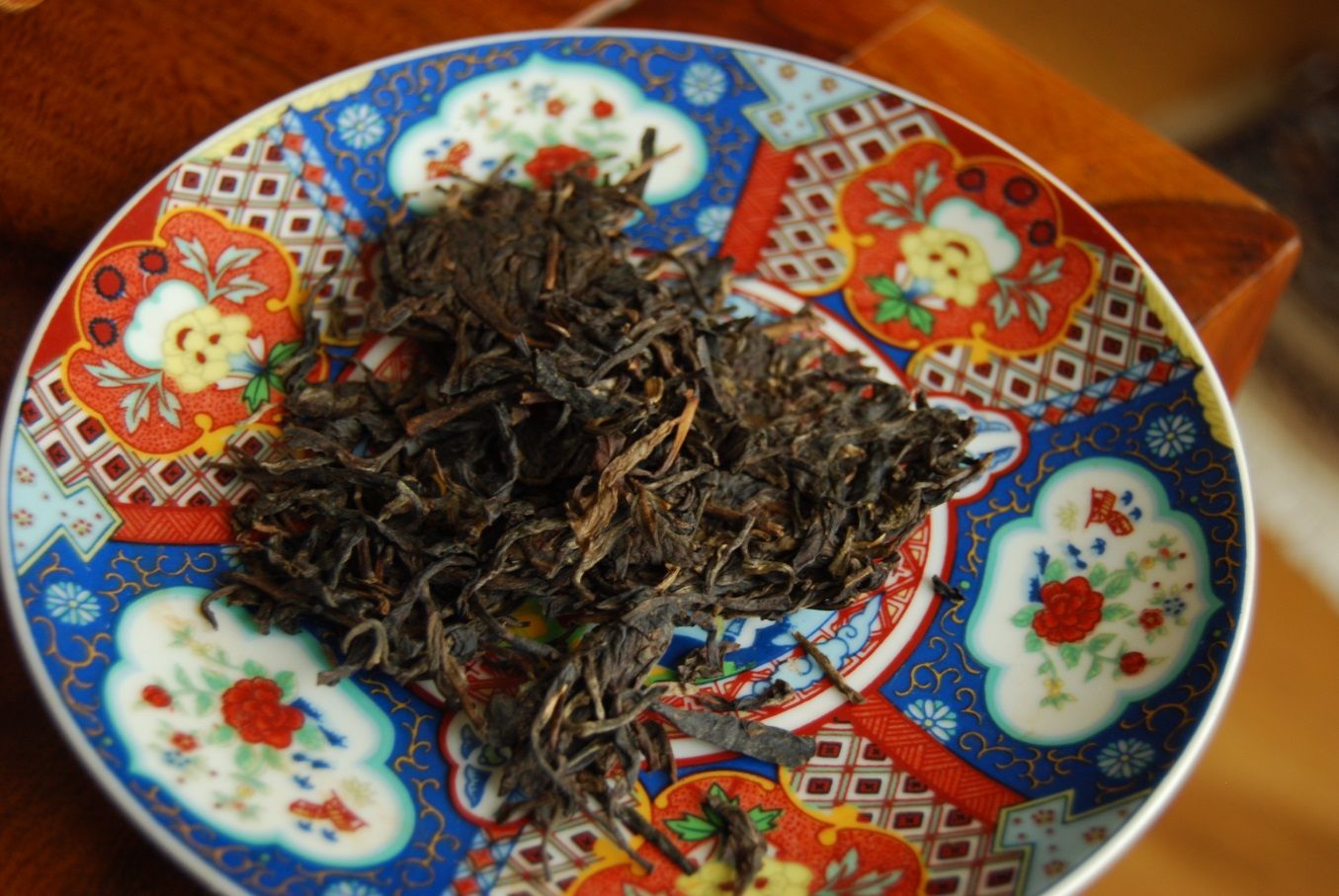
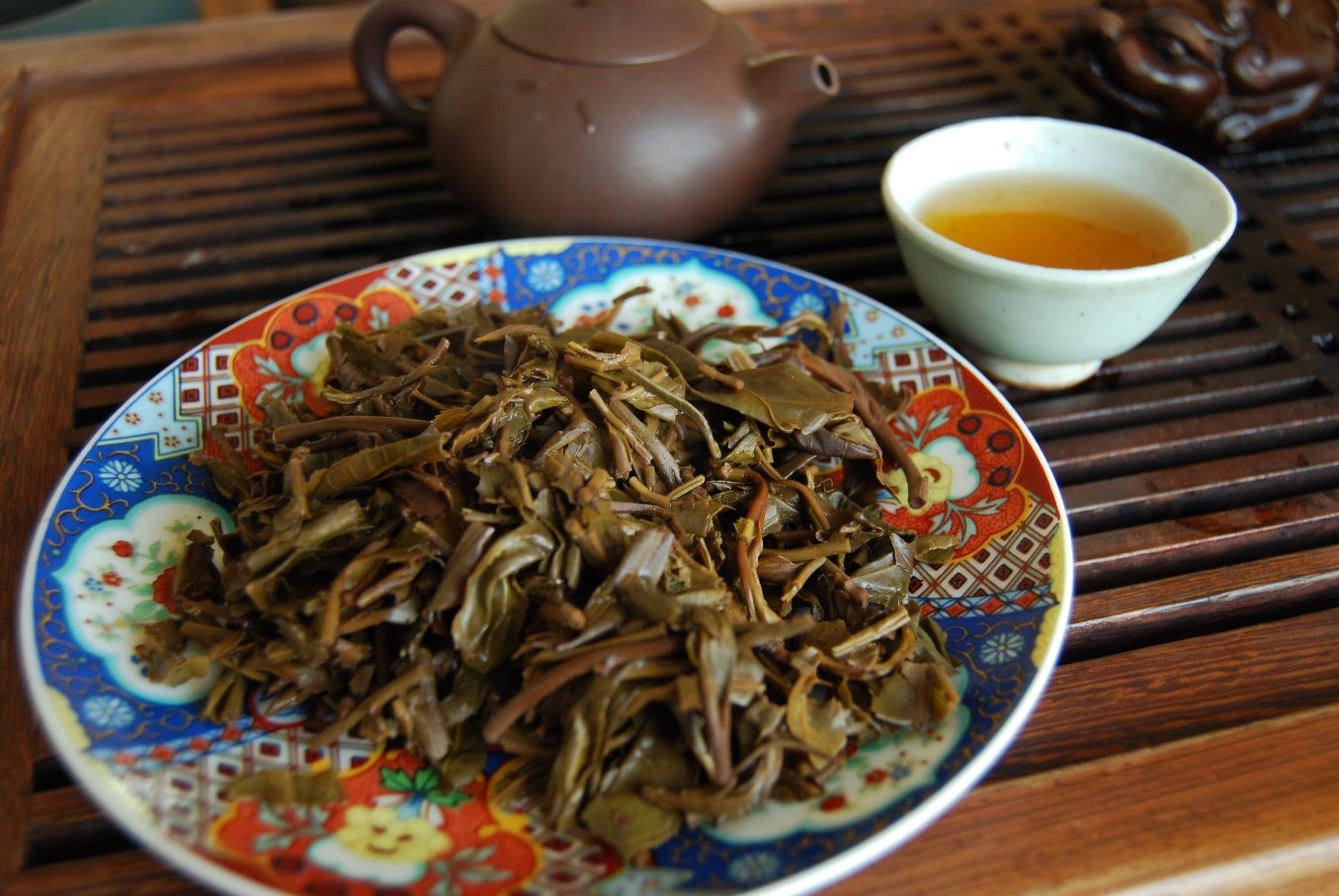
The original note on the sample-bag indicates that this tea is made from Bulangshan (boom), Gelanghe (twang), and Mengsongshan (thump).  How they all work together as a melange we have yet to determine.  Certainly, the twiddly maocha looks rather pleasing to the eye, as pictured above.


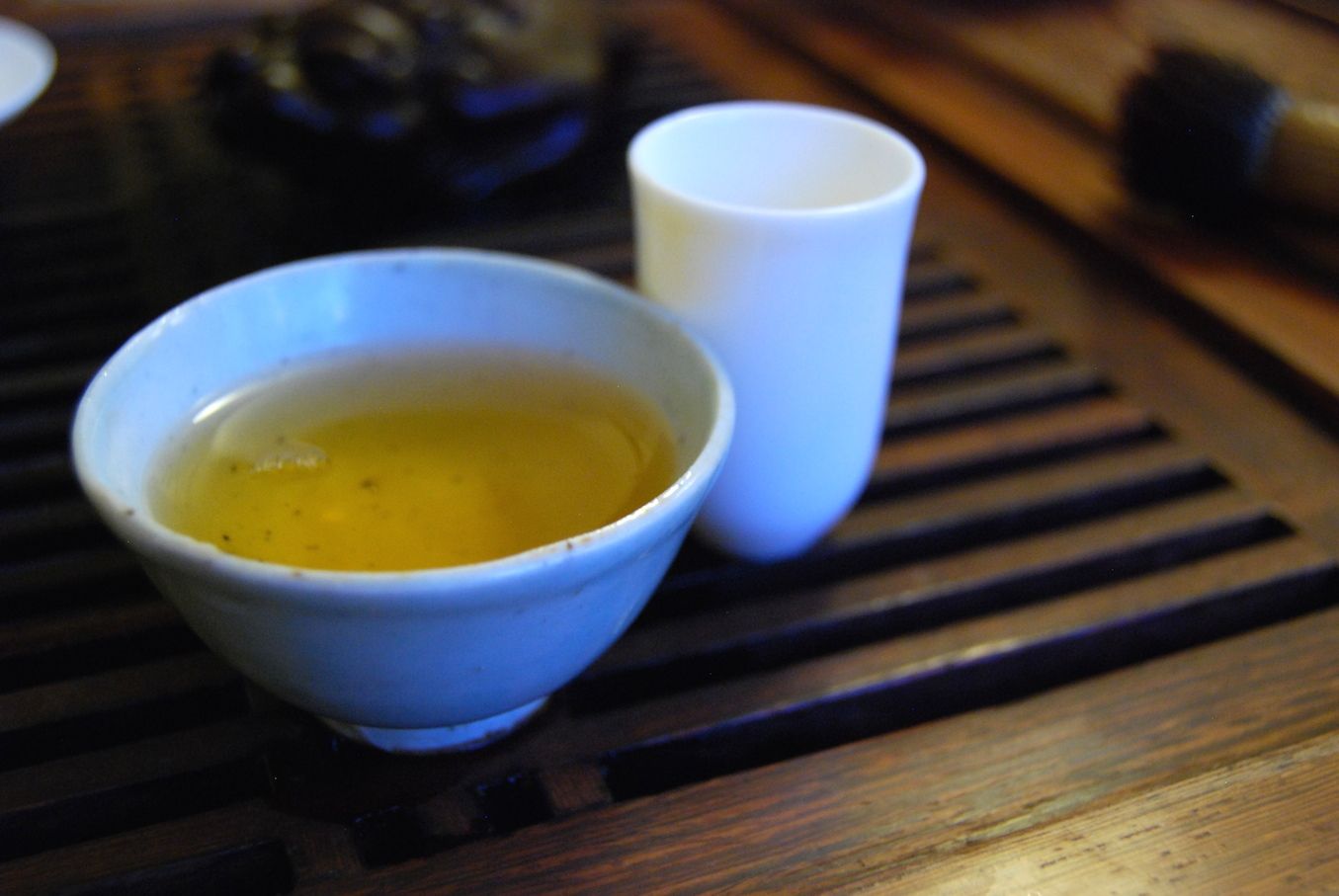
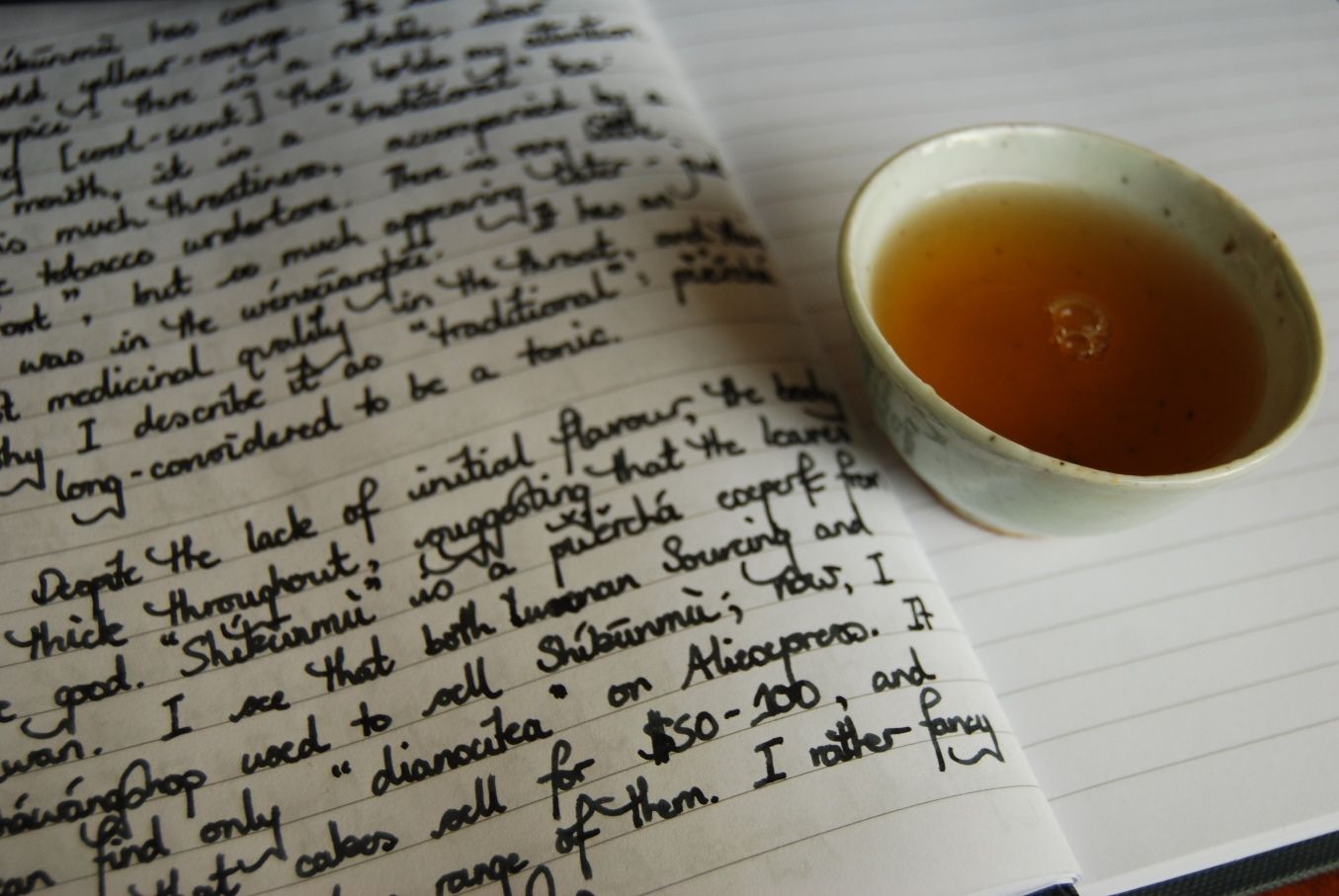
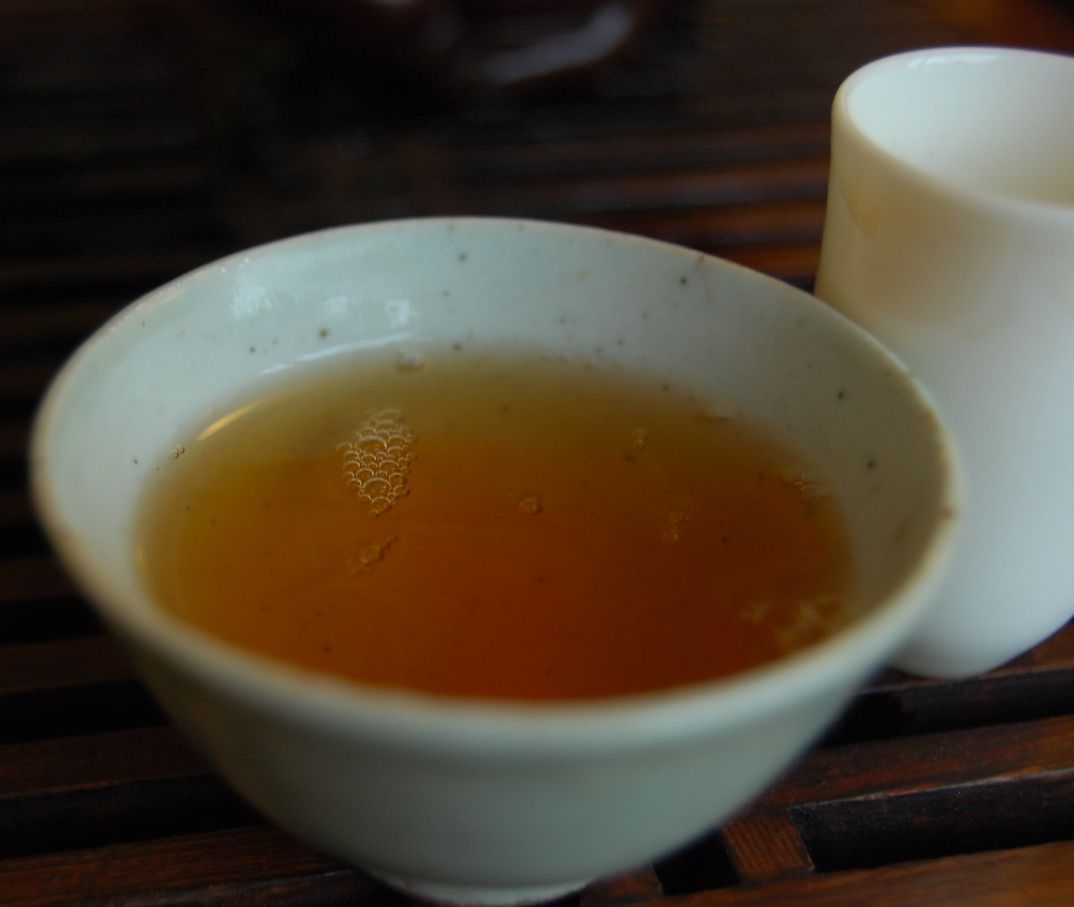
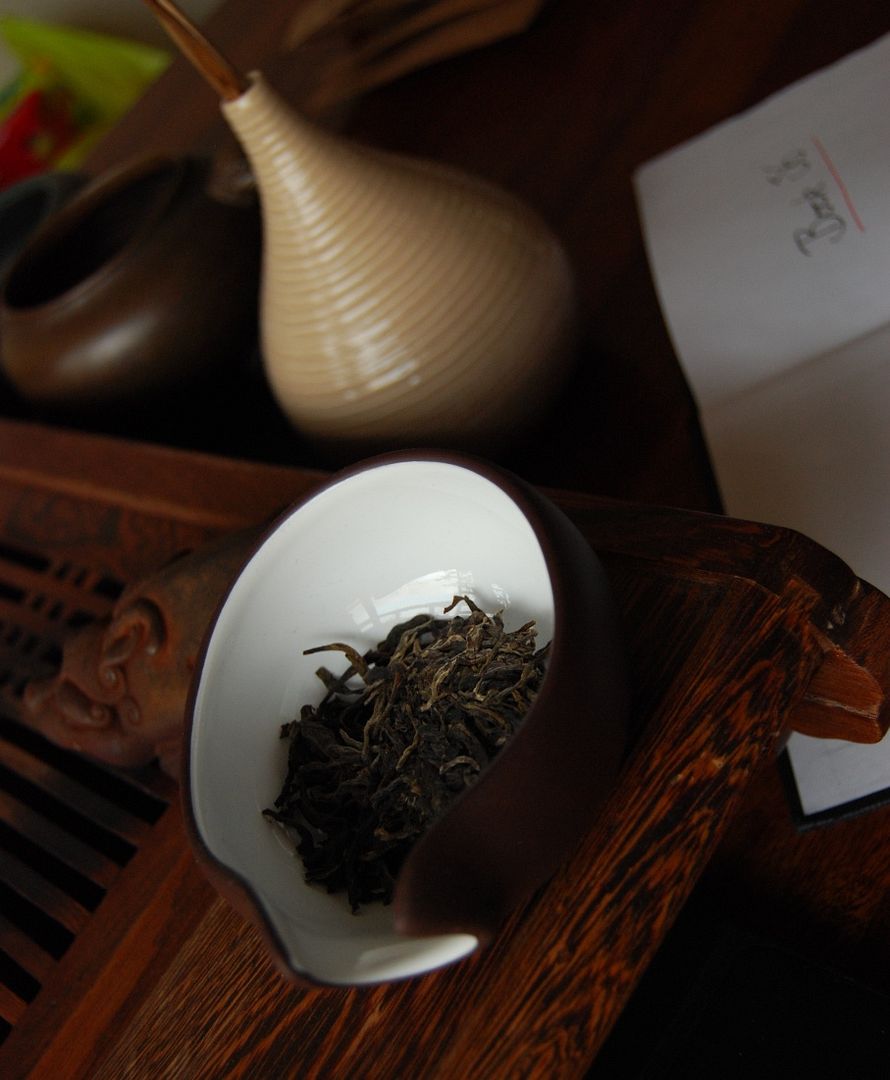
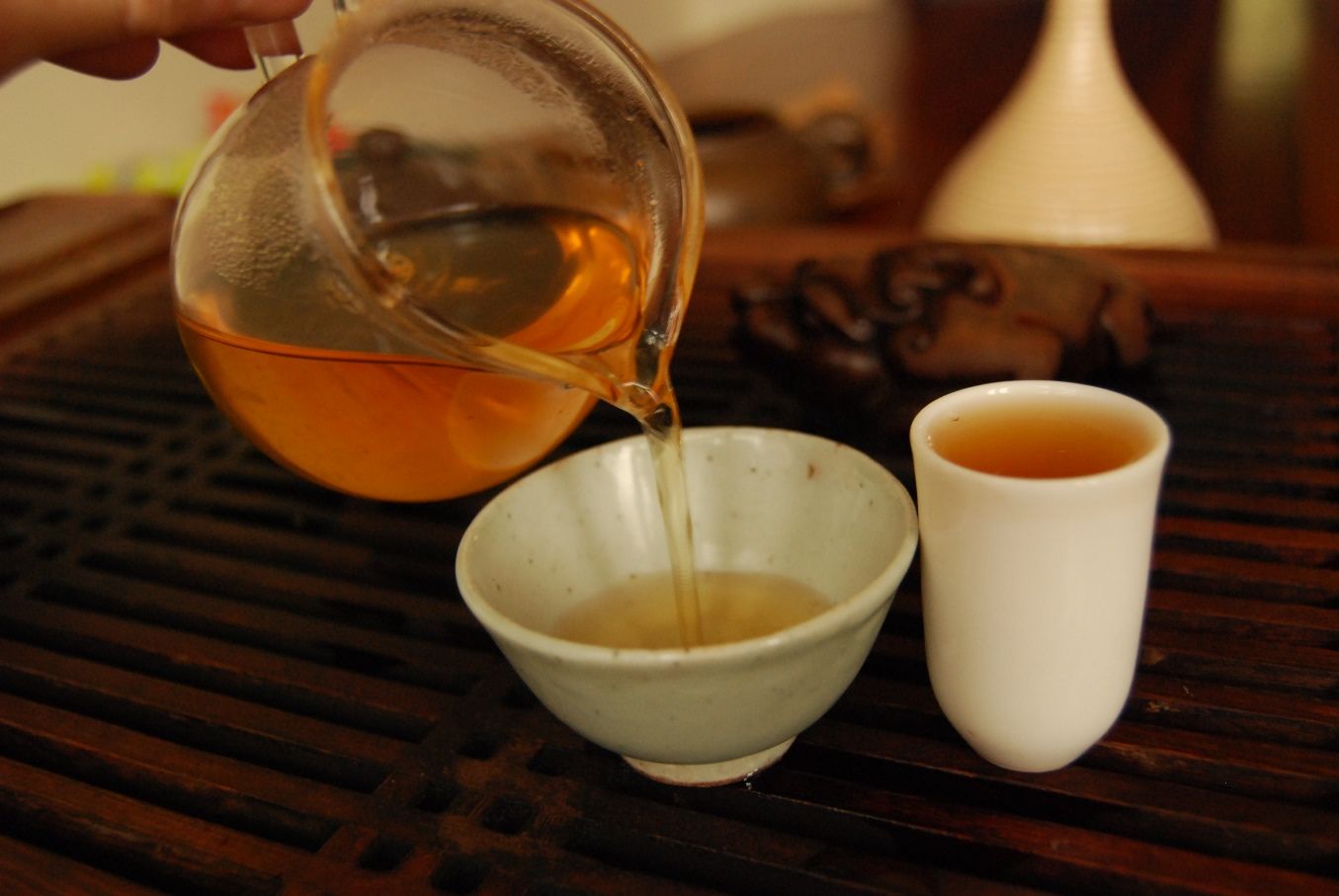
This brews a confident, clean, bold yellow-orange, as shown here.  I think you'll agree that it looks rather decent.  Its scent is gentle, warm spice - there is a notable, slow lengxiang [cooling scent] that holds my attention.  In the mouth, this is a "traditional" tea (which is a very good thing): there is much throatiness, accompanied by a definite tobacco undertone.  There is very little "up front", as suggested by the wenxiangbei [aroma cup], but so much appearing later.  It has an almost medicinal quality in the throat, and this is why I describe it as "traditional": pu'ercha was long considered to be a tonic.

Despite the lack of initial flavour, the body is thick throughout, suggesting that the leaves are good.  "Shikunmu" is some sort of pu'ercha expert ("MASTER") from Taiwan.  I see that both Yunnan Sourcing and Chawangshop used to sell Shikunmu; now, I can find only "Dianxitea" on Aliexpress.  It seems that cakes sold by the latter are in the range $50-100, and that there exists quite a range of them.  I rather fancy trying some recent examples.

By the fourth infusion, the base of this tea has swollen into a heavy, straw-like sweetness; I appreciate its inertia, and the fact that it takes several infusions to "get the ball rolling".  This is a slow, heavy, and quite tasty tea with excellent density in the throat.

If I ever get around it, I will check out Dianxitea in more detail.  I suspect, by the time this article reaches publication, that I will have entirely forgotten about it, and so it will serve as a convenient reminder...

07 April, 2014

Cigarette Box

Zhangjiawan is an area from which I have only good (taste) memories: the only other cake I have had that called itself "Zhangjiawan" was a fantastic little 2012 xiaobing from Chawangpu, that cost < $40.


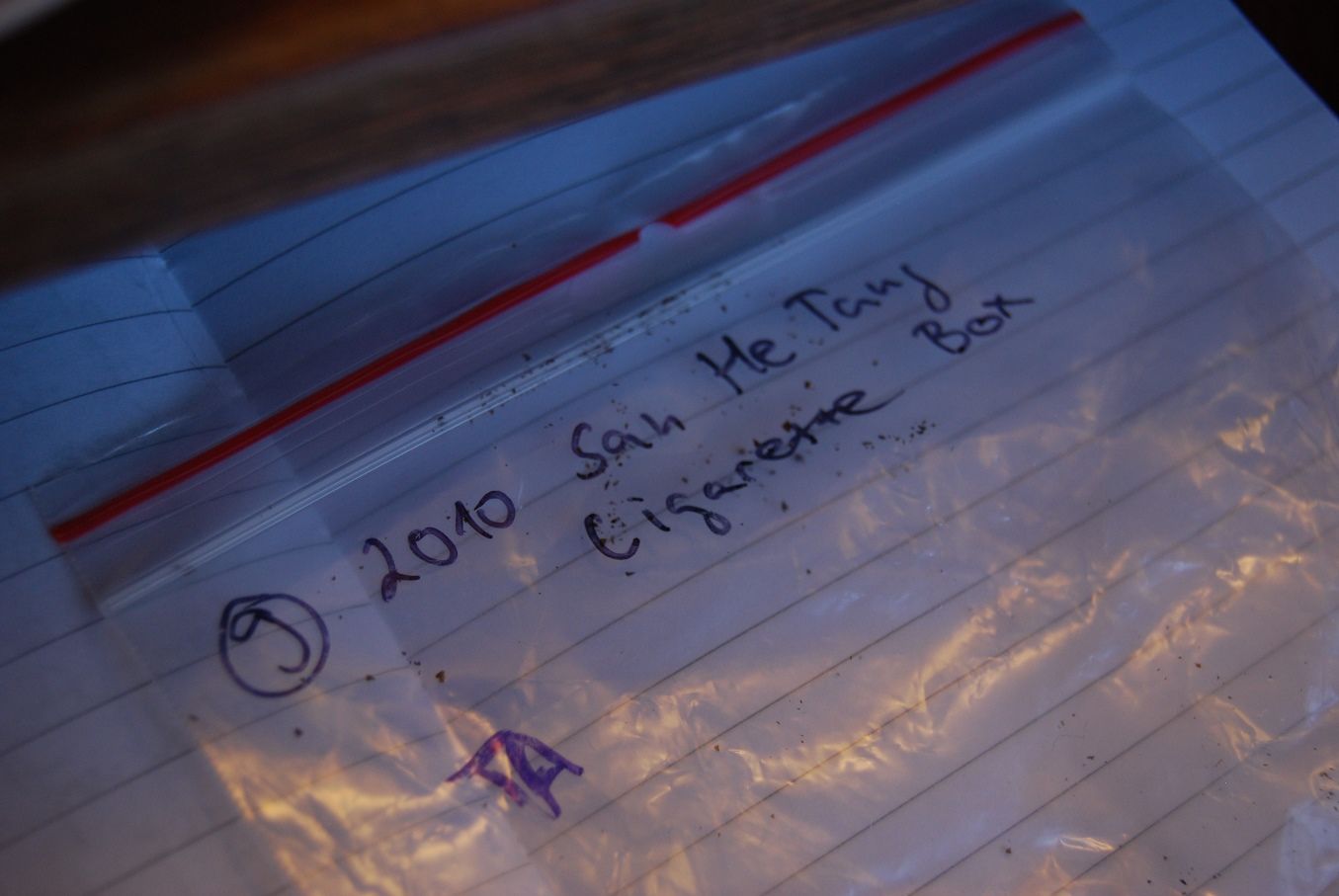
This particular Sanhetang cake is from they of the Xizihao fame.  This sample was kindly provided (about a hundred years ago) by TA - I do not know the link between this cake and the eponymous "cigarette box", but I suspect that it must be the format of the tea.  Either than or it tastes like Marlboro.


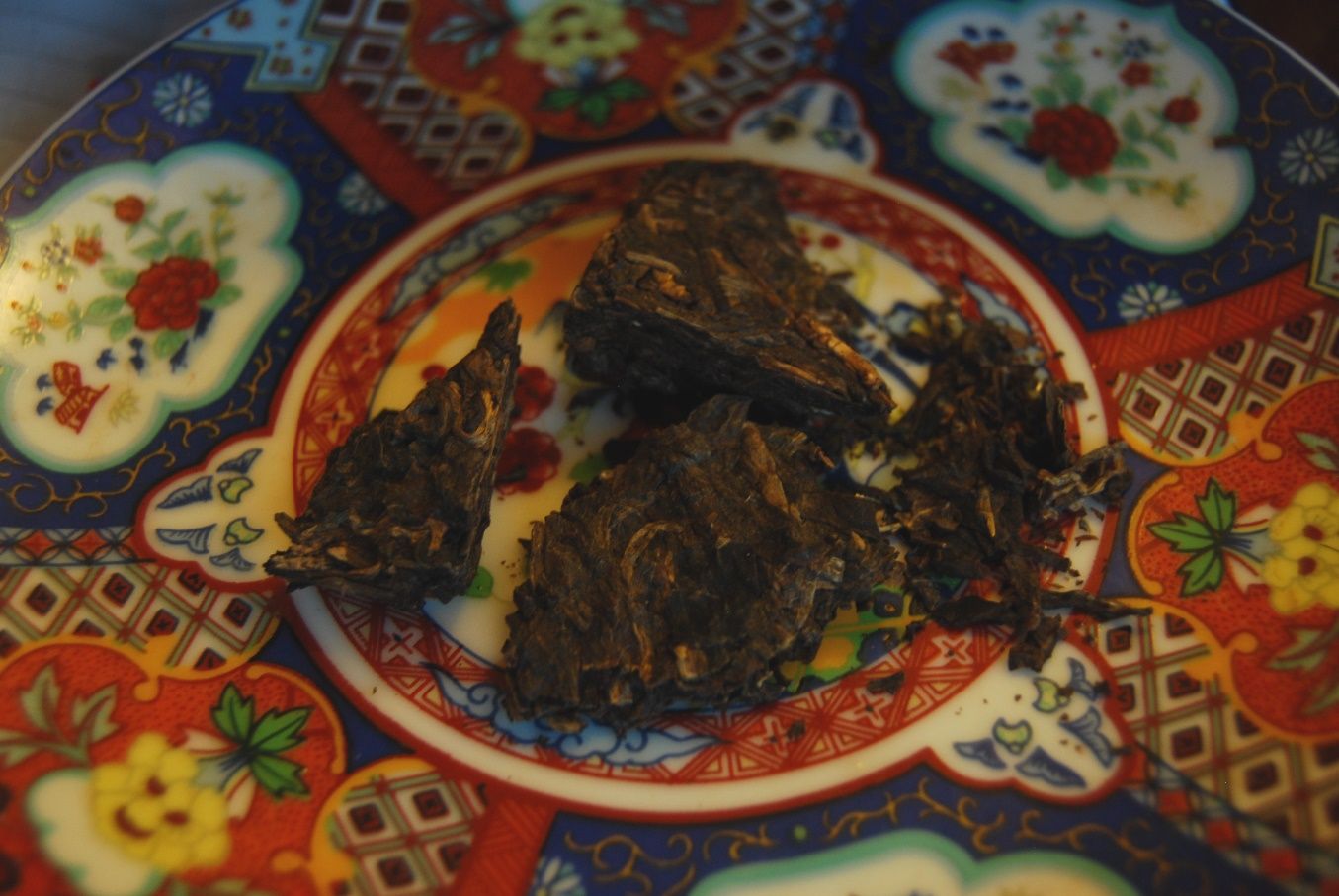
The suspicions of little-brickiness begin to become more firm as we examine the small chunks of leaf, pictured above, which have the sharp edges of brick tea.  As is typical for zhuancha, the leaves are small and broken.  I begin to wonder why Sanhetang have stooped to creating brick tea.  Then I remember the 2010 Xiaozhutong [little bamboo-tong] from Sanhetang, which was dreadful and which Houde sold to me without me trying a sample (silly, silly me).  Clearly Sanhetang is not above making the odd wacky, terrible pu'ercha.


However, my considerable faith in the skills of Sanhetang are restored on brewing it up: despite the fact that the public frontman for Sanhetang has committed the ultimate crime of wearing a pony-tail, he does know his pu'ercha.  This particular example is a solid yellow-orange, as pictured above, and as clean as ever they were from this brand.


Sanhetang even seems to be able to make brick tea into something enjoyable: it has a lively base of dried fruits, and a decent kuwei [good bitterness].  It is also rather energetic, and seems to have something to say.  This is at odds with the simply univariate bitterness of many zhuancha.


As the leaves begin to open, and the nuggets separate yet further in the belly of Zidu, my pot, they reveal some more Yiwushan complexity: alongside that thick, clean sharpness comes plenty of regional character that suggests Sanhetang has used decent leaves, even if they appear as mulch within the maocha.


The leaves show no sign of weakening from their state of thick sweetness, even after a dozen infusions.  They must have been leaves from a good, healthy set of trees: even fragmented, they seem to last forever.  I am impressed that the "cigarette box" turned out to be much better than its dreadful name suggested.  Thanks again to TA for the sample.

14 February, 2014

The Surprise Left-Hook

Swapping tea with friends is a fine way to get taken by surprise.  Today's session with a 2010 Gumingxiang is just such an exercise in unexpected, enjoyable pugilism.  Thanks to ME of Argentina for this excellent session.


Although every tea is special in the Zen sense of living-everything-for-the-first-time, this session feels particularly significant.  It has been some long weeks, at the time of writing, since I managed to reach my tea-table, and there is a layer of dust over everything that needs to be removed before the session begins.  I use my bamboo brush to wipe away the residue.  Already, I am in the mood for a serious tea.


The scent of roasting dust rises from my hot-plate, beneath the tetsubin.

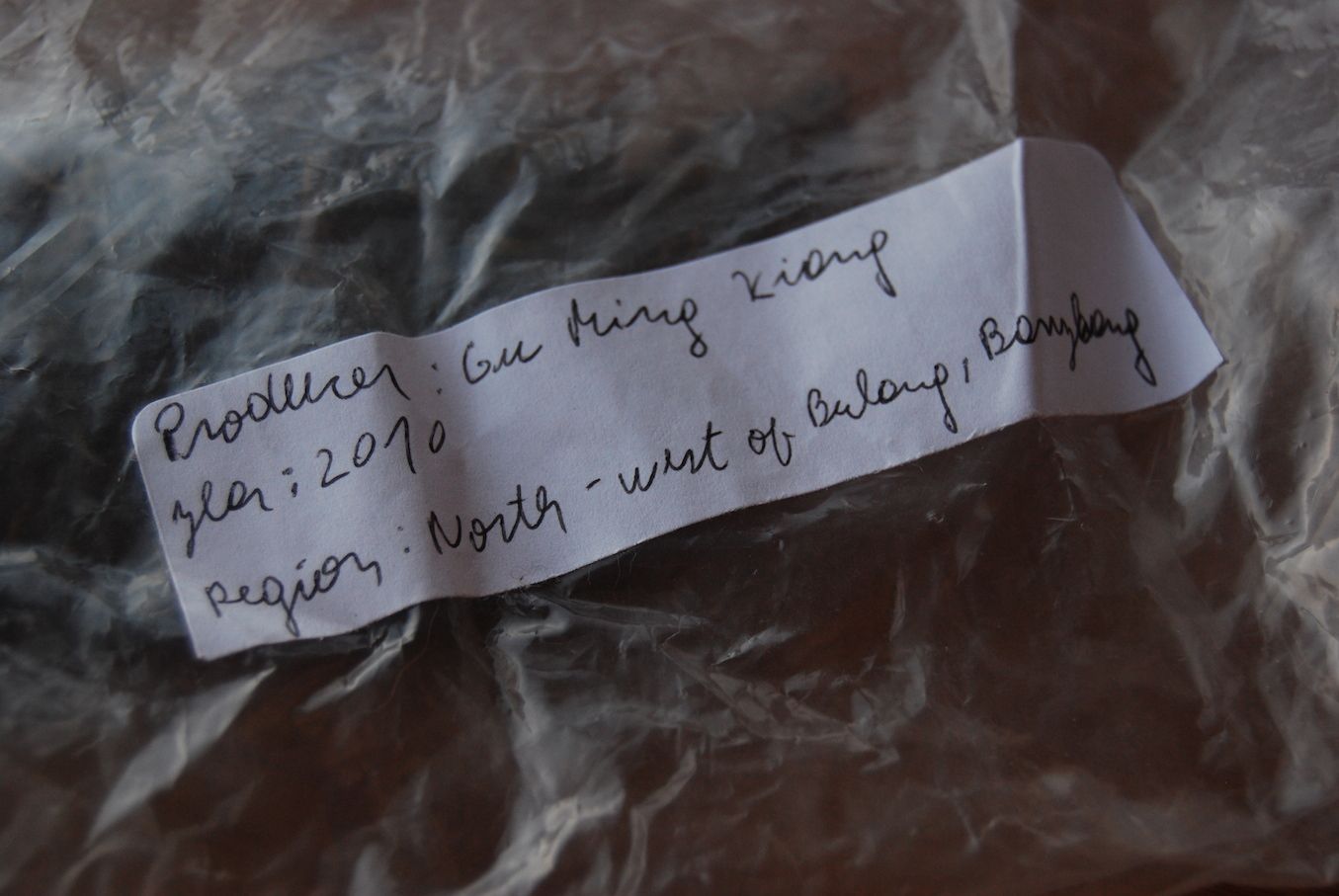
Gumingxiang is not a company with which I have any past experience.  A quick Google search reveals that Yunnan Sourcing sells three cakes from this factory, and they are all from 2010.  In order of increasing price, they are a Banpen, a Xinbanzhang, and a "Laobanzhang" ($40, $110, and $190, respectively).  The hand-written labels notes that the leaves come from north-west of Banzhang.


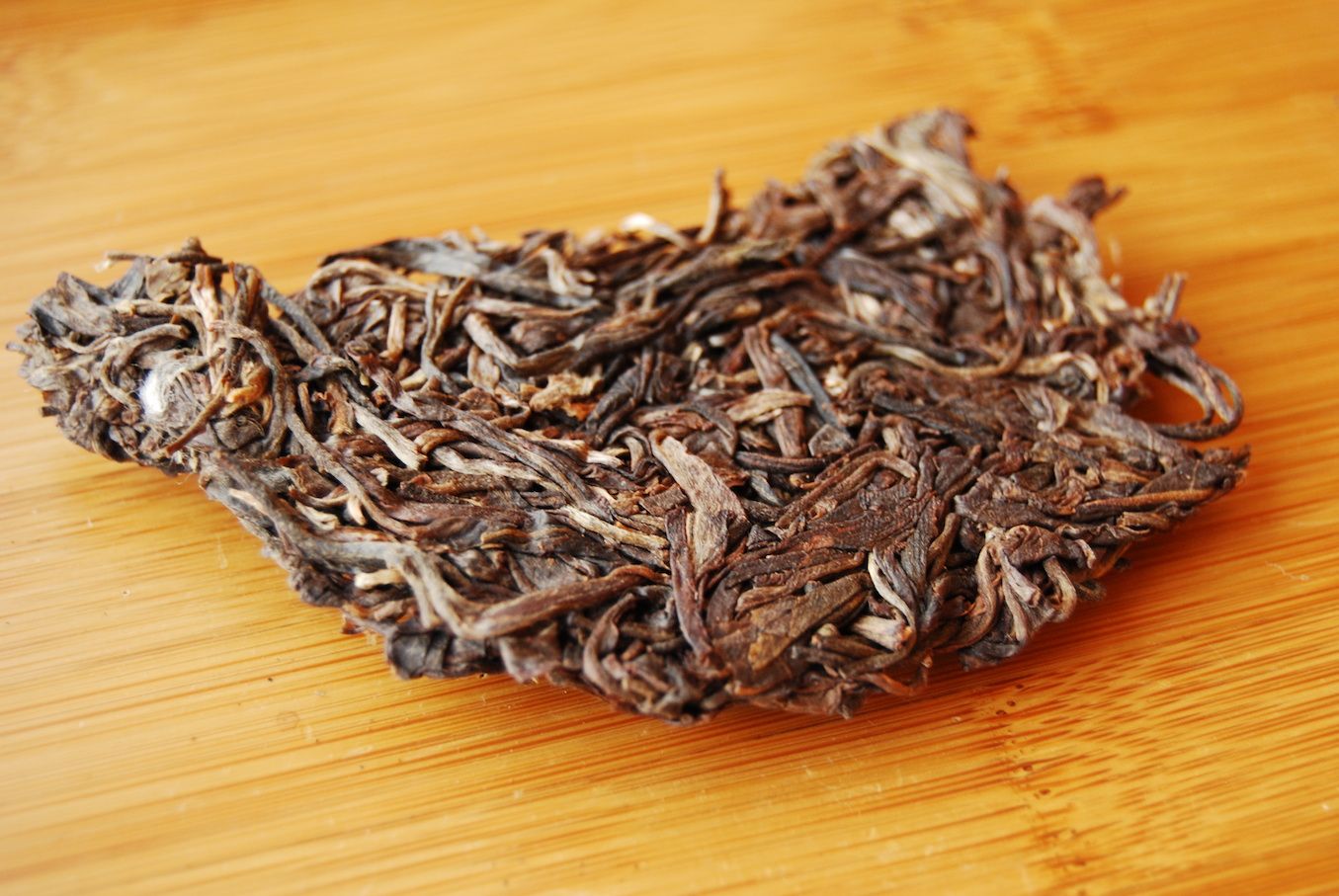
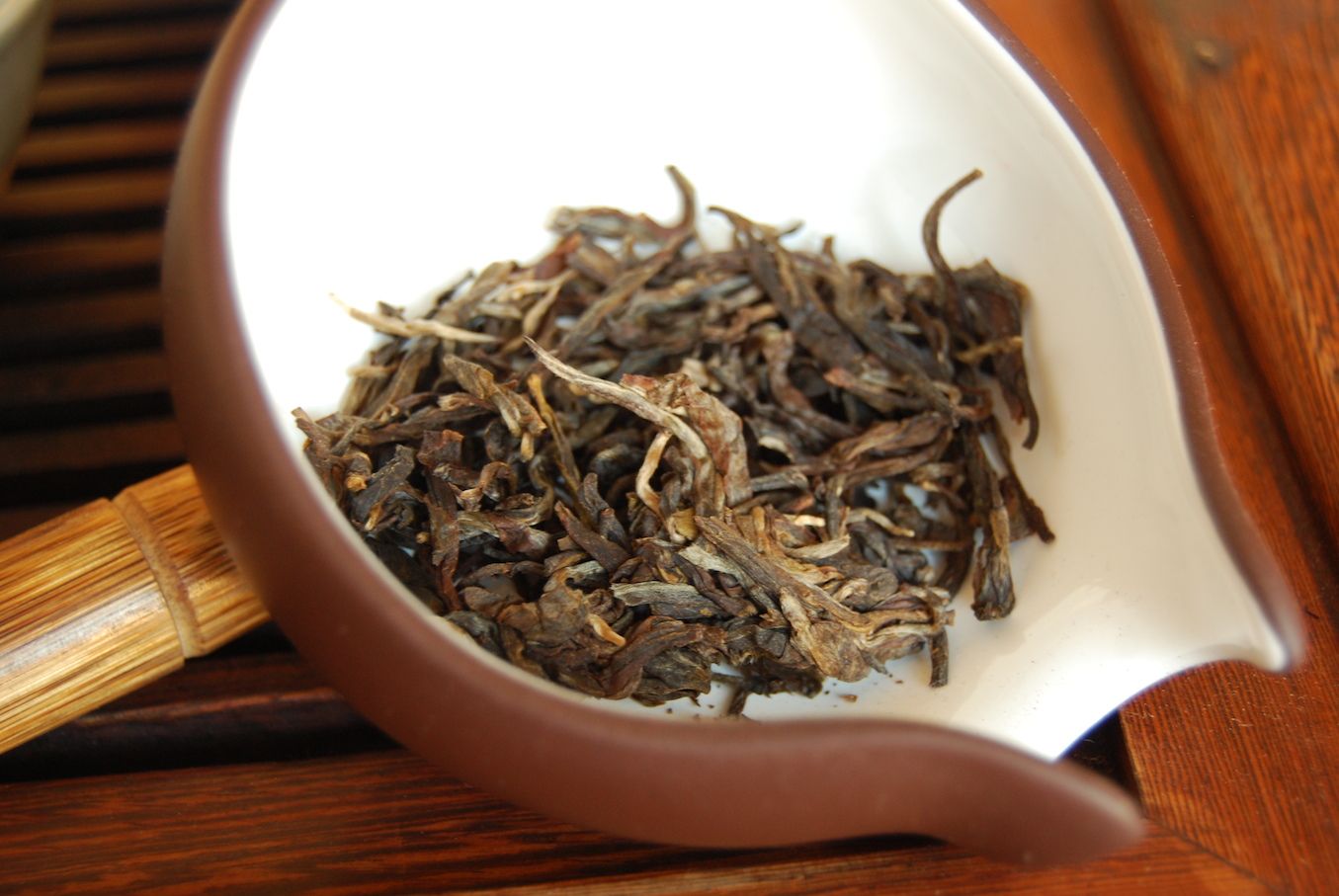
The maocha looks good, as you might agree from the photographs.  The leaves have the colour of a few years of ageing, and are mostly unbroken.  Their scent, appropriately enough, is "chenxiang" [aged scent] - given that the name of the company, Gumingxiang, is approximately "ancient tea scent".  The aroma also carries the fruity, complex, low sweetness of its region, and I consequently hope for good things.

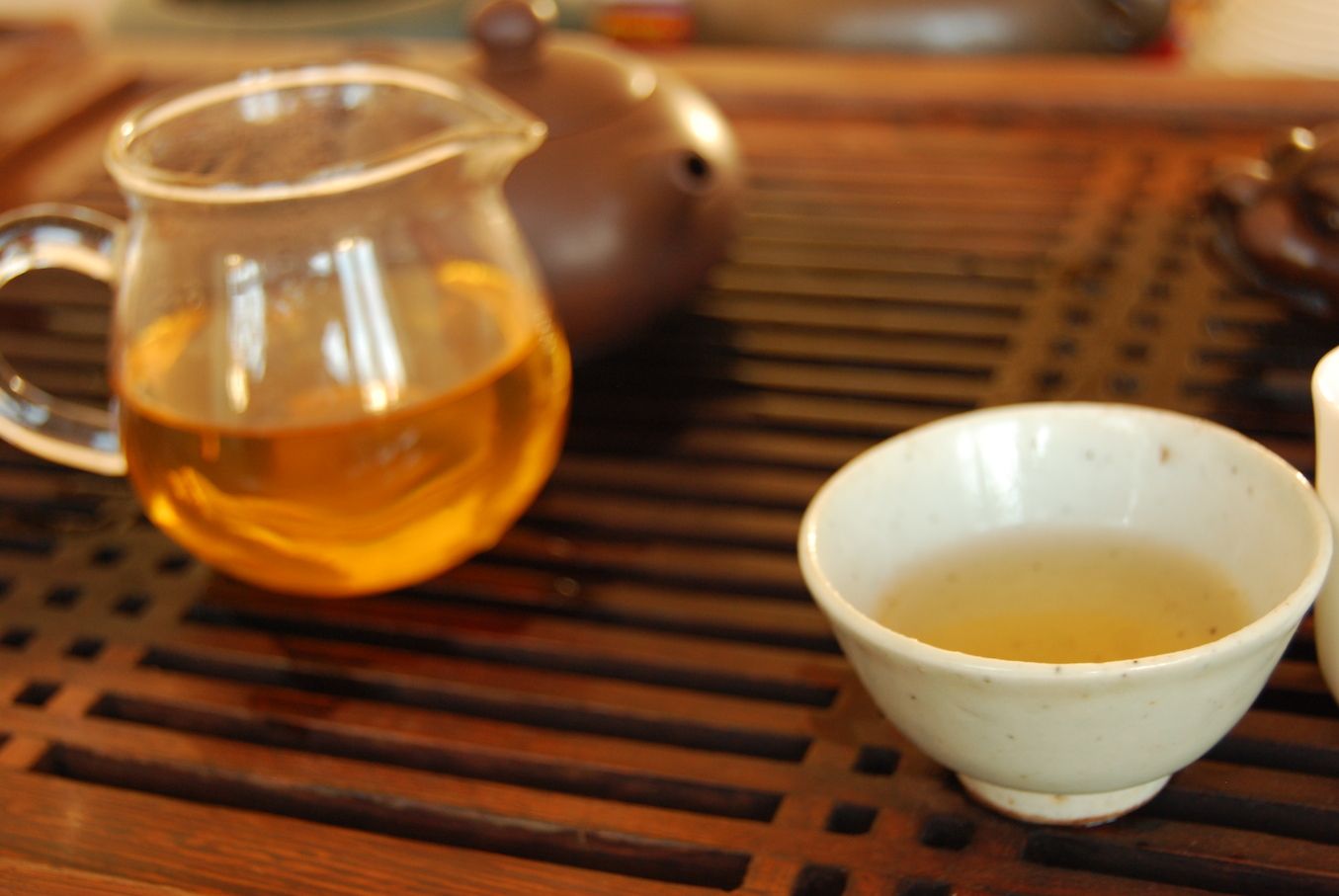
This is dry (in the sense of a wine), husky, and instantly recognisable from its regional characteristics.  The flavour is, for want of a better word, stunning: it is full-frontal tangy sweetness, with a fine undercurrent of kuwei [good bitterness].  This is by far the best tea that I have had in some time - but this must be taken in light of the fact that I have not had a real session for an absolute age.


There is fullness, complexity, challenge, and aggressive charm.  It is a fantastic tea with which to return to the table.  This is not an "easy" drink: it rewards care in both preparation and consumption.  I appreciate its heavy feeling that dominates the mouth, with a superb bitterness that exists tantalisingly close to the threshold that marks "unpleasantness", but which always remains on the side of "significantly enjoyable".

Almost nasty, but not quite - this is good pu'ercha.

27 January, 2014

Laow Maine

I like to pronounce "Laoman'e", which should be pronounced "LAO MAN-ERH", to rhyme with "chowmein".  There's nothing quite so pleasingly discordant to the ears as when we Anglicise something inappropriately.  It's one of my favourite games, and, it seems, the favourite of many Americans: I give you the US pronounciation "NOTER-DAYME" for Notre Dame, which is enough to make every Frenchman's ears erupt in flames.

Inexplicably, despite a healthy intolerance for the French language, Americans pronounce "herbs" in the French manner, without an initial "h". Is that just to upset the French?


Pictured above, the rinse from my dry teapot, before the leaves.  Zidu ["purple belly"] is reaching the stage at which he doesn't even need leaves inside him to brew something that tastes like tea...


So, what do we know about "Lao-Mayne"?  This particular example is both fruity and fresh, with leaves that look very health indeed (as pictured above).  The colour of the soup is properly yellow, which is a good colour for a European three-year-old cake.  The first infusion, though cloudy, is most pleasant: it is sharp and bitter, in the usual way for "Lao-Mayne", but has the charming, fruity complexity of the greater Banzhangshan region.


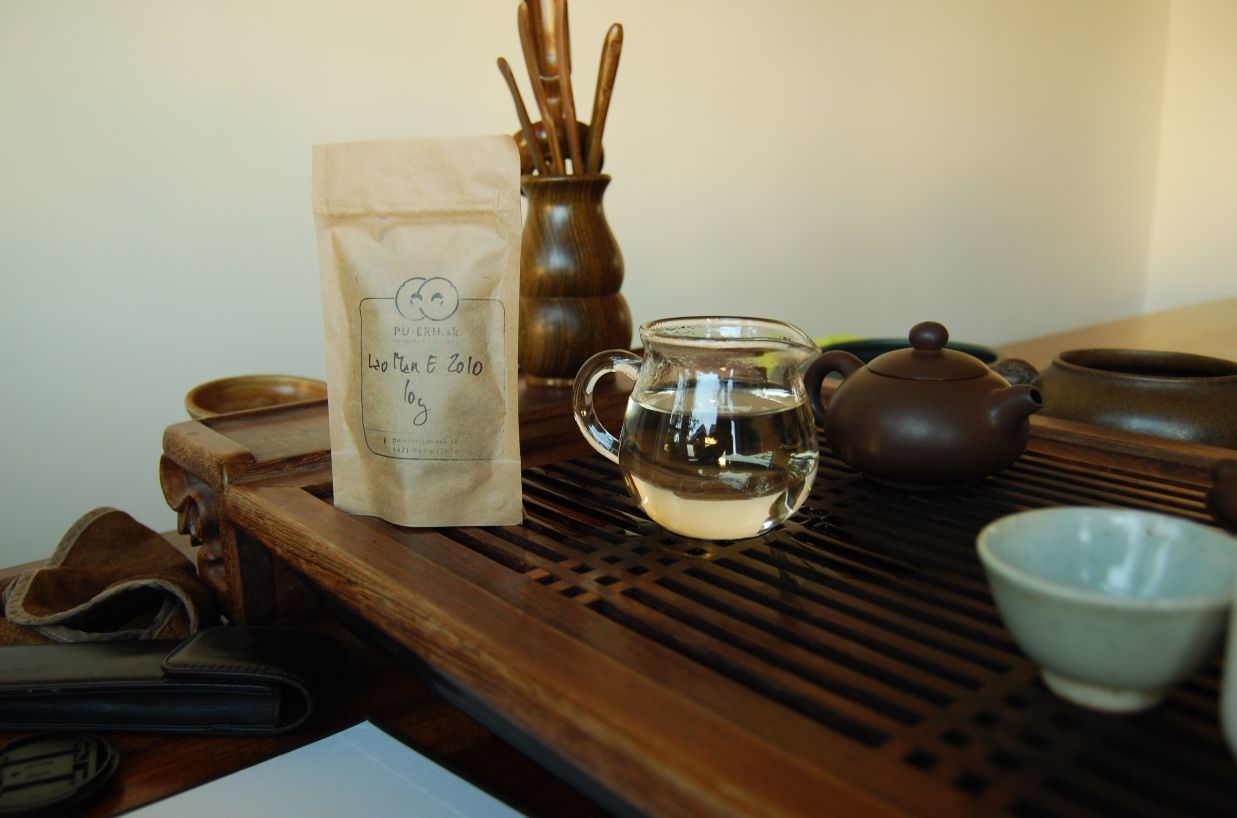
This one is clean and well-made.  The buttery scent is common to many young pu'ercha cakes; the bitterness is that of grapefruit - again, something that I have come to expect from "Lao-Mayne".  This works more better than you might expect.  Its solid texture and long throatiness are compliments to its tangy sharpness.  It is, without doubt, an "acquired taste" and perhaps not one to try out on non-teafolk.

Thanks again to Peter for the sample, which was thoroughly enjoyed.  His cakes are coming along very nicely, and I always look forward to seeing what else will be coming out of his stable.

24 January, 2014

Badabing, Badaboom

Badabing and I, as you may know if you are a regular sufferer of this web-site, have a long and most amiable relationship.  Peter of Pu-erh.sk has been so kind as to press my Badabing-related buttons at regular intervals: it began with a 2011 Badabing that was delicious, but which was sold out; it went on to a 2012 Badabing that was entirely yumptious, and which I tonged.  I was terrifyingly enthusiastic about the latter.  There was then a 2012 autumnal Badabing, which was fine indeed.  Then, there was an excellent (but perhaps quite pricey) 2013 Badabing.  Where could we possibly go from here, given that the 2014s are not yet picked?


Of course, back in time to 2010!

The scent of fresh, grapelike sweetness, from young shengpu, is not one that I have enjoyed lately.  Tellingly of my circumstances, the session opens with the obvious scent of burning dust - this is because I have not had a proper tea session for some time, and so the hot-plate and tetsubin that I use at home have become a little dusty, which gets burned away as the everything warms up.


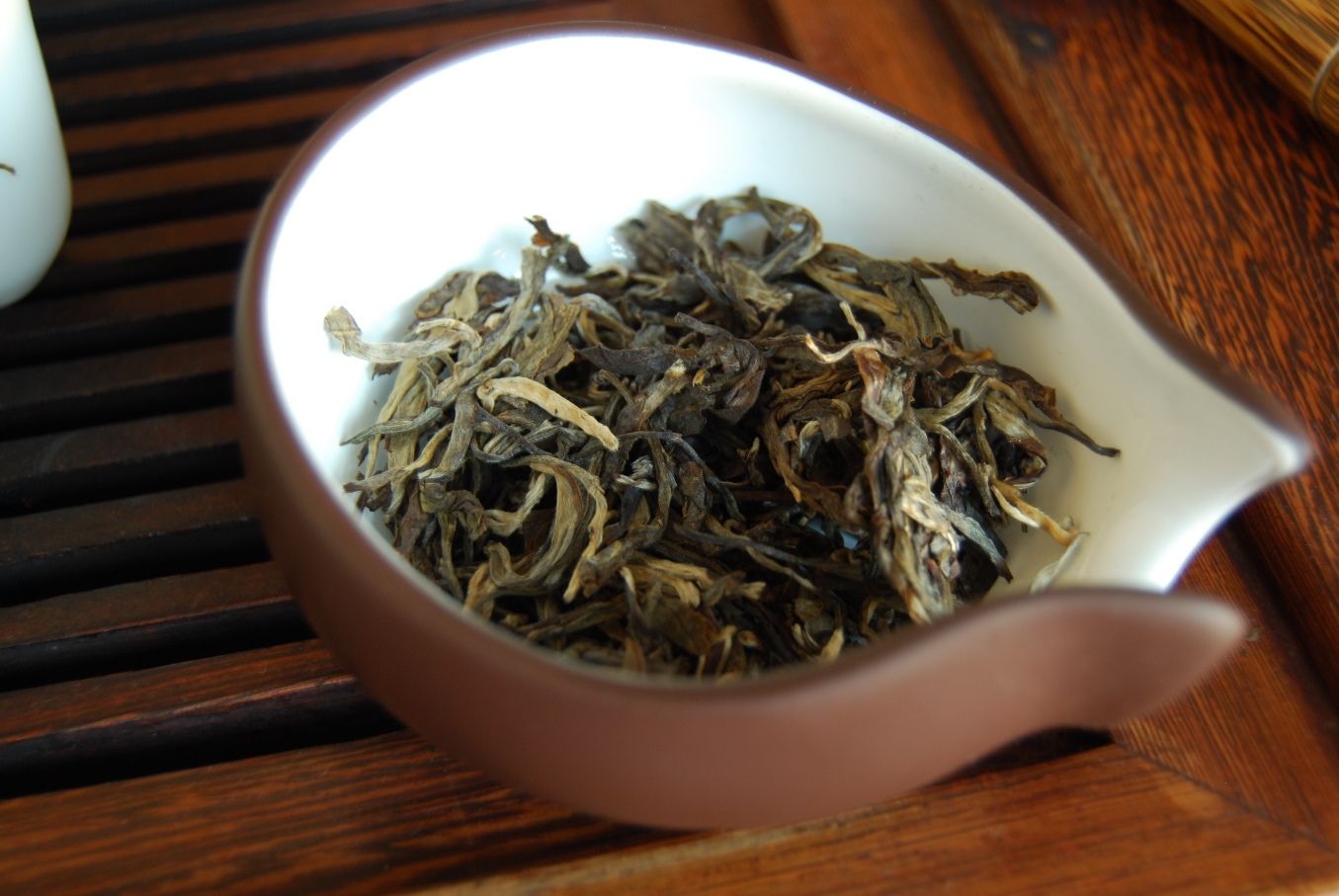
I am amused to see that the above photograph looks uncomfortable in both "landscape" and "portrait" orientations, such was the strange angle at which I took it.  What you can see, despite the bizarre shooting aspect, is a long-leaf Badashan that has some age to it, from the darkness of those leaves.

Even the rinse smells fantastic.  As the first wash of the tea drips through the slats of the tea-table, the scent of rich, sticky-sweet pu'ercha fills the room - and all is well with the world.


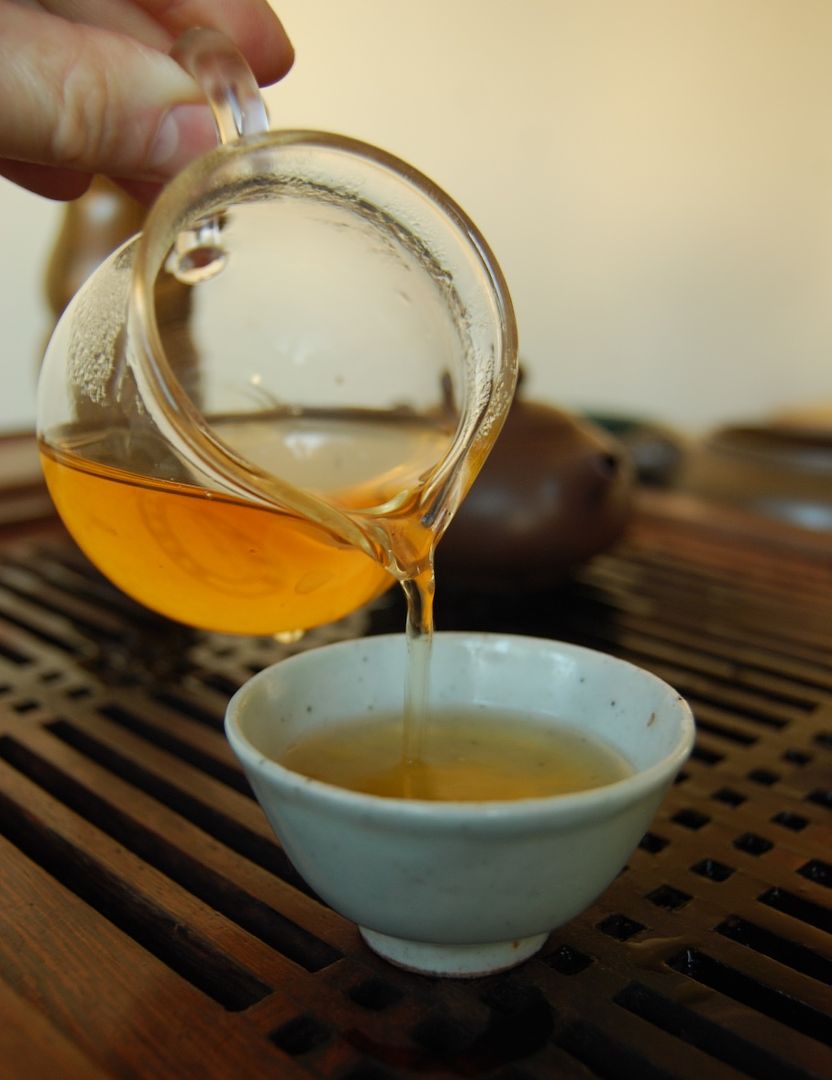
Unusually for a tea from this region, this has a visibly brown hue that I usually associate with Simao and Lincang cakes.  The character, however, is entirely familiar, and excellent: it is fresh, bitter, cooling, and has a rich, strong base that is entirely commendable.  The kuwei [good bitterness] is strong in the throat; the overall effect is a deeply satisfying darkness, with a slightly straw-like sweetness (in a good way).  "Just two cups and I am happy", I wrote in my journal.

I pause the session for two hours to help my dear wife write a covering letter in her application for a new position in the university; my delay in writing up my notes is that now, looking back, I know that the application was ultimately successful.  Perhaps we have the remarkable clarifying strength of this 2010 Badabing to thank.

Excellent stuff.

13 December, 2013

Yiwushan Clan

Today's article covers a week in the world of Yiwushan, in which I've been focussing on getting to know some of the various villages, as my almost-depleted bag of samples allows.  The motivating tea for this excursion was a sample generously provided by Prof. GV, who is now departed for an old British trading colony attached to the south of China.  I suspect that his access to good tea has improved accordingly.


This is, as far as I can make out, "2006 Eight Pcs", or that could be "2006 Eight Pos".  I suspect the former.  Eight pieces?  Pieces-of-eight, pirate style?  If the good professor happens to be reading, perhaps he might be able to shed some light on this.


Funnily enough, I brewed this tea as a remedy for washing away the sins of a pesticide-laden cake in the previous session.  The leaves have a dense and sweet aroma of good ol' Yiwushan that promises tongue redemption.


PIECES-OF-EIGHT turns out to be a spicy-sweet Yiwu with some warmth and decency in the straightforward style typical of the region.  It has some backbone that keeps it going; even though I crammed a large quantity of leaves into the pot, I am rewarded with stability and sweetness, without scaling any heights of grandeur.  It definitely put me in the mood for more Yiwushan tea, however, and that formed the focus of my sessions over the few days following.


Scraping the bottom of my sample bag for residue, I came across a packet of tea kindly provided by Eugene of Tea Urchin, when the on-line shop opened some time ago.  It looks as if Eugene has gone on to good things; the samples that I tried previously had the disadvantage of all being autumnal, and were consequently a little underwhelming.


Intriguingly, this tea is sold as being "Wangong" tea, although the product description reveals it is Dingjiazhai.  This is sort-of, kind-of the eastern Yiwushan region, and often classified as "Mansashan".  Wangong is rather sexy, as far as tea locations go, Dingjiazhai is about as sexy as old corduroy.  Don't get me wrong, I love me my corduroy.


This is an autumnal cake from "Xinshenglihao", a brand so minor that it does not appear in the mighty BABELCARP, long may she reign over us.  I found the Xinshenglihao "Xikong" to be good, but a bit simple compared with the competition from Yunnan Sourcing.


What you get for your $49/200g here, which is quite a lot for an autumnal cake, is some dark, sweet soup with a cooling penetration.  It is, unsurprisingly, warm and rounded in the autumnal "guhua" style, without the aggression of springtime tea - this could be acceptable if you're looking for a muted drink-it-now cake, but will prove a hinderance to aging.  There is little complexity but there is, at least, comfort.  There is just an edge of kuwei [good bitterness], dimmed.  By the fourth infusion, this cake has collapsed into mediocre Dingjiazhai territory.


Days later, I went into a session with the 2012 "Early Yiwu" cake from Yunnan Sourcing ready to be underwhelmed.


Scott has demonstrated, over the course of the years, that he knows how to pick good cakes.  I am always wary of "early season" cakes, however, because the emphasis is on rushing to market, and this can sometimes correspond to the sacrificing of quality.  Scott has made this using leaves from Yibi and Luoshuidong, where I can honestly say that I don't think I've ever had a good pu'ercha cake from Luoshuidong.  Hence the feeling of impending doom.


You have to go into pu'ercha with an open mind.  The first few infusions of this tea were so watery that I was ready to confirm my schlerotic prejudice almost immediately.  Thankfully, I soldiered on.


It turns out that this tea really needs four infusions to reach maximum speed.  This is quite unusual in young tea, which is usually deceptively pleasant in the first two infusions, and which may then easily collapse after the third.  If you're lucky, the tea will stay pleasant.  This cake, however, bucked the trend, and actually got better during those first four infusions, until it peaked and remained stable.  This is a characteristic shared by some of my favourite teas, and hints at the fact that the leaves might actually have quite a lot of density, in some sense, that needs some coaxing to turn into strong soup.


Eventually, the soup turns a thick yellow.  By this time, the straightforward, almost empty, Yiwushan sweetness has swollen into something thick and proper.  It has a heavy solidity that I appreciate, and the sweetness continues out until the ninth or tenth infusion.  So, in this case, as so frequently occurs, my prior assumptions turned out to be false, and I should learn to give the tea its time in the sun.  At $24/250g, it is quite nicely priced, too.


This was an article about Yiwushan, which I have totally misrepresented, because I want to finish with a tale of the 2010 Longfeng "Phoenix", which actually comes from Jieliang (near Laoman'e), in the Bulangshan region.


There was some soap-opea drama associated with the Longfeng brand, involving a cross-over with Yunnan Sourcing, as far as I recall, and which I hope to ignore as my tolerance for drama is extremely limited.

Much better to consider, the tea leaves (pictured below) are fragmented, and a little dark, but have the heavy scent of good sweetness.


This tea, as with the "Early Yiwu" cake described above, starts slow and watery.  However, by the third infusion, it delivers a razor-sharp edge of sheer metallic kuwei that is unmistakeably "Bulangshan".  I love it.  The sensations in the mouth are simultaenously cold, which reinforces the "cold steel" feeling of this cake.


The core of sweetness develops as the perfect foil to the cold-steel kuwei.  "This pure antisocial hatred is rather refreshing, and I am happy to brew it again and again."

I'm sure that this cake isn't available any more, but I loved its deadly ruthlessness.  Fine stuff, and a great way to end a week that was otherwise spent pottering around in the sweet comfort of Yiwushan.

30 August, 2013

Judge Not, that Ye Be Not Judged

People who write about tea are a famously grumpy bunch.  A number of us, as far as I can tell, are students or academics or similar, and we are therefore not in the profession of suffering fools gladly.  This can lead to the impression that we are miserable, grouchy, Grinch-like individuals, who like nothing better than to steal Christmas.

Although I try to maintain an optimistic outlook*, I was particularly grumpy when I sat down to this session.  This is because, at the time of writing, it is August, I am sat at home with a cold, and am generally feeling quite grim.

Against all the odds, this session with shupu from Teasetter truly lifted my spirits.  I would like to recount the story to you, Gentle Reader, if you will bear with me.

*My students call me "Dr. Who", only partly because of my dress-sense.


The tea world is filled with hucksters, charlatans, swindlers, mountebanks, and scumbags.  It seems that everyone wants to start up a little business on the side, buying cheap tea from China, obscuring it with a suitably evocative name (presumably so that customers cannot buy it elsewhere for the actual, cheaper price), and then selling it at a significant profit margin.  Every web-site is dazzling white (in the "Apple" style); everyone claims to be selling something unique.  They typically last a year or two before the owner gives up, and goes back to the "day job", or perhaps focusses on selling something else.

Wulong is the prime focus of this industry, given its untraceable origins and accessibility for novice drinkers; pu'ercha (usually labelled "pu-erh" as if we were writing via 19th century Wade-Giles) is by no means immune.


Clockwise from top: 2010 "Ethical Agriculture's Wild Grown Pu-erh" [sic], 
2011 "Old Capitol" [sic], 1992 "Sweet Fragrance Pu'ehr Tea" [sic]


You will, therefore, excuse me if I am rather prejudiced concerning new ventures that seem to fit this pattern.  This is merely because we have all seen far too many of them come and go.

It is against this backdrop, while grumpy for the reasons listed above, that I sat down to drink three 4g samples of shupu from Teasetter.


All three samples mixed, with fannings removed


I started browsing the company web-site, and alarm bells started to ring.  It was then that I came to realise that I was viewing the web-site through the rheumy, yellow-encrusted lenses of my own prejudice.  I watched the company's Youtube-hosted instruction video, and was confronted with the honest, sincere face of a young man, which was as free of guile as any innocent soul could ever hope to be.


It also made me realise that the world of tea is much greater than the tiny niche that I inhabit.  If people wish to recommend using a microwave for 3-4 minutes to heat the water, then why should they not?  The whole affair smacks of passion and personal commitment, and I rather like it, grammatical errors and inkjet printing included.


Napolean famously called the English a "nation of shopkeepers", which he intended to be an insult.  However, the entrepreneurial instinct is to be congratulated, I think.

I suspect that the primary market for Teasetter is the USA (the tea may only be purchased in "oz", which Google informs me is approximately 28g).  Certainly, the customers of Teasetter are pleased: there are 128 people who "like" the company via Facebook, and reviews quoted on the web-site rate the teas as being "100/100".  Ultimately, if it contributes to lowering the body mass, blood pressure, and cholesterol levels of your average Westerner, then such ventures are to be applauded.

As far as the tea that I tried, when mixed all together, it was absolutely delicious.  The session lasted a good hour, the tea had no signs of exhaustion, and it remained thick, sweet, and highly invigorating - a welcome cure in between cups of "jiangtang" [ginger soup].  I look forward to seeing Teasetter convert more Americans to drinking decent tea.