12 October, 2007

2007 Simao Maocha

Teas brewed for me in Maliandao generally tasted about 50% as pleasant as the same teas turned out when brewed at home.

This particular tea, the 2007 Simao maocha, makes for a good comparison of waters, as I have tried it in several locations: Maliandao, a Beijing hotel, in my office, and at home - with water quality increasing from worst to best in that order (Maliandao worst, home best).


For the insular purposes of my notes, this tea was 120 RMB [~£9, $18] per banjin [250g], from the sweet girl who spoke no English, and whose boyfriend was cooking dinner.

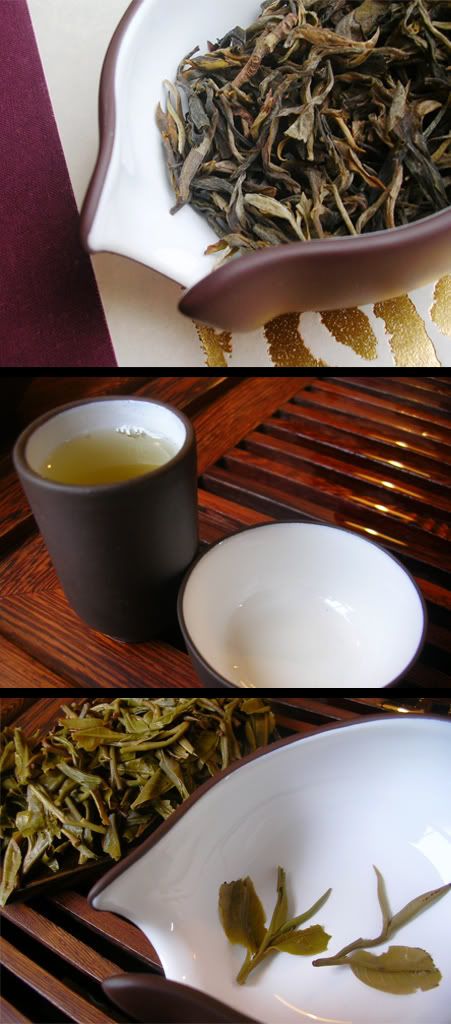
Good, whole leaves with plenty of tips, which give a correspondingly grape-like, green lid. The wenxiangbei gives a tangy, mushroom-like aroma, which exactly follows into the mouth. There is plenty of exciting acidity in the finish, from which comes the huigan, while the texture is almost creamy. The soup is a solid yellow.

It's a chunky, mushroom-like tea which I like very much - one for drinking immediately, with plenty of leaf. The wet leaves are all tip-and-bud systems, with good strength that suggests the effects of overfarming may not be omnipresent. A fine grade.

Its effect with water is fascinating: this is a very decent tea, but I distinctly remember how it tasted in Maliandao: an echo of its future glory, but standing out enough from its Maliandao peers to encourage me to buy it. All other brewing parameters being almost identical to my own, it has to be the water that is the differing factor.

Using a similarly poor-quality water in my office almost exactly reproduced the pedestrian Maliandao character, while giving it the benefit of some decent water (Scottish Mountain) at home was like polishing a grubby diamond: the results were brilliant, fresh, and thoroughly enjoyable.

This seems to be a constant tale for my Maliandao teas: they taste delicious at home. An education in water, again.


Addendum
March, 2012

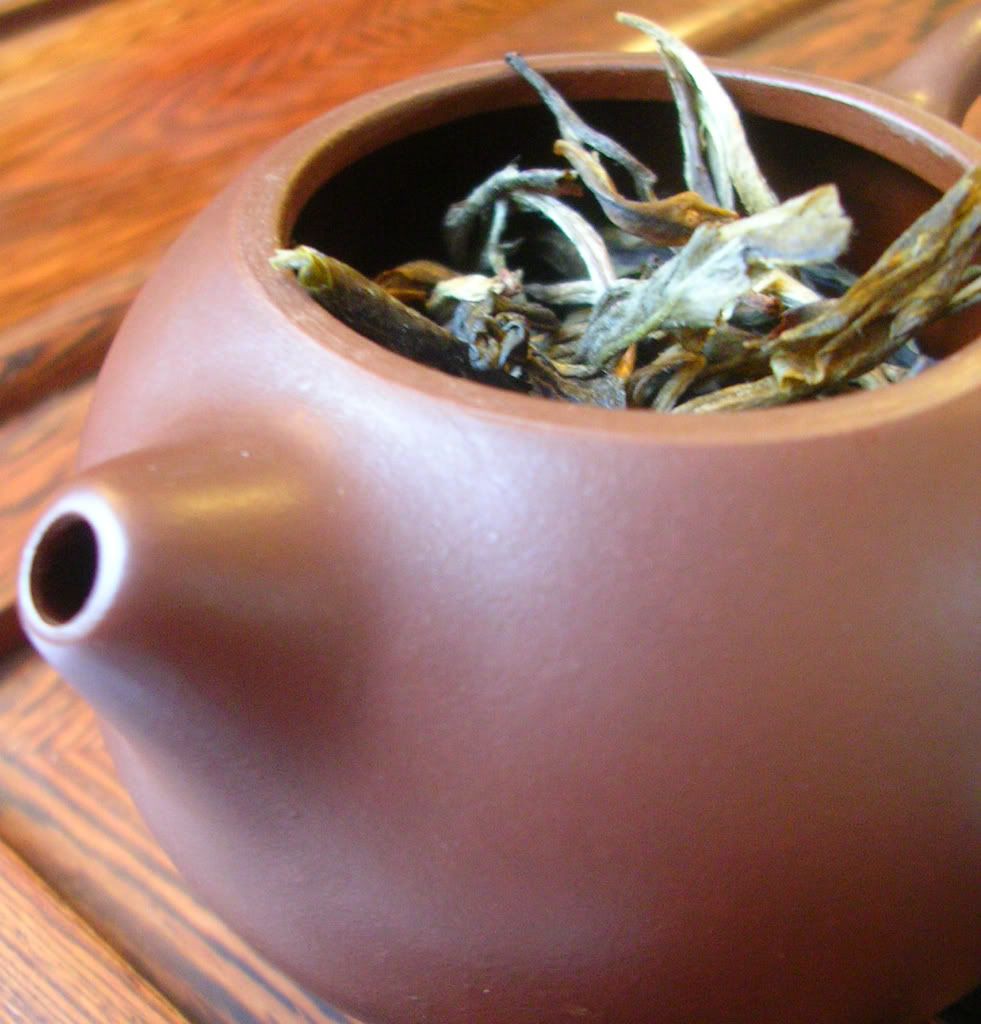
It has been five years since I bought and last tried this maocha - I have been aging this maocha in a tightly-sealed cardboard tube (pictured below), and a smaller amount in a rosewood box so that the majority in the tube need not be disturbed.


2007 Simao Maocha
Don't worry - it's not really longjing

As it turns out, the rosewood container imparted some rosewood charateristics to the 50g or so of maocha that it contained.  I consumed this in my lab, but wondered as to the majority of the leaves, aging steadily in their cardboard tube.


2007 Simao Maocha


The immediate impression is of a maocha that has darkened considerably in the half-decade that it's been aging here in England.  The green character that I remember from before has been entirely replaced by a healthy brown shade.  I'm amazed that I seem to recall the taste-memory of this maocha, even though it has been five years since I encountered it last.


2007 Simao Maocha


Simao prefecture is directly north of Xishuangbanna, and south of Lincang.  Its produce seems, to my recollection, to be more akin to the latter than the former: rustic, "granary", sweet, potent. The aroma, uncaged after its years in isolation, brings this back to mind.


2007 Simao Maocha


Even though the cardboard tube has been closed for five years, the tea has aged noticeably.  I deliberately keep my maocha stoerd under more tightly-constrained conditions of airflow than my cakes, because I (rightly or wrongly) associate loose leaves as being at risk of losing their character.  Many's the aged maocha  that I've tried that seems a touch spent, whereas the density of matter in a cake seems to age more robustly.


2007 Simao Maocha


As shown in the picture above, I rather enjoyed this maocha.  Despite being almost sealed, the soup has darkened from the acrid green-yellow purity of youth to a heavy orange.  In the aroma cup, it is long, sweet, and potent - a great sign.

  Vibrant, mouthwatering, tantalising - the 2007 version of me really managed to buy a good tea in this instance.  It is like a gift from the past, and a highly encouraging episode.  Its kuwei [good bitterness] remains strong, but it has broadened and deepened in its character to become richer and more enjoyable than the leafy green flavour of youth.  Fantastic stuff.

Back in the tube it goes.


Addendum
October, 2014

The scent of the leaves remains that of the rosewood box in which they are stored, but the wenxiangbei is filled with sweet-and-granary Simao aroma.  The brown tint to the soup is a further clue to its origin.  I enjoy its "soft" and smooth flavour; its age has taken away any rough edges that it may have had.  Is that pesticide?
09 October, 2007

2006 Yibang Chamasi "Gedebaohao"

Long-term victims of the Half-Dipper might recall an article on the 2006 Yibang Chamasi "Menghai" cake. It was highly inexpensive, and performed above expectation. This cake, the Gedebaohao [Goteburg brand], is one I have been meaning to try ever since then, courtesy of a recommendation from Geraldo.

"Scottish Mountain" @ 100C in 10cl shengpu pot; ~8-9g leaf; 1 rinse

Dry leaf:
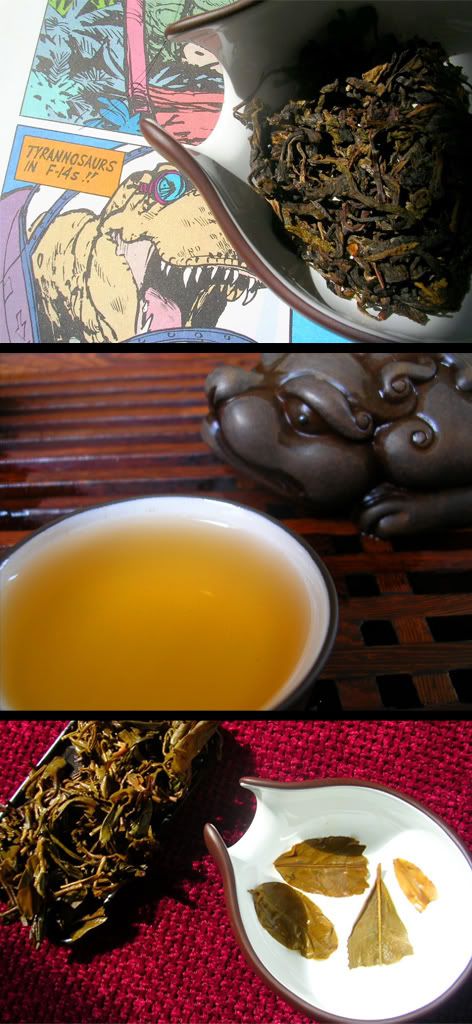
Very nice indeed, being long and whole. For an inexpensive cake ($20 from Royal Pu'er), they look decent. There is a range of colours on display, from red, to brown, to various shades of green. There is a grape-like scent of maofeng about them. Green tea aromas usually arouse suspicion.

3s, 5s, 10s, 30s, 60s, 90s:
The initial lid-scent is quite sour.

The soup is a straight orange, of average clarity. The beidixiang is a very quiet sweet grassiness, with a sweet-sour lengxiang, akin to the lid-scent. This leaves me uncertain of what to expect from the pinmingbei.

The character is unusual indeed: it is low, like a dark Chinese medicine, but with a fresh mushroom character.

The tea is tingling and active on the lips and tongue, and the texture is fair. A direct, but not overpowering, ku swells to a fair huigan, that leaves the mouth watering. The chaqi is noticeable in strength, at least.

This tea has to be shown a strong hand, as it becomes underpowered if the infusions are not repeatedly and significantly increased in duration. Right to the end, it remains buzzing and active in contact with the lips and tongue.

Wet leaf:
Fairly whole, and small-to-medium in size. They are a touch thin, but nothing too serious.

Overall:
Active, quite smooth, with that pleasant, swelling huigan. It is a "second division" tea, but doesn't make any claims to be otherwise, at $20. For the money, I like it. I was hoping to be thrilled into buying a tong, but instead, I am mildly amused enough to have bought three cakes.


Addendum
27 April, 2008

This tea tasted fresh, pleasant, and exhibited a decent acidic aftertaste that left me satisfied. While not the most complex tea in the world, it gave me a solid mix of broad flavour, coupled with a particularly enduring aroma.


Addendum
12 April, 2009

One year later and this tea is coming on nicely. It is dark - even darker than in the photograph above. The soup is orange, and the flavour is a decent mix of smooth straw-like characteristics, with an aftertaste of tobacco. It has some potency, and hints of redness are beginning to show in its blend. I'm very pleased with the manner in which this is aging.


Addendum
February, 2011

This trio of cakes has been with me for four years now, and the cakes themselves are just about to celebrate their fifth birthday. They were cheap and very cheerful when I bought them, but their significance is that I have tried them most years since buying them.  Due to the pressures of time, I can't drink all of my tea all of the time, and so this cake, in particular, is a very useful indicator of the effect of English storage.


2006 Gedebaohao


It was a simple $20 cake from a minor label, but I thought well of it at the time.  My notes above remind me that I have enjoyed its limited charms each time that I return to it.


2006 Gedebaohao


For a small-label, somewhat mainstream cake, it has a "hand-produced", artisan feel to it.  The compression is loose, and the leaves are mostly whole and well-preserved.


2006 Gedebaohao


The whole cake has a rich, heavy aroma of woody leaves; it has positively increased in character and potency.


2006 Gedebaohao


My expectations are low, but hopeful, as I sit down on a slow Saturday morning.


2006 Gedebaohao


It pours a solid orange colour, which darkens rapidly in contact with the air, as if it is alive and well.  All of the laoshu cakes that I have tried exhibit this evidence of activity, and so I take it to be a good sign that the cake has not died, and become flat.

The character in the mouth is genuinely surprising - an unexpected beauty, all of a sudden.  Its body is thick, and it grips the tongue well; the effect is sweet and clean.  In the throat, a resounding woodiness - the tea has aged surprisingly well, and is developing into something significantly different from its original mushroom-and-straw origins.


2006 Gedebaohao


Encouraged as to the efficacy of English storage, I spend several hours with this new-found gem. It was a solid tea at its beginning, but time has been kind to it. I feel some relief as I look over the stacks of tong after tong, every little such experiment heartening me to a small, but significant, degree.

03 October, 2007

Dragon Teahouse Tasting

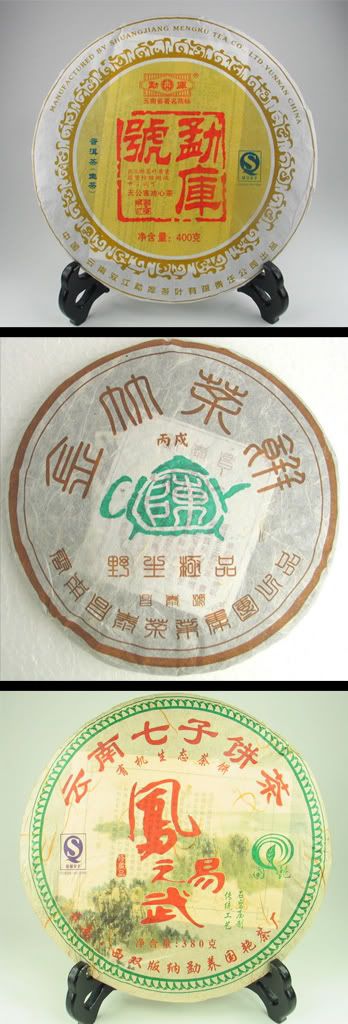
Many thanks to those brave souls that took part in the recent tea-tasting event. The three cakes in question [pictured] were:
Thanks to the tasters for all of the notes, and thanks again to Gordon at the Dragon Teahouse for being so good as to provide the tea, and go the considerable trouble of posting the samples.

An extra special award for service above and beyond the call of duty goes to Doddy for managing to match each tea with a different comic book!

Clicking on the links above should take you to the notes for each tea.

For completeness, see also notes on the 2007 Guoyan "Phoenix of Yiwu" at Tea Logic, and Ancient Tea Horse Road.