Showing posts with label 1980s. Show all posts

08 June, 2015

Rolling the Dice, Playing Croquet with MJOLNIR

Every time drink the pu'ercha, you're rolling the dice - let alone before buying the darned stuff with the hope of it aging nicely.  We are, therefore, no strangers to risk.  We are not risk-averse.  Indeed, there can be little chance of reward without risk.  It's all about playing the probabilities.  You gotsta play the numbers, as the wise man once said.


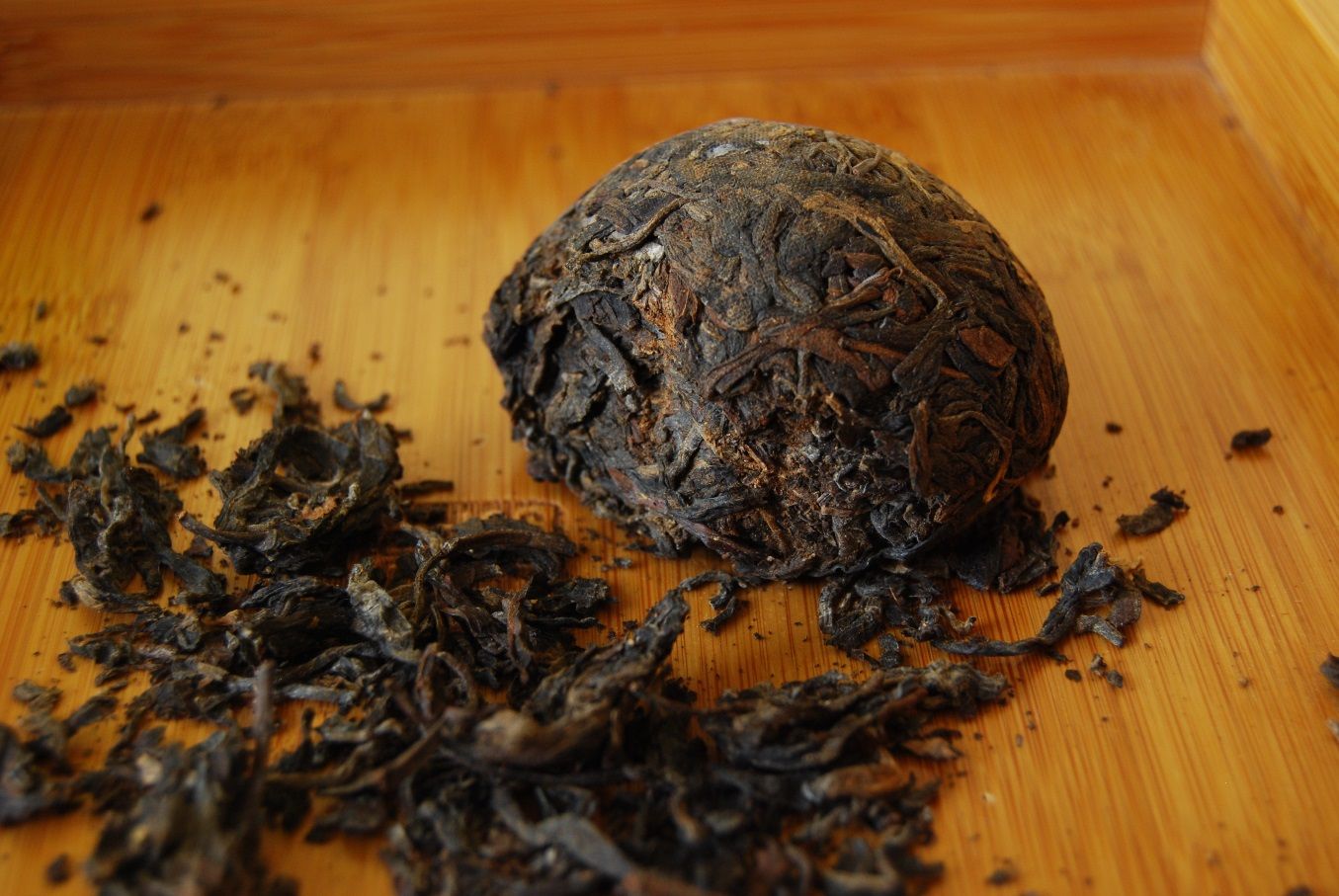
I've been through the 1980s "Yiwu Maocha" from Teaclassico in the past (notes here).  That was in autumn of last year, in which I concluded: yum.

Sometimes, when you've time for a tea session and that time is becoming ever more scarce in its availability, you simply wish to minimise risk.  You wish to set aside learning and experience, and just get down to some tea that is THE MIGHTY THOR.

In this wise, I opted for low-risk 1980s maocha.  It is a Mjolnir among teas.


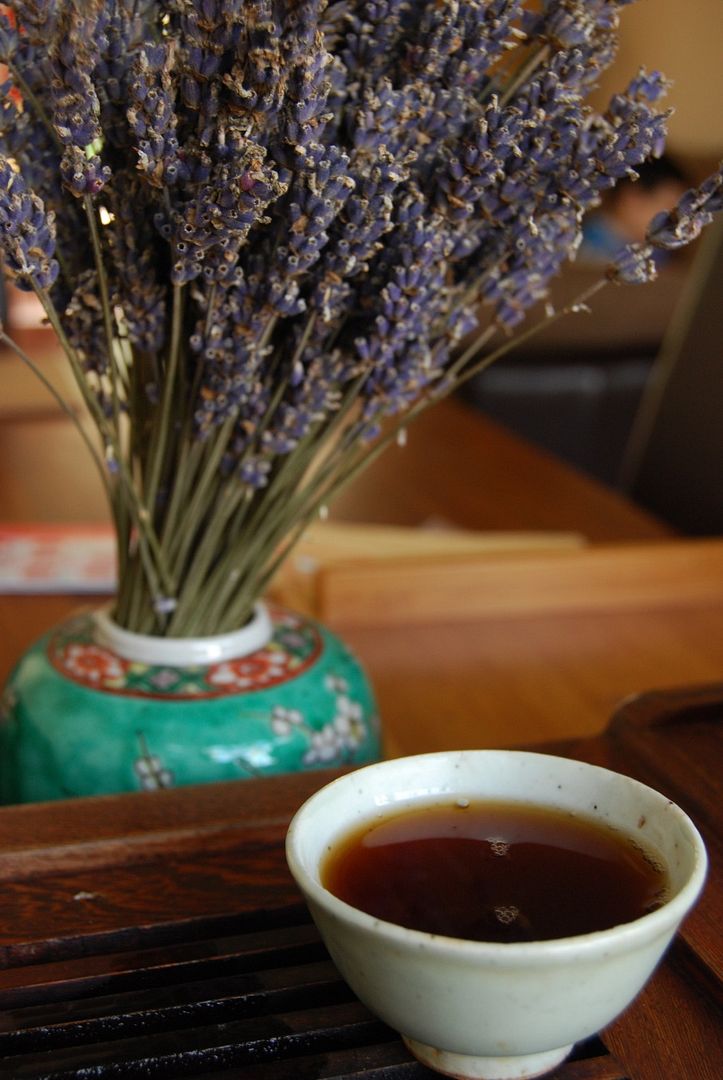
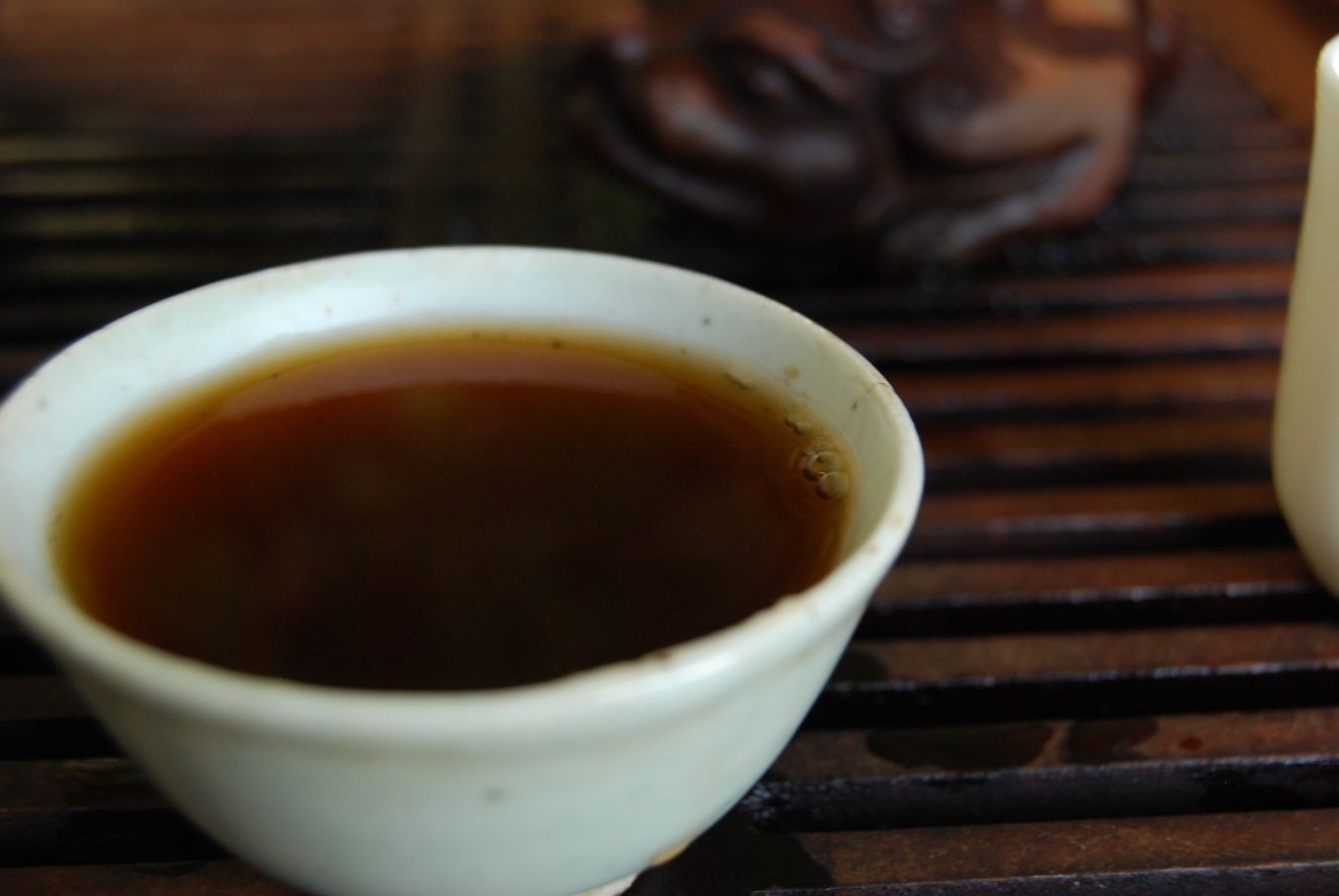
The photograph really emphasises everything we need to know about this tea.  It is so very good, and so very dependable, that it completely satisfies my desire to avoid risk.  The only hazard in such a session is to one's wallet.  Seriously, this one is wallet-critical in terms of risk.

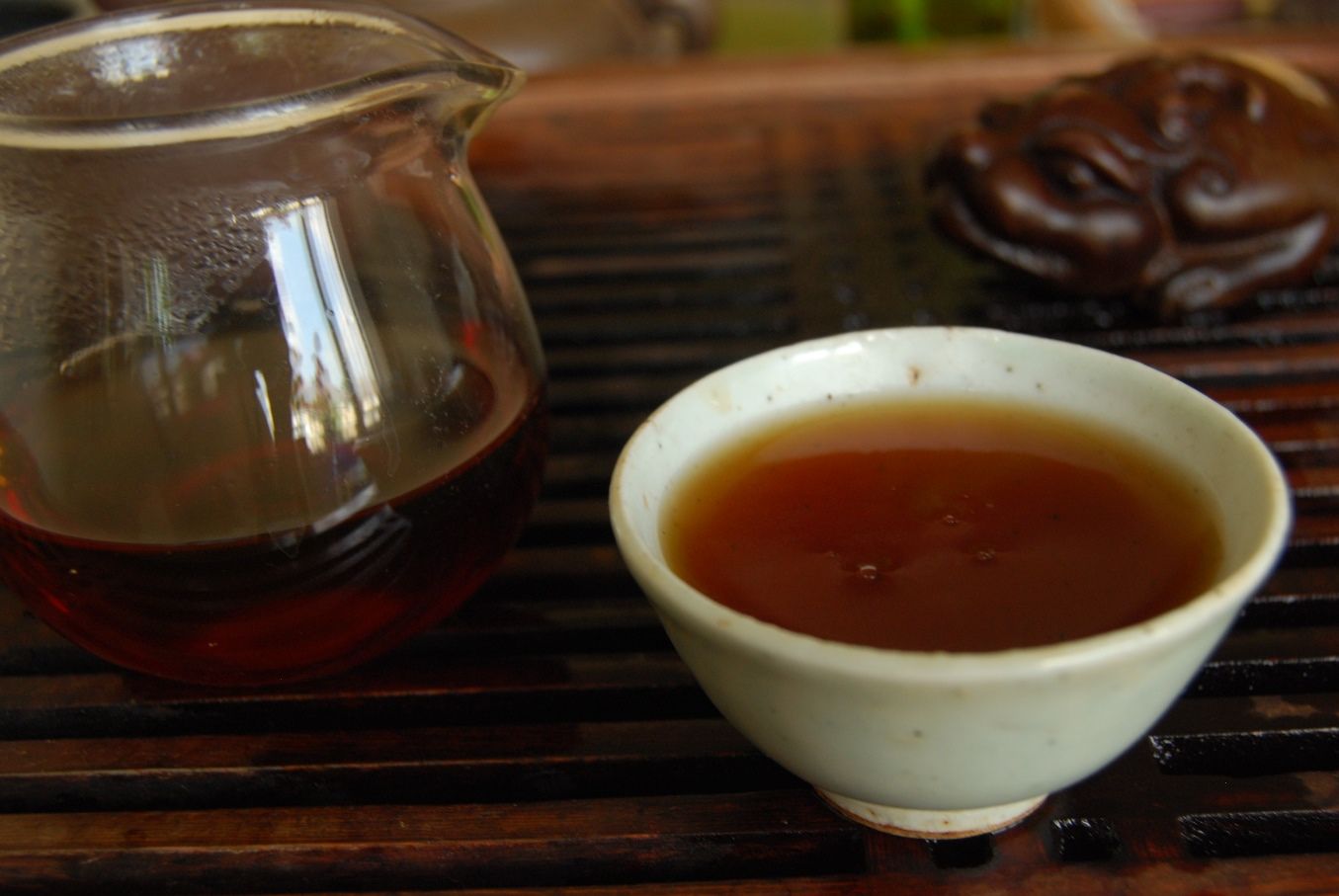
It is instantly (INSTANTLY) dark, and even the first infusion is smooth and gentle in its texture.

It reminds of one of family heirlooms, of sorts: a wooden indoor croquet set, made for very young children, which belonged to my mother, when she was a girl in rural Anglia.  It then belonged to me, in due course, and its dark woodiness left a lasting impression on me - the scent of the dark, sweet wood in particular.  This croquet set really made an impression on my growing senses.

This 1980s Yiwu Maocha is almost the perfect recreation of that wooden croquet set.  It is a state of remembrance in which I dwell for the entirety of the session.


...and some days you wish only to roll the dice, and let the chips fall where they may.


I do not know where this cake comes from - Gentle Reader, if it is from you, then please accept my thanks.  Let's roll the d6...


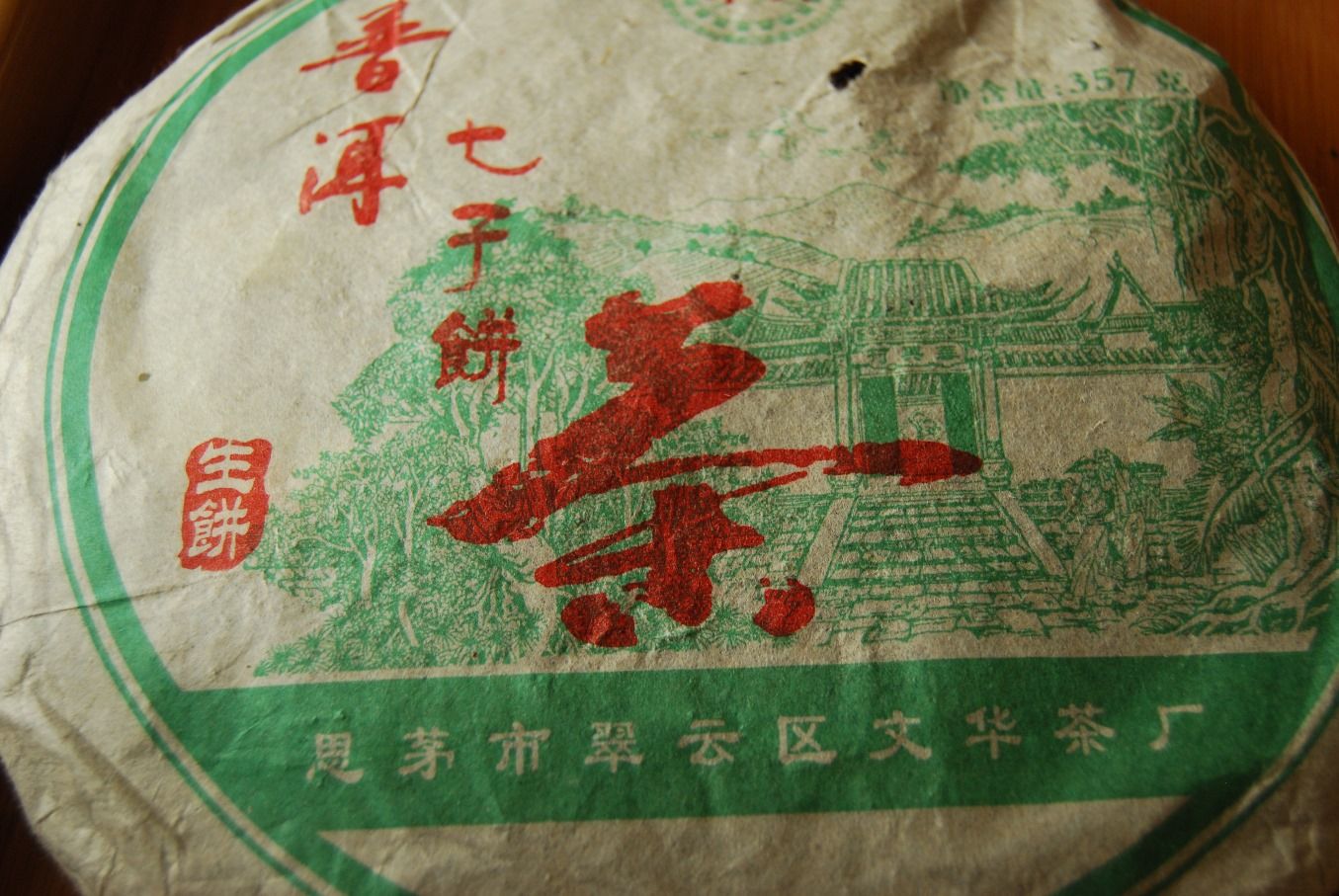
This cake looks good, does it not?  The wrapper suggests that it is "Simao Cuiyun Wenhua", where Cuiyun is a town in Simao prefecture, and where "wenhua" is (very approximately) "tradition".  It also has a stamp tha reads "huaxing", which "means that the company is traditional", according to my dear wife.  Experience suggests that I rather like random Simao cakes, and so I am optimistic.


This cake dates from 2005, and its darker shade of leaf, along with the quite well-preserved maocha, suggests that we might even have something of decent "artisan" status on our hands.


Oh boy, does this cake suck.

Suck.

Suction of a manner that I have not experienced for some considerable duration, in fact.  There is real, true suction on offer here.  It has the sweet, sticky character of red pu'ercha with a very low ceiling indeed - its processing has left it almost nowhere to go, and its dry storage has not been kind.

It is aggressive on the tongue and lips, and I do not mean that as a compliment.  This is agrochemical all the way.   The sensation persists for some minutes, and I have only had two small cups from the first infusion.

My poor, poor tongue.  I nurse it back to health with some of that 1980s Yiwu Maocha with which I started this article.

What did I learn?  I learned that not every roll of the dice turns up the goods.  This stuff is as [insert derogatory adjective] as the [insert name of body part] from a [insert name of continental European country] mother.  Like, for reals.


after our meeting
only one of us, minister
will scrub nappies
10 October, 2014

Bigtime Bibendi

"OK, hard drinkers: let's drink hard."

Perhaps George Clooney's finest hour.

In keeping with the spirit of George's famous utterance, Neil of Teaclassico has kindly provided us with some hard drinkin'.


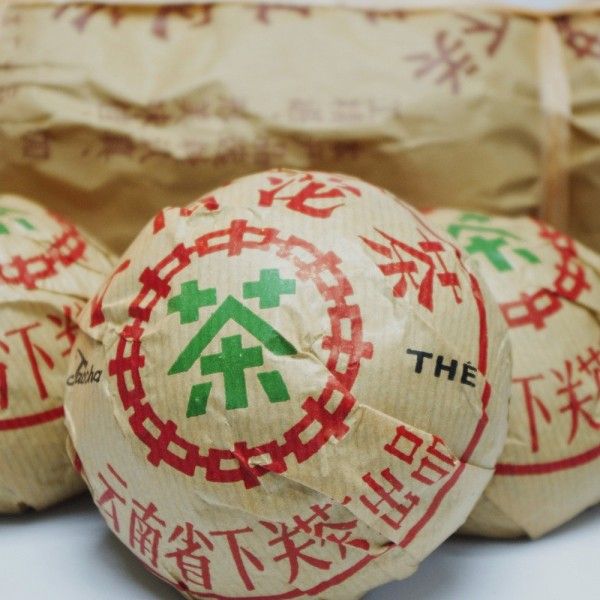
1999 "Xiaofa" Xiaguan French Export shupu


Surprisingly, this "faguo" [French] export tuocha smells of neither garlic nor onions.  It has had 15 years of Hong Kong storage, which might account for that.  The leaves are on the larger side, for Xiaguan, and in truth they do have a distinctive aroma of what can only be called "fish".  This is not a problem, just an observation.


Tiny Death Star + shupu


The piscine aromatics do not continue into the cup.  What we do get is a big, stable, and enjoyable dose of shupu.  There is a particularly silky and thick texture that reminds me Xiaguan really know their way around the manufacture of tuocha.  I enjoyed it very much, but perhaps not quite enough to spend $89 on it.


Yet more serious is this: a 1980s maocha from the Yiwushan area.


Pictured above, this is a big, deluxe pile of a tea.  My expectation is that the older maocha gets, the weaker it gets.  This one, however, still seems to be quite strong, which makes me wonder if it is actually 1990s, rather than 1980s - not that such things matter, anyway.


The colour is a more solid red than might otherwise be expected, which again leaves me thinking that it might be 1990s.  Its body is smooth, if a little thin.  There is a detectable trace Hong Kong in its history, but this has been aired out - presumably in Taiwan, along with many of the teas sold by Teaclassico.  HK then Taiwan is a good route to take.

Aged well, with deep HK mineral characteristics, this is a gentle, warming tea.  I read this tea in the background while annotating an MSc thesis for submission, and I think the tea put me in a good mood.


The star attraction, and one worthy of George Clooney's attention, is the following:


This 1997 Tongqinghao "Chi Cheng" is quite special.  It came in a sample bag as "Tung Ching Hao", and so I suspect that the cake's pinyin name is not actually "Chi Cheng".  Without seeing the characters, it is difficult to disambuigate Taiwanese (or, rather, Wade-Giles) romanisation.

The leaves, pictured above, surely already have you whipped up into a frenzy.  They have the scent of (you guessed it) Hong Kong.  The scent of the HK tea, that is, not the scent of the HK teargas.


The brown-red colour and BEEFY flavour are very welcome.  I used lots of leaves, knowing that it would not become overbrewed (HK tea, aged), and the result is a vivid and vibrant fizziness on the tongue.  It leaves a humid bookishness in the nose which, for a serial university type, is quite alluring.

Not that anyone ever goes in libraries any more.

With passing infusions, as the leaves open fully, the centre of the soup darkens in colour.  There is a wildflower note that reminds me of the 2003 Zipinhao from Zitenglu / Wisteria Teahouse.  Its core of deep, sweet mahogany is enjoyable and I am already beginning to wonder as to its price.


I kept adding leaves to Zidu, my pot, to prolong the session - so good was this tea, that I did not want to stop.  Eventually, Zidu was so full that I had to decant the leaves into a larger pot - and (its bulk pictured above) it was almost half-full when I did so.  I brewed them for two days, and they were decent.

Teaclassico will, I understand, be stocking this in future, but one cake could already be enpurchanised and coming my way.  Be ready, ye shelves, for Tongqinghao is very decent indeed.

26 September, 2014

And onto Beijing

In an ideal world, you will be reading this by the time I have made it to Beijing, via Shanghai, Kunshan, and then Suzhou.  My research programmes in China are keeping me busy, and I'm hoping to visit my friends in Maliandao's Taochaju and Fengmingyuan while in the capital, in addition to (if he's not in Yunnan) Mr. Dog.  I am hoping it all works out...


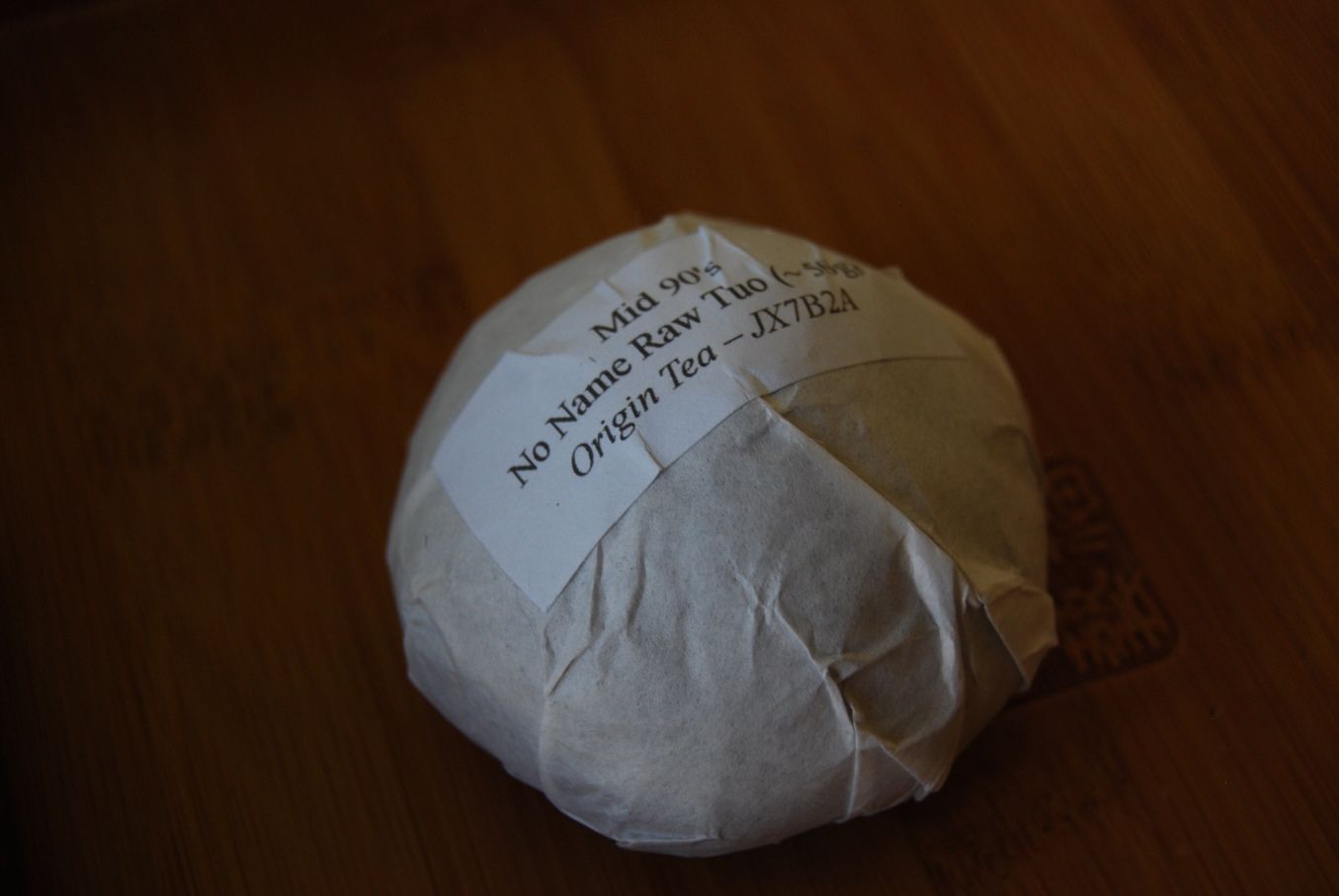
Before I left, I spent some time with some purchases from dear departed Origin Tea.  I wish I'd got to know Origin before they stopped trading, as I have had some very nice, and very nicely-priced, older teas from them.  (Or, rather, "him" - I think his name is Tony?)


This is your normal "white wrapper" entity: it's of known origin, its age is probably a guess, but it turns out that the tea is very decent.  Let us not get ahead of ourselves, however.


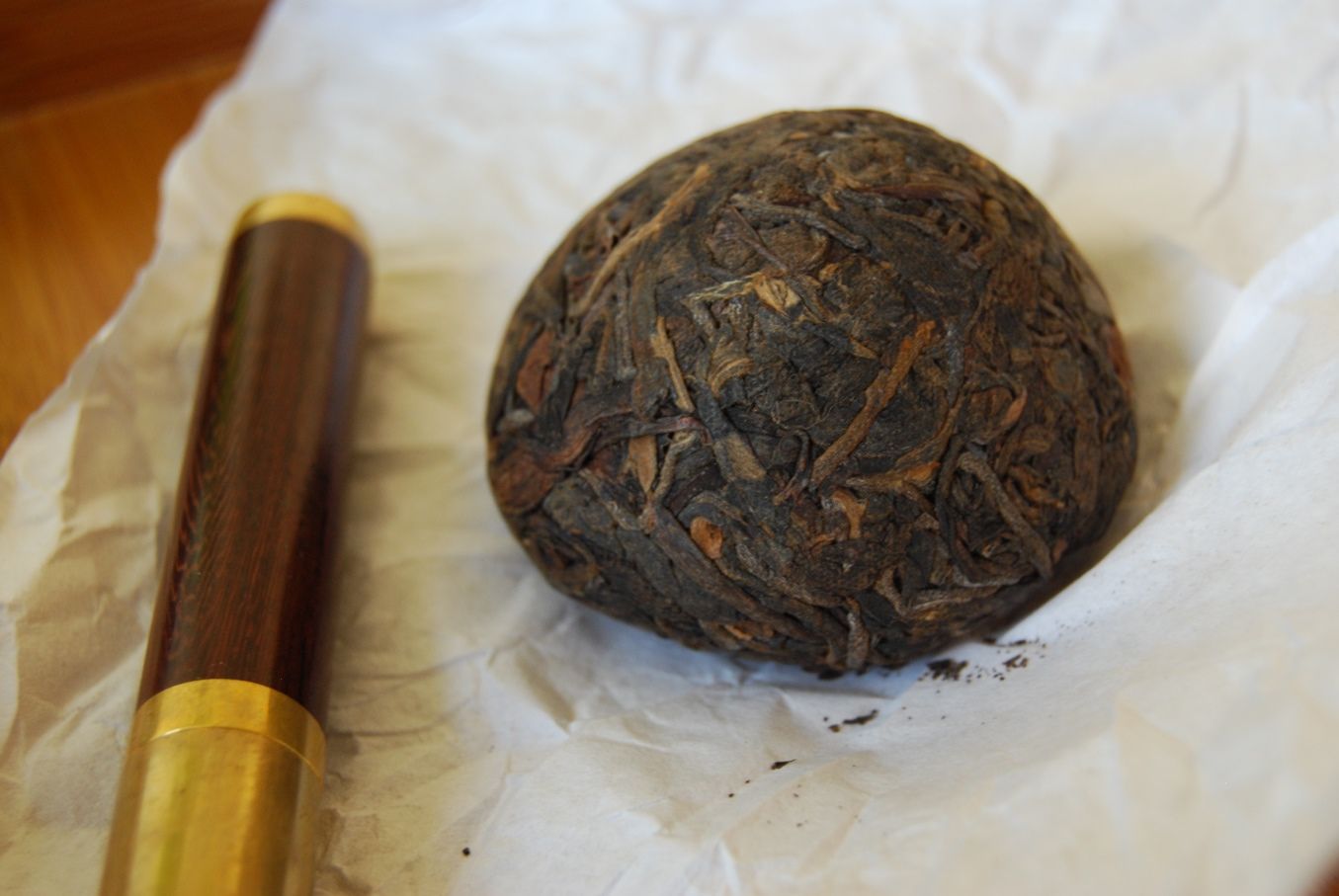
What you probably cannot see here is that the tuocha is rather small, being just 100g.  It was a mere £7.50, which is deeply inexpensive for something that might have some age.  I admire the fair pricing.

When brewed, it looks rather appealing:


This tea was at the recommendation of TG, my friend from East Anglia, and he certainly knows his onions.  And his pu'ercha.  The healthy little leaves have a shicang [humid-store] aroma, and they are dark (and perhaps even a little dull) on the exterior face of the tuocha, as if the humidity had been intense.  I expect, from their appearance, that they are a touch younger than "1990s", but that is not terribly important.

Far more important is the fact that the orange-red soup carries the flavour of pure, sweet mould that reminds me of the Hunan Fuzhuan that I loved back in July.  The body of the brew from this tuocha is silky; there is little huigan, just the dark, raisin-like flavour of sweet mould.  The humidity has been a bit extreme (hence the dull surface): all that is left is the fuzhuan mouldiness, and so it tires early.  It is cheap and quite cheerful, though.


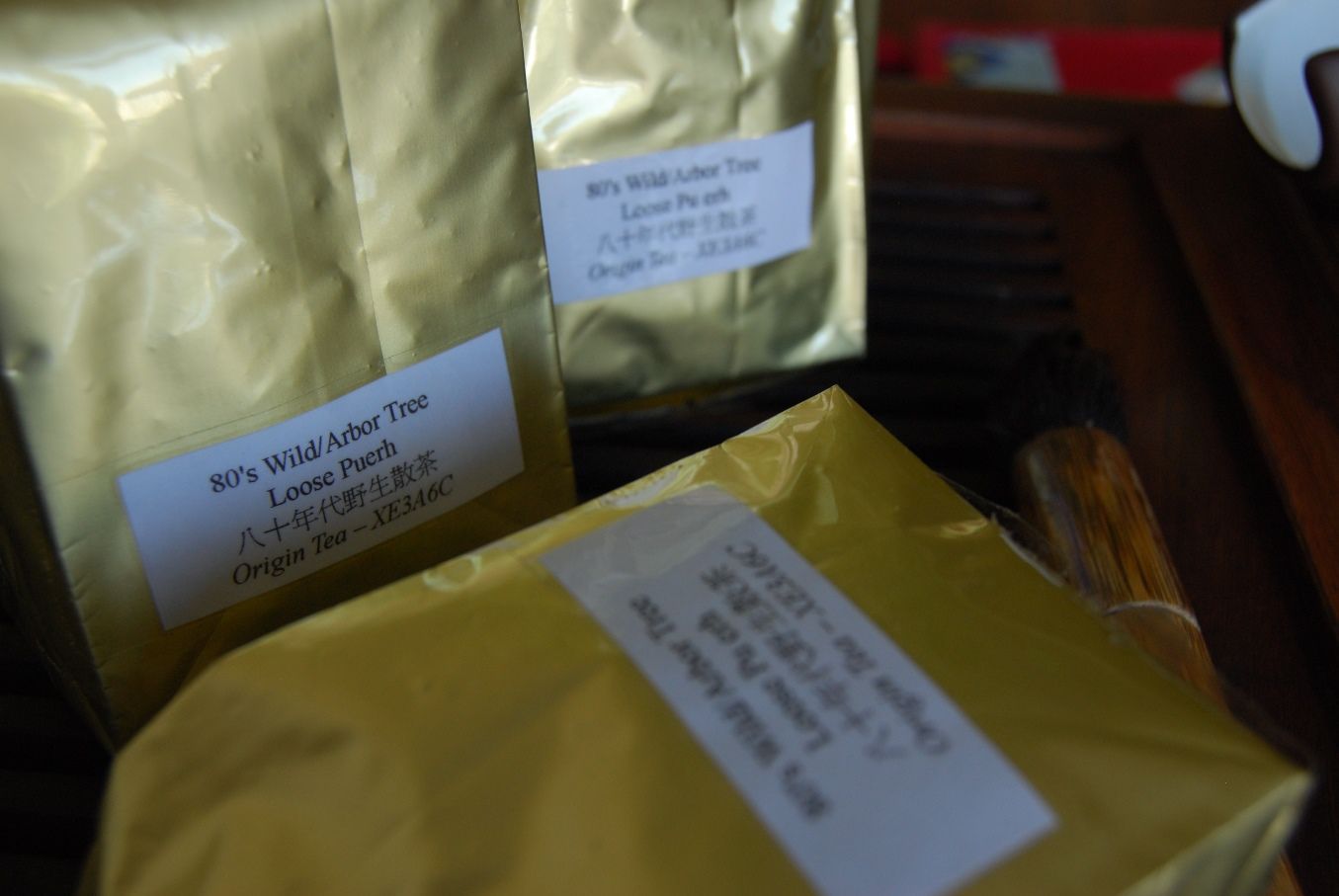
Much more serious is the 1980s "wild arbor" maocha, of which the following sacks arrived...


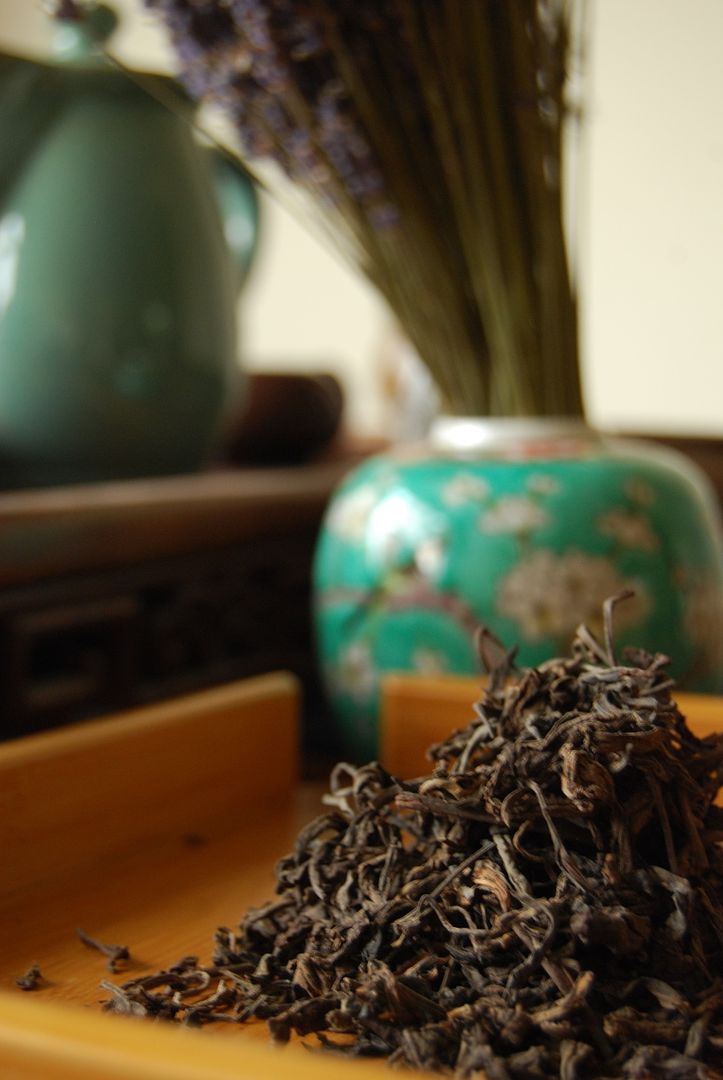
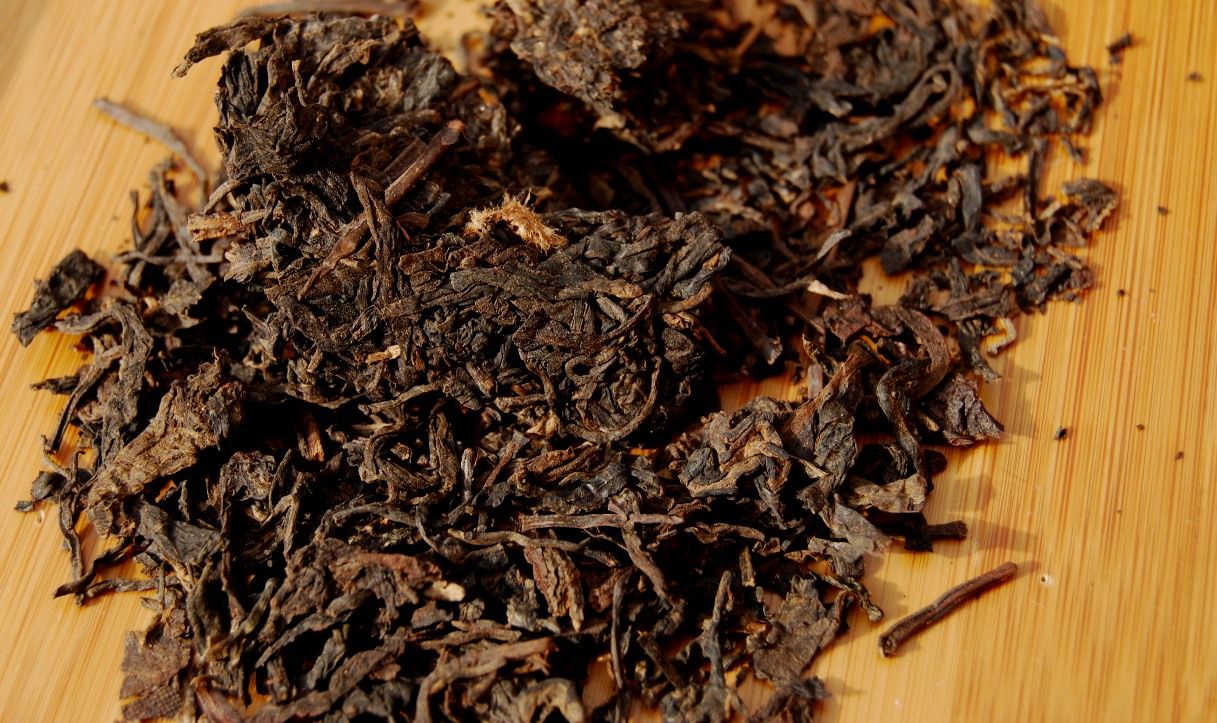
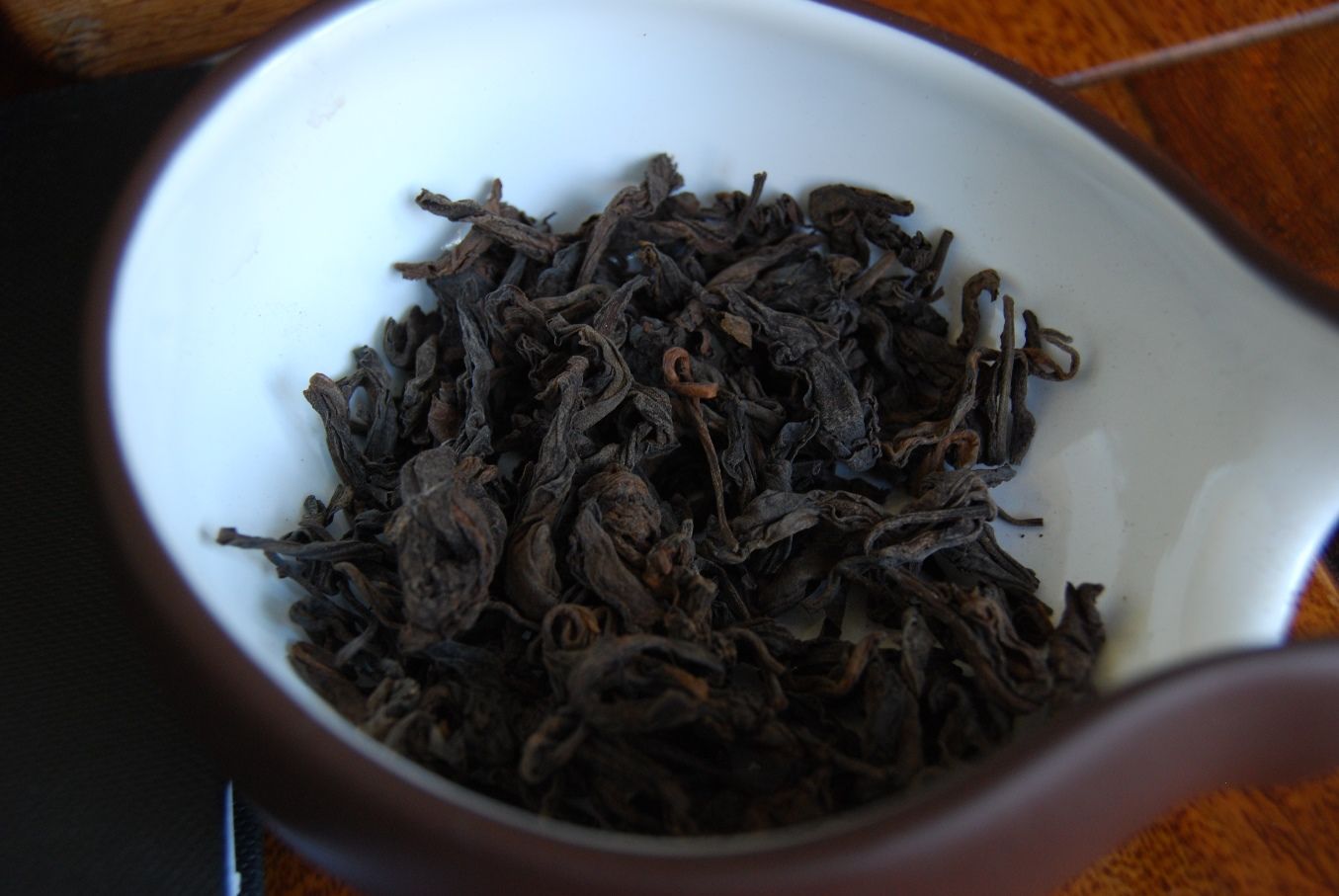
This loose-leaf tea looks rather tasty, as you might agree from considering the photograph below.  It has the chocolate colour of old maocha.


Even though the first infusion shows that the tea is not yet fully awake (which is unusual for maocha), the initial aroma is solid in its sweetness (if short-lived), while the soup is soft and rounded. 


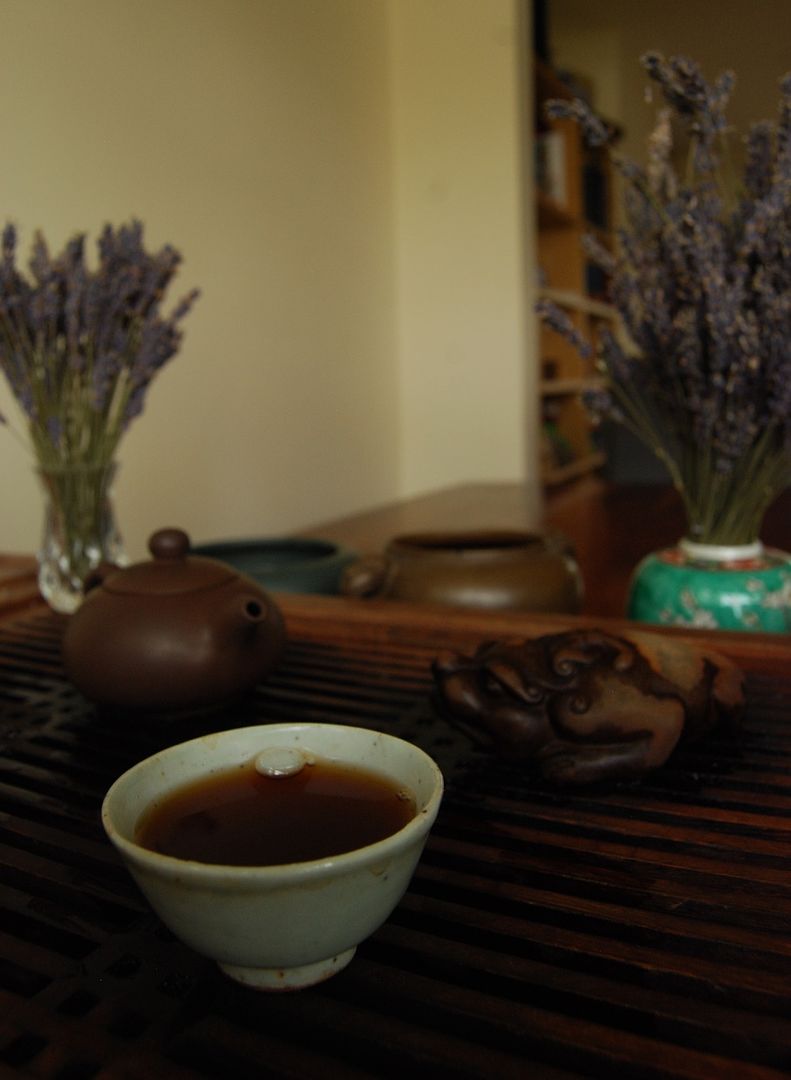
It transpires that this tea is not very thick, and that it requires some long brewing to get proper "tea" out of it, but the result is excellent: as pictured above, we find ourselves with a fantastically dark soup.  Brewed long and hard, with lots of leaf, it is tarry and sweet, while always being soft and comforting on the stomach.

Yes, it is weak, in the way of most aged loose-leaf pu'ercha, but you can always add more leaves.  Under-the-tongue dark sweetness prevails.  At the end of the session, I have used quite a lot of leaves, and so I pop them into a container and take them to my lab for extending brewing as a "background" tea.  This one is priced at £70 / 300g.  Not cheap, and probably from the 1990s rather than the 1980s, this is worthy of comparison to unaged modern shengpu.


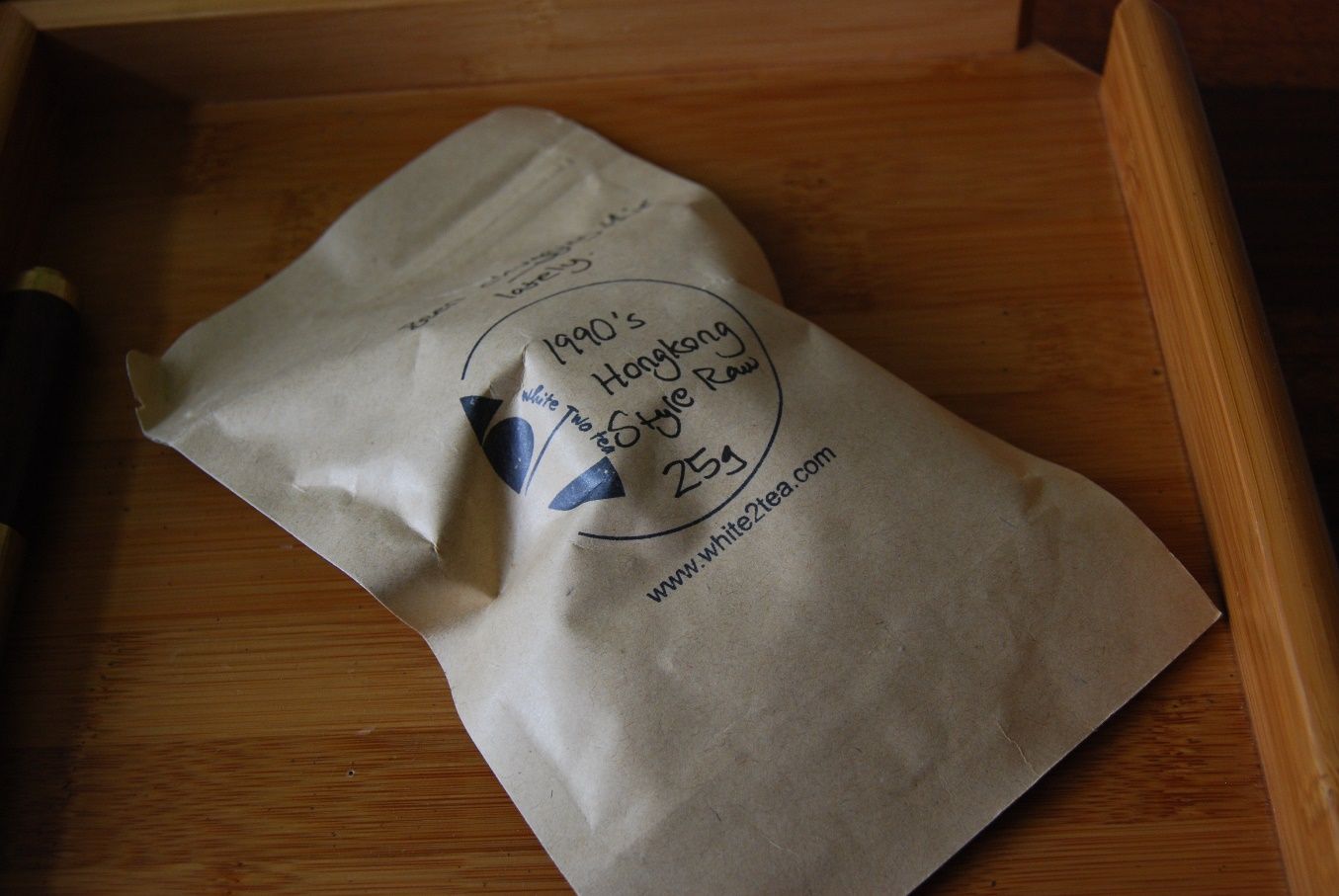
Changing gear, but staying in the 1990s, I'd like to include another humid cake - this time from white2tea.


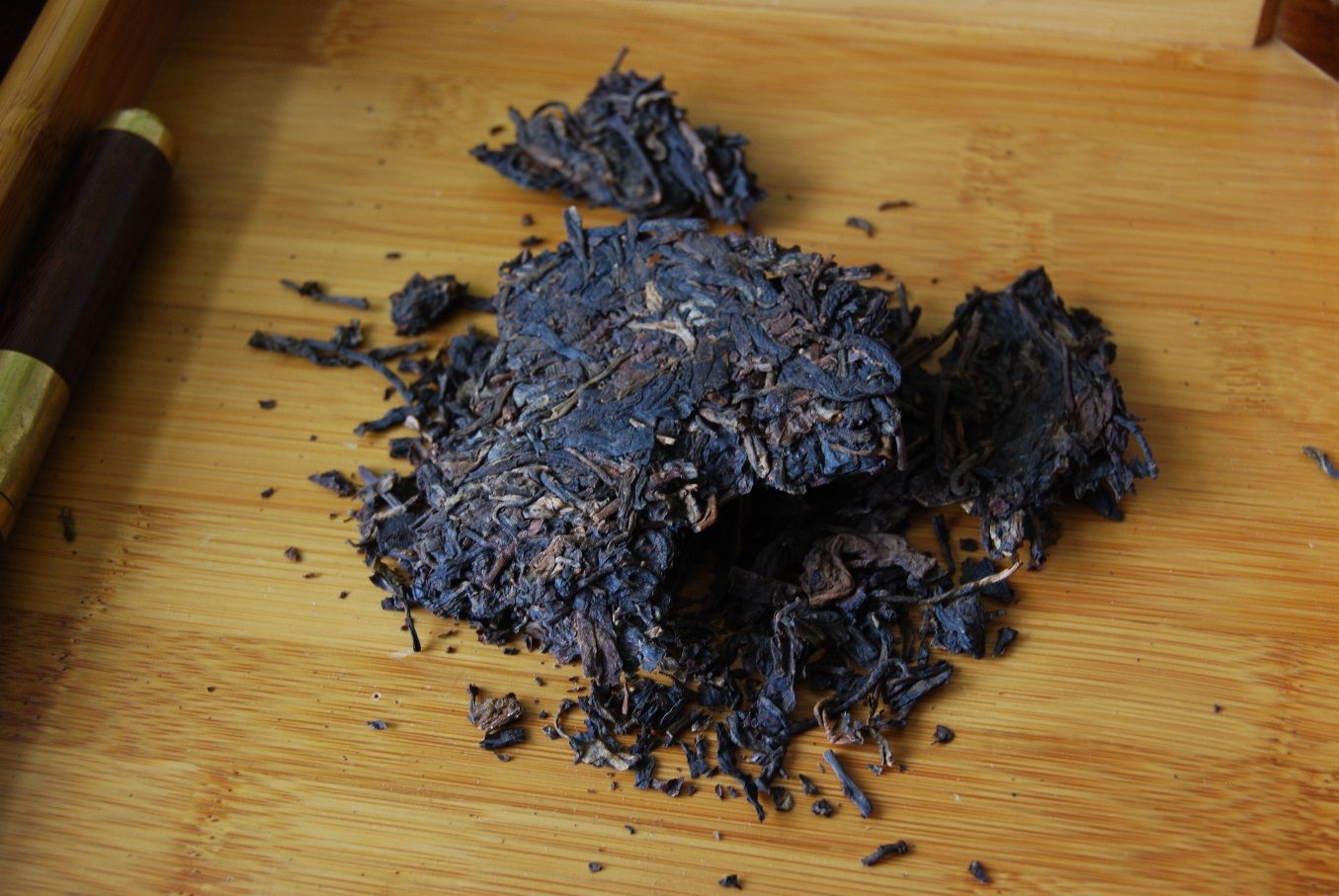
The leaves do, indeed, seem as if (i) they hail from the 1990s, and (ii) have been through Hong Kong.  There's a good chance they were there in Hong Kong when the British were, in fact.  The dear old chancellor of our university, the Lord Patten of Barnes, often likes to talk of his time as governor of the Fragrant Port, and he speaks with genuine affection.


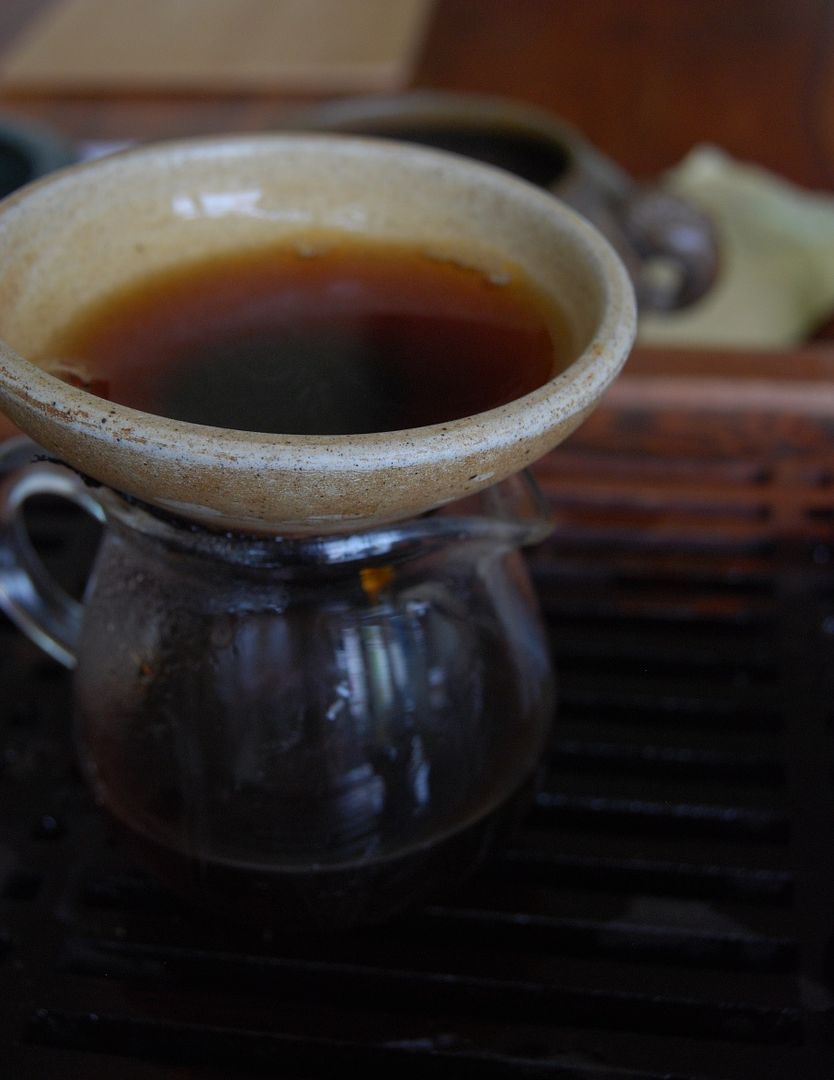
This is sharp, potent tea.  It is thick, dark, and red, as you will conclude from examination of the image below.  The sharp sweetness dwells under the tongue for whole minutes.  I am reminded that Mr. Dog does seem to know his way around a teapot.

Amusingly, his label notes, "I have been CHUGGING this lately".


I can see why.  It is eminently chugworthy.  I enjoy its density and cleanliness, which is admirable for old HK tea.  There is no shicang [wet store] character, as if it had been aired out, but it has the thick tar-like profile of tea aged in significant humidity.

What enormous fun.  At $150, it is definitely worth considering.  Again, compare that price to modern, unaged shengpu and see which you'd prefer.  I have made my choice...


Addendum
June, 2015

This is a session with the 1980s maocha.  The close, sweet humidity of the extraordinarily long leaves is calming.  I feel a little dizzy after being woken at a very early hour by dear Xiaohu.  This is a good tea, for old maocha.  Not weak, as one might expect, it is instead energetic and (damply) sweet.  Even its deep, red soup is reassuring.

22 August, 2014

You're a Dinosaur - A Relic of the Cold War

Despite M's famous words, sometimes it's OK to be a relic of the Cold War.

Today, I am going to show you some photographs of black, gloopy teas from bygone days, one of which is definitely from the Cold War period.  All three of these teas were provided by Teaclassico, a splendid outfit of which I have written before.


1999 Tongcanghao

First up: shupu.  It's cooked, it's composted, and it's suitably old so that the rank dampness has departed.  This is the 1999 (or 1997?) "Tongcanghao".

I'm not too sure what's actually happening with this cake, because it isn't for sale at Teaclassico, but only at Generation Tea - although it was supplied to me in a Teaclassico sample bag.  Hence, the tiny image above is from Generation Tea, where it sells for $135.  There is some overlap of the inventories of Teaclassico and Generation Tea, but the former has lower prices than the latter.  The owner of Teaclassico assures me that there is no relationship between the two teashops.

My eyebrows wobble slightly at the fact that Teaclassico has actually replicated the Wade-Giles spelling of this cake ("Tung Chang Hao") that is also shown at Generation Tea.  If there is truly no relationship between Teaclassico and Generation Tea, then I suspect that they simply buy their cakes from the same Taiwanese dealer.

I am aware of Taiwanese spelling habits!


Either way, this is some MEAN looking shupu.  Checks ye out the leaves above: they really put the proverbial lotion in the proverbial basket.  If you are going to buy composted tea, then you may as well buy composted tea made out of some seriously chunky leaves.  The Tongcanghao does just that.

The leaves do, it must be admitted, look a little grey.  This is usually a sign of some substantial Hong Kong influence, or, alternatively, the use of a hose to spray down the cakes as if you were Boris Johnson trying to calm down a rioting crowd of Londoners with a high-pressure water cannon.  Kek.


What does the combined effect of shupu composting AND tons of water do to a cake?  What on earth do you think it does?!  It makes it humid!  And dark!  And super black!  This is like drinking liquid evil.  It is Lucifer's tears, or some other even worse bodily fluid.

Unsurprisingly, given its moistmoistmoist treatment, there isn't much in the way of power or duration, here.  Everything it had has been accelerated out of it, and traded away for pure, gloopy, darkness.  It is a deal with the Dark Side, and its soul has certainly been transacted.

That said, if you were going to drink only one Tea of the Thrice Damned this week, you might like to try this one.  As hellbound beverages go, this one is quite enjoyable.


Washing ourselves down with holy water and then having the teatable re-sanctified by a passing exorcist, we turn our attention to something a little less macabre.


1999 Commissioned 8582


"Commission" usually means "rocking" when it comes to Menghai Factory.  Believe it or not, I used to find 8582 a little underwhelming.  Apache, among (very) many others have since turned my eyes to the light, through a substantial exercise in collective generosity, and I now admit the error of my ways, and enjoy older 8582s on a semi-regular basis.  The big ol' leaves certainly make for some decent aging, in the world before Dayi.


What was 8582 like in 1999?  If this cake is anything to go by, then I'd say it is not too bad.

The difficulty with this cake is that we have to peer at it through the lens of Hong Kong storage.  This is no bad thing, but it is not a lens that leaves it subject unaltered.  It has been aired out in Taiwan, apparently, and this leads to a good, clean, crisp edge that pleases - its Hong Kong background is entirely pleasant.


As always with older teas, I use tons of leaves.  It's not like you're going to be able to overbrew something like this (assuming that you use water-in, water-out infusions as is my habit).  It has a "beefy" sweetness that reminds me of non-Dayi Menghai, and which I like a lot.

It is sharp and abrupt, and, it must be stated for the record, that it doesn't really endure particularly, either in the mouth or in its number of infusions.  Its starting storage conditions appear to have taken the wind out of its sails.  The overall effect is very positive: the Hong Kong storage has focussed and heated its sweetness; the Taiwanese storage has opened and crispened it somewhat.

I was on the edge of thinking rather seriously about this cake (price $199), but the trio listed here eventually trumped a purchase decision.


Let's now return to the title of this article, and end with a relic of the Cold War.


1980s Yinminghao


Admittedly China was a very different place to Europe in the 1980s, but there remains a certain feeling of nostalgia for those of us who were alive at that time.  Not that I remember it particularly well, but I am definitely delighted to try some tea from that era.


This is a serious $329, which is far beyond my limit, and so, thus freed from any other considerations, I therefore get to enjoy the tea without worry about whether or not I should be buying it.  This is a considerable freedom, it must be said.

As pictured above, this is a blend of just about everything, from tip to stem.  It has the red-grey colour of old Hong Kong tea, and is faded and distant in appearance.


The first infusion requires absolutely no time to open, and this cake slams its foot onto the accelerator right from the start.  It is smooth, dense, and very slippery.  There is a fine, enjoyable core of Hong Kong mineral humidity.  The older this mineral character becomes, the more dense it becomes, as if being compacted by gravity.  The first few cups entirely clarify my mind, and feel most positive.

This is a big, soft tea, and it requires maximum attention.  Its consistency prevents extended description: it is long, vanilla-like, and smooth, and stays that way as long as I stay at the table.  It is quite something, and you might be well-advised to procure at least a sample, to acquire the data-point in your training set.

With thanks again to Neil of Teaclassico, it has been a fine week for tea.

24 June, 2013

It Tolls for Thee

...especially when Apache comes to visit.  Let's do this.


502 Dayi


I love me my Dayi 501 tuocha.  Apache and I have been trying to recreate its genius of late, and had two attempts at the Dayi 502 tuocha.  The latter is double the size of the former, at 500g, and is the second batch (the "02" in "502") from 2005 (the "5" in "502").
 
This tuocha is the "sample A" version from the link above.


502 Dayi


Sadly, even this "sample A" 502 version has sold out via Taobaowang.  Blink and you'll miss it.


502 Dayi


As always, the leaves are small and dense.  They retain some of the vigour of youth, perhaps aided by the tight compression common to tuocha.


502 Dayi


This is dry.  Really quite dry - but sweet, with tons to give in the wenxiangbei [aroma cup].  We kicked back for this first tea of the day, and enjoyed the "real Dayi flavour".  You may find yourself in the difficult position of not enjoying the real Dayi flavour.  It is an acquired taste, and not a refined one at that, but it is one that has been with me since I first started out in pu'ercha.  It is the taste of familiarity and comfort.


502 Dayi


I would have liked to have more of this "sample A" version of the 502 tuocha, but have instead acquired another version that was still for sale.  That latter version sits unwrapped on my tea-table, waiting for me to find the time for a session.


Apache has a certain skill at constructing the running order in a tea session.  With our palates awoken by a fresh young tuocha, we changed gear and headed into the lo-fi charms of a "25-year-old" old shupu.


25-Year Qiaomu Shupu


If you're skeptical about all of those modern cakes claiming to be qiaomu [arbor / tall-tree], then how do you feel about the claims of a shupu having qiaomu leaves?  The thought of putting high-quality leaves through the wodui [composting] process used to make shupu is terrifying, and highly unlikely to have occurred.


25-Year Qiaomu Shupu


This tastes very thick, and therefore marks itself as being a rather well-aged shupu.  We enjoyed the heavy flavour of Chinese dates.


25-Year Qiaomu Shupu


The colour of the soup pictured above goes some way to reassuring us that this is very decent shupu.  Yes, it opens with the common "fishy" character for shupu, but it stays thick and actually develops as the infusions pass, which is a rarity for this often-simple genre of pu'ercha.


I have a long relationship with the 2001 Menghai Yiwuzhengshan.  Check out the article in that link, if you will, Gentle Reader, and remind yourself of the notoriety of this cake.  It is the Menghai cake with the large green leaf design on the wrapper.  Thoughts of the Houde price-rush on this thing still send shivers of fear down my spine.  Talk about captive audience - in those days, there was no access to Taobaowang without a Chinese bank account (an actual account in a physical Chinese building), and even my wife found it difficult to access.  Hence, it was pretty much Houde, Yunnan Sourcing, and a few other early pioneers.  Methinks the proprietor of Houde (being a canny chap, and a doctor of engineering at my wife's university, among other things) must have made a righteous killing.  I guess that's what mercantile activity is all about.


2001 Menghai Yiwuzhengshan


Years later, the terror is diminished, and I begin to drink this tea carte blanche.  The soup, shown below, has a dark orange colour - but then, it always did, even when young.  It is powdery, smooth, understated and woody.

"Old taste", notes Apache.


2001 Menghai Yiwuzhengshan


Later infusions developed into a sharpness that was very satisfying.  Despite history, this cake has plenty to offer.  I don't know if I'll ever really enjoy it, though, due to the trauma of years past.


This is the 2001 CNNP 7432.  Note, it is not the 7532.  The former had its recipe fixed in 1974 (the "74" in "7432") while the more famous latter cake had its recipe fixed a year later ("75" in "7532").  Both have smallish leaves (the "3" in "7432").


2001 CNNP 7432


Apache notes the unusual character for chu (出) on the neifei.  In the wacky way of such things, this cake is called "sharp chu" because the top of its chu is not printed full-width.  It is such minutiae that allow hardcore enthusiasts to identify cakes.  I wouldn't say that I am a great expert of the printing of wrappers.


2001 CNNP 7432


Apache, pictured below, points out the "sharp chu"...


2001 CNNP 7432


This is not an inexpensive cake, with estimates in the range of £250-300 (approx. $400).  The blend, pictured below, has a little bit of everything within it - including stems and huangpian [yellow flakes].


2001 CNNP 7432


The reason that the minutiae of the wrapper are A Big Deal is because the tea tastes fine.  The soup, pictured below, has that effect whereby the meniscus is thinner and yellower than the heavy orange of the body.


2001 CNNP 7432


It is a bit ragged, actually, but has a lot of backbone - it is sharp and sweet, and heaven knows how tough this must have been when young.  This is despite the last five years being spend in Hong Kong. 


2001 CNNP 7432


I like it.  I appreciate its violence, and I like the fact that it has plenty of potential for further aging.  "Induces perspiration", has my journal...

Apache tells the story of a Russian colleague whose "day was ruined" after drinking a single cup of this tough little tea.  What better recommendation could one have?


"Game over", said Apache with a smile, on trying this last tea.


30-Year Tongxinghao


This old Tongxinghao might be the 1970s Tongxinghao that I encountered previously, and it is the king of the heap, today.


30-Year Tongxinghao


Soft, soothing... a sudden peace descends.  This is quite something to achieve in a household that has two very willful children. 

Xiaohu pummels a drum at my feet, and yet everything is entirely calm.  So... very... calming.


30-Year Tongxinghao


Long and sweet with proper chenxiang [aged scent], it is packed full of Chinese herbs and tastes like something you might get prescribed by a Chinese medic to treat cold limbs.  It combines being active and lively with being so mellow. 

It lasts forever, and we are happy.