Showing posts with label 1998. Show all posts

06 April, 2015

Neil Before Your Maker

Say what you want about drug pushers, they know how to get the job done.  I strongly suspect that NEIL of Teaclassico used to push narcotics / finance revolutions in his past, because he really knows how to get me to buy tea.

I feel unsafe around him.


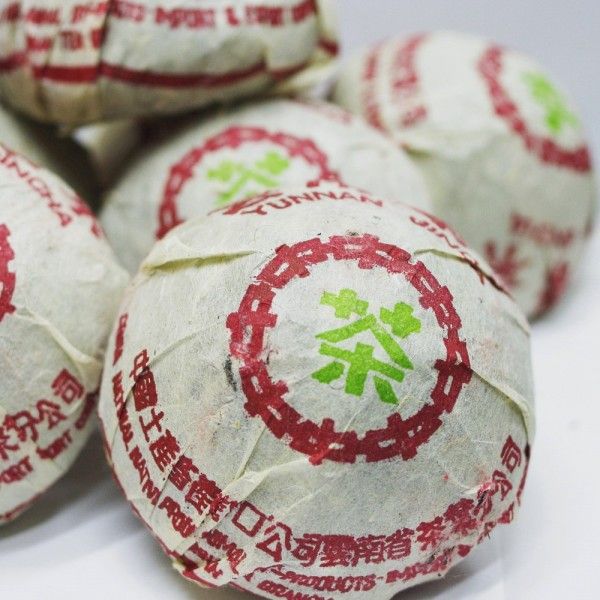
If this isn't a Taobao image then I'm a monkey's uncle.


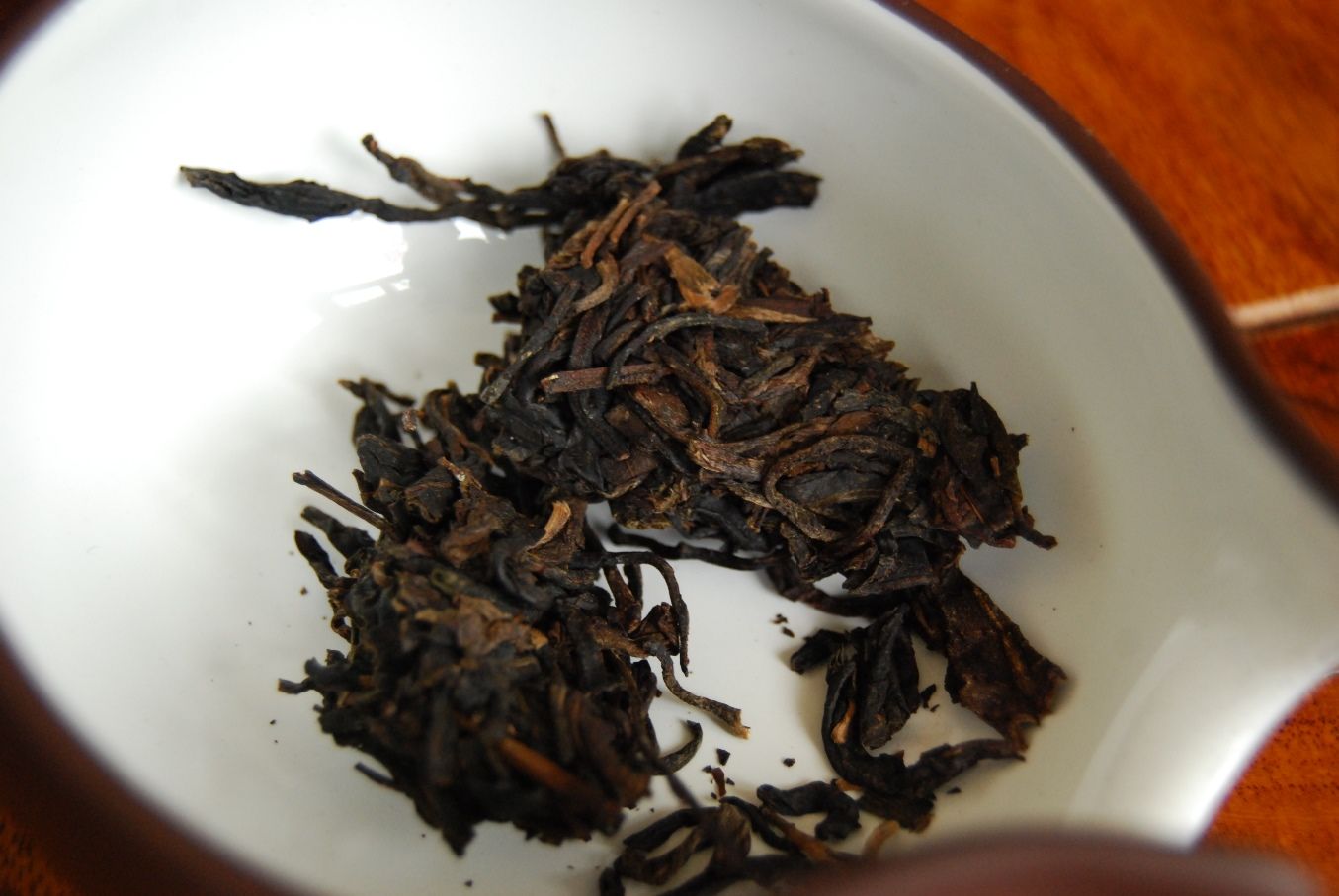
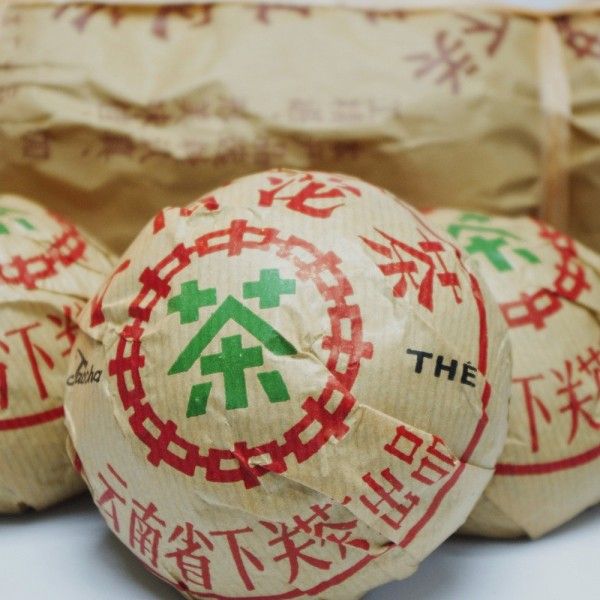
Let's open the batting with a "1990s" (aren't they all?) Phoenix tuocha.  (It is from the Dalian Lanjian outfit.)


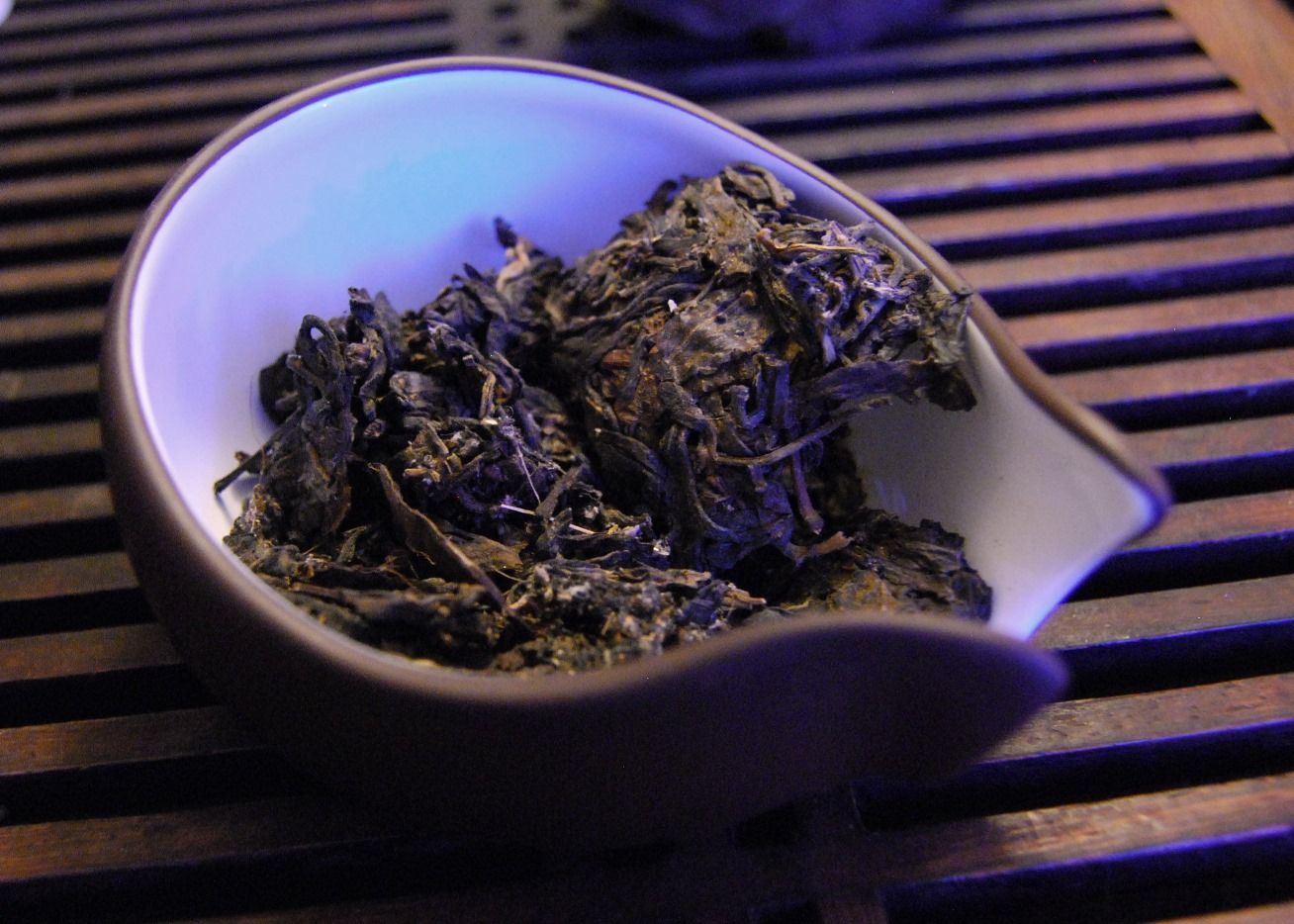
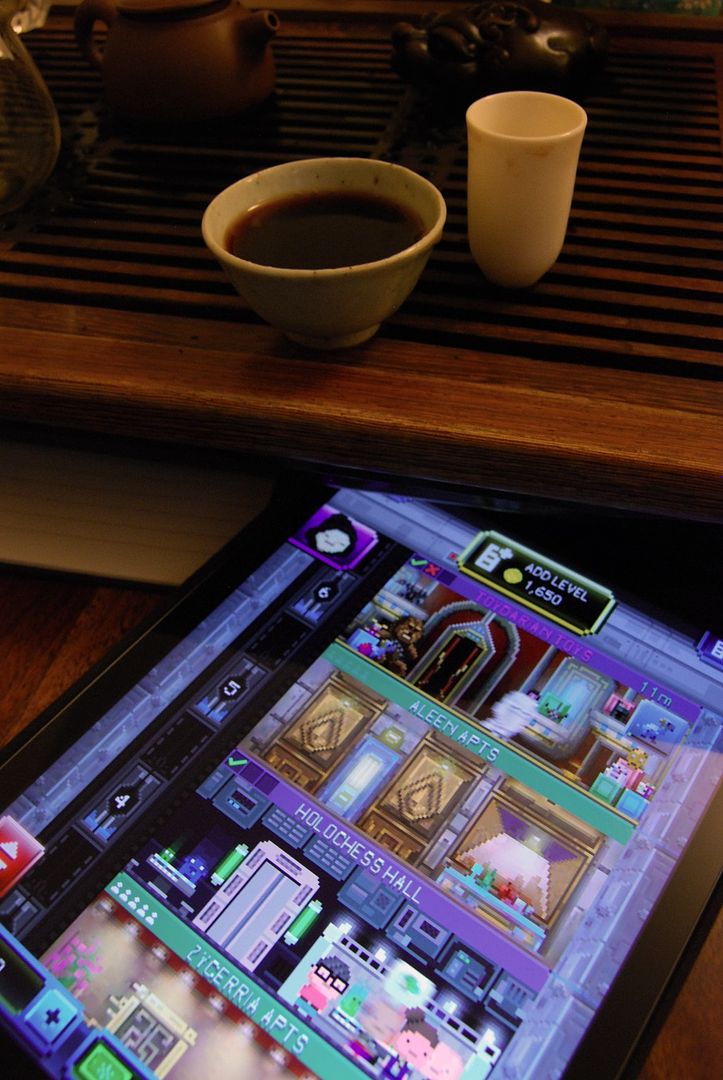
As you can surmise from the spooky blue glow in the above photograph, this sesh kicked off in the thin hours before dawn, when the children are dormant and the voices in my head are at their most muted.

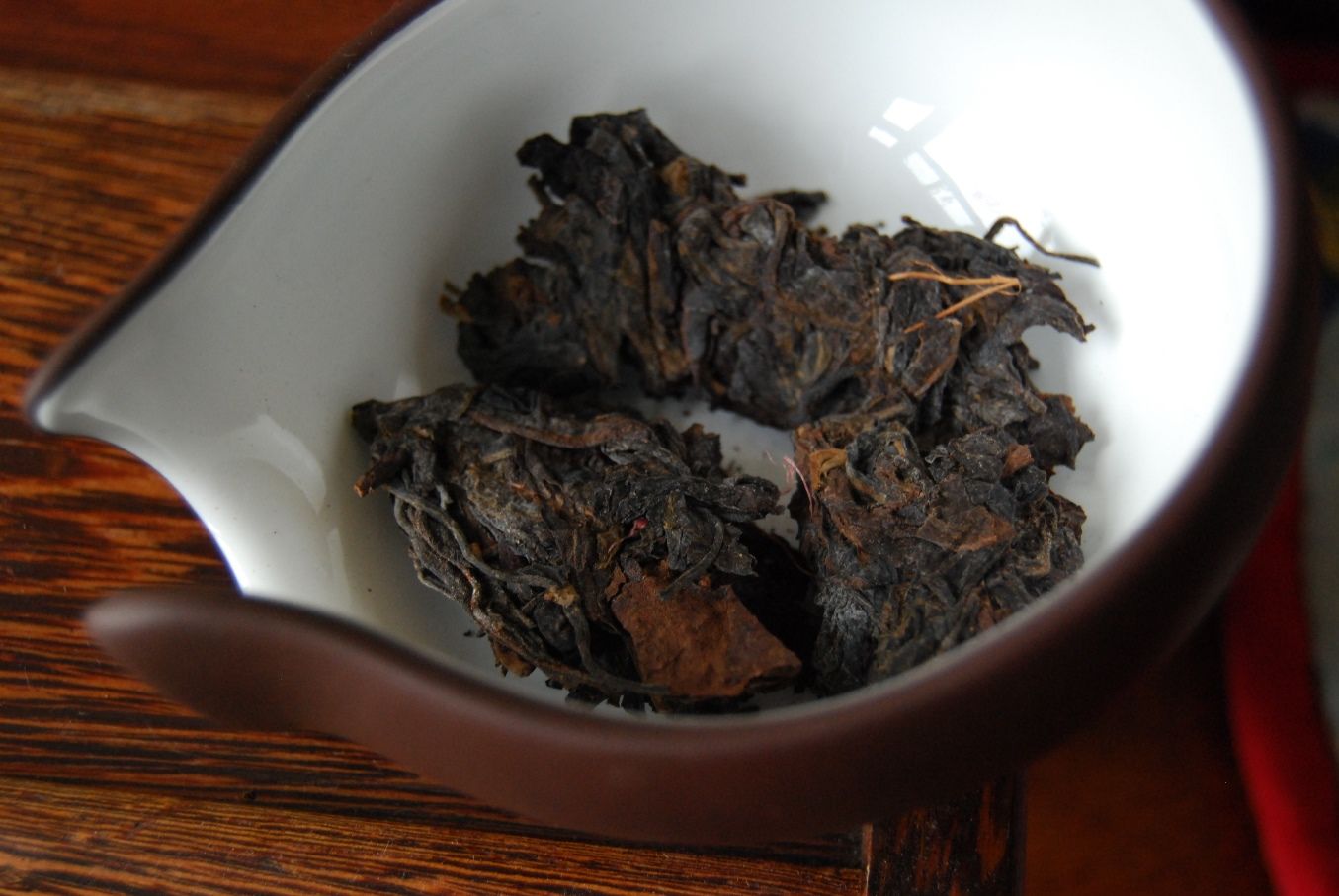
It's a tuocha, yes indeed.  You're looking at the tight little lumps of rock-hard leaves and concluding the same.  The weird thing about this session was that it occurred the morning after a rather heavy night - the heaviest in my college calendar, in fact.  They say that booze disrupts sleep, so maybe that's it.  Either way, this tea has some serious healing to perform.


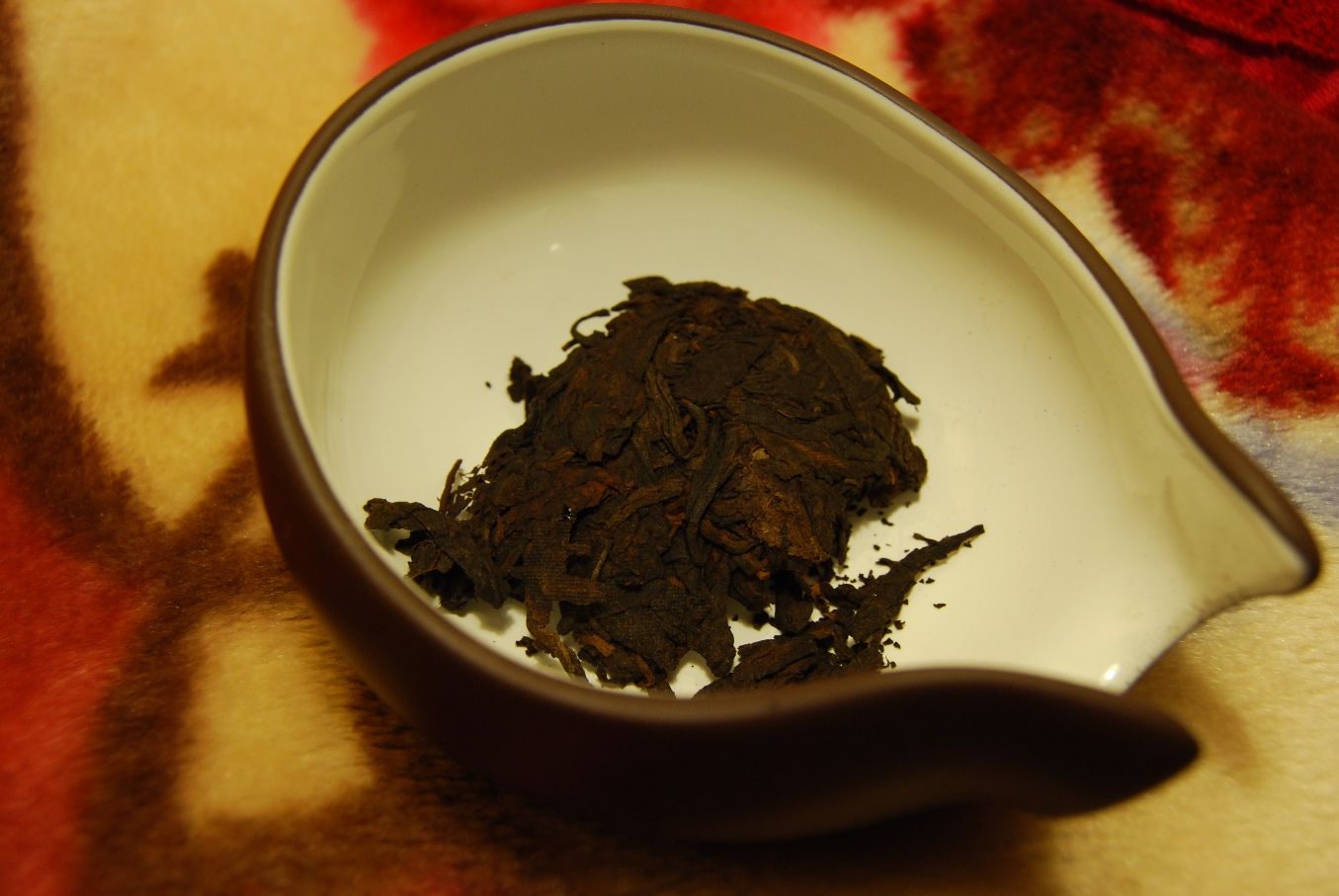
It is sharp and dark, with a "black" character to its flavour that might be due to its storage.  In common with my approach to all older teas, I used tons of leaves, because it's almost impossible to overbrew old tea.

Bad move.  Tuocha still retain much of their potency, thanks to that arrested development induced by the compression, and I was made to pay the price for my hubris.  Tail between my legs, suitably humbled, I took some leaves out of the pot and got things back under control.  The result is a pleasingly sharp (sharp!) woody sweetness, much as you might expect from an older tuocha.

The scent of this tea, curiously enough, is one of its better features: it makes me feel relaxed.  It is the scent of Good Times.  Does that make any sense at all?

It must be said that I didn't buy this tea; at $139, it's still just a tuocha, after all - even for all its lovely scent.


The same cannot be said of the next cake, which is, I have concluded, probably two parts cocaine to every three parts maocha.


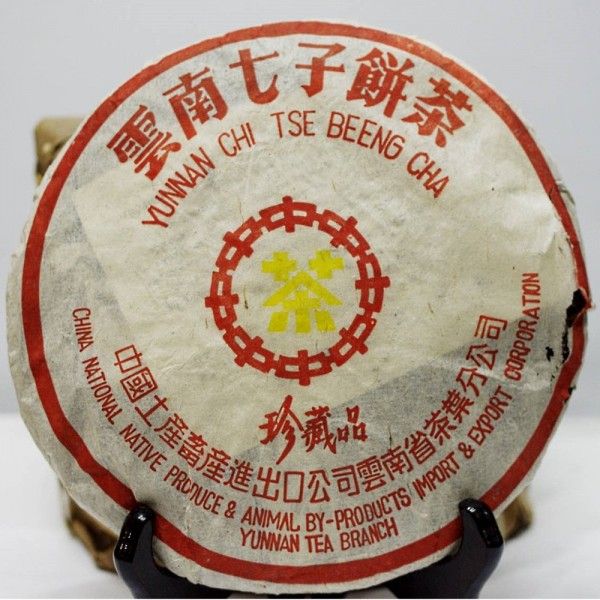
This is the 1998 CNNP "Zhencang" Hongyin [red label], which, if you value your bank balance, you would be well advised NOT TO TRY UNDER ANY CIRCUMSTANCES.  I mean this.  The addiction will take hold of you after just one session, and, as happened with me, you will be both terribly grateful and yet simultaneously terrified (and quite a bit poorer).


You can't see the cocaine in the above image, but rest assured: it is there.  Waiting.  Your neuroreceptors are buzzing at the prospect, I can tell.  This tea knows that, and sits there, rubbing its hands and cackling to itself, like Donald Pleasence sitting in a turny, black SPECTRE chair.

Be afraid.


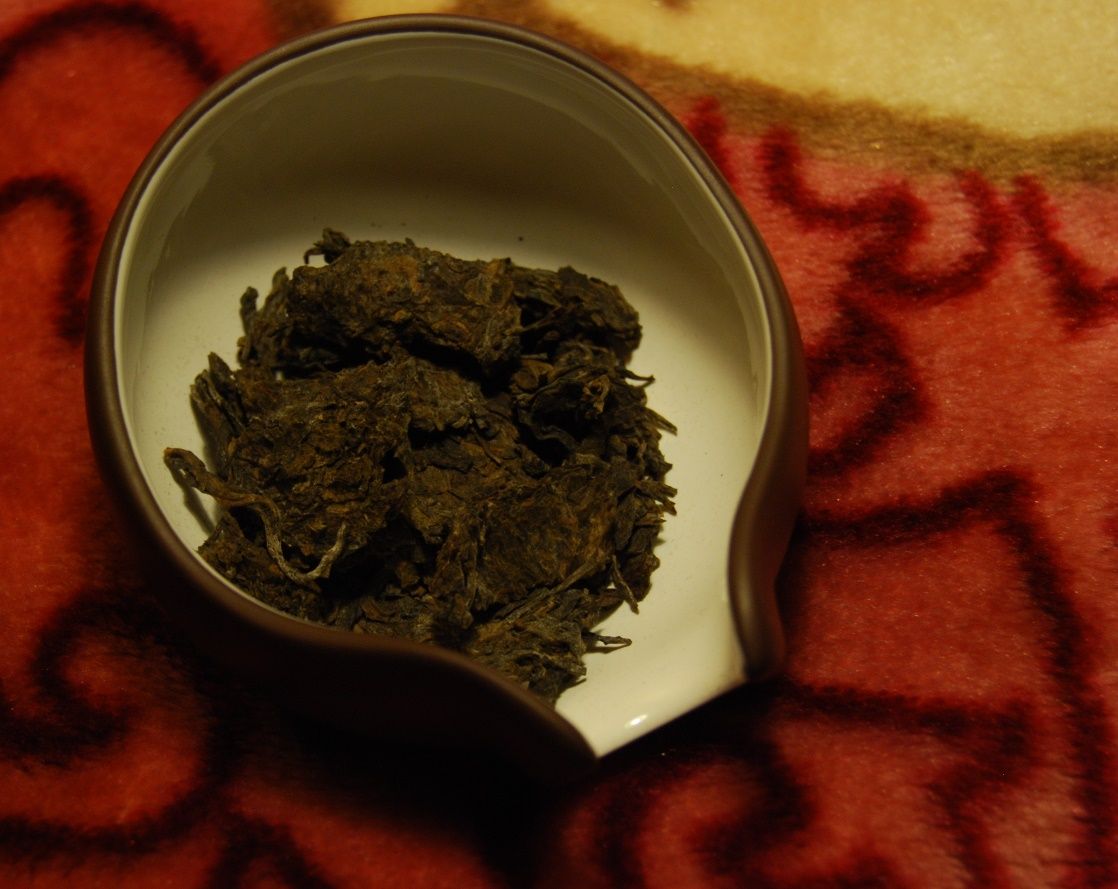
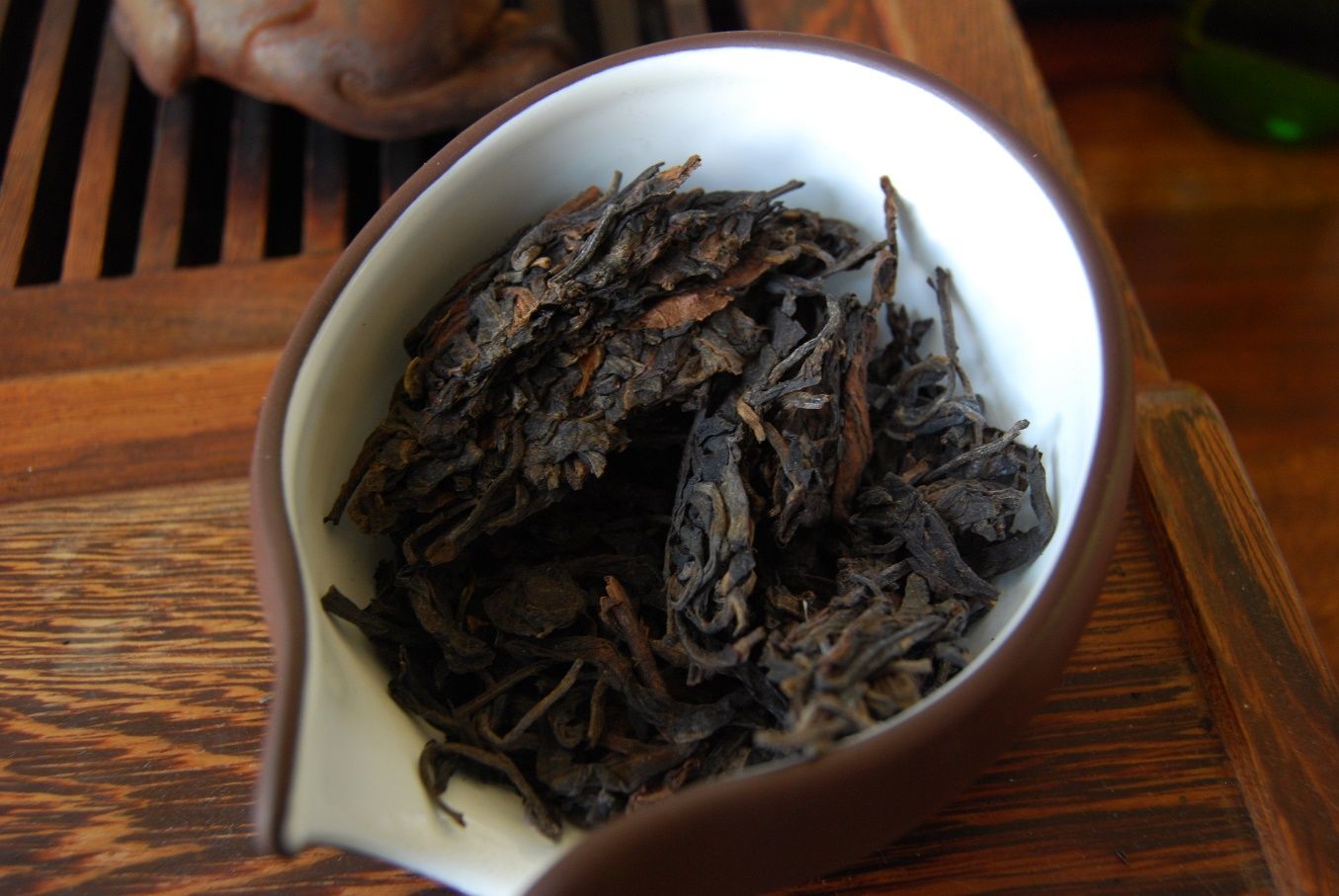
Is the above image beginning to impart the reason for the fear?  This cake is thick, and sweet, and decidedly deadly.  It smells humid to say the least.  Perhaps, if you do not like humid tea, then that will be your salvation, and will allow you to resist this cake.  Perhaps.

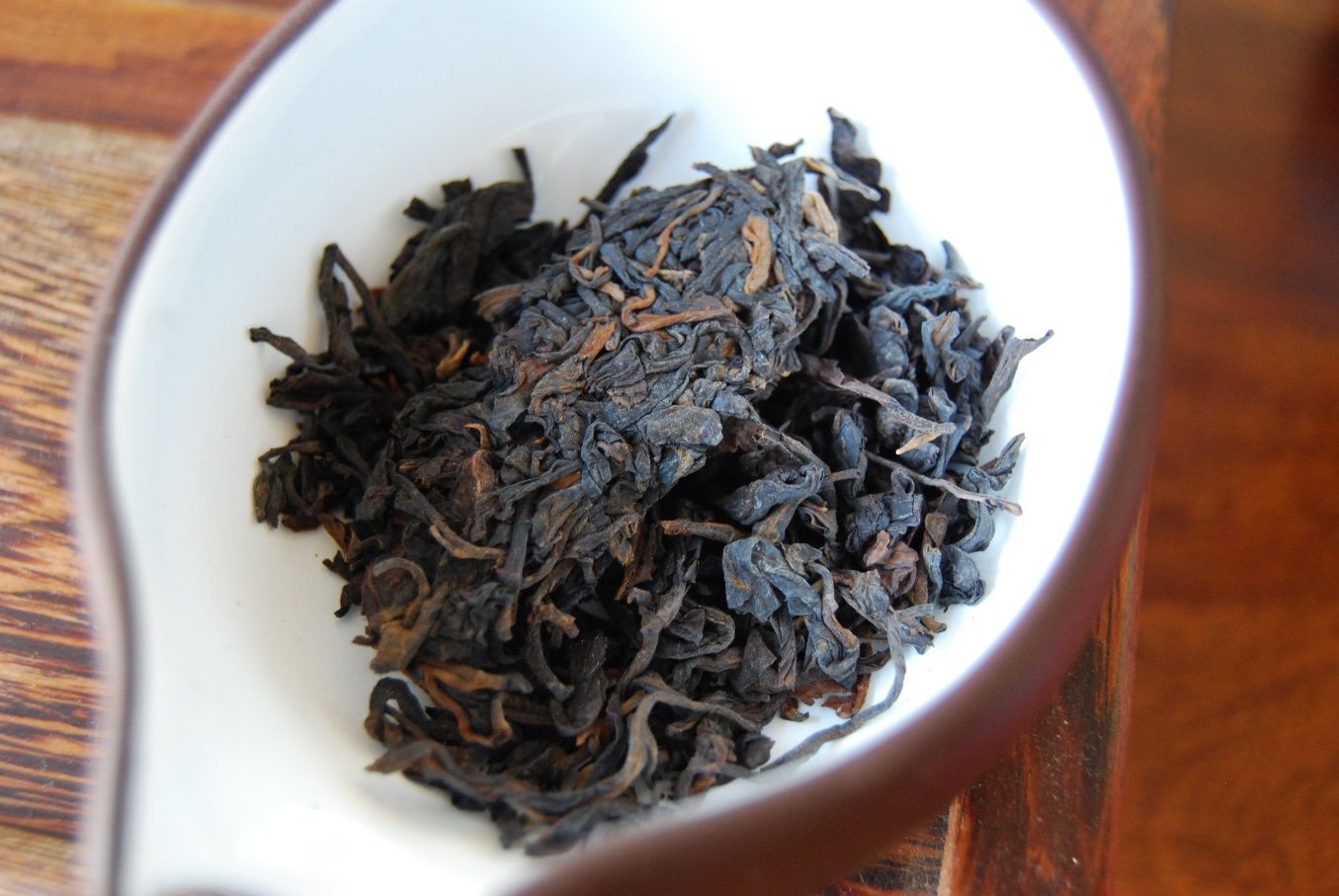
The fragmented small leaves are only the slightest bit grey.  This tea tastes not just wet, but soaking.  It really is humid.  Mineral in its core, sweet and carrying a long throatiness, it grips every part (every part) of the flesh with tingling sensations.  The breath is like ice.

My diary has "the aftertaste is purest library".  Hide your $279, because this is a mammoth of a tea.


Slow Malbec


slow Malbec
the taste of the steak
before it arrives

19 January, 2015

Sith

Some of my favourite music at school included (among death metal, progressive trance, and the opera of Lorenzo Da Ponte), albums made by East-Coast US groups from "The Projects".   If there is a common thread among these very different genres, it is that they can all be really, really good.

One of the side effects of my extended flirtation with East-Coast lyrics is that I have a detailed and nuanced, if biassed, understanding of life in New York State.  To my limited education, Americans are either (i) gangsters from Staten Island or (ii) musket-wielding revolutionaries from Concord, Massachusetts. 

My own childhood was spent in a dark, remote place in the middle of the English countryside, famous for a certain university and the likes of Isaac Newton. On recently receiving an invitation to return home, to the heart of darkness, I was reminded of the meeting of Obiwan and Darth Vader on the departure deck of the Death Star.

Gentle Reader, you surely know by now that I was the Sith Lord in this analogy.

Cf. this.


The Big Man himself prepared for his Death Star encounter by meditating in his Sith Chamber.  What they don't show in Empire Strikes Back is that, in the solitude of his Sith Chamber, Vader was actually listening to albums from the aforementioned East Coast affiliates.

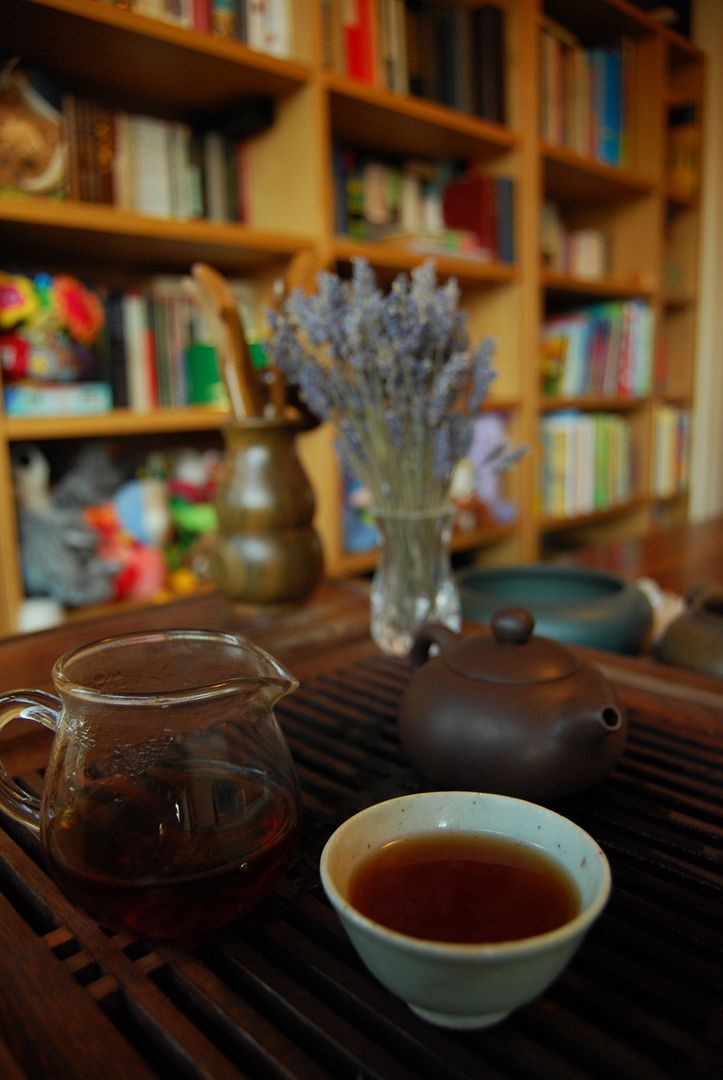
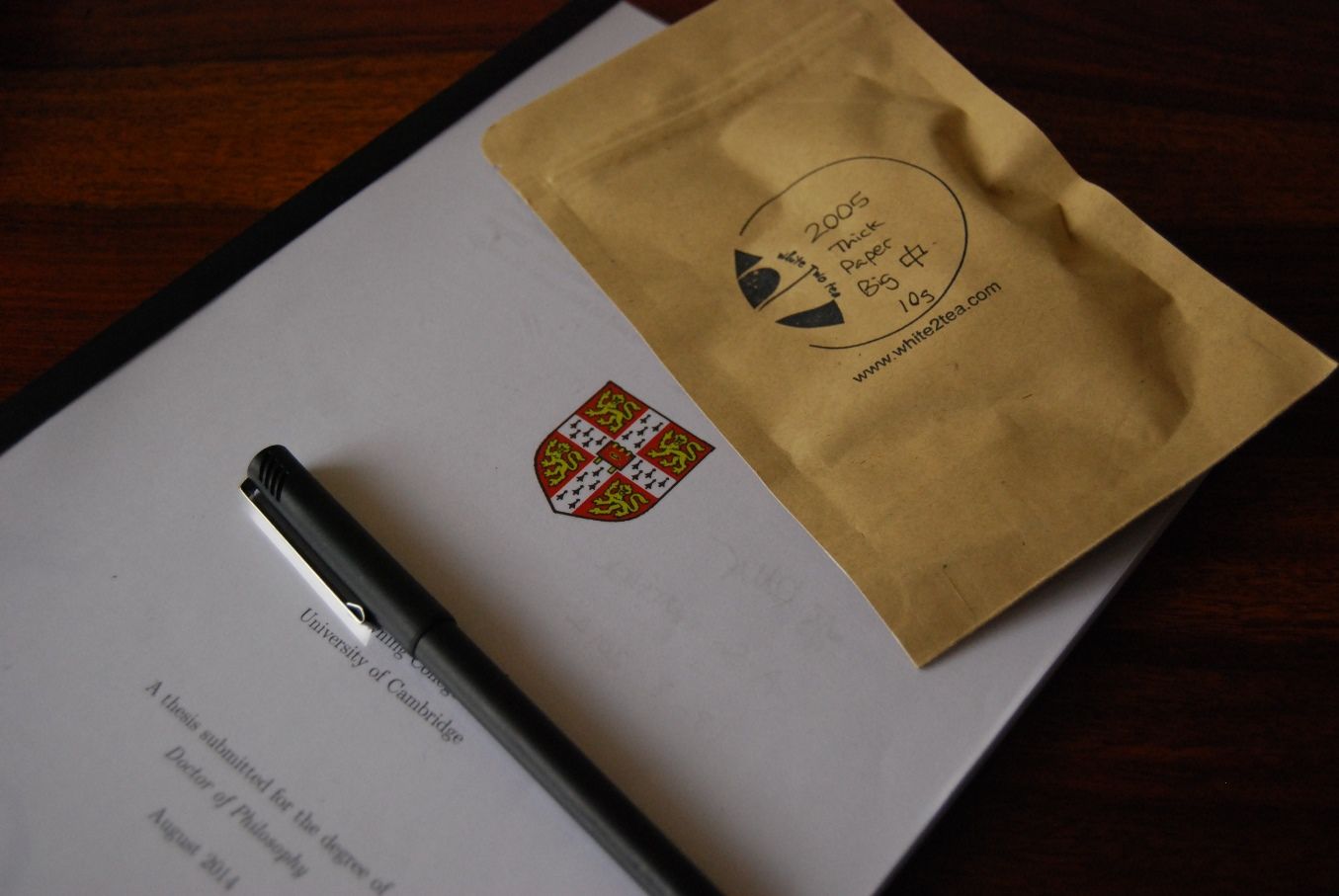
My equivalent was to recline in the mechanised sanctuary of the teatable, my life-support helmet temporarily removed so that I could work on my Dark Side.  My prep involved meditating on the thesis (pictured above) produced by some poor nerfherder rookie, hoping to earn his stripes by locking his s-foils in attack formation.  I could almost smell the moisture farm.

Accompanying my Sith meditations was the 2005 BIG ZHONG from w2t, a tea vendor whom I inexplicably seem to know now only as "Dubs".  

(As in, "This came from Dubs.  Let me show you the web-page.")


While I sharpened my (obviously scarlet) lightsabre, ready to hit up the Death Star, I reflected on the humid darkness of the Big Zhong.  It smells like Tatooine, in case you were wondering.


It starts slow, like two users of the Force circling one another to estimate the depth of their adversary's affinity for that power that surrounds us and penetrates us; that binds the galaxy together.  There is malt and darkness (in the tea, not in the Force), but it is slow and reticent.  It a bedrock of naturally humid storage.

It is constant and sweet, but... it doesn't grab me.  Activity, warmth, a cooling sensation - but something is missing.  It reminds me of the hollow victories of the Dark Side itself: promising much, tempting one in with promises of ultimate power, and yet, somehow, absent any purpose or greater meaning.  Ultimately, it cannot last, and will eventually be overcome.

It is a sobering message for all practitioners of the Dark Side.


I return to my Sith Chamber.  Helmet up, Staten Island tunes playing on the stereo.  What went wrong with the Big Zhong?  I must meditate.


I crack open a bag of 1999 "Special Order" 8582.  It reminded me of the 1999 "Commissioned" 8582 from Teaclassico.  However, this version has a green, rather than a red, zhongcha character on its wrapper.  Twodog, the proprietor of the Dubs, noted that this cake has been stored in Guangzhou, which means humidity.

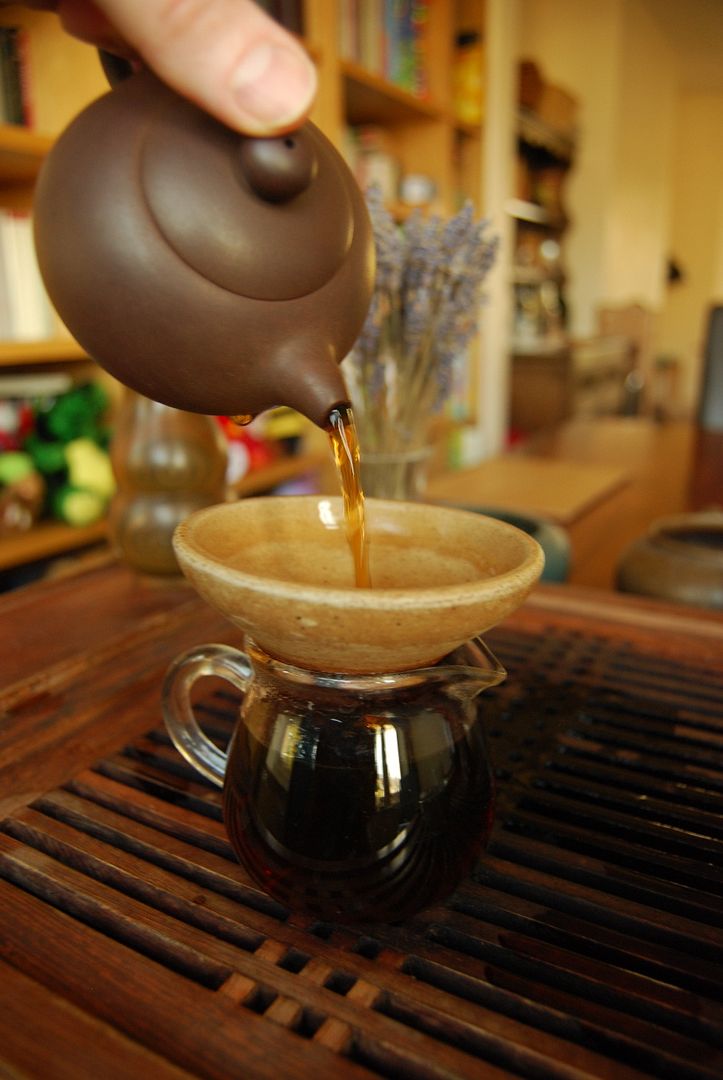
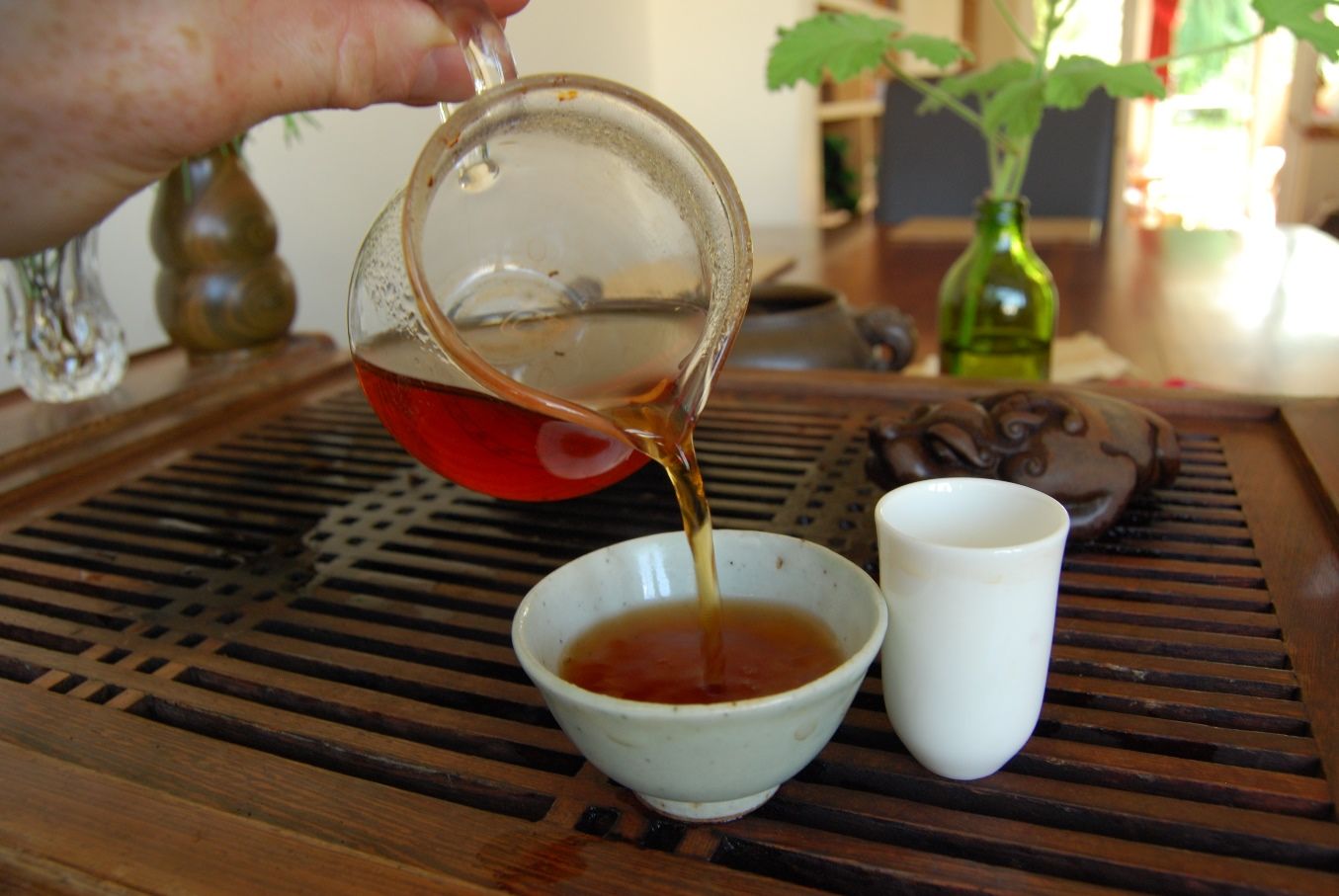
Even from the first infusion, in which the leaves (pictured above) have not separated, this tea is filled with character.  It begins with a red-orange colour, pictured below.  Woody sweetness, sitting in the throat, reminds me of warm feelings that Sith Lords do not usually experience.

Big, malty, dense, tingling - whereas the 1998 "Commissioned" 8582 from Teaclassico was all soft comfort, this is a harder, woodier tea with real bite.  It has an edge in the finish that causes the mouth to water.  Sith Lords don't get a lot of mouth-watering.  I was impressed.


Finally, to close this trilogy, and to end with the catharsis of the original Star Wars trilogy, I warmed up the tetsubin for a sample of 1998 "Hong Kong, Dry-Stored 7432".  The owner of the Dubs noted that this was not, in any quantifiable way, a bargain.  This is, in fact, a 1998 Liming cake.


Like Vader picking up the Emperor Palpatine in the conclusion of the Return of the Jedi, this tea brings even the darkened soul of the unredeemed out into the cleansing power of the Light Side.  Interestingly, there is almost no caffeine - instead, this tea is packed with comforting, energising, narcotics.

Seriously, this tea is drugs.


Tangy density, heavy and pleasant, the eternal comfort of the Light Side - this tea is so (so, so) far beyond my purchasing threshold that I can simply marvel at its potency.  So this is what Yoda had in mind.  Maybe he wasn't such a nutball, after all.


The confrontation back on the Death Star turned out to be, likewise, a thoroughly charming and friendly affair.  The nerfherder did good.  There may well be one more doctor in the world, before too long.


This Year's Apples


this year's apples
made from last year's apples
in the compost bin

12 January, 2015

Mo Shoops

When I was growing up, I was repeatedly advised (by school, relatives, strange cloaked Wotan-style wanderers slumped over a gnarled staff) to not become an academic, under any circumstances.  The careers of lawyer, architect, backing singer in a Japanese punk band - any of these is preferable to being an academic, went the Received Wisdom.

Being an academic, the chorus of guidance went, is a sure-fire way of (i) wearing cardigans before the age of forty; (ii) ending up in a state of penury; and (iii) smelling of mothballs and slightly suspicious ammonia-based fluids of a masculine persuasion.


I am here, Gentle Reader, to tell you that (i) I have always loved cardigans, and now somehow I have accidentally become temporarily cool, thanks to recent incarnations of Dr. Who* and a generation of British indie bands; (ii) while not exactly a license to print money, some branches of academia are apparently able to avoid destitution; and (iii) academics actually smell of old books, not urine, and old books smell like Gandalf.  What's Gandalf?  Gandalf's cool, that's what.

*Interestingly, my nickname among the undergraduates appears to be "Dr. Who".  The origin of this moniker is, I have discovered, due to my dress sense.  I was under the impression for the longest time that my nickname was actually "Dr. Hu", referring to my rule of iron discipline, like an Asian police state.


There are perks to being an academic, entirely apart from the ability to wear brightly-coloured cardigans, odd socks, and the occasional bow tie at dinner.  Some of these are intangible: they include, strangely, breakfasts served in the oak-clad darkness of ancient buildings that seem to benefit from the cathartic, healing scent of bacon and black pudding.  Others are more tangible: we have a post-doc from Malaysia who brings me back whopping great big stacks of tea from his homeland when he visits home.


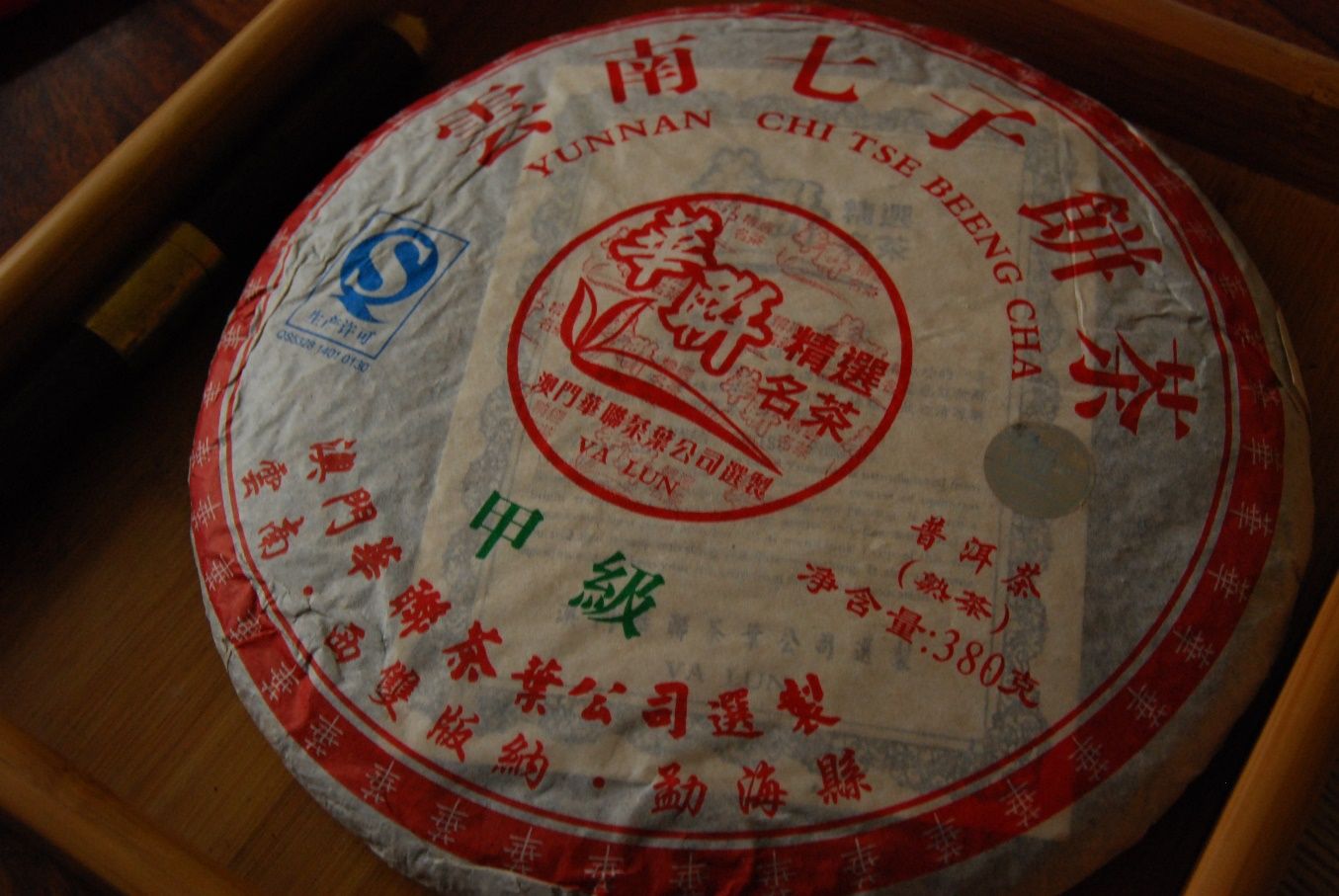
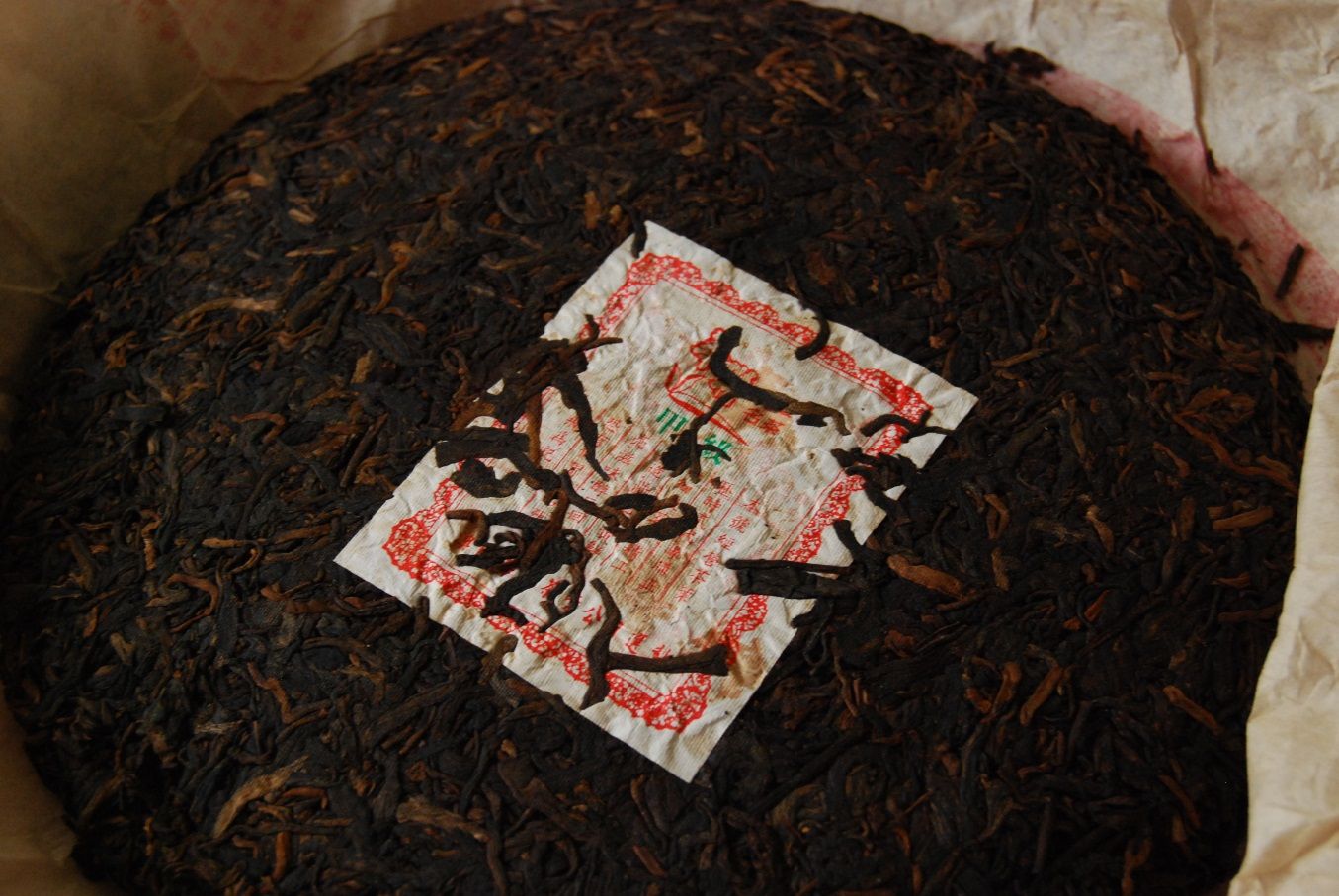
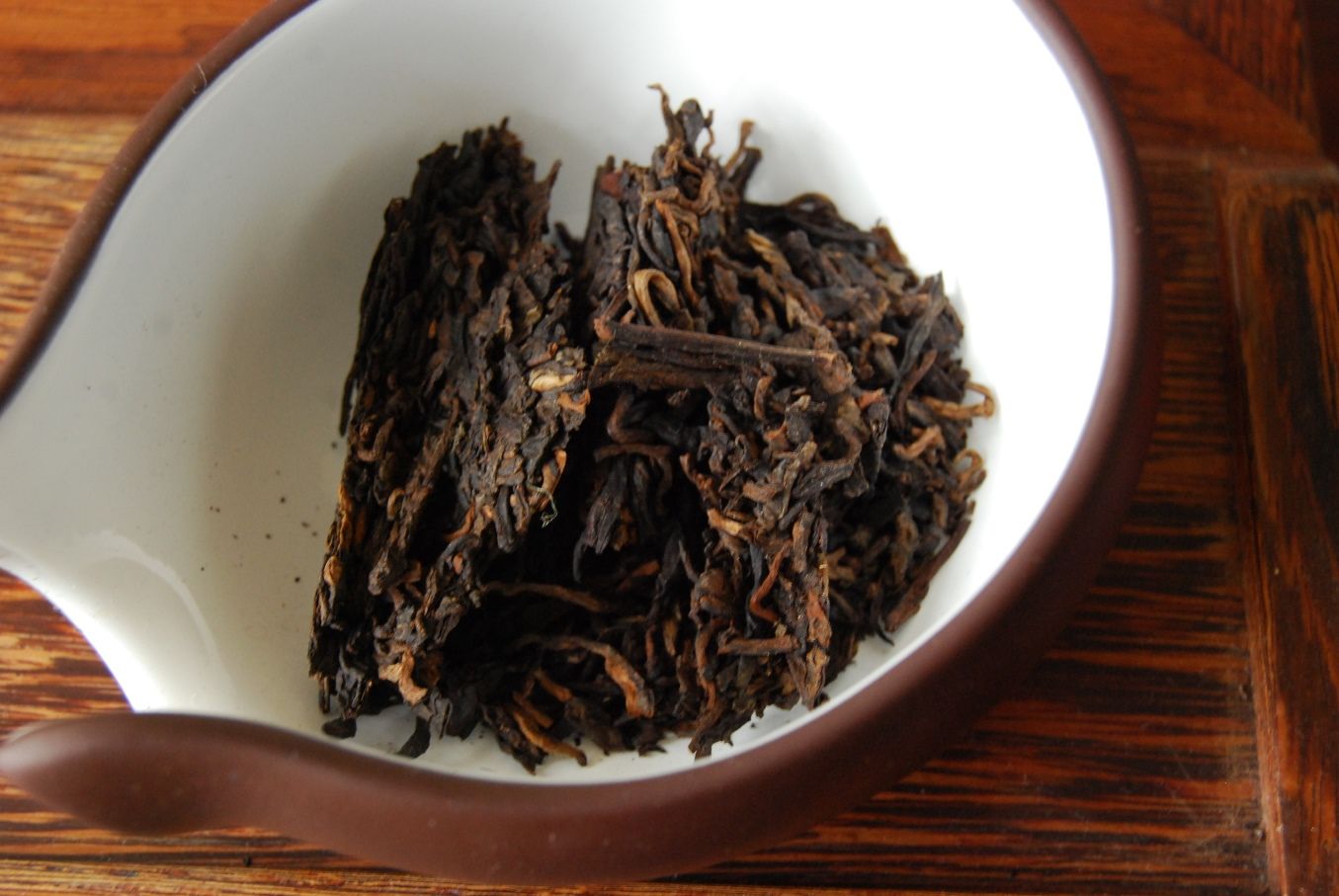
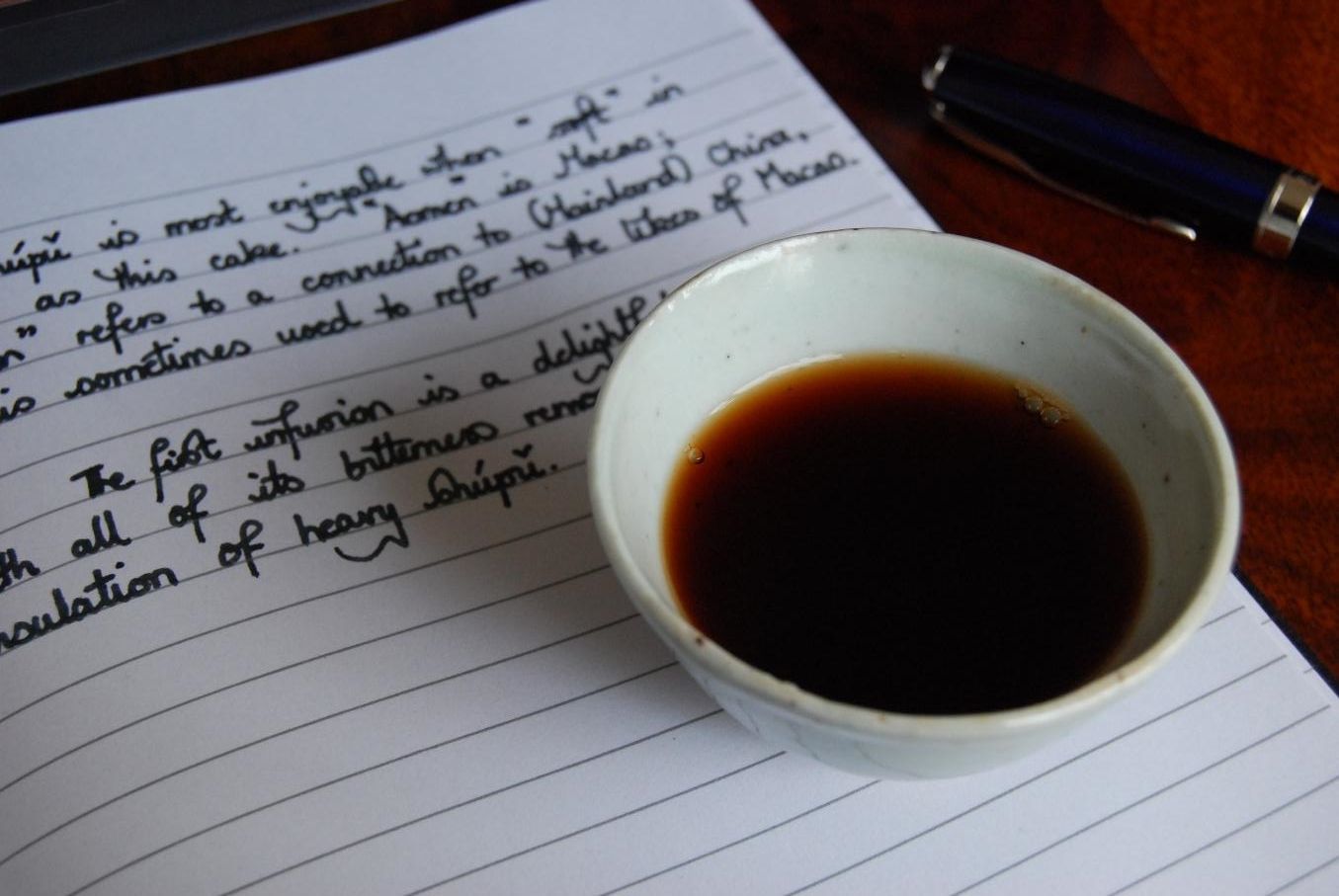
The cake shown in the first half of this article is an awesome example of this generosity: a 2012 cake of shupu from an outfit named "Aomen Hualian".  The name refers to Macao ("Aomen"), and where "hualian" is a connection to (Mainland) China - a suffix often used in association with the various islands / provinces / independent nations [delete as appropriate] that exist around the coast of the PRC.


This cake is only the second that I have ever finished.

I am just going to let that fact sit there for a little while, and marvel in it.  I have only ever finished two cakes of pu'ercha.  The first was something from white2tea, and was, I think, another fantastic shupu.

This Aomen Hualian cake is probably not going to be too easy to find.  However, should you ever come across it, I emplore you to remember this article: buy this tea.  It is rocking, thick, brutal, strong, fat, calorific, and all-round-fine.  I had a period after Christmas this year in which I was encased in my office, working on a long EU grant proposal - this Aomen Hualian cake propped me up, slapped me in the face, and promptly punched me in a sensitive place that I really would have preferred not to have punched.  I can heartily recommend this cake.


Speaking of chugworthy shoopmasters, we now turn our attention to something from the Augean Stables of white2tea: no matter how much you think you've cleaned 'em out, they just keep on giving.


I am reasonably certain that through various channels, Gentle Reader, you will have probably heard the Gospel concerning this mighty little 1998 "white wrapper" tuocha.  Just in case you have recently arisen from a long hibernation beyond the grave, I here recount some brief notes to convince you that we have on our hands (yet another) good, random purchase from w2t.

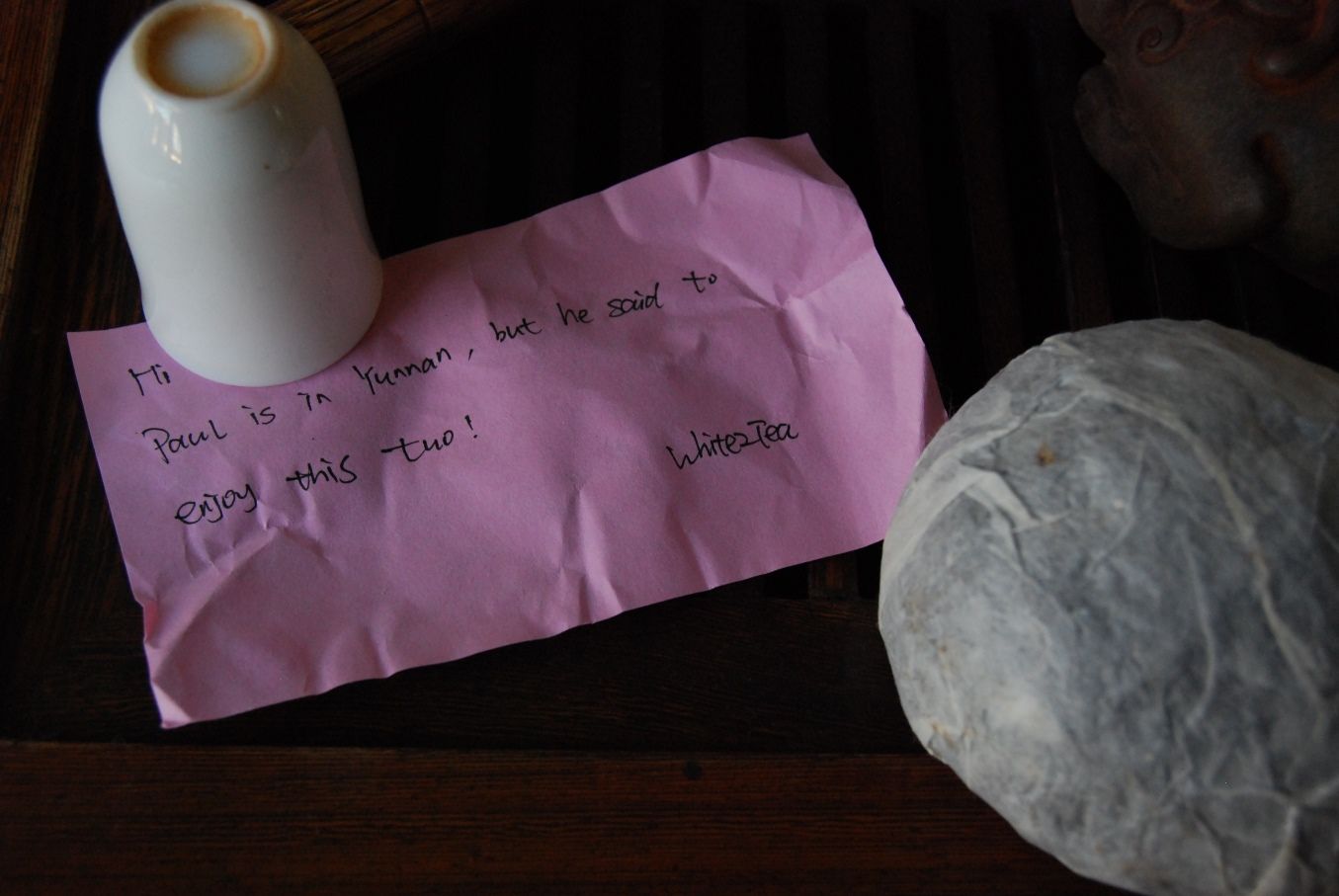
I say "purchase", but, as you might conclude from the above, the tuocha in this article was received gratis and for nothing, by an unknown correspondent whom seems to know / be related to / be married to / be in indentured servitude to Paul, a.k.a. twodog2 of w2t.  As is often the case with some of the finest dealers of narcotics, the first hit is always free.

Then, the Jonesing begins.


And how, the Jonesing!  This is strong.  In fact, my diary appears to have "The tea is extraordinary."  It is thick, creamy, sweet, and obviously excellent.  This is a good tea to buy in quantity.  Amusingly, the tong of tuocha eventually come wrapped in some REALLY RUSTY wire, which is surely a good sign.  You can't buy risky fun like that.

Well, actually, you can - at about $55 / tube, which is a very fair price for brilliant shoops that might give you tetanus.  You just can't go wrong.

Addendum: it seems that I have already written about this tea!  I'm glad to see that I agree with myself.


The shupu fades after the 8th infusion, but is otherwise fantastic.  The creamy, well-rounded sweetness remains even after the body has faded.  It is a delightful tea, and a fine introduction to this week's haiga...


Cup of Cold Tea


cup of cold tea
returned to the teapot
after storytime

10 October, 2014

Bigtime Bibendi

"OK, hard drinkers: let's drink hard."

Perhaps George Clooney's finest hour.

In keeping with the spirit of George's famous utterance, Neil of Teaclassico has kindly provided us with some hard drinkin'.


1999 "Xiaofa" Xiaguan French Export shupu


Surprisingly, this "faguo" [French] export tuocha smells of neither garlic nor onions.  It has had 15 years of Hong Kong storage, which might account for that.  The leaves are on the larger side, for Xiaguan, and in truth they do have a distinctive aroma of what can only be called "fish".  This is not a problem, just an observation.


Tiny Death Star + shupu


The piscine aromatics do not continue into the cup.  What we do get is a big, stable, and enjoyable dose of shupu.  There is a particularly silky and thick texture that reminds me Xiaguan really know their way around the manufacture of tuocha.  I enjoyed it very much, but perhaps not quite enough to spend $89 on it.


Yet more serious is this: a 1980s maocha from the Yiwushan area.


Pictured above, this is a big, deluxe pile of a tea.  My expectation is that the older maocha gets, the weaker it gets.  This one, however, still seems to be quite strong, which makes me wonder if it is actually 1990s, rather than 1980s - not that such things matter, anyway.


The colour is a more solid red than might otherwise be expected, which again leaves me thinking that it might be 1990s.  Its body is smooth, if a little thin.  There is a detectable trace Hong Kong in its history, but this has been aired out - presumably in Taiwan, along with many of the teas sold by Teaclassico.  HK then Taiwan is a good route to take.

Aged well, with deep HK mineral characteristics, this is a gentle, warming tea.  I read this tea in the background while annotating an MSc thesis for submission, and I think the tea put me in a good mood.


The star attraction, and one worthy of George Clooney's attention, is the following:


This 1997 Tongqinghao "Chi Cheng" is quite special.  It came in a sample bag as "Tung Ching Hao", and so I suspect that the cake's pinyin name is not actually "Chi Cheng".  Without seeing the characters, it is difficult to disambuigate Taiwanese (or, rather, Wade-Giles) romanisation.

The leaves, pictured above, surely already have you whipped up into a frenzy.  They have the scent of (you guessed it) Hong Kong.  The scent of the HK tea, that is, not the scent of the HK teargas.


The brown-red colour and BEEFY flavour are very welcome.  I used lots of leaves, knowing that it would not become overbrewed (HK tea, aged), and the result is a vivid and vibrant fizziness on the tongue.  It leaves a humid bookishness in the nose which, for a serial university type, is quite alluring.

Not that anyone ever goes in libraries any more.

With passing infusions, as the leaves open fully, the centre of the soup darkens in colour.  There is a wildflower note that reminds me of the 2003 Zipinhao from Zitenglu / Wisteria Teahouse.  Its core of deep, sweet mahogany is enjoyable and I am already beginning to wonder as to its price.


I kept adding leaves to Zidu, my pot, to prolong the session - so good was this tea, that I did not want to stop.  Eventually, Zidu was so full that I had to decant the leaves into a larger pot - and (its bulk pictured above) it was almost half-full when I did so.  I brewed them for two days, and they were decent.

Teaclassico will, I understand, be stocking this in future, but one cake could already be enpurchanised and coming my way.  Be ready, ye shelves, for Tongqinghao is very decent indeed.

03 October, 2014

Shoops

Everybody loves the shoops, by which we mean, of course, the shupu.

Today's story is an epic tale of love and longing, a paean of thanksgiving, a chronicle of one man's unceasing journey to find that last, final bargain.  Yes, we're drinking the shoops.


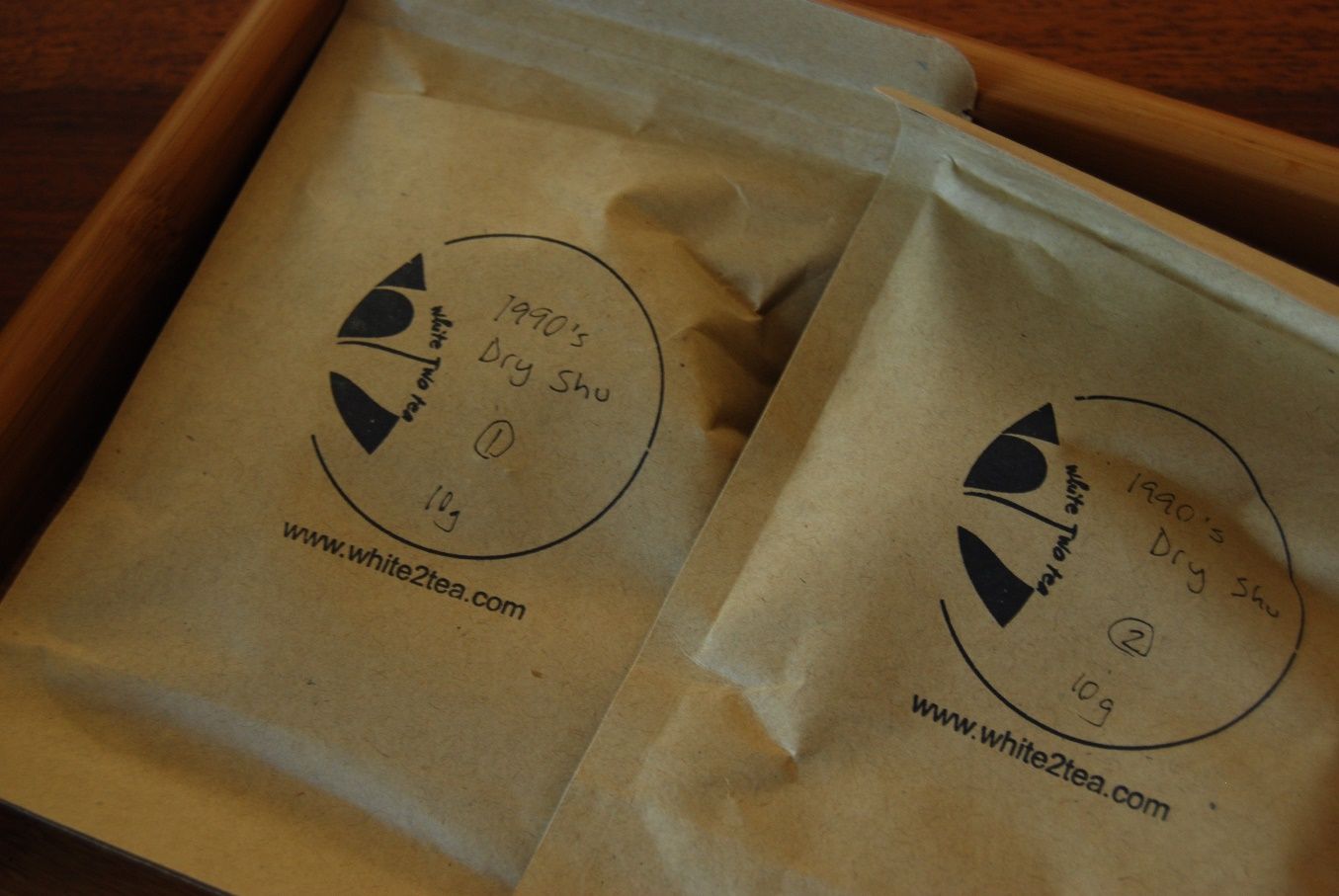
Today's teas are a pair of initially-anonymous samples, provided by PM of white2tea.


I used to think of the relationship between PM and myself as one of friendship.  Buddies.  Comrades.  Now, after being exposed to a sequence of ab-sol-utely irresistible bargains, I am beginning to wonder if our relationship is not more like that of a drug-pusher and an addict.

At least I'm not yet stealing cars to feed my habit.  At the time of writing.


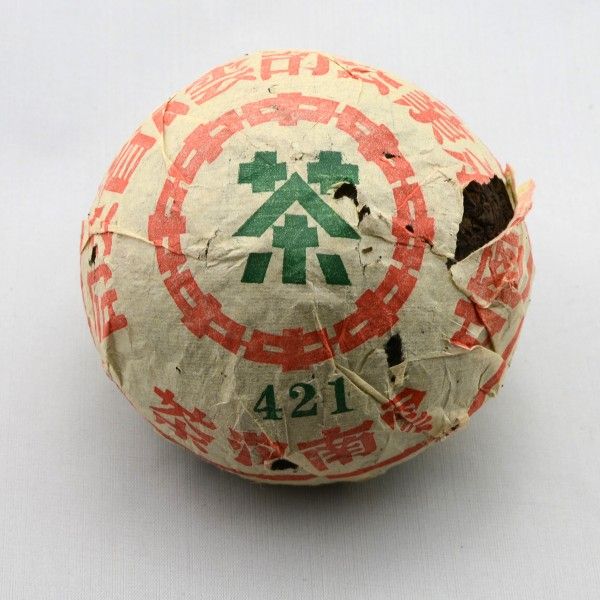
No prizes will be awarded for guessing the identity of this first pseudoanonymous sample: it is the 421 shupu from 1998.  This is tightly compressed, even for tuocha, which is expected for Zhongcha.


The colour of this shoop is striking: it is red-brown.  This may not come out very well in the pre-dawn photograph shown below.  It looks like a lot of other shupu, let's say, without being one of those "instantly black" kinds.  It must be said that the latter are my preference, but I'm willing to give anything a test-drive.


It takes a long time to open, and that is thanks to its compression.  When it does, perhaps around the third infusion, it is blacker in colour, while providing powdery sweetness much beloved by we quiet fans of shoops.  It begins to resonate near the back of the mouth.

This was made by Kunming factory for the CNNP brand, and, while good, there is better to come.


...and here it is.


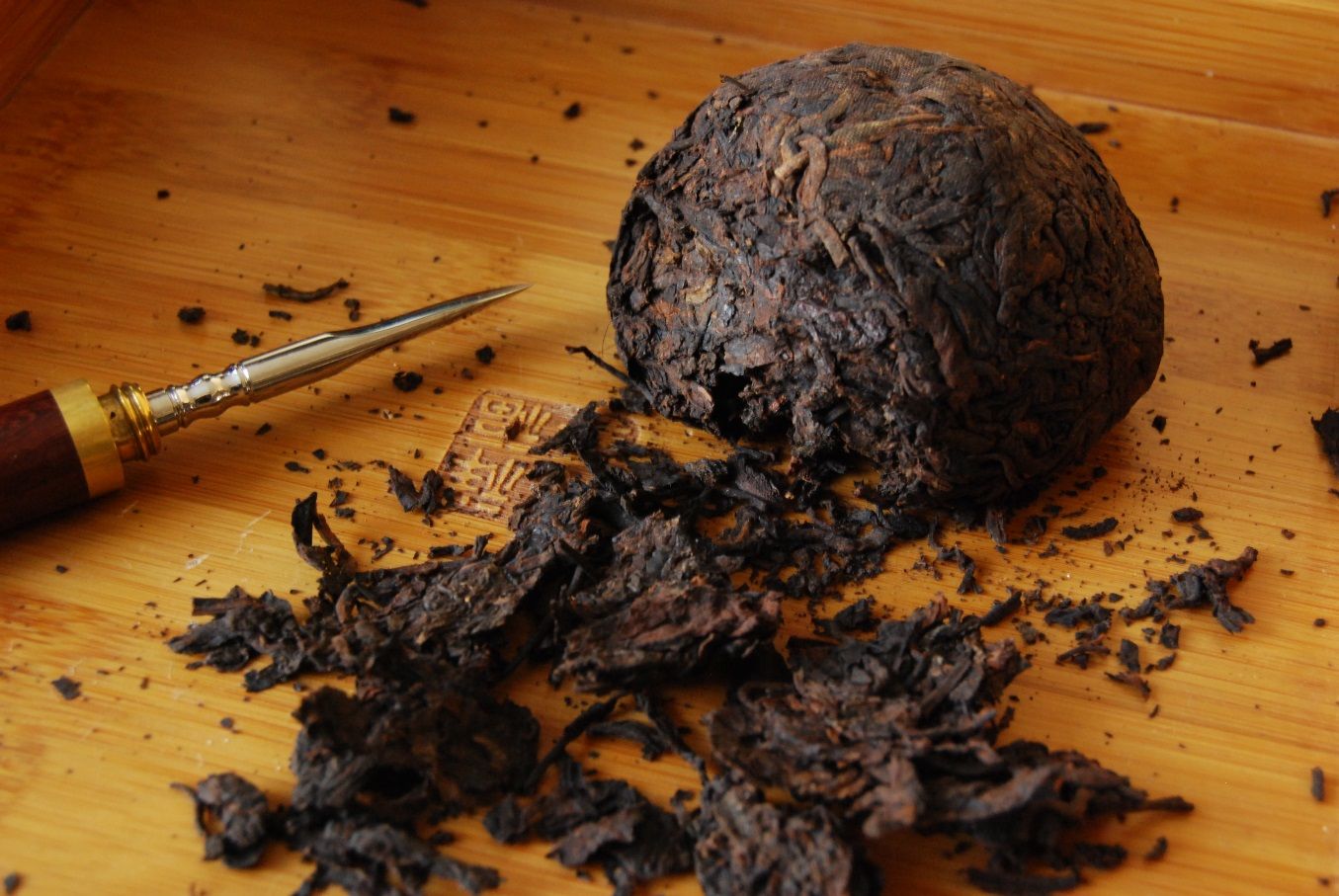
This shrivelled-looking piece of apparent excreta is actually a "white wrapper" tuocha, dug up by PM.  He is excellent at such digs, as regular readers will know, and I am coming to the conclusion that I have quite a lot of PM "white wrapper" tea on my shelves these days.

I admire the spirit of investigation, willing to get out there, into the Great Uncharted wilderness, with only one's tastebuds to help navigate.  The result is low-priced, high-quality tastiness, and this shupu is one such example.


1998 "white wrapper" shupu

Everything that you might look for in shupu is here:
  • Densely humid scents of the dry leaves?
  • Loose, hand-compressed texture?
  • Longer leaves than normal?
  • Soft vanilla scents in the aroma cup?
  • Big, smooth flavour?
  • Resonant in the throat?
  • Creamy texture?
  • Thick, soft body?
  • Colour that is as black as your soul?
Suffice to say that this is Good Shoops.  I don't currently know its price, but I understand that it will be "low".  I look forward to introducing it to my Paypal account.

08 August, 2014

The New Old Half-Dipper

The ol' Half-Dipper is coping with some changes, which you may or may not have noticed - it is the common story of a tea-site.  I thought that I might offer you an explanation, Gentle Reader, which is much-deserved given your infinite patience.

Back in the day, I somehow managed to write an article on this web-site almost every day, which was perhaps a  testament to exactly how much spare time doctoral students have on their hands.  I started as a graduate student in 2004, and met my wife-to-be in the same year.  Happy days indeed!  I drank a lot of tea.


Since graduating, in more recent years, I've written articles for publication on Mondays and Fridays, which fitted with the timescales of my post-doc status of the time, in which I was effectively working for a senior professor.  If you've ever served your time as a post-doc, you know that it can be busy, but there is a certain rhythm that allows you to, for example, drink and write about tea on a moderately regular basis.

The big change to my life happened in October of last year when, in a moment of uncharacteristic and substantial foolishness, my university decided to appoint me as a member of the faculty.  It subsequently handed me the steering wheel for a research lab.  Bear in mind that I cannot drive, and that I get asked to prove my age when I try to buy alcohol (heh).

Since that time, life has consequently become more and more rapidly accelerating.  It is a hugely enjoyable time, and it gives me the genuine privilege of working with some massively talented students and researchers - but it does mean that, as our lab grows (approximately doubling in size every six months), the opportunities to drink and write about tea decrease proportionally.

The new ol' Half-Dipper will, therefore, be a little less regular in its publication, and we will make permanent that arrangement that I have been trialling recently, with a summary article every week or so.

Let's kick off this new old Half-Dipper with an investigation of a recent week of annual leave, some of which I managed to spend at the tea-table.


The 1998 CNNP "Apple-Green" tuocha


I basically spent the mornings of the entire week with some mind-wreckingly good tea from an outfit called teaclassico.com.  Full disclosure: the proprietor, Neil, sent me a big box o ' treats without charge.

This actually caused me to reevaluate completely how I go about buying tea, such was the magnitude of the fabulosity of the tea.


Decent CNNP tuocha leaves in the old style


The tea market is a strange affair: modern pricing has inflated the cost of modern tea to tear-inducing quantities; even a few years ago, the same tea could be bought for a fraction of its current price.  These price increases have been passed onto consumers, and there are now very few outfits that provide good, modern tea at a reasonable price.

I would count white2tea, Chawangshop, and Yunnan Sourcing as my current "go-to" tea vendors, who have managed to keep a cap on prices, and I spend almost no money outside these three (excepting direct purchases via Maliandao or Taobao).  Other vendors are in no way bad, but their offerings are now frequently double or triple (or more!) the price of equivalent cakes from previous years, and I simply could not bring myself to pay that much.  In many cases, this is not the fault of the vendor, due to the cost of maocha - but, whatever the cause, the result is the same.

Price increases could be argued as being a good thing, if the farmer is seeing more of the profits.  We see signs of this throughout Yunnan, particularly in places such as Laobanzhang.  To estimate the proportion of the price increases that reaches the farmer is rather futile, given the lack of data.


Gloopy, strong, clean - what else do you need?


We have older teas, however, that have already reached a price ceiling, of sorts.  The only way that modern tea can comfortably be priced at sky-high prices is if all vendors simultaneously increase the prices of their older teas, but this they have not done - perhaps due to that intangible (and soft) price ceiling on older teas.  There is, after all, a limit to how much an old tea is worth, without demand for it increasing hugely.  With demand often confined to modern teas, hence the price rises, we have the strange effect that price pressures are tightly focussed on modern teas, but less on older teas.

Yes, the prices of the super-classics have gone crazy, but I maintain that there is a class of good, aged teas that has not seen the price increases of either the very modern or the very old teas.

Therefore, drinkers such as me, and perhaps even you, Gentle Reader, are being driven away from spending their money on modern teas (excepting obvious "white whale" bargains!) and instead spend their money on older teas.  This was previously something that I did not do, at scale, but where now I would much rather spend X units of currency on something of proven vintage and aging, than spend the same X units of currency on something modern, with all of the risks that arise from uncertainty over processing, storage, etc. Why take the risk, when older tea costs the same?

In that spirit, outlets such as Teaclassico are well-placed to capitalise on this new category of consumer, which comprises drinkers who are looking for reasonably-priced older teas, of similar price to modern cakes.  We are searching for those cleverly-prices teas from the mid-range, between modern and aged, and places like Teaclassico are meeting that need.  Such vendors are unhindered by trying to sell you modern cakes, and so can afford to price their aged tea at reasonable (Taiwan-esque) prices.

The first tea that meets my quality:price threshold is the 1998 CNNP "Apple Green" tuocha, shown here: this is $83/250g ($119/357g equivalent), which makes it much less expensive than many modern cakes.  Admittedly, this tuocha is not a grand tea, but it is (i) strong, (ii) aged, and (iii) priced nicely, which is a fine place for a tea to occupy, whereas modern tea can claim only (i) at best.

It is a heavy red-orange, as befits tuocha from 1998, and it very smooth, very heavy, and very enjoyable in the mouth.  It has a smooth, "beefy" sweetness that is clean and soft; it cools and tickles the tongue, and has the liveliness of good tuocha.  Purchase of this tea seems straightforward.


One step up the food-chain from the tasty 1998 Apple-Green tuocha is this 2003 Menghai 7542.  This could very well be the last 7542 before Menghai Tea Factory flipped over into Dayi.


2003 Menghai 7542


We're one step up the price ladder here, at $129/357g.  The cake started out in Hong Kong, and ended up being stored in Taiwan for some years.  This is a common story for the cakes from Teaclassico, which leads me to conclude that Neil has spent some time with sellers in Taiwan - this is no bad thing, as I never get to Taiwan, and I like the storage there.  In some ways, an initial period in HK followed by a cleaning-out in Taiwan is an optimum, as far as my tastebuds go.


Even the leaves look "Menghai"


It is a heavy orange-red, as you might see below, and has a sweet and tarry body that reminds me of other 7542s from this era that I have enjoyed with Apache.  It is clean, and cooling, and quickly fills the mouth.  There is a good quantity of Menghai house character, and this surely must be the best protection against fakery that one could hope to achieve: a recognisable house character.


Chunk-y

As with many strong, good teas, this one takes a good two or three infusions before it reaches full speed: it needs a good run-up, which usually always corresponds to good-quality tea in my experience: it has tons of contents, and does not throw them all away in the first infusion.  Perhaps it is this "locked in" character, taking several infusions to rouse, that made it such a good candidate for storage.  Warmth, depth, mahogany: this is solid tea, with a penetrating, woody sweetness that leaves me feeling strangely calm.

Again, it is actually cheaper than many modern cakes, and is guaranteed to be good for aging - because it is already aged.


The prize for this week of teas is shown below.


2000 CNNP Zhencangpin


The "Zhencangpin" [lit. treasure-store product; e.g. "collector's item product"] designation is shown in the calligraphic text under the yellow zhongcha character - otherwise, it looks like standard yellow-label.  However, that calligraphy makes all the difference: this is a big, bad cake.  Big!  And bad!


Delicious


The photograph of the leaves shown above makes the mouth water just from the image alone.  That's when you know it's good tea: when the photograph of the dry leaves makes you thirsty.

This is the only tea in the collection from Teaclassico that I actually drank twice, taking two precious days to enjoy it.  This means that, as far as I'm concerned, it is really rather fine.  It is a not insubstantial $220/357g, but compare that to modern cakes and you will be immediately convinced that this is, if not a bargain per se, then at least a very properly-priced cake (given recent pricing).

It is heavy, full, and continuous in its woodiness.  Again, there is a HK background of humid, mineral characteristics, but this has been sharpened and cleaned by the Taiwanese storage to magnificent effect.  In price, storage, and character it is almost precisely what defines "good tea" for me.  This is a personal decision, but it hits every single note that I need a fine tea to hit.

"OAK-PANELLED STRENGTH", I have in my diary.  Elongated,velvety, and strong.  If you have the opportunity to sample this tea, you may well be as enamoured as I was, during that week of annual leave.  Purchasement, as with the other two cakes shown here, is straightforward.


Everything that is good in tea


I hope that Teaclassico builds on its start, and that it continues to keep the pricing right - I will certainly be keeping an eye on their inventory from here on, as my buying habits have been forcibly changed.

Thanks again to Neil for a great week of teas that made for some excellent summer mornings.  The "Zhencangpin" was so good that I actually invented a new non-parametric Bayesian stochastic process during the session, and documented it over 17 pages in my log-book.  Not many teas manage to be both a great beverage and a muse...
18 July, 2014

It Tastes So Right, It Can't Be Wrong

Today, I would like to introduce you to a friend of mine who is a bit... "special".  The appearance will terrify you, perhaps, but I think that you, as did I, will grow to love her.  Perhaps love her a bit too  much.  Let us not get ahead of ourselves.

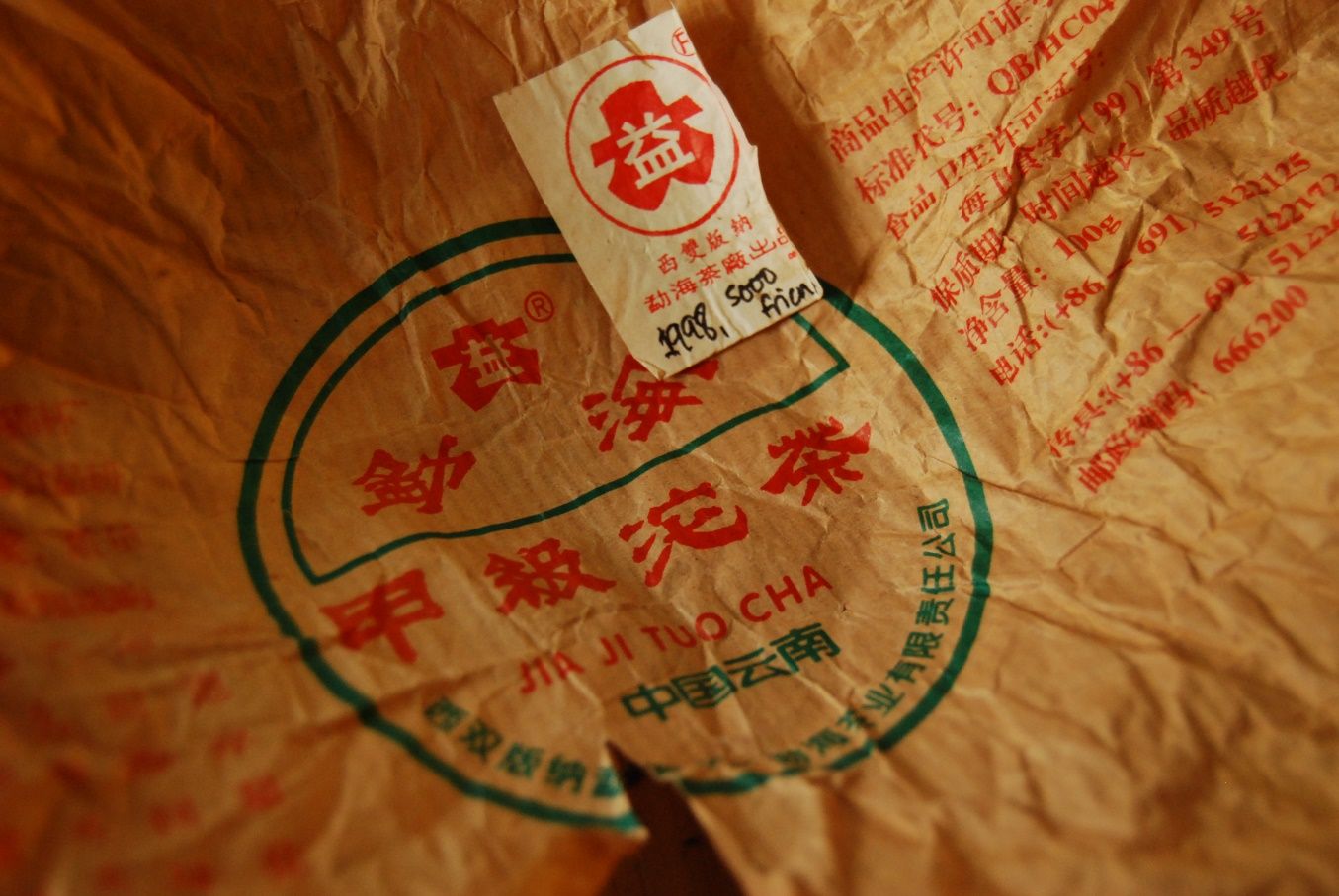
Before the "main event" today, I warmed up the cockles of the empty, barren wasteland which is my heart with an old purchase from days gone by: the 1998 "Jiaji" tuocha from Good Ol' Dayi ("MAKIN' THE SHENGPU LIKE MAMA USED TO MAKE").


You are a clever one, Gentle Reader, and so you will have already seen my annotation in the above image: I bought this tuocha from "5000friend", which is an eBay vendor of some significant repute.

Many words have been used to describe "5000friend": these include, but are not limited to, thief, scumbag, blackguard, mountebank, racketeer, rancid burglar from beyond the ninth gate, and (my personal favourite) "douchenozzle".  5000friend shot to internet fame by selling Late Qing dynasty ("Late Qing dynasty") teapots that were rubbed with what can only be described as cheap shoepolish.  So it is said.  I was never a big buyer on the whole teapots-covered-in-cheap-shoepolish scene, and so didn't sample the delights of their product range, but the stories were chucklesome and enmirthenating to the max.


Being a suquer for punishment, I bought a bunch of "1998" tuocha from them, but it all turned out well.  I have no idea whether or not the tea is really Dayi (or even if Dayi were branding their tuocha in this manner back in 1998), but I live by the famous saying "Who cares if it's a fake sold by some dude who rubs cheap shoepolish into a teapot - if it tastes so right, it can't be wrong".  I think perhaps Shakespeare originally wrote that.

The original article for this tea is here.


My humourous regions are enlivened when I check my tea spreadsheet (yes, I have a spreadsheet) to learn that this tea cost £8 back in 2007.  That probably means that, in 2007 prices, it was 15 USD.  Those were the days, when British currency was about 1:2 with the US dollar.  I miss those days plentifully.


I have a big old tube of these tuocha, and so I am really hoping that they are aging properly.  The soup, once a heavy yellow, is now a heavy orange, and LO, Hobbes did breathe a sigh of relief to see that some aging had occurred.

The result is long-lasting and very throaty, like a nasty virus.  It has a plurality of HUIGANS, and these latter last rather a long time, too.  This is one of just a few teas that I have aged from "middle age" to something approaching actually "aged"; the majority of the teas on our shelves were either bought "aged" or which were bought young and are now "middle aged".  So, to see this little fella developing nicely is a welcome experience.  "Exceptional length", I seem to have recorded, and exceptional length can only be a good thing.

"This is quite complex", observes my dear wife, as she passes and tastes a cup.


I promised you something ugly, and here it is.  Let's get nasty.


This gold brick looks soooo old-fashioned, in the classical Chinese 80s-90s aesthetic that it actually seems appealing, in a kitsch way.  It is the 2011 "Jinxiangyi".

Xiangyi [SHEE'ANG-YEE] is a brand, and so "Jinxiangyi" is, would you believe it, "Gold Xiangyi".


Xiangyi, the brand, is a product of HUNAN YIYAN FUCHA.  This is not pu'ercha.  Hold onto your hats and hide your daughters, because this is rancid brick tea from Hunan.

You can't say that you haven't been warned.


We have Chinese, yes.  We have... Tibetan, by the look it (help me out here, cunning linguists).  We also have... that strange script that reminds me of Arabic that, if it isn't actually Arabic (and I am unable to tell) is that language that crops up repeatedly when dealing with Muslim minorities in the PRC.  It's probably Arabic.  Never ask a scientist to get linguistic.
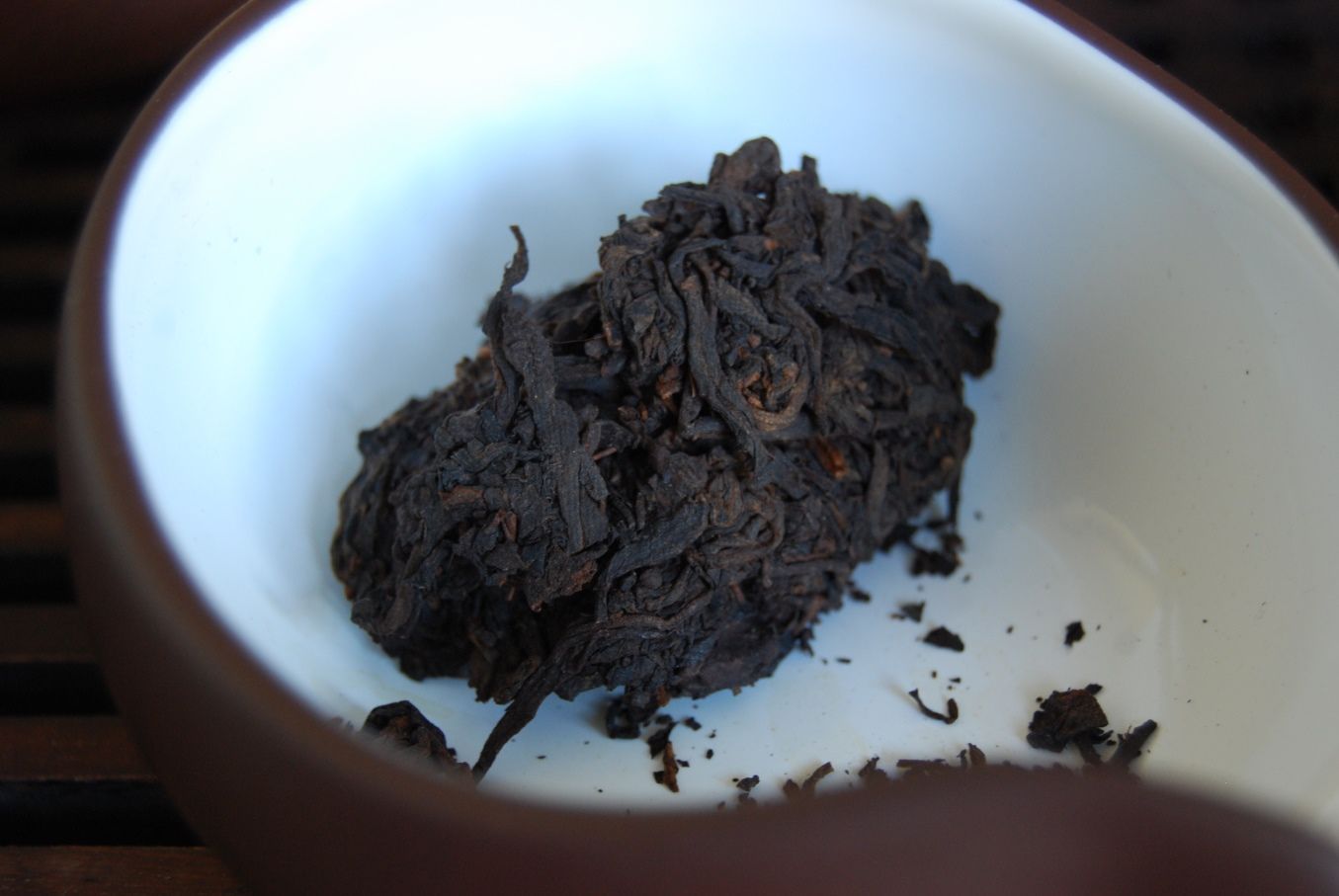



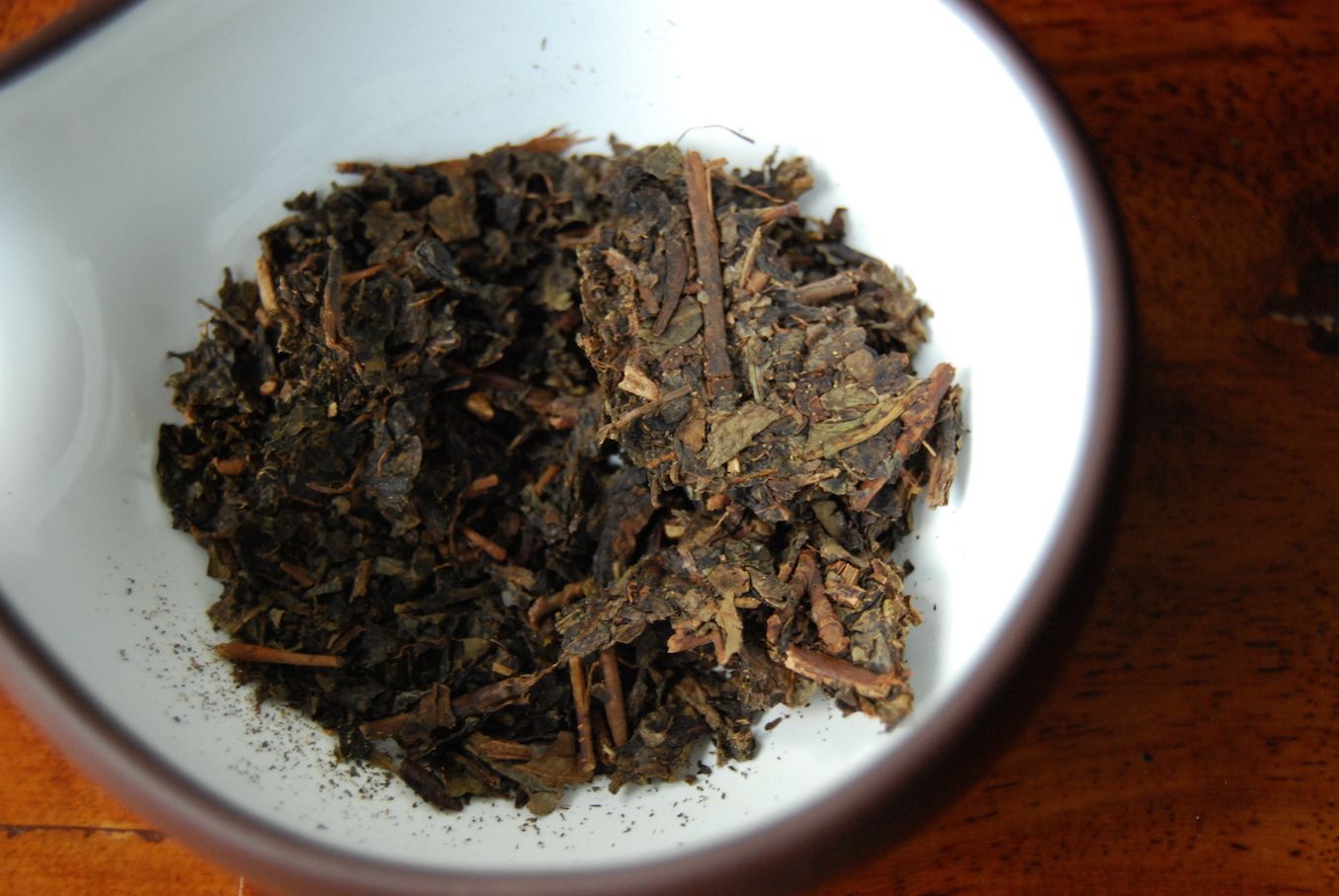
What's so nasty about Hunan brick-tea, then?  Well, Gentle Reader, steel yourselves for the images above and below, which show copious quantities of mould.  They spray it on, they do all sorts of voodoo, and the result is intentional mould-encrusted tealeaves.


These are spores.  SPORES!  From China!  Heaven knows what's happening down there.  I can see the FDA's blood pressure rising already.


It really is carnage down in this brick.  We've got mould, we've got smacked-up branches, it wouldn't be surprising if I found a severed rat's tail in there.  This stuff is really, really dirty.


What better way to start the day?  Fire up the kettle and let's get filthy, methinks to myself.


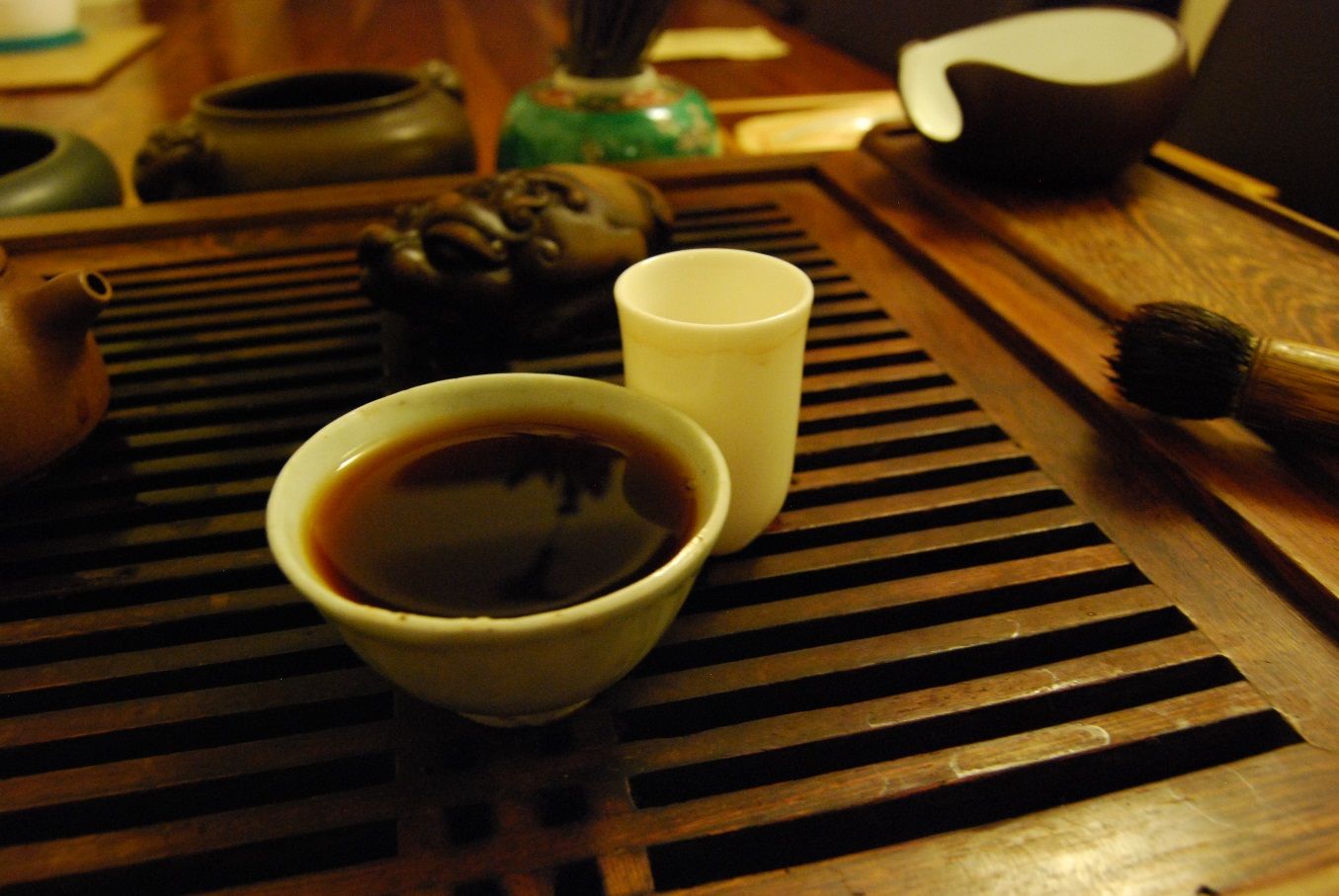
This tea is really addictive.  I mean addictive, this tea leaves you shivering and tremourous, and craving more.  It is the crack cocaine of the Chinese tea market, except it is so dirty that you would be hard-pressed to find any self-respecting dealer of narcotics peddling such wares.

Except, it's hugely popular.  This rancid, unholy concoction is a regional speciality.  Like herpes in Bangkok, perhaps, but a regional speciality nonetheless.

I really love it.  (The tea that is, not the herpes from Bangkok.)  It is big, orange, heavy, and so-so-so powerful that it makes Bulangshan pu'ercha look like a gentle shoulder-massage from a nubile concubine.

This tea is very definitely not a nubile concubine.  It is something more akin to a tattoo-covered, salty, hairy mistress of the night, who came up the wrong side of the law once too often.  It is not nice, in any measurable sense, and yet it so plainly addictive that I am beginning to question my own sanity, like a protagonist in a story by H.P. Lovecraft.

When Cthulhu rises from beneath the waves, and Shub-Niggurath (the Goat with a Thousand Young) gets his Shub on, their beverage of choice will UNDOUBTEDLY be the 2011 Jinxiangyi.  This is the kind of tea that the words "eldritch" and "cyclopean" were invented to describe.  This is like the twised half-sister of liu'an, which was passed through a dimensional portal only to be stranded in the infinite abyss for a millenium, infused with the screams of the howling daemons that inhabit that nether-realm, before being returned to present-day earth for immediate consumption.

If you like danger, you need to try the 2011 Xiangyi.  I am currently trying to find a vendor to provide this in quantity, and preferably one that does not have ties to a mystical cult dedicated to bringing about the resurrection of an ancient race of intergalactic, planet-eating deities.

However, if the choice is between not having this tea and funding the aforementioned apocalyptic cult, then SIGN ME UP, cultists, and get my robes and head-dress ready. 

I must haves me my Xiangyi.

Ph'nglui mglw'nafh Cthulhu R'lyeh wgah'nagl fhtagn.