Before the "main event" today, I warmed up the cockles of the empty, barren wasteland which is my heart with an old purchase from days gone by: the 1998 "Jiaji" tuocha from Good Ol' Dayi ("MAKIN' THE SHENGPU LIKE MAMA USED TO MAKE").
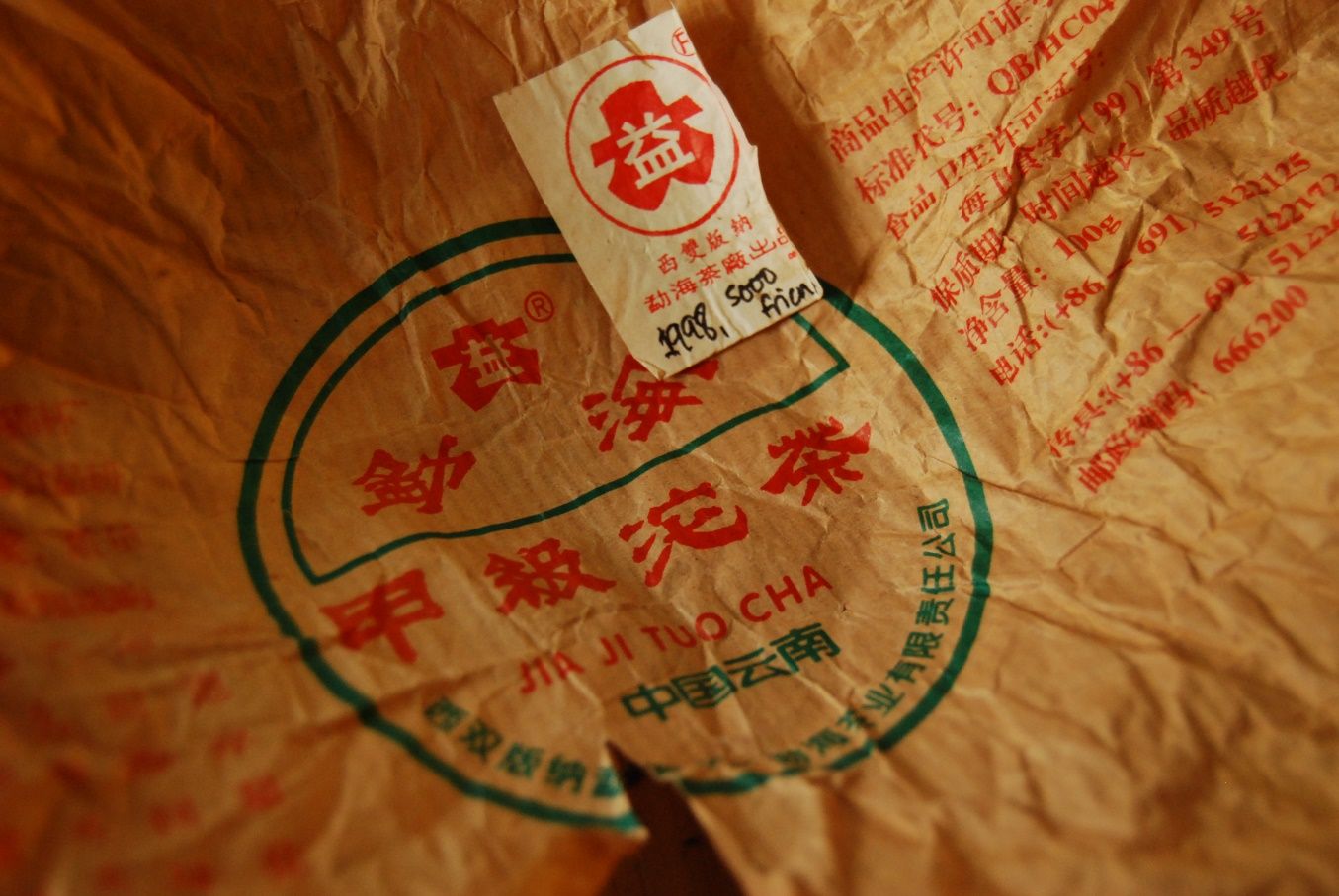
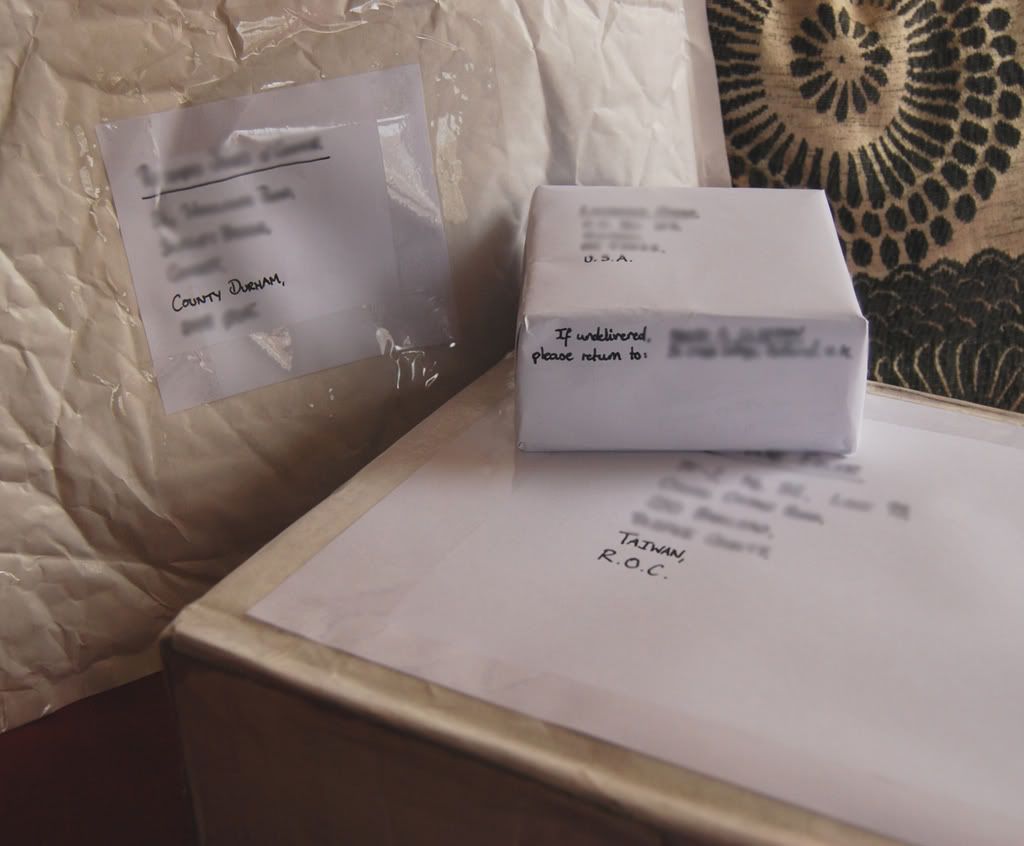
You are a clever one, Gentle Reader, and so you will have already seen my annotation in the above image: I bought this tuocha from "5000friend", which is an eBay vendor of some significant repute.
Many words have been used to describe "5000friend": these include, but are not limited to, thief, scumbag, blackguard, mountebank, racketeer, rancid burglar from beyond the ninth gate, and (my personal favourite) "douchenozzle". 5000friend shot to internet fame by selling Late Qing dynasty ("Late Qing dynasty") teapots that were rubbed with what can only be described as cheap shoepolish. So it is said. I was never a big buyer on the whole teapots-covered-in-cheap-shoepolish scene, and so didn't sample the delights of their product range, but the stories were chucklesome and enmirthenating to the max.

Being a suquer for punishment, I bought a bunch of "1998" tuocha from them, but it all turned out well. I have no idea whether or not the tea is really Dayi (or even if Dayi were branding their tuocha in this manner back in 1998), but I live by the famous saying "Who cares if it's a fake sold by some dude who rubs cheap shoepolish into a teapot - if it tastes so right, it can't be wrong". I think perhaps Shakespeare originally wrote that.
The original article for this tea is here.

My humourous regions are enlivened when I check my tea spreadsheet (yes, I have a spreadsheet) to learn that this tea cost £8 back in 2007. That probably means that, in 2007 prices, it was 15 USD. Those were the days, when British currency was about 1:2 with the US dollar. I miss those days plentifully.

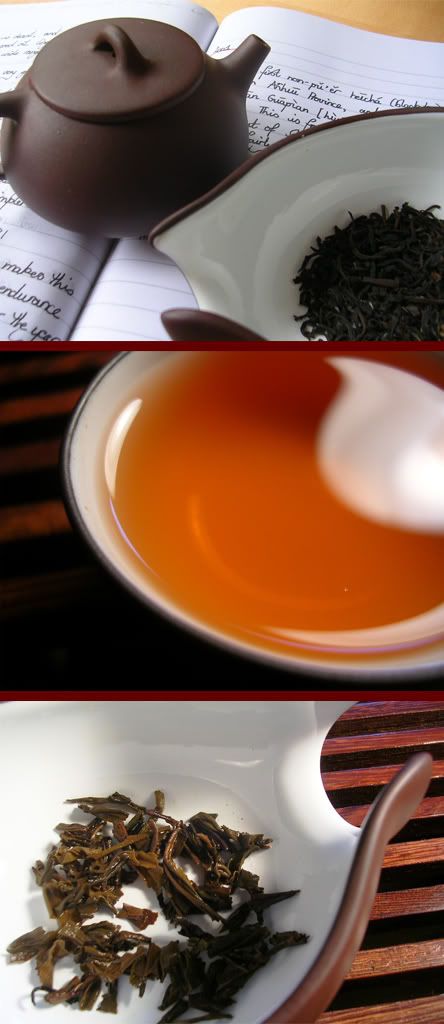
I have a big old tube of these tuocha, and so I am really hoping that they are aging properly. The soup, once a heavy yellow, is now a heavy orange, and LO, Hobbes did breathe a sigh of relief to see that some aging had occurred.
The result is long-lasting and very throaty, like a nasty virus. It has a plurality of HUIGANS, and these latter last rather a long time, too. This is one of just a few teas that I have aged from "middle age" to something approaching actually "aged"; the majority of the teas on our shelves were either bought "aged" or which were bought young and are now "middle aged". So, to see this little fella developing nicely is a welcome experience. "Exceptional length", I seem to have recorded, and exceptional length can only be a good thing.
"This is quite complex", observes my dear wife, as she passes and tastes a cup.
I promised you something ugly, and here it is. Let's get nasty.

This gold brick looks soooo old-fashioned, in the classical Chinese 80s-90s aesthetic that it actually seems appealing, in a kitsch way. It is the 2011 "Jinxiangyi".
Xiangyi [SHEE'ANG-YEE] is a brand, and so "Jinxiangyi" is, would you believe it, "Gold Xiangyi".

Xiangyi, the brand, is a product of HUNAN YIYAN FUCHA. This is not pu'ercha. Hold onto your hats and hide your daughters, because this is rancid brick tea from Hunan.
You can't say that you haven't been warned.

We have Chinese, yes. We have... Tibetan, by the look it (help me out here, cunning linguists). We also have... that strange script that reminds me of Arabic that, if it isn't actually Arabic (and I am unable to tell) is that language that crops up repeatedly when dealing with Muslim minorities in the PRC. It's probably Arabic. Never ask a scientist to get linguistic.

What's so nasty about Hunan brick-tea, then? Well, Gentle Reader, steel yourselves for the images above and below, which show copious quantities of mould. They spray it on, they do all sorts of voodoo, and the result is intentional mould-encrusted tealeaves.
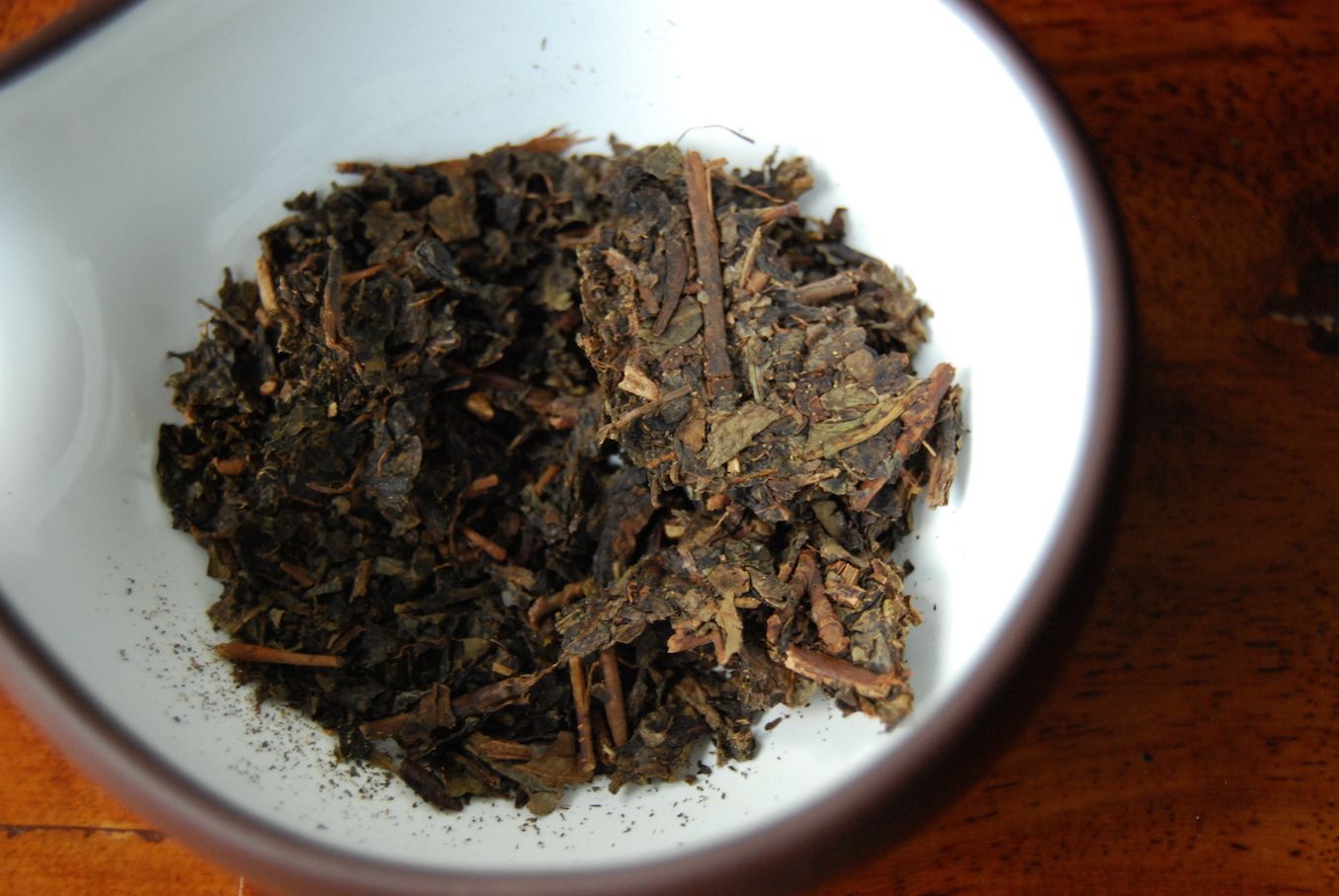
These are spores. SPORES! From China! Heaven knows what's happening down there. I can see the FDA's blood pressure rising already.

It really is carnage down in this brick. We've got mould, we've got smacked-up branches, it wouldn't be surprising if I found a severed rat's tail in there. This stuff is really, really dirty.

What better way to start the day? Fire up the kettle and let's get filthy, methinks to myself.

This tea is really addictive. I mean addictive, this tea leaves you shivering and tremourous, and craving more. It is the crack cocaine of the Chinese tea market, except it is so dirty that you would be hard-pressed to find any self-respecting dealer of narcotics peddling such wares.
Except, it's hugely popular. This rancid, unholy concoction is a regional speciality. Like herpes in Bangkok, perhaps, but a regional speciality nonetheless.
I really love it. (The tea that is, not the herpes from Bangkok.) It is big, orange, heavy, and so-so-so powerful that it makes Bulangshan pu'ercha look like a gentle shoulder-massage from a nubile concubine.
This tea is very definitely not a nubile concubine. It is something more akin to a tattoo-covered, salty, hairy mistress of the night, who came up the wrong side of the law once too often. It is not nice, in any measurable sense, and yet it so plainly addictive that I am beginning to question my own sanity, like a protagonist in a story by H.P. Lovecraft.
When Cthulhu rises from beneath the waves, and Shub-Niggurath (the Goat with a Thousand Young) gets his Shub on, their beverage of choice will UNDOUBTEDLY be the 2011 Jinxiangyi. This is the kind of tea that the words "eldritch" and "cyclopean" were invented to describe. This is like the twised half-sister of liu'an, which was passed through a dimensional portal only to be stranded in the infinite abyss for a millenium, infused with the screams of the howling daemons that inhabit that nether-realm, before being returned to present-day earth for immediate consumption.
If you like danger, you need to try the 2011 Xiangyi. I am currently trying to find a vendor to provide this in quantity, and preferably one that does not have ties to a mystical cult dedicated to bringing about the resurrection of an ancient race of intergalactic, planet-eating deities.
However, if the choice is between not having this tea and funding the aforementioned apocalyptic cult, then SIGN ME UP, cultists, and get my robes and head-dress ready.
I must haves me my Xiangyi.
Ph'nglui mglw'nafh Cthulhu R'lyeh wgah'nagl fhtagn.