Showing posts with label 2001. Show all posts

09 February, 2015

When Shi'itake Gets Real

Gentle Reader, let us parley.  I have three good 'uns for you this fine morn: one solid, one stanking (sic), and one that could only be described as being like the planet-eating deity, Unicron.

Let us open the batting with "solid".


Ah, the delights of the pre-dawn sesh.  It is called "burning the candle at both ends": aiming to have something resembling a social life in the evening, after the dear children have been coaxed to bed, and then rising early to have some tea, being paradoxically unable to sleep, even though immensely tired.  

Thusly, tired, and yet unable to sleep, I make matters yet worse by taking on a hefty slug of caffeine.  It is a cycle that I have, at the time of writing, managed to break simply by going to bed immediately after my children, for a night or two.  Sleep heals all wounds, and I have latterly discovered my love of it.  I have become rather good at sleeping, in fact, and have made something of a hobby of it.
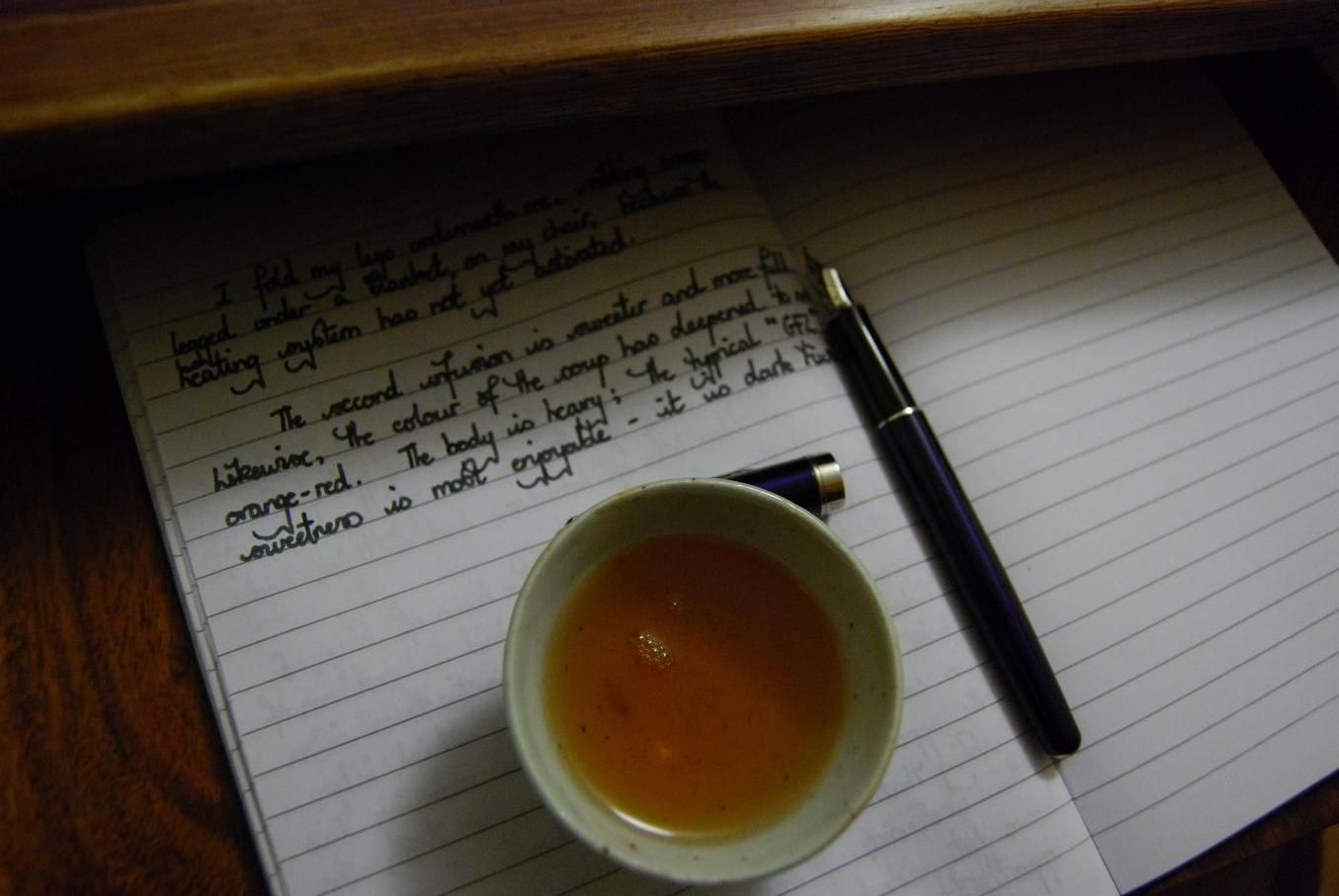


The "solid" cake is the 2007 Chenyuanhao "Guafeng Laozhai".  I cannot recall from whence cometh this one, but it might be Dubs, or the now-vanished Origin.  Or someone else.

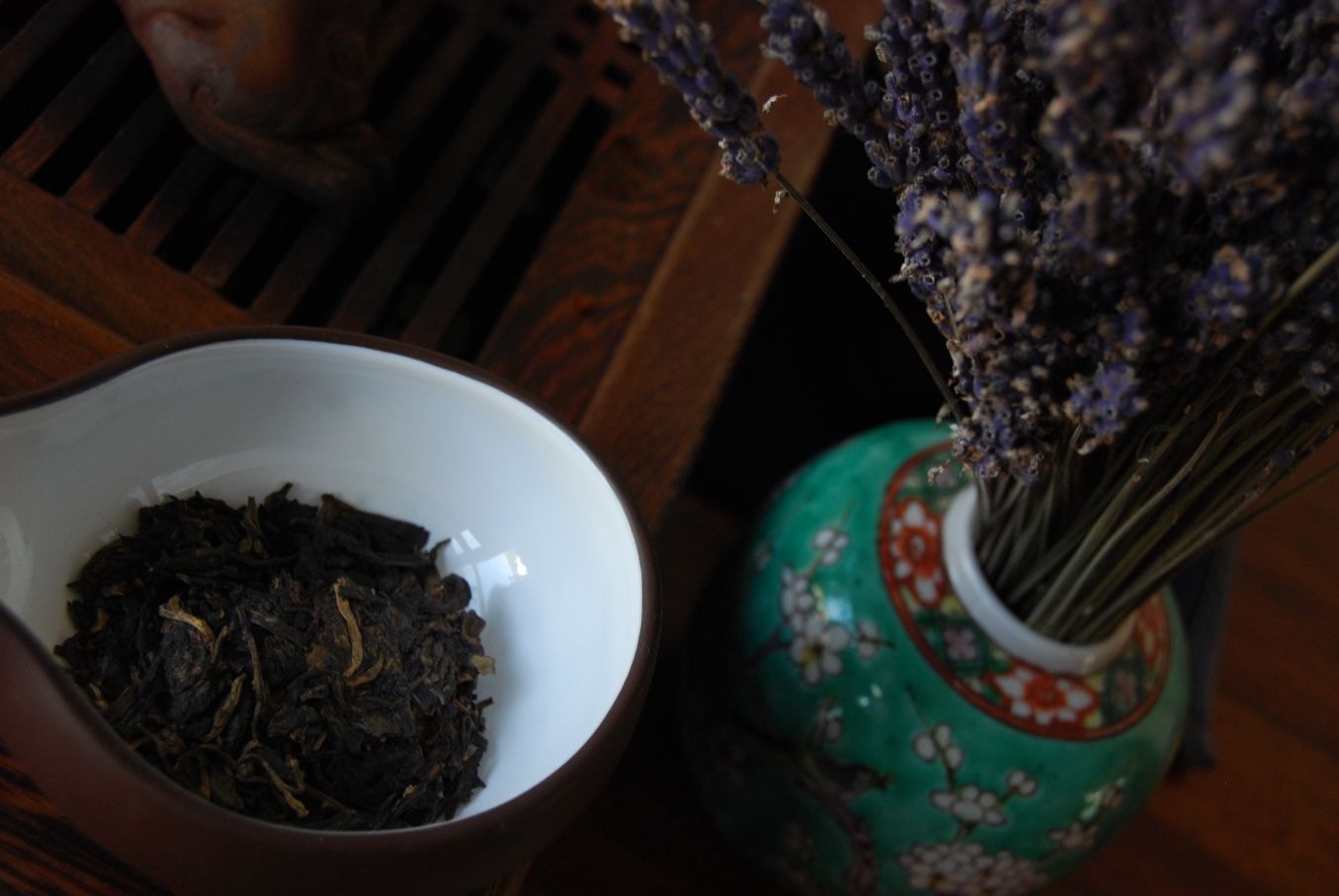
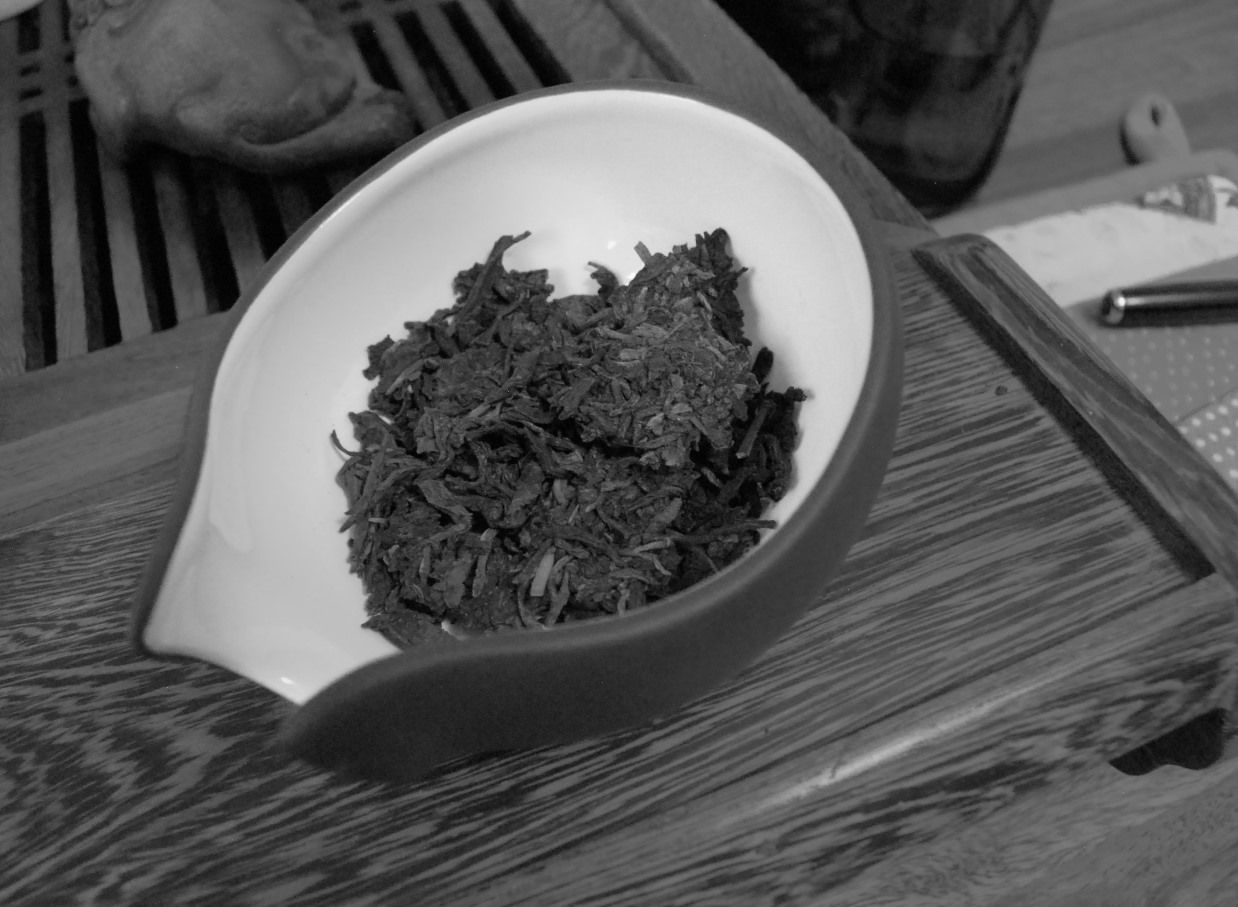
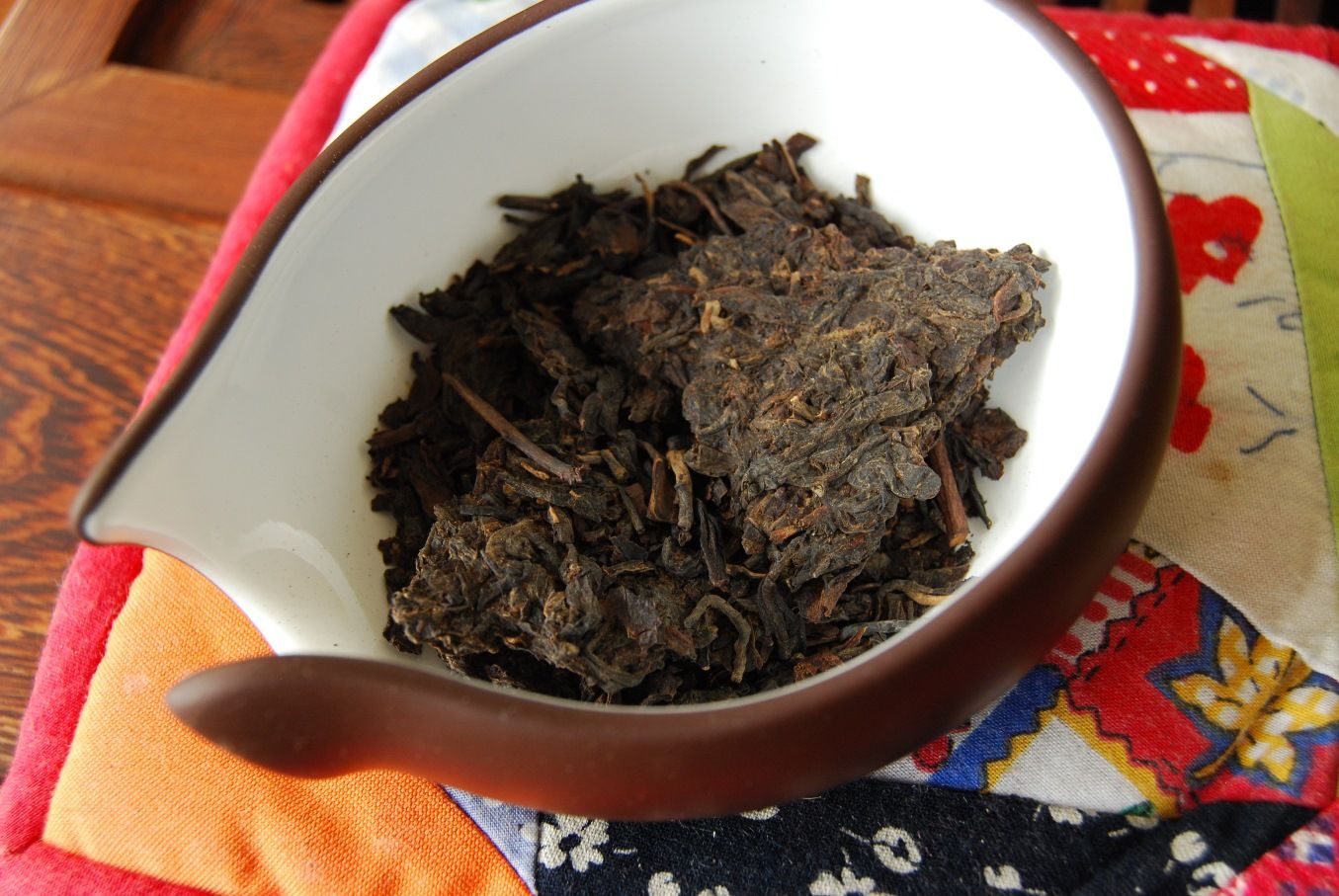
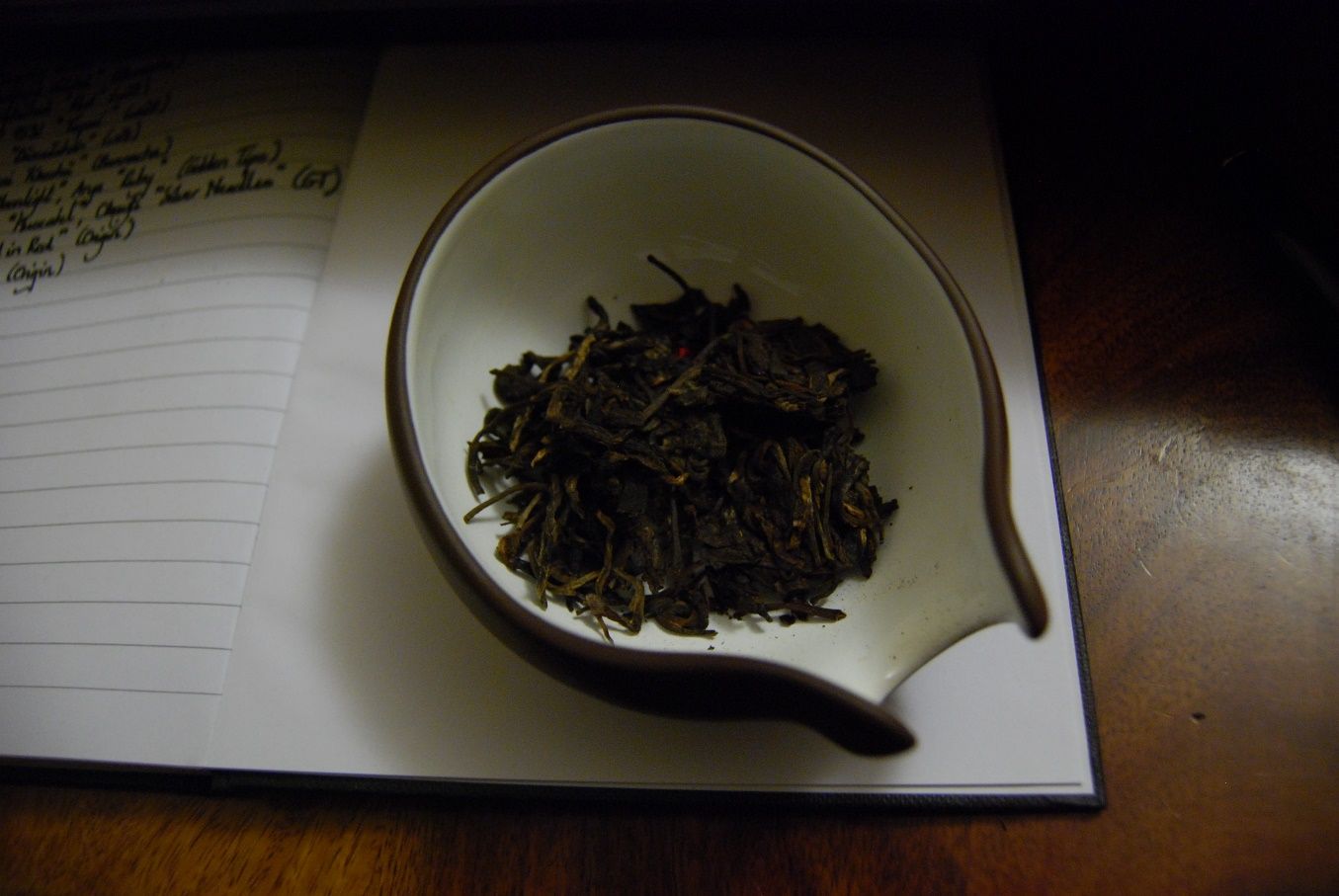
The leaves, pictured top, are unusually dark, even at 4.30 a.m., and they have a mightily-enticing scent of tobacco.  I am a vicarious tobacco consumer, initially from my father's distant pipesmoke, as he puffed beyond the jurisdiction of my mother, at the end of the garden, and more recently via pu'ercha.

This cake, like much of Daddy's pipeleaf, is solid, sweet, and rather clean.  Unlike the contents of the patriarchal pipe, this tea also has a note of fishiness to it.  That is not a matter of immediate concern, given that almost everything out of Japan (and the tea!  ho ho) smells of fish.  It is a full and heavy little tea; its "GFZ" character is typical, and, therefore, welcome.  I liked it, but not enough to pursue.


The "stanking" tea is the 2001 Changtai "Red", from Dubs.
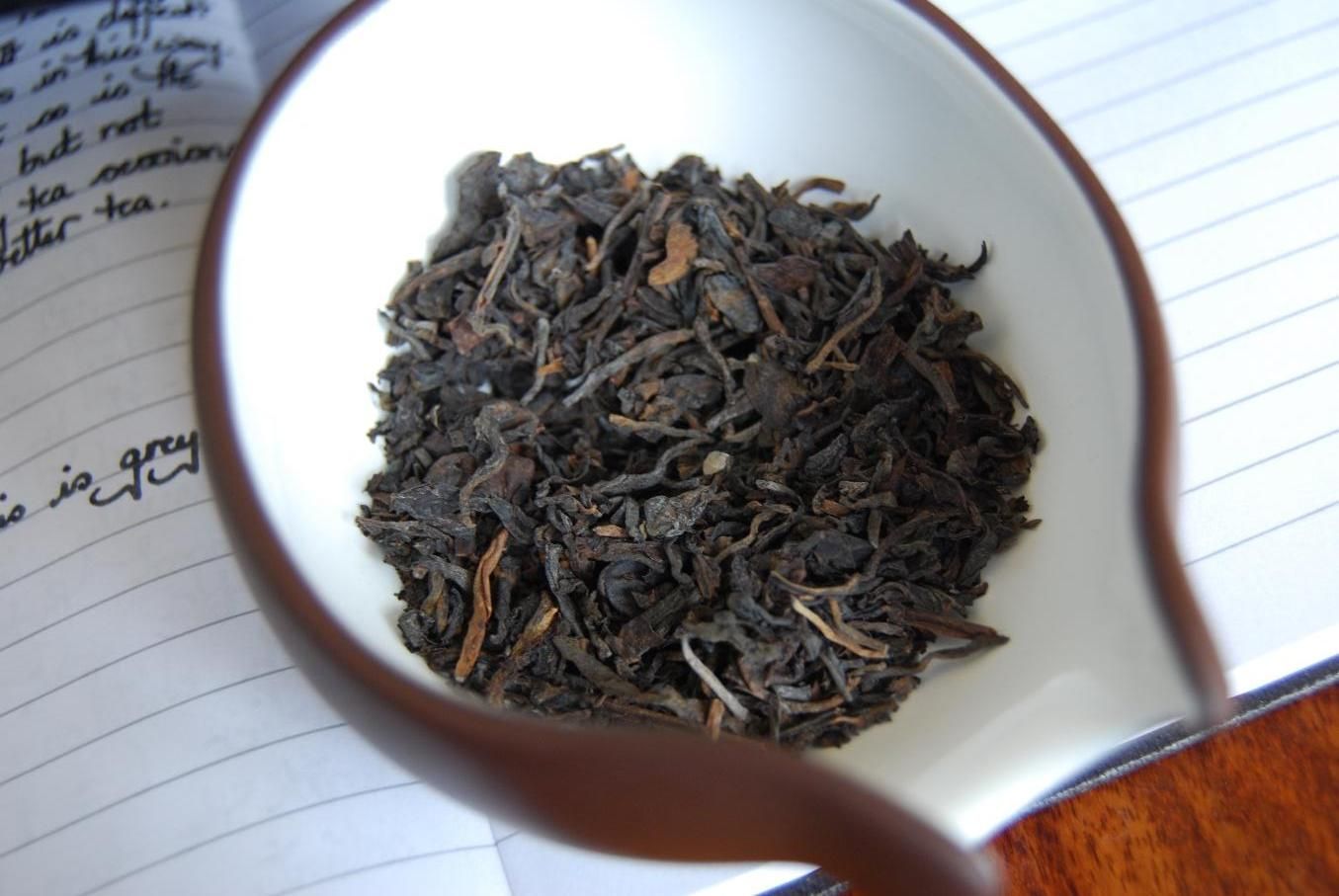


My diary has, and I quote directly, "This tea stinks, like Nurgle."  For those few of you not familiar with the collected works of Games Workshop (i.e., for anyone who has not previously been a teenage British male), Nurgle is the Plaguebringer, a deity of pestilence and decay.  He looks like a smiling, fat Buddha, except he is green and decomposing.  The 2001 Changtai cake is exactly like this.
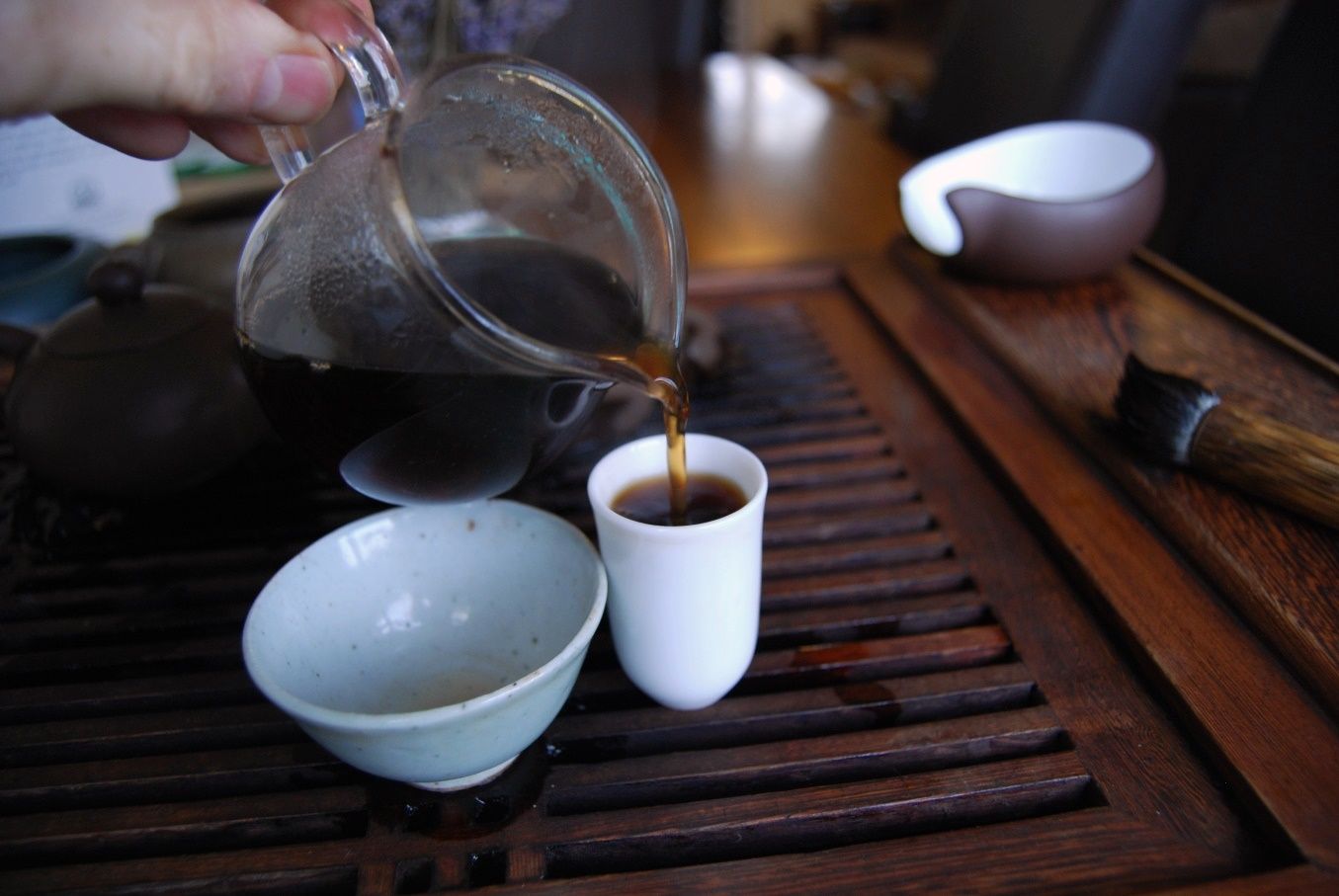


This is $150 from Dubs, and the cake is grey (grey!) with humidity.  I like my tea so wet that it's likely to decompose before it gets brewed, and so this appeals to me greatly.  I like teas that have been colonised by as-yet undiscovered bacteria, which may or may not confer super-powers on the imbiber.

"Heavy minerals" notes my diary, which is par for the course.  Its tangy, humid warmth pushes its way through the dried-out soul.  However, as you might expect, the excessive pestilence of this cake has given with one hand, only to take away with the other.  It does not endure, and the fairly low (for its age) price reflects its various qualities and limitations.


And then there was the Unicron.
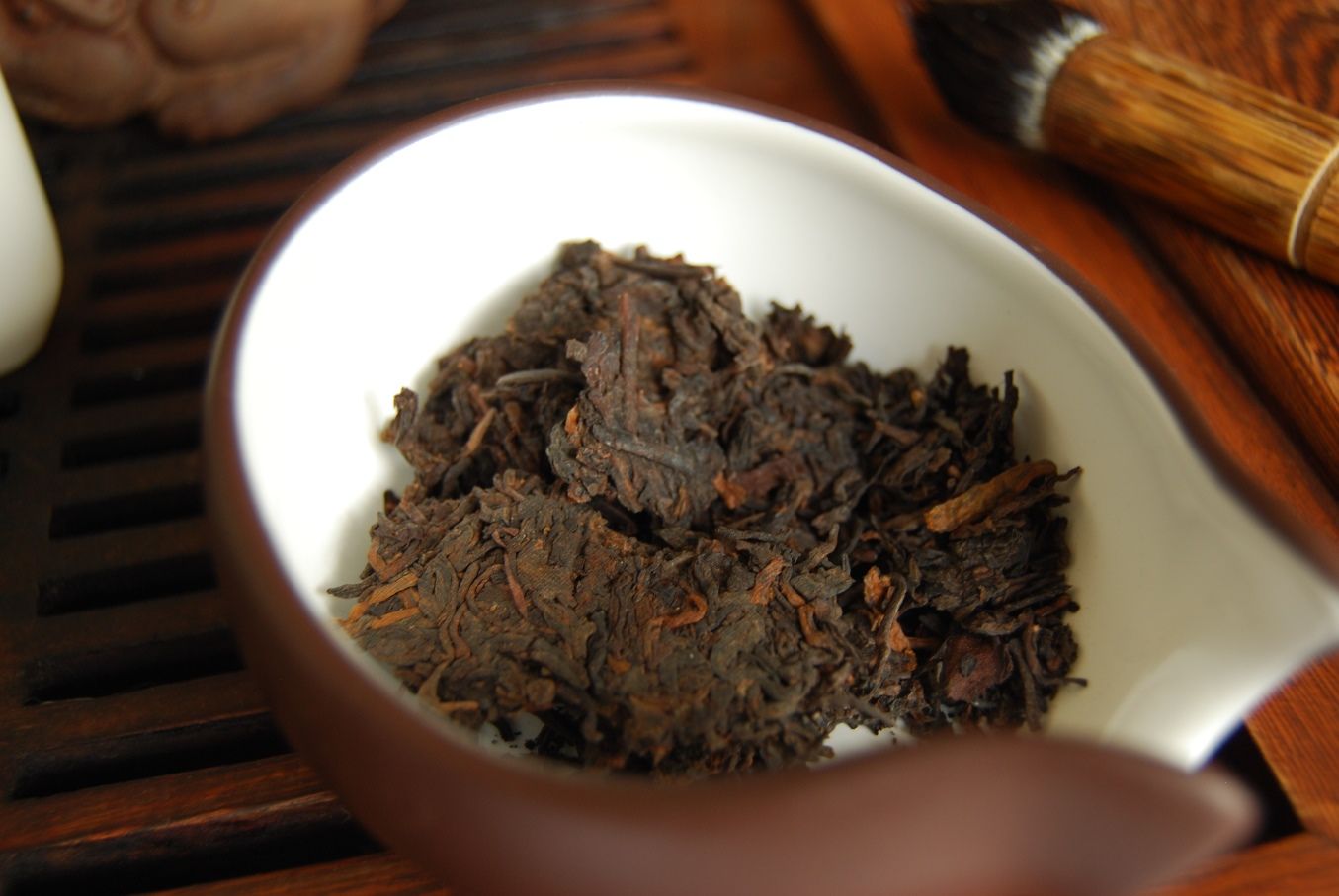


I really like this cake.  It is the 2000 CNNP 7532 "Tiepai", from the aforelinked Dubs.  You know this is a cake that needs to be owned the minute that you break it open. 
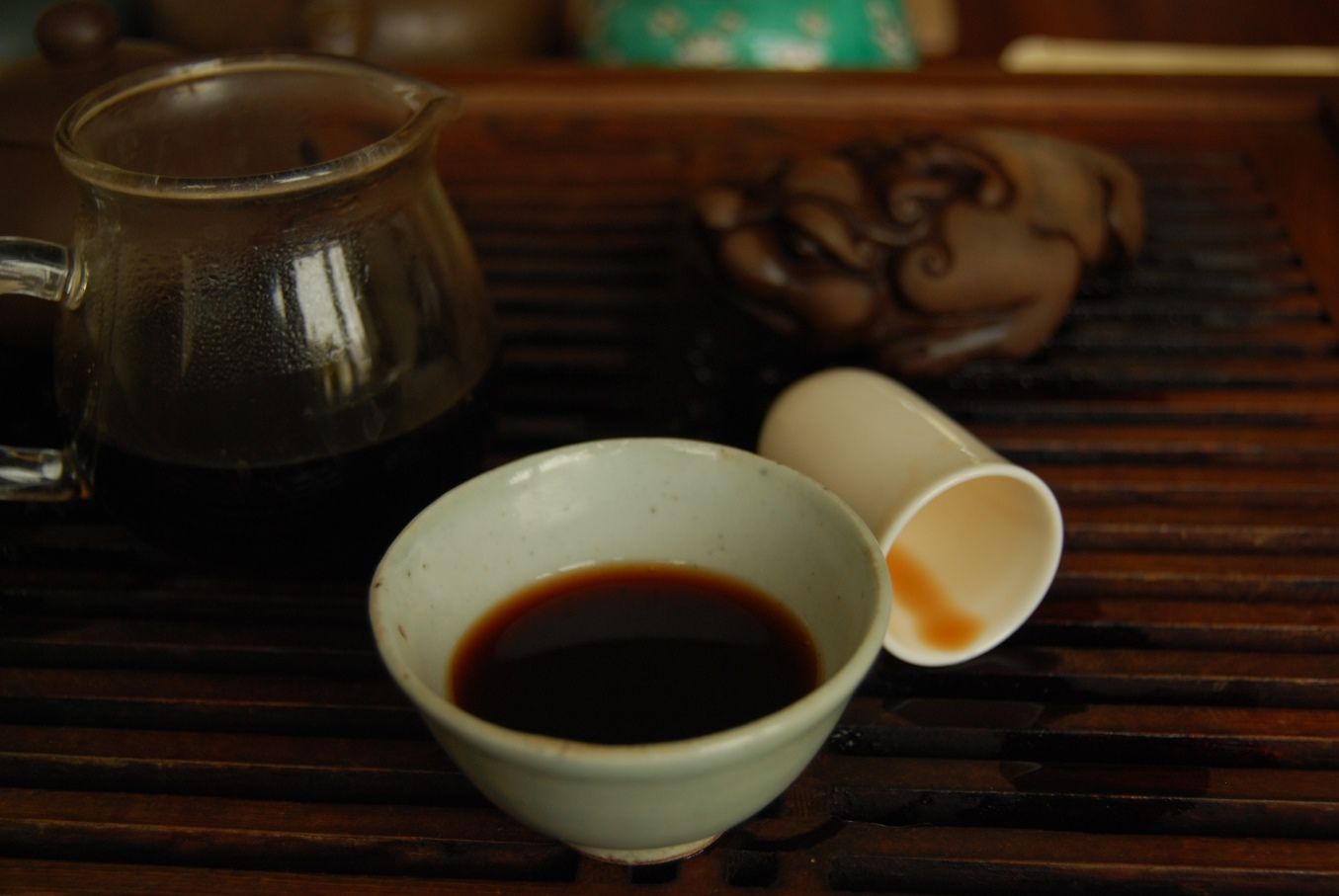


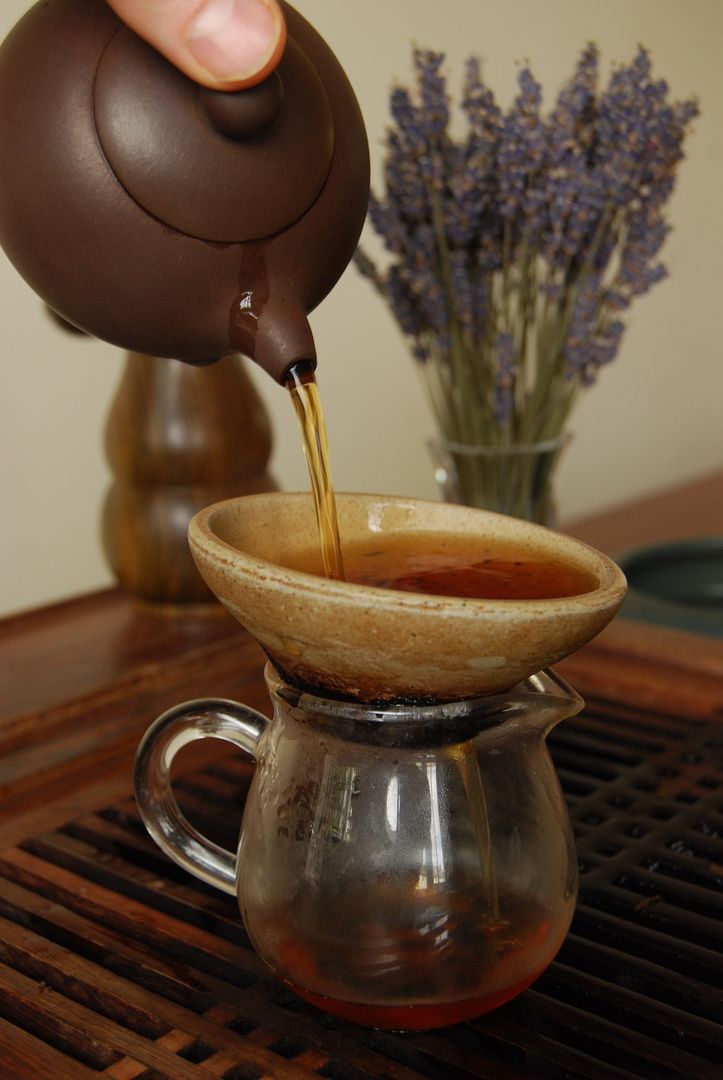
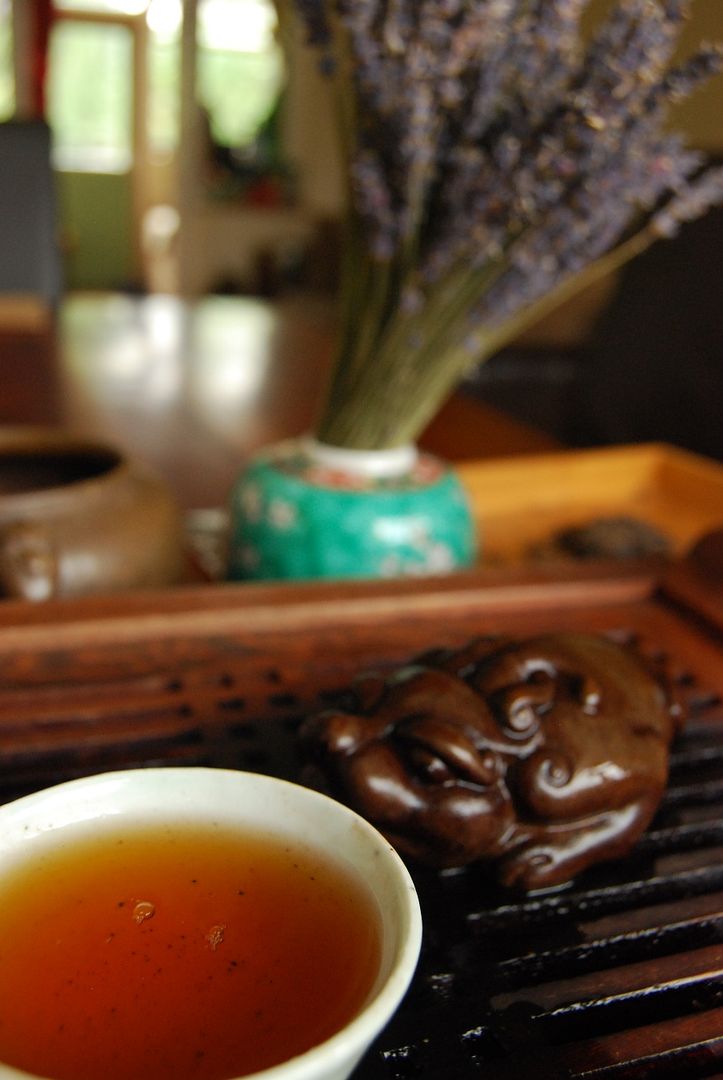
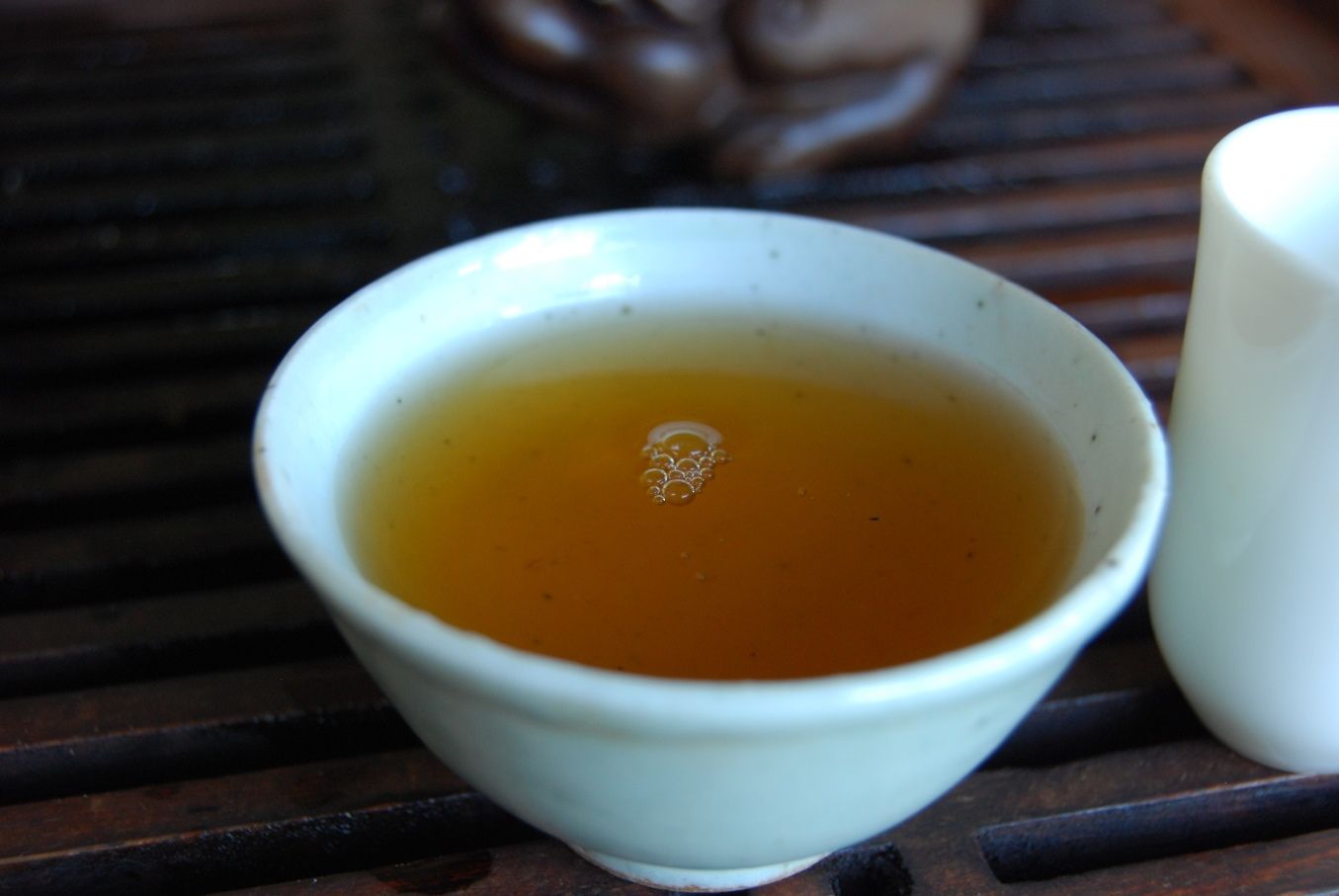
Does the above image convey a sense of thickness?  I think it looks rather like a serious claret.  You probably cannot detect, from the photograph, its sweet and floral scent, even though it has the dark red-brown character of good age.

Unlike many other cakes of this (comparatively reasonable) price-range, which is $140, its scents and residual aftertaste are well-developed, and suggestive both of good leaves and good storage.  I must confess that I brewed the entire 25g of the sample to gain this degree of thickness, but that's fair game.  The result is Unicron, plain and simple, crunching his way through planet after planet.

"This tiepai cake is pure blackness."  Note that "tiepai", meaning "pasted brand", refers to the probability that this cake is some sort of unorthodox pretender, dressed in an authentic 7532 wrapper. That said, one has to keep an open mind.  If the wrapper contains Unicron, then it's all good.


Balliol



Charles! you look young!
back from India I see
how is Lucy?

my name is not Charles
I've not been to India
and who is Lucy?
24 October, 2014

Teenager Tea

Teenage pu'ercha is a great deal easier to handle than real teenagers, I think.  Although my boys are just 2 and 4 years old, at the time of writing, I look forward to their teenage years.  In tea years, it is approximately years 2-10 where the changes happen, depending on storage - after a decade, you're into much more gradual territory, and the character of the tea has, to some degree, been determined.

The teenage teas in today's article, then, are all "settled down", to a varying extent.


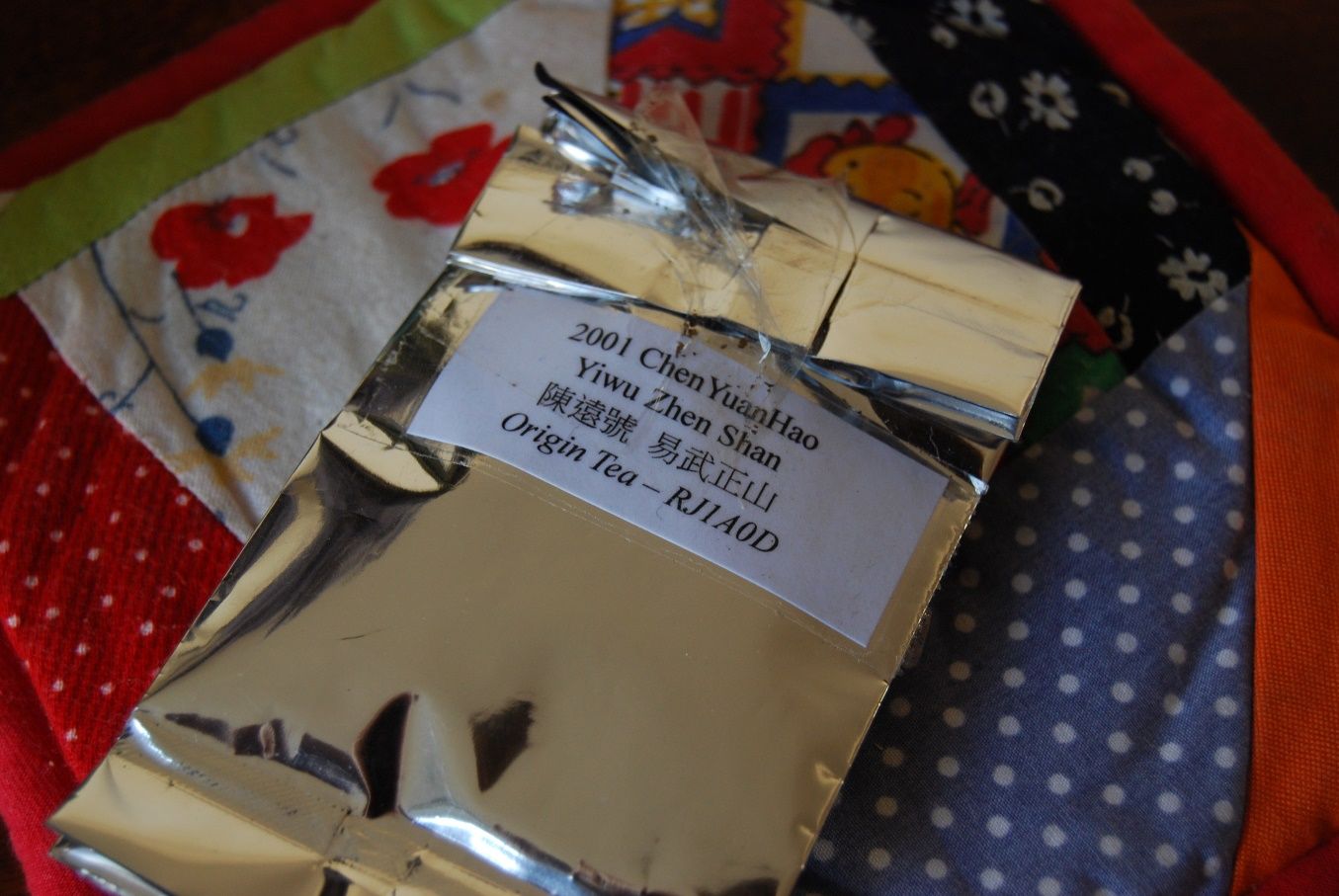
The first is the 2001 Chenyuanhao, a Taiwanese producer with a reputation for scrupulous control of processing.


While seemingly stored in Taiwan (this tea came from Origin Tea, after all), the black-with-rusty-orange leaves have the dense sweetness of more humid climes.  I seem to drinking nothing but HK-Taiwanese tea lately.  That is not a complaint.


It turns out to be a heavy orange, aided by the quantity of leaves that I have rammed into Zidu, my pot.  It is tangy and a little "fishy", in the manner of some straw-like Yiwushan tea.  There are few other regions from which a tea of this character could be derived.  Again indicative of the region, to my mind, there are those wildflower overtones that I associate with the better teas from the area.

Dense, tangy, and sweet, with a reasonably smooth body, it actually seems a touch unready.  The floral Yiwushan nature is very familiar, and very welcome.


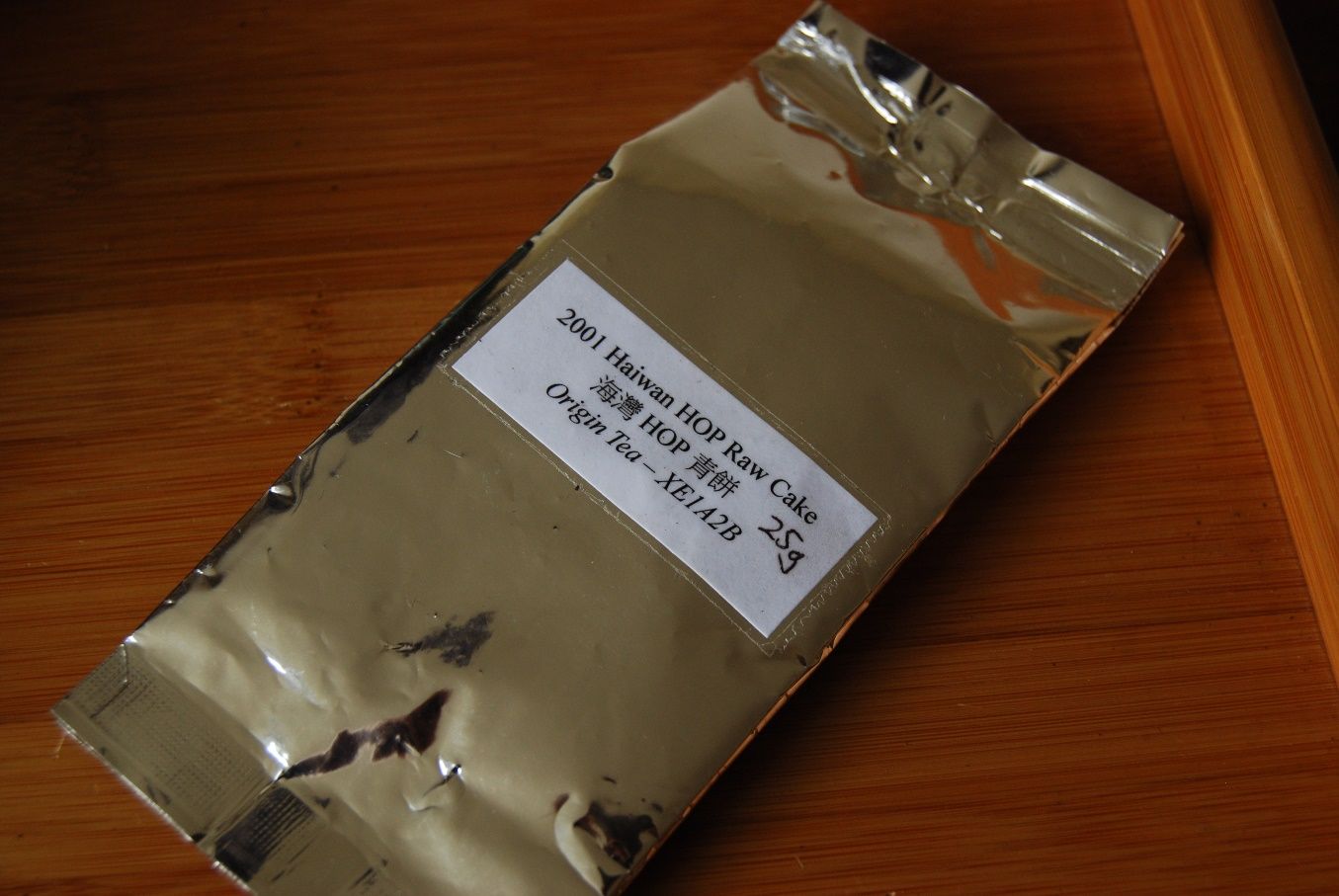
A second tea from Origin (and again kindly provided by JT), we have...


...some sort of "special order" Haiwan.  I don't usually touch Haiwan with a big stick, because it is the single guaranteed producer that you'll find in almost every single bad pu'ercha shop in China.  Laotongzi is, almost literally, everywhere.

Brushing off those negative associations is not easy!  The fact that this used to cost around $150 when it was available raises the eyebrows, too; presumably it is better than I think it will be.


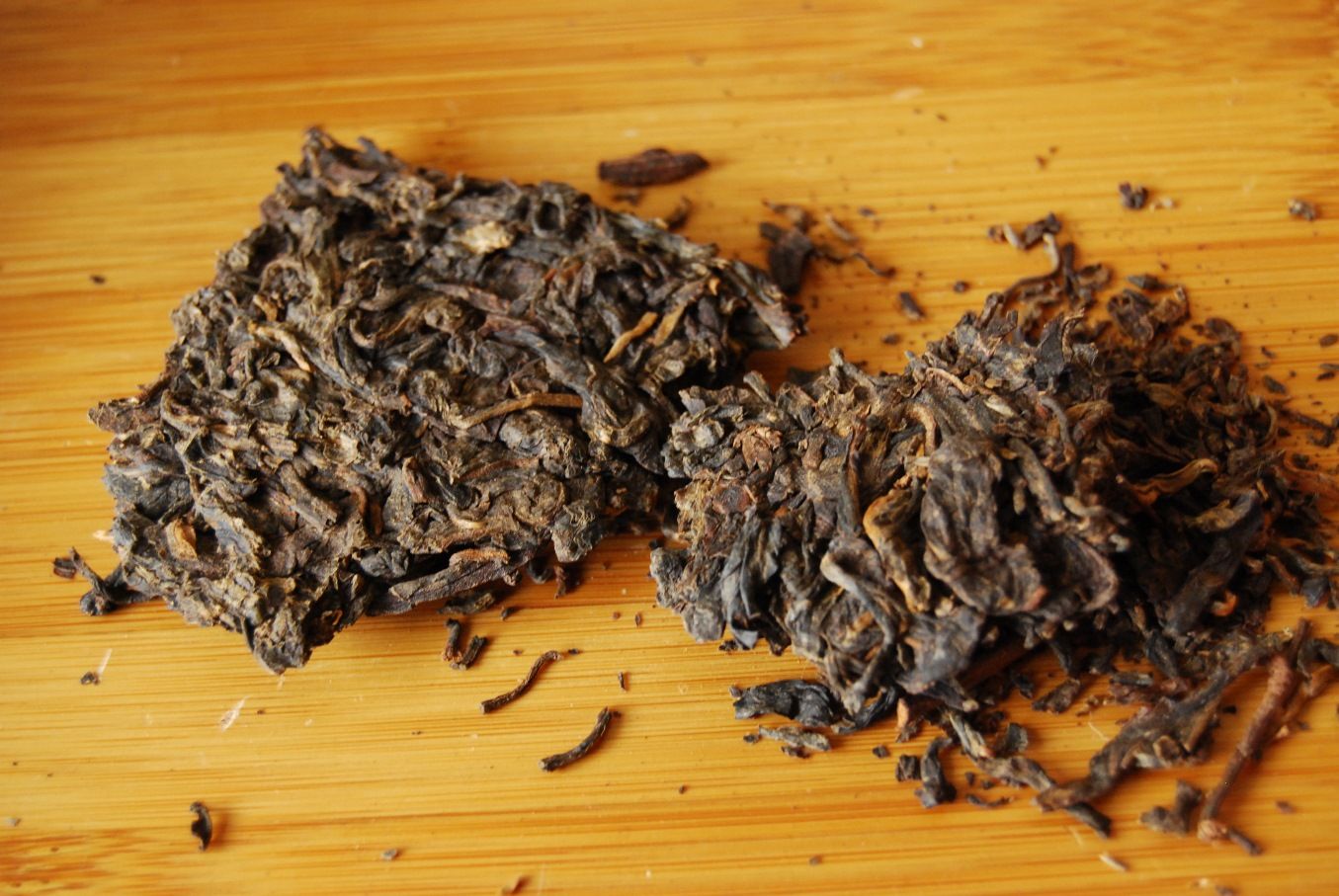
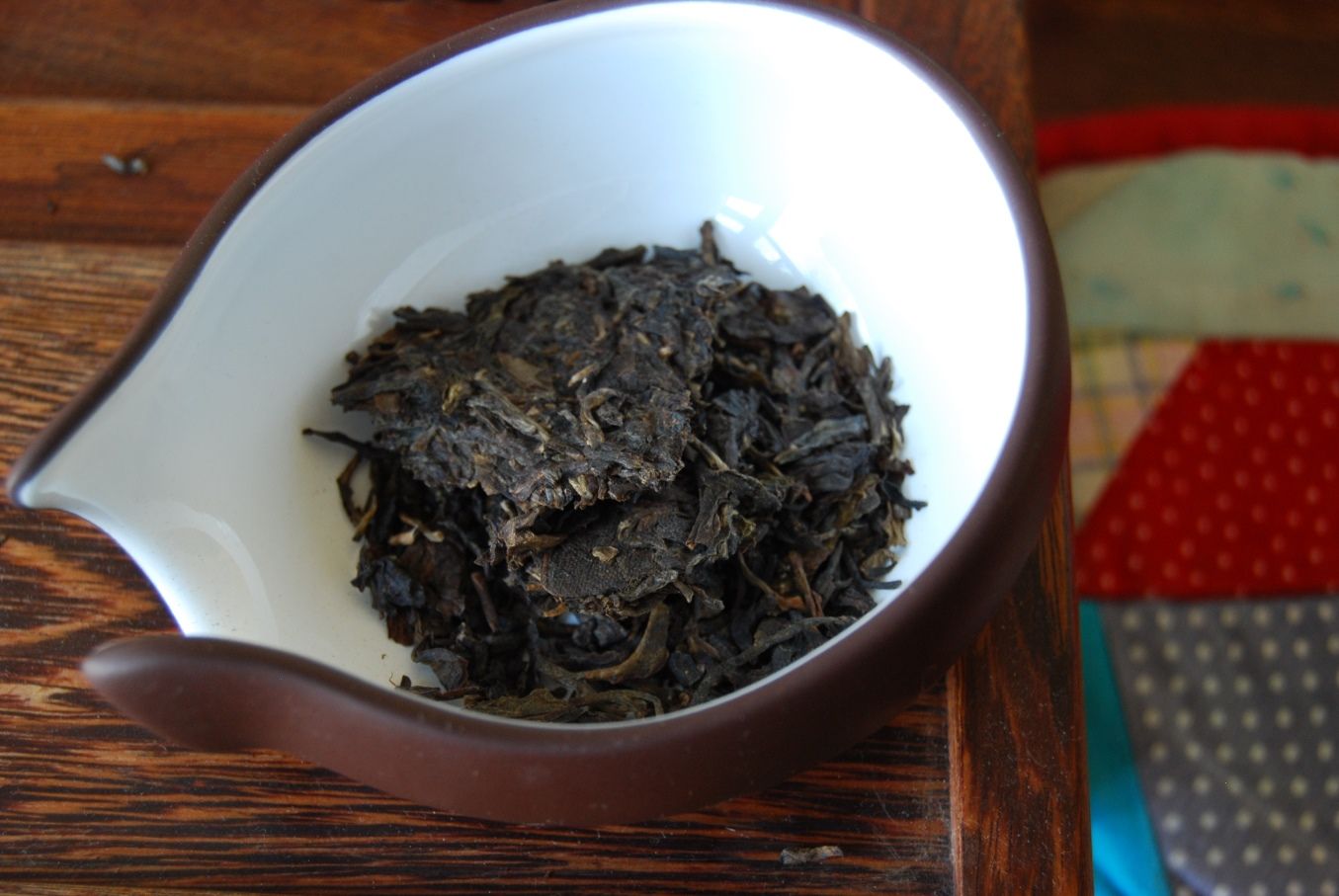
The little leaves, pictured above, are filled with heavy and humid scents.  When I opened the sample bag, I was assaulted by obvious smokiness; this continues in the aroma cup, but, thankfully, not so in the tasting cup.  It is also immediately sweet, which I was not expecting at all.


Its standard "black" woodiness is not too underpowered, despite the high compression that would otherwise suggest it needs time to open.  It is easy enough to drink, and surprisingly rewarding: the "black" sweetness, although presumably down to Dayi-style cunning in the processing of this tea, is long-lasting and perhaps even cooling.  It tastes rather like Dayi, and has the low plantation ceiling of same.


Speaking of which...


I like Dayi, but I don't like Dayi.  There is a difference.  If you're of the mind for some low-ceiling plantation tea, with a probably blackness added by virtue of the old factory's dark pantheon of tricks, then it is always good fun.  When aged, even when aged in Taiwan (as is this), the result is often woody, sharp, and enjoyable.

This particular cake weds the Dayi blackness to a charming Nannuoshan sweetness that works very well together, and of which you'd think there would be more, given how many zillions of cakes Dayi churns out every year.

The problem with Dayi begins when the mainland tea market gets its brand-fixation problem going, and the price disappears through that same ceiling that is otherwise containing the character of the tea.  Dayi tea is simply not worth the often-huge asking price.  More than any other mainstream brand, Dayi seems to have some sort of terrible grip on the wallets of mainland consumers and I know not why.  I can guess (!), but I'm sure the true reasons are manifold.

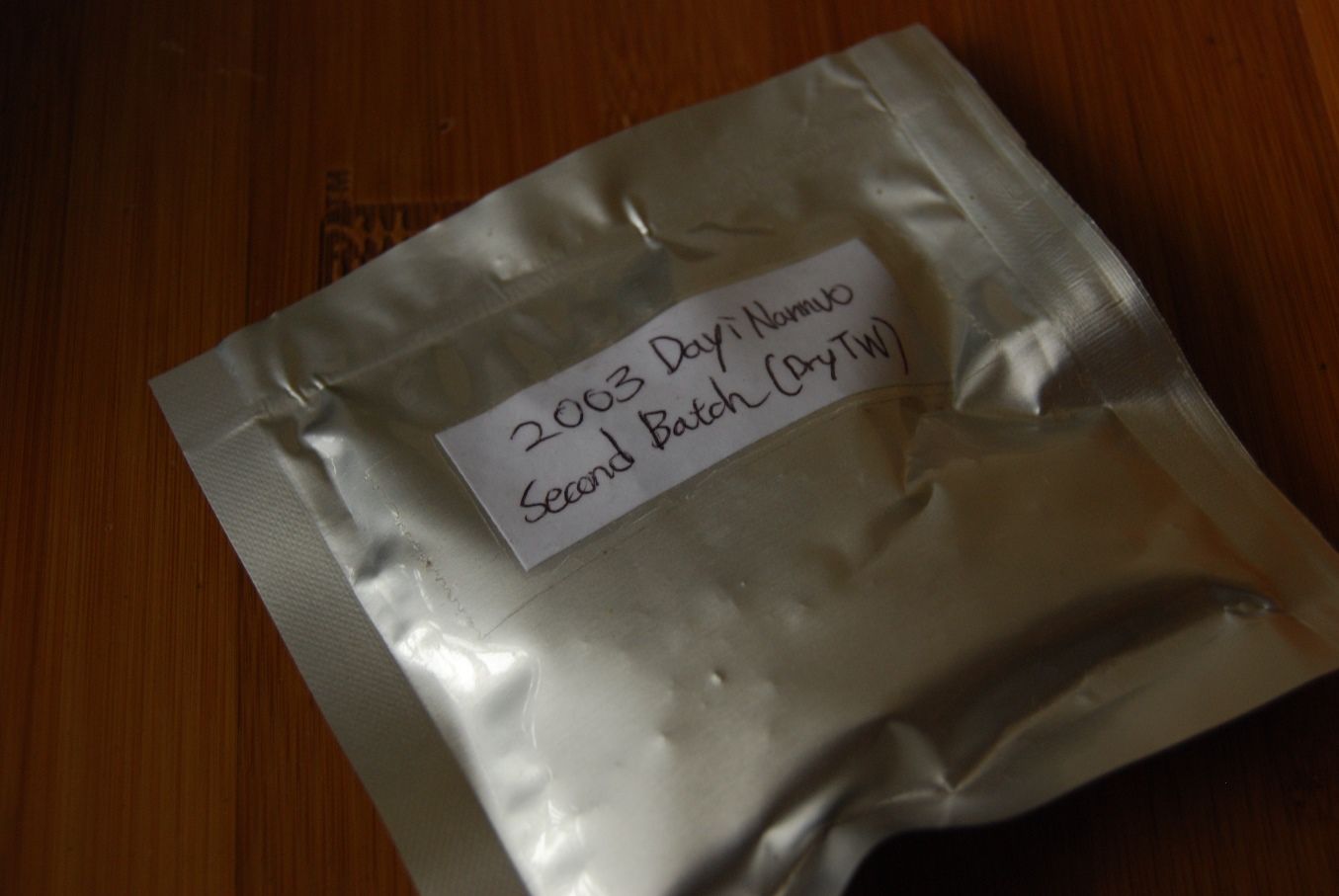
This 2003 Dayi is, would you believe it, orange, woody, husky, and tastes like solid 11-year-old taidicha.  I refuse to look up its price, because it would make me chuckle.  Thanks to PM for this sample, which reaffirms all of my preconceived notions with respect to the Great Benefit.

19 September, 2014

A Postcard from the Fragrant Port

If all goes well, Gentle Reader, then you are reading this while I am on the way to the Fragrant Port.  I'm not entirely sure which fragrance modernday Hong Kong sports at this time of year, but I suspect that "fragrance" might be a little generous.

As it happens, this article is all about The Dayi, and one of my Hong Kongese chums, Apache, is about as into Dayi as I am.  We're not fanboys, I should point out, but we do get together from time to time to drink up the "Great Virtue".  There are people like us, who enjoy a bit o' Dayi, and there are the other kind of Dayi fans - those folk who can tell you all about the way certain flecks of ink on certain characters indicate special batches, and so on.


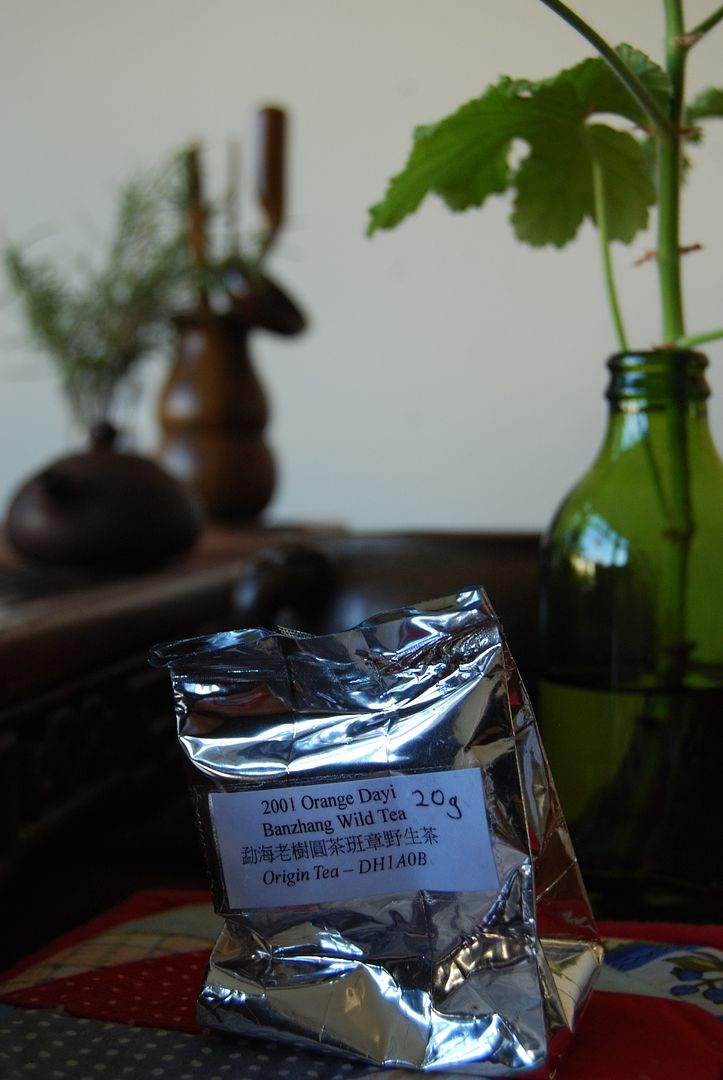
This tea came from the now-defunct Origin Tea, by way of JT (many thanks).  2001 Banzhang "Wild"?  Of course it is.


Looking at the photograph above, this tea is as expected.  You can almost smell the tell-tale blackened plantation aroma just from the bitmap.  It is exactly that which you would anticipate for Dayi.  I am fascinated to see that the stereotypical "Dayi" house style existed even in 2001.


It is orange and husky, but you knew that.  This is a sharp cake, with some (ready the lifeboats, stand by your bunks) dry storage.

Queue pictures of Luke Skywalker holding onto a weathervane.

Luke didn't have it so bad.  He lost a hand and the Sith Lord that was doing the Emperor's dark bidding turned out to be his father, sure, but he didn't have to cope with excessively dry tea.  I'm not a fussy drinker, and I can drink everything from a cake that's so humid even your average Hong Kong resident wouldn't touch, all the way down to something that's as dry as a Jawa's gusset.

In this particular case, it has a solid body, but absolutely no huigans at all.  There is simple, plantation strength, but not too much else.  Yes, it's Dayi, but (and don't hate me here) it's really not the best example of Dayi that you might hope to find.


This next cake is the 2003 Dayi "Purple".


Foiled!  The colour balance of my pre-dawn photography was so unalterably nasty that I simply had to desaturate the entire image.  At least you can see the shape of the leaves. 


This second plantation recipe, like the 2003 Jin Dayi, has become very expensive.  As with the 2001 Orange Banzhang, above, this is blackened and sweet in the usual Dayi way.  This cake is also a victim of basic economics: the demand is so high that the price has risen way beyond that which I would consider to be "good value", and has passed even beyond "almost reasonable".  It is, merely, a husky Dayi plantation tea, without much huigan [returning sweetness].  It is good plantation tea, certainly, but you couldn't buy this with a straight face.  This is internet forum madness, and not worth contemplating.


The 2001 "Commissioned Purple", however, is really worth thinking about, in my opinion.


That picture is enticing.  I am enticed!

Dark and humid, these leaves are calling out for a good session.  The "commissioned" status lifts it above the norm, quite obviously.  Gone is the husky blackness of standard Dayi; in comes the very real scent of grapes and raisins.  This smells much more natural.


This is red-brown, and very smooth.  Compare this 2001 Commissioned Purple to the 2001 Orange Banzhang, at the top.  It's like chalk and cheese; heaven and earth; Optimus Prime and Megatron.

I used all of the leaves in my sample, safe in the knowledge that it would be almost impossible to overbrew, which turned out to be correct.  It is dark and oaken like dodgy Norweigan metal.  Devoid of roughness (unlike the aforementioned Norweigan metal), this is made from quality leaves.

This is surely about as Dayi is ever going to get.  Its pure strength is its primary advantage, but it is the punch of an Ent: woody, solid, and completely unstoppable.


Finally, shupu.

Please, contain yourself, Gentle Reader, for such wailing is most unbecoming.  You sound like a schoolgirl.


I will have you know that I actually like shupu.  I often drink it in my lab, and I sometimes even drink it at home at the teatable.  Shupu is fine by me, when done right.

Doing shupu right is exactly what Dayi knows.  When you want shupu, you go to the people who invented shupu.


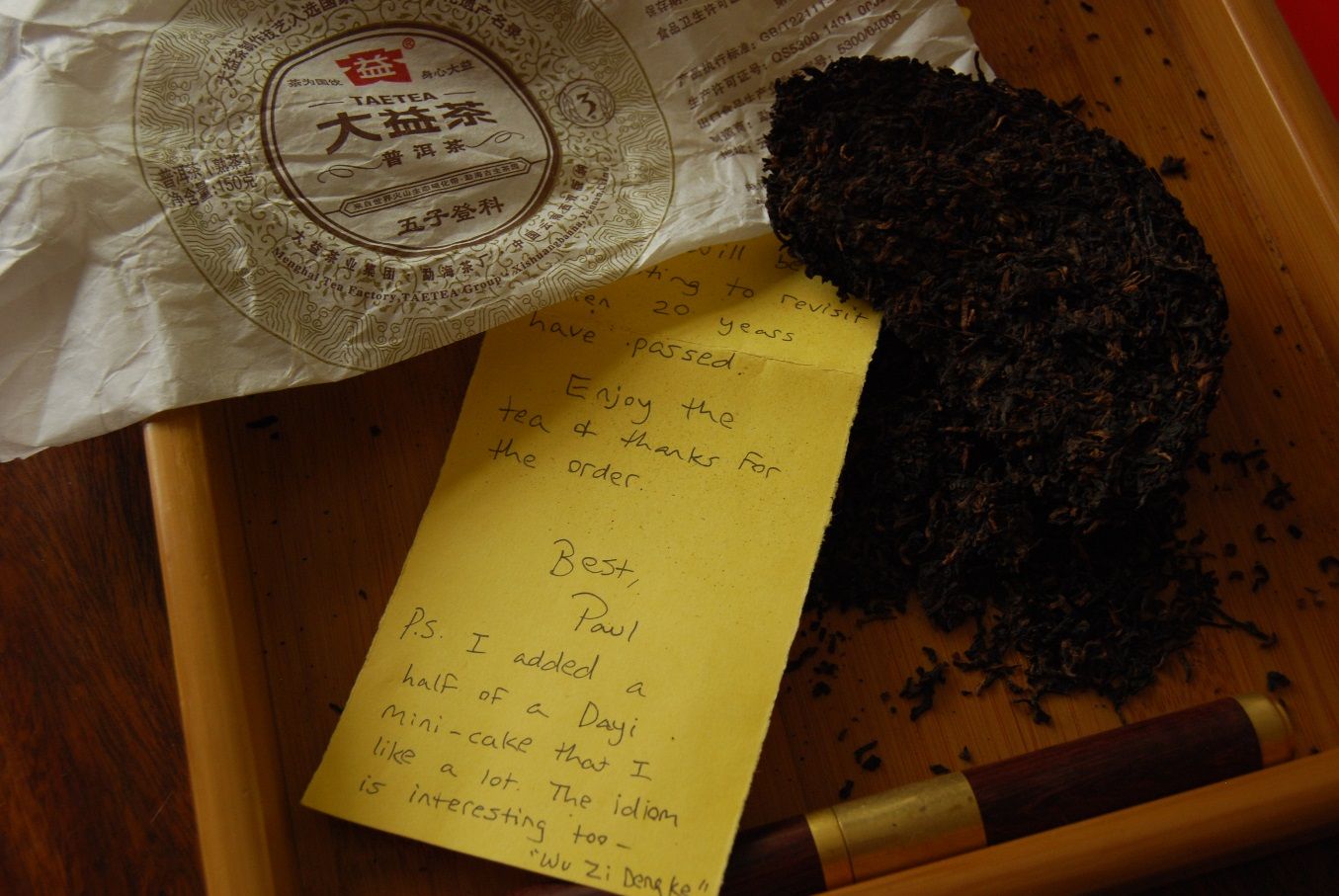
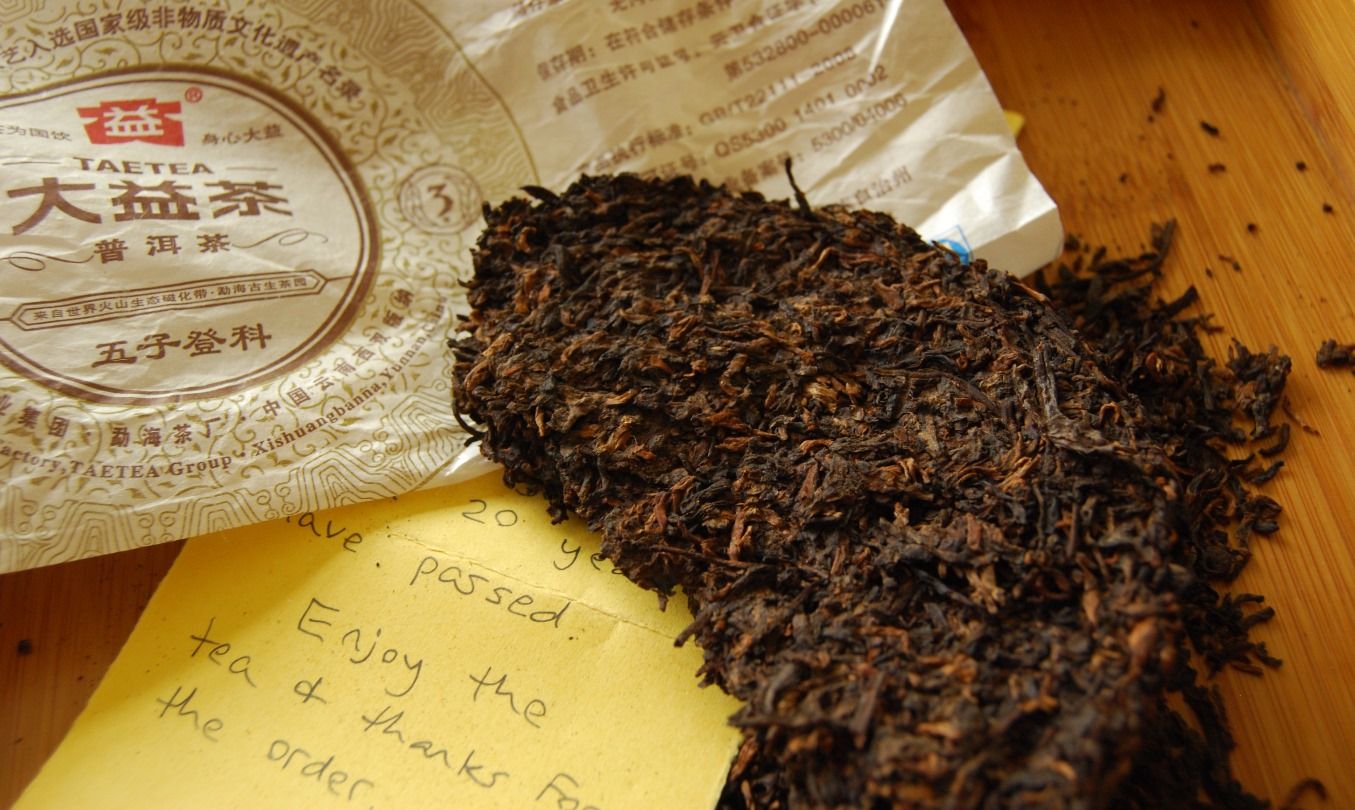
"Wuzidengke" [woo-zer dung-ker] refers, approximately, to five sons passing the examinations for the Imperial civil service.  It's a great name.  It's also a great pu'ercha pun, because a tong is called qizi, as you know (seven sons), referring to the seven cakes in a tong.  Guess how many little cakes you get in the (metallic) tong casing here?

PM of white2tea sent me a sample of this, as you can see in the photographs above, and I promptly swooped like the vulture I am and acquired a groovy metal tin.  It weighs in a about $70 for the lot, which is really good value considering how awesomely stable this shupu can be.

Heavy, black, clean, fresh, husky, and sweet: Dayi are the unbeaten masters of shupu, and here they are on fine form.  It has the soft, eroded edges of shupu, but retains good strength - a marvellous piece of composting.  There is complexity the likes of which one would never expect: honey, and much in the way of vanilla softness.

If you're doing shupu, then do please try a sample of Wuzidengke.  The name is hard to forget, and it is a personal favourite.

25 November, 2013

Voltron

"We form like Voltron, and he... he just happen to be the head."

I cannot believe that this site exists, but be thankful that it does.  It's like the wikipedia of Wu-Tang lyrics.  With graphics and audio clips to navigate the 36 chambers.  Un-be-lievable.


While Peter of pu-erh.sk may not quite be THE GZA, if we formed like Voltron he would at least be fairly close to the shoulders.  Or the lumbar region, at minimum.

Today's teas include a few samplers that don't appear to have made it onto his web-site, by which are, as always, a complete and total education - and therefore very gratefully received.


The purile part of me always finds the name "Yibang" extremely amusing (Chinese has a virtually silent "y" at the start of this vowel sound), akin to "Badabing" or, every schoolboy's favourite, "Chawang".

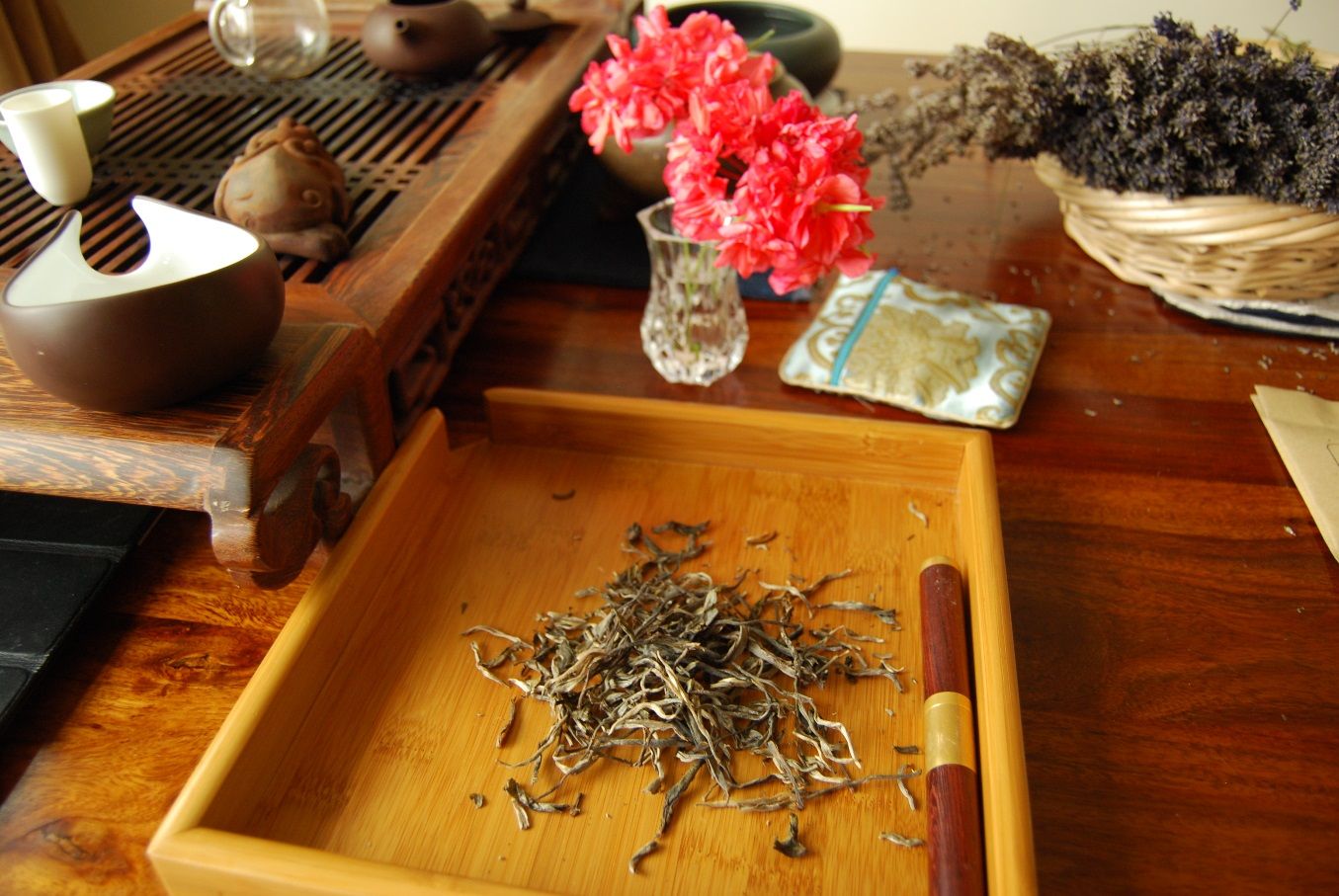
Famous for its short leaves, Yibangshan is usually sweet and approachable.  This particular sample, maocha as pictured above, has no breakage.


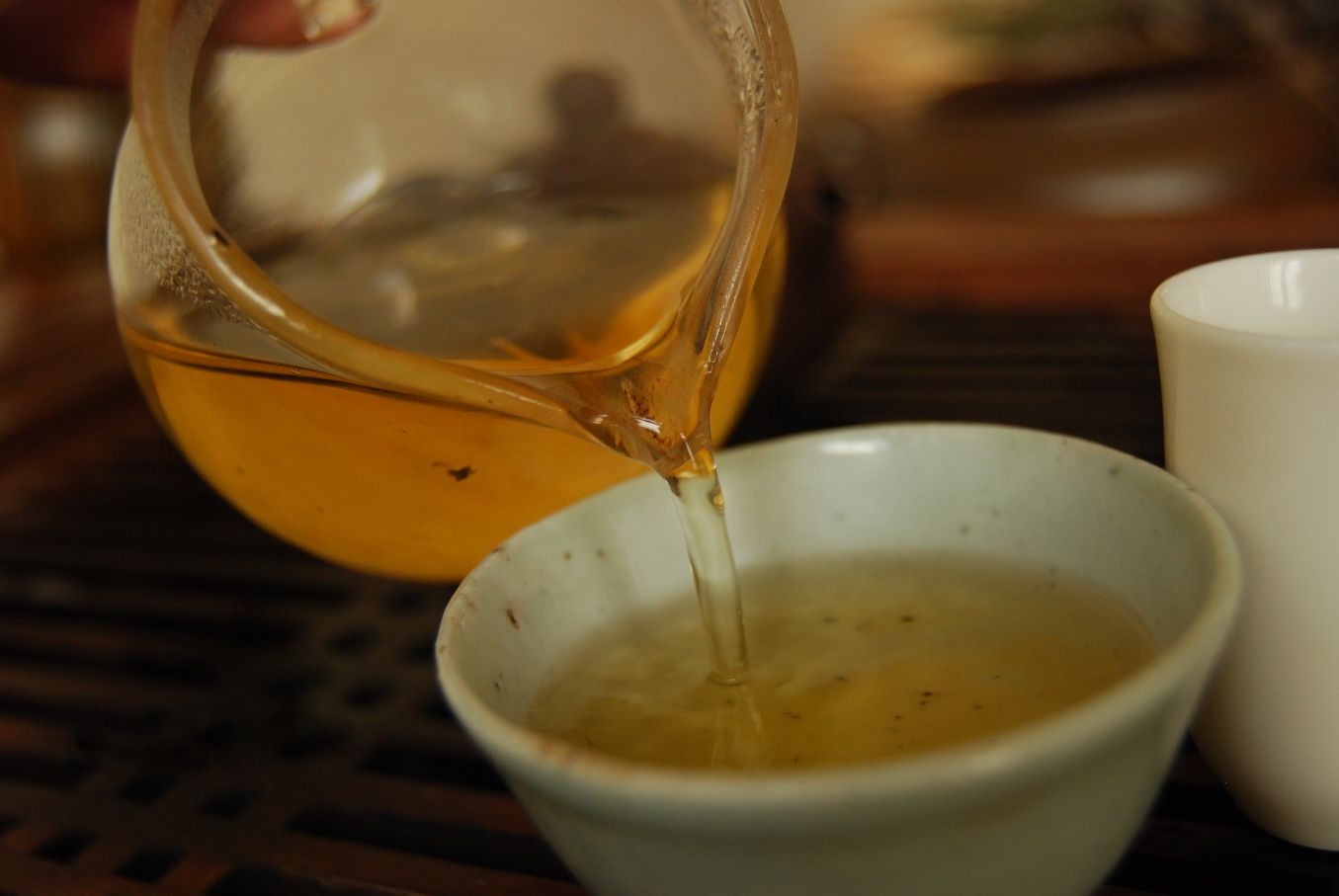
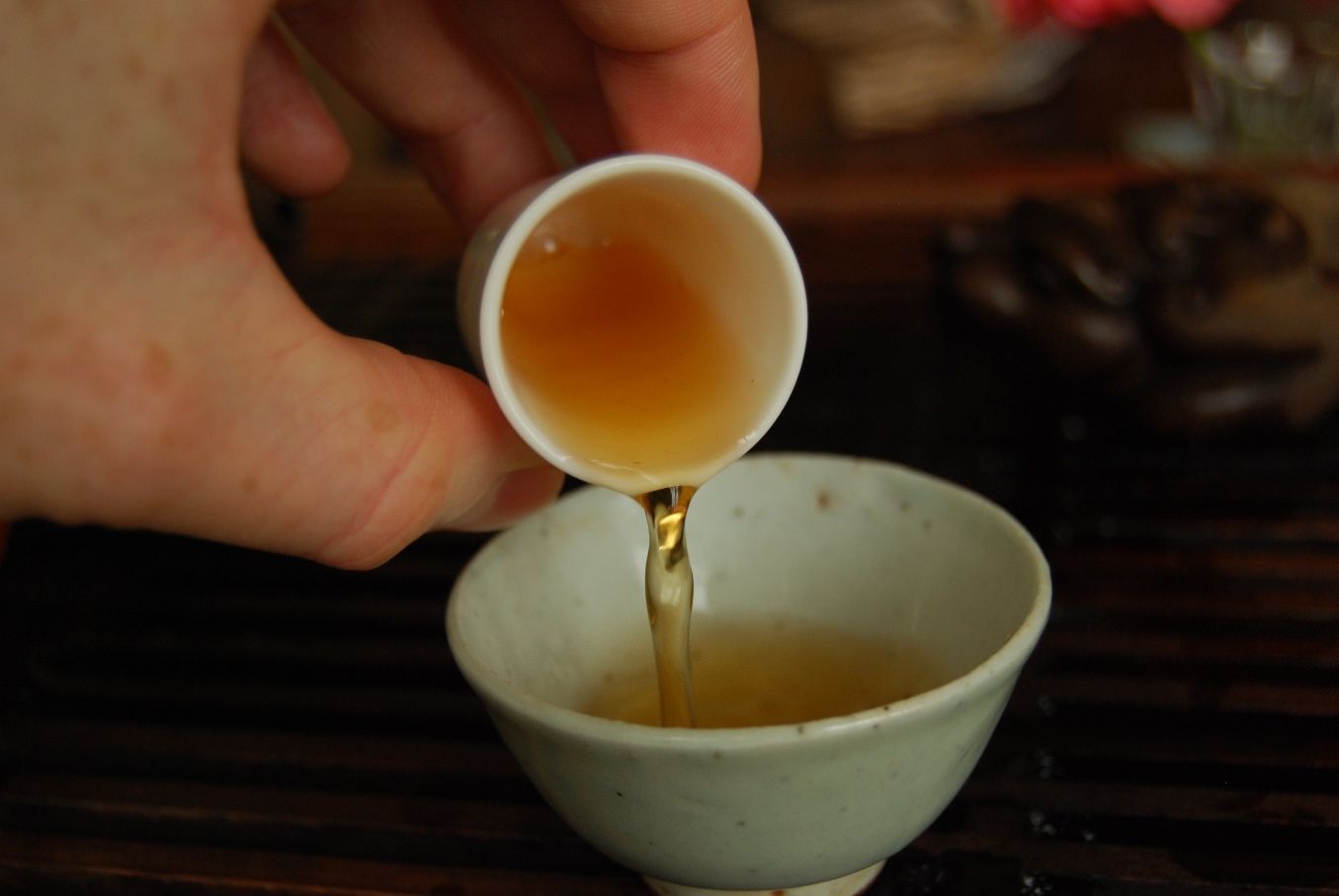
This is good tea: the scent is heavy, buttery, and particularly long-lasting.  The body is tangy, pollenated grass; its soup, pictured above, is just as you would expect.  It has more fruitiness than other "grassy" teas - the thick, grassy sweetness is entirely charming here.  It is a very optimistic tea - perfect for an unusually sunny morning, in the middle of the week.

I let the tea decide the length of the session: if it wishes to stay longer, then it may do so.  Everything (and everyone) has its own pace, and it is all we can do simply to allow each to their own tempo, without attempting to force them otherwise.


Next up, a trip across to the Bulangshan region, for Bangpen:


The long-leaf maocha, pictured below, looks beautiful indeed.  The scent of the dry leaves is a gentle sweetness.  The rain has just stopped, it is near the week-end at the time of writing (days after the Yibangshan above).


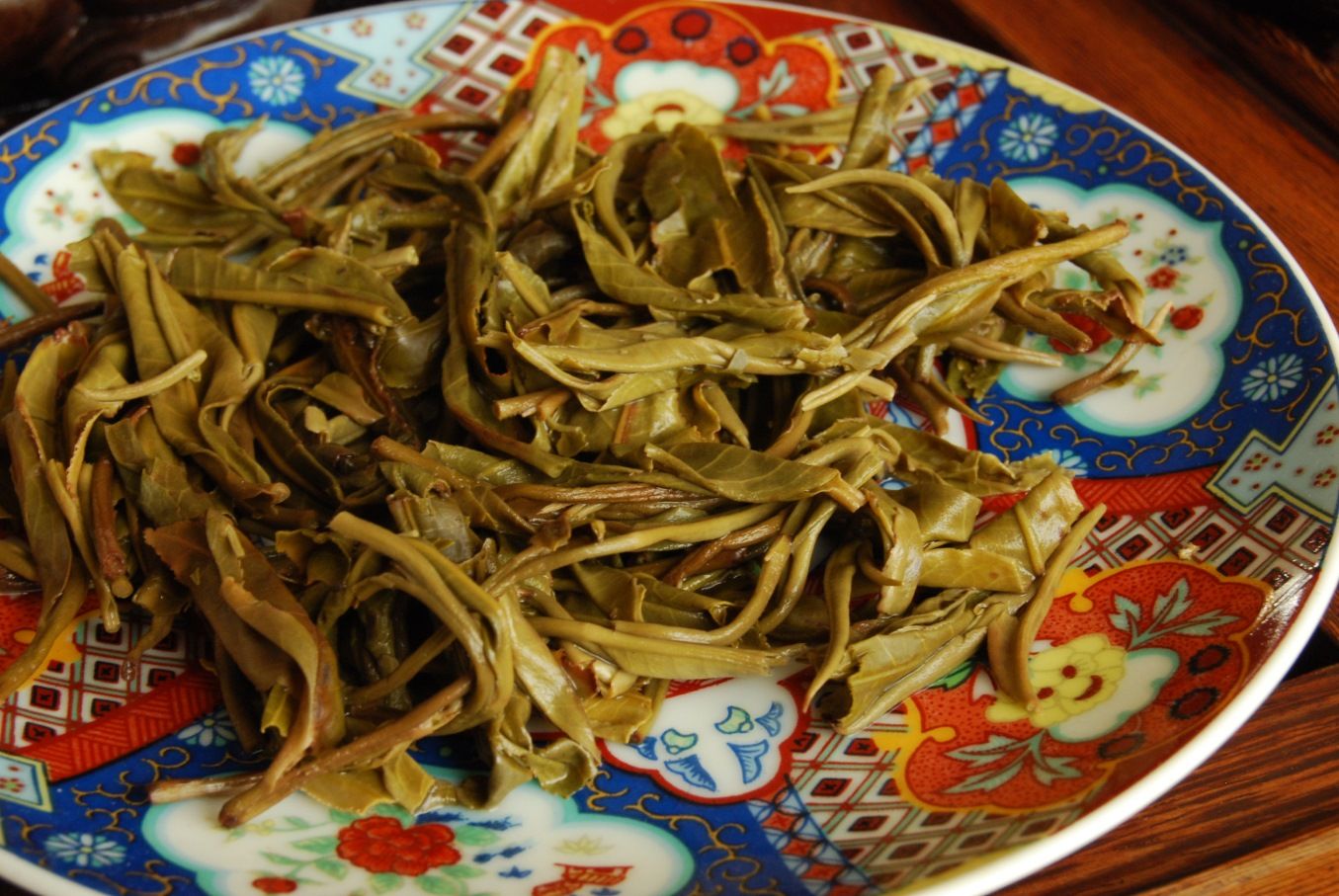
The tea is good: it has the content and quality of gushu [ancient tree].  As with many Bulangshan teas, it is strong; it is also compact, dense, very clean, and sweet to its core.  That sweetness is second to a broad base of lower "biscuit", almost Mengsong, characteristics.


Hints of old honey mix with the sharp kuwei [good bitterness] of the region.  It has a reasonably-textured soup, but is not "thick".  I like its delivery of a sequence of clean, precise, fairly enjoyable infusions.


Lifted by its energy, I concluded that this tea was more about core Bulangshan characteristics, in the end, which is no bad thing.


Finally, an actual cake:


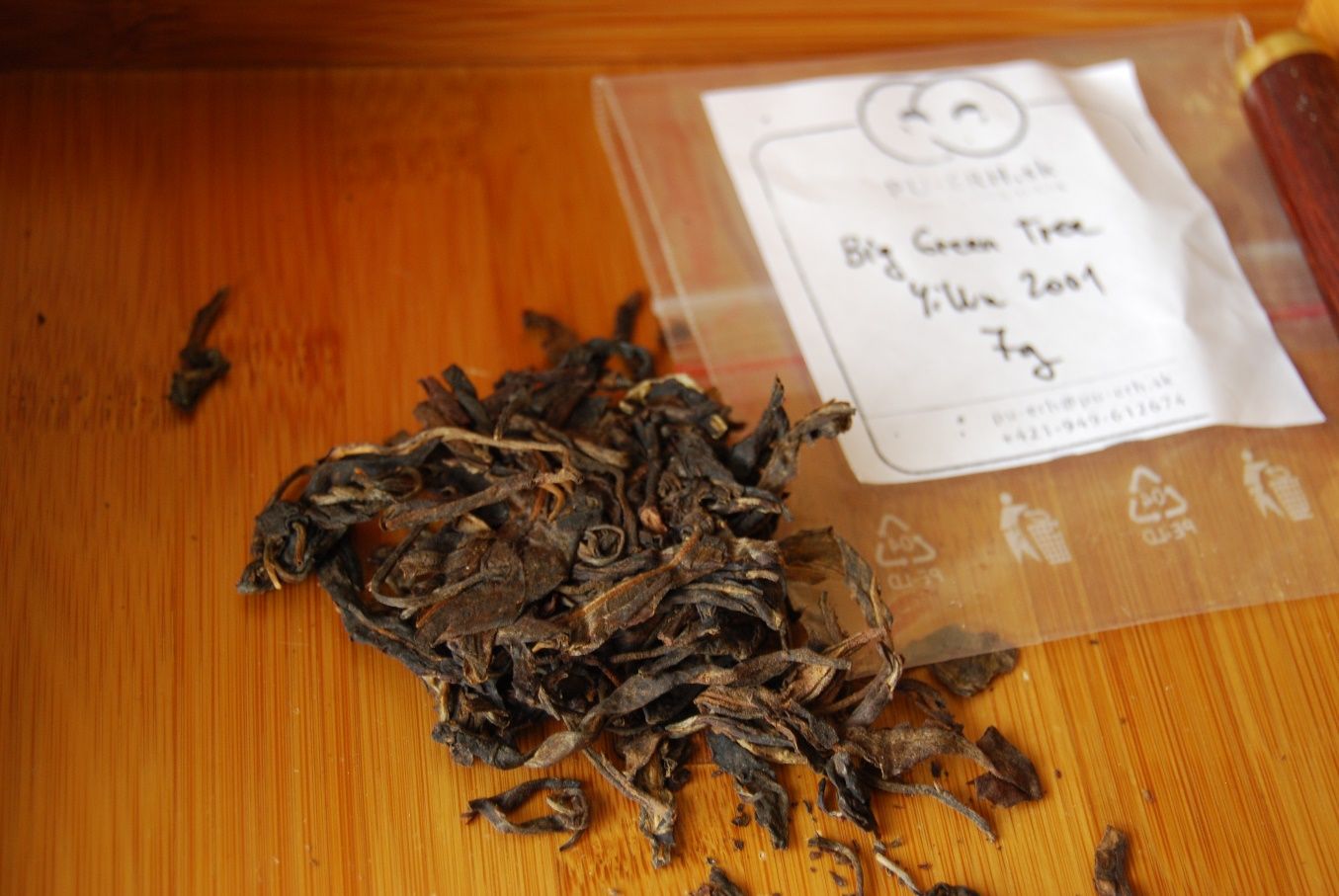
With the 2004 version of this "special" (?) Big Green Tree selling for 64 Euro, this 2001 version priced at 140 Euro is curiously-priced.  They are both, Peter writes, "tailor-made private productions", and notes that both have different wrappers to the standard Big Green Tree cakes.  This 2001 has been stored in Guangzhou, with a single year in Taiwan.


The dark, slightly fragmented leaves have the scent of old Yiwushan.  Warmth, Yiwushan sweetness, vibrancy in the mouth: this "BGT" (or "Beej") is a solid cake.  It carries its sweet straw from the tingling tip of the tongue all the way back into the throat, remaining sweet long after the swallow.  It is gently calming; I breathe a slow sigh and straighten my back.

The session lasts for two days, as I am determined not to disrespect the tea by finishing early.  The second session occurred after swimming for an hour or so.  After 3 km, the last 2.5 km completed without stopping (somehow), I am totally ready for comforting tea.

If we formed like Voltron, then I have a feeling that I may be south of the waistline.

24 June, 2013

It Tolls for Thee

...especially when Apache comes to visit.  Let's do this.


502 Dayi


I love me my Dayi 501 tuocha.  Apache and I have been trying to recreate its genius of late, and had two attempts at the Dayi 502 tuocha.  The latter is double the size of the former, at 500g, and is the second batch (the "02" in "502") from 2005 (the "5" in "502").
 
This tuocha is the "sample A" version from the link above.


502 Dayi


Sadly, even this "sample A" 502 version has sold out via Taobaowang.  Blink and you'll miss it.


502 Dayi


As always, the leaves are small and dense.  They retain some of the vigour of youth, perhaps aided by the tight compression common to tuocha.


502 Dayi


This is dry.  Really quite dry - but sweet, with tons to give in the wenxiangbei [aroma cup].  We kicked back for this first tea of the day, and enjoyed the "real Dayi flavour".  You may find yourself in the difficult position of not enjoying the real Dayi flavour.  It is an acquired taste, and not a refined one at that, but it is one that has been with me since I first started out in pu'ercha.  It is the taste of familiarity and comfort.


502 Dayi


I would have liked to have more of this "sample A" version of the 502 tuocha, but have instead acquired another version that was still for sale.  That latter version sits unwrapped on my tea-table, waiting for me to find the time for a session.


Apache has a certain skill at constructing the running order in a tea session.  With our palates awoken by a fresh young tuocha, we changed gear and headed into the lo-fi charms of a "25-year-old" old shupu.


25-Year Qiaomu Shupu


If you're skeptical about all of those modern cakes claiming to be qiaomu [arbor / tall-tree], then how do you feel about the claims of a shupu having qiaomu leaves?  The thought of putting high-quality leaves through the wodui [composting] process used to make shupu is terrifying, and highly unlikely to have occurred.


25-Year Qiaomu Shupu


This tastes very thick, and therefore marks itself as being a rather well-aged shupu.  We enjoyed the heavy flavour of Chinese dates.


25-Year Qiaomu Shupu


The colour of the soup pictured above goes some way to reassuring us that this is very decent shupu.  Yes, it opens with the common "fishy" character for shupu, but it stays thick and actually develops as the infusions pass, which is a rarity for this often-simple genre of pu'ercha.


I have a long relationship with the 2001 Menghai Yiwuzhengshan.  Check out the article in that link, if you will, Gentle Reader, and remind yourself of the notoriety of this cake.  It is the Menghai cake with the large green leaf design on the wrapper.  Thoughts of the Houde price-rush on this thing still send shivers of fear down my spine.  Talk about captive audience - in those days, there was no access to Taobaowang without a Chinese bank account (an actual account in a physical Chinese building), and even my wife found it difficult to access.  Hence, it was pretty much Houde, Yunnan Sourcing, and a few other early pioneers.  Methinks the proprietor of Houde (being a canny chap, and a doctor of engineering at my wife's university, among other things) must have made a righteous killing.  I guess that's what mercantile activity is all about.


2001 Menghai Yiwuzhengshan


Years later, the terror is diminished, and I begin to drink this tea carte blanche.  The soup, shown below, has a dark orange colour - but then, it always did, even when young.  It is powdery, smooth, understated and woody.

"Old taste", notes Apache.


2001 Menghai Yiwuzhengshan


Later infusions developed into a sharpness that was very satisfying.  Despite history, this cake has plenty to offer.  I don't know if I'll ever really enjoy it, though, due to the trauma of years past.


This is the 2001 CNNP 7432.  Note, it is not the 7532.  The former had its recipe fixed in 1974 (the "74" in "7432") while the more famous latter cake had its recipe fixed a year later ("75" in "7532").  Both have smallish leaves (the "3" in "7432").


2001 CNNP 7432


Apache notes the unusual character for chu (出) on the neifei.  In the wacky way of such things, this cake is called "sharp chu" because the top of its chu is not printed full-width.  It is such minutiae that allow hardcore enthusiasts to identify cakes.  I wouldn't say that I am a great expert of the printing of wrappers.


2001 CNNP 7432


Apache, pictured below, points out the "sharp chu"...


2001 CNNP 7432


This is not an inexpensive cake, with estimates in the range of £250-300 (approx. $400).  The blend, pictured below, has a little bit of everything within it - including stems and huangpian [yellow flakes].


2001 CNNP 7432


The reason that the minutiae of the wrapper are A Big Deal is because the tea tastes fine.  The soup, pictured below, has that effect whereby the meniscus is thinner and yellower than the heavy orange of the body.


2001 CNNP 7432


It is a bit ragged, actually, but has a lot of backbone - it is sharp and sweet, and heaven knows how tough this must have been when young.  This is despite the last five years being spend in Hong Kong. 


2001 CNNP 7432


I like it.  I appreciate its violence, and I like the fact that it has plenty of potential for further aging.  "Induces perspiration", has my journal...

Apache tells the story of a Russian colleague whose "day was ruined" after drinking a single cup of this tough little tea.  What better recommendation could one have?


"Game over", said Apache with a smile, on trying this last tea.


30-Year Tongxinghao


This old Tongxinghao might be the 1970s Tongxinghao that I encountered previously, and it is the king of the heap, today.


30-Year Tongxinghao


Soft, soothing... a sudden peace descends.  This is quite something to achieve in a household that has two very willful children. 

Xiaohu pummels a drum at my feet, and yet everything is entirely calm.  So... very... calming.


30-Year Tongxinghao


Long and sweet with proper chenxiang [aged scent], it is packed full of Chinese herbs and tastes like something you might get prescribed by a Chinese medic to treat cold limbs.  It combines being active and lively with being so mellow. 

It lasts forever, and we are happy.