I used to think that all good tea had to be something like
4'01" into Come to Daddy, a classic track by the Aphex Twin, and a characteristic that, for example, the
2009 Nadacha Bulangshan cake exhibited, among others. However, tea is much more complex than my naïve assumptions allow, and I am always glad to read that there exist other cakes famous for something other than cardiovascular exertions.
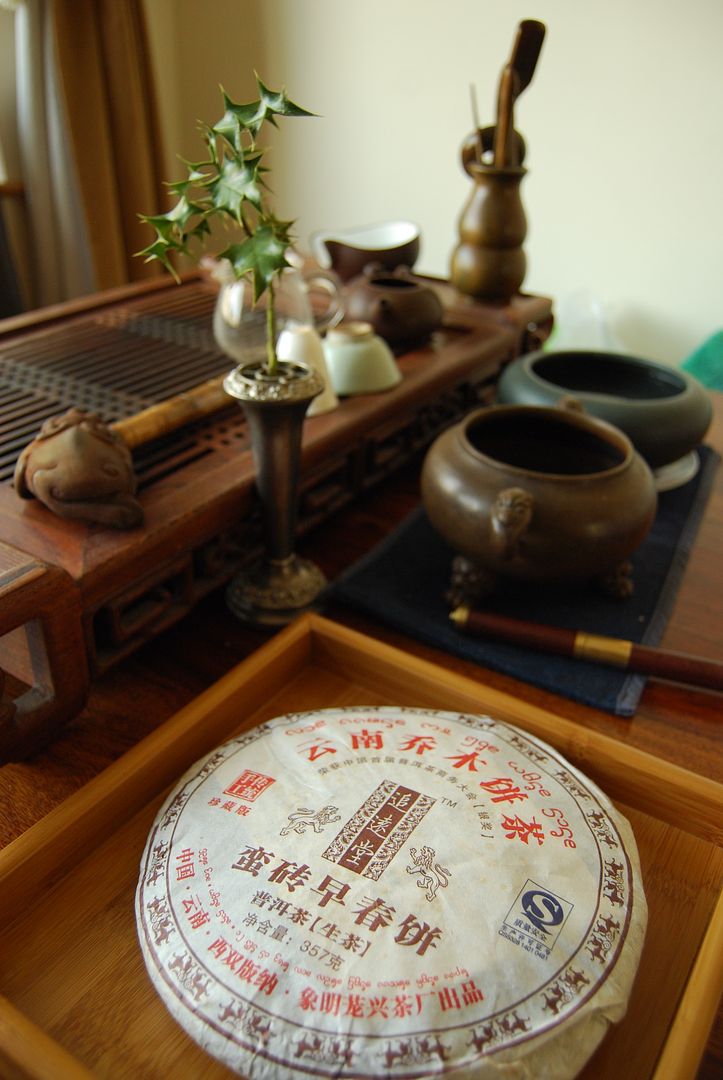
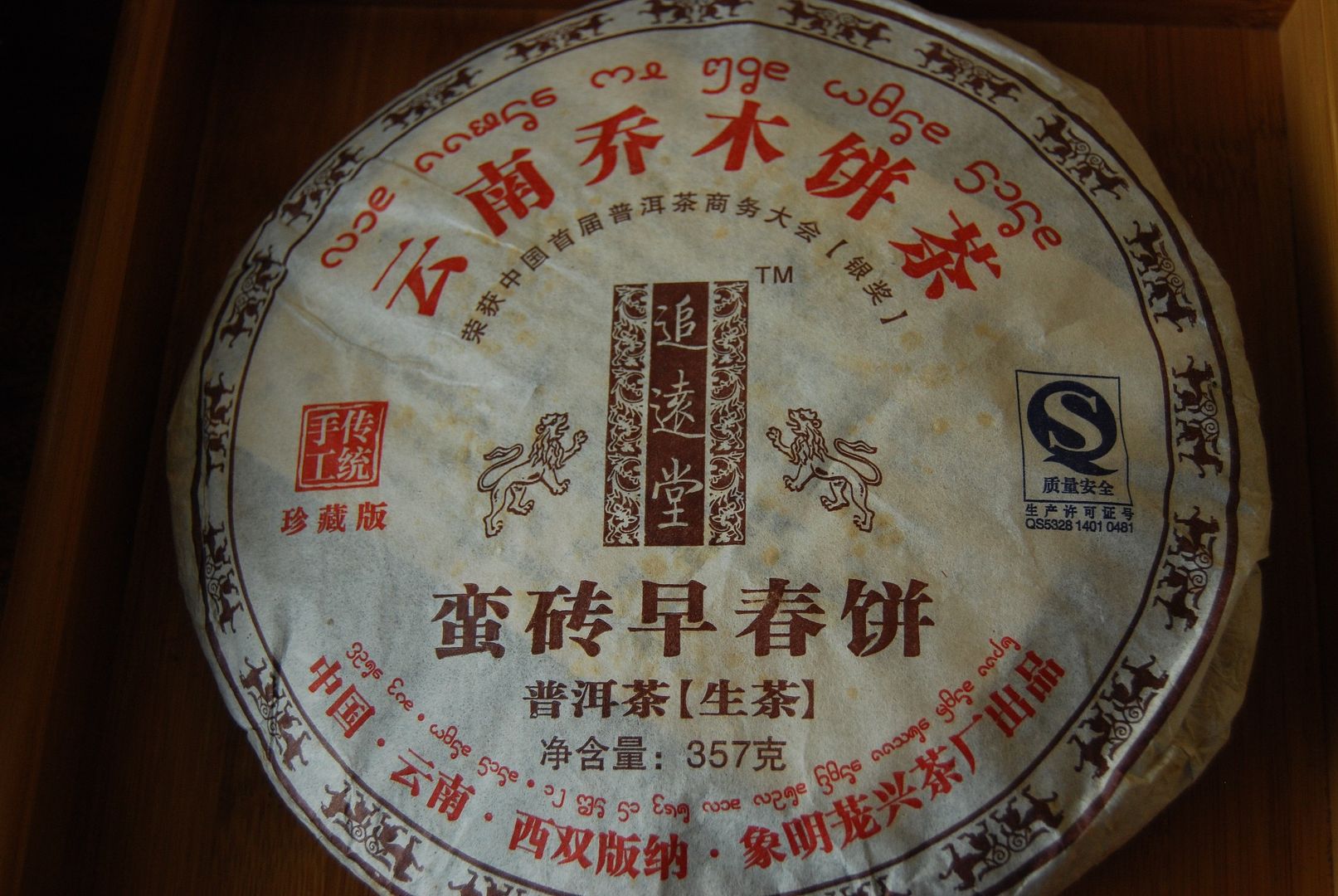
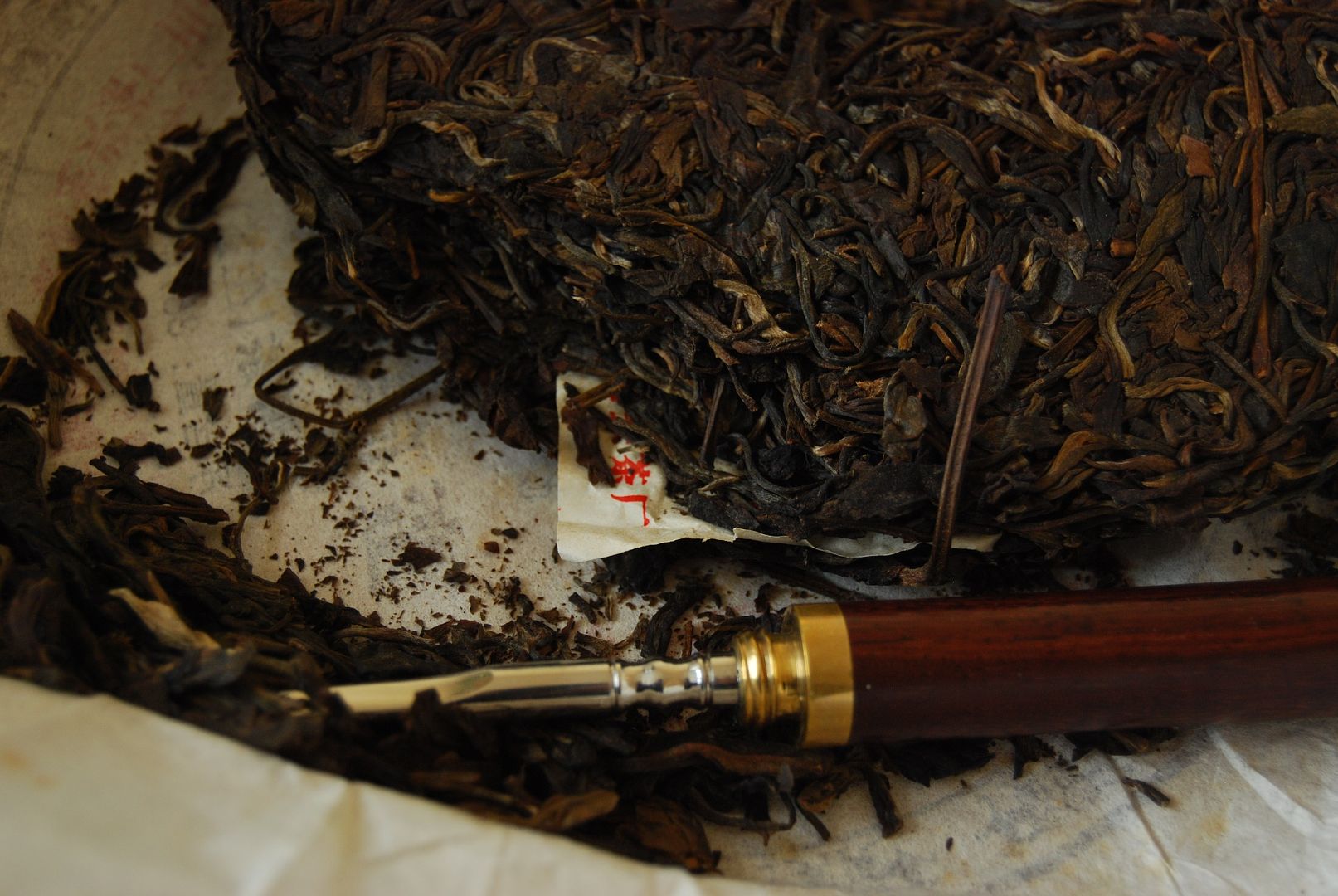
One such beasty is the 2003 Zipinhao [purple-label brand], made by the modernday
Duke of Zhou, Mr. Zhou Yu, ultimate teadaddy of the Wisteria Teahouse in Taipei. His cakes are generally regarded as being "superfly TNT every time my fingers touch brain".
In the nicest possible way.

The Wisteria Teahouse is named after the plant, which was named after Dr. C. Wistar, but deliberately misspelled by the infamous botanist, T. Nuttall. That kind of hardcore flagrancy with spelling deserves, rightly, to be immortalised in the name of a botanical species, as it has. It's up there with "aluminum" in the annals of scientific trolling. These are the kinds of things that keep me awake at night.
Mr. Zhou gets around this matter by using the Chinese characters for the flower, but, like, that's just, like, your opinion (man).

Now, having written the above, and finding myself totally in the mood for the Big Lebowski, I begin to wonder if this Zipinhao would be the kind of tea that "The Dude" would appreciate. It has the recumbent feel of pu'ercha that El Duderino would likely enjoy.
EC, a hugely generous teachum from Singapore, took pity on we miserable offenders, and bestowed upon us a stonking great sack of rather attractive samples. Naturally, this one was the first horse out of the stalls.
The nice thing about drinking a modern-day classic like Zhou's 2003 Zipinhao is that words have already been spilled in abundance. You may have previously enjoyed, as I have, writings on the subject by (a surprisingly human and most definitely charming) computer scientist named
THE JAKUB, and dear old
MarshalN.
That's not fair on computer scientists. They're not all like Data from
Star Trek.
No, some are like
IG-88 from
Star Wars.
On the
Star Wars scale of pu'ercha, I believe that the 2003 Zipinhao is Lando Calrissian, in his "Cloud City" mode in
The Empire Strikes Back, rather than in his "Attack on the Deathstar" mode in
The Return of the Jedi. I mean that affectionately. The Zipinhao is cheeky, energetic, and likely to sell you out to Darth Vader at the first opportunity.
If one is going to spend several years frozen in carbonite, then you at least want to be awoken by Princess Leia in her
Boushh bounty-hunter outfit.
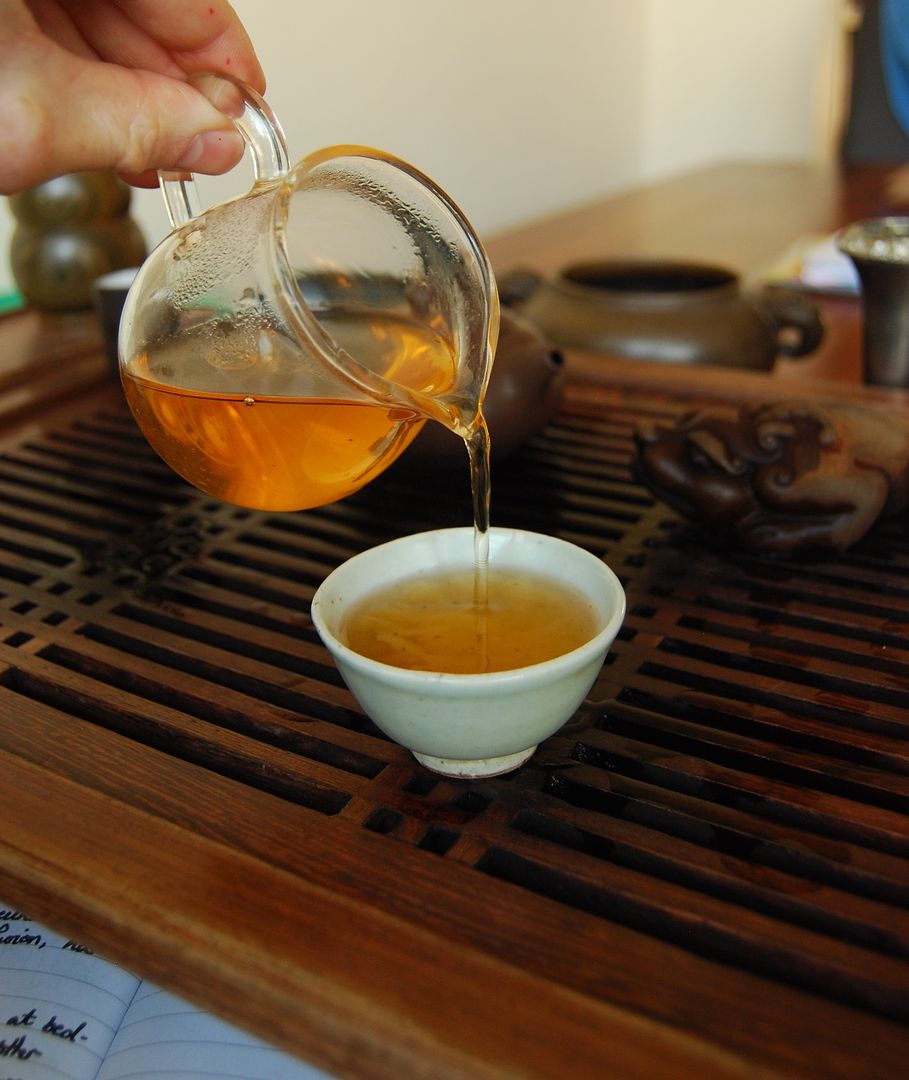
Drinking the Zipinhao is exactly like Lando. It starts off smooth and friendly. In fact, it is entirely unique: I don't know if Lando had an aroma of flowers, almost like the scent of violets, but I'm guessing from the colour of his cape (in Cloud City) that he probably smelled similarly to the Zipinhao.

Before long, though, perhaps just about as you're entering that dining room where there are no guests, excepting a rather tall Sith lord, you begin to wonder if the Zipinhao has rather a lot going on under the surface.
I wrote in my journal that the Zipinhao is "an entirely unconnected node in my pu'ercha experience". The caffeine began to grip my unacclimatised body, rather like poor old Han Solo going down into that carbonite-infusion pit, while Boba Fett looks on. It tightens the mind, as the manner in which one increases the tension in a wire by winding its ends.

Like Lando Calrissian, this tea has energy and vivacity enough for two episodes, and I wouldn't be surprised to see the Zipinhao marching on for an equally long tea-session the day after. Amid that curious violet aroma is all manner of sharp pine and sweet leather, which makes for a very complex tea experience.
I am a firm believer that, as I appear to have written in my journal, pu'ercha and its enjoyment may be considered to be equitable.
You don't have to spend the Earth to find good tea, but the truly great teas, a genre to which the 2003 Zipinhao is a strong contender, are certainly worth attempting to acquire, at least in sample form. For that, I have only to offer EC my very great thanks.
Now, my friends, if you will excuse me, I have a matter to discuss with a jetpack-wearing bounty hunter...
Addendum
September, 2013
This cake continues to mystify me. I acquired a cake via Jakub (thanks again!), and am struggling to enjoy it as much as the sample from Singapore, described above.

Drinking tea with friends is a wonderful experience, but the emphasis is often on the conversation, rather than the tea, as is natural (and very enjoyable). Jakub and his good lady were kind enough to visit me for a welcome-to-Oxford session, where we brewed this in the background. The tea was fine, but I felt it was a little lacking with respect to the clearly, and abnormally, delicious cake from Singapore.
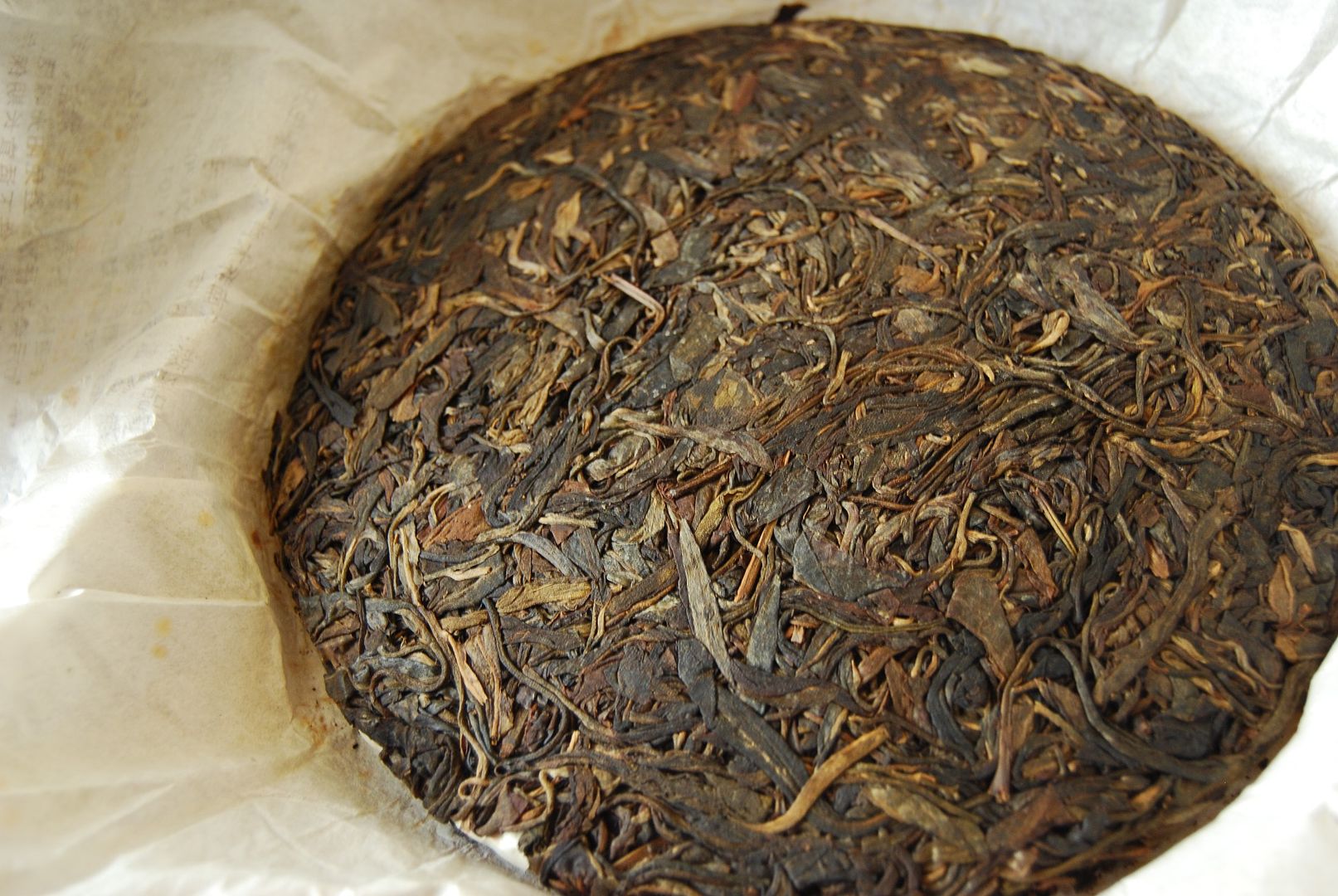
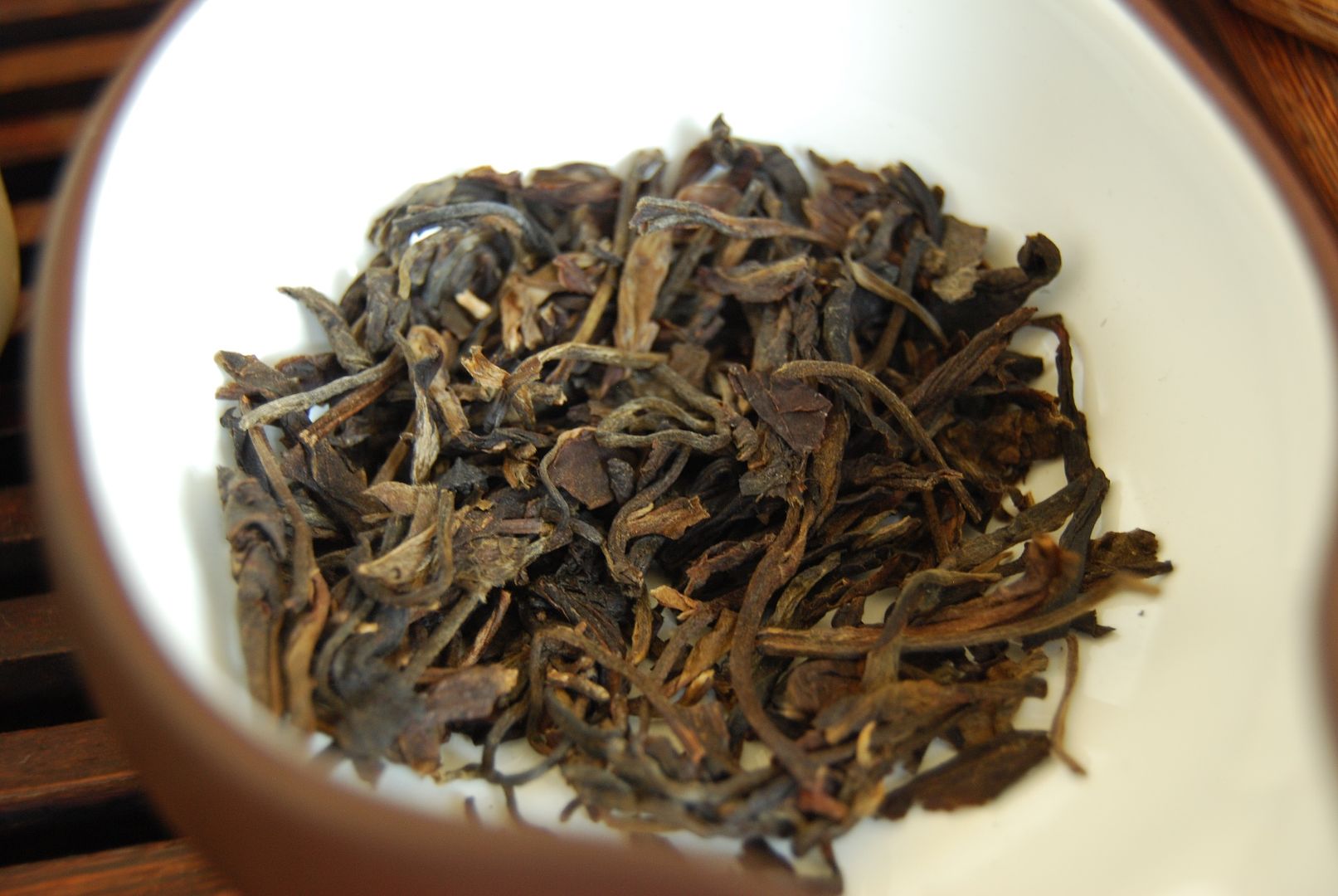
I fired up the kettle the next day and simply used far more leaves. The result was much closer to (although still not quite as good as) the fine sample from Elven. This time, it was dark, humid, and pleasantly sweet with the backbone provided by using more leaves in the brew. Consequently, it has a more full body, and the more concentrated aroma closely resembles that of the sample provided by Elven. It has the slightly powdery and floral character that I remember.
It just goes to show, there are differences even between Singaporean and Taiwanese storage - and I rather prefer the former, based on this cake.