To my considerable frustration, it seems that having recently achieved the novelty of landing a "proper" academic job seems to translate to spending most of my life travelling. This would have been a great thrill for the twenty-something, carefree version of myself, but poses difficulties for a thirty-something father. On the bright side, my children are becoming used to receiving chocolate-based gifts from the around the world.
Today's session took place after a recent trip to Brussels, after returning from which I was greeted by a grinning eldest son running to the door to (i) apply the aggressive cuddles that only a three-year-old can manage, and (ii) determine the nature of the treats that I had inevitably brought him.
Today's session took place after a recent trip to Brussels, after returning from which I was greeted by a grinning eldest son running to the door to (i) apply the aggressive cuddles that only a three-year-old can manage, and (ii) determine the nature of the treats that I had inevitably brought him.
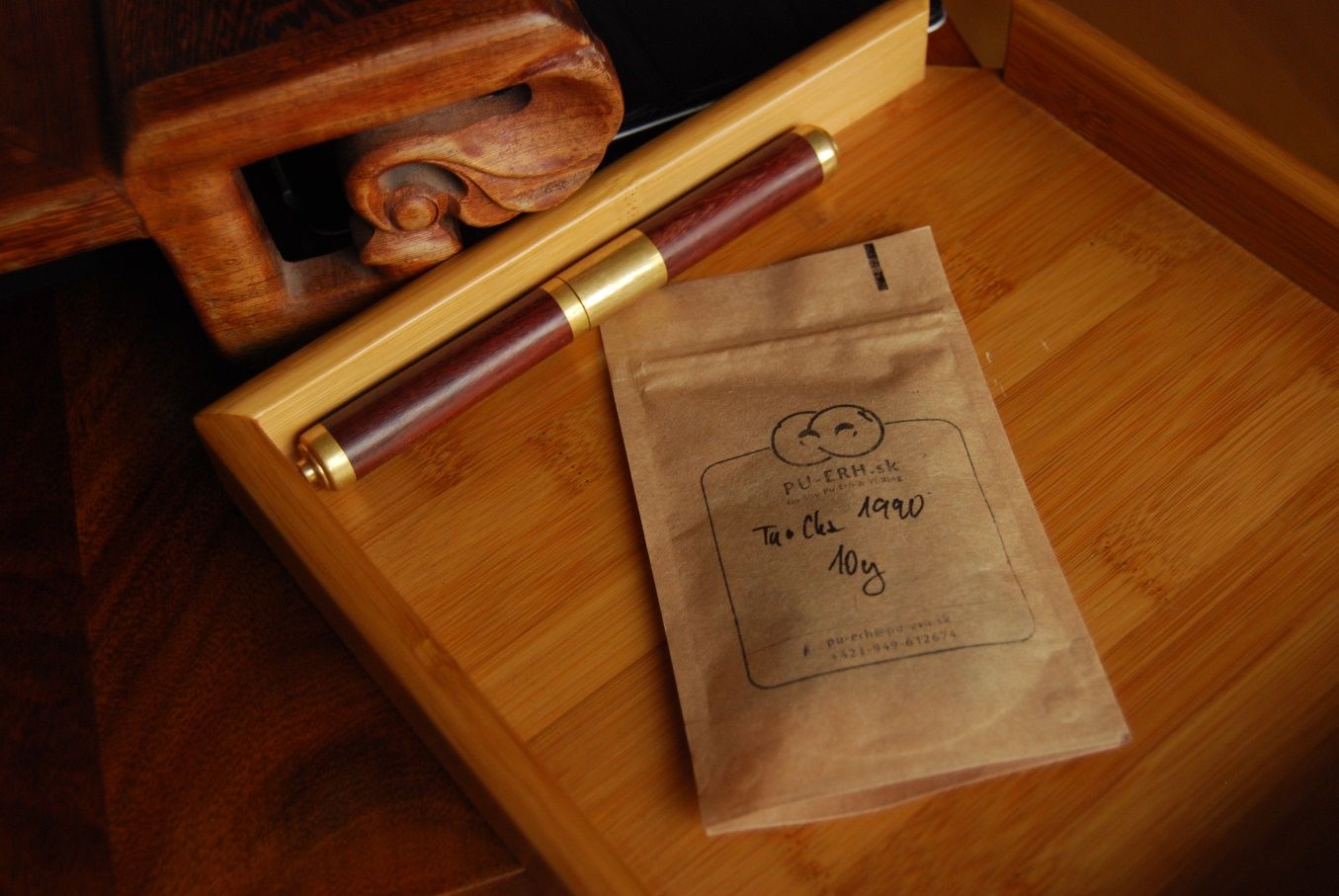
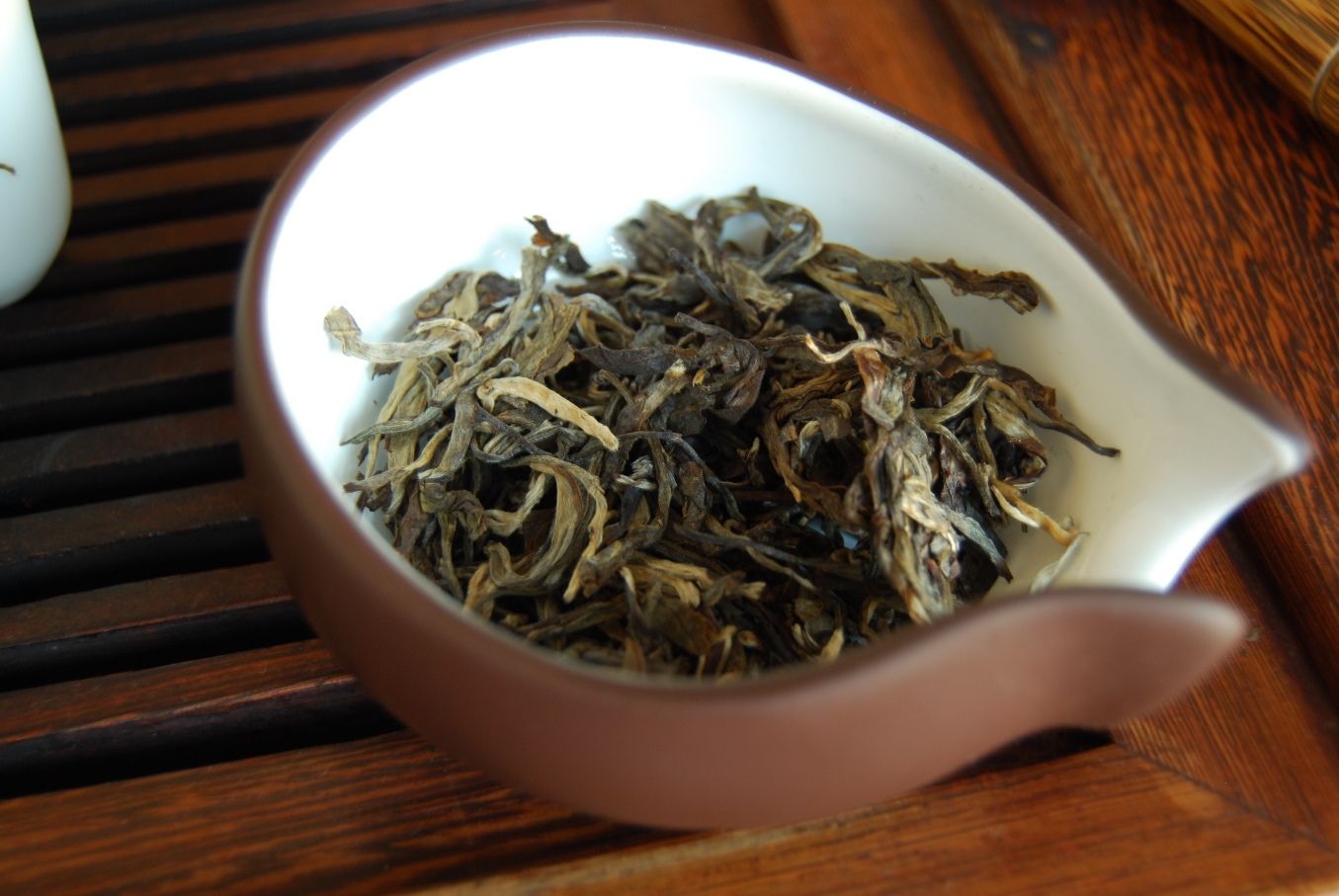
And yet what treats does his father have, hmm? Well, this old 1990 tuocha, provided from the magnanimous charity of Peter of pu-erh.sk, certainly counts.
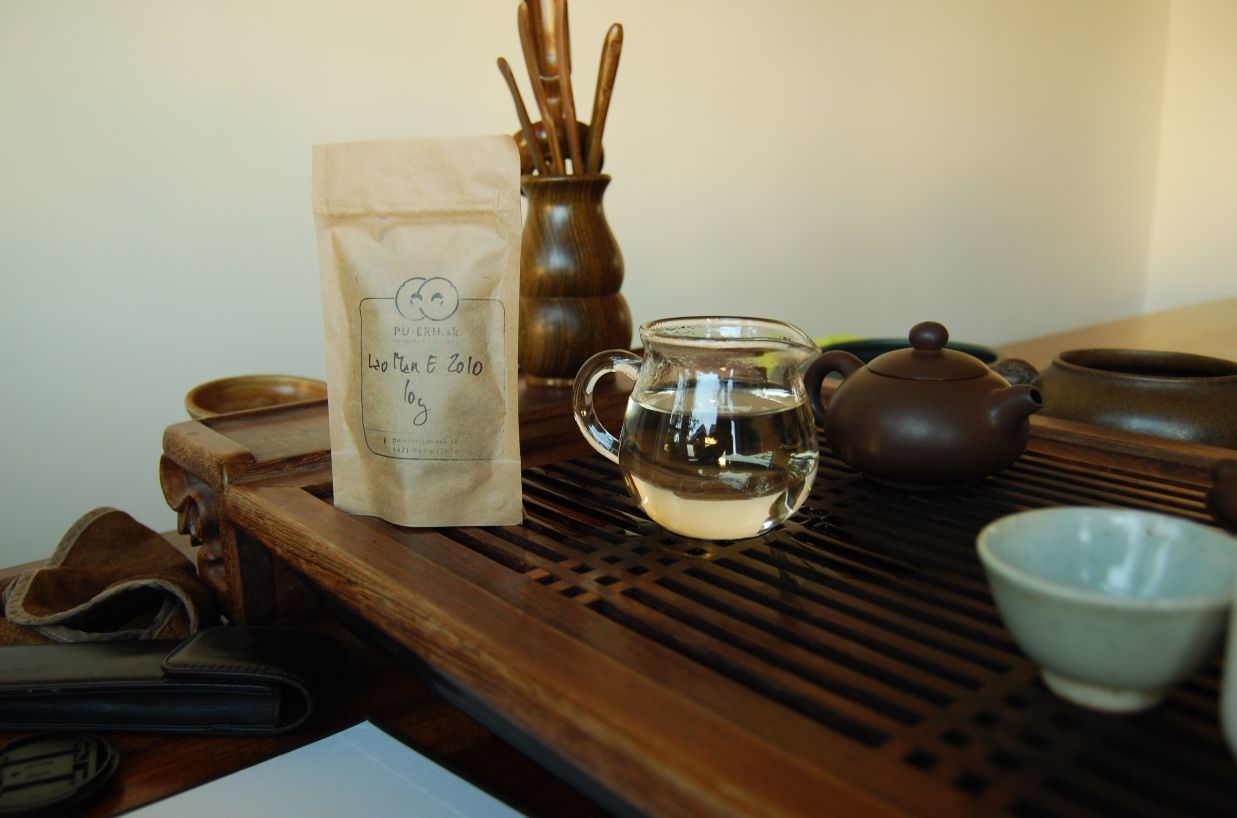
The eponymous little chunkynuggets of tea that make up this session have a "chenxiang" [aged scent], when introduced to the damp, warm belly of the tiny pot (pictured below) that I use for brewing some old cakes. Even the first infusion, with the leaves still tightly compressed, has a tar-like, sweet scent and a substantially cooling sensation.
The eponymous little chunkynuggets of tea that make up this session have a "chenxiang" [aged scent], when introduced to the damp, warm belly of the tiny pot (pictured below) that I use for brewing some old cakes. Even the first infusion, with the leaves still tightly compressed, has a tar-like, sweet scent and a substantially cooling sensation.

I am not a big collector of pots; in fact, I like to "simplify, simplify" whenever possible. When I first got into tea in the mid-noughties, perhaps like most people I went a bit crazy and bought pots for every occasion one could conceive. Roasted, green, old, young, frisky, rough, etc. etc. These days, I drink almost exclusively from Zidu (my big ol' Zishahu that brews around 110 ml), with a tiny 70ml pot for those small samples as may exist of older teas. I have a pot for green wulong and a pot for heavy-roast wulong, but those are more for fun rather than function. Finally, I have a shupu pot and a hongcha pot. Everything else (and there is virtually nothing else, excepting lucha) goes into a gaiwan.
This lovely little tuocha is crisp, smooth, and particularly sweet - it is perfect for my return to a dark, northern country which is entirely saturated with rain and winter chills. It is hard to imagine that such a country exists after spending time away, even in Belgium, but exist it does. The strange thing is that I actually come to miss the dark, wet little country when I am away/. There truly is "no place like home".
This lovely little tuocha is crisp, smooth, and particularly sweet - it is perfect for my return to a dark, northern country which is entirely saturated with rain and winter chills. It is hard to imagine that such a country exists after spending time away, even in Belgium, but exist it does. The strange thing is that I actually come to miss the dark, wet little country when I am away/. There truly is "no place like home".
What does one look for in an old tuocha? Sharpness? Pleasant sweetness? Endurance, and strength? This 1990 version has all of these virtues. Even after some twenty or so years of aging, this tea caused my dear wife to observe "an aggressive aftertaste" - which is quite a compliment for an older tea!
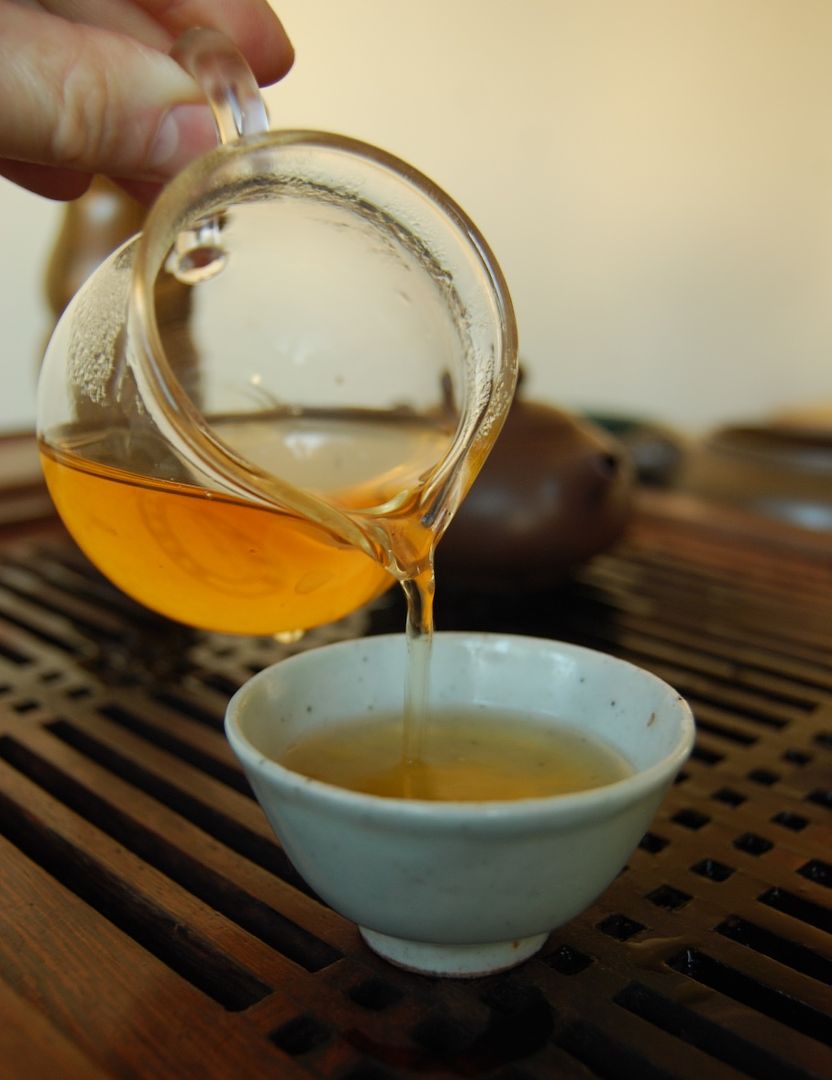
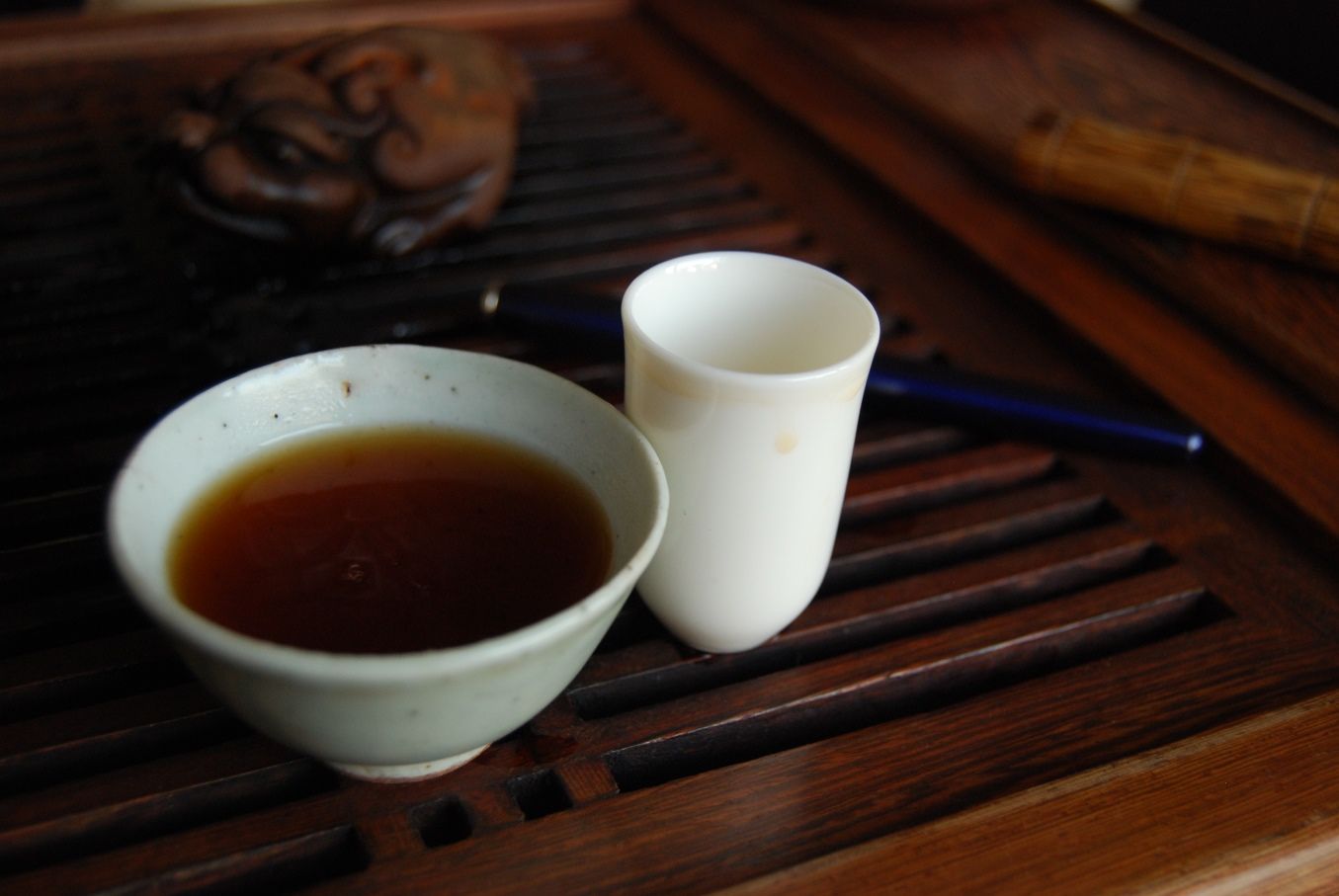
The red-orange soup, which looks so invitingly thick in the photographs above, has a tangy, long-lasting scent that reminds of the benefits brought about by tight compression: though aged, it has the retention of some of the characteristics of youth that blend very well - it is a fascinating mixture of aspects that we might otherwise associate with both age and youth. I deliberately brew it strongly to emphasise its considerable strength.
What a wonderful way to return home. Thanks again to Peter for the session.
The red-orange soup, which looks so invitingly thick in the photographs above, has a tangy, long-lasting scent that reminds of the benefits brought about by tight compression: though aged, it has the retention of some of the characteristics of youth that blend very well - it is a fascinating mixture of aspects that we might otherwise associate with both age and youth. I deliberately brew it strongly to emphasise its considerable strength.
What a wonderful way to return home. Thanks again to Peter for the session.