26 September, 2014

And onto Beijing

In an ideal world, you will be reading this by the time I have made it to Beijing, via Shanghai, Kunshan, and then Suzhou.  My research programmes in China are keeping me busy, and I'm hoping to visit my friends in Maliandao's Taochaju and Fengmingyuan while in the capital, in addition to (if he's not in Yunnan) Mr. Dog.  I am hoping it all works out...


Before I left, I spent some time with some purchases from dear departed Origin Tea.  I wish I'd got to know Origin before they stopped trading, as I have had some very nice, and very nicely-priced, older teas from them.  (Or, rather, "him" - I think his name is Tony?)


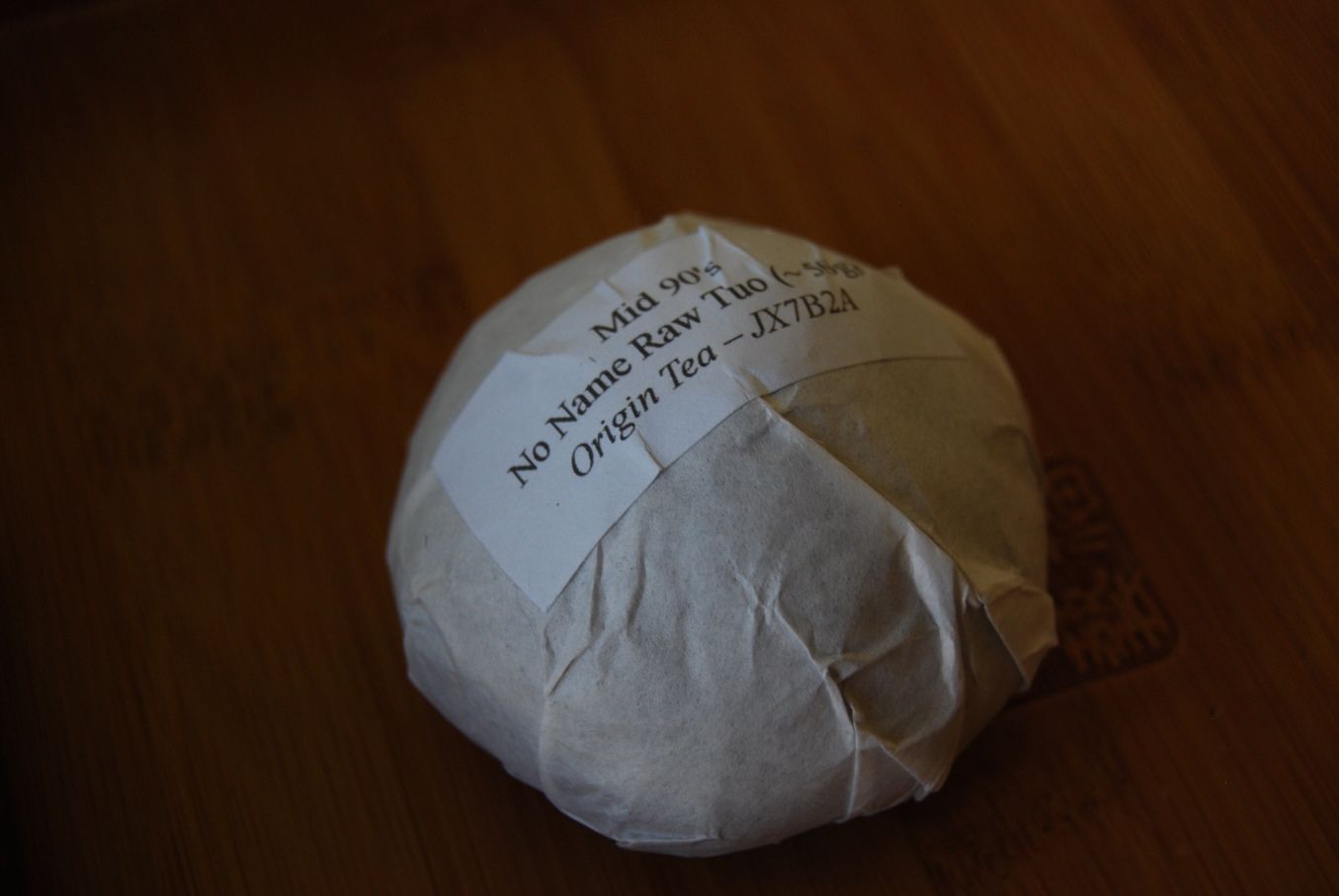
This is your normal "white wrapper" entity: it's of known origin, its age is probably a guess, but it turns out that the tea is very decent.  Let us not get ahead of ourselves, however.


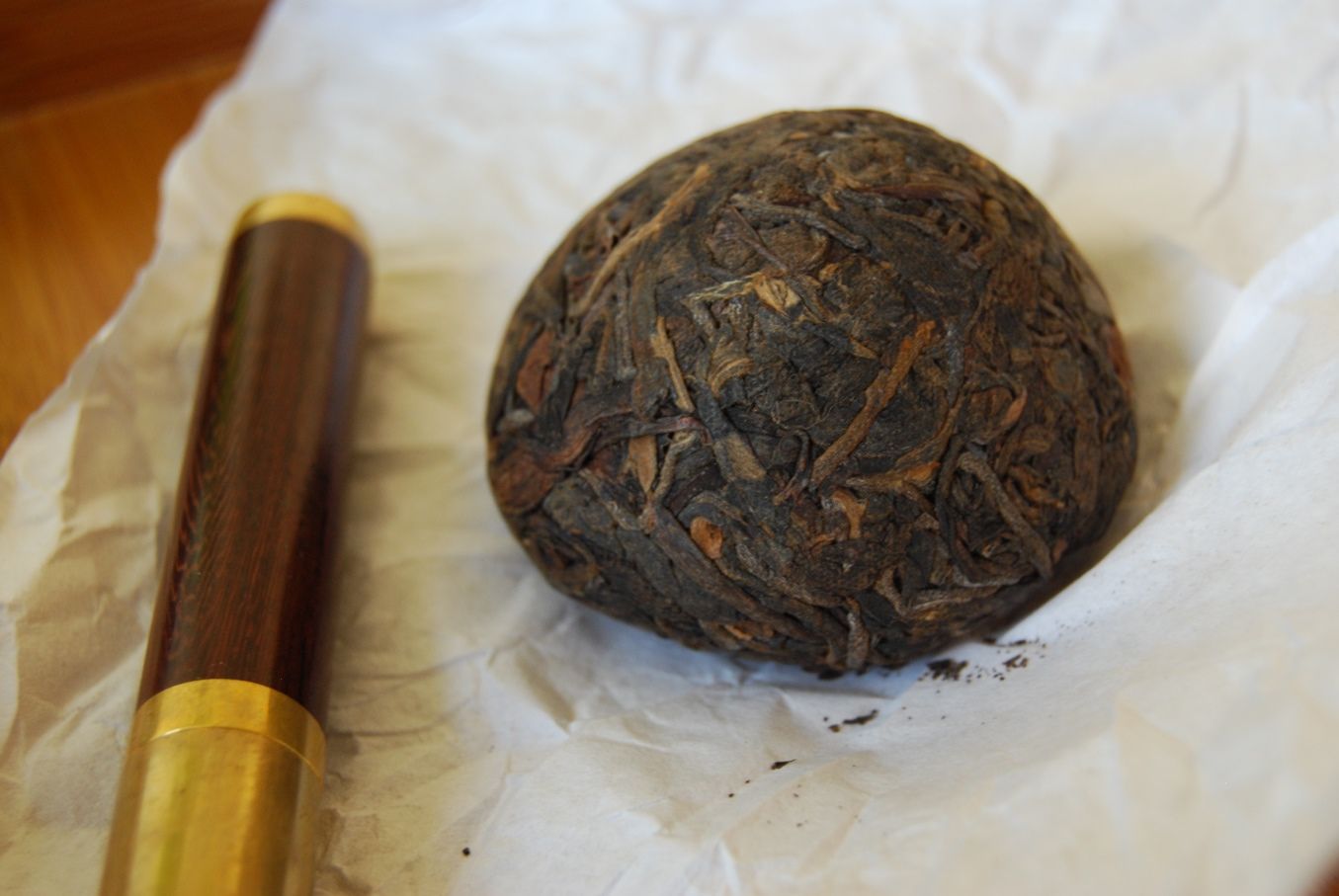
What you probably cannot see here is that the tuocha is rather small, being just 100g.  It was a mere £7.50, which is deeply inexpensive for something that might have some age.  I admire the fair pricing.

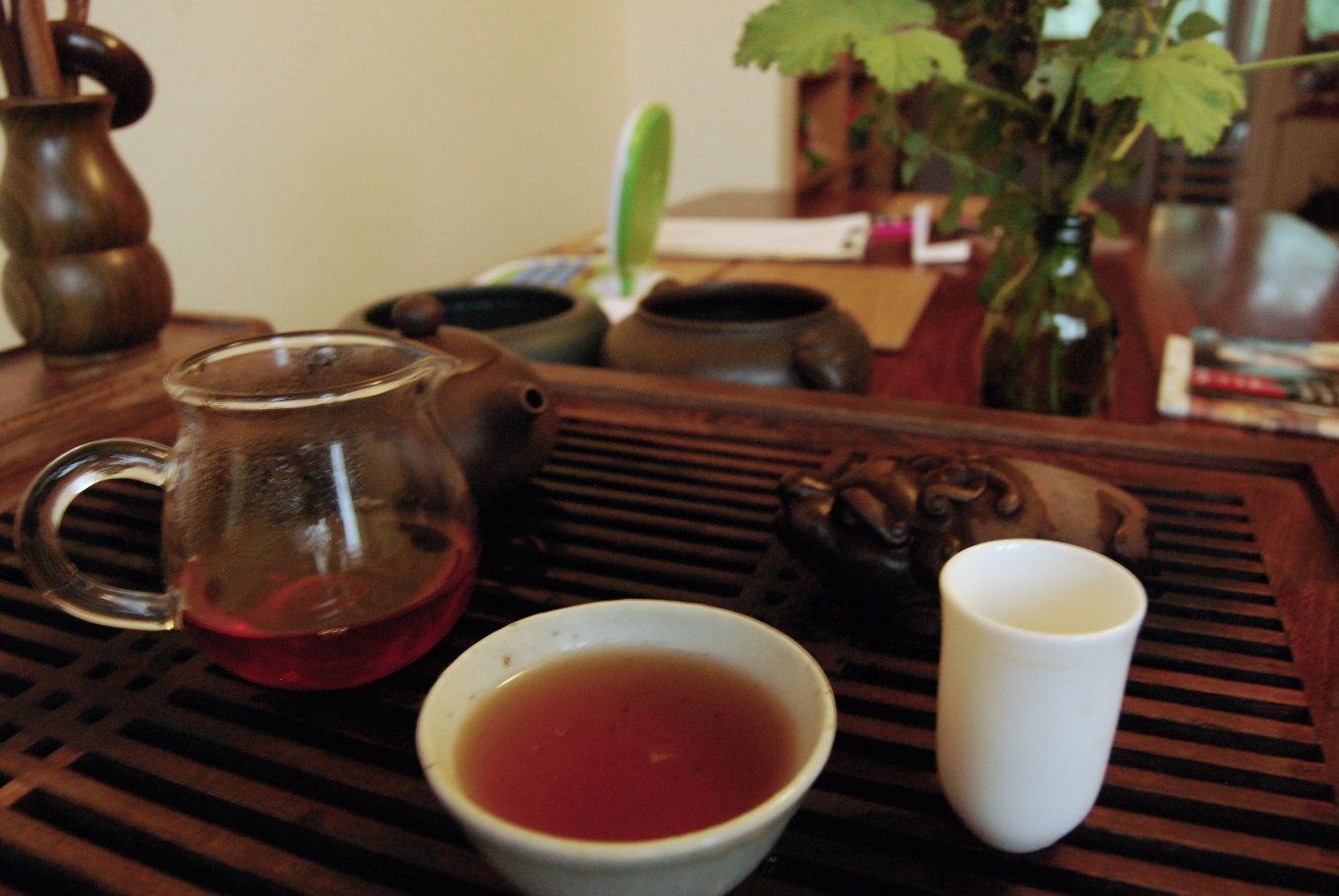
When brewed, it looks rather appealing:
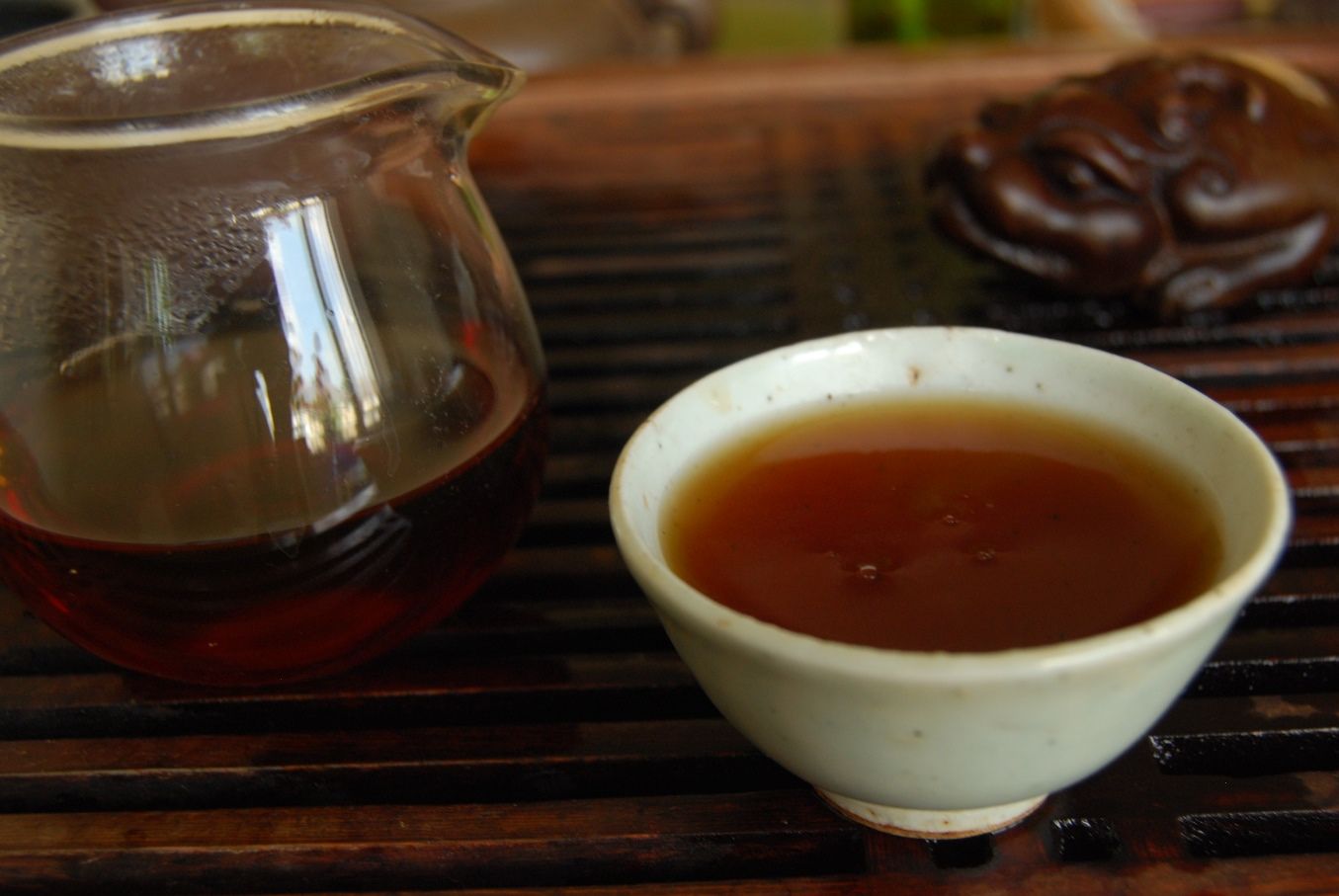


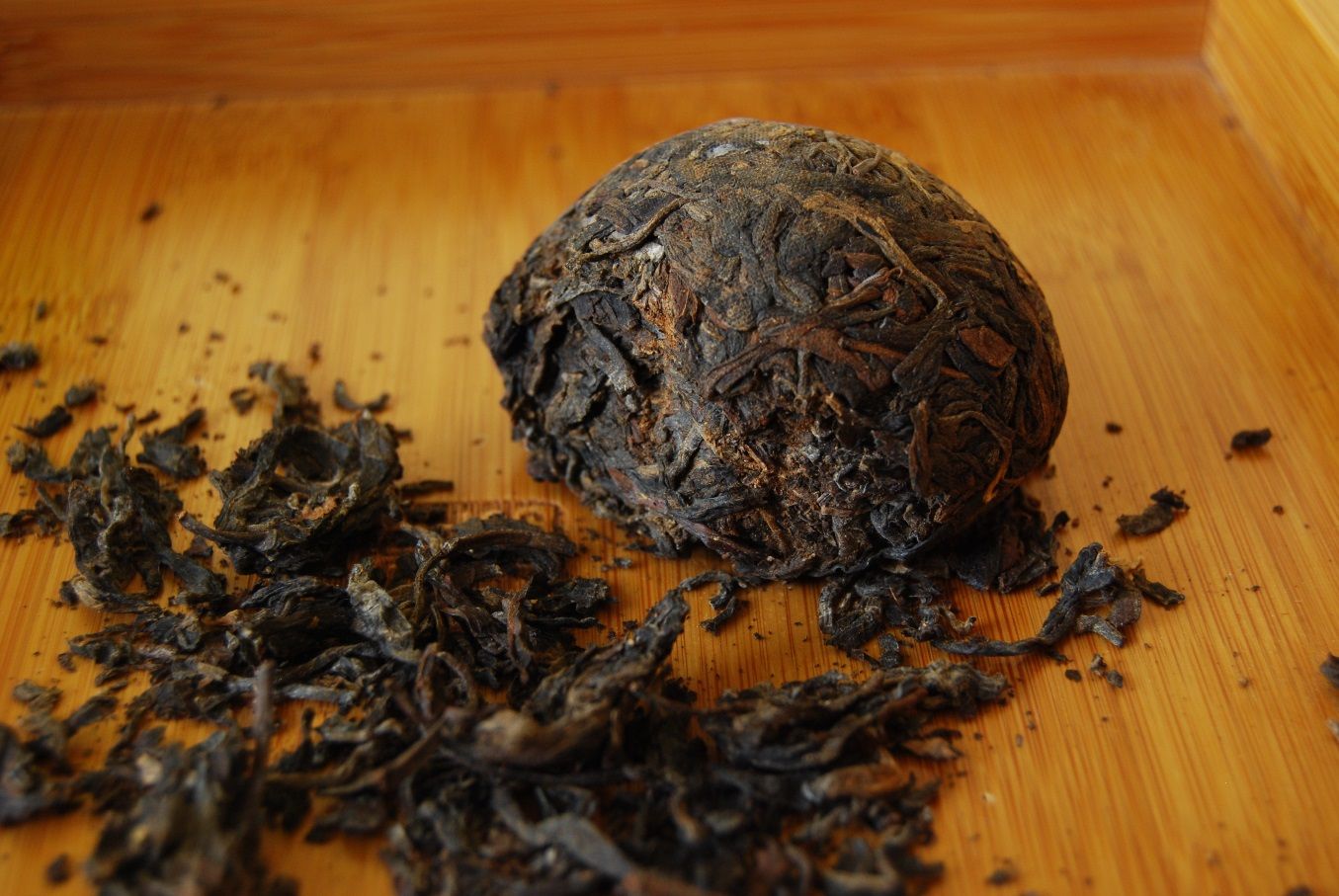
This tea was at the recommendation of TG, my friend from East Anglia, and he certainly knows his onions.  And his pu'ercha.  The healthy little leaves have a shicang [humid-store] aroma, and they are dark (and perhaps even a little dull) on the exterior face of the tuocha, as if the humidity had been intense.  I expect, from their appearance, that they are a touch younger than "1990s", but that is not terribly important.

Far more important is the fact that the orange-red soup carries the flavour of pure, sweet mould that reminds me of the Hunan Fuzhuan that I loved back in July.  The body of the brew from this tuocha is silky; there is little huigan, just the dark, raisin-like flavour of sweet mould.  The humidity has been a bit extreme (hence the dull surface): all that is left is the fuzhuan mouldiness, and so it tires early.  It is cheap and quite cheerful, though.


Much more serious is the 1980s "wild arbor" maocha, of which the following sacks arrived...
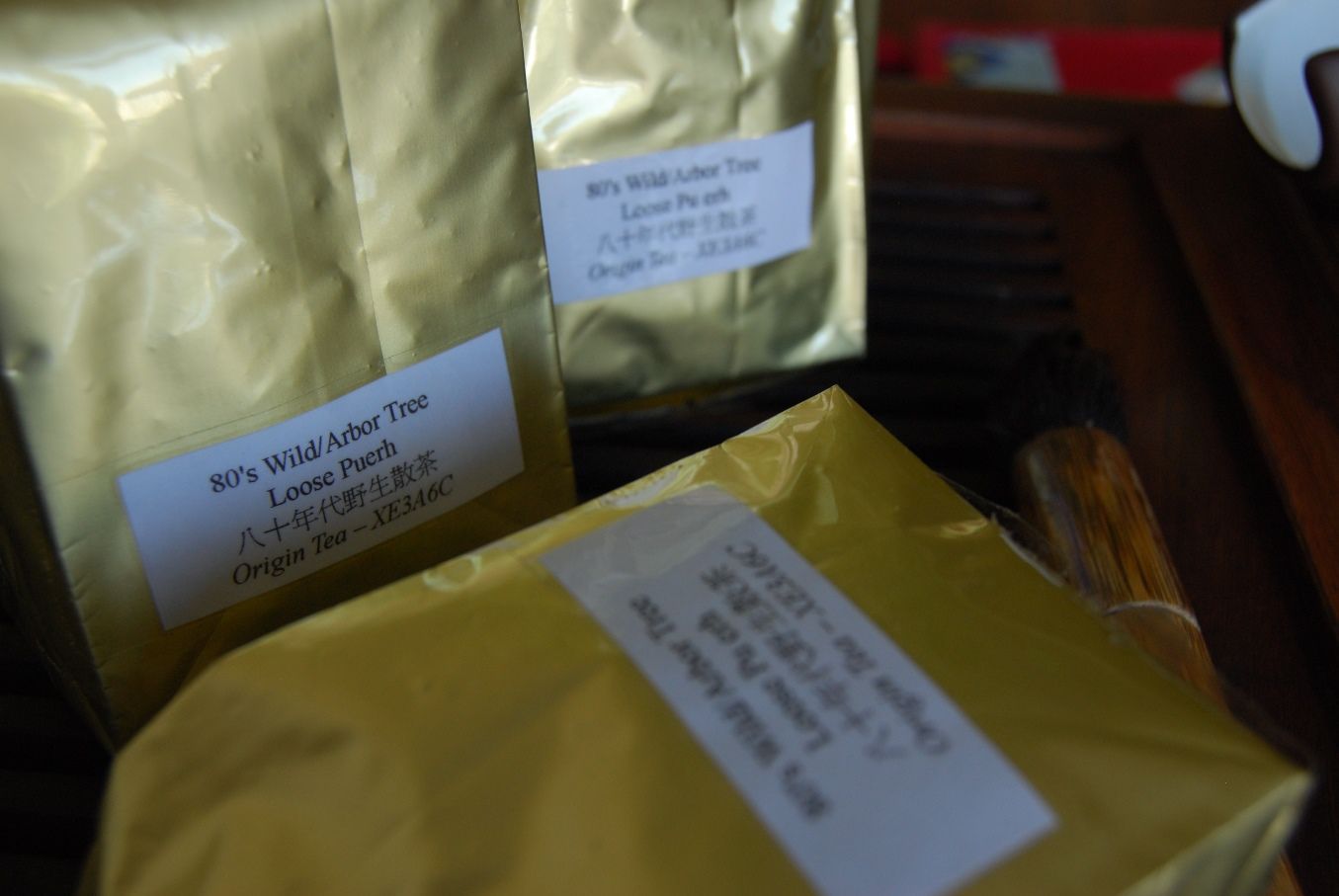


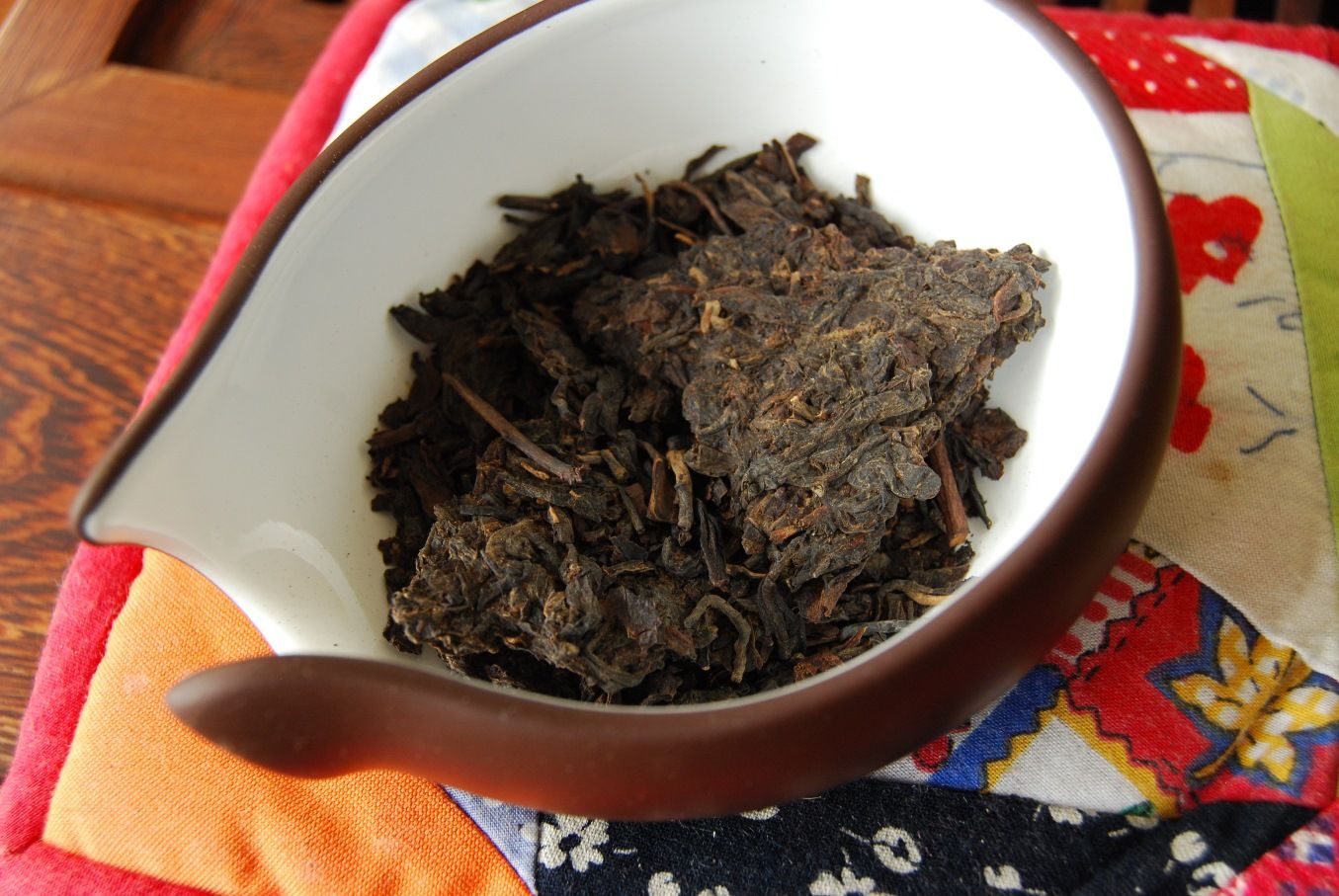
This loose-leaf tea looks rather tasty, as you might agree from considering the photograph below.  It has the chocolate colour of old maocha.
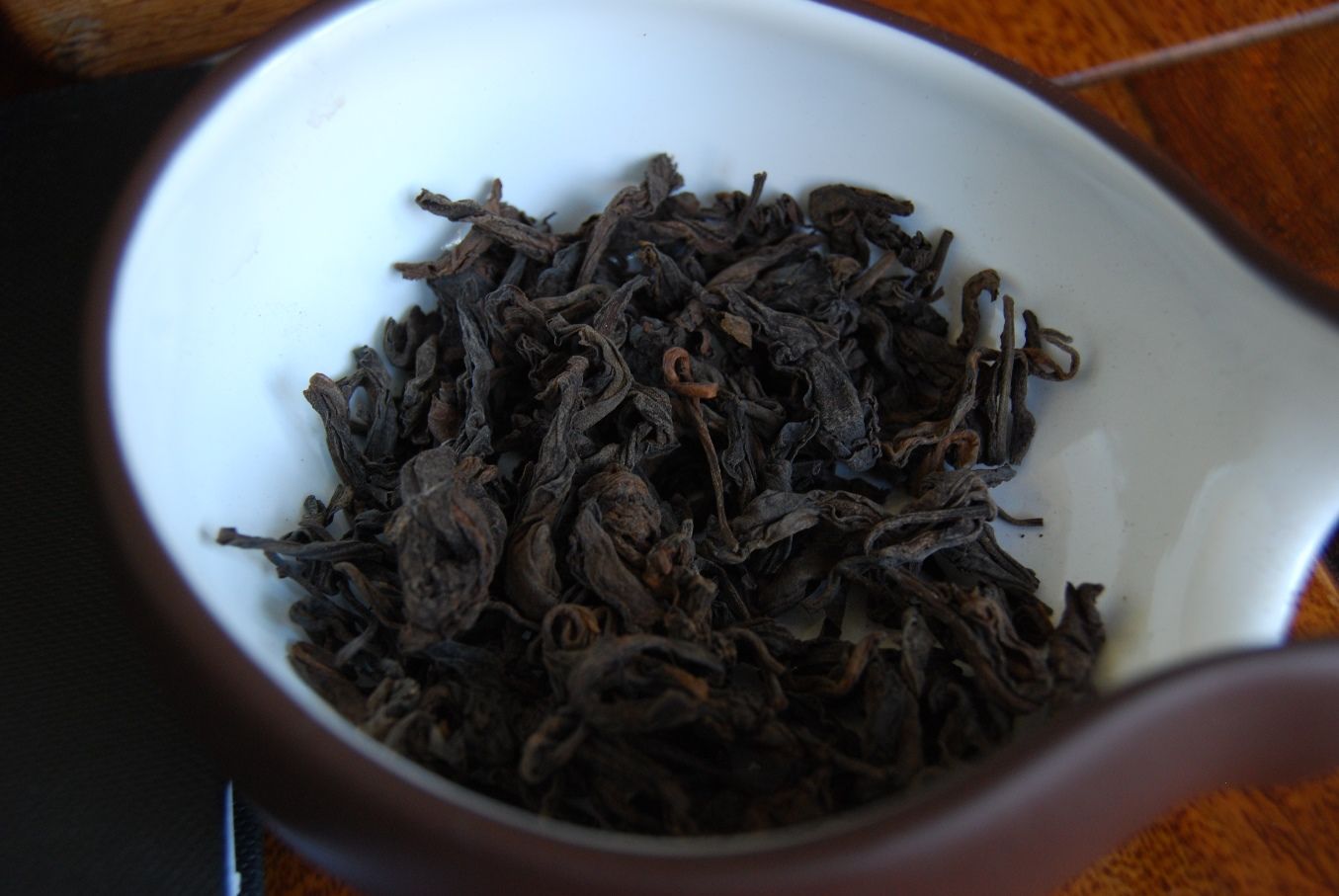


Even though the first infusion shows that the tea is not yet fully awake (which is unusual for maocha), the initial aroma is solid in its sweetness (if short-lived), while the soup is soft and rounded. 
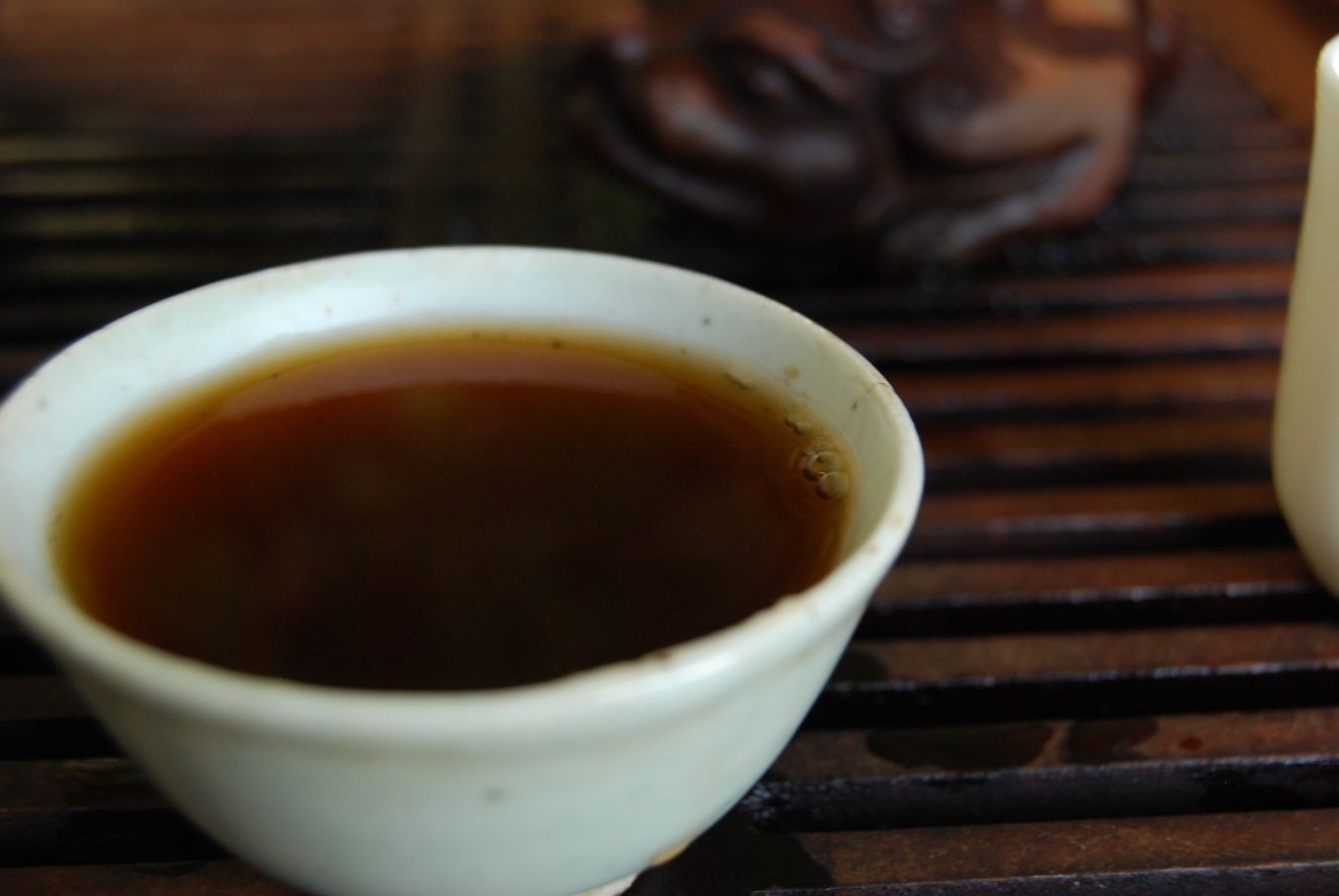


It transpires that this tea is not very thick, and that it requires some long brewing to get proper "tea" out of it, but the result is excellent: as pictured above, we find ourselves with a fantastically dark soup.  Brewed long and hard, with lots of leaf, it is tarry and sweet, while always being soft and comforting on the stomach.

Yes, it is weak, in the way of most aged loose-leaf pu'ercha, but you can always add more leaves.  Under-the-tongue dark sweetness prevails.  At the end of the session, I have used quite a lot of leaves, and so I pop them into a container and take them to my lab for extending brewing as a "background" tea.  This one is priced at £70 / 300g.  Not cheap, and probably from the 1990s rather than the 1980s, this is worthy of comparison to unaged modern shengpu.


Changing gear, but staying in the 1990s, I'd like to include another humid cake - this time from white2tea.
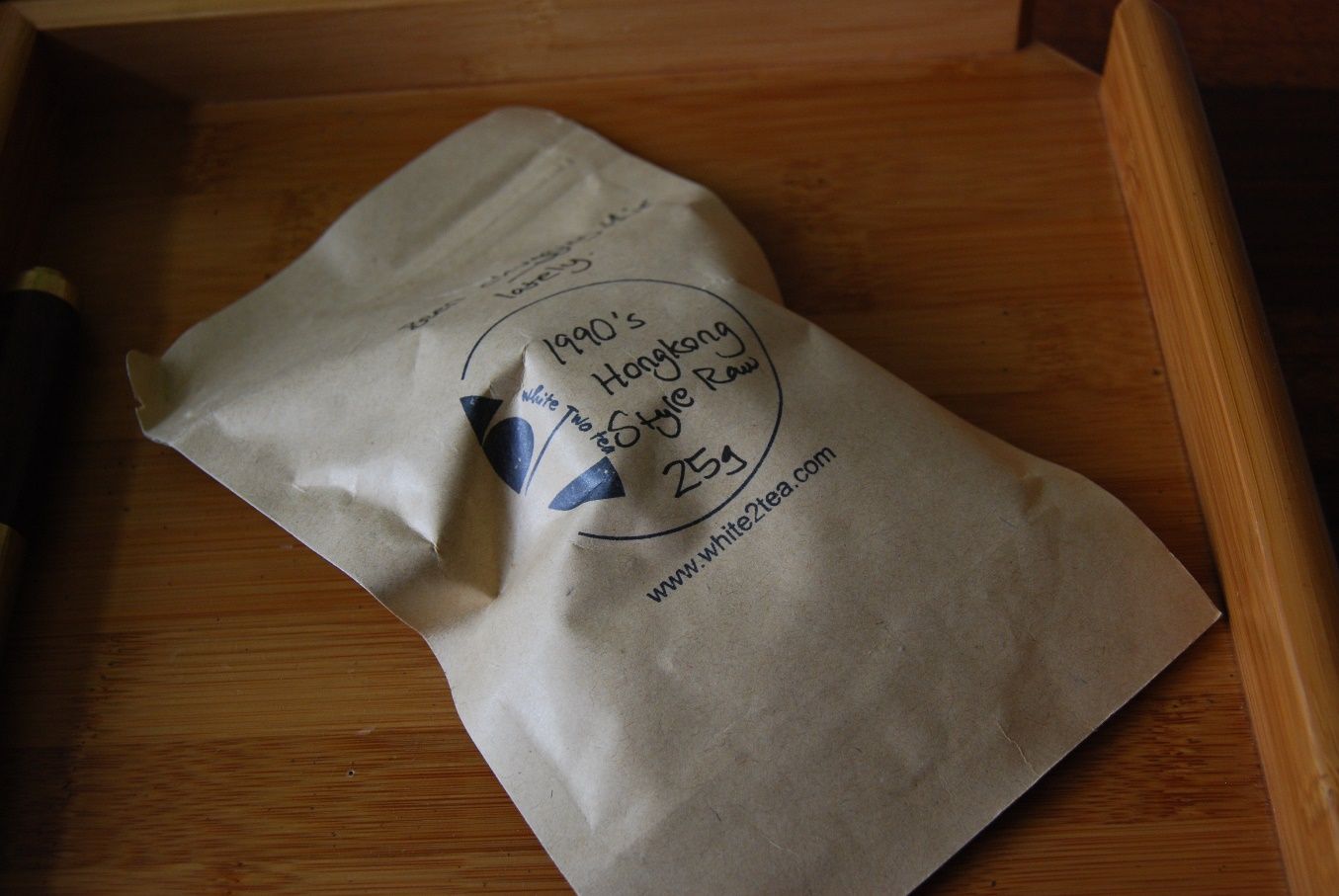


The leaves do, indeed, seem as if (i) they hail from the 1990s, and (ii) have been through Hong Kong.  There's a good chance they were there in Hong Kong when the British were, in fact.  The dear old chancellor of our university, the Lord Patten of Barnes, often likes to talk of his time as governor of the Fragrant Port, and he speaks with genuine affection.
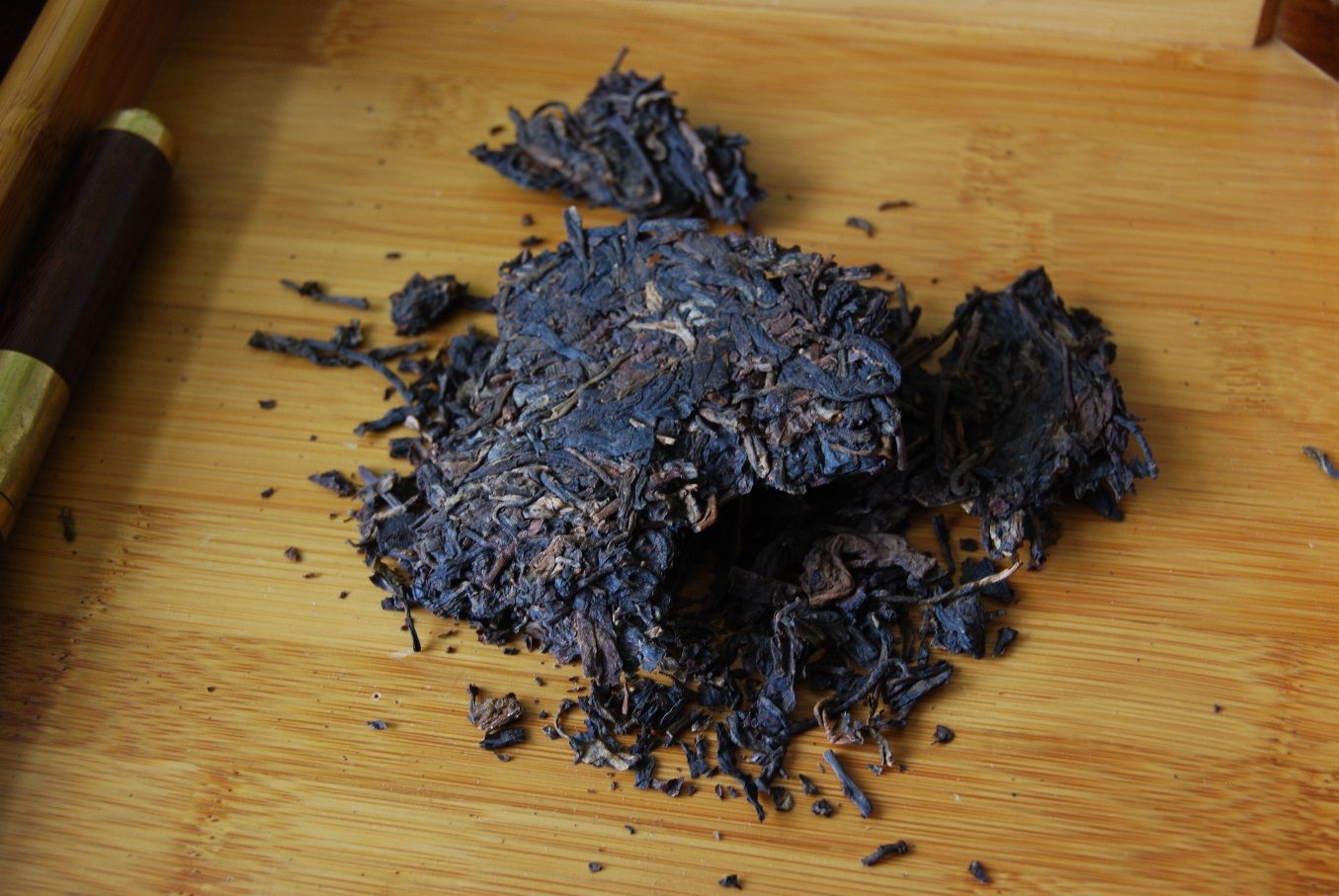


This is sharp, potent tea.  It is thick, dark, and red, as you will conclude from examination of the image below.  The sharp sweetness dwells under the tongue for whole minutes.  I am reminded that Mr. Dog does seem to know his way around a teapot.

Amusingly, his label notes, "I have been CHUGGING this lately".
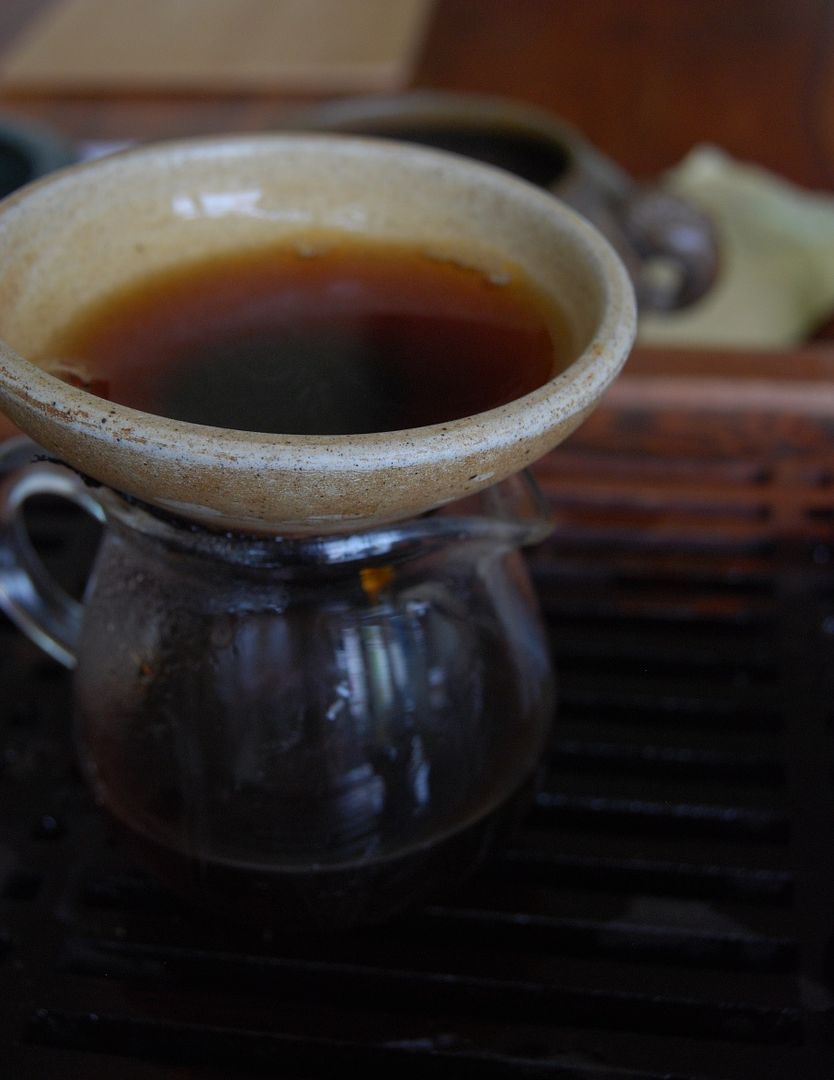


I can see why.  It is eminently chugworthy.  I enjoy its density and cleanliness, which is admirable for old HK tea.  There is no shicang [wet store] character, as if it had been aired out, but it has the thick tar-like profile of tea aged in significant humidity.

What enormous fun.  At $150, it is definitely worth considering.  Again, compare that price to modern, unaged shengpu and see which you'd prefer.  I have made my choice...


Addendum
June, 2015

This is a session with the 1980s maocha.  The close, sweet humidity of the extraordinarily long leaves is calming.  I feel a little dizzy after being woken at a very early hour by dear Xiaohu.  This is a good tea, for old maocha.  Not weak, as one might expect, it is instead energetic and (damply) sweet.  Even its deep, red soup is reassuring.
24 September, 2014

The Risk of Slugs


the risk of slugs
makes eating the fallen plums
even sweeter

19 September, 2014

A Postcard from the Fragrant Port

If all goes well, Gentle Reader, then you are reading this while I am on the way to the Fragrant Port.  I'm not entirely sure which fragrance modernday Hong Kong sports at this time of year, but I suspect that "fragrance" might be a little generous.

As it happens, this article is all about The Dayi, and one of my Hong Kongese chums, Apache, is about as into Dayi as I am.  We're not fanboys, I should point out, but we do get together from time to time to drink up the "Great Virtue".  There are people like us, who enjoy a bit o' Dayi, and there are the other kind of Dayi fans - those folk who can tell you all about the way certain flecks of ink on certain characters indicate special batches, and so on.


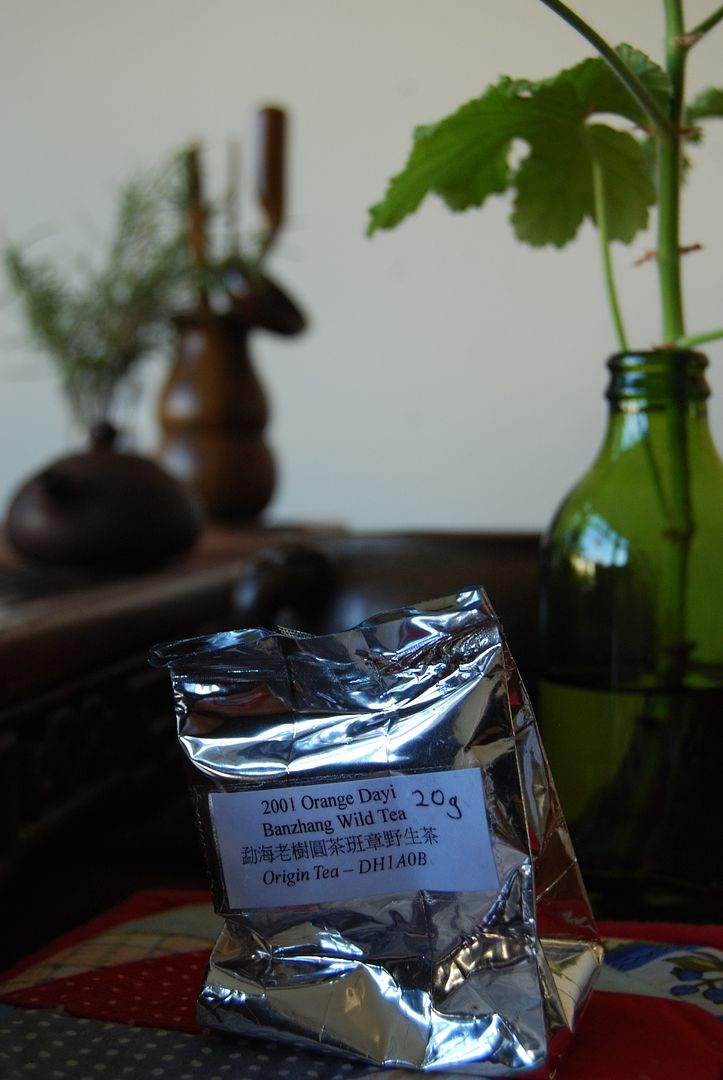
This tea came from the now-defunct Origin Tea, by way of JT (many thanks).  2001 Banzhang "Wild"?  Of course it is.


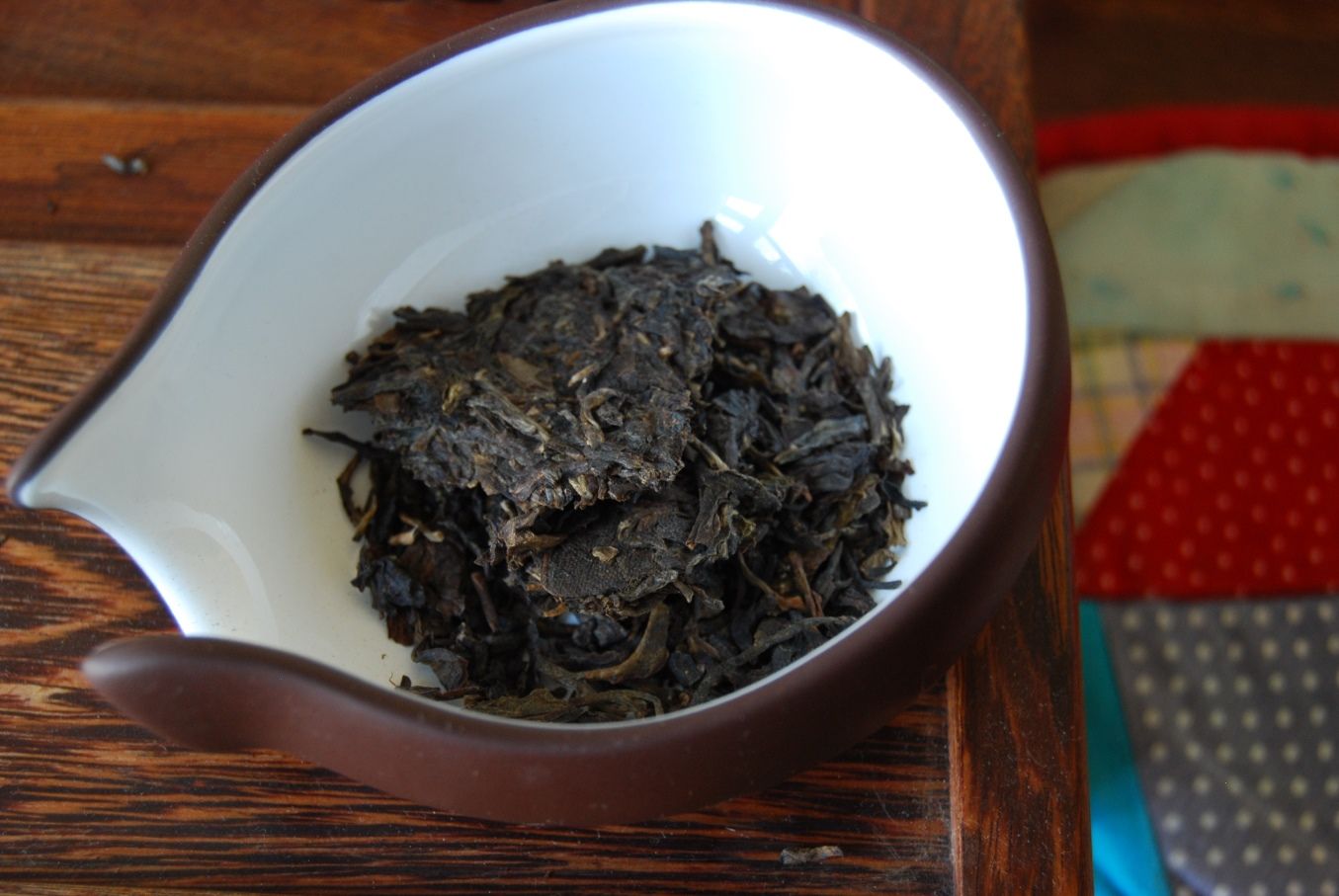
Looking at the photograph above, this tea is as expected.  You can almost smell the tell-tale blackened plantation aroma just from the bitmap.  It is exactly that which you would anticipate for Dayi.  I am fascinated to see that the stereotypical "Dayi" house style existed even in 2001.


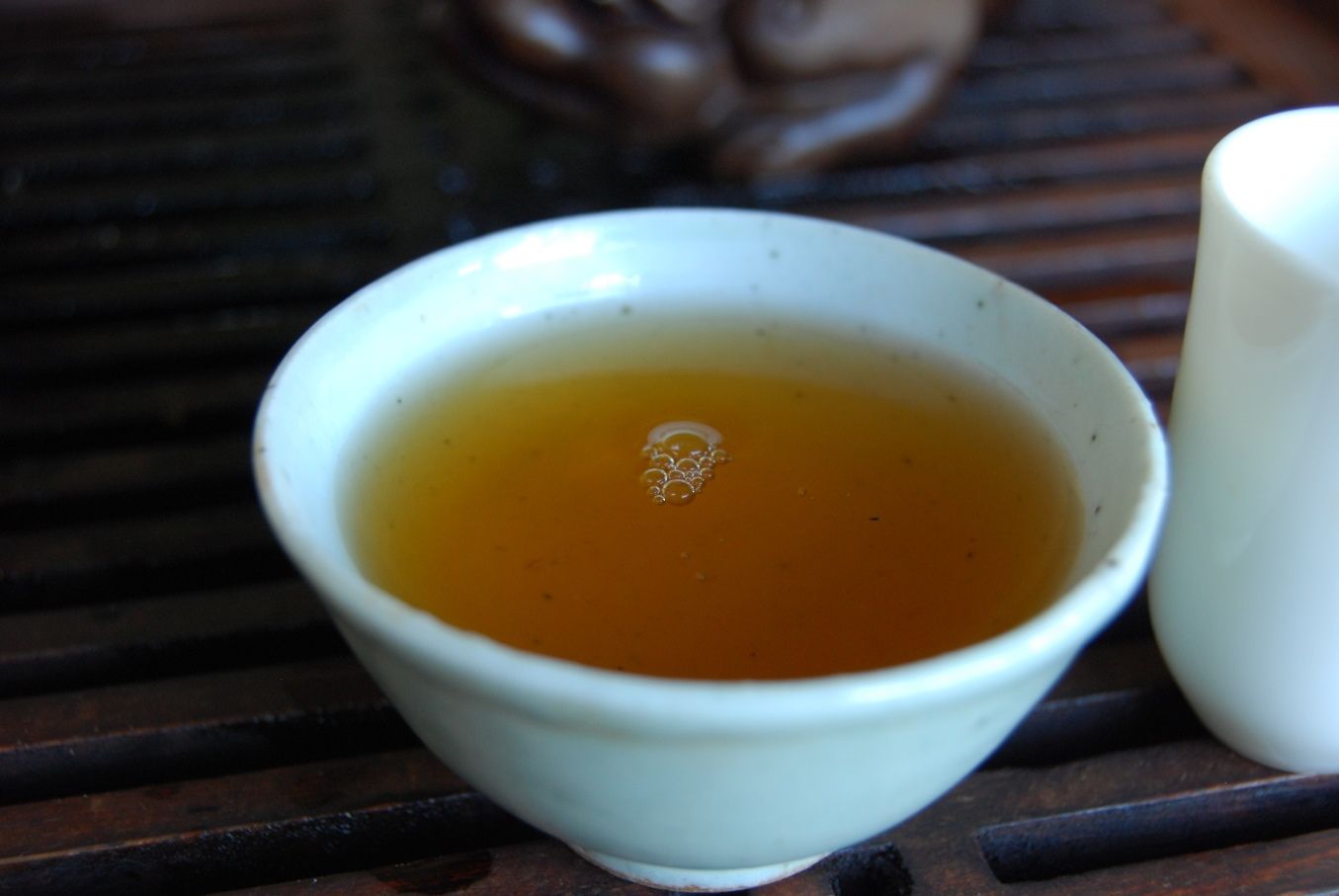
It is orange and husky, but you knew that.  This is a sharp cake, with some (ready the lifeboats, stand by your bunks) dry storage.

Queue pictures of Luke Skywalker holding onto a weathervane.

Luke didn't have it so bad.  He lost a hand and the Sith Lord that was doing the Emperor's dark bidding turned out to be his father, sure, but he didn't have to cope with excessively dry tea.  I'm not a fussy drinker, and I can drink everything from a cake that's so humid even your average Hong Kong resident wouldn't touch, all the way down to something that's as dry as a Jawa's gusset.

In this particular case, it has a solid body, but absolutely no huigans at all.  There is simple, plantation strength, but not too much else.  Yes, it's Dayi, but (and don't hate me here) it's really not the best example of Dayi that you might hope to find.


This next cake is the 2003 Dayi "Purple".


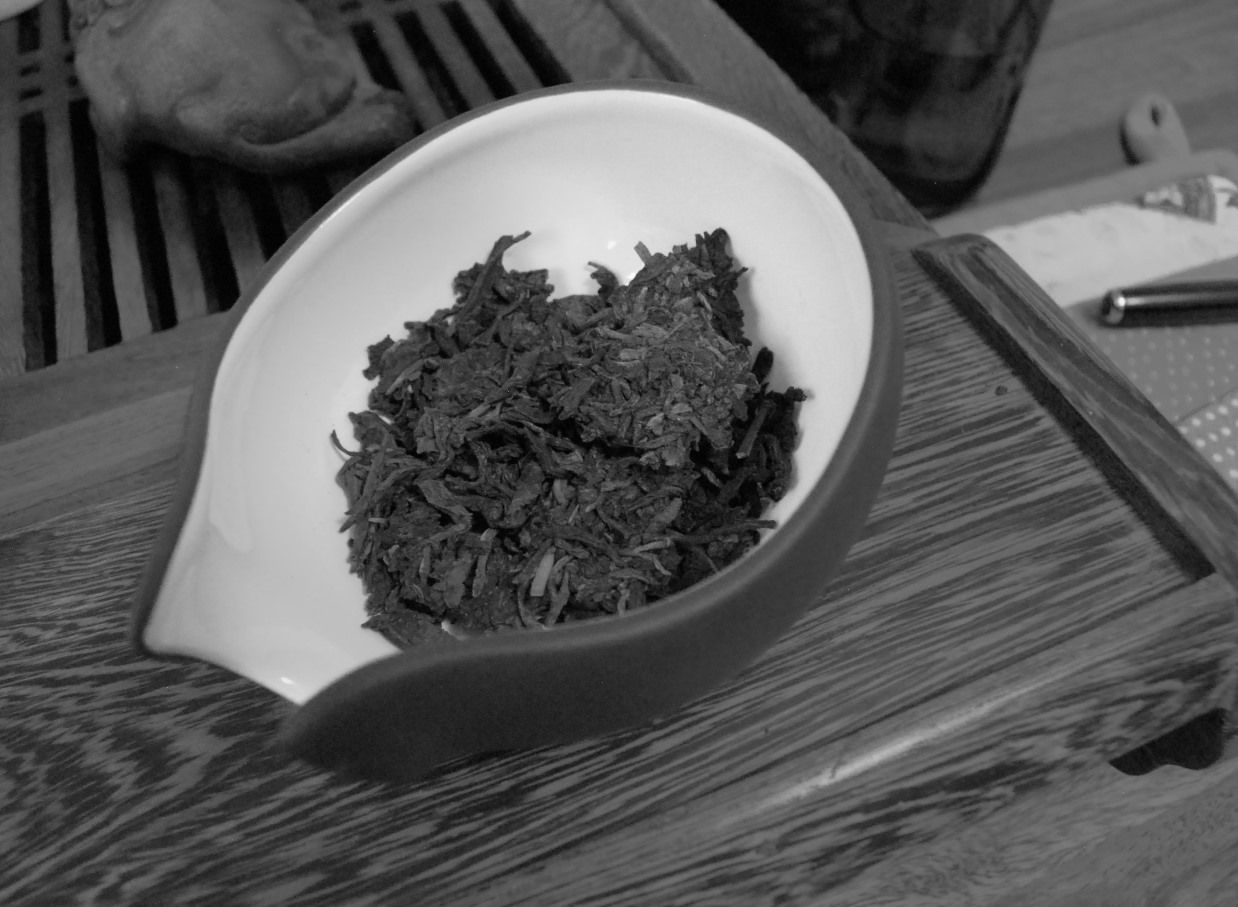
Foiled!  The colour balance of my pre-dawn photography was so unalterably nasty that I simply had to desaturate the entire image.  At least you can see the shape of the leaves. 


This second plantation recipe, like the 2003 Jin Dayi, has become very expensive.  As with the 2001 Orange Banzhang, above, this is blackened and sweet in the usual Dayi way.  This cake is also a victim of basic economics: the demand is so high that the price has risen way beyond that which I would consider to be "good value", and has passed even beyond "almost reasonable".  It is, merely, a husky Dayi plantation tea, without much huigan [returning sweetness].  It is good plantation tea, certainly, but you couldn't buy this with a straight face.  This is internet forum madness, and not worth contemplating.


The 2001 "Commissioned Purple", however, is really worth thinking about, in my opinion.


That picture is enticing.  I am enticed!

Dark and humid, these leaves are calling out for a good session.  The "commissioned" status lifts it above the norm, quite obviously.  Gone is the husky blackness of standard Dayi; in comes the very real scent of grapes and raisins.  This smells much more natural.


This is red-brown, and very smooth.  Compare this 2001 Commissioned Purple to the 2001 Orange Banzhang, at the top.  It's like chalk and cheese; heaven and earth; Optimus Prime and Megatron.

I used all of the leaves in my sample, safe in the knowledge that it would be almost impossible to overbrew, which turned out to be correct.  It is dark and oaken like dodgy Norweigan metal.  Devoid of roughness (unlike the aforementioned Norweigan metal), this is made from quality leaves.

This is surely about as Dayi is ever going to get.  Its pure strength is its primary advantage, but it is the punch of an Ent: woody, solid, and completely unstoppable.


Finally, shupu.

Please, contain yourself, Gentle Reader, for such wailing is most unbecoming.  You sound like a schoolgirl.


I will have you know that I actually like shupu.  I often drink it in my lab, and I sometimes even drink it at home at the teatable.  Shupu is fine by me, when done right.

Doing shupu right is exactly what Dayi knows.  When you want shupu, you go to the people who invented shupu.


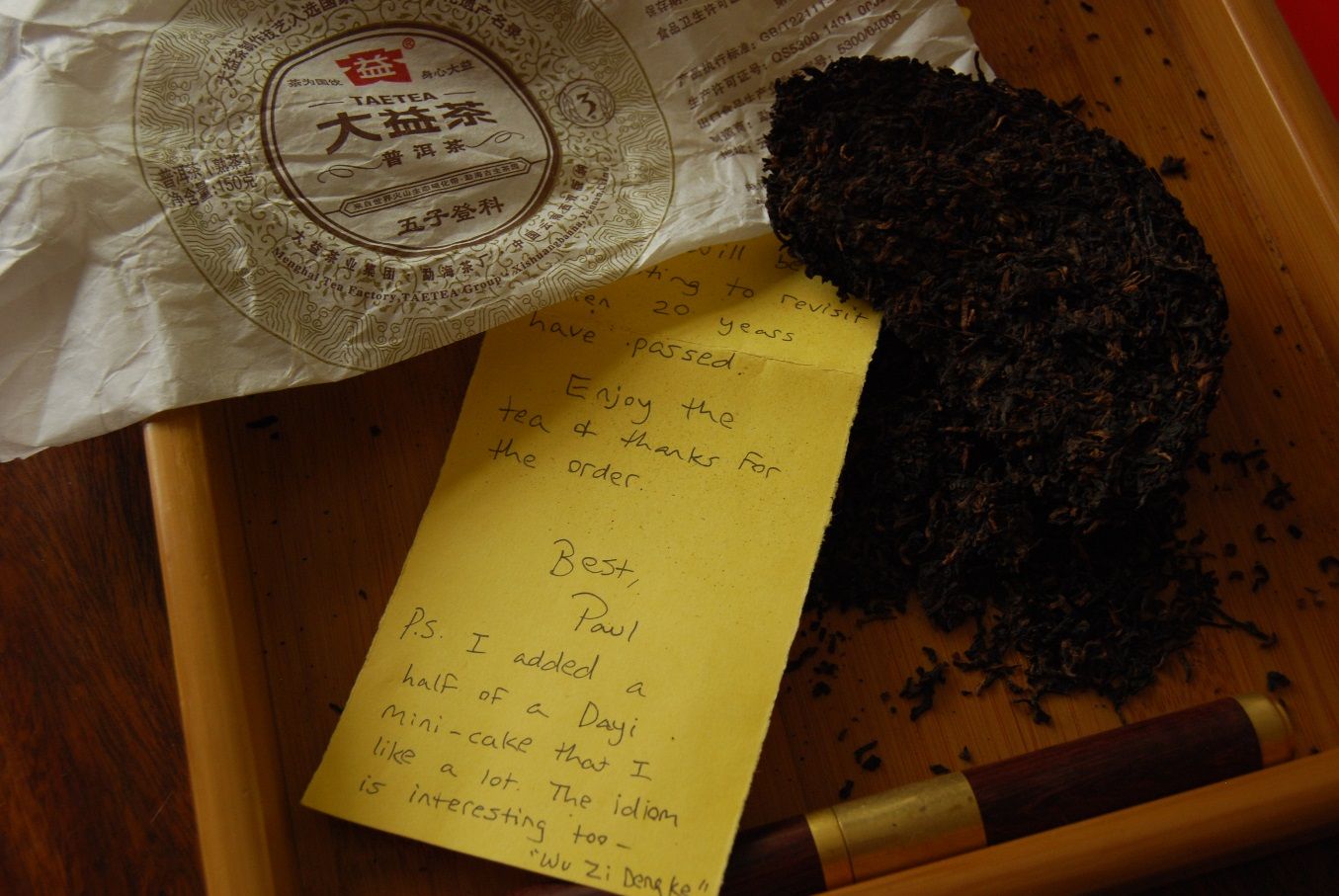
"Wuzidengke" [woo-zer dung-ker] refers, approximately, to five sons passing the examinations for the Imperial civil service.  It's a great name.  It's also a great pu'ercha pun, because a tong is called qizi, as you know (seven sons), referring to the seven cakes in a tong.  Guess how many little cakes you get in the (metallic) tong casing here?

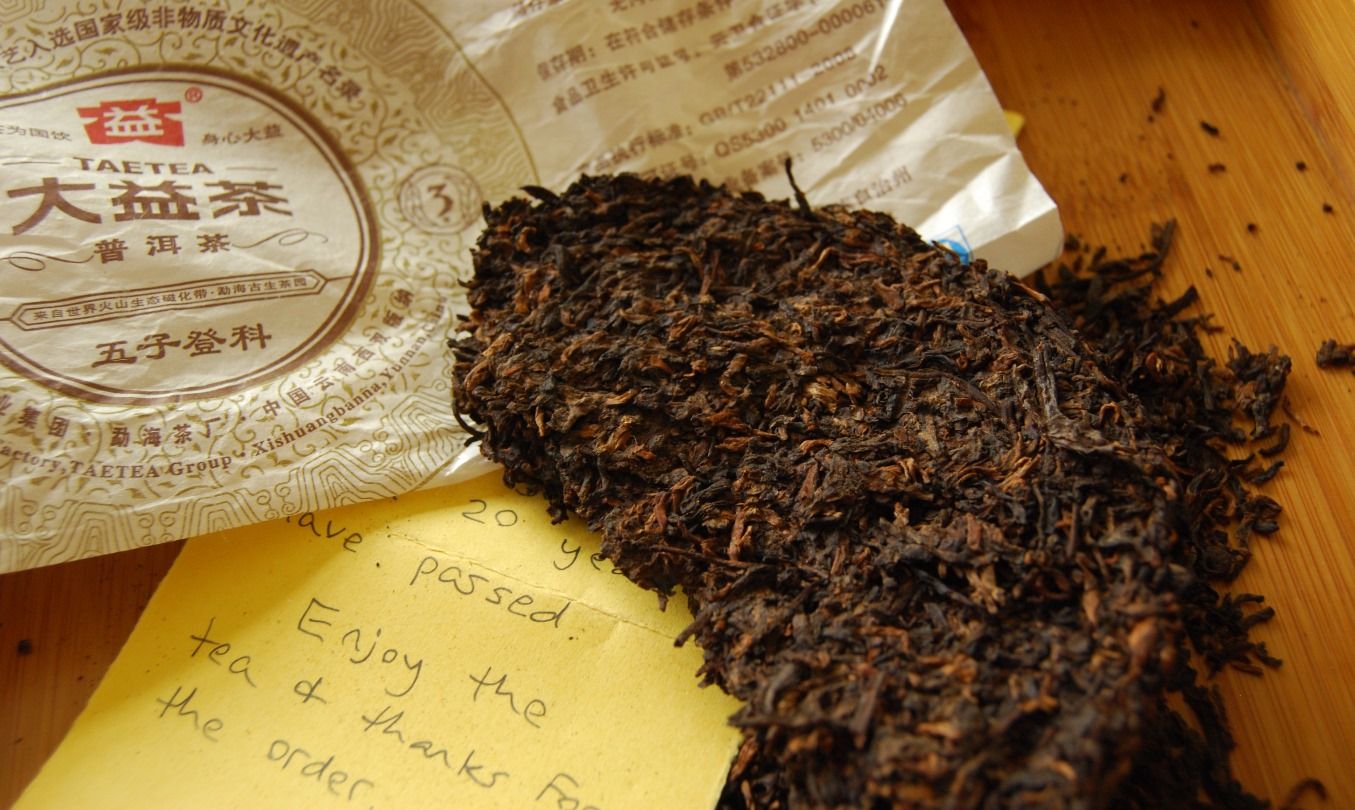
PM of white2tea sent me a sample of this, as you can see in the photographs above, and I promptly swooped like the vulture I am and acquired a groovy metal tin.  It weighs in a about $70 for the lot, which is really good value considering how awesomely stable this shupu can be.

Heavy, black, clean, fresh, husky, and sweet: Dayi are the unbeaten masters of shupu, and here they are on fine form.  It has the soft, eroded edges of shupu, but retains good strength - a marvellous piece of composting.  There is complexity the likes of which one would never expect: honey, and much in the way of vanilla softness.

If you're doing shupu, then do please try a sample of Wuzidengke.  The name is hard to forget, and it is a personal favourite.