Crusty old barnacles among you, Gentle Readers, may well recognise the wrapper of the 2008 Fuchaju "Wuliangshan" cake:
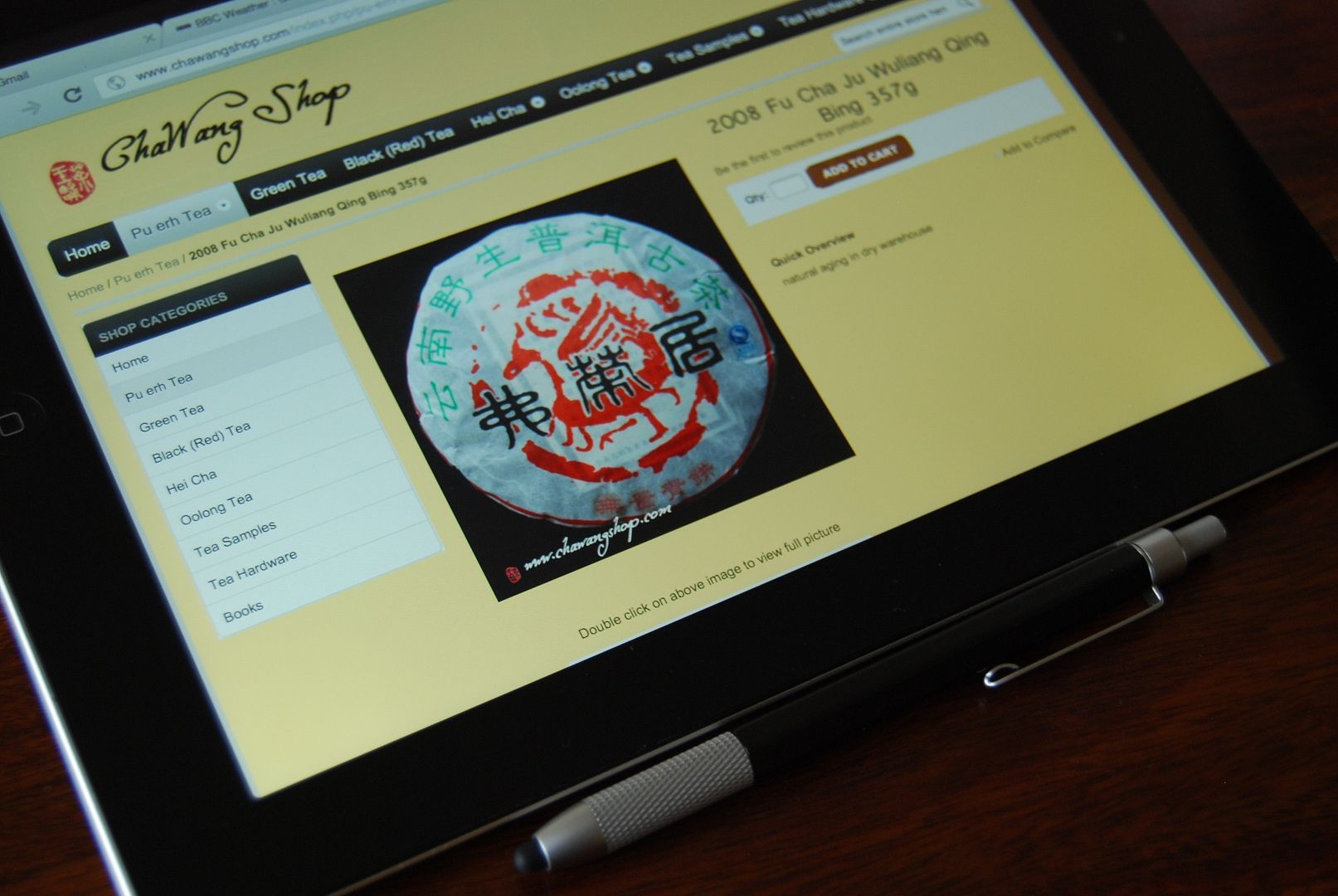
The comparison with the 2002 Fuchaju is favourable, because the latter was very reasonably priced, when young, and is aging very well on our shelves. It seems to be yet another ex-patriot of China who seems to enjoy the chilly dampness of our crumbling old city, for reasons that I have not yet determined. This is the "new old friend", for its relationship to my beloved 2002 cake.
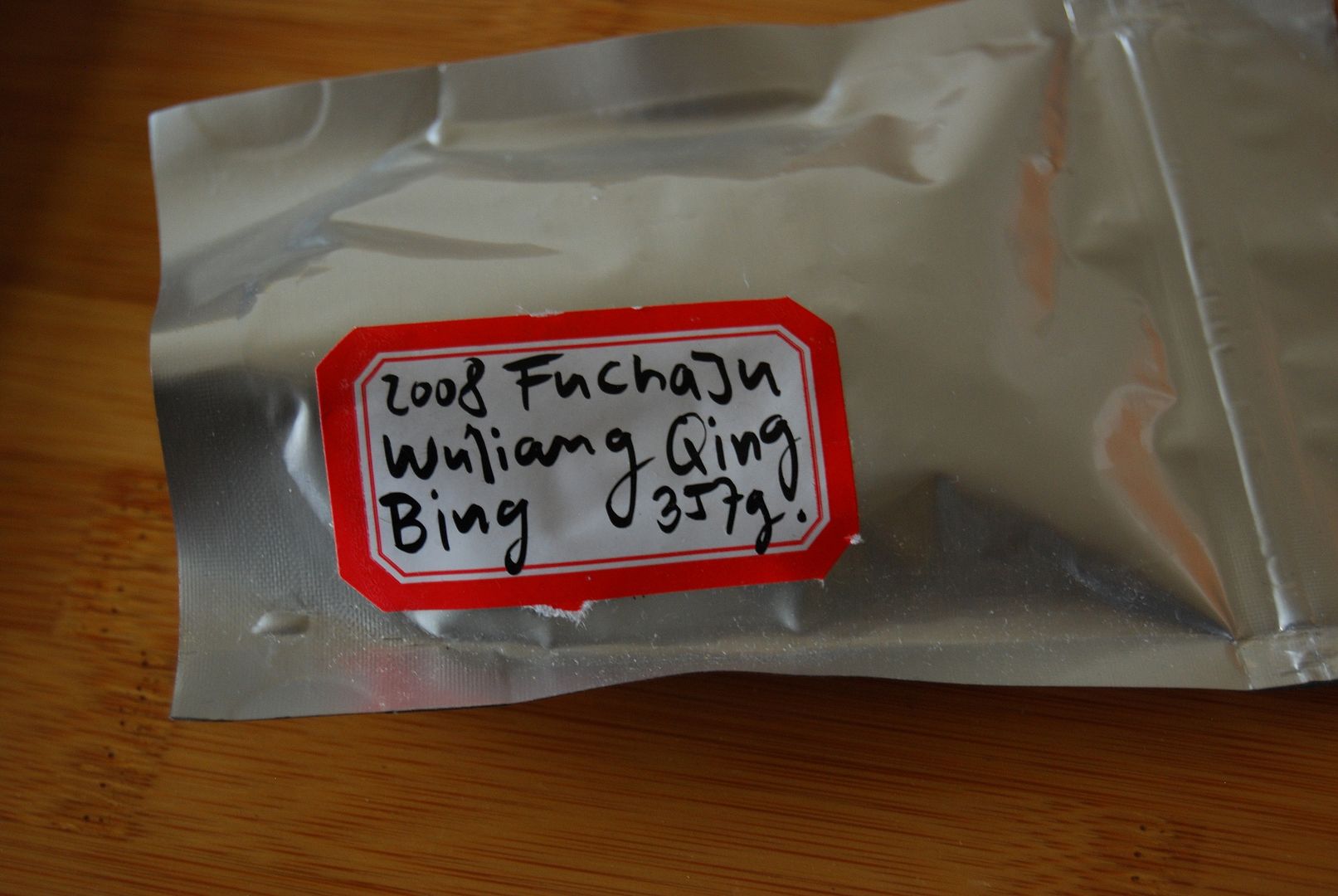
This particular cake is from Chawangshop, one of those fantastic post-eBay shops that sells very solid tea at gratifyingly reasonable prices.
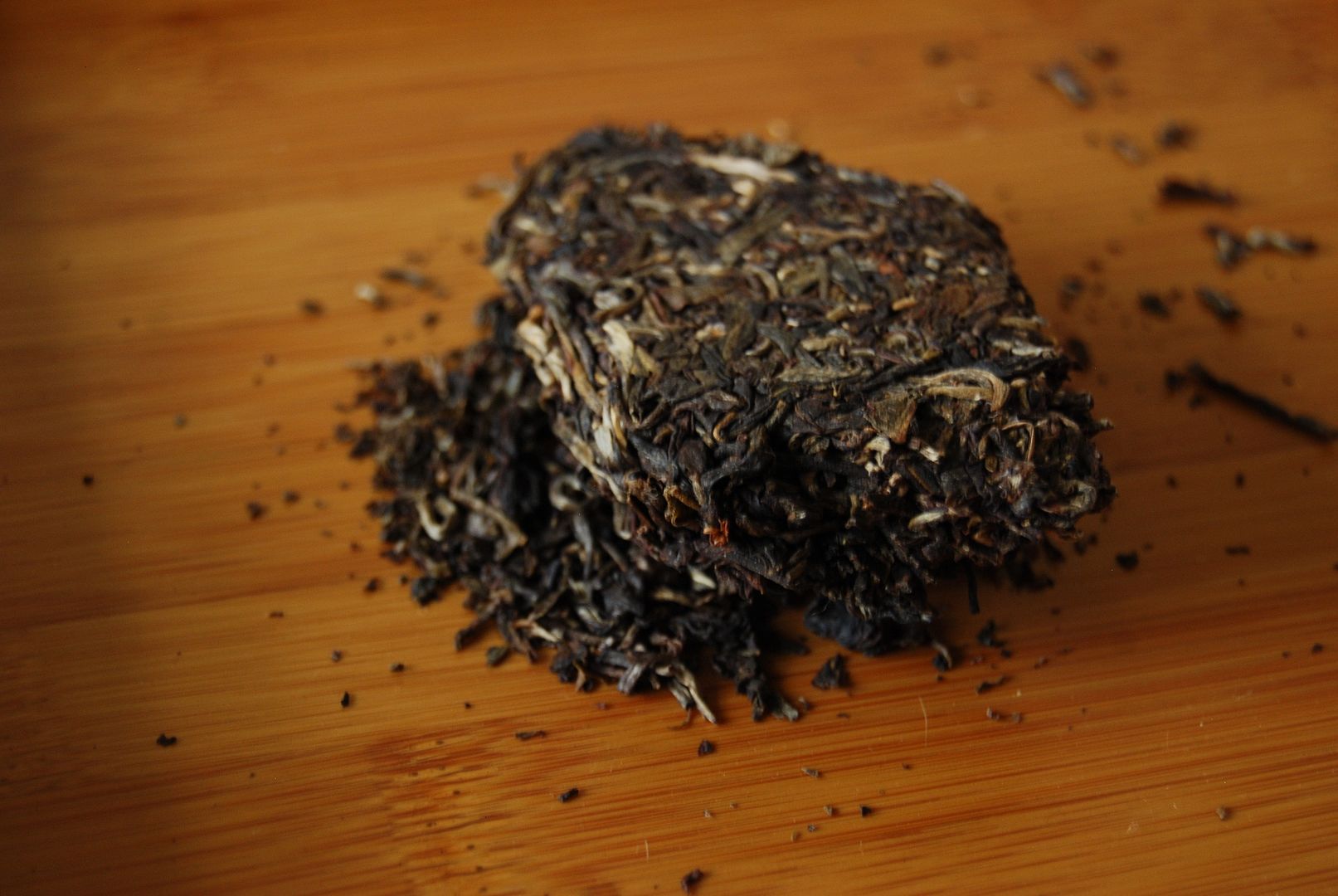
Pictured above and below, we can see the leaves for Wuliangshan is famous: they are really rather small. Wuliangshan is right in the middle of where my tastebuds light up: Simao diqu [approx. "prefecture"]. Some of my favourites, and best agers to date, have been from Simao and Lincang. These are just personal preferences, of course, as far as such things go.
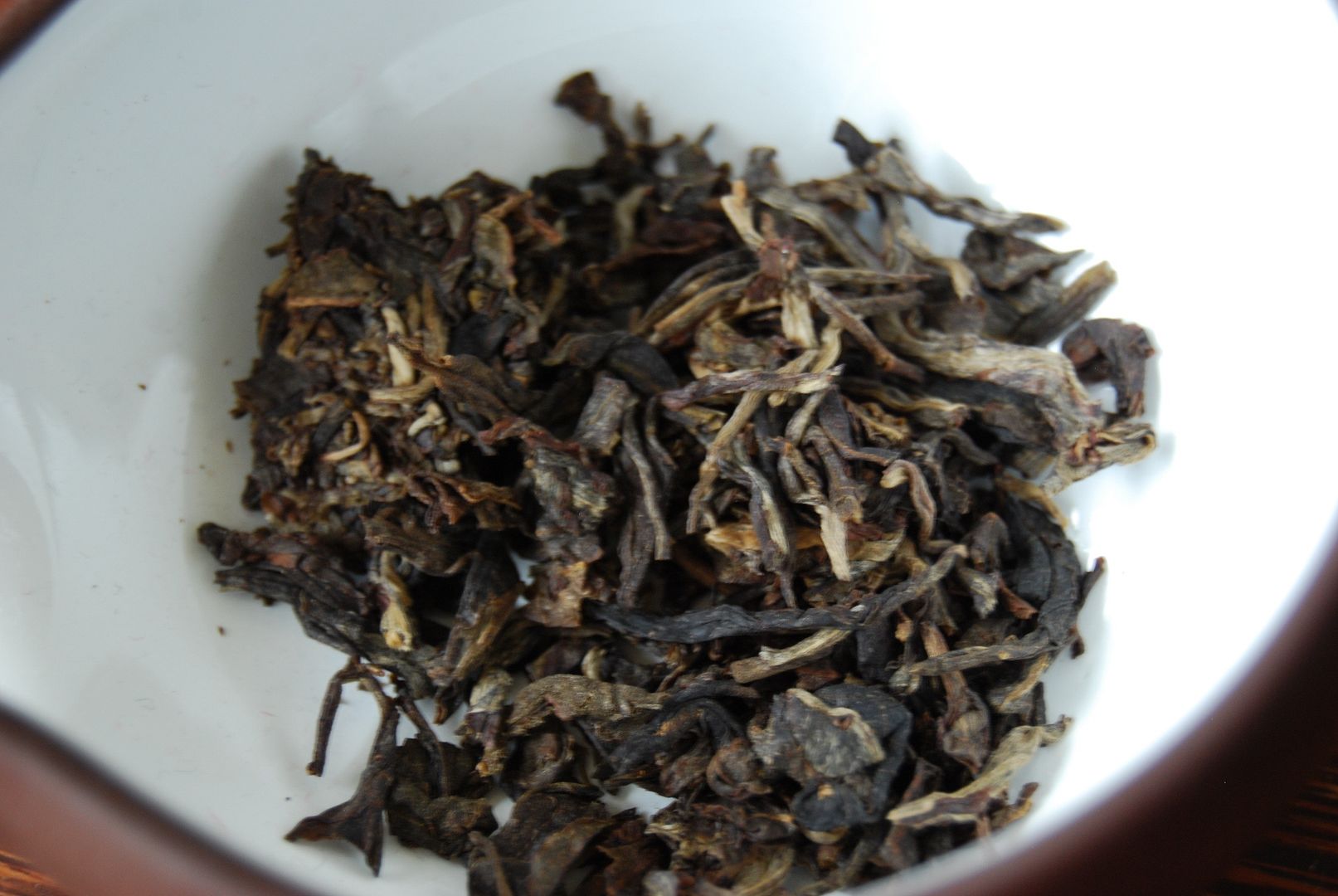
This is fat, low tea in the molasses-and-dried-fruits genre. My diary has that it "tastes just a little too malty", which may indicate a little early redness creeping in. It has proper kuwei [good bitterness], but I wrote that "it tastes a little too much like actual English black tea". Not even hongcha, that is, but actual English black.
Could this profile be the result of storage? It is unlikely: the lack of humidity of the leaves suggests storage in drier climes, from which we might expect slower aging. This leads me to wonder if the malty "blackness" was there from day one.
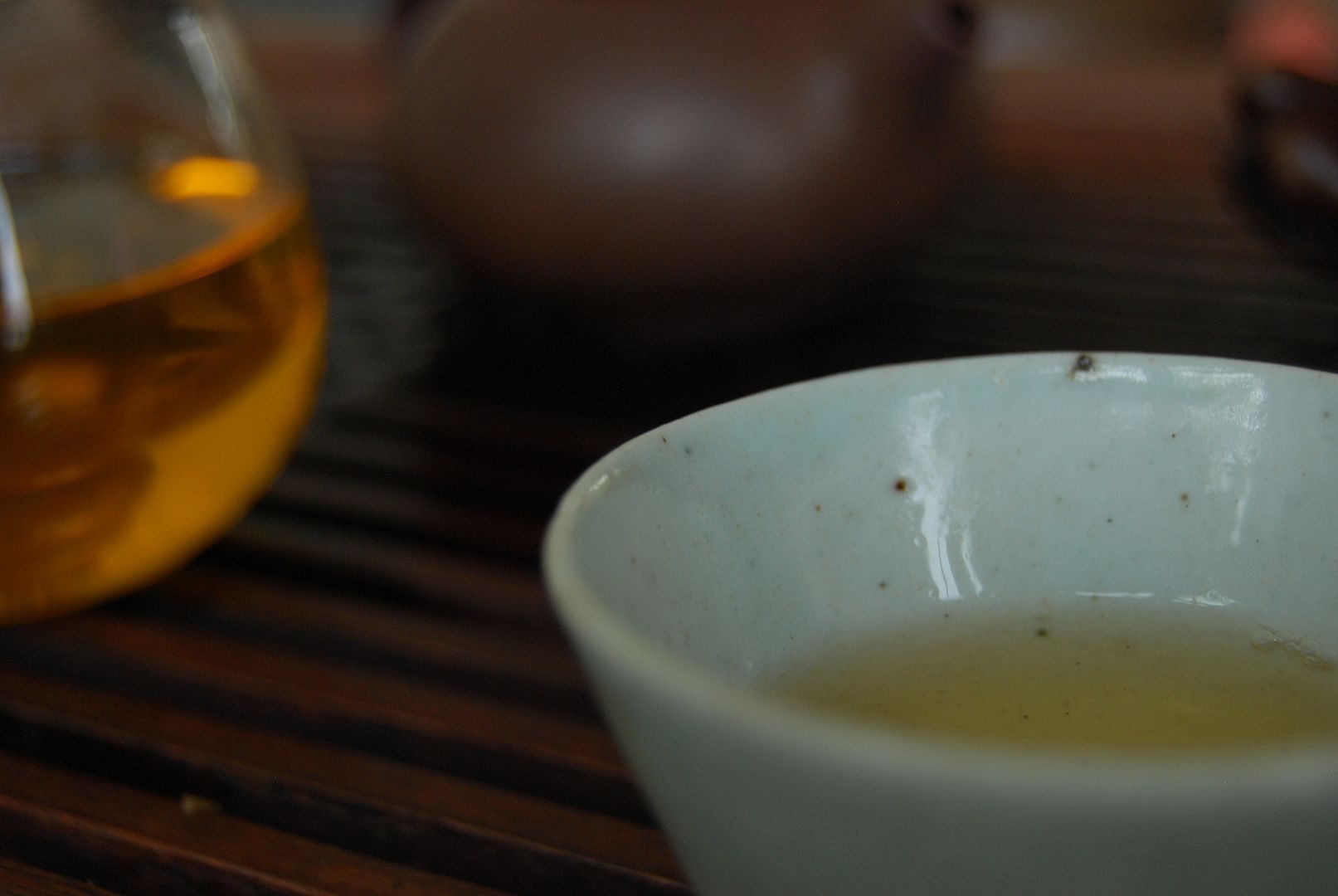
Ignoring the malty edge, it has a fruity sweetness that is immediately enjoyable. As a lifelong drinker of strong "black" tea, I rather like the maltiness, anyway, but suspect that it is not a good sign when it appears in pu'ercha.
Later infusions calm down, and become pure kuwei combined with a sweetness of dried fruits, much as the scent of the dry leaves suggested. It lasts well, and is clean, but is neither complex nor evolving. At $31, it is priced acceptably... but does not compare well to some other stand-out teas from Wuliangshan and the greater Simao region.
Changing gear, we head into the "Old New Friend" - a cake which is a new friend, but which is older. From 2005, this cake is sold for just $26!
Man the harpoons - is a bargain in sight?
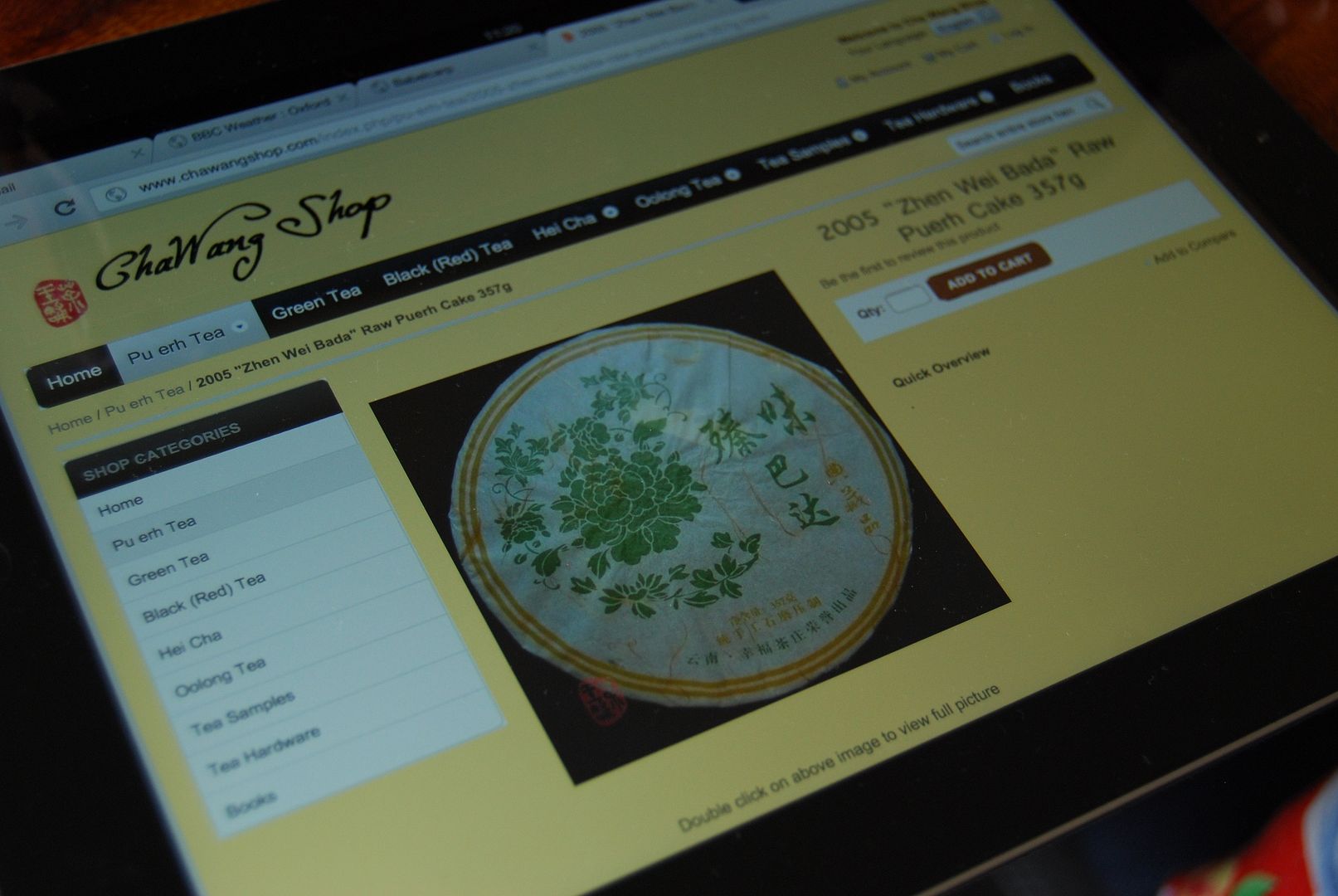
This cake was made by under the Zhenweihao brand for the Xingfu Teashop of Kunming, in Yunnan province.
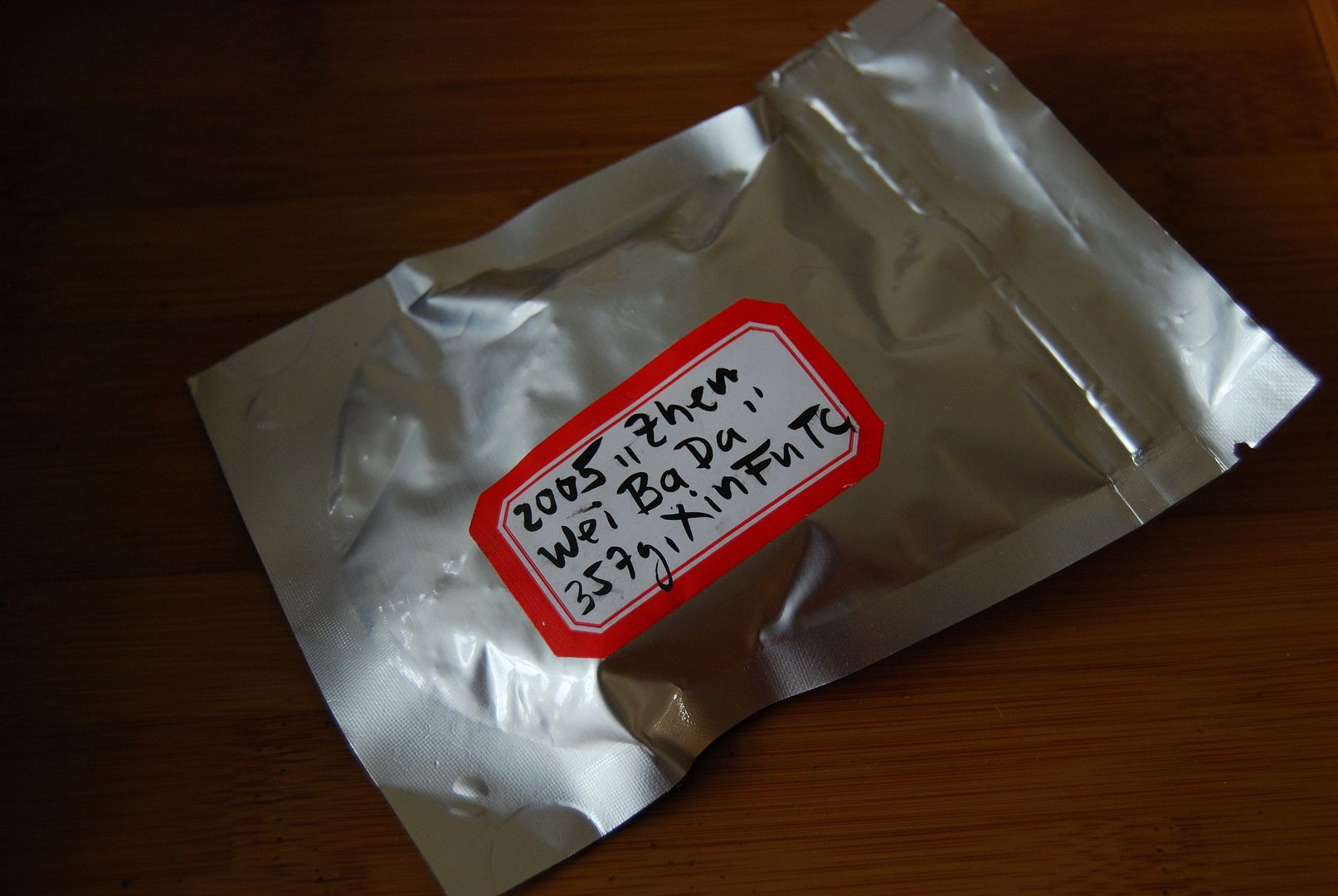
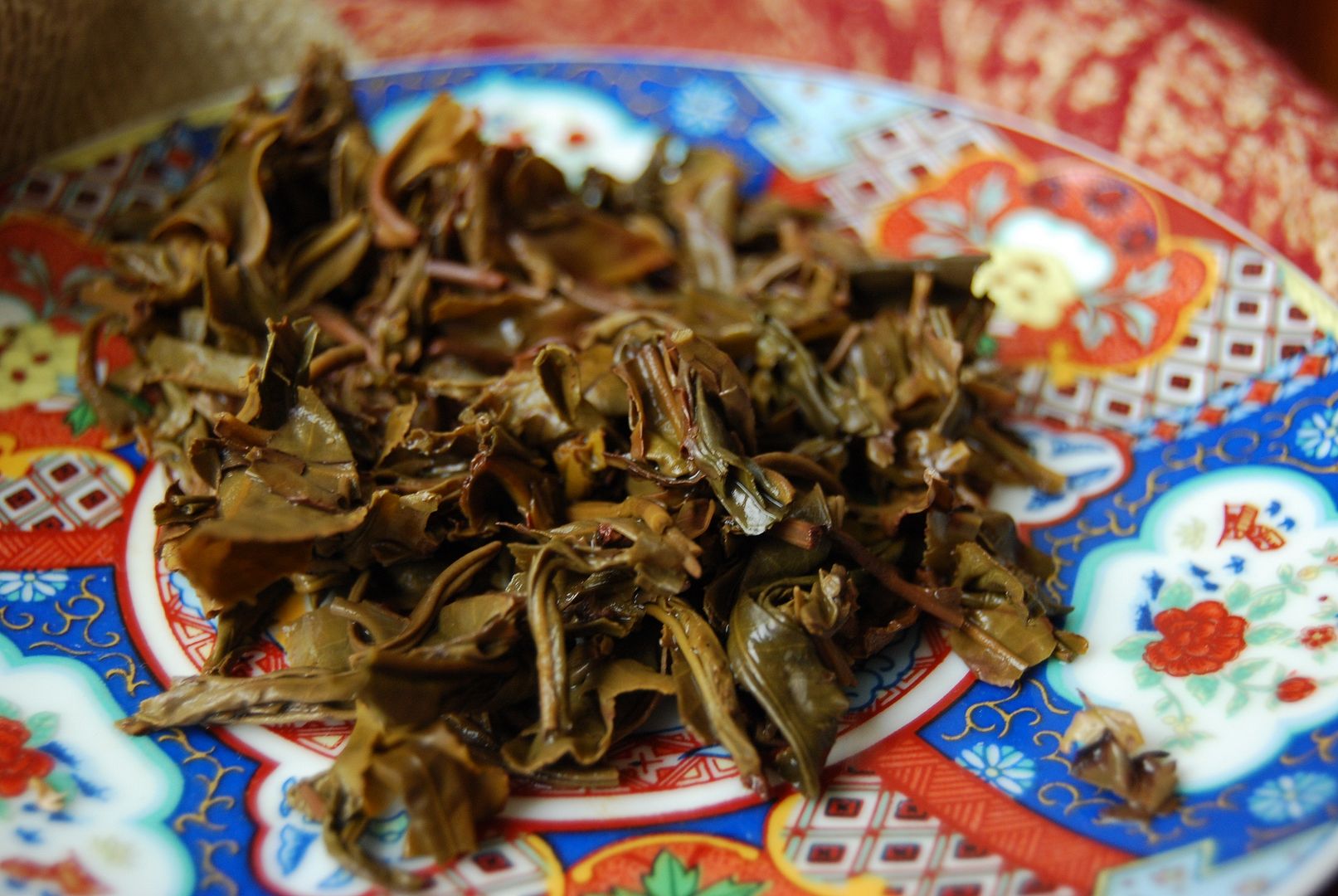
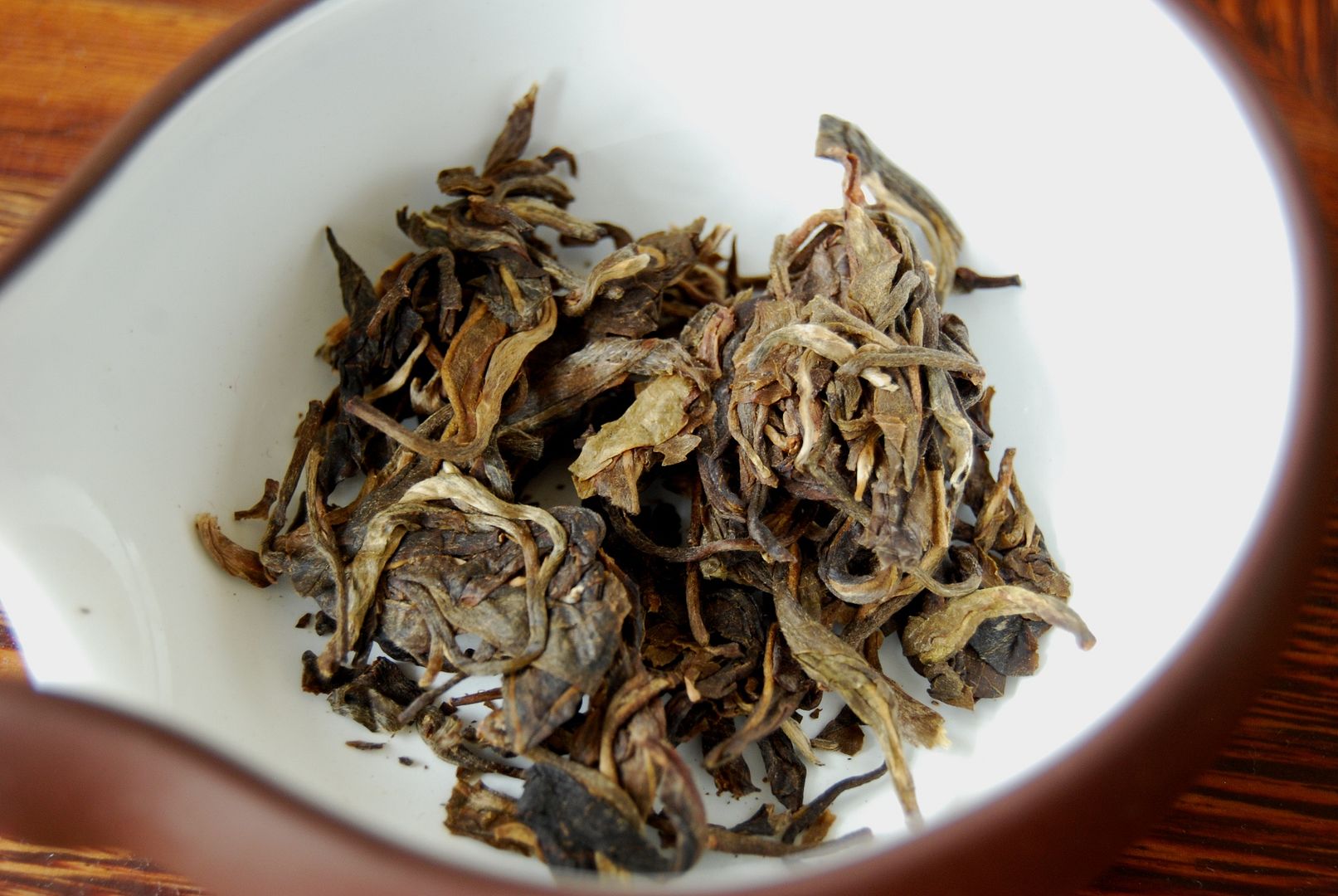
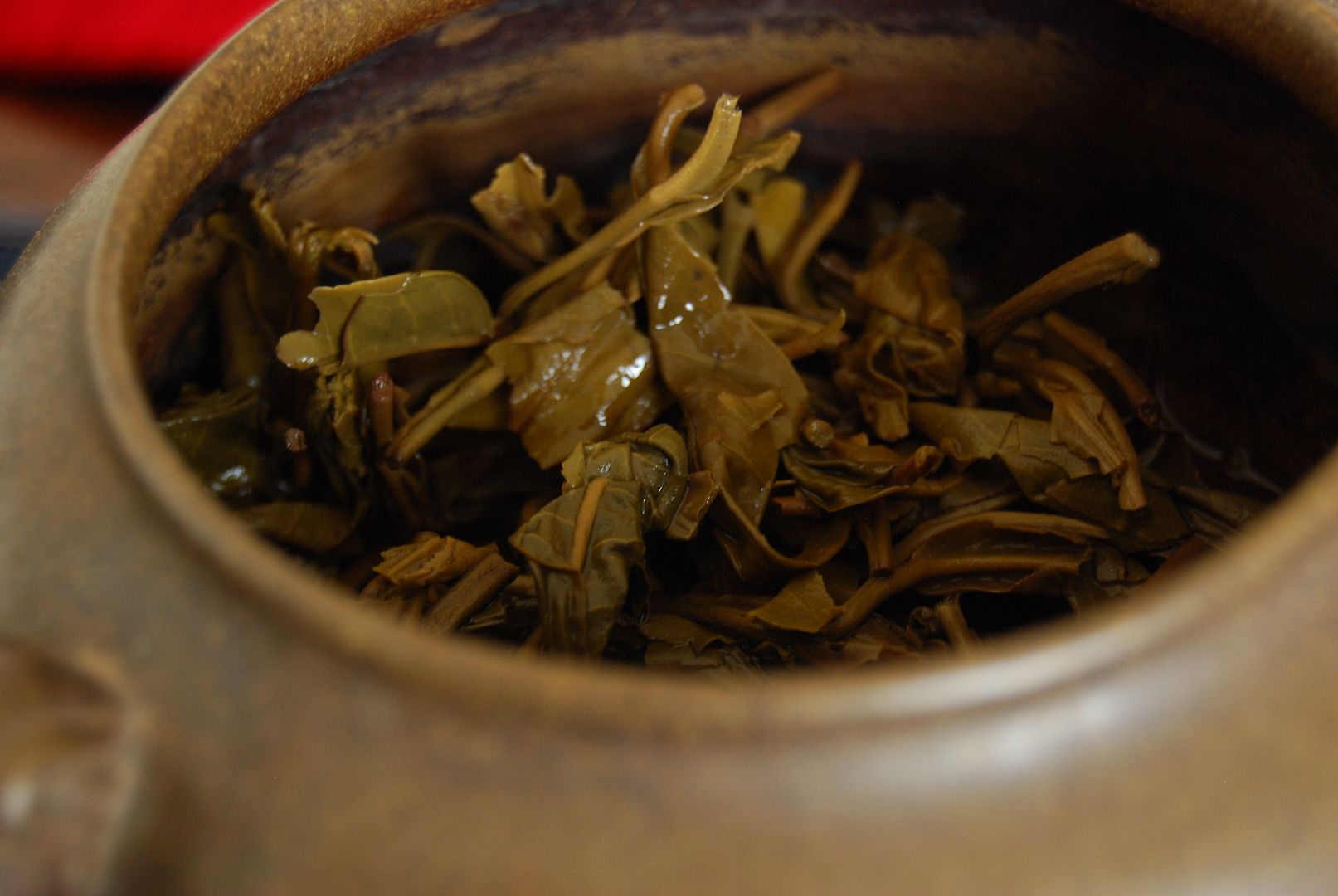
The leaves are large, as pictured below, and are turning a slightly orange shade of rustiness.
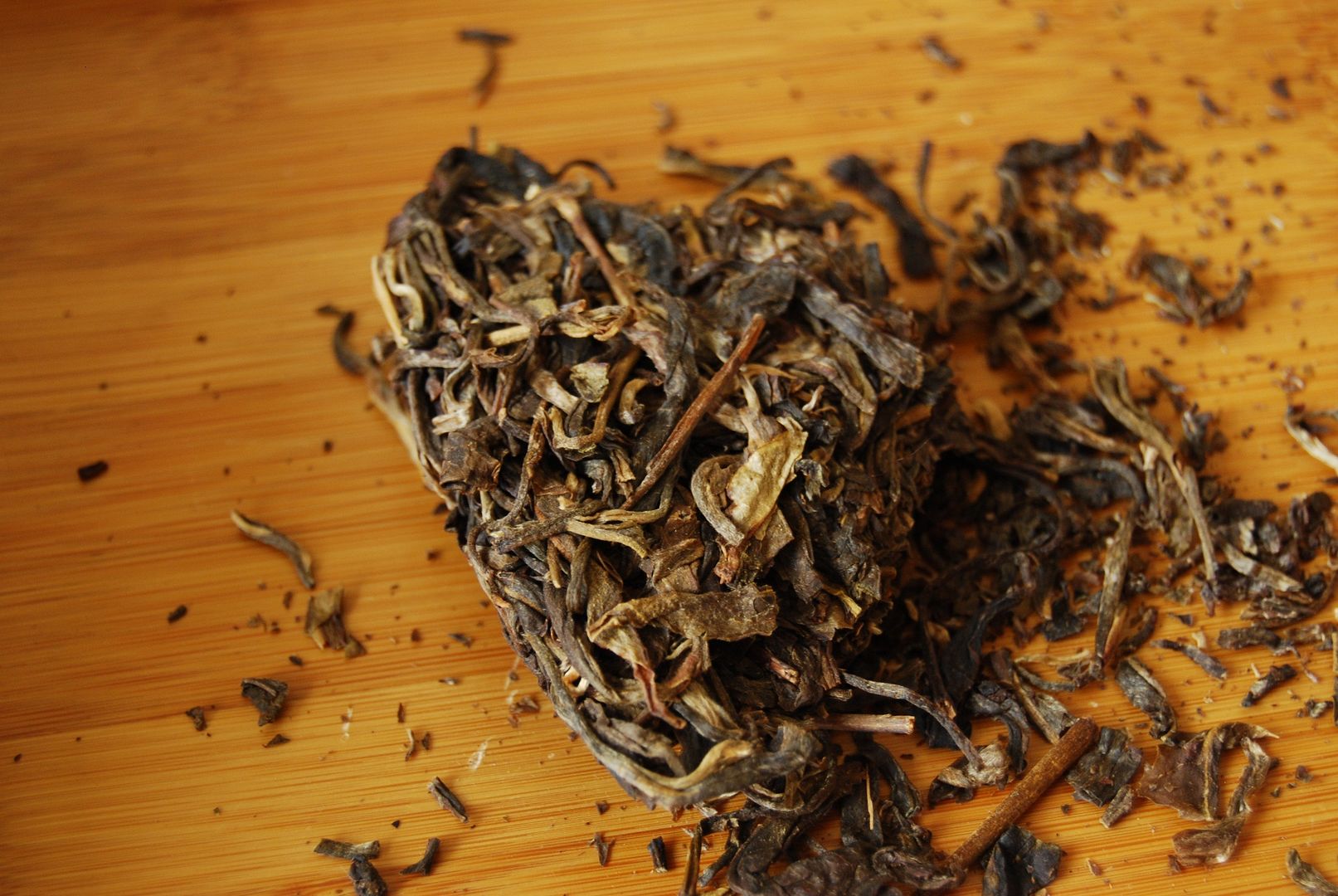
The scent is quite complex, and first impressions are very positive. The blend, as shown below, contains some decent leaves.
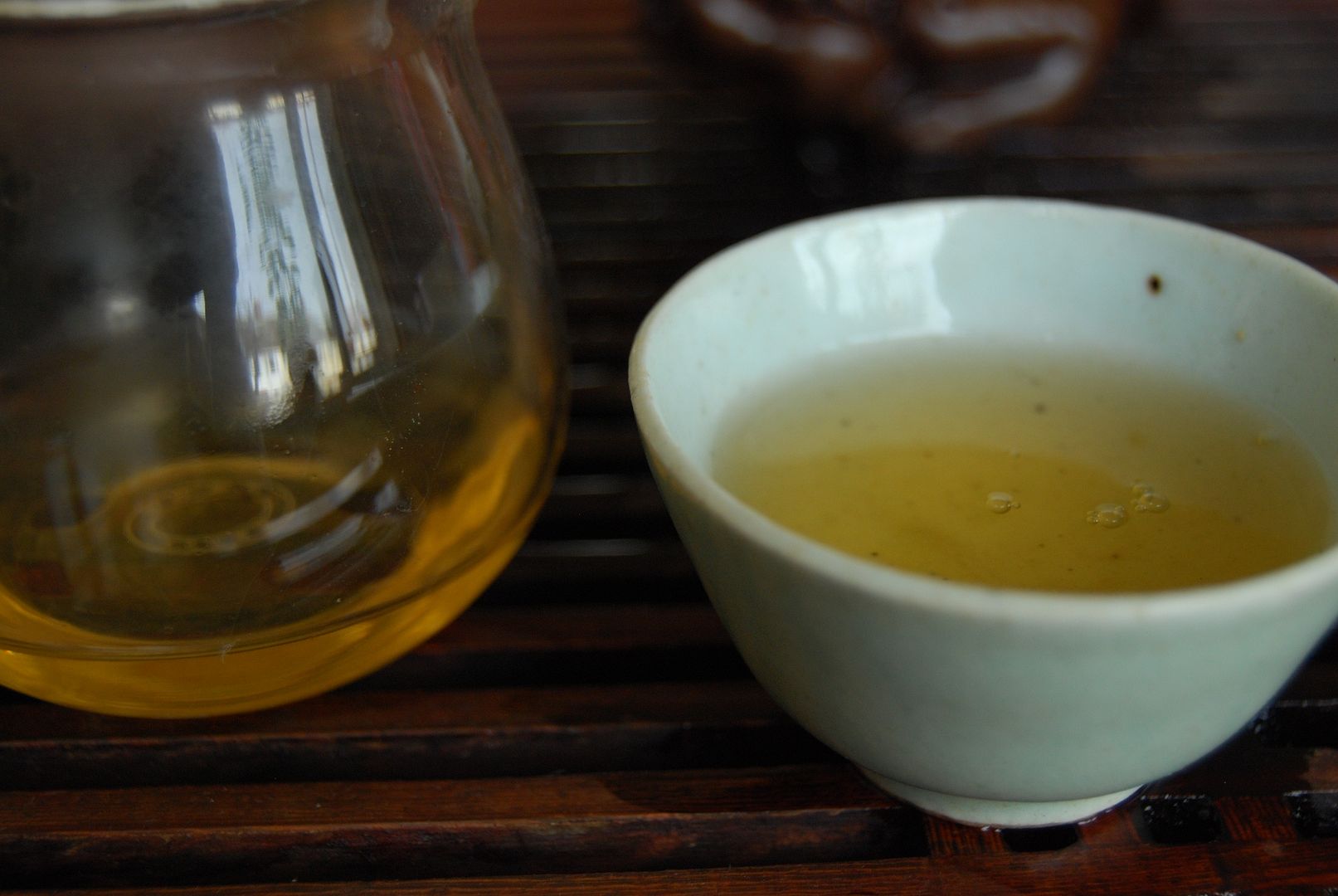
I am immediately surprised by the yellow soup, shown below, given that this cake is now eight years old. The storage has been dry indeed. The scent is even "buttery", as of newer cakes, which suggests that the aging of this cake has been almost permanently arrested.
If it were stored at Xingfu in Kunming, that might explain the aging.
This has a sweet, straw-like character. It is believably Badashan: the years have diminished the grassiness typical of the region, although it remains present in the background. It has the long, fruity, springtime sweetness that always makes me appreciate cakes from the region.
This cake certainly fits the bill for a teashop, where the emphasis, presumably, is on accessibility. One wouldn't wish to terrify one's punters by feeding them hardcore leaves, and these leaves are far from hardcore.
The texture is silky and smooth, while it stays quite interesting due to its sweet, slightly bitter, infusions. At such a low price, it is good value for causual drinking.
Perhaps we can give the last word to my journal:
"This little Zhenweihao tea soldiers on, in its solid, charmingly sweet little way."


