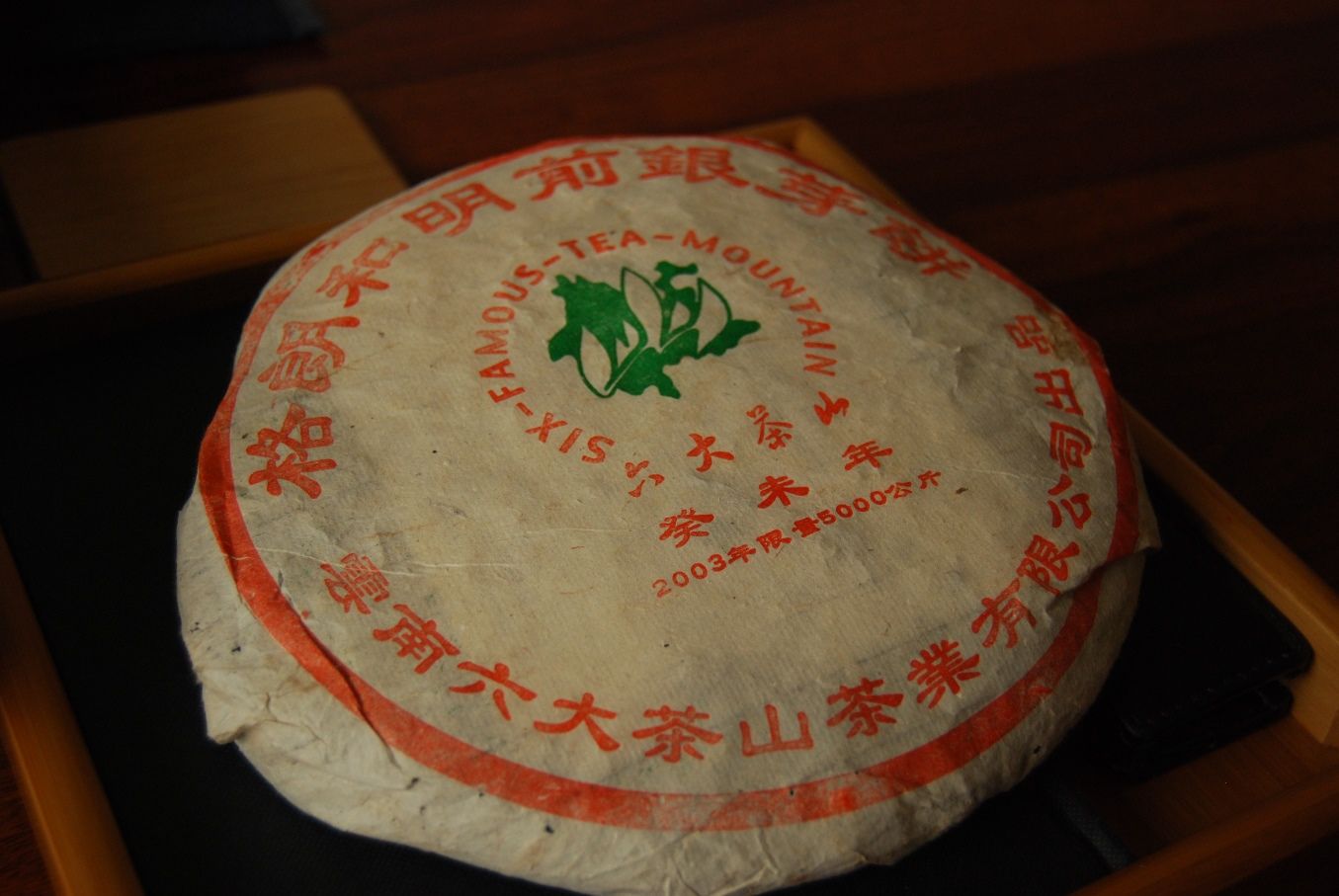
6FTM, how mighty were your Six Famous Tea Mountains, once upon a time. Something changed in the company in the mid-2000s, perhaps coinciding with the pu'ercha investment bubble, from which the company has never recovered.
With thanks to Keng, it is time to enjoy some of their "vintage" output. This cake is either $45 or $451, depending on how I read Keng's handwriting. I suspect its the former.

This is a cake from Gelanghe, which is in the Menghai region. 6FTM are nothing if not traditional, which is perhaps a constraint imposed upon themselves by their name. This is not a bad thing when the tea is good.

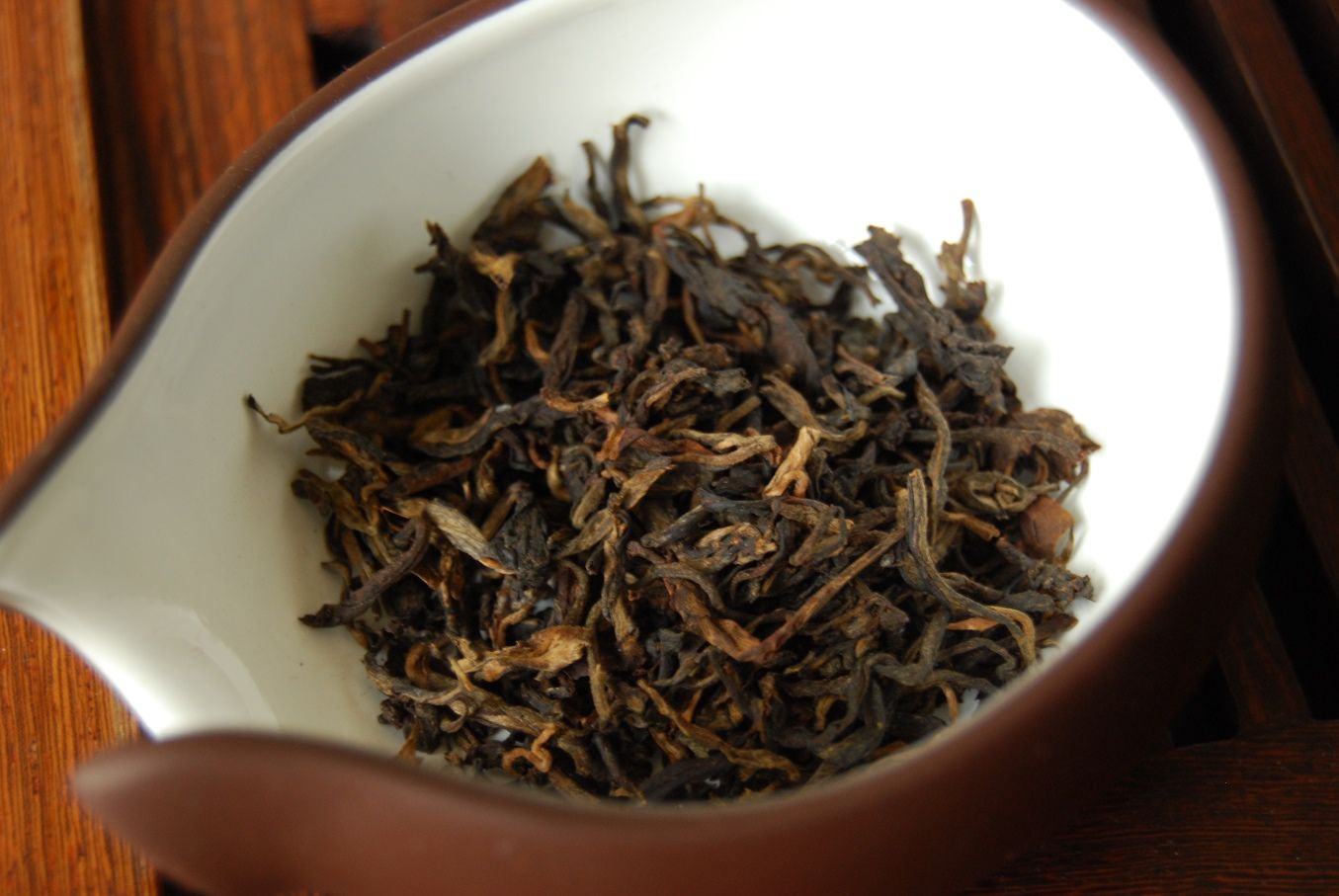
Pictured above and below, the leaves are really very appealing: they are whole, quite small, but varied in grade. The tips have turned a rusty copper colour with age. While it has not spent its whole life in Singapore, there is certainly more than a hint of the city-state's excellent storage conditions in its sweet aroma.

It is an excellent tea, being dense, sweet, with some clean sharpness remaining - the storage seems much less humid than some Singaporean examples. It has a robust, low body of clean shengpu flavour; I wrote "surprisingly clean" in my diary.
I don't think that I could identify the individual characteristics of Gelanghe that distinguish it from other Menghai regions, but this cake is solid, apparently inexpensive, and longlasting. 6FTM had such a good record of making productions that far exceeded their low asking price - perhaps I should try reacquainting myself with their more moden cakes to see if it has been regained. I gave up on their new cakes a few years ago, and everyone deserves a second chance...

While I don't usually mix computing and tea, the arrival of the iPad has made checking out small details about a particular tea a lot easier. I sincerely recommend them for all manner of tasks, and would happily bore you sideways about how I can use it to access Windows running on a virtual machine in my university laboratory, which I then VNC into from my home (or college, or conference in China) through an SSH tunnel, after VPN connecting to the university network...
Addendum
September, 2013
You don't often hear about Gelanghe cakes, and I suspect that this is one of just a handful in our collection.
In the few years that we have had this cake, it has noticeably darkened. I didn't notice just how small the leaves are when I tried this one previously - as pictured below, the blend is very "old-fashioned", in the sense that the "grade" is of quite small leaves.
Of all our 2003 6FTM cakes, this is probably the best: it has a cooling sensation in the mouth, a strong central sweetness, and lasts well into the throat. While still a humble 6FTM cake, it has qualities that are properly enjoyable. The maltiness is clean and long, thanks to its apparently careful aging, and, critically, it retains strength sufficient for it to keep going. This is not a cake that is likely to "fade away", as demonstrated by its state after its first decade.
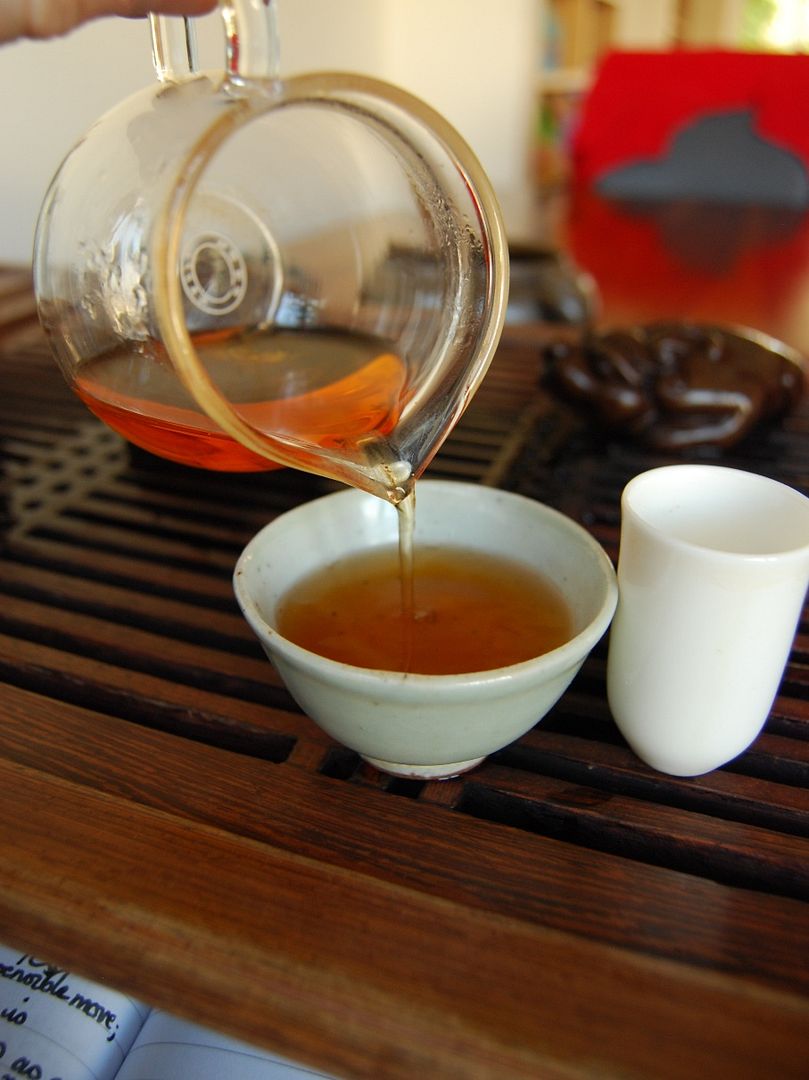
One actually has to be a little careful, because it is entirely possible to get careless and overbrew the leaves. The wooden, pure sweetness is rewarding, and there is something of a vibrant energy about the soup that leaves me feeling brightened and refreshed. Its texture is decent, with something to "chew on". I look forward to seeing how it progresses...


