"Try this blind and give me an opinion", reads the Alice-in-Wonderland-style label on a little packet that I recently received.

Twodog, of white2tea, has a habit of finding low-cost, decent cakes, as a cursory glance through the tasting notes page of this humble web-site will reveal. I am, therefore, expecting good things.
Then, it is enigmatically revealed that "This is definitely not a bargain."
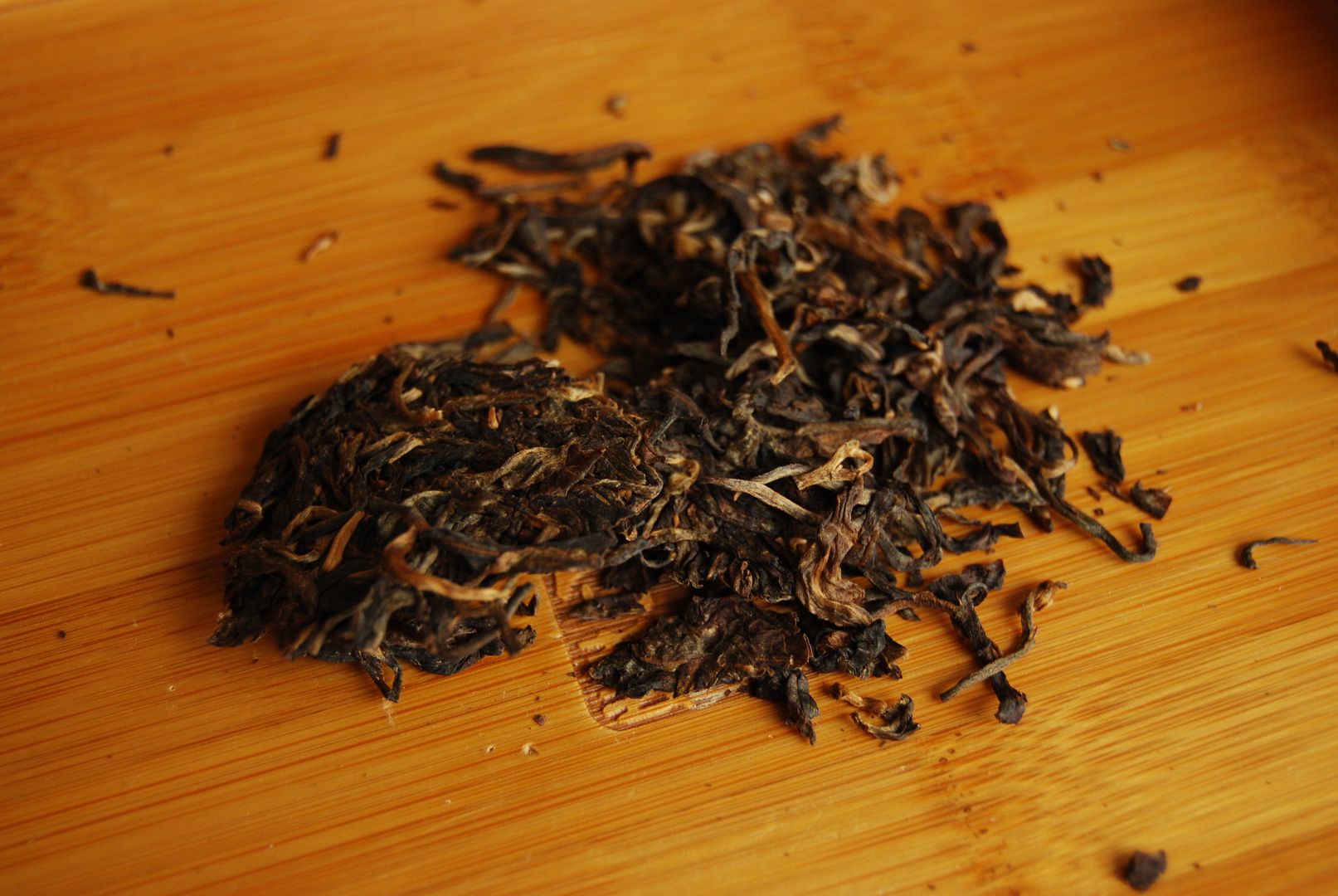
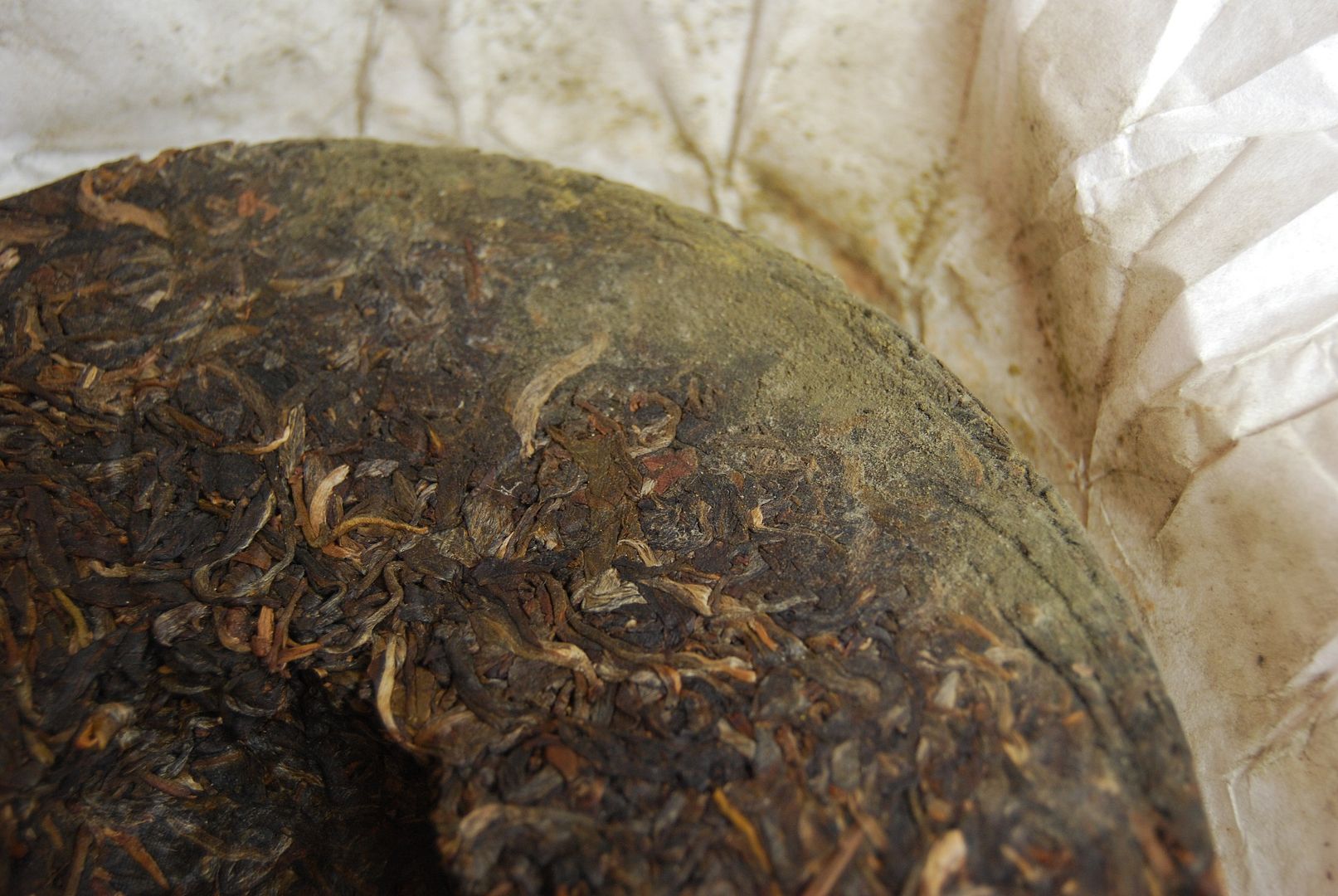
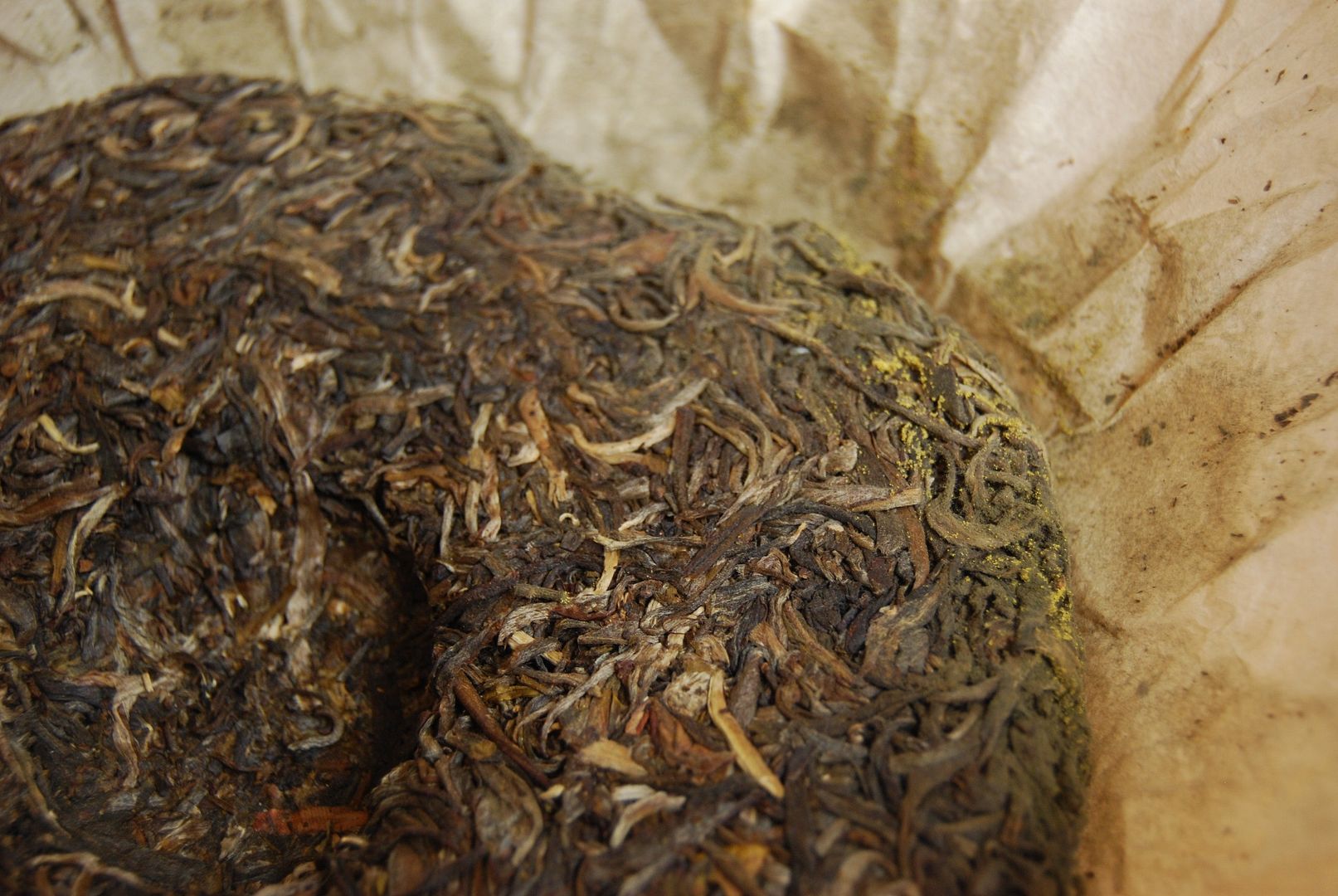
First of all, consider the leaves, pictured above and below. In this instance, which is a blessed rarity, the colour balance of my camera has been accidentally set to a level sufficient to capture the colour of the leaves entirely accurately. You may conclude, perhaps, that they are more than a little bit red. This was my impression, and the photographs convey the same impression.
The age of this cake feels as it is around five years or so; the tips have a slight rustiness in their colouring, as of that age, but have not yet become entirely changed. The fragmentation is significant, as you can probably see.
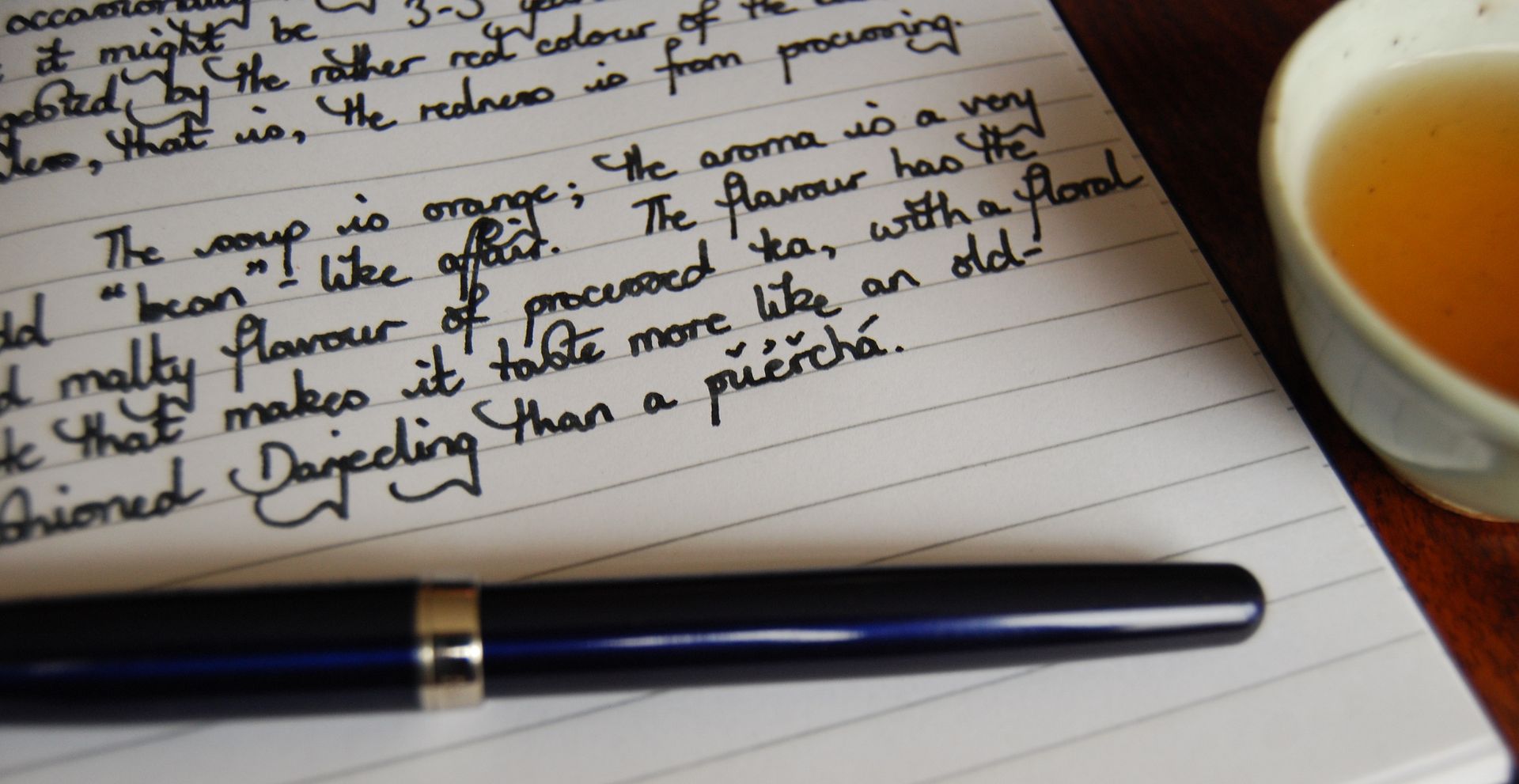
The soup is orange; the aroma is a very "bean-like" affair. The flavor has the red, malty flavor of processed tea (or, more accurately, tea which has been processed "unusually"). It has a floral note that makes it taste like more like an old-fashioned Darjeeling than a pu'ercha.
As the infusions plough on, the tea develops a certain positive sweetness, but it never loses the characteristic of being thoroughly reddened. It is straightforward in texture, character, and scent, with minimal kuwei consistent with questionable processing.
However, we should not be too quick to write off this tea, whatever it may be: my journal has "While red, this mysterious sample is clean and oddly enjoyable." There is a pronounced cooling sensation, as if the inputs were once of decent quality. "There is quality, but it is buried", I seem to have written.

Mr. Dog subsequently revealed that this is a 2006 Xinbanzhang cake; that is, not "Lao" Banzhang, but the nearby eponymous village that has become increasingly more popular as "LBZ" becomes more expensive. He points to occasional flairs of brilliance that keep him hooked, mixed in with the red, fruity tea that I described.
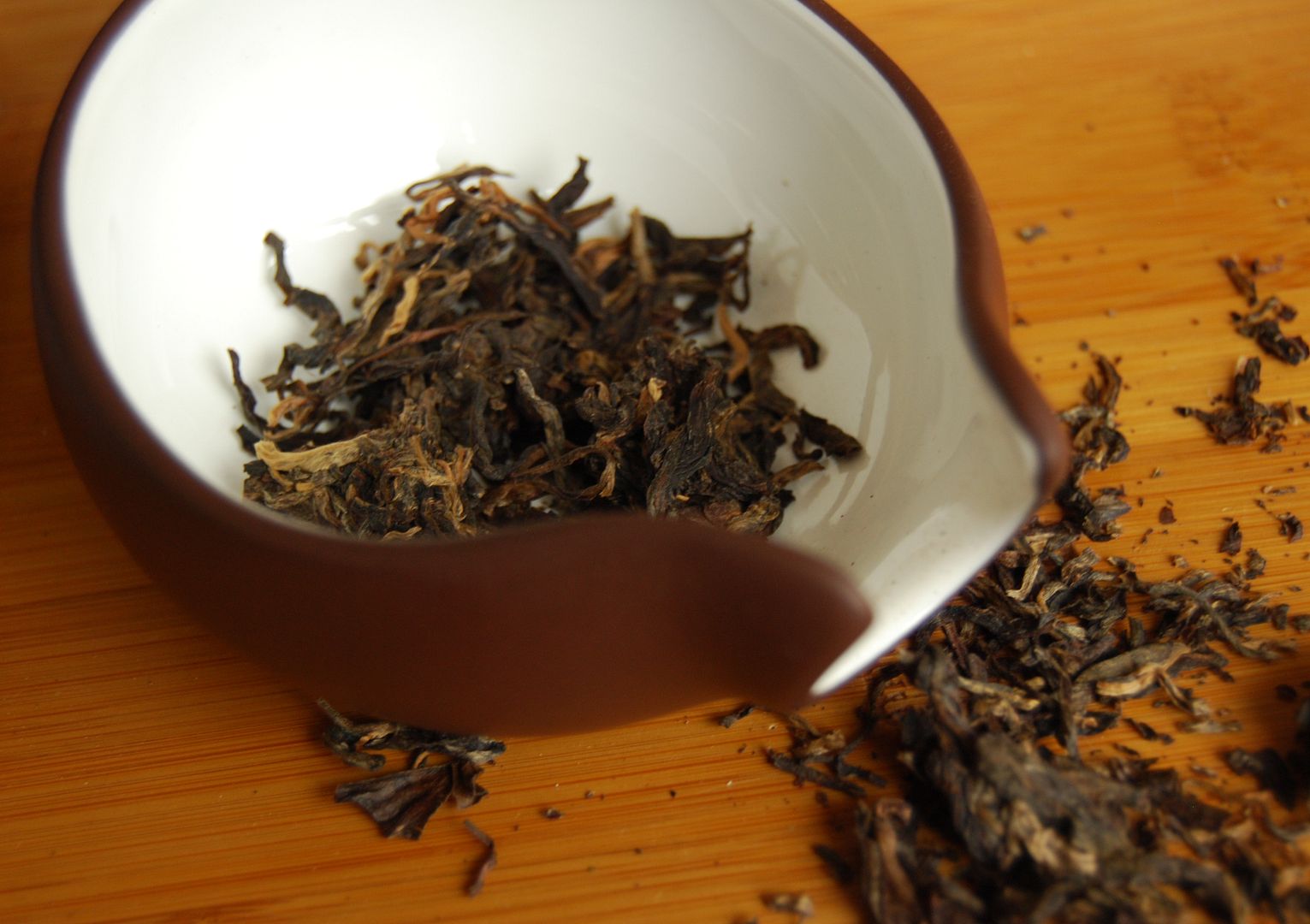
If there is one thing I have come to conjecture about "red" teas: their deliberate lack of potency tends to result in unimpressive results some five or so years down the line. The wet leaves, shown above in my waste-water bowl, tell the story: a small portion looks green - the majority are red. This "Dr. Jekyll and Mr. Hyde" combination leaves me, similarly, in two minds.