
GV has been too kind to me - far too kind. This is an entire box of 1986 Yiwu "Chunya" [Spring Buds] from the well-reputed Sunsing teashop in Hong Kong. What a magnificent treat this tea has turned out to be, a parting gift from when we met recently.

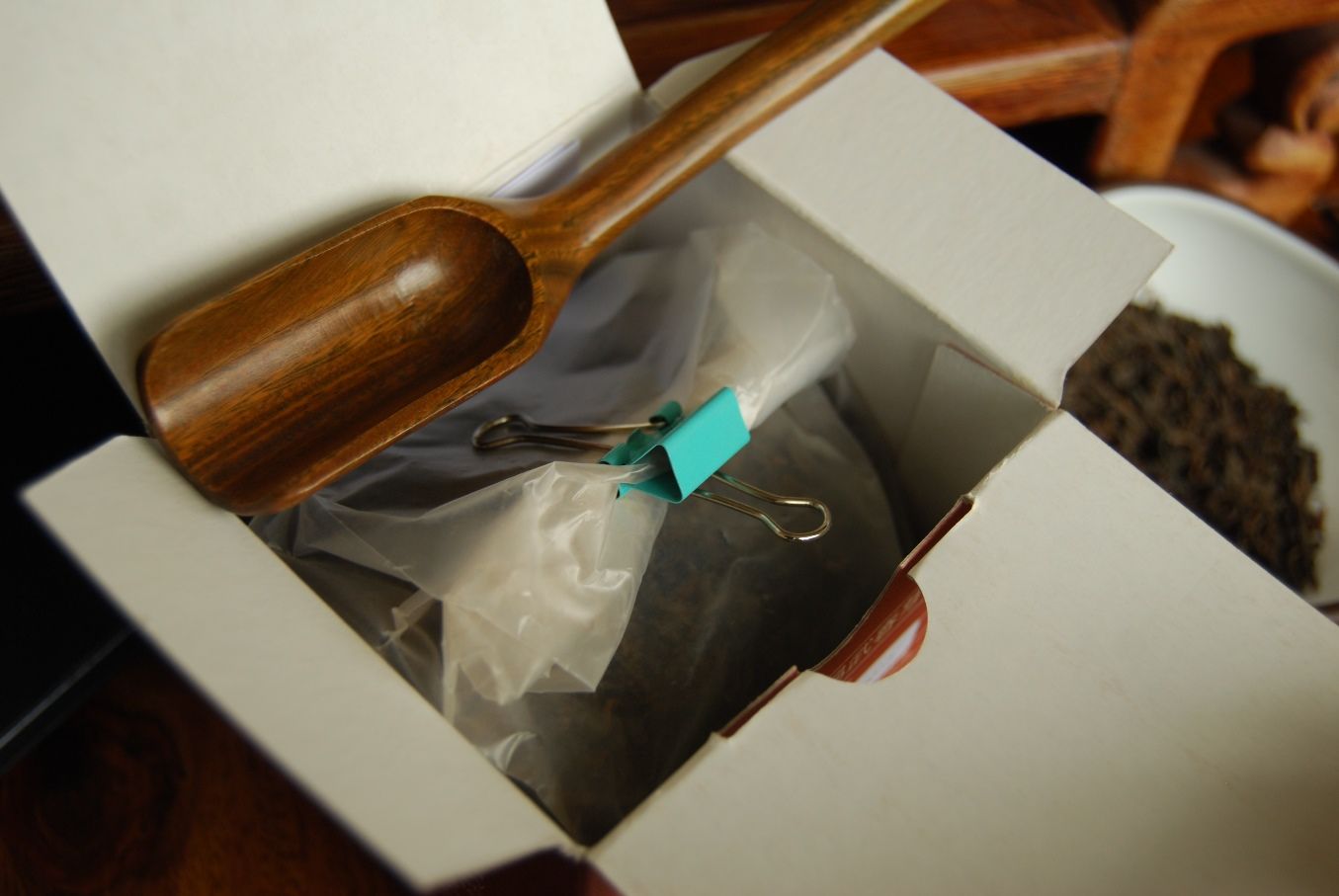
Even the box is appealing
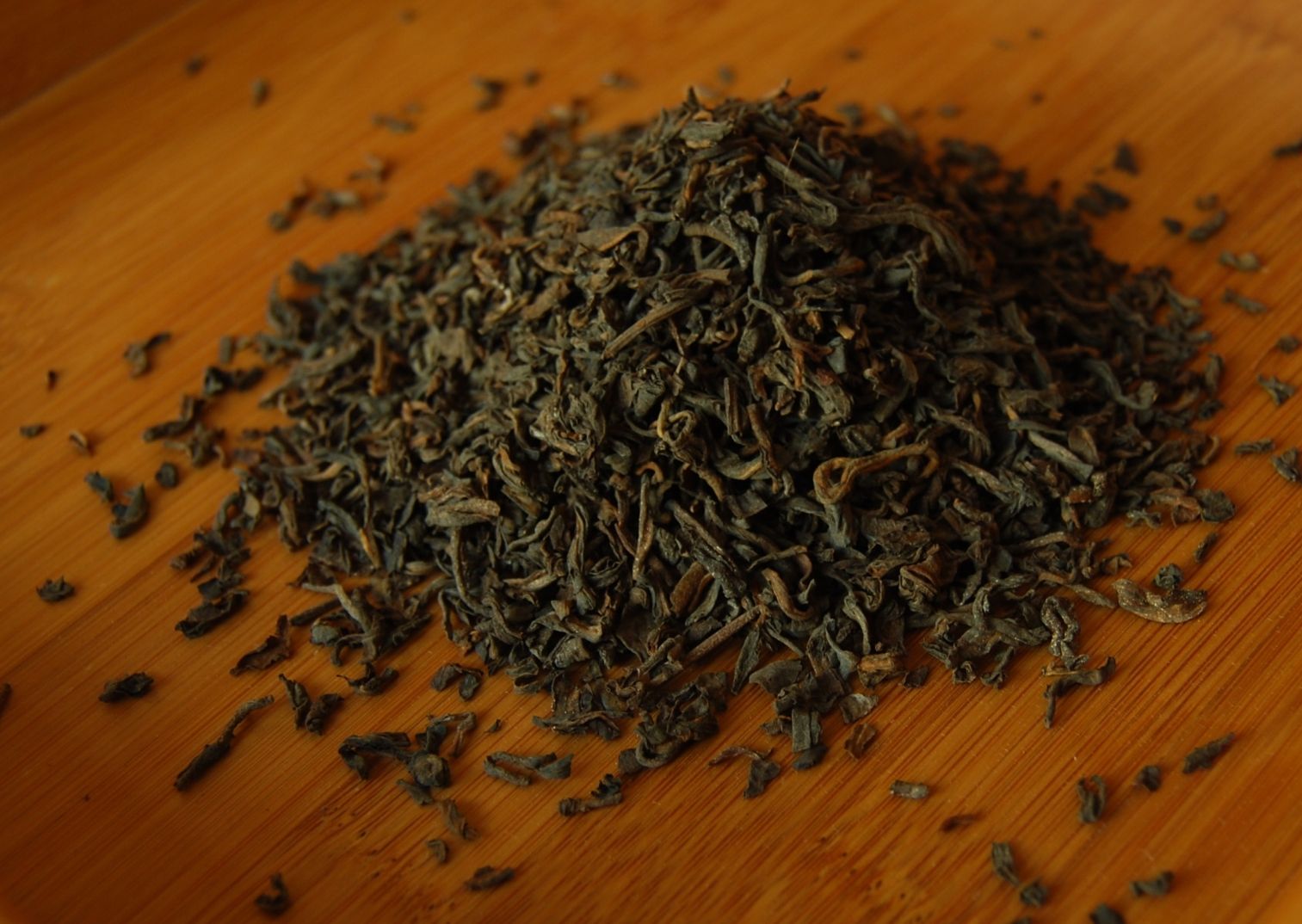
The maocha blend is ubiquitously small - it looks very old-fashioned, and I mean that in a good way. Taking a look at the image below, we can see that they are husky-chocolate in colour.
After the passing of some fairly serious deadlines, I am relaxing with a session of this as a treat on a Saturday morning, when I can give it the full time and attention that it deserves.
After the passing of some fairly serious deadlines, I am relaxing with a session of this as a treat on a Saturday morning, when I can give it the full time and attention that it deserves.
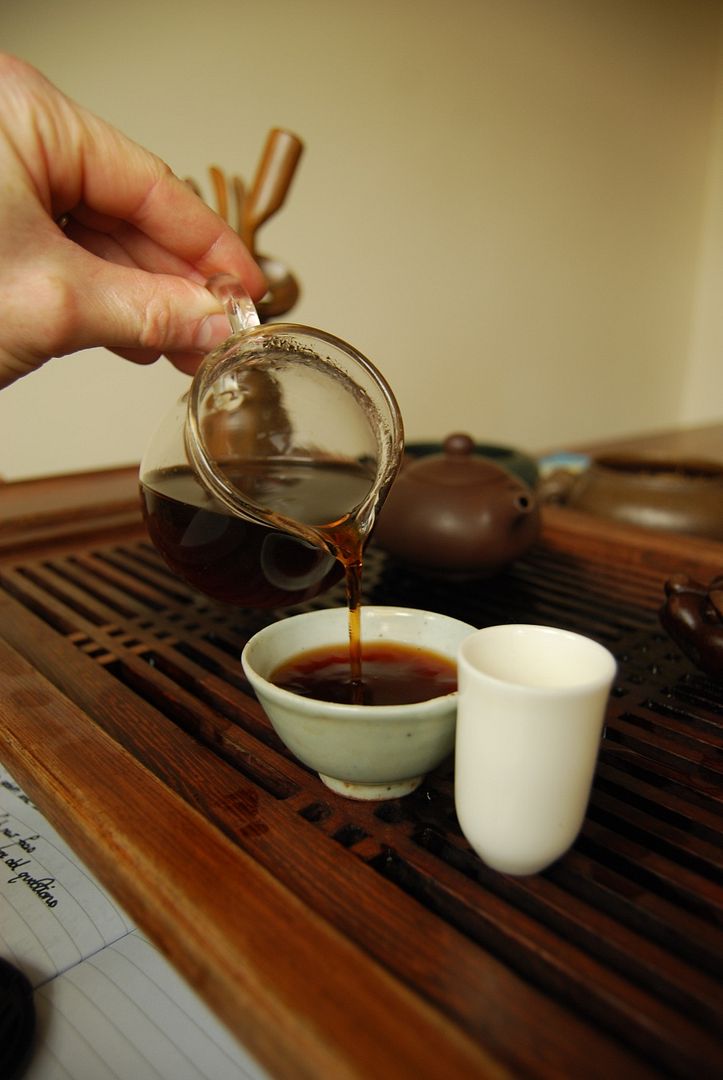
The wenxiangbei is filled with scents of spiced wood. The photograph below shows the deep burgundy colour of the soup, which fades to yellow-brown at the miniscus.
The flavour is superb: it has a gradual, dense character than adheres to the tongue and fills the mouth with a long huigan of creaminess and dark wood. It has excellent endurance in the mouth.
The flavour is superb: it has a gradual, dense character than adheres to the tongue and fills the mouth with a long huigan of creaminess and dark wood. It has excellent endurance in the mouth.
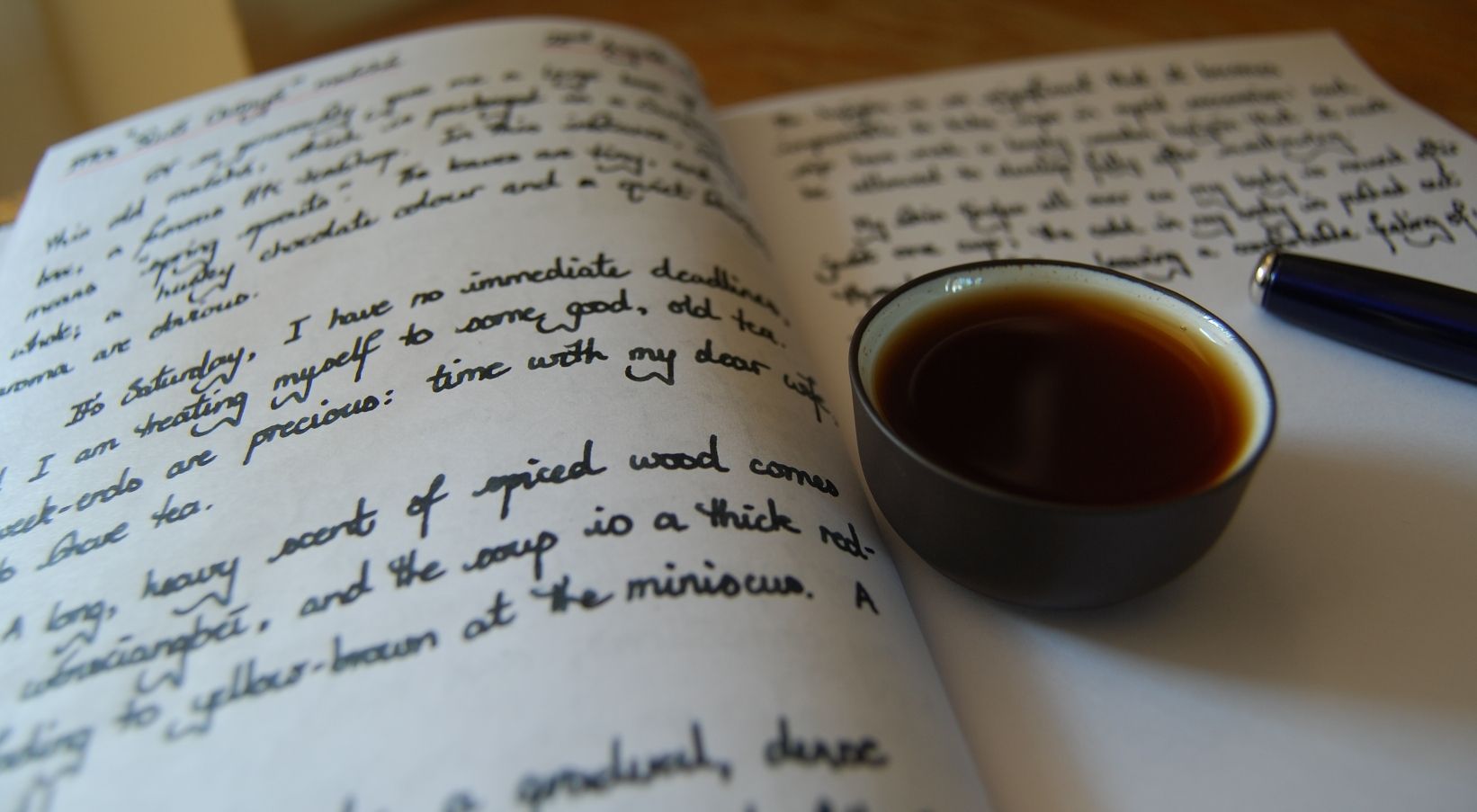
The huigan is so significant that it becomes impossible to take sips in rapid succession: each sip has such a lovely, wooden huigan that it must be allowed to develop fully in the throat after swallowing. This is a tea for when times are slow and the heart is calm.
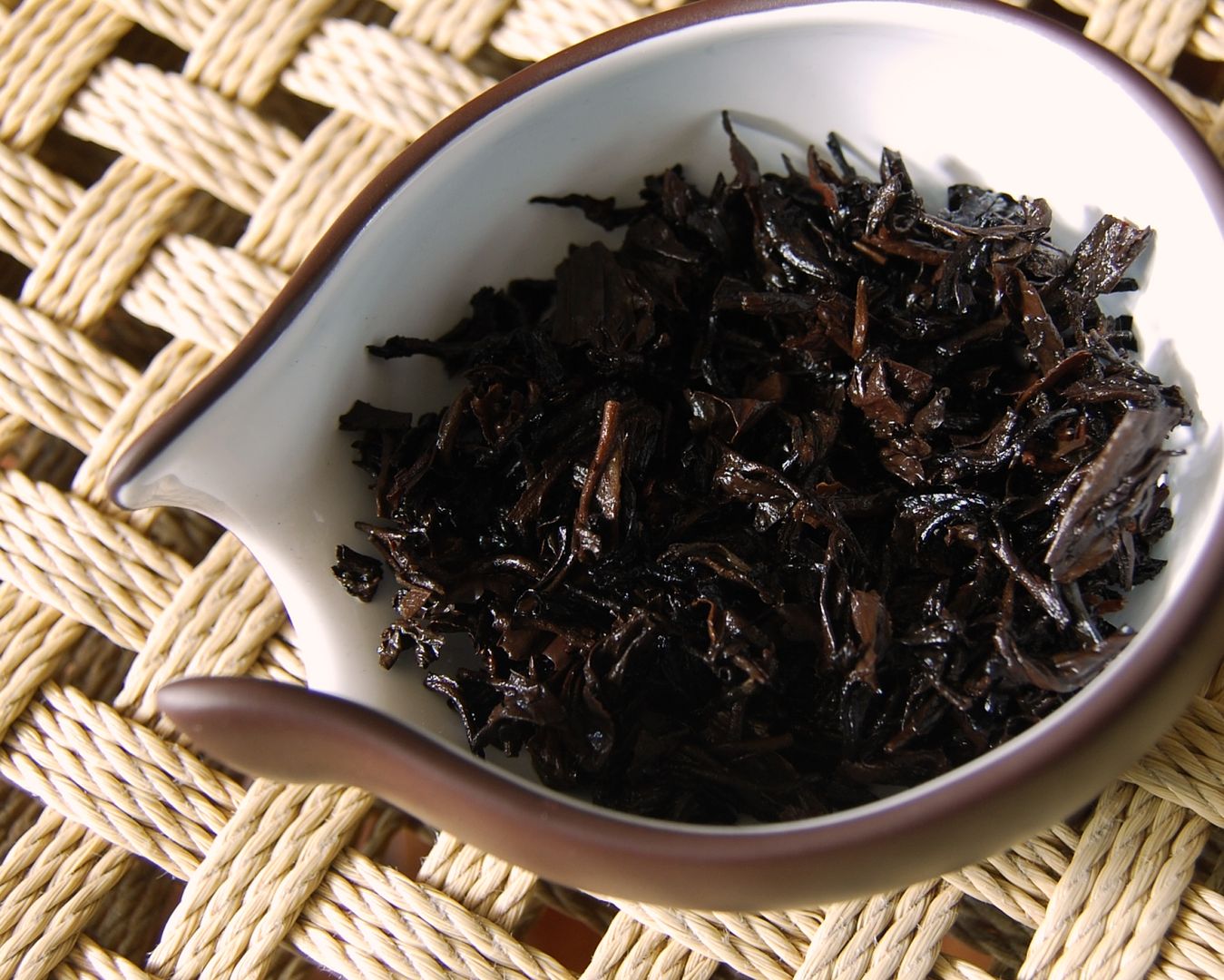
The leaves last several days
Later infusions swell into a sweet-vanilla character that makes me glad to be aware of shengpu.
The leaves last me a further day of constant infusion in my office, until they are exhausted and delivering a sweet, pale yellow brew.
My hat is off to GV - an entirely excellent gift, and a wonderful Saturday.
The leaves last me a further day of constant infusion in my office, until they are exhausted and delivering a sweet, pale yellow brew.
My hat is off to GV - an entirely excellent gift, and a wonderful Saturday.
Addendum
March, 2014
I last drank this in 2009 - after five years, it will be an interest revisitation of a tea that is now seriously old.
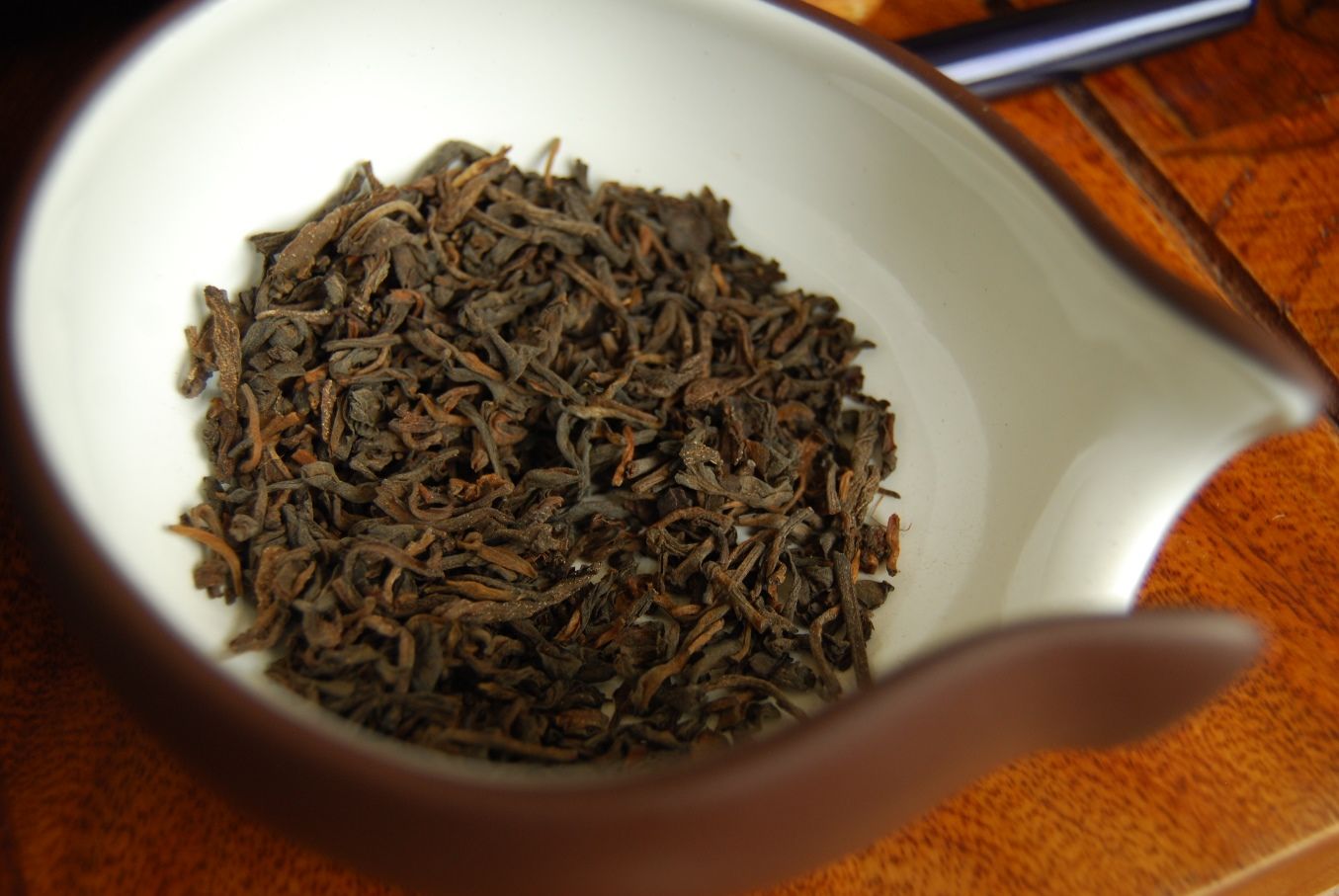
So long ago was the last time that I enjoyed this tea, that the photograph above shows that I was writing in a leatherbound, unruled diary of the kind that I have not used in a long time. The dark little leaves, as you might be able to discern from the photograph above if you zoom in (by clicking), have "jinhua" [golden flowers]. These are crystalline formations on the surface of the leaf, and I did not notice them before.
The thick, black tea starts off quietly in the first infusion, but then rapidly accelerates into a thick, gloopy tar-like substance that packs a strong finish. As the infusions pass, and the leaves develop, a comforting scent of vanilla accompanies the flavour of humidity.
I have to cut the session short to run off to an unforeseen commitment, but, so good is the tea, that I drink it for sessions over the next two days, during which it remains potent, thick, and enduring. I am impressed by the sheer longevity of this tea, and leave it brewing in the background, in a little gaiwan, by I brew other teas in Zidu, my teapot. This is a fantastic tea and, if Sunsing still sells it, you would be well-advised to acquire some.


