Showing posts with label Shupu. Show all posts

02 June, 2015

Be'elzebub and Aged Fish

When in 1816 that great Romantic poet, Lord Byron, wrote his famous verse

"I've got a love-Jones for your body and your skin tone"

he may well have had the 2014 Laochatou from Dubs in mind.
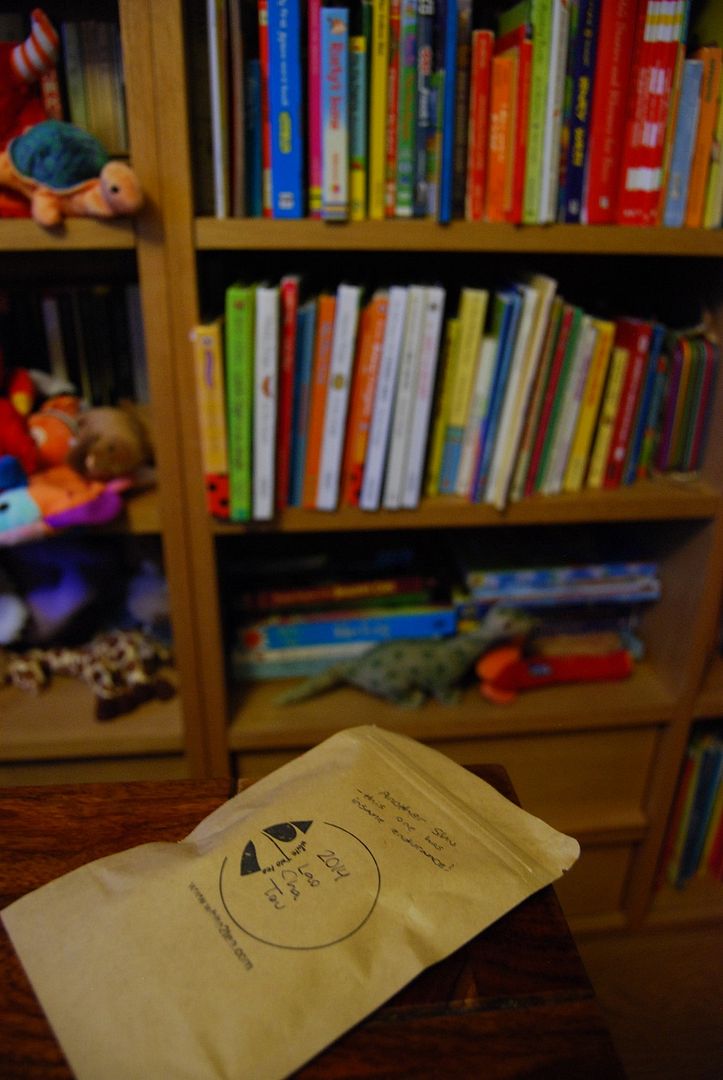


Laochatou [laow-char-toh] is the crystallised evil that is left over after the composting process for making shupu has completed.  They are, perhaps, the kidney stones of Be'elzebub.  Happily, when you brew those little badboys, they can produce some really satisfying tea.
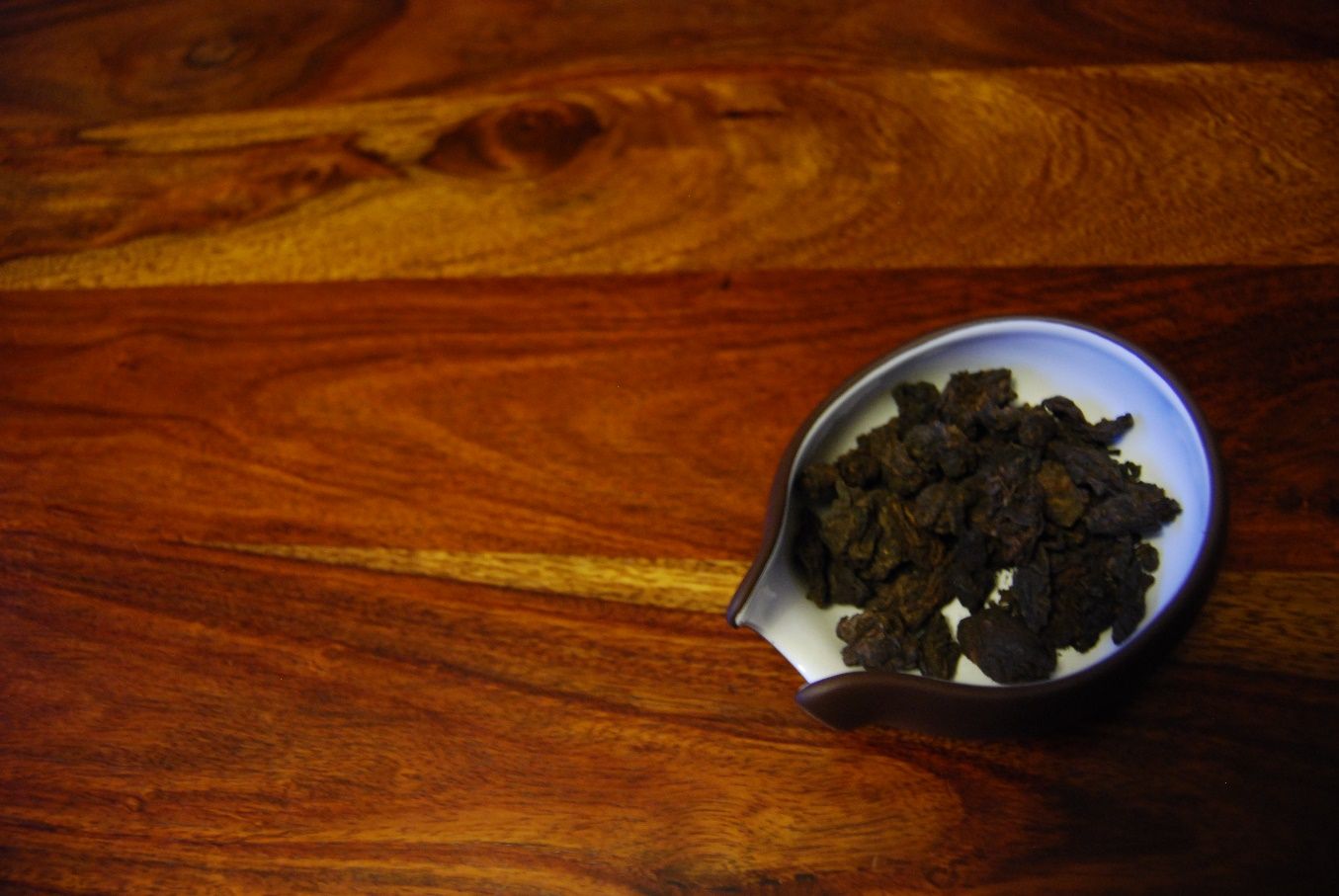


Rock-hard and with a distant scent of shupu, they are almost comically inexpensive.  Such is the profile of by-products from making shupu.  The cost of these at Dubs is listed at $5.50 / 50g.  Paul writes that these are, in fact, made from springtime Bulangshan - we are thus primed for some tea with potential for power and endurance.
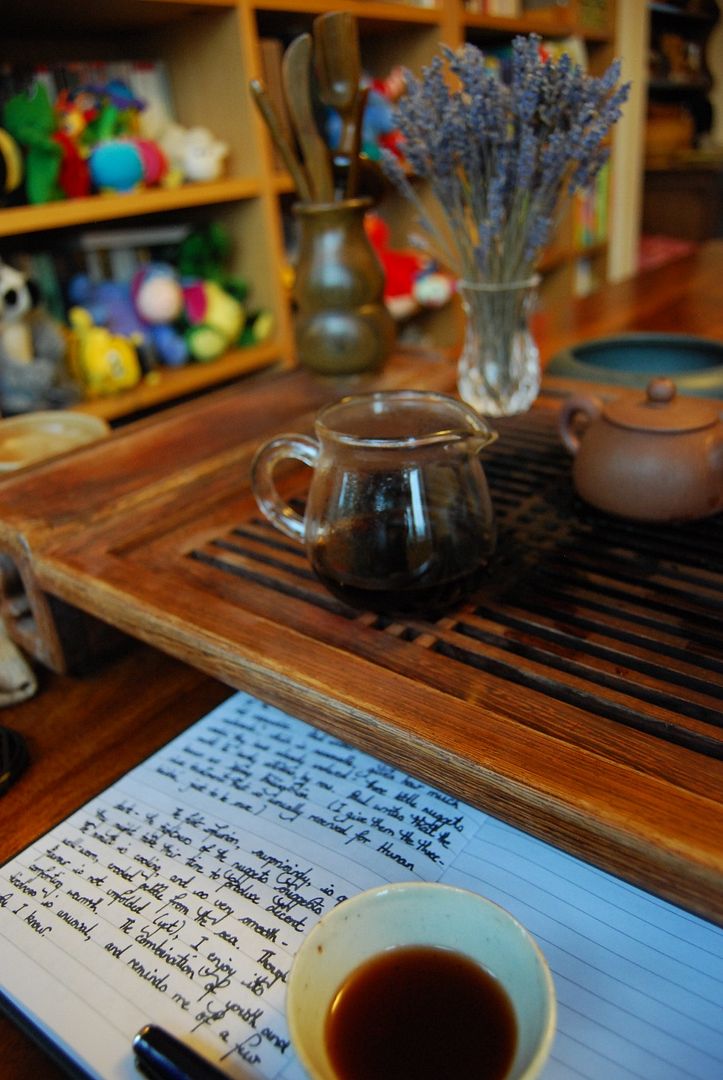


This is precisely what they deliver: power, and endurance.  They really do last forever.  It is cooling, and strangely smooth - the flavour of a pebble that has been eroded on the ocean floor for aeons.  It combines the activity of good leaves with a slug of pure molasses.   It tastes almost exactly like gloopy molasses syrup.  At $110/kg, the lab might well benefit from such a mighty and potent little fiend.

You should try these, if you like shupu, and if you like your teas dark and heavy.


The main event today is the 2005 "Gaoshan Qingzing".  Aren't they all gaoshan and qingbing?
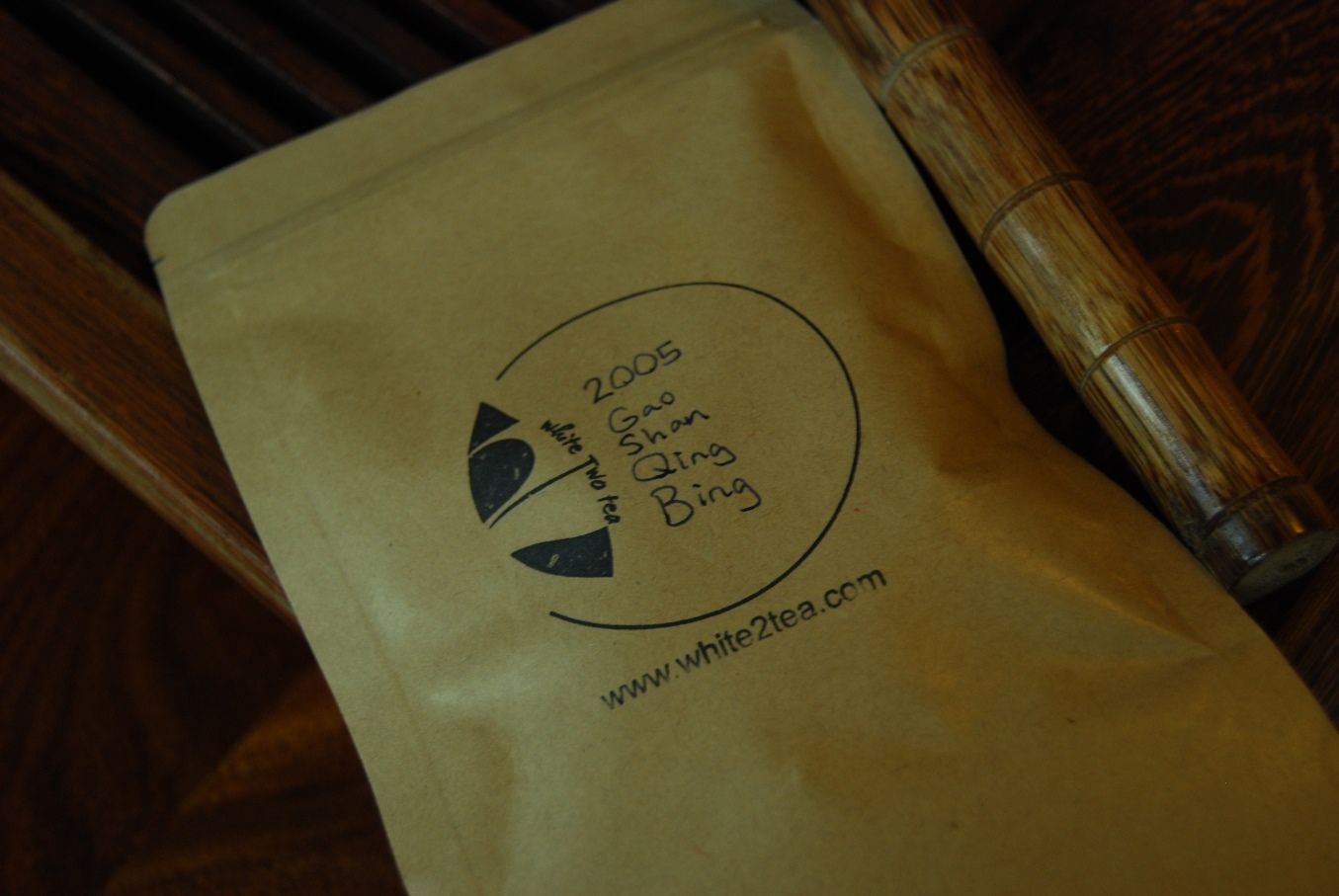


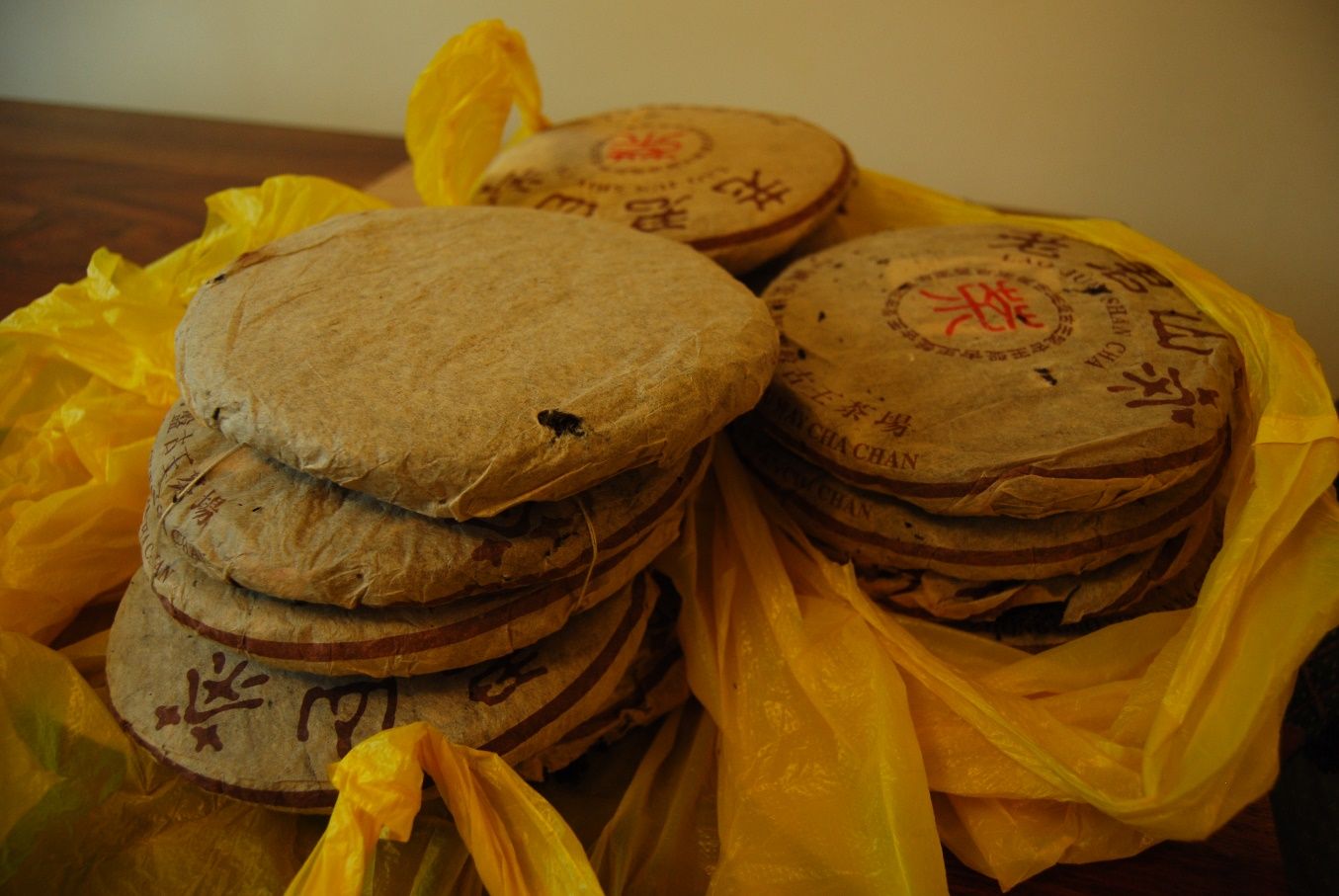
At $40, this amusingly-wrapped cake could be a bargain.  It is cloaked in a wrapper that looks a lot like "big green tree", which it obviously is not.
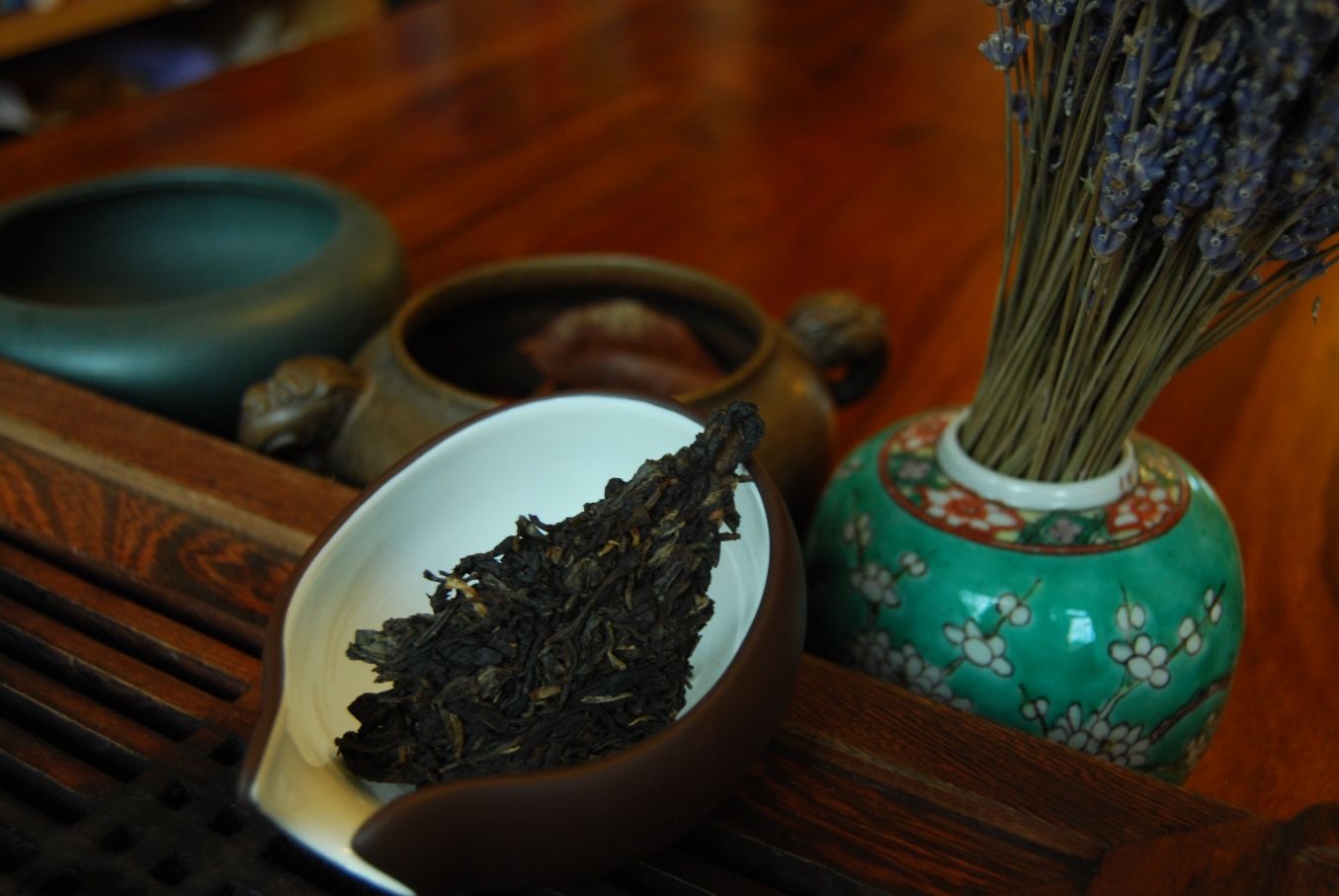


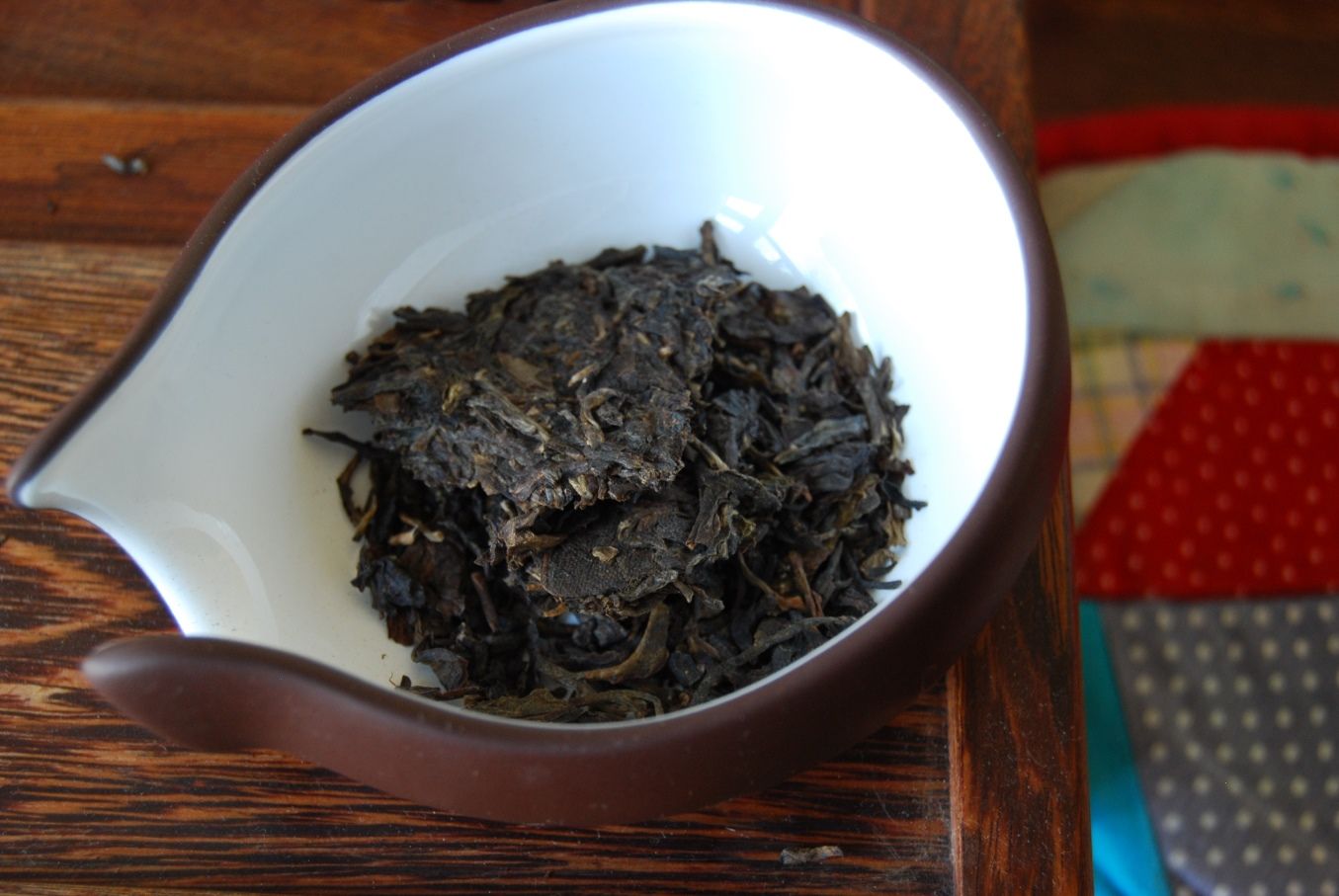
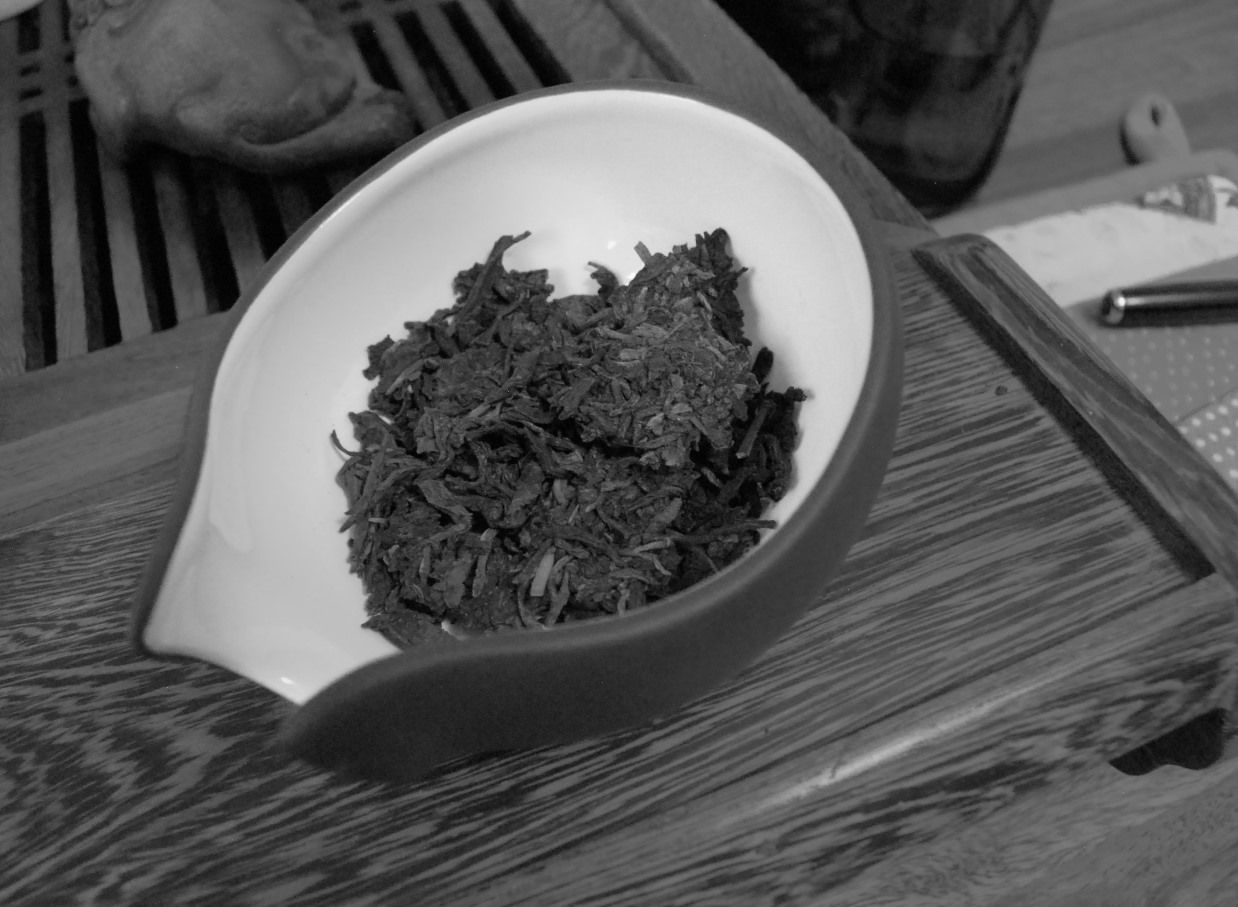
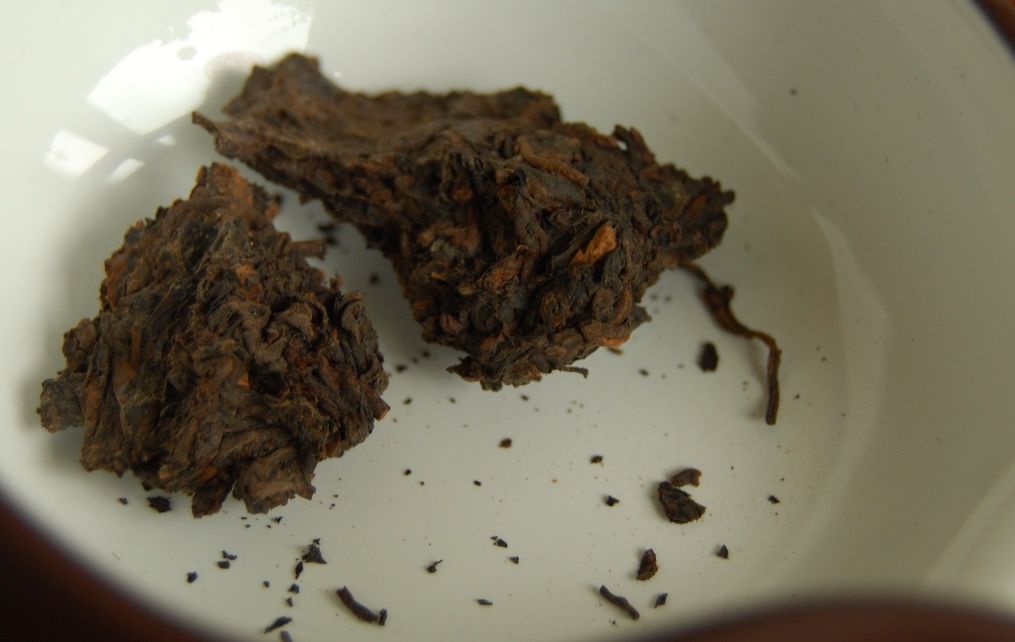
We have fragments of smaller leaves, pictured above, with a most welcome aroma of aged sweetness.  This is a decade old!  2005 is a strangely long time ago.  I was just starting out into the second year of my graduate degree, and was married to my dear wife in the same year - after meeting just one year before, as it happens.
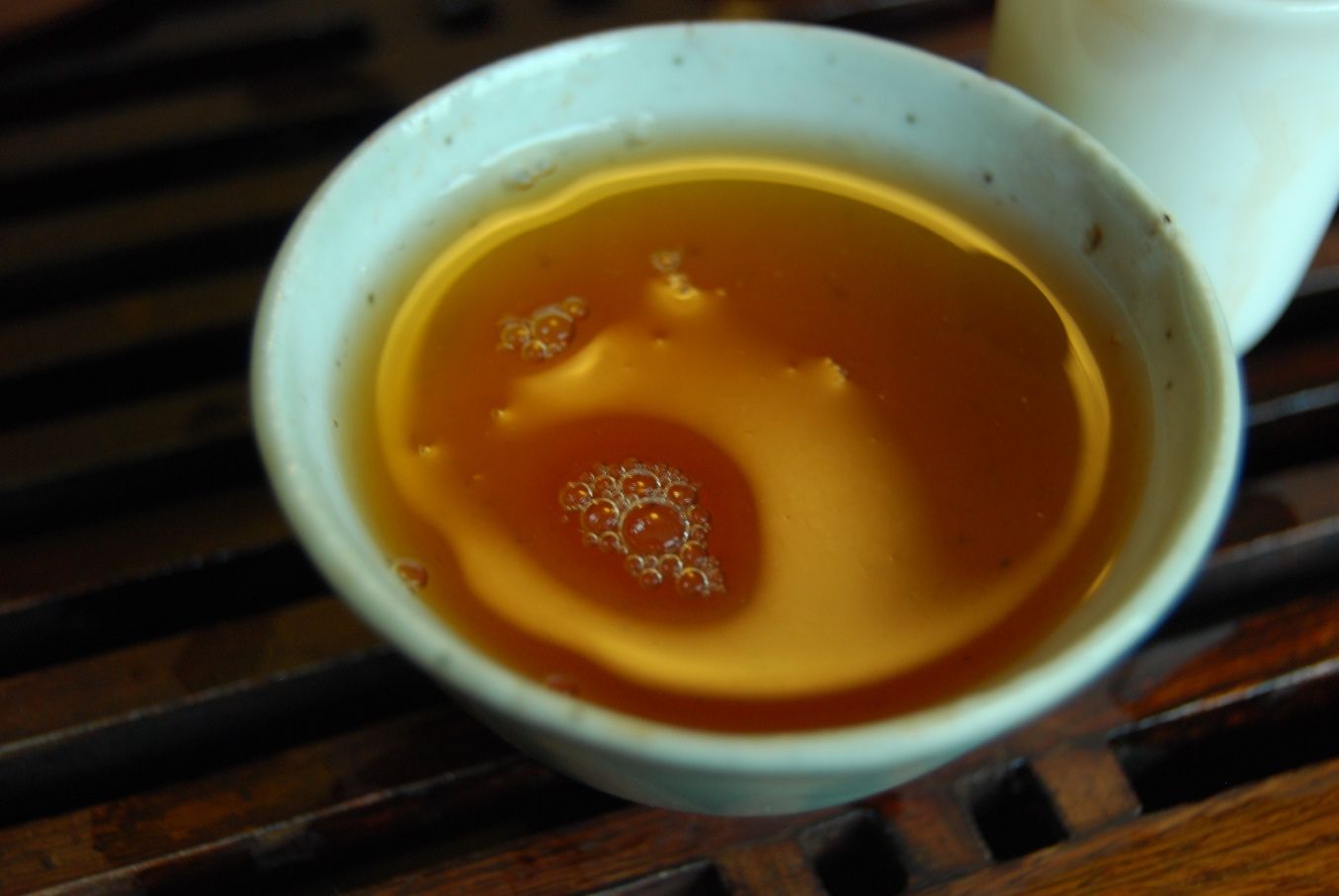


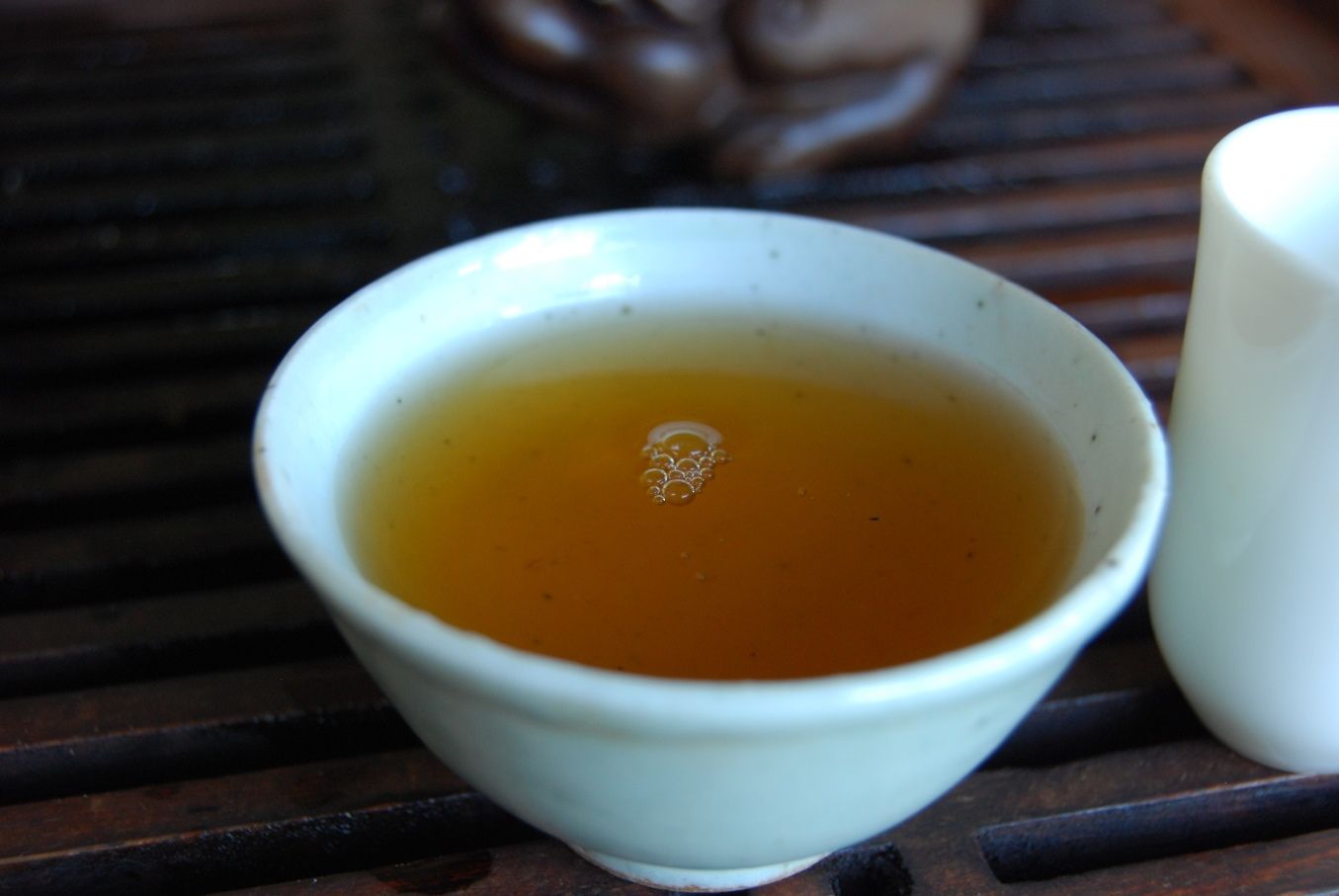
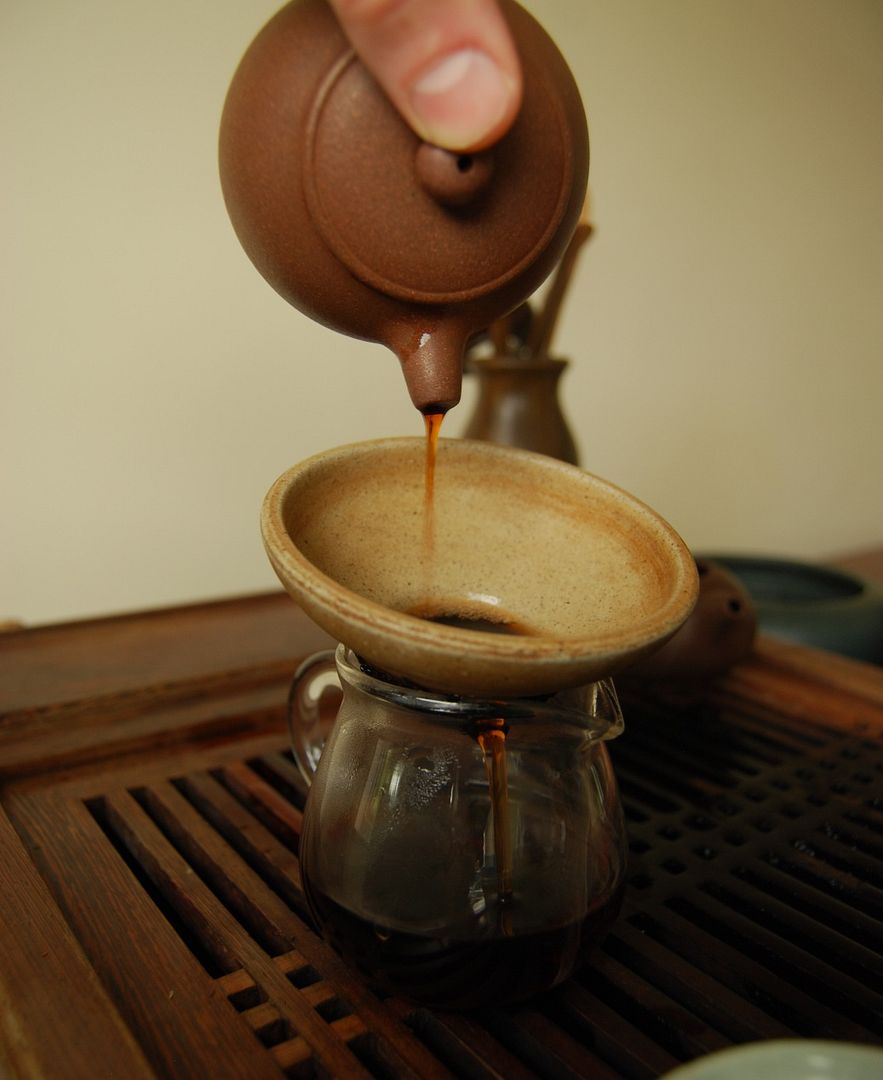
The soup is clean, clear orange and its first impression is: AGED FISH.  This particulary fishy note is one that I associate with sub-CNNP, and it not something that I have come to appreciate.  (Note to self: this is a whole different class of fish to the almost-pleasant Dayi fish.)  It is cooling, and clearly caffeinated.

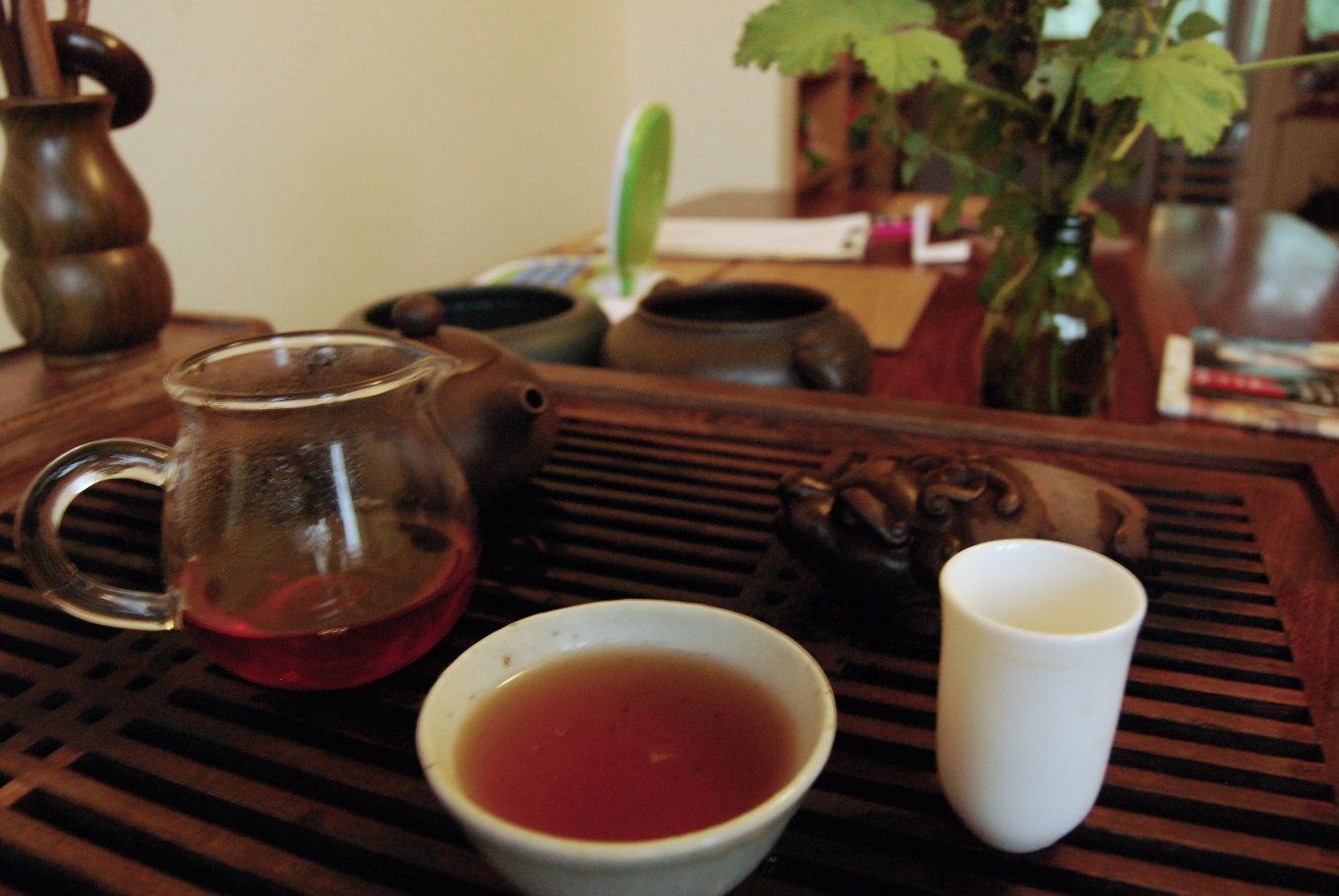
Thankfully, the second and subsequent infusions lose the fish and gain a strong, pine-like sweetness.  I can take pine, in preference to aged fish, any day of the week.  The sharpness is rather appealing.  I interleave brews of this cake with the Laochatou (started the day before).  The Laochatou continues to be powdery and sweet.  By contrast, the 2005 Gaoshan seems to be rather unsettling on the stomach, which is not a sensation that I typically receive from tea.  The fishy character eventually returns, and I finish the session after some four infusions or so.

AGED FISH: just say "no".



I have altered the
bed time - pray that I alter it
no further

30 March, 2015

Chiptunes + Shoops

The Easter Vac.  It is a sacred time.  Not least because my college has, it being the end of term, wound down.  This means two things: (i) all the academics get to focus on sweet, delicious research; and (ii) I have the time to combat a Dark Breakfast every day, followed by a remedial diet of chiptunes + shoops (i.e., shupu) upon hitting my lab shortly thereafter.  

Bacon followed by shoops is the only way to fly, I have concluded.


Knackered 2003 Fenqing wrappers


As if picking up the psychic vibrations of the times, my homes from back home, Mr. TG, sent an e-mail to tempt me with some large doses of the aforementioned shoops + some shengpu.

As Oscar Wilde once said, "I can resist anything except temptation."


This is, in fact, a 2003 cake made by an outfit called Xiangzhuqing Tea Co.

TG (pronounced "TEEDJ") noted that this used to be available via the mighty bushido-laden Bannacha, but that it is now out of stock, and that I suck.  It seems that TEEDJ himself purchased his cake from Chawangshop, but, again, I cannot seem to find it listed there, and, again, I suck.


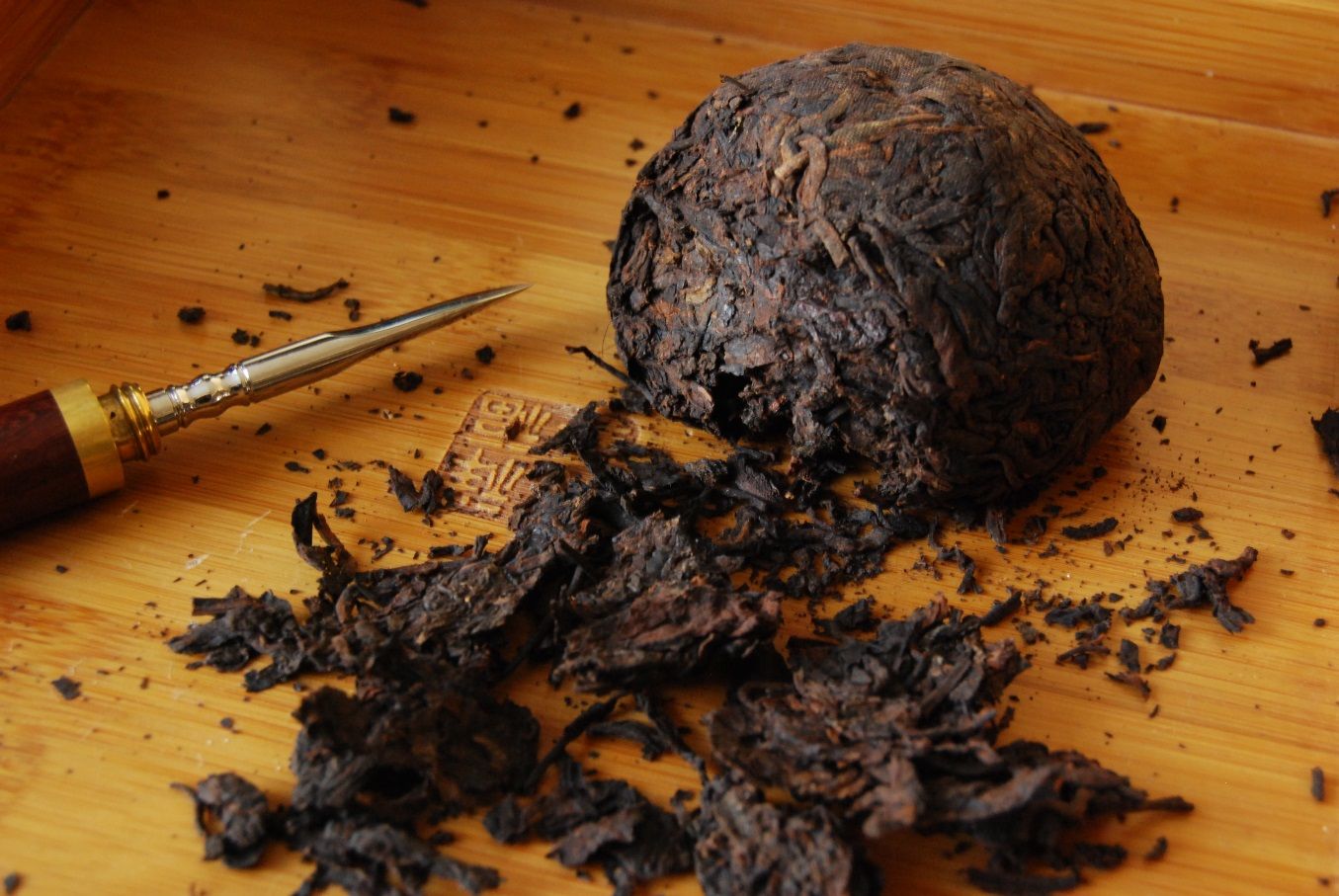
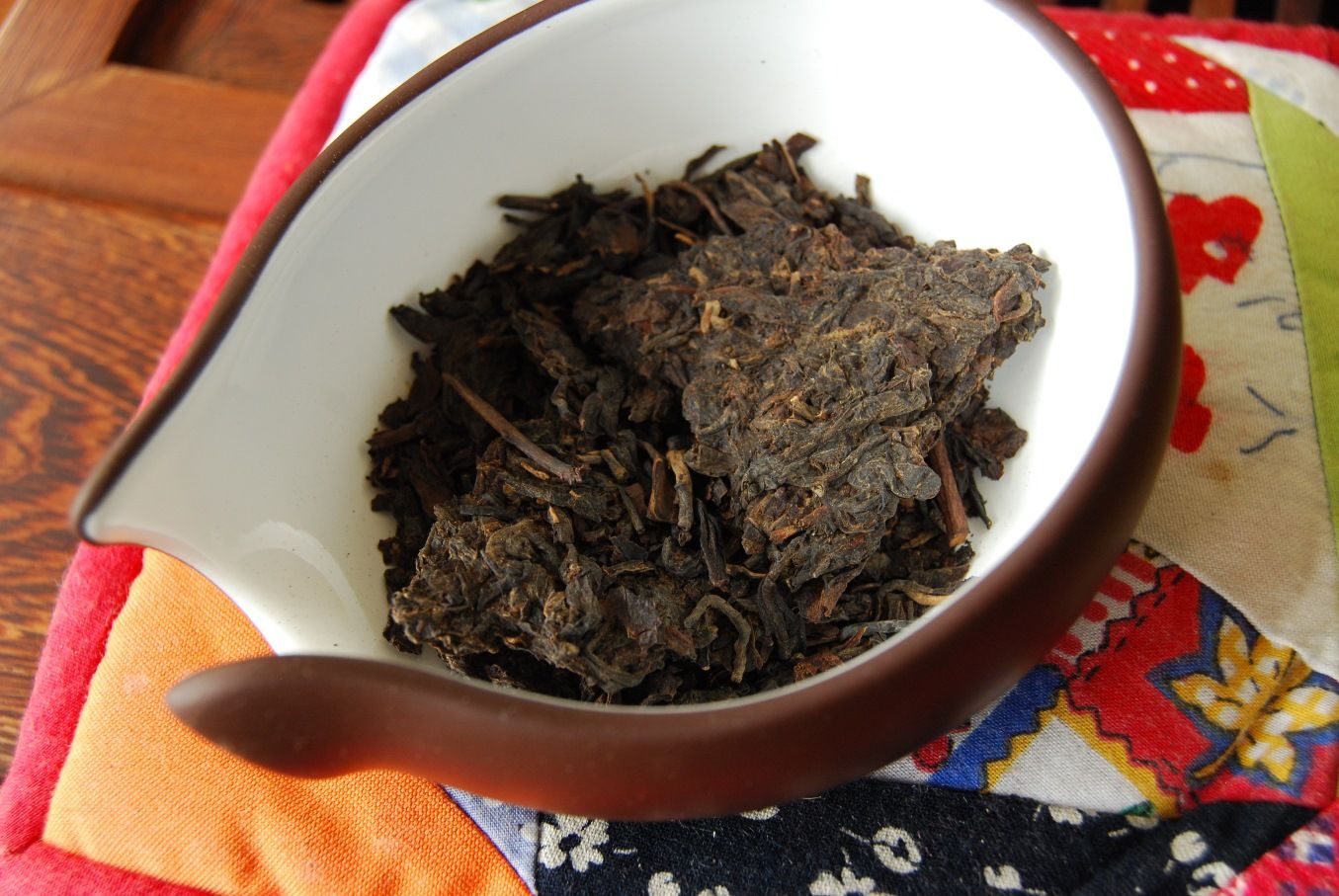
"Like, whatever", I thought to myself, in my native Valleygirl accent.  I busted out the sample from TEEDJ, which, pictured above, rather reminds me of my day job, in which we sometimes have to extract samples of tuberculosis DNA from the most antisocial of patient byproducts.  Say no more.  I count my blessings that I'm only exposed to the data, rather than the... original material.
Apart from looking like pestilent faecal matter, then, the 2003 Fengqing cake is allegedly "old tree".  Again, this causes my inner Valleygirl to start with the "whatevers", because why in the sweet bowels of Hades would you make shoops out of good laoshu leaves?  You wouldn't, of course.  If you think you're drinking "old tree" shoops, then the chances are quite reasonable that you're not, and that you're gullible, and that, like me, you suck just a little bit.

Edit: this isn't shupu, my notes are incorrect - it is shengpu, and the suction is all mine.


I've never brewed human excrement laden with infectious disease-carrying bacteria, but I suspect that this huangpian-infested, red-tinged leaf is not a million miles away from the charms that we might anticipate from such an experiment.

That is not to say that it's bad, far from it: what we have here is merely rather "rustic", let's say.  It is a Lincang cake, and it is smooth, and rather cooling.  I dig mightily on its sweet and mouth-watering satisfaction.  If it started out "red", which I suspect, then it has nonetheless managed to retain some its oomph, 12 years later.  The background is malted redness, and there is some Lincang grainlike sweetness in it - the impression is one of "decent minor-label artisan cake".  It is not the world's most complex tea, but it has much to recommend it, in its well-balanced way.  If inexpensive, it might be worth a look, although I cannot find its price due to the aforementioned negative pressure gradient that surrounds me.


Enough of the pussyfooting around: it's time drink dirty shoops.


The tiny wee picture above tells us that this is really rather dirty, in that sub-CNNP manner.  Thrills indeed!  This 200g brick will set you back a staggering twenty American bucks via Awazon.  It's cheap, it's nasty, it's just what I needed.

Let's do this.


Did you ever have a tea so rancid that all of the thick, greasy Chinese hair that was embedded in the leaves voluntarily got up and left, because it was too nasty even for thick, greasy Chinese hair to tolerate?  This brick is exactly like that.

Pictured below, we have some sort of... I'm going to say "webbing" embedded in the mixture.  Would you believe that it smells like rank heicha from Hunan?  You would?  Well, it does.  It has the scent of nasty tobacco, just like Hunan bricks of deadliness.  I'm just going to point out the epidemiological fact that this area of China has some pretty serious throat diseases - moreso than any other region.  I can hit you up with some project publications on that if you wish to see the data.


Now, I'm not suggesting that there is a causal link between drinking TEA THAT COMES FROM THE COLON OF SATAN and illness, but I'm going to leave the idea in the back of your mind.

The photograph below rather summarises my opinion of this tea.


It is dark, it is thick, and it is very (very) dirty.  TEEDJ notes that it "responds well to filling the gaiwan with leaf", and so I went heavy with the quantity.  I was rewarded with a very strong, knock-out dose of surprisingly sharp shoops.  It is so very smooth and so very powderlike that I fall instantly in love.

My current lab tipple is WUZIDENGKE from Menghai, which is amazing.  I have tins and tins and tins of this stuff sitting in my lab, thanks to Dubs.  Given that its name means (approx.) "five sons pass Imperial exams", this makes it a fantastic gift for academic colleagues, all of whom seem to get muchos chortles out of the name.  However, so thick and nasty is the CNNP brick from Awazon, that I am considering changing gear from time to time.  

I'm just not sure my white blood cells are up to the job.


SK LFG


SK LFG
WTB DL TP
1G PST

12 January, 2015

Mo Shoops

When I was growing up, I was repeatedly advised (by school, relatives, strange cloaked Wotan-style wanderers slumped over a gnarled staff) to not become an academic, under any circumstances.  The careers of lawyer, architect, backing singer in a Japanese punk band - any of these is preferable to being an academic, went the Received Wisdom.

Being an academic, the chorus of guidance went, is a sure-fire way of (i) wearing cardigans before the age of forty; (ii) ending up in a state of penury; and (iii) smelling of mothballs and slightly suspicious ammonia-based fluids of a masculine persuasion.


I am here, Gentle Reader, to tell you that (i) I have always loved cardigans, and now somehow I have accidentally become temporarily cool, thanks to recent incarnations of Dr. Who* and a generation of British indie bands; (ii) while not exactly a license to print money, some branches of academia are apparently able to avoid destitution; and (iii) academics actually smell of old books, not urine, and old books smell like Gandalf.  What's Gandalf?  Gandalf's cool, that's what.

*Interestingly, my nickname among the undergraduates appears to be "Dr. Who".  The origin of this moniker is, I have discovered, due to my dress sense.  I was under the impression for the longest time that my nickname was actually "Dr. Hu", referring to my rule of iron discipline, like an Asian police state.


There are perks to being an academic, entirely apart from the ability to wear brightly-coloured cardigans, odd socks, and the occasional bow tie at dinner.  Some of these are intangible: they include, strangely, breakfasts served in the oak-clad darkness of ancient buildings that seem to benefit from the cathartic, healing scent of bacon and black pudding.  Others are more tangible: we have a post-doc from Malaysia who brings me back whopping great big stacks of tea from his homeland when he visits home.


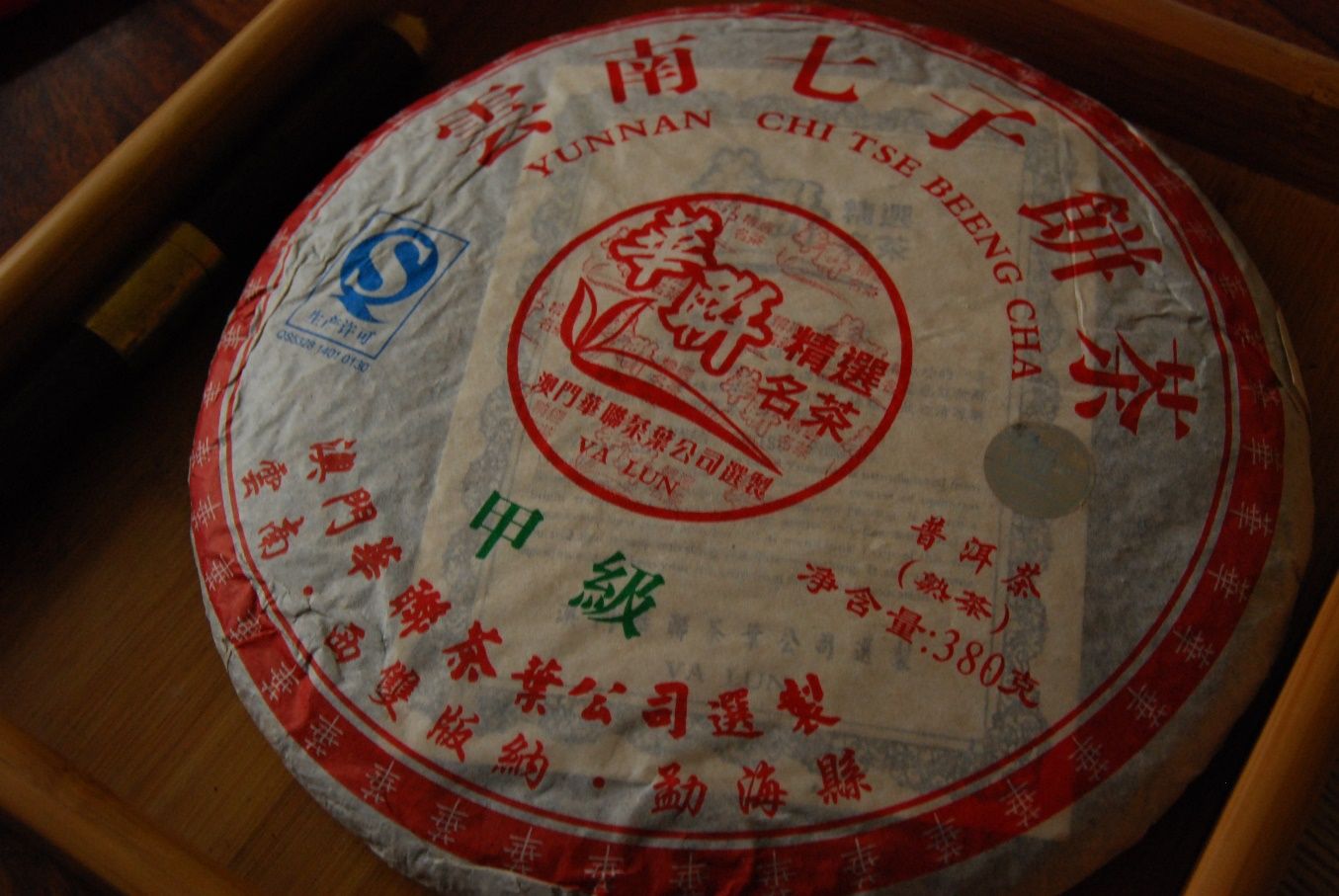
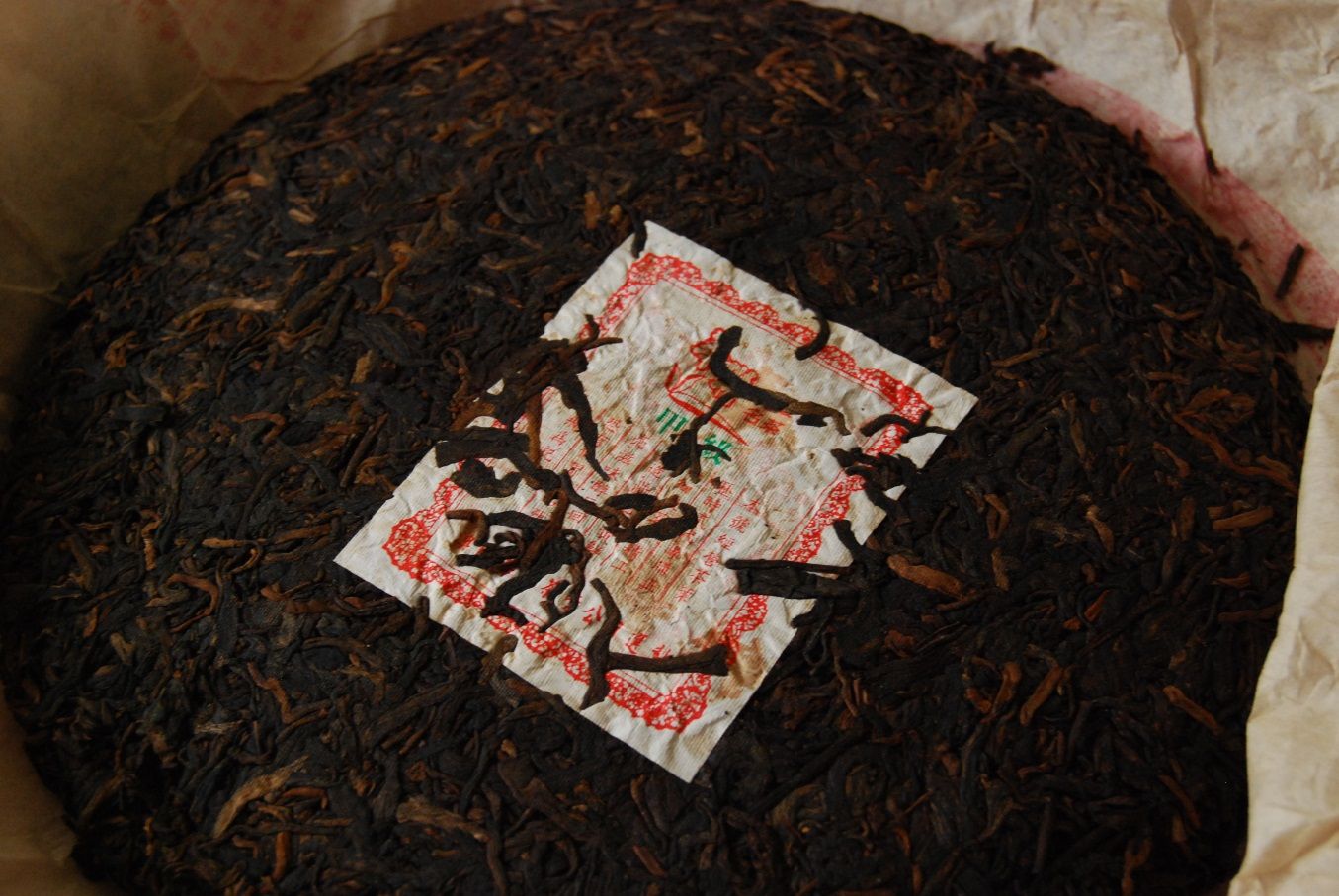
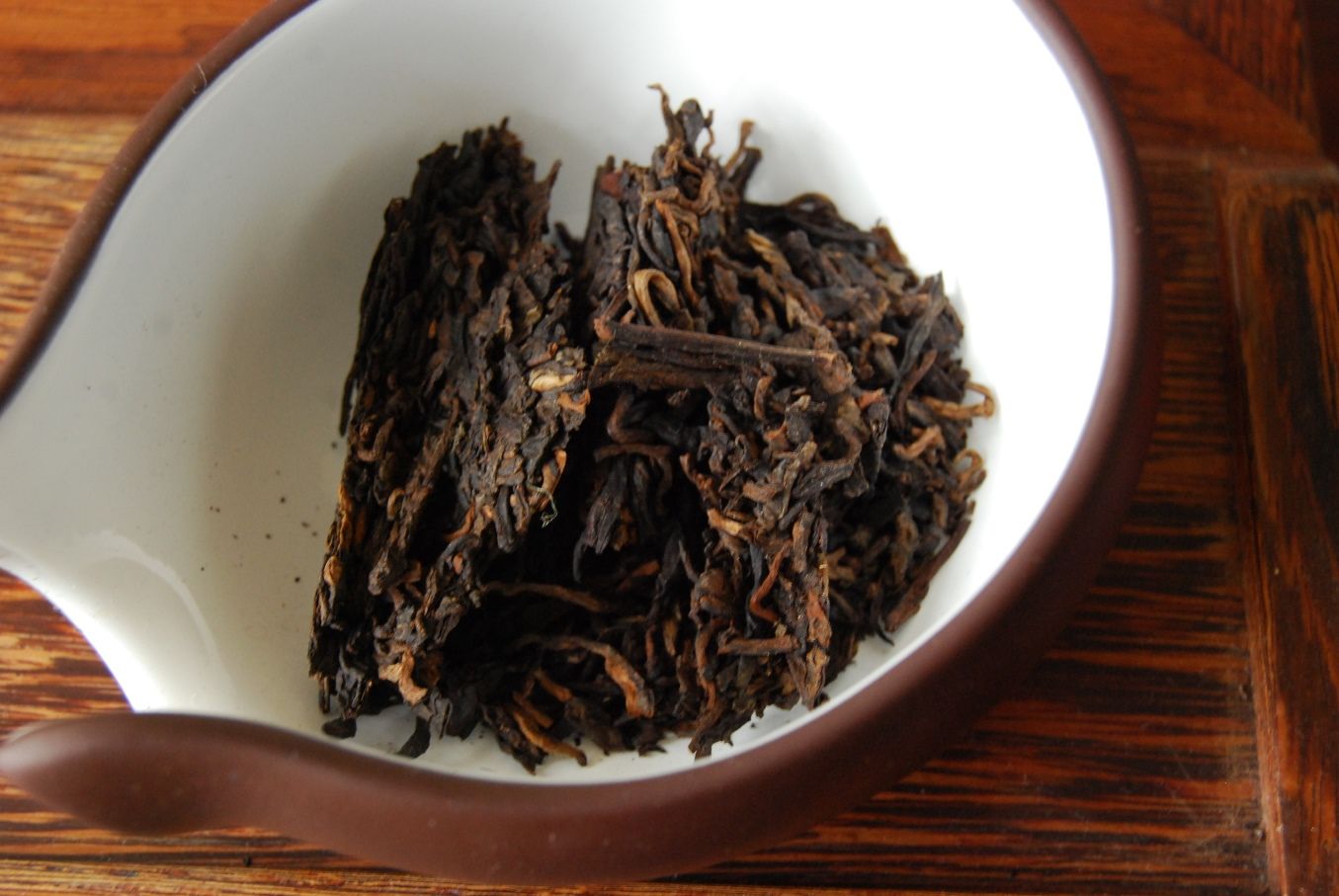
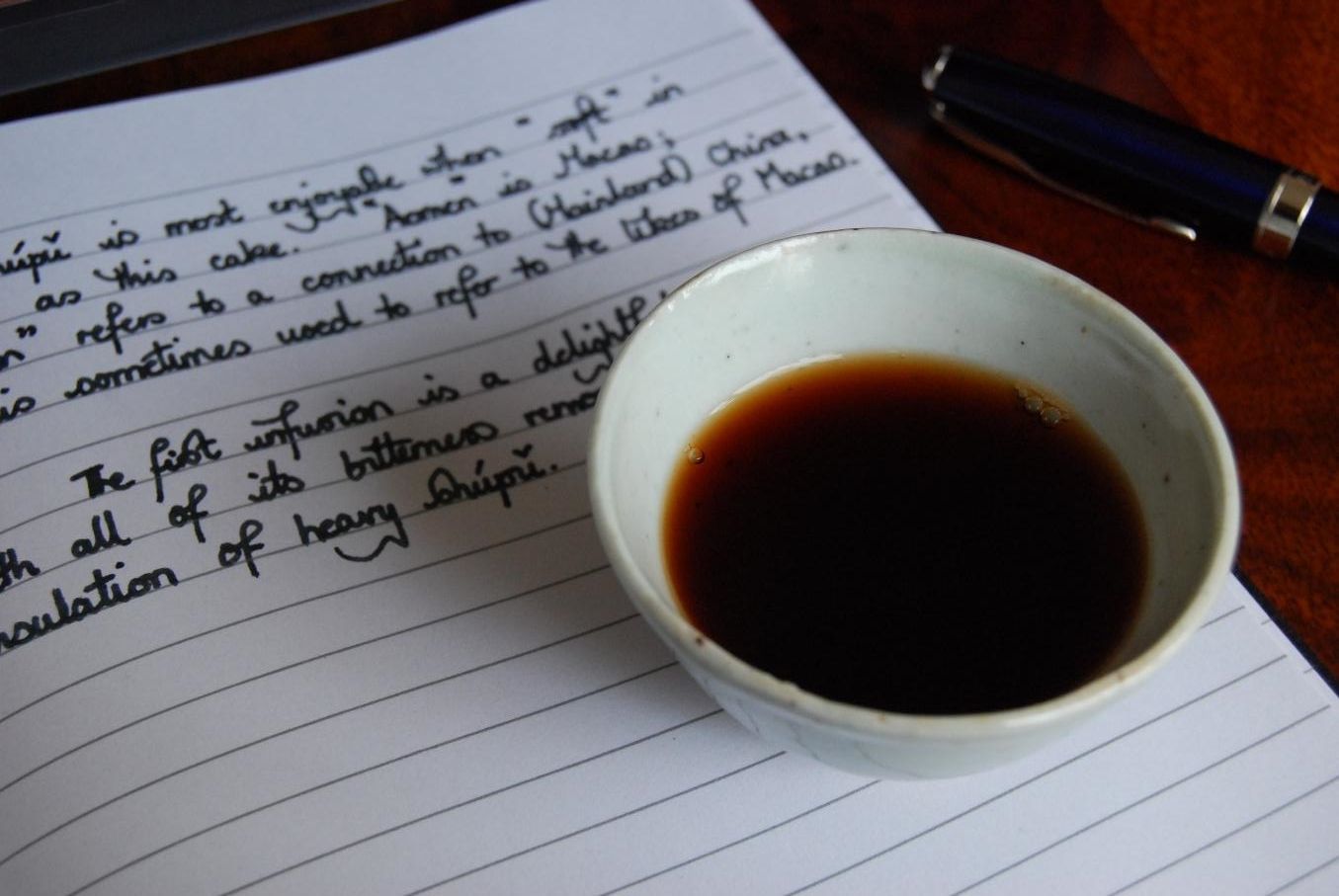
The cake shown in the first half of this article is an awesome example of this generosity: a 2012 cake of shupu from an outfit named "Aomen Hualian".  The name refers to Macao ("Aomen"), and where "hualian" is a connection to (Mainland) China - a suffix often used in association with the various islands / provinces / independent nations [delete as appropriate] that exist around the coast of the PRC.


This cake is only the second that I have ever finished.

I am just going to let that fact sit there for a little while, and marvel in it.  I have only ever finished two cakes of pu'ercha.  The first was something from white2tea, and was, I think, another fantastic shupu.

This Aomen Hualian cake is probably not going to be too easy to find.  However, should you ever come across it, I emplore you to remember this article: buy this tea.  It is rocking, thick, brutal, strong, fat, calorific, and all-round-fine.  I had a period after Christmas this year in which I was encased in my office, working on a long EU grant proposal - this Aomen Hualian cake propped me up, slapped me in the face, and promptly punched me in a sensitive place that I really would have preferred not to have punched.  I can heartily recommend this cake.


Speaking of chugworthy shoopmasters, we now turn our attention to something from the Augean Stables of white2tea: no matter how much you think you've cleaned 'em out, they just keep on giving.


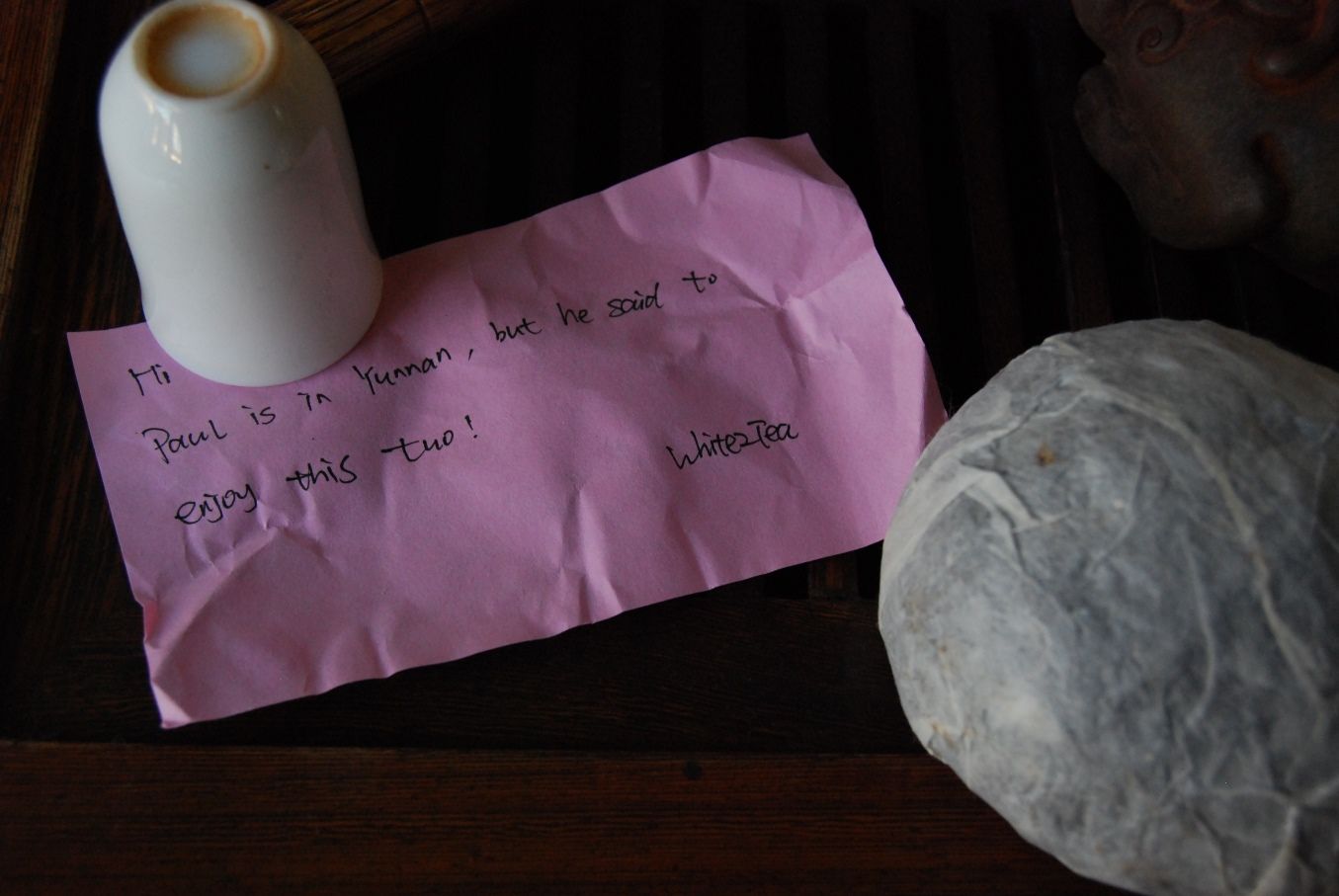
I am reasonably certain that through various channels, Gentle Reader, you will have probably heard the Gospel concerning this mighty little 1998 "white wrapper" tuocha.  Just in case you have recently arisen from a long hibernation beyond the grave, I here recount some brief notes to convince you that we have on our hands (yet another) good, random purchase from w2t.

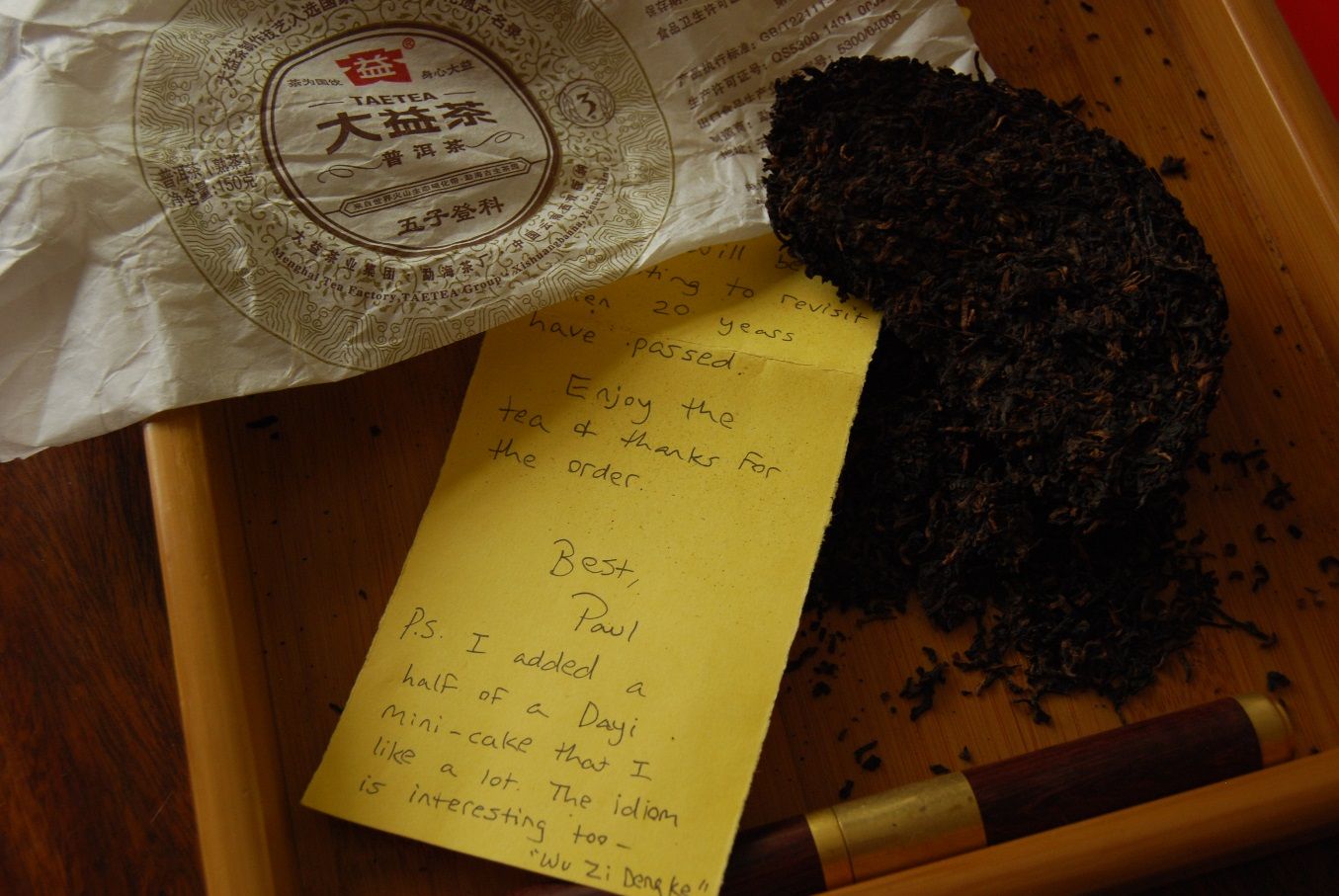
I say "purchase", but, as you might conclude from the above, the tuocha in this article was received gratis and for nothing, by an unknown correspondent whom seems to know / be related to / be married to / be in indentured servitude to Paul, a.k.a. twodog2 of w2t.  As is often the case with some of the finest dealers of narcotics, the first hit is always free.

Then, the Jonesing begins.


And how, the Jonesing!  This is strong.  In fact, my diary appears to have "The tea is extraordinary."  It is thick, creamy, sweet, and obviously excellent.  This is a good tea to buy in quantity.  Amusingly, the tong of tuocha eventually come wrapped in some REALLY RUSTY wire, which is surely a good sign.  You can't buy risky fun like that.

Well, actually, you can - at about $55 / tube, which is a very fair price for brilliant shoops that might give you tetanus.  You just can't go wrong.

Addendum: it seems that I have already written about this tea!  I'm glad to see that I agree with myself.


The shupu fades after the 8th infusion, but is otherwise fantastic.  The creamy, well-rounded sweetness remains even after the body has faded.  It is a delightful tea, and a fine introduction to this week's haiga...


Cup of Cold Tea


cup of cold tea
returned to the teapot
after storytime

03 October, 2014

Shoops

Everybody loves the shoops, by which we mean, of course, the shupu.

Today's story is an epic tale of love and longing, a paean of thanksgiving, a chronicle of one man's unceasing journey to find that last, final bargain.  Yes, we're drinking the shoops.


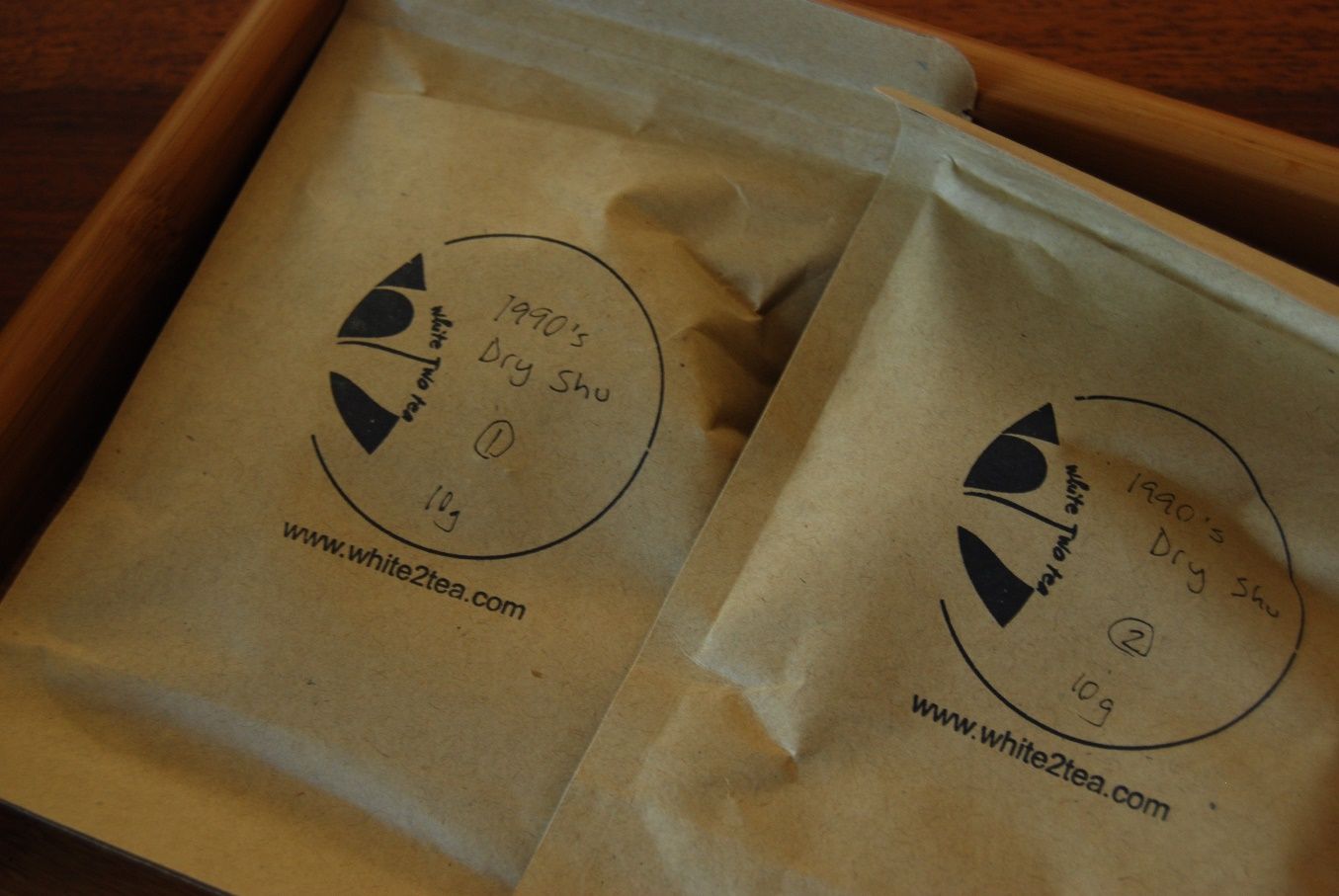
Today's teas are a pair of initially-anonymous samples, provided by PM of white2tea.


I used to think of the relationship between PM and myself as one of friendship.  Buddies.  Comrades.  Now, after being exposed to a sequence of ab-sol-utely irresistible bargains, I am beginning to wonder if our relationship is not more like that of a drug-pusher and an addict.

At least I'm not yet stealing cars to feed my habit.  At the time of writing.


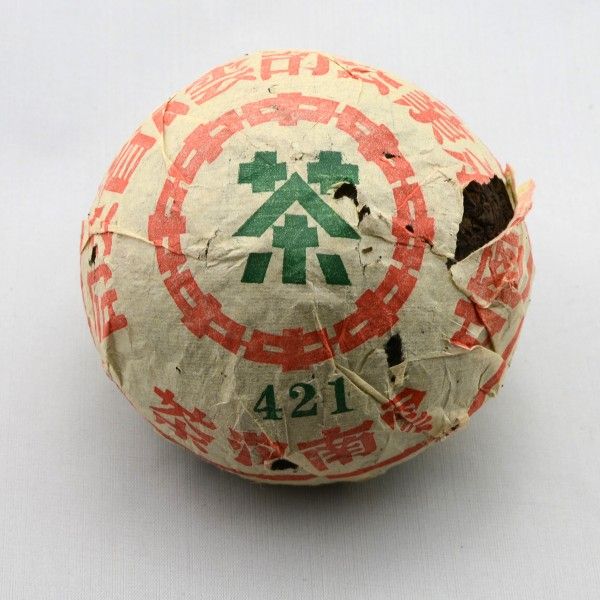
No prizes will be awarded for guessing the identity of this first pseudoanonymous sample: it is the 421 shupu from 1998.  This is tightly compressed, even for tuocha, which is expected for Zhongcha.


The colour of this shoop is striking: it is red-brown.  This may not come out very well in the pre-dawn photograph shown below.  It looks like a lot of other shupu, let's say, without being one of those "instantly black" kinds.  It must be said that the latter are my preference, but I'm willing to give anything a test-drive.


It takes a long time to open, and that is thanks to its compression.  When it does, perhaps around the third infusion, it is blacker in colour, while providing powdery sweetness much beloved by we quiet fans of shoops.  It begins to resonate near the back of the mouth.

This was made by Kunming factory for the CNNP brand, and, while good, there is better to come.


...and here it is.


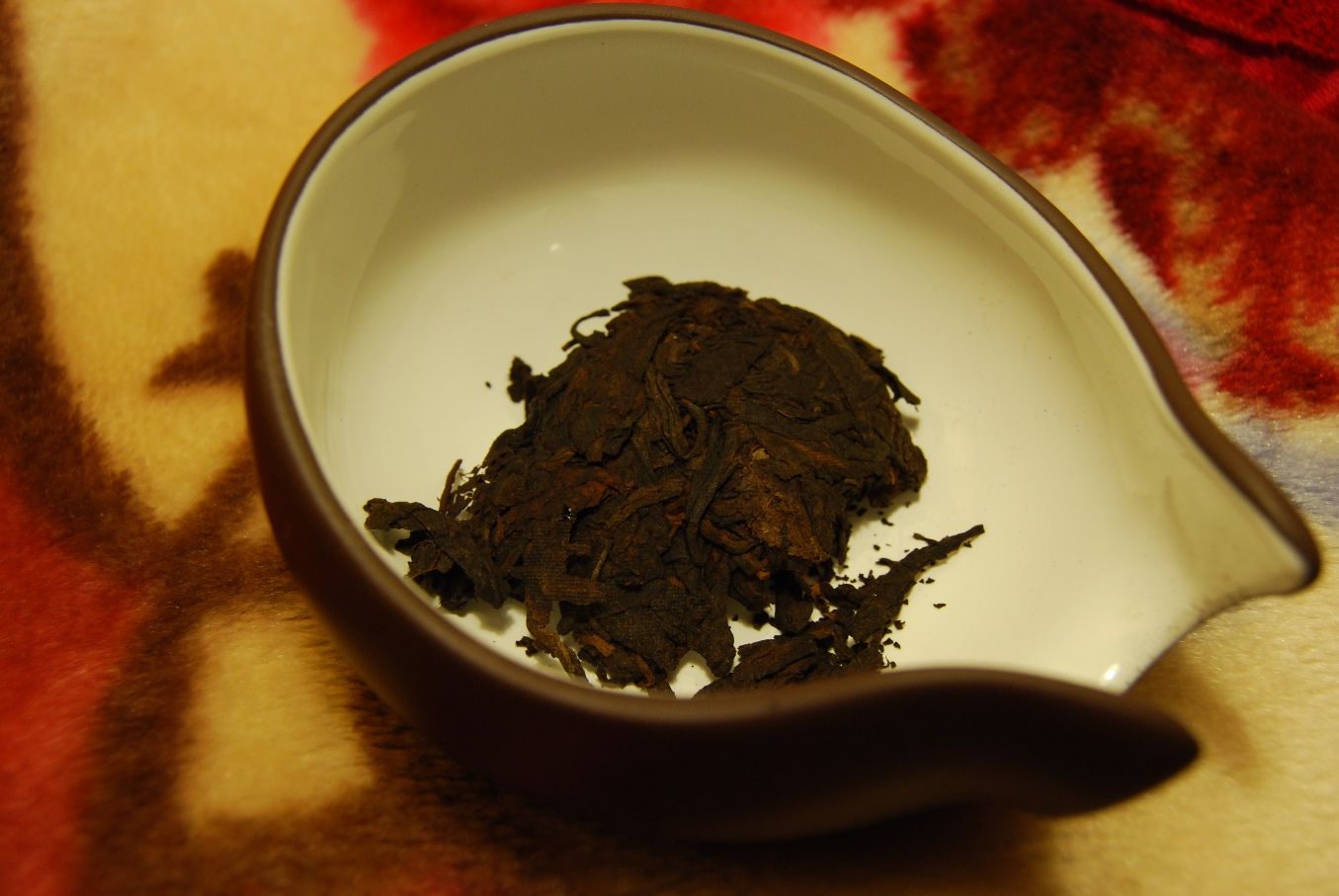
This shrivelled-looking piece of apparent excreta is actually a "white wrapper" tuocha, dug up by PM.  He is excellent at such digs, as regular readers will know, and I am coming to the conclusion that I have quite a lot of PM "white wrapper" tea on my shelves these days.

I admire the spirit of investigation, willing to get out there, into the Great Uncharted wilderness, with only one's tastebuds to help navigate.  The result is low-priced, high-quality tastiness, and this shupu is one such example.


1998 "white wrapper" shupu

Everything that you might look for in shupu is here:
  • Densely humid scents of the dry leaves?
  • Loose, hand-compressed texture?
  • Longer leaves than normal?
  • Soft vanilla scents in the aroma cup?
  • Big, smooth flavour?
  • Resonant in the throat?
  • Creamy texture?
  • Thick, soft body?
  • Colour that is as black as your soul?
Suffice to say that this is Good Shoops.  I don't currently know its price, but I understand that it will be "low".  I look forward to introducing it to my Paypal account.

19 September, 2014

A Postcard from the Fragrant Port

If all goes well, Gentle Reader, then you are reading this while I am on the way to the Fragrant Port.  I'm not entirely sure which fragrance modernday Hong Kong sports at this time of year, but I suspect that "fragrance" might be a little generous.

As it happens, this article is all about The Dayi, and one of my Hong Kongese chums, Apache, is about as into Dayi as I am.  We're not fanboys, I should point out, but we do get together from time to time to drink up the "Great Virtue".  There are people like us, who enjoy a bit o' Dayi, and there are the other kind of Dayi fans - those folk who can tell you all about the way certain flecks of ink on certain characters indicate special batches, and so on.


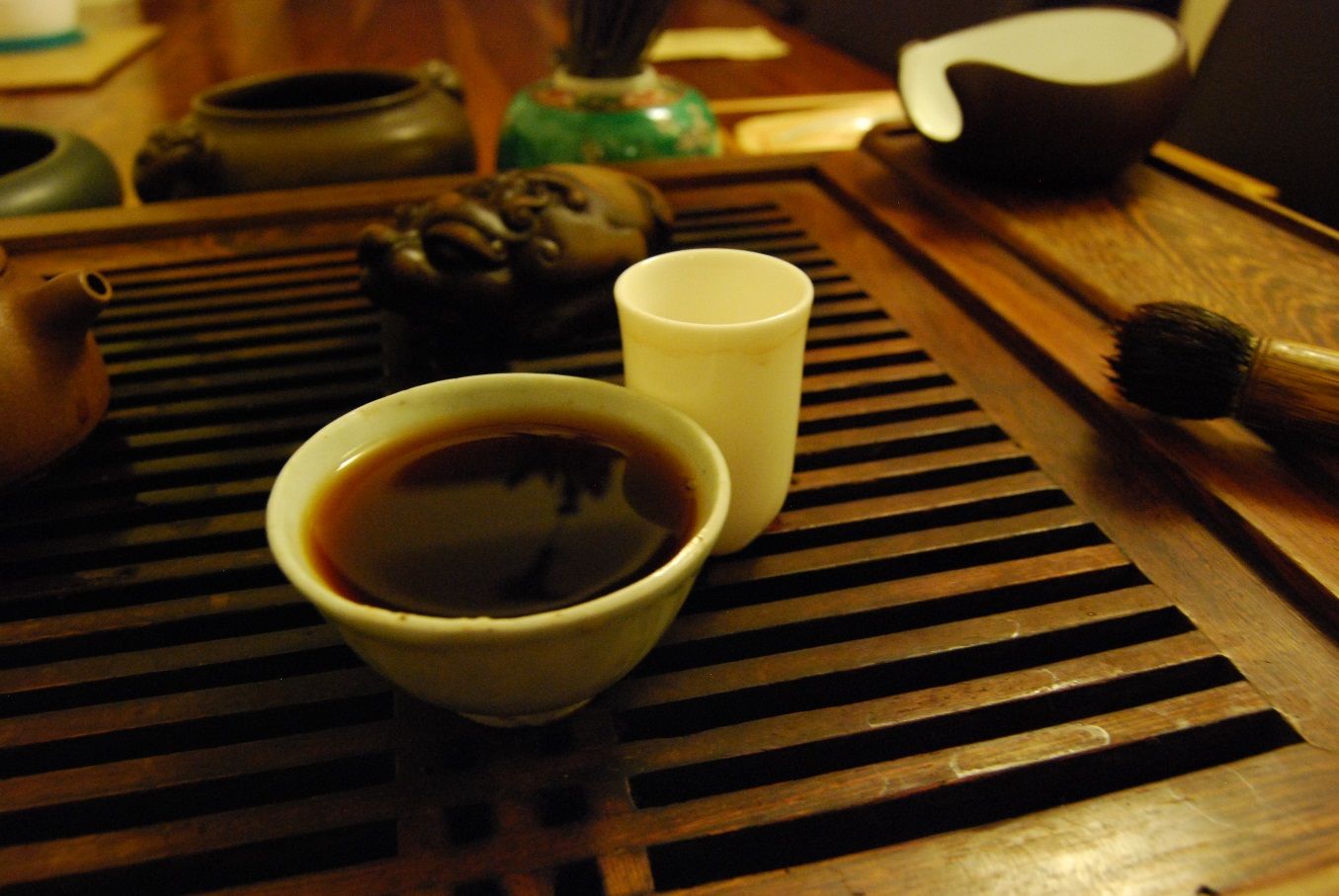
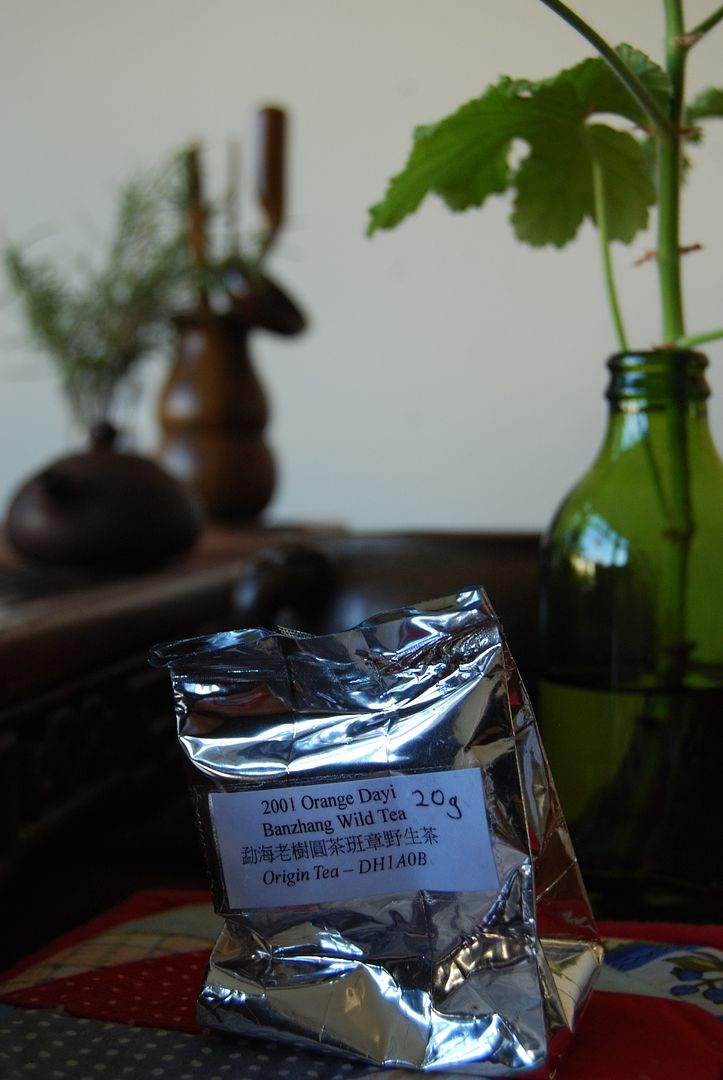
This tea came from the now-defunct Origin Tea, by way of JT (many thanks).  2001 Banzhang "Wild"?  Of course it is.


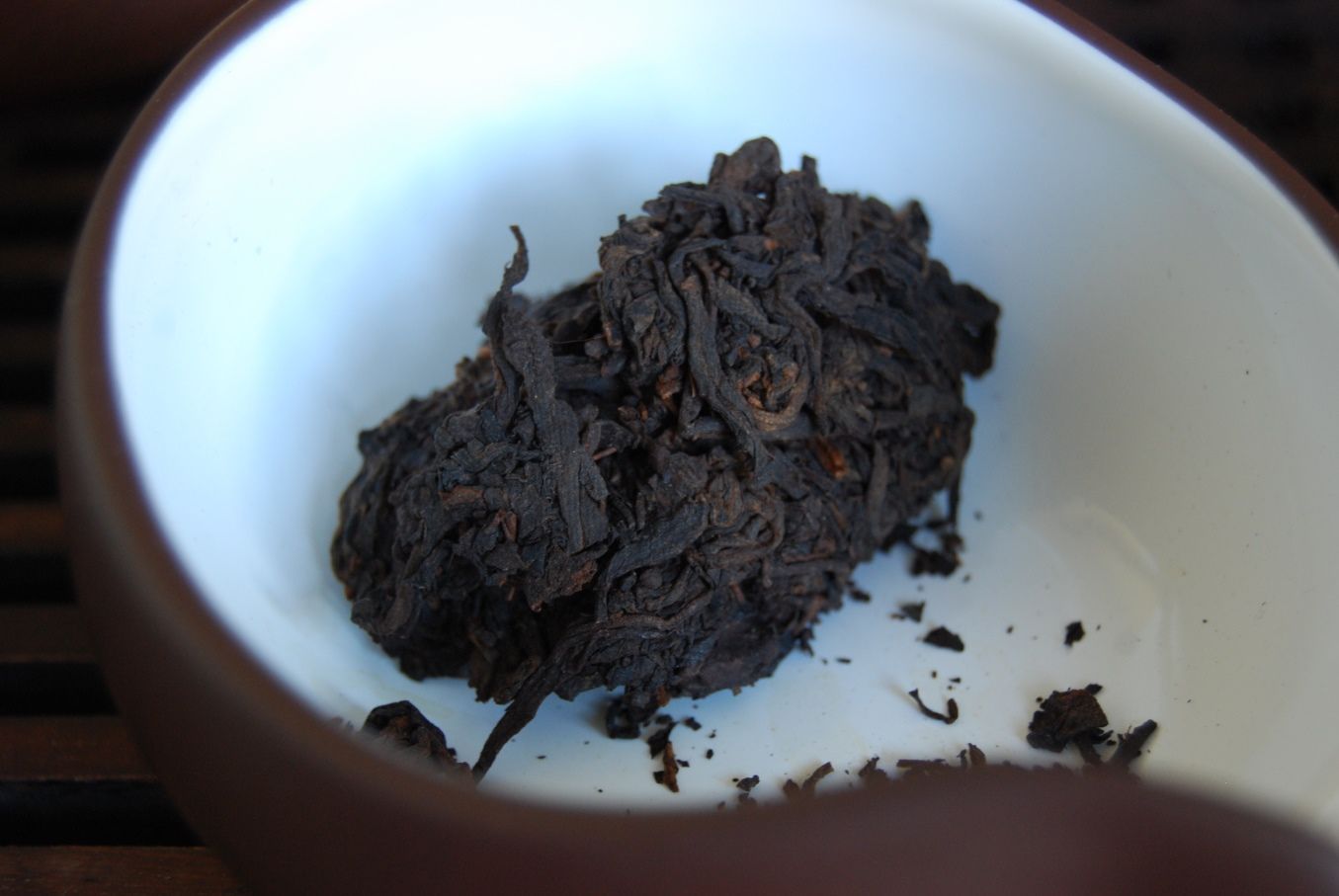
Looking at the photograph above, this tea is as expected.  You can almost smell the tell-tale blackened plantation aroma just from the bitmap.  It is exactly that which you would anticipate for Dayi.  I am fascinated to see that the stereotypical "Dayi" house style existed even in 2001.


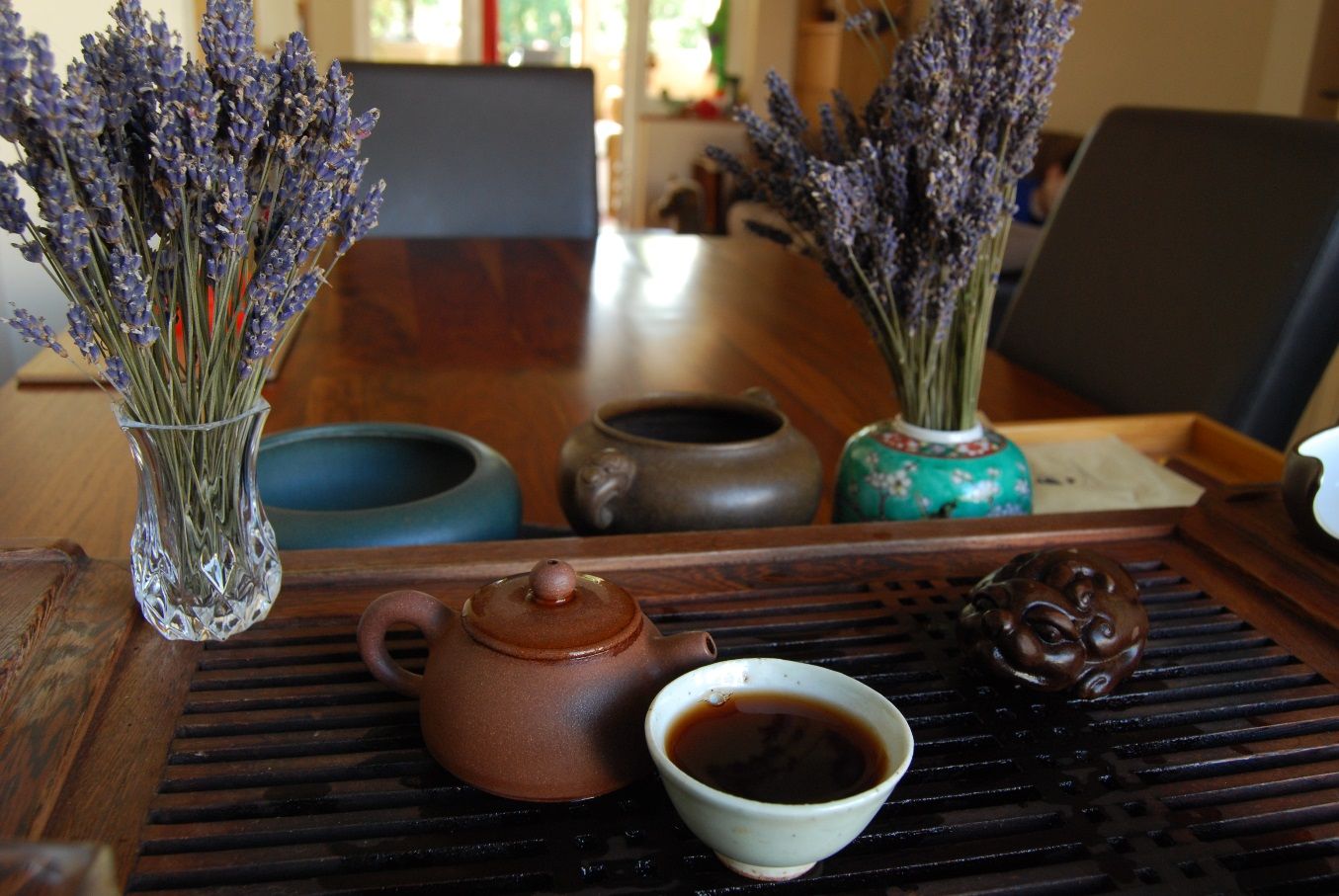
It is orange and husky, but you knew that.  This is a sharp cake, with some (ready the lifeboats, stand by your bunks) dry storage.

Queue pictures of Luke Skywalker holding onto a weathervane.

Luke didn't have it so bad.  He lost a hand and the Sith Lord that was doing the Emperor's dark bidding turned out to be his father, sure, but he didn't have to cope with excessively dry tea.  I'm not a fussy drinker, and I can drink everything from a cake that's so humid even your average Hong Kong resident wouldn't touch, all the way down to something that's as dry as a Jawa's gusset.

In this particular case, it has a solid body, but absolutely no huigans at all.  There is simple, plantation strength, but not too much else.  Yes, it's Dayi, but (and don't hate me here) it's really not the best example of Dayi that you might hope to find.


This next cake is the 2003 Dayi "Purple".


Foiled!  The colour balance of my pre-dawn photography was so unalterably nasty that I simply had to desaturate the entire image.  At least you can see the shape of the leaves. 


This second plantation recipe, like the 2003 Jin Dayi, has become very expensive.  As with the 2001 Orange Banzhang, above, this is blackened and sweet in the usual Dayi way.  This cake is also a victim of basic economics: the demand is so high that the price has risen way beyond that which I would consider to be "good value", and has passed even beyond "almost reasonable".  It is, merely, a husky Dayi plantation tea, without much huigan [returning sweetness].  It is good plantation tea, certainly, but you couldn't buy this with a straight face.  This is internet forum madness, and not worth contemplating.


The 2001 "Commissioned Purple", however, is really worth thinking about, in my opinion.


That picture is enticing.  I am enticed!

Dark and humid, these leaves are calling out for a good session.  The "commissioned" status lifts it above the norm, quite obviously.  Gone is the husky blackness of standard Dayi; in comes the very real scent of grapes and raisins.  This smells much more natural.


This is red-brown, and very smooth.  Compare this 2001 Commissioned Purple to the 2001 Orange Banzhang, at the top.  It's like chalk and cheese; heaven and earth; Optimus Prime and Megatron.

I used all of the leaves in my sample, safe in the knowledge that it would be almost impossible to overbrew, which turned out to be correct.  It is dark and oaken like dodgy Norweigan metal.  Devoid of roughness (unlike the aforementioned Norweigan metal), this is made from quality leaves.

This is surely about as Dayi is ever going to get.  Its pure strength is its primary advantage, but it is the punch of an Ent: woody, solid, and completely unstoppable.


Finally, shupu.

Please, contain yourself, Gentle Reader, for such wailing is most unbecoming.  You sound like a schoolgirl.


I will have you know that I actually like shupu.  I often drink it in my lab, and I sometimes even drink it at home at the teatable.  Shupu is fine by me, when done right.

Doing shupu right is exactly what Dayi knows.  When you want shupu, you go to the people who invented shupu.


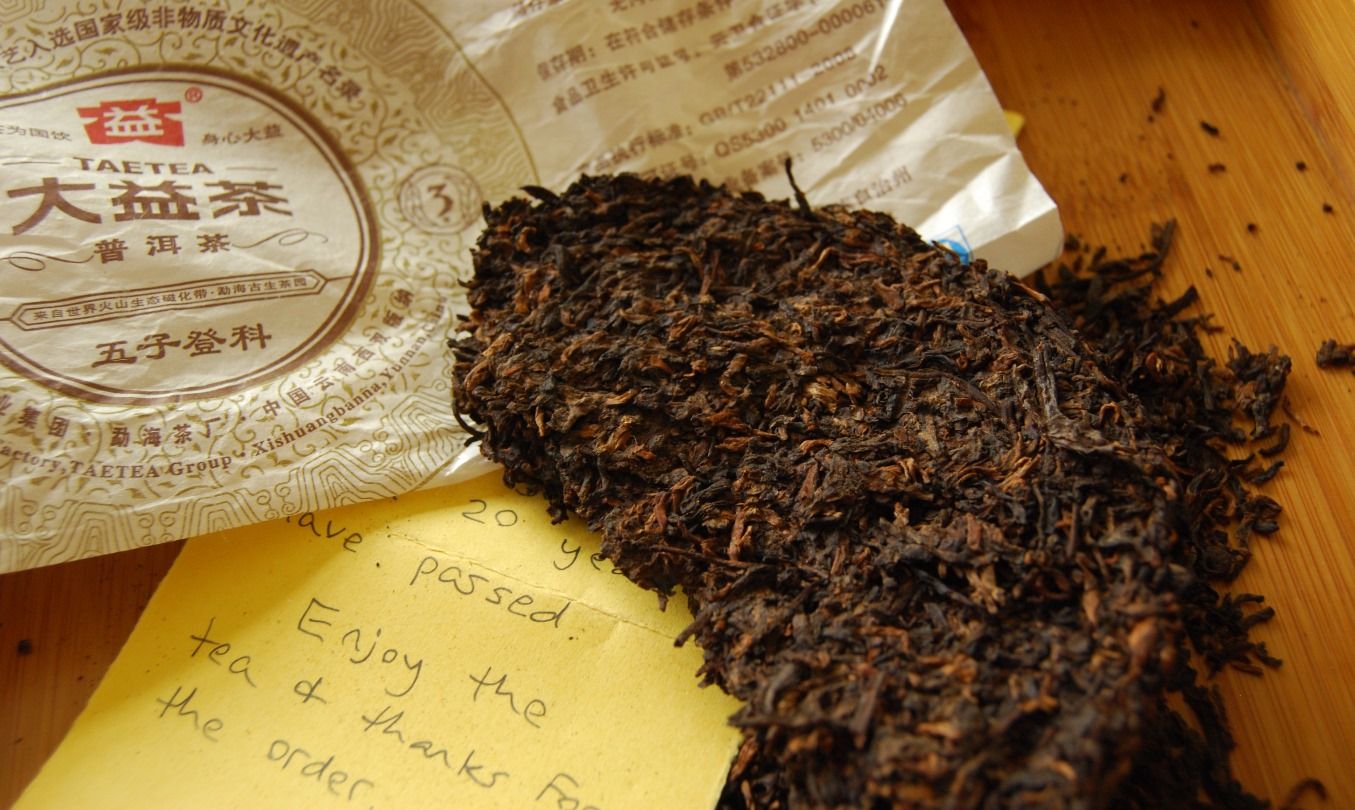
"Wuzidengke" [woo-zer dung-ker] refers, approximately, to five sons passing the examinations for the Imperial civil service.  It's a great name.  It's also a great pu'ercha pun, because a tong is called qizi, as you know (seven sons), referring to the seven cakes in a tong.  Guess how many little cakes you get in the (metallic) tong casing here?

PM of white2tea sent me a sample of this, as you can see in the photographs above, and I promptly swooped like the vulture I am and acquired a groovy metal tin.  It weighs in a about $70 for the lot, which is really good value considering how awesomely stable this shupu can be.

Heavy, black, clean, fresh, husky, and sweet: Dayi are the unbeaten masters of shupu, and here they are on fine form.  It has the soft, eroded edges of shupu, but retains good strength - a marvellous piece of composting.  There is complexity the likes of which one would never expect: honey, and much in the way of vanilla softness.

If you're doing shupu, then do please try a sample of Wuzidengke.  The name is hard to forget, and it is a personal favourite.

16 June, 2014

Kunming: Not Just a Concrete Jungle

One of the oldest and least-appreciated factories, Kunming is a maker of magic, from time to time.  I recall the 1998 Kunming Zhongchapai, which I snaffled for the arrythmia-inducing sum of 280 RMB / cake in Maliandao, during a visit in 2011.  That was not exalted tea, but it was darned fine.  This article is about a second tea from that same stable.


The 1995 "9016 Shutuo" is, as its name suggests, tuocha made from shupu.  This is not the usual format.  Equally unusual is the fact that the shupu in question was seemingly made from leaves of a particularly decent quality - shupu is usually composted with leaves of a lesser quality, the reasoning being (perhaps quite sensibly) that one wouldn't wish to use laoshu maocha in a compost heap.


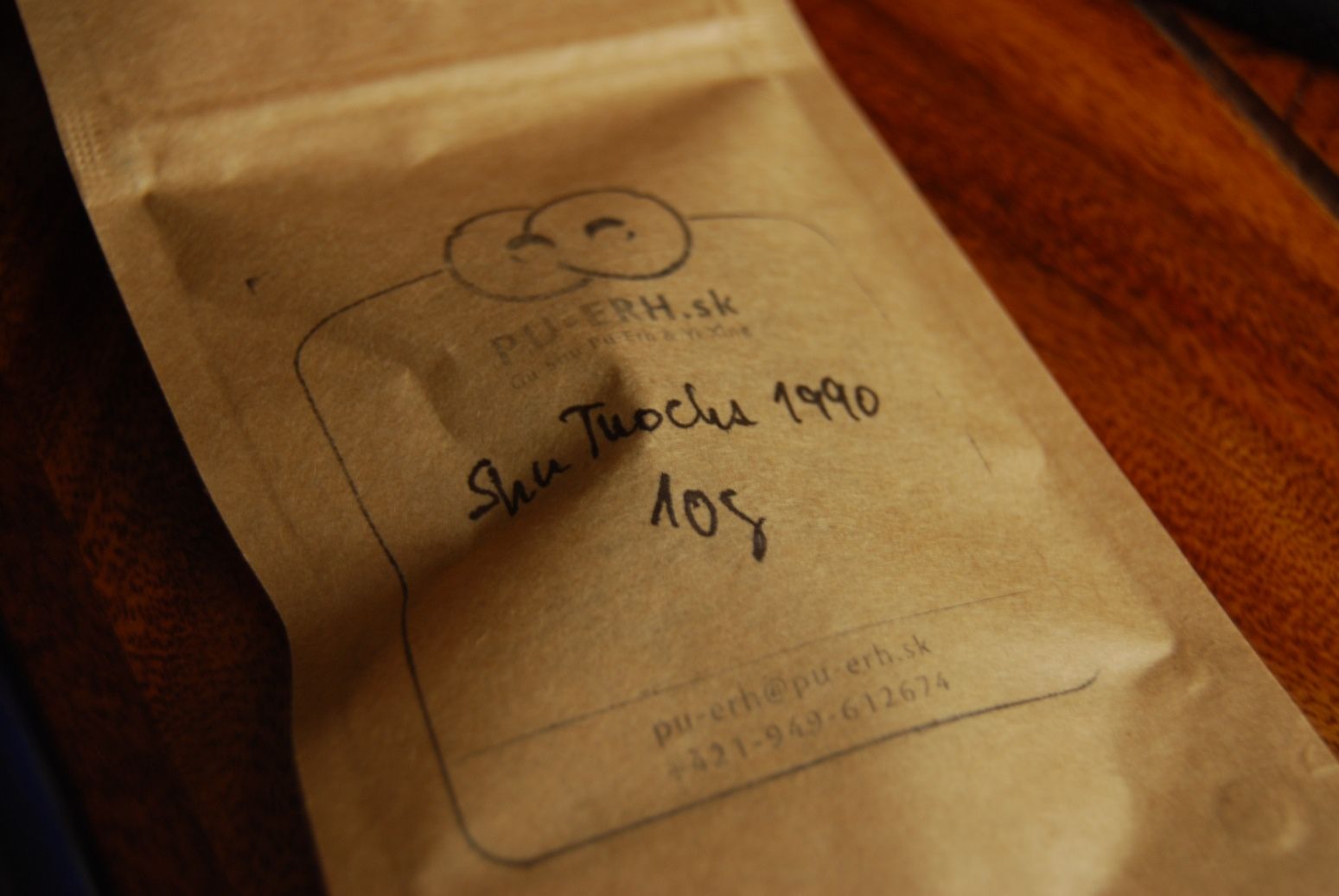
The result is that this 9016 is regarded within some circles as being a "benchmark" for shupu.  Taste the 9016, it is said, and you have something with which to compare all future shupu: if the tea in question is better than the benchmark, then you can buy it with confidence.  The opportunity to try the benchmark, provided generously by Peter of pu-erh.sk, was gratefully received.


There is not a huge amount that can be written about this shutuo, except for the fact that it is very (very) good shupu.  It genuinely surprised me with its strength, with its thickness of body, and with its throaty and enduring sweetness.  Its quality sticks out like a sore thumb, in a world awash with terrible shupu.  I absolutely loved this sample, and was thrilled to enjoy it over several days.  It lasted that long: it just kept going, and going - and going, and going.  In fact, I ran out of steam before it did.  After goodness knows how many litres of good tea produced from the same small set of leaves, I eventually called it quits and emptied my teapot.  This little beast is remarkable.

At 99 Euro / 250g at pu-erh.sk, it isn't inexpensive, but I am seriously considering it...

30 December, 2013

Aging Tea: A Mixed Bag

I have been sampling my own shelves widely, of late, and have come to some conclusions on the relative merits of my cakes ability to age.  (In each case, I have added notes to the original articles, which you are invited to inspect by following the corresponding links.)

The Good

The 7542-801 is quite good, although a little akin to a "dry storage" cake. The 7532-801 is better - it tastes more humid and more developed, and does not have the "dry storage" straw of the 7542-801.  Oddly, the 7542-901 is absolutely first-class.  Made just one year later, it is dark and heavy in that classical Dayi manner, and tastes very nicely aged indeed.  I suspect that most people would enjoy it - they would certainly enjoy it for the sub-$10 price in 2009.

Another success story is our aging experiment in central China, where Chinese Mama and Baba have recently brought us a few tong from our stores there.  The 1997 Laojunshan (pictured below), being one such cake brought to England, even though it is shupu, is heavy, round, and excessively sweet with old vanilla.  I look forward to trying the shengpu that we have.


My post-viva Hongjie cakes, bought in 2009 in Maliandao, when my dear wife was unknowingly carrying Xiaohu, our eldest son, has come on very well (much like dear Xiaohu himself!).  The change in the tea-leaves from their original green to a husky red-orange is very encouraging.

Finally, the 1996 Xiaguan bricks from Maliandao (pictured below) are coming on a treat - somehow, they are superdense carriers of vanilla and smooth huigan.


The Not-So-Good

Oddly, the 2003 Zitenglu Zipinhao [Wysteria Teahouse purple-label], pictured below, fits in this category. The original sample that I tried, stored in Singapore, stopped the clocks and was unfathomably excellent.  The actual cake, stored in Taiwan, was less amazing.  I managed to overcome some of this simply by using many more leaves of the Taiwanese-stored cake, which got it a little closer to the Singaporean version.


Perhaps most concerning of all, the 2011 Yunzhiyuan "Autumnal Xikong" (pictured below) has collapsed into tasting like purple tea.  I am deeply concerned for its future, and will take this as a warning concerning the purchase of super-sweet, unaged autumnal cakes in future.


Tea is such an education, and an experiment in itself.

30 August, 2013

Judge Not, that Ye Be Not Judged

People who write about tea are a famously grumpy bunch.  A number of us, as far as I can tell, are students or academics or similar, and we are therefore not in the profession of suffering fools gladly.  This can lead to the impression that we are miserable, grouchy, Grinch-like individuals, who like nothing better than to steal Christmas.

Although I try to maintain an optimistic outlook*, I was particularly grumpy when I sat down to this session.  This is because, at the time of writing, it is August, I am sat at home with a cold, and am generally feeling quite grim.

Against all the odds, this session with shupu from Teasetter truly lifted my spirits.  I would like to recount the story to you, Gentle Reader, if you will bear with me.

*My students call me "Dr. Who", only partly because of my dress-sense.


The tea world is filled with hucksters, charlatans, swindlers, mountebanks, and scumbags.  It seems that everyone wants to start up a little business on the side, buying cheap tea from China, obscuring it with a suitably evocative name (presumably so that customers cannot buy it elsewhere for the actual, cheaper price), and then selling it at a significant profit margin.  Every web-site is dazzling white (in the "Apple" style); everyone claims to be selling something unique.  They typically last a year or two before the owner gives up, and goes back to the "day job", or perhaps focusses on selling something else.

Wulong is the prime focus of this industry, given its untraceable origins and accessibility for novice drinkers; pu'ercha (usually labelled "pu-erh" as if we were writing via 19th century Wade-Giles) is by no means immune.


Clockwise from top: 2010 "Ethical Agriculture's Wild Grown Pu-erh" [sic], 
2011 "Old Capitol" [sic], 1992 "Sweet Fragrance Pu'ehr Tea" [sic]


You will, therefore, excuse me if I am rather prejudiced concerning new ventures that seem to fit this pattern.  This is merely because we have all seen far too many of them come and go.

It is against this backdrop, while grumpy for the reasons listed above, that I sat down to drink three 4g samples of shupu from Teasetter.


All three samples mixed, with fannings removed


I started browsing the company web-site, and alarm bells started to ring.  It was then that I came to realise that I was viewing the web-site through the rheumy, yellow-encrusted lenses of my own prejudice.  I watched the company's Youtube-hosted instruction video, and was confronted with the honest, sincere face of a young man, which was as free of guile as any innocent soul could ever hope to be.


It also made me realise that the world of tea is much greater than the tiny niche that I inhabit.  If people wish to recommend using a microwave for 3-4 minutes to heat the water, then why should they not?  The whole affair smacks of passion and personal commitment, and I rather like it, grammatical errors and inkjet printing included.


Napolean famously called the English a "nation of shopkeepers", which he intended to be an insult.  However, the entrepreneurial instinct is to be congratulated, I think.

I suspect that the primary market for Teasetter is the USA (the tea may only be purchased in "oz", which Google informs me is approximately 28g).  Certainly, the customers of Teasetter are pleased: there are 128 people who "like" the company via Facebook, and reviews quoted on the web-site rate the teas as being "100/100".  Ultimately, if it contributes to lowering the body mass, blood pressure, and cholesterol levels of your average Westerner, then such ventures are to be applauded.

As far as the tea that I tried, when mixed all together, it was absolutely delicious.  The session lasted a good hour, the tea had no signs of exhaustion, and it remained thick, sweet, and highly invigorating - a welcome cure in between cups of "jiangtang" [ginger soup].  I look forward to seeing Teasetter convert more Americans to drinking decent tea.