Showing posts with label 2009. Show all posts

26 May, 2015

YOU WIN OR YOU DIE

I have long searched for an accurate analogy for the life of an "early career academic" (for which one should of course read: "someone too ignorant to get a real job").  The nature of this life is well-documented - articles on the difficulties faces by the new generation attempting to secure a permanent academic position crop up quite frequently in the media.  It's a tough prospect, and one that a number of we tea-drinkers share.

I used to think that the situation for new academics was like unto a Ponzi scheme.  There are a very (very) large number of undergraduate students; our lives do not really touch theirs very much, except for whichever quantity of teaching one has to undertake (and which we are actively encouraged to minimise in favour of research) and for the occasional "final-year research project".

There is a smaller, but still quite large, number of graduate students.  These are those brave souls who have not quite had enough of university life, and think that they can tolerate a bit more edumacation.  These days, many grad students have a career outside university in mind - perhaps the majority, given the state of the media.

Next up the pyramid of what I once considered to be the Ponzi scheme, we have the post-doc.  This is a much smaller population than that of graduate students, and comprises people who are usually fairly serious about staying in their discipline (either in academia or industry).  The post-doc lives a vicarious, often nomadic, lifestyle, moving between fixed-term research contracts.  In the sciences, this usually means working in someone's lab.  It is a stage that I know well!

Next up the pyramid is the permanent academic staff, or what seem to be called "PIs" (principal investigators) by recent standards.  In the UK, this is more-or-less the top of the pyramid, with some internal gradation concerning shades of seniority.  Once you make it into this group, you generally stay there until retirement (financial temptations of the private sector notwithstanding).

(In the US, I understand that there is something analogous, but which involves the tenure process - there might be a substantial split between the number of assistant professors gaming for a smaller number of permanent spots, which would put the "safety" point even further up the pyramid.)


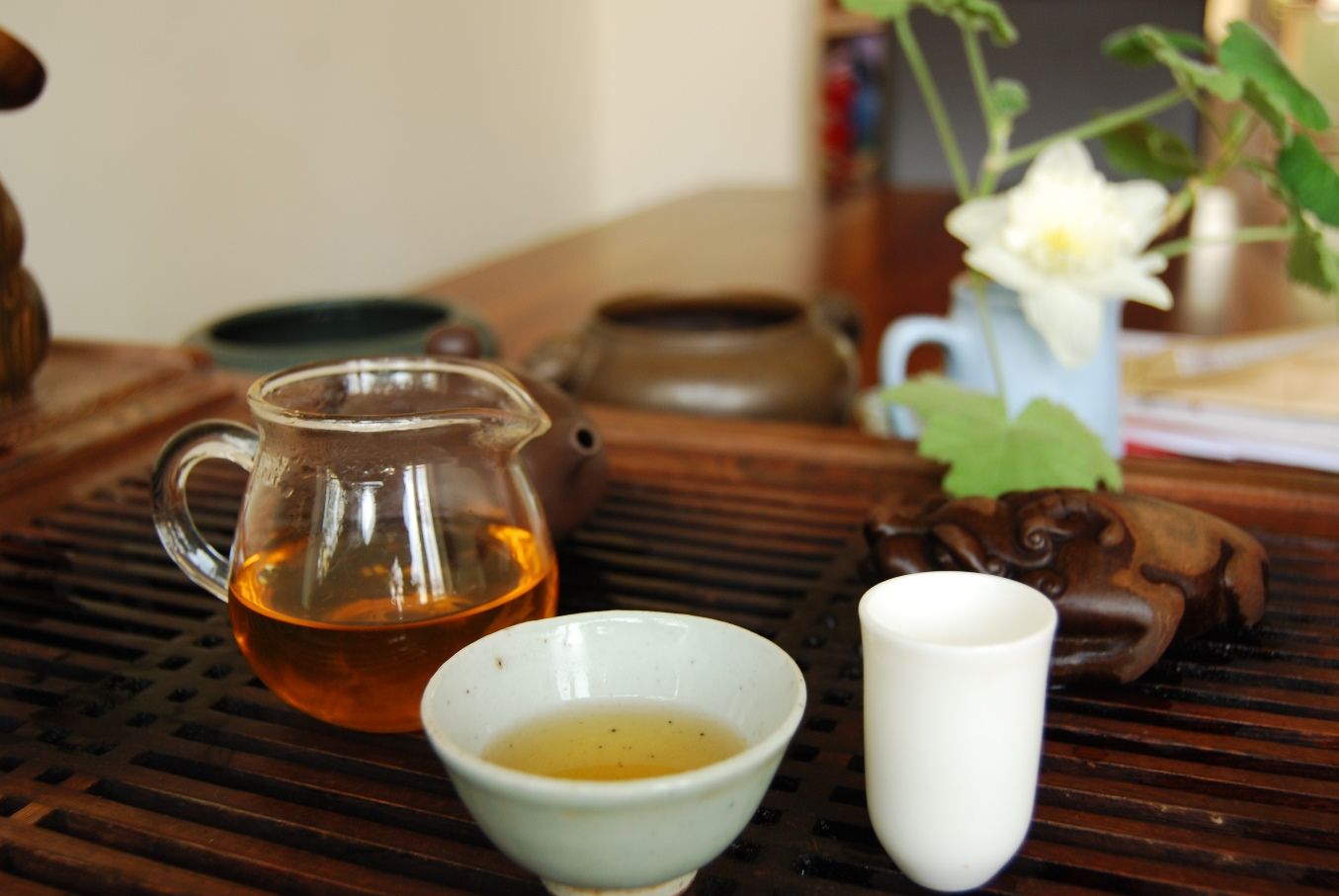
This is the 2002 Smoky LEE from Pu-erh.sk.  I love the capitalisation on LEE, which causes me to bellow the final word to myself, in my mind.


The Ponzi scheme is often used to describe this situation: there is no real value in the system, and it is propped up by one person making good on the situation of a larger number of other people.  Those people, in turn, can make good by having their own number of dupes.  And so it continues.

I bought this for some time, until I concluded that a Ponzi scheme only works if everyone has the opportunity to obtain a set of duped inferiors.  In a real Ponzi scheme, you are selling a nonexistent commodity to a set of people, which they in turn are each selling to others.  However, in the academic pyramid, this latter effect is not possible.  It cannot be considered a Ponzi scheme, because of this lack of flexibility to spread the risk ever wider.

For some time, then, I considered early-career academia to be like unto indentured servitude.


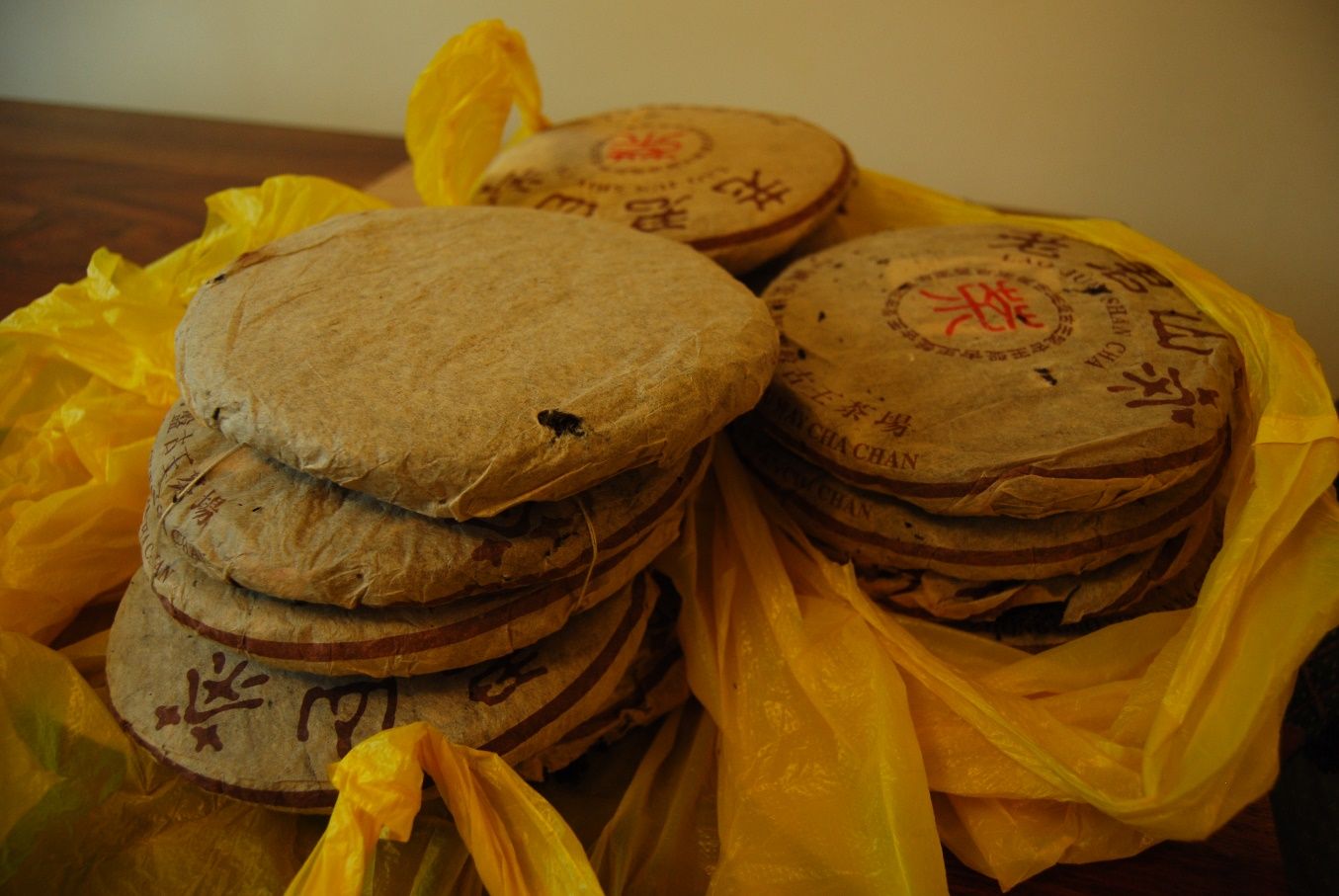
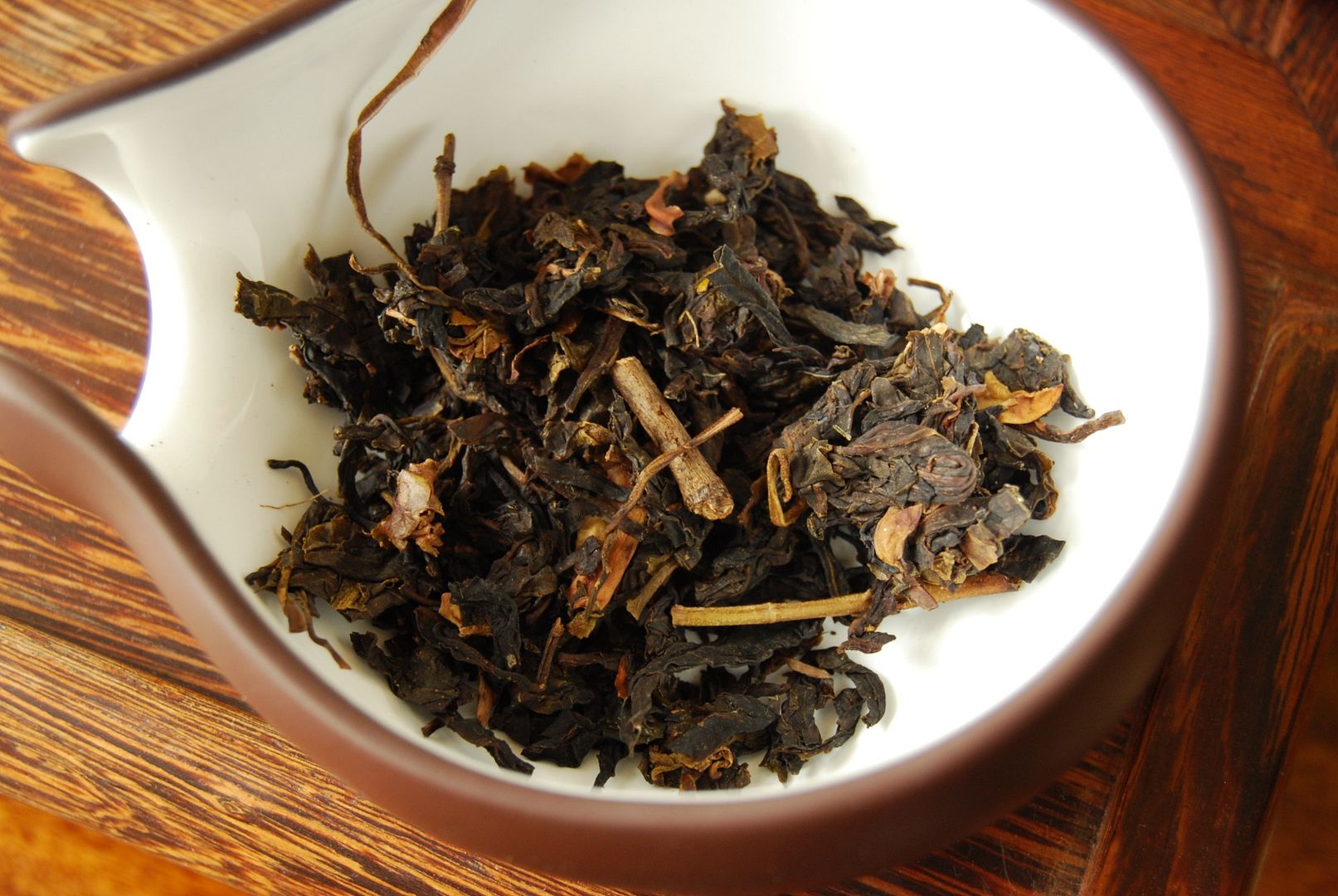
At 53 Eurobucks, this is a decent-value cake.  It has been stored in Guangzhou, and has maocha from Jiangcheng in Simao.  The rustic stems and (of course) bits of Chinese hair really emphasise the lo-fi nature of the cake.


It felt as if one would strive (and strive and strive) and, eventually, one might work up sufficient good karma to be made a freeman, which is to say be promoted to the top of the pyramid.  Put in sufficient effort, and freedom was attainable.

However, this analogy is equally as ill-fitting as that of the Ponzi scheme.  I have seen in those who have gone before me, many times, that there is striving aplenty only never to result in attainment of the ultimate reward.  There is no guarantee that hard work (and perhaps even genius, in some of their cases) would translate into being granted their (academic) freedom as their own independent, permanent researcher.

So, the indentured servitude doesn't cut it, either.

What, then, is the life of the early-career academic like?


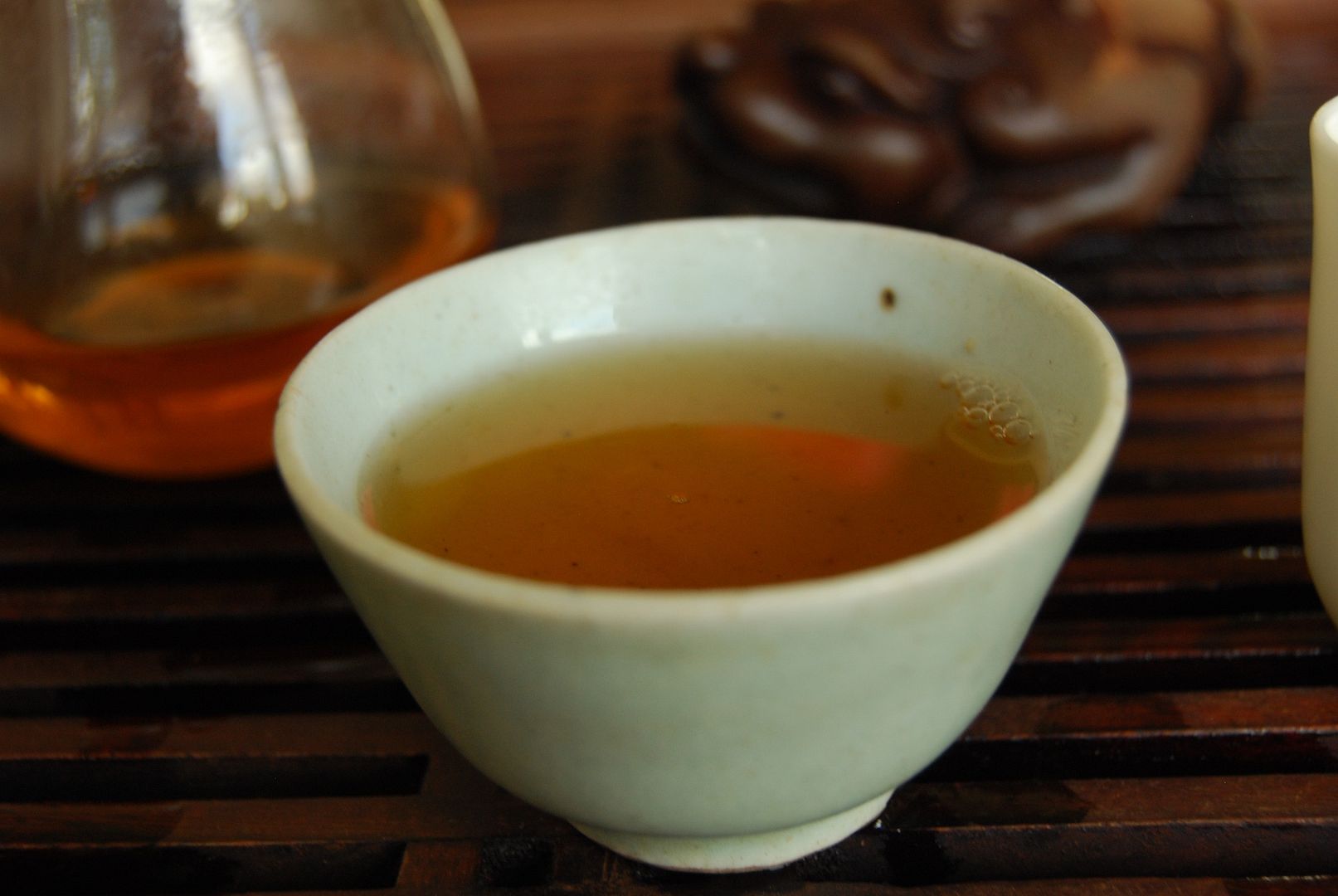
It most obvious first impression is (quelle surprise) sweet smoke.  Its purity is remarkable, in that it has no cloudiness at all.  Thick and satisfying, the smokiness diminishes with each infusion, as does the memory of all of that Chinese hair in the maocha.  Perhaps the smokiness is an acquired taste but, as a lover of lapsang souchong, it is a taste that I have acquired.


The title of this article gives you my conclusion: it is none other than the Game of Thrones.

When you play the Game of Thrones, you win, or you die.

And there we have it.  After a certain point, everyone in the game is at least competent.  Incompetence tends to get weeded out earlier on in the process.  By the time you hit the main action of the pre-tenure game, everyone has proven themselves in battle.  Everyone is pretty good at what they do.  Everyone has a campaign or two under their belts.  Everyone has their own code by which they live, their own manner of operation, their own networks of informants and bannermen.

So what is it that makes the difference?  It's a good question.  There is no winning formula, and every early-career path is different.  Some mixture of ability, ruthlessness, patronage, knowing the rules of the game, and sheer willpower is often present.  However, Game of Thrones also teaches us that:

Gold wins wars, not soldiers.

It is a truism that cashmoney really makes the difference in the early stages (and perhaps all stages) of academia.  By this, I mean the sheer quantity of hardcore currency that one's research activity has attracted to date.


This is "Like 7542", and has just been released for 44 Merkeldollars at the Pu-erh.sk web-site.  It has a similar recipe to Menghai's mighty classic, and was stored in Yixing town.


This is not quite so bizarre as it sounds, as depressing at it might be.  Academic work is notoriously hard to "grade" outside one's own narrow field.  What is good research?  It is very difficult even for one's own university to answer that question, let alone ask people from outside.  In the absence of a set of realistic answers to that question, there are a number of proxy quantities: impact factors for journals, the number of citations one's work has attracted, etc.  However, even these vary tremendously from subsubdiscipline to subsubdiscipline.  It really is extremely difficult.  If everyone is at least good, how do you tell who is worth tenure, given that notorious variability in metrics between the tiniest differences in research fields?

Hence, shades of green is one means of determining some sort of proxy.  If a researcher is good, they have probably done good work, and that has probably been recognised by that researcher's peers, and they will have returned good reviews of, for example, academic grant proposals.  I note with some amusement / dissatisfaction that success with big grants tends to be followed by recognition.

Whether or not this is healthy is a different question; whether or not it promotes low-risk research that plays well to reviewers' expectations likewise.  It's not right, but is it OK?

The comic irony of this situation is that in many academic institutions, my own being one of them, one cannot write grant applications until one has achieved a permanent position - and attaining a permanent position is very difficult (arguably impossible) unless one has achieved success in research, by which accumulation of successful research grants is the oft-used proxy.

It is the perfect catch-22.


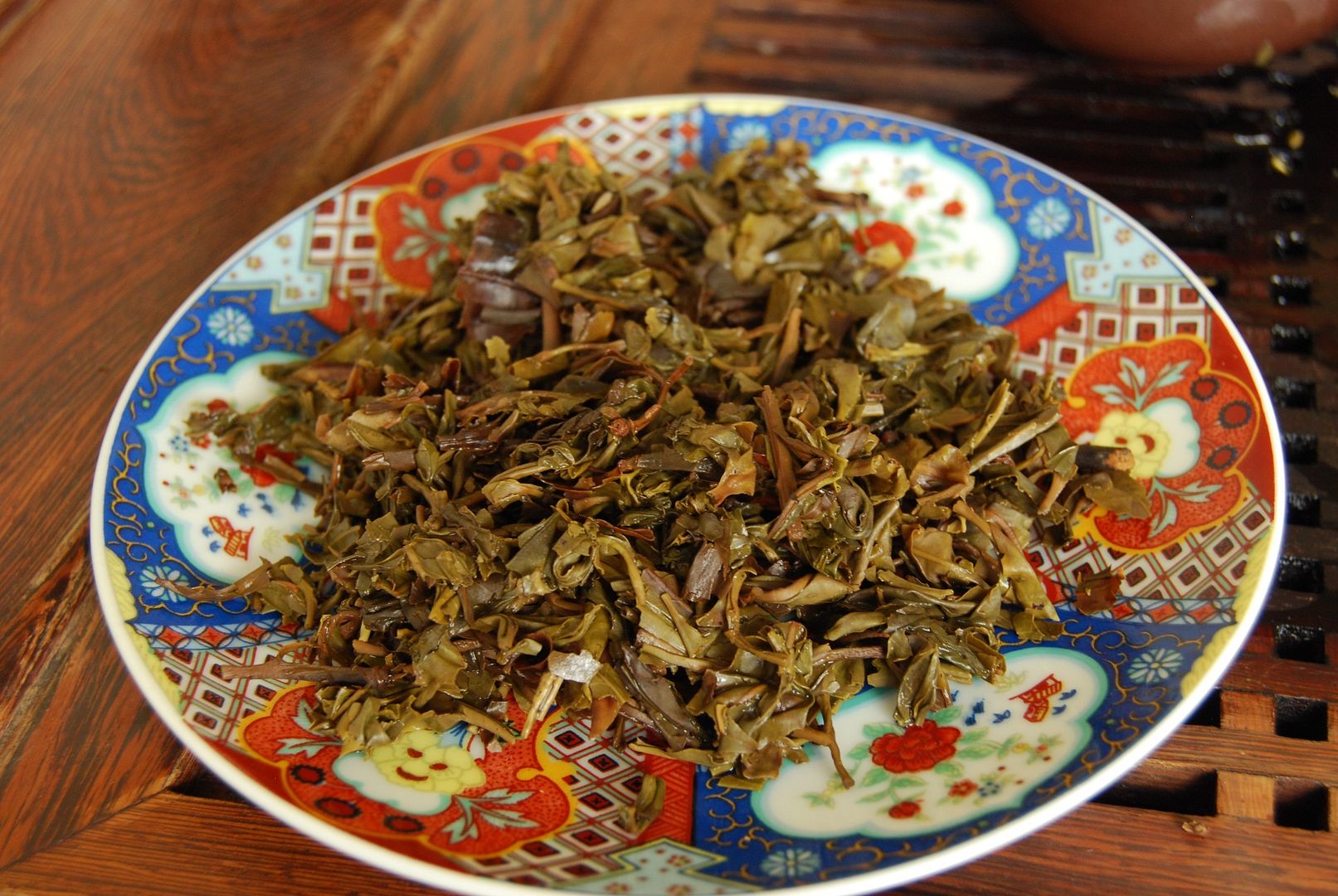
There is a (very) faint scent of sweetness about the small, dark leaves which certainly look the part of 7542.


Just like the real Game of Thrones, the truth of the situation is that it isn't all this bad.  After all, "if golds wins wars, not soldiers" then how come Robert Baratheon (a soldier) is king, whereas one of the Lannisters (a wealthy noble house) is not?

There are other ways to play the Game, and these vary so substantially that they provide the lack of certainty that exists in early academia.  Some of these actually include excellence in research, which is heartening.


Interestingly, the thick Chinese hair in this tea (there is always thick Chinese hair) is not black - rather, it is entirely white.  I imagine an ancient sage processing this cake, between cigarette breaks.  The flavour (of the tea, not the hair) is warm, and perhaps a touch malted.  It has welcome strength at the back of the throat, and I am pleased to feel that it stimulates the tongue.  This cake feels quite lively, and is noticeably mouth-watering.  Its body is reasonably solid; it tastes like a decent little-factory cake made from quite strong leaves.  There are no points of immensely substantive interest, but the whole is pleasant.


Now I'm not saying that university turns everyone into Machiavelli, but (!) it is instructive to observe the changes that take place between your average human on entering the Game (let's say at graduate student level, to read for a doctoral degree) and leaving.

New grad students are awesome, typically.  When they arrive, they can be rough in manners and tread on everyone's toes with big voices and clumsy natures.  Usually within one or two years, this has changed dramatically.  I see it every year: they become finessed, and it is a change that you can almost see occurring before your very eyes.

The game is playing them.


NOT FOR SALE JUST FOR FUN.  I knew a girl like that once.  This is a 2010 7542, and it came to get down.


How does it end?  It ends the same way it always ends...


The little leaves are surprisingly dark, but then I realise that this 2010 cake was made half a decade ago.  There is the reassuringly fishy scent of bone fide Dayi.  It takes a few infusions to open, but the result is sweet density on top of all that opening fishiness.  The character in the mouth is strong, and it endures particularly well in the throat.  I am as impressed as I am captivated.  It has a sharp, rosewood edge.  It wakes me up, and comforts me.


You win, or you die.


is that pink paint
dripping from the parked car
old cherry blossoms

23 June, 2014

Big Melons

I have a distinct lack of melons on my teashelves. This is deliberate. Melon-tea (guacha) is right up there, in my estimation, with shupu pressed into novelty shapes / pictures, and stuffed tangerines. Bingcha: great. Tuocha: often very good. Zhuancha: more risky. Melons: terrible.
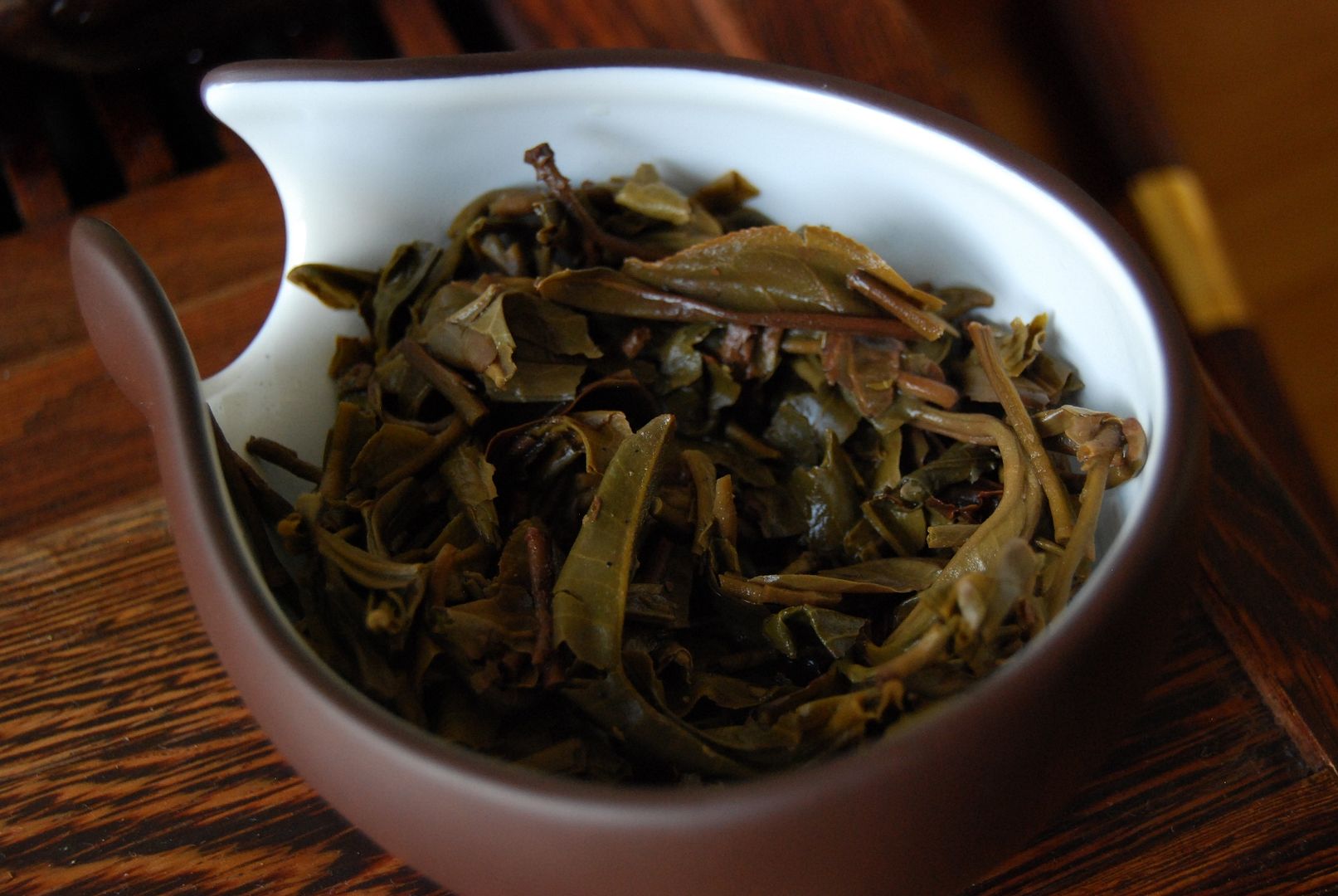
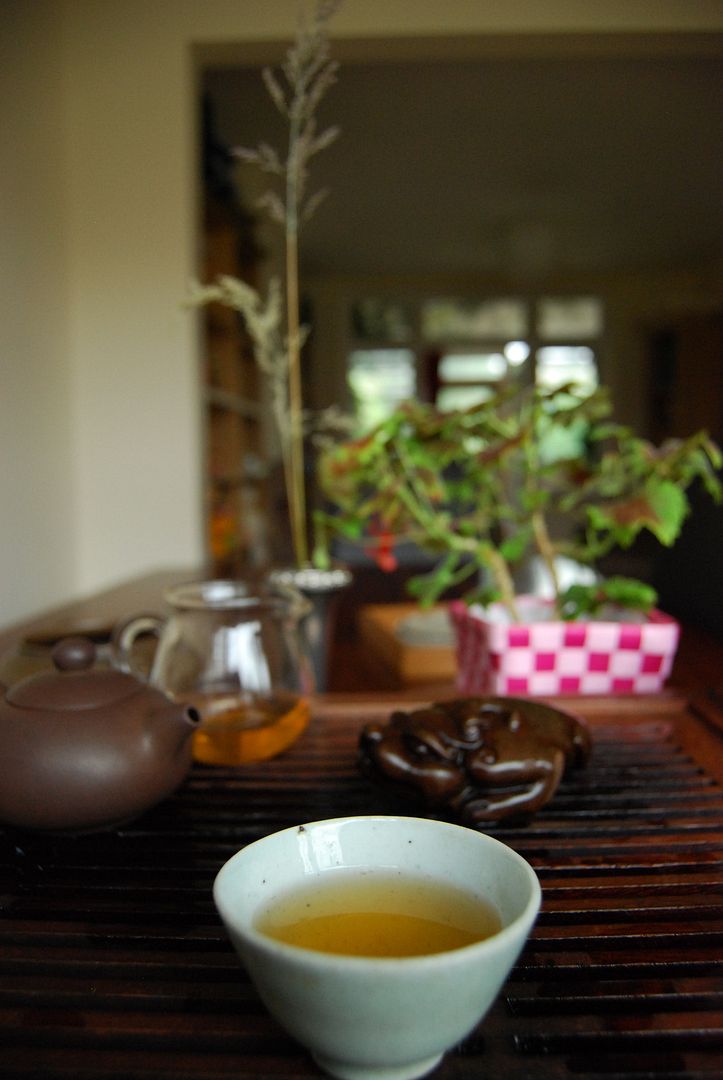


So, how about we then consider the blessed conjunction of melon-tea with something equally hideous: tippy pu'ercha?  The gang's all here.


As always with gifts from Keng, I am hereby forced to eat my words, and retract my statements about how terrible melon-tea and tippy pu'ercha might be.  Keng has a unique ability to demonstrate to me that my opinions are usually wrong, and that I should be ashamed of myself.  In the nicest possible way.  He achieves this through the medium of giving me very nice tea, for which I am always thankful.


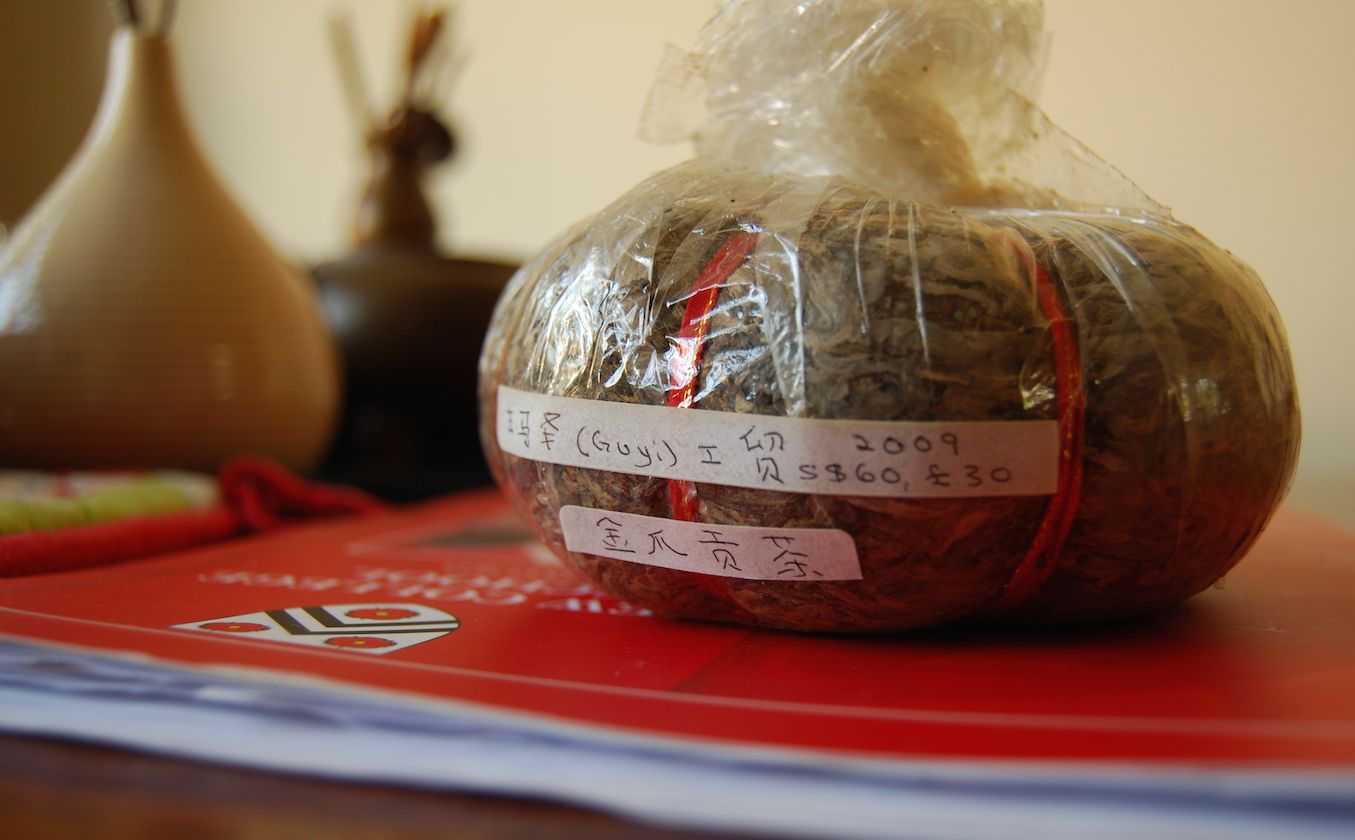
As you can tell from the top-most image, this is a 2009 Guyi melon, and its name is "Jingua Gongcha", or "GOLDEN MELON TRIBUTE-TEA".  The capitals are obligatory, because I imagine a thick-necked Mainland tea distributor trying to convince me that this is Emperor's tribute tea.  Silly names are, as we know, par for the course when it comes to pu'ercha.  I think if I made pu'ercha, I could either take white2tea's approach and go for naming after music (anyone for the 2014 Hobbeschayuan People Equals Sh** special production?) or after characters from dodgy sci-fi ("the 2014 Hobbeschayuan Sarlacc Tongue is aging very well these days").  I might run into trademark problems with the latter, but it'd be worth it for the wrapper designs alone.

My special run for each year would be a bounty hunter.  The 2015 cake would be the 2015 Boba Fett, naturally, but perhaps 2016's special run might be 2016 IG88 - it even looks like a proper pu'ercha recipe number, with the added bonus of being a killer droid with a comedy head.


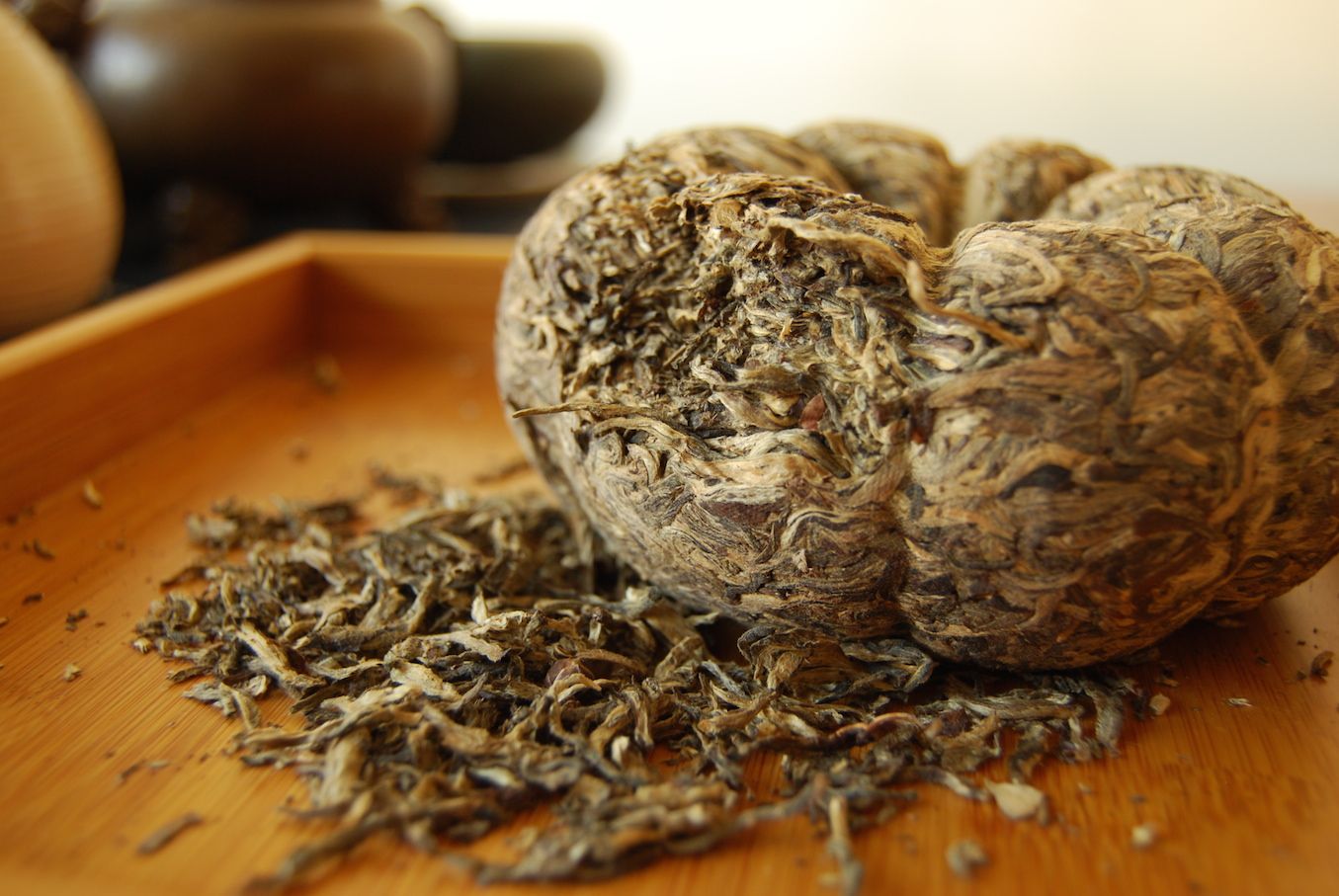
Back to melons.  This melon, being made of tippy leaves (arghle!) separates very easily, because the white fluff prevents the leaves from bonding.  With a little gentle massage, we suddenly move from the compressed melon, shown above, to the chahe of leaves, shown below.


Much like some of the other tippy-pu'ercha that Keng has so generously provided me over the years, this is actually really good, despite my vitriol.  The yellow-orange soup has the predictable and charming scent of fresh pollen (achoo), but it has a strong centre of irreducible pu'ercha proper.  It is well-made, clean, and has decent kuwei [good bitterness].  The latter is particularly surprising, and is the important part about fussing around with what is essentially pu'ercha's answer to white tea.


It chugs along like a little 50cc motorbike, but this is deceptive: it goes slow, and it remains constant, but it lasts forever. It gives, and gives, and then gives some more, without sign of diminishing. It actually lasts several days, in a way that many "proper" pu'ercha cakes will not, and for that it must earn our respect. I admire tenacity. If you've got endurance, and you're in for the long-haul, then you have many of the virtues needed to succeed, given time sufficient. That's fine, in my book. I've come across many a weaker student who, through sheer effort of will and endurance, manages to succeed where more naturally talented, but less enduring, students fail.

Thanks again to Keng for so generously and enjoyable demonstrating that my prejudices need to be reworked.

23 May, 2014

Stockholm Syndrome

This curious effect, Stockholm syndrome, refers to the fact that captives (in approx. 8% of cases, according to Wikipedia) may develop positive bonds with their captors. It is not clear if this effect is more prevalent among residents of the Swedish capital.

Long-time readers of this humble web-site may recall mention of my spending time with a cake while we moved house one year. During that time, our tea collection was in storage (of an inaccessible variety), and my tastebuds were held captive by a single bing. This article is about that bing, which I seem to have not tried since that special period in my life.


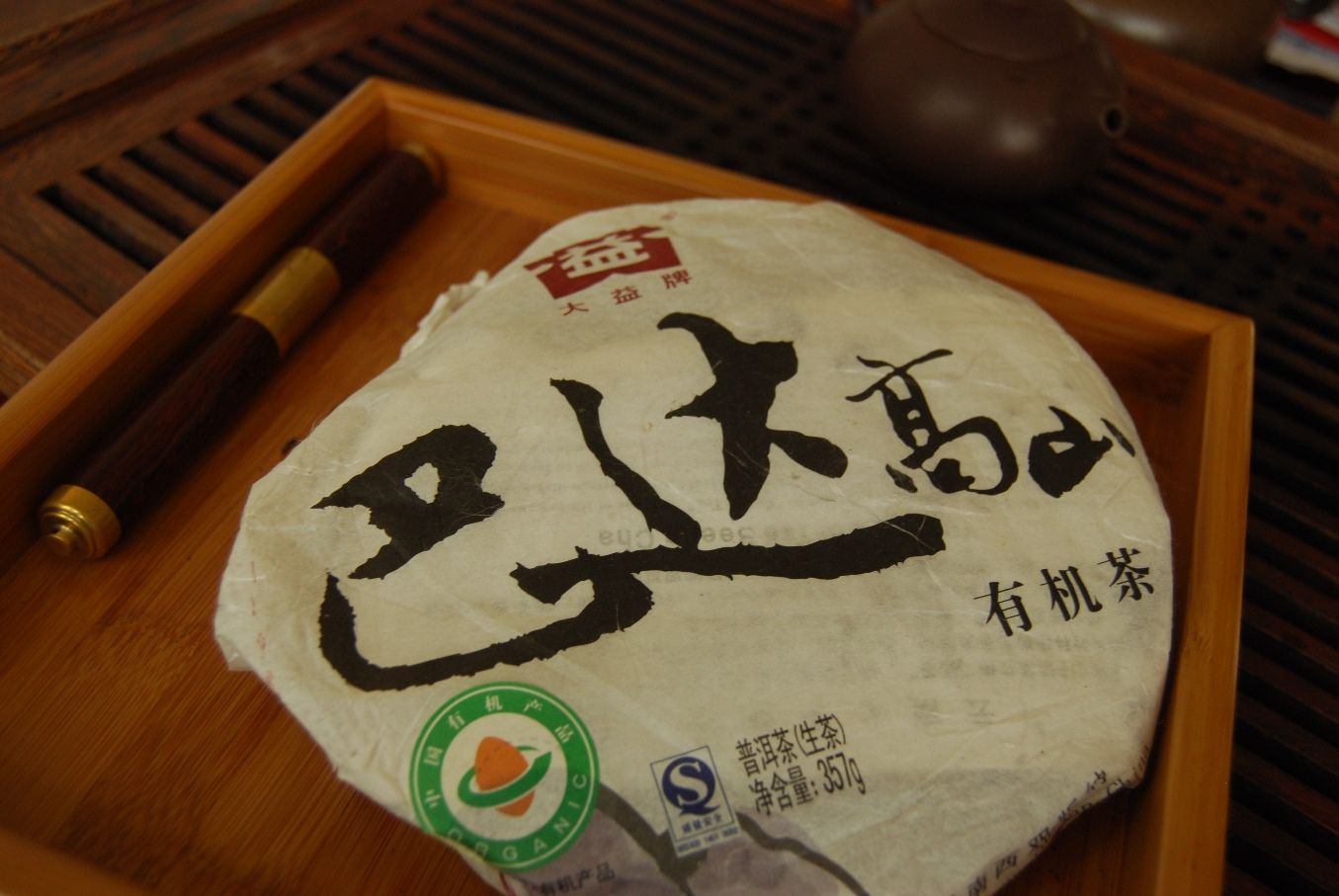
The Menghai "Bada Gaoshan" is, supposedly, an organic cake ("youjicha"). Naturally, with organic certification (and any other manner of certification) being such a mutable / purchasable descriptor in China, we must take claims with a moderate dose of salt. At the least, Menghai Tea Co. is tacitly admitting that pesticide-free tea is a good thing, even if this tea may or may not contain Heaven-knows-what in terms of man-made additives. Such are the gambles one takes when buying Chinese tea! Roll the dice, and take your chances...


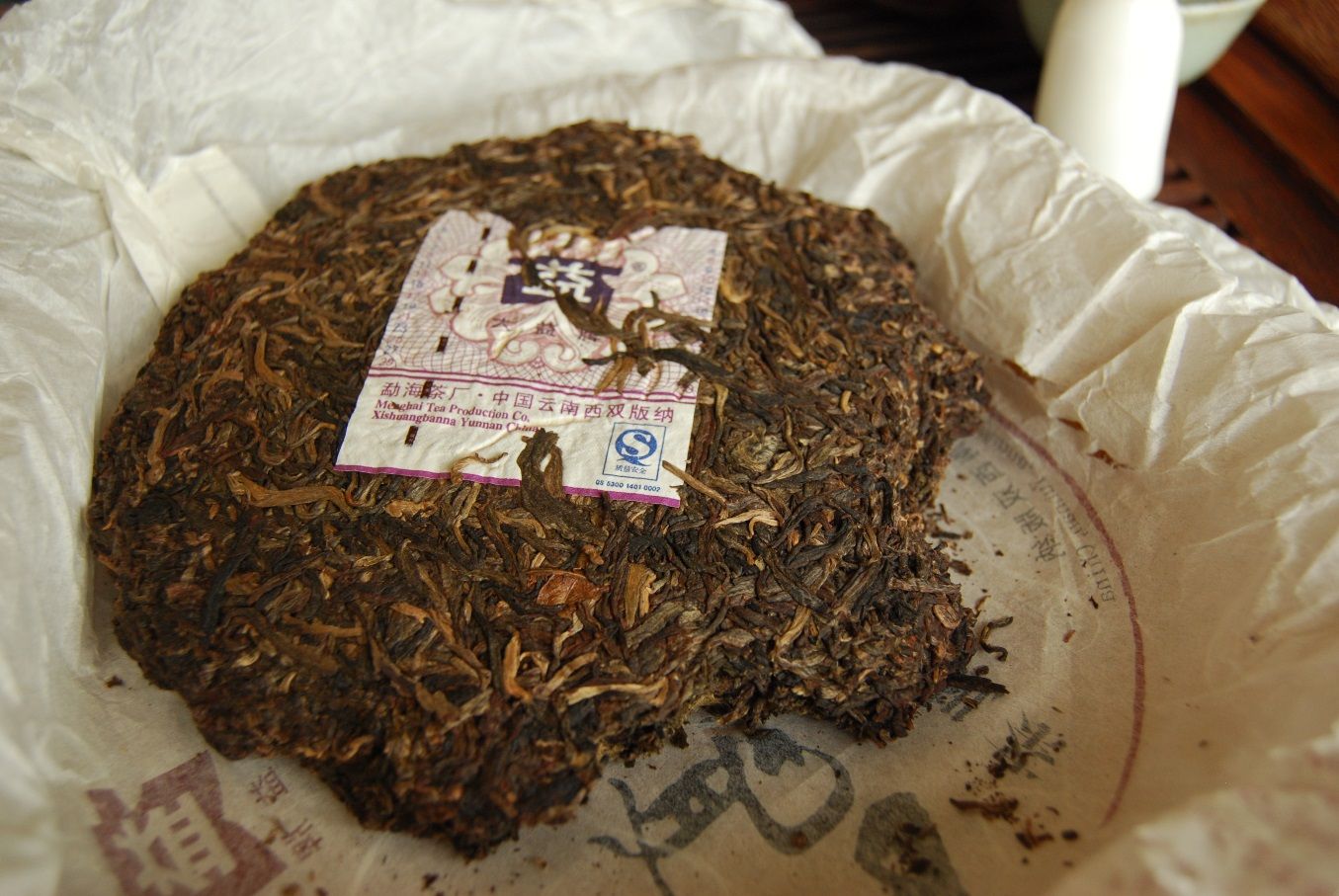
The leaves of this old friend of mine are small; it is easy to overbrew, because I tend to use too may leaves when they are small.  Looking at the photographs above and below, you might immediately recognise the typical "Dayi" appearance of the cake.  This is an advantage if, like me, you are rather partial to the straightforward-yet-appealing charms of this factory's output.  They are cheap and, often, very cheerful.

Well, they used to be cheap.  This cake certainly was, at £9 back in 2009.  What can you get for £9 these days?


This time, I win: the first infusion is sweet and well-structured.  The grassiness of Badashan is a charming addition to the usual house style.  The finish is sweetly resonant in the throat, which is likewise fine.  We have the complexity of old honey; this cake benefits from attentive, slow consideration.


While this tea is not, objectively speaking, the biggest ninja in the clan, it holds special appeal with me, which brings me back to Stockholm syndrome: I spent so long with it, and drank nothing else but this tea, that it has defined "Badashan" for me. All Badashan cakes subsequent to this are immediate in their comparison: I was going to write that "it is like one's first girlfriend", but then I decided against it.

This cake is aging nicely, and whether or not it is "youjicha", it certainly has its virtues. When weighed against the fact that it cost a hideously offensive nine (9) English pounds, and the fact that it has such a unique place in my heart despite so many good cakes that have come since, we cannot conclude anything other than that this cake is mighty fine. Try some - I'm sure it's available somewhere, for lovers of basic but reliable Badashan tea. It used to be available all over the place at one time.

05 May, 2014

A Wild Xizihao Appears

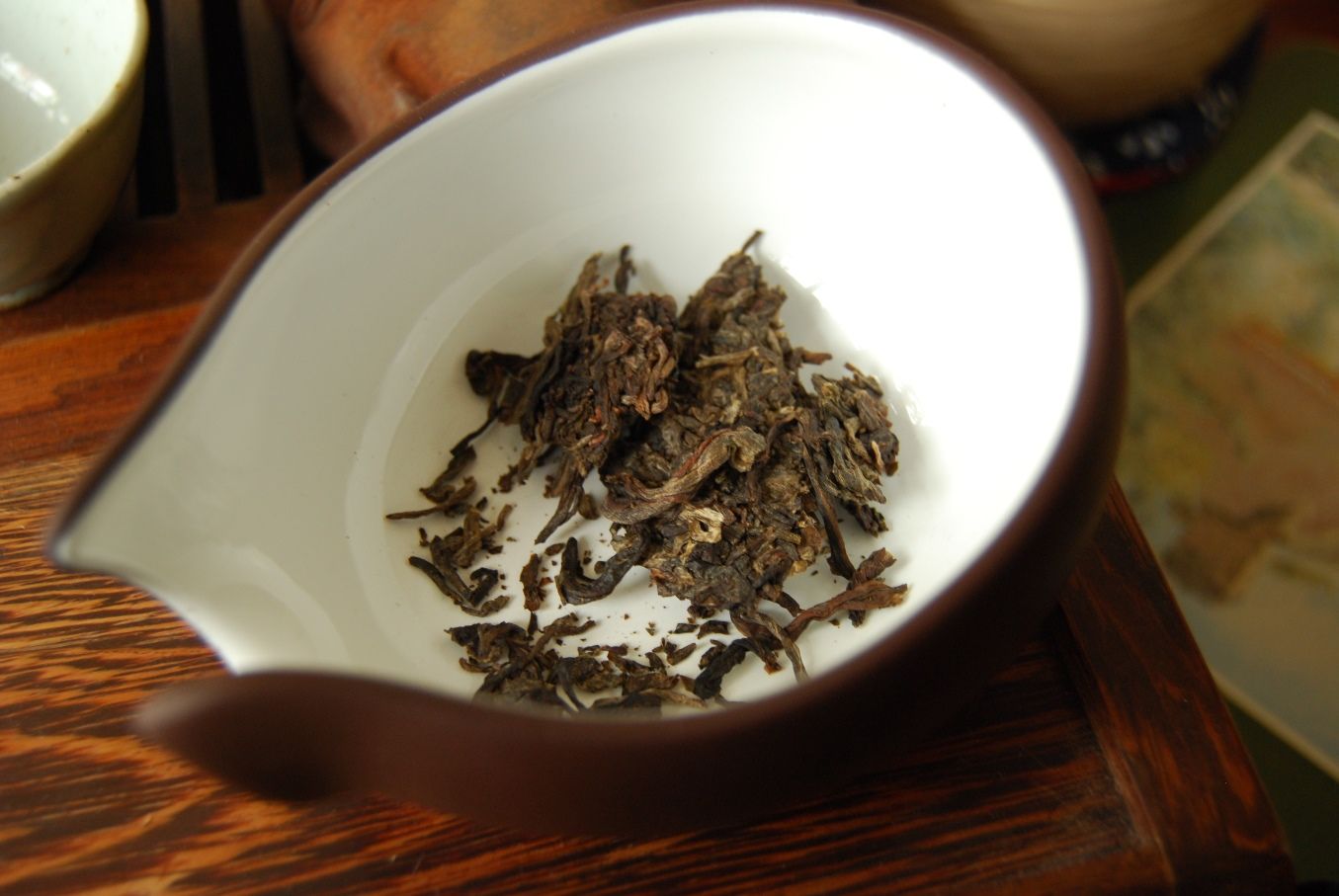
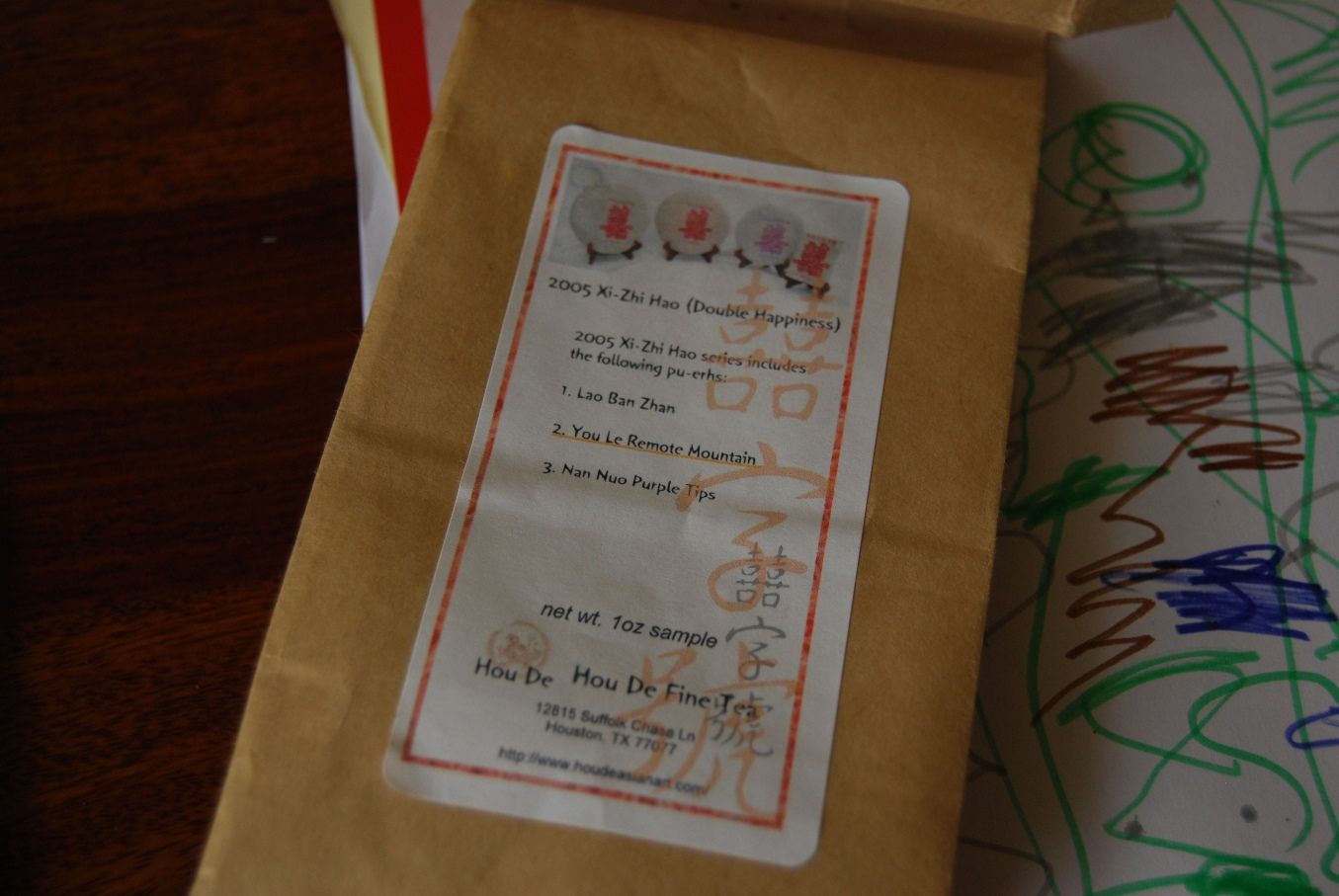
How on earth I managed to have entirely missed a sample of "XZH" is beyond me, but missed this 2005 Youleshan I appear to have.  Its presence, nestled in the far-off recesses of the darkest parts of my collection, suggests that I have had it some time - as does the layer of dust.  Today, archaeology!


I need something low-risk today, and nine-year-old Xizihao fits the bill.  I have just finished preparing for my first University-level examination, in which some poor student gets to spend three hours with me and an external examiner, dressed in comedy Elizabethan costume, defending his work.  As if rebutting our probing questions weren't bad enough, doing it in comedy clothing really takes the cake.


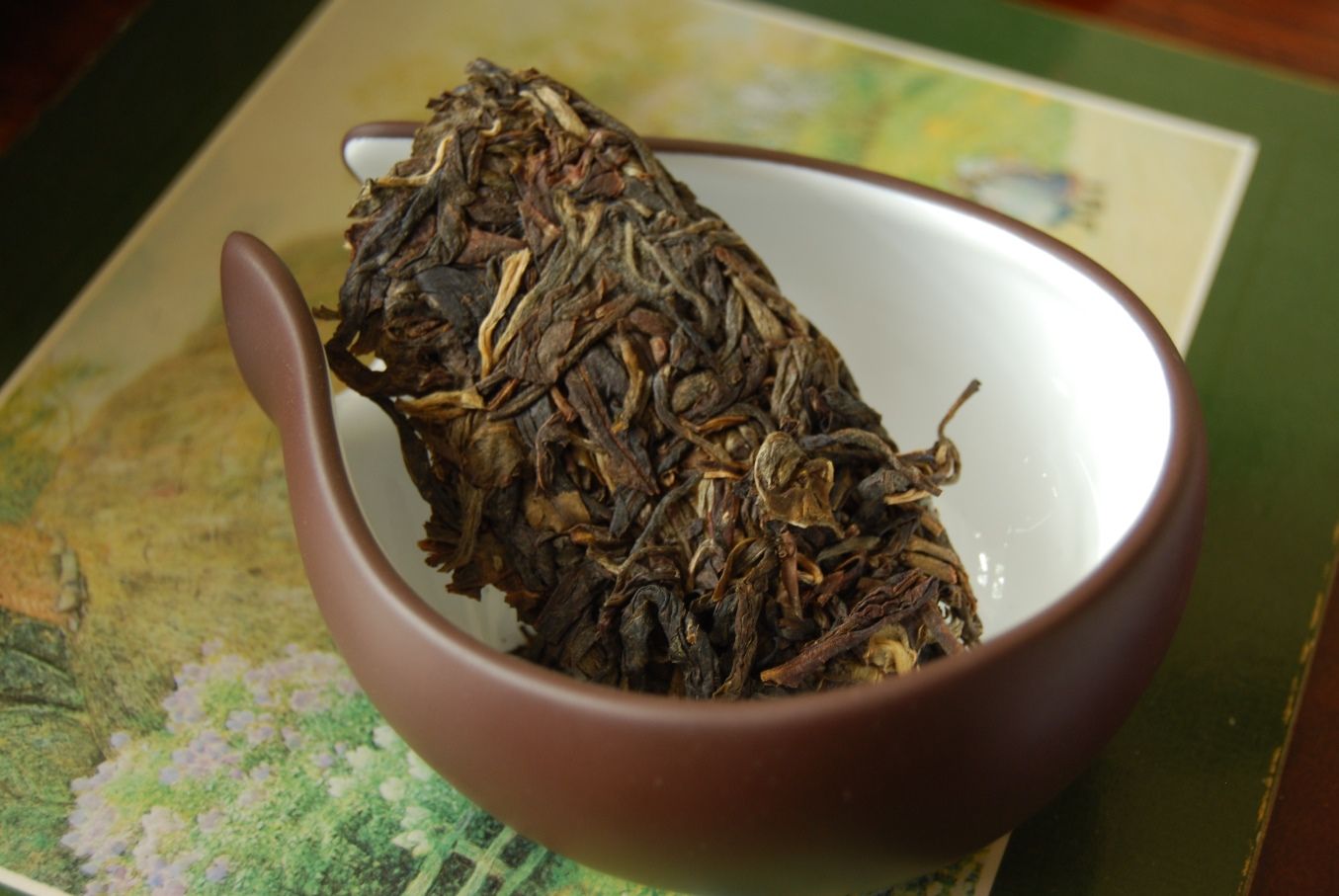
This cake seems to contain a little of everything: basis leaves, huangpian [yellow flakes], furry tips, little stems.  Perhaps "rugged" would be a good description of the maocha used to make it.

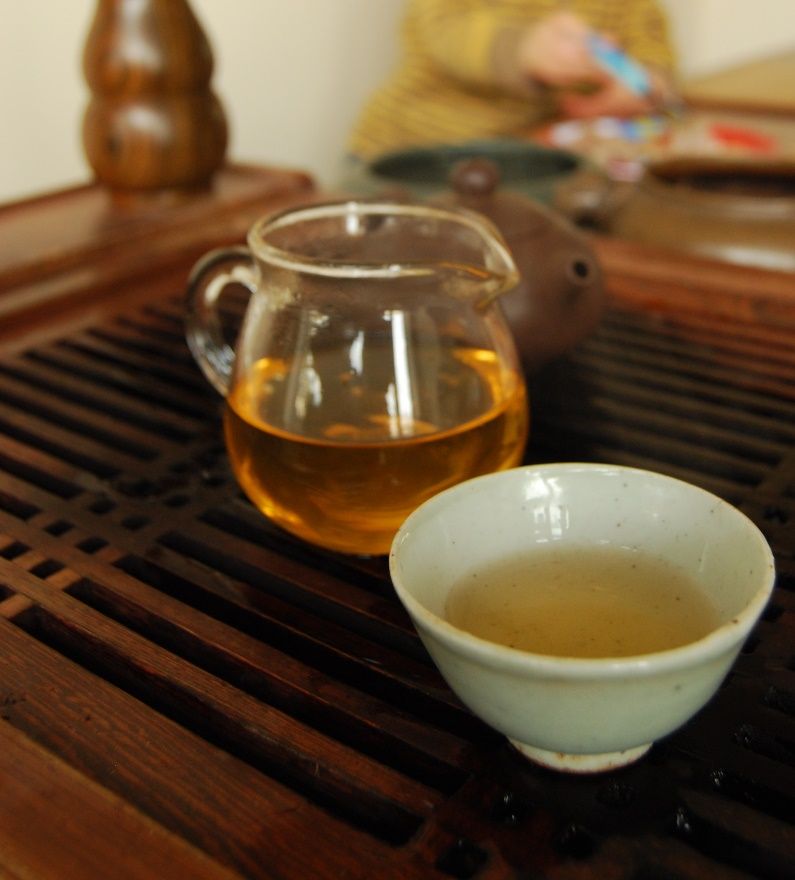
As ever, Sanhetang, the producers of this brand, demonstrate that they know how to press leaves: the result is thick, strong, and sweet.  Despite the fact that it has spent its existence in a tiny paper bag, here in England, for its life, the leaves have aged well.  There is a clean, orange soup (pictured below); the character in the mouth has a solid base of dark pu'ercha, with a long, unhurried fragrance of orthodox 'Banna tea.


After some infusions, I conclude that this tea is not outstanding - there is a tangy note that I do not enjoy, that has crept into later infusions, along with the naked roughness of plantation leaves. I am just about resolved to ditch this tea and try something else and then think: "No, this is today's tea, and I am going to stick with it." There follows a further dozen infusions that are generically sweet; brewed carefully, the plantation notes can be contained. It is not Xizihao's finest hour, but it is not without virtue - particularly during those first infusions.

30 December, 2013

Aging Tea: A Mixed Bag

I have been sampling my own shelves widely, of late, and have come to some conclusions on the relative merits of my cakes ability to age.  (In each case, I have added notes to the original articles, which you are invited to inspect by following the corresponding links.)

The Good

The 7542-801 is quite good, although a little akin to a "dry storage" cake. The 7532-801 is better - it tastes more humid and more developed, and does not have the "dry storage" straw of the 7542-801.  Oddly, the 7542-901 is absolutely first-class.  Made just one year later, it is dark and heavy in that classical Dayi manner, and tastes very nicely aged indeed.  I suspect that most people would enjoy it - they would certainly enjoy it for the sub-$10 price in 2009.

Another success story is our aging experiment in central China, where Chinese Mama and Baba have recently brought us a few tong from our stores there.  The 1997 Laojunshan (pictured below), being one such cake brought to England, even though it is shupu, is heavy, round, and excessively sweet with old vanilla.  I look forward to trying the shengpu that we have.


My post-viva Hongjie cakes, bought in 2009 in Maliandao, when my dear wife was unknowingly carrying Xiaohu, our eldest son, has come on very well (much like dear Xiaohu himself!).  The change in the tea-leaves from their original green to a husky red-orange is very encouraging.

Finally, the 1996 Xiaguan bricks from Maliandao (pictured below) are coming on a treat - somehow, they are superdense carriers of vanilla and smooth huigan.


The Not-So-Good

Oddly, the 2003 Zitenglu Zipinhao [Wysteria Teahouse purple-label], pictured below, fits in this category. The original sample that I tried, stored in Singapore, stopped the clocks and was unfathomably excellent.  The actual cake, stored in Taiwan, was less amazing.  I managed to overcome some of this simply by using many more leaves of the Taiwanese-stored cake, which got it a little closer to the Singaporean version.


Perhaps most concerning of all, the 2011 Yunzhiyuan "Autumnal Xikong" (pictured below) has collapsed into tasting like purple tea.  I am deeply concerned for its future, and will take this as a warning concerning the purchase of super-sweet, unaged autumnal cakes in future.


Tea is such an education, and an experiment in itself.

26 August, 2013

How Wild is Your Wild-Tree?

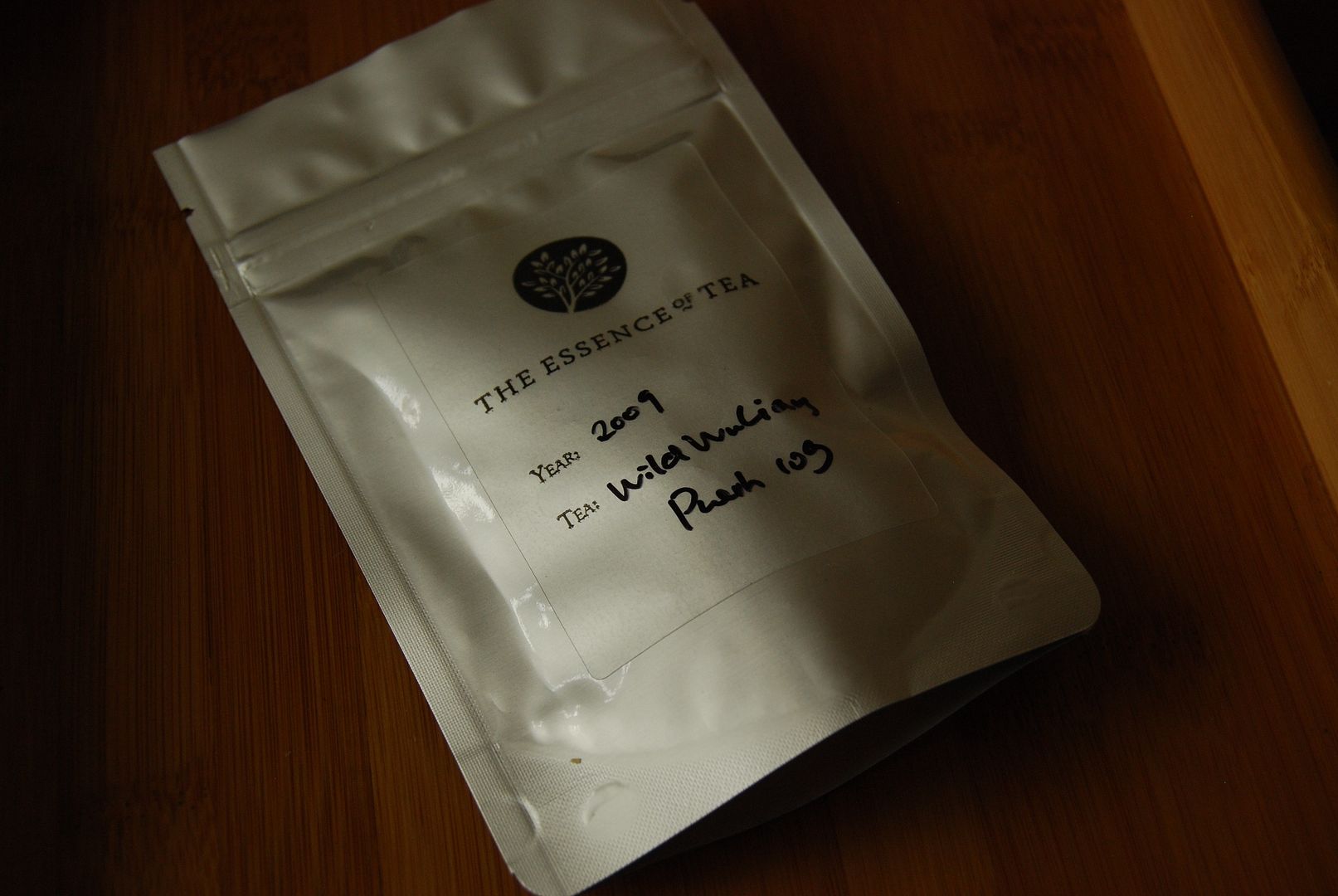
In the case of the 2009 Wuliangshan "Wild Trees" from Essence of Tea, the answer is: really rather wild.


Wuliangshan is an area of the world to which I have never travelled, and yet which I totally dig, in both far out and happening ways. 

Of course, this (really rather long) range of mountains is in northern Simao diqu, the next range over from Ailaoshan.  I have previously enjoyed, in excessively extravagant wise, the 2011 Wuliangshan from Scott at Yunnan Sourcing, which is heavily represented on my tea-shelves and which is Superbad.

This tea from EoT is completely different.


I am always grateful to Mr. Essence for his unique samples that give insights into otherwise unobtainable aspects of pu'ercha, usually those very hard-to-find guarantees of actual laoshu material.  I remember fondly, among many others, the 2008 Laobanzhang which was 100% laoshu, and quite an education in itself.

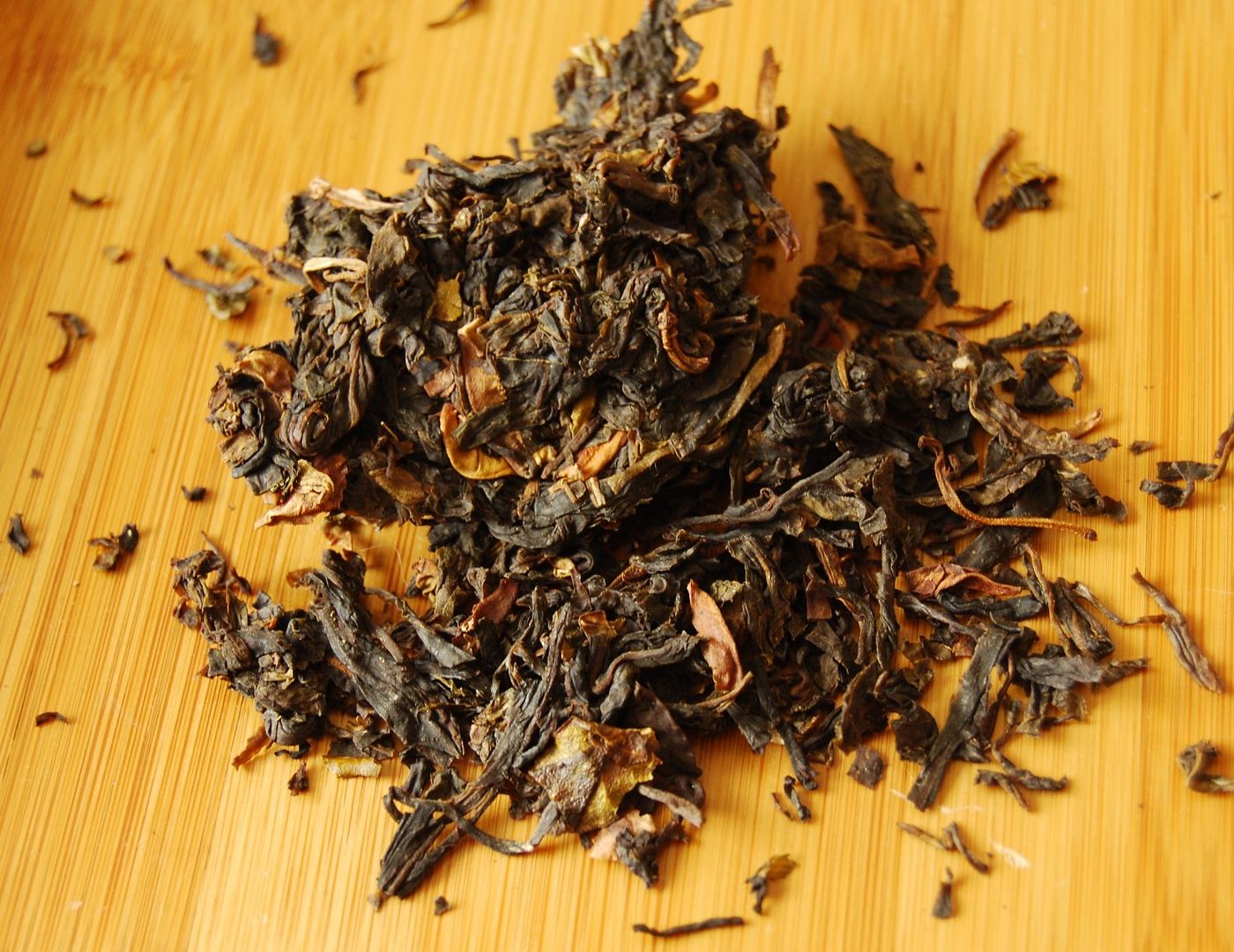
Shown above and below, my first impression of the leaves was, "Yikes: these are scarlet!"


The first time around, with this tea, I could not get past the "red" character: the soup was immediately orange, and, while light and crisp, it seemed to be everything that was difficult (to me) with red-leaf pu'ercha: I felt that it had a very "low ceiling", despite being crisp and fresh.  I piled in the leaves, and the character remained almost entirely unchanged - it was impossible to overbrew, such was (as I perceived it) the limitation of the leaves.


My journal had, after that first session, "I could drink this stable, fresh, crisp, and unchanging little red tea all day".


Taking pity on me, Mr. Essence sent me another sample - a much larger quantity, in fact.  He urged me to try it again.

It turned out that this charitable act was just what was needed.  It was an abject lesson in getting over oneself.  Yes, the leaves were very red.  Yes, there was a long distance to be covered between trees and processing location, giving time for oxidation.  All that is true.  Yet, the tea itself shines through its processing.  In the second and third sessions with this tea, it delivered a sweetness and charm that works slowly on the affections, winning you over such that, before you know it, you realise that you have thoroughly enjoyed the session.

What a curious experiment, and a lesson learned with thanks.

12 July, 2013

A Grimm Tale

Up until today, I was under the impression that Dayi cakes were, at least, fairly good.  Most are, to my tastes, really rather satisfying.  Every now and again, there is a duffer (e.g., 0622), but never anything that I could actually describe as bad.

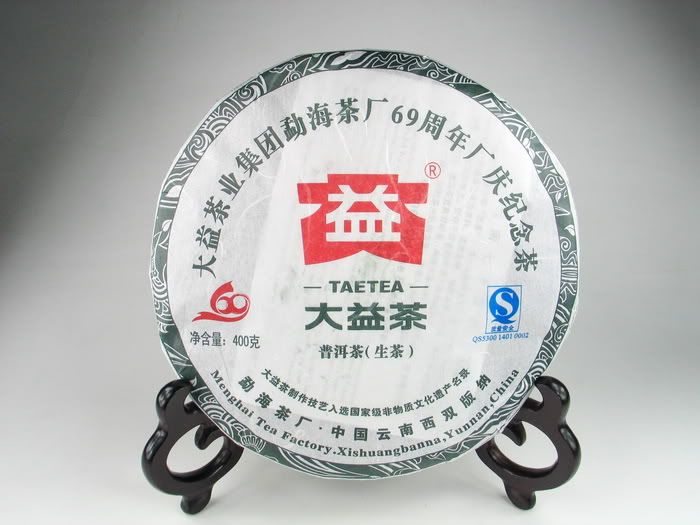
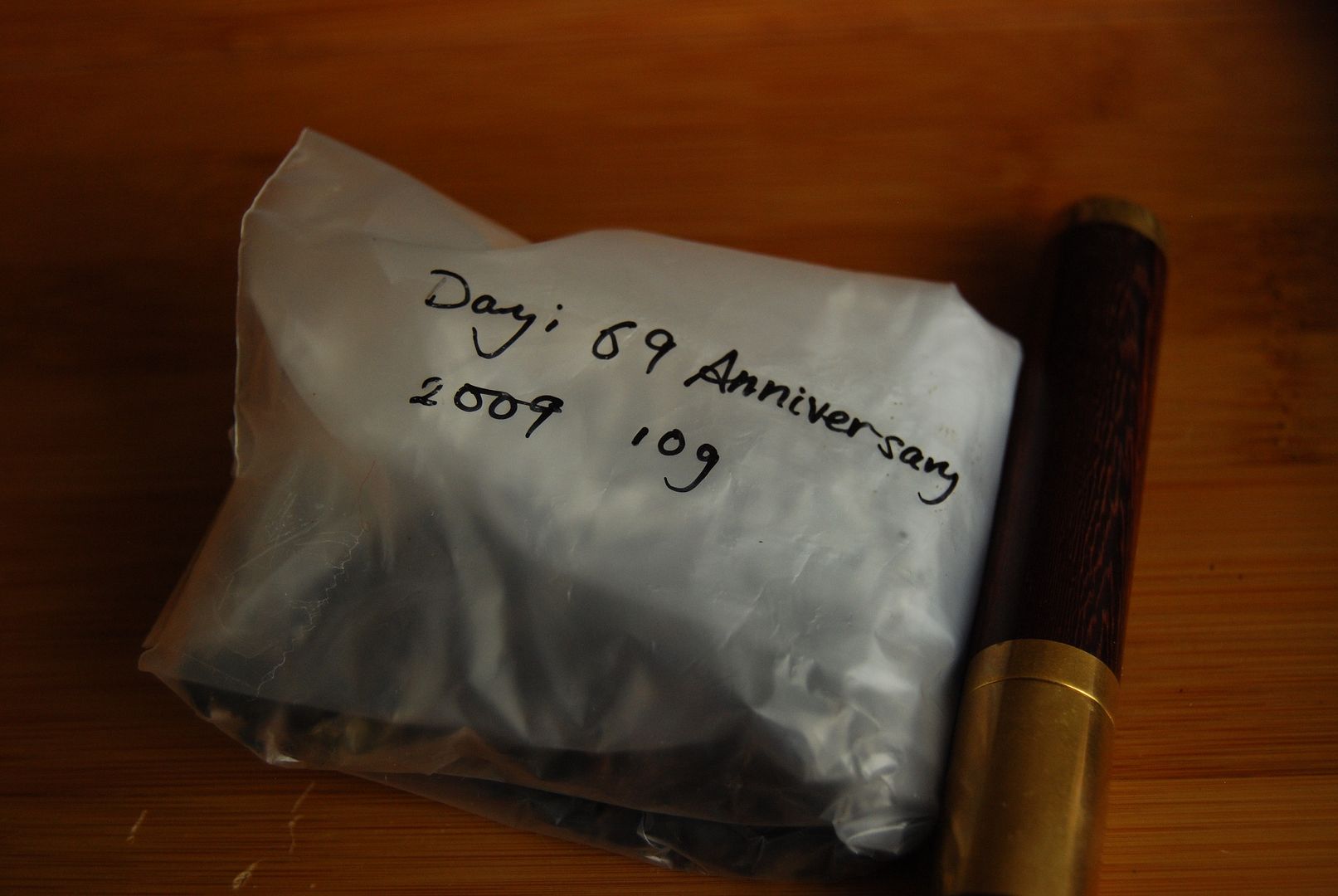
Ladies and gentlespoons, I give you the 2009 Dayi "69th Anniversary" cake.


2009 Dayi 69th Anniversary


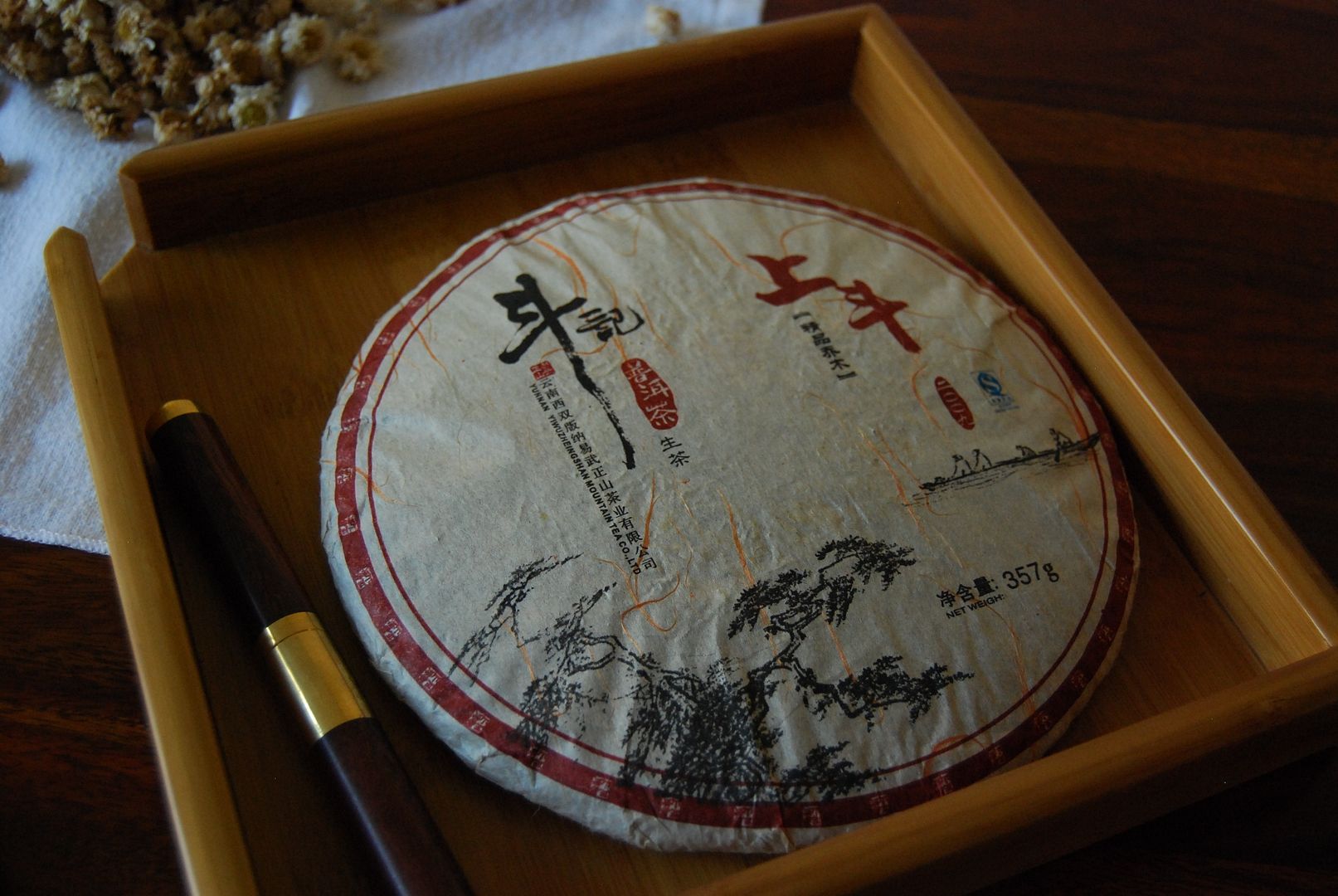
It is not possible to discern the magnitude of this cake's suction from the wrapper, which looks innocuous.


2009 Dayi 69th Anniversary


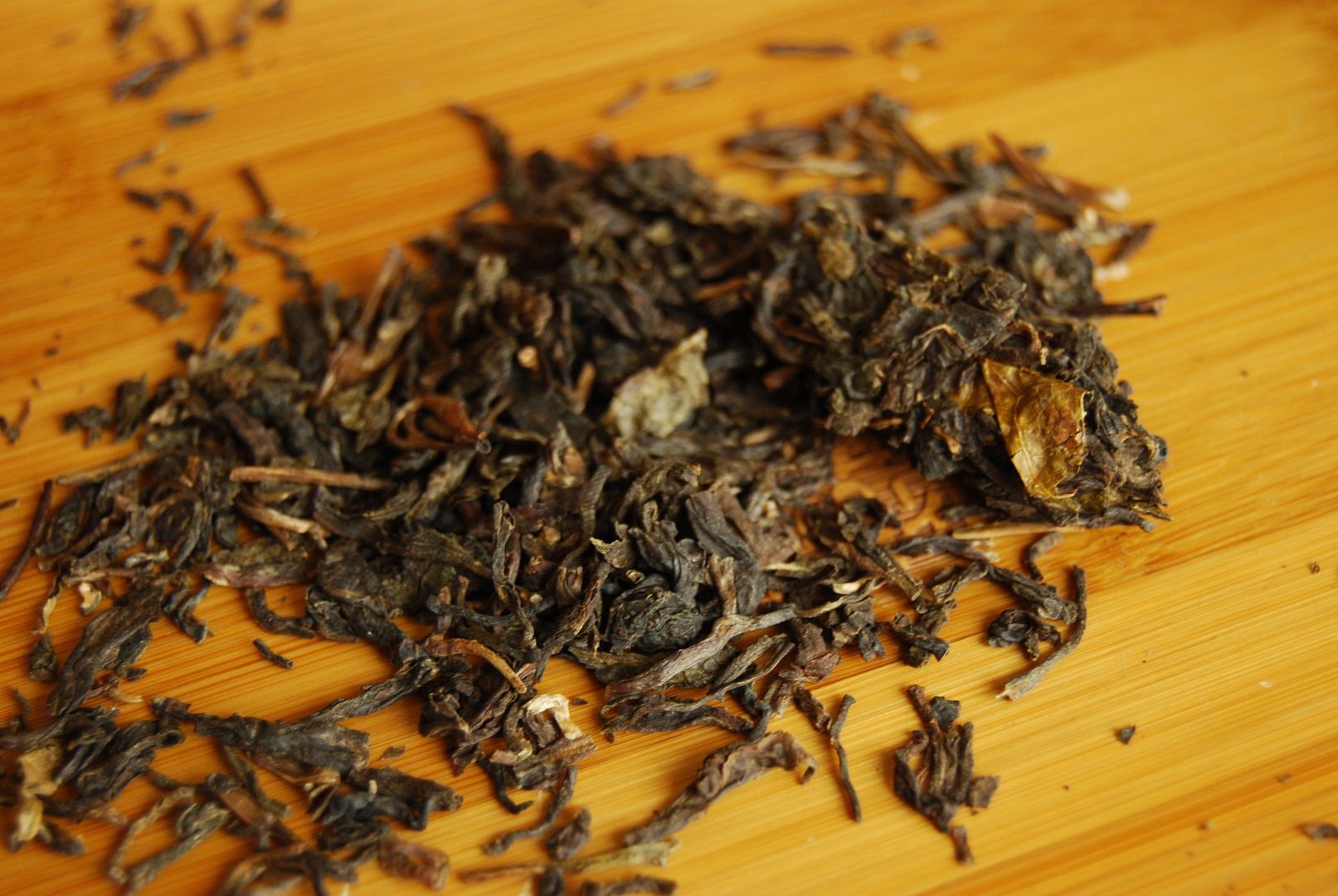
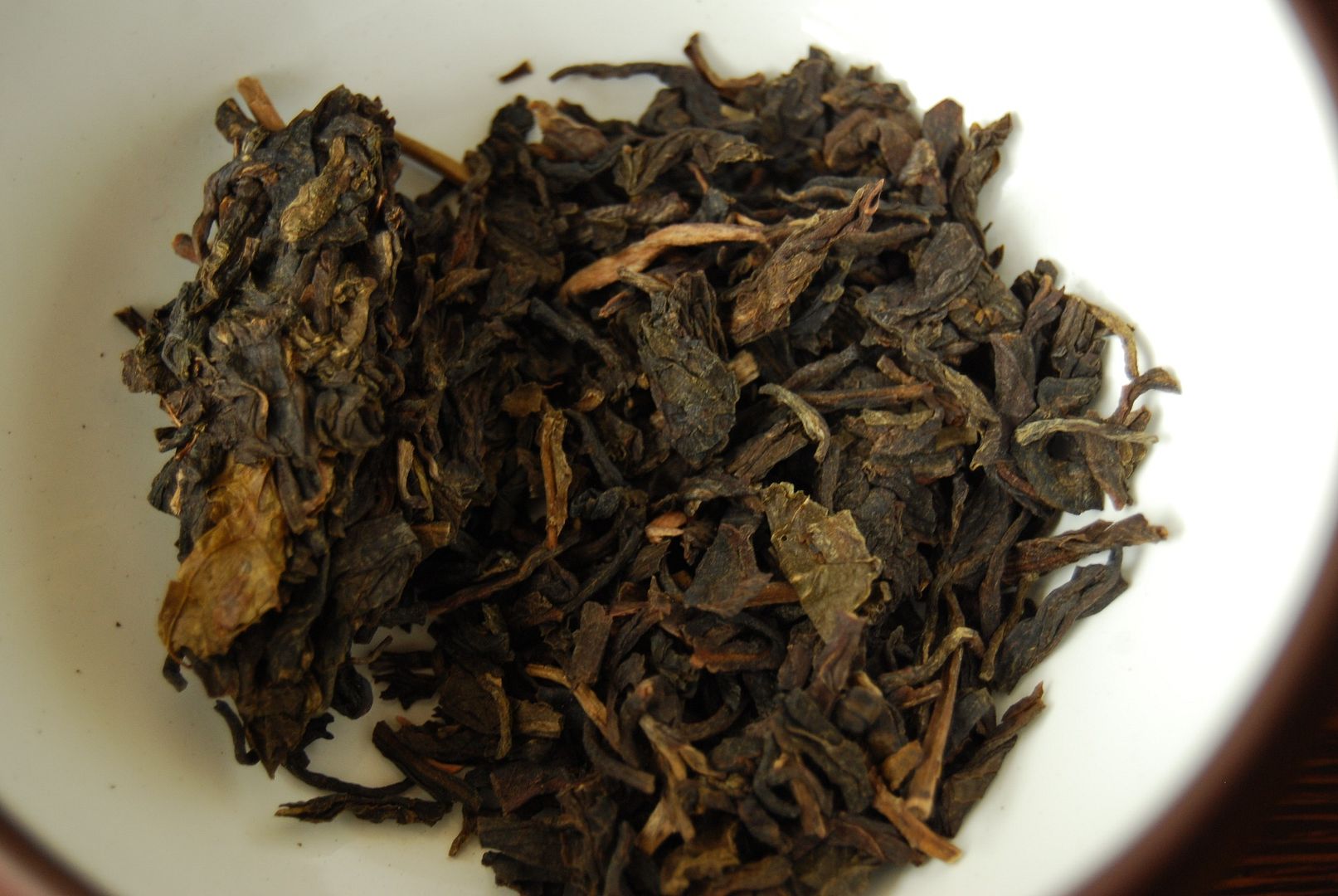
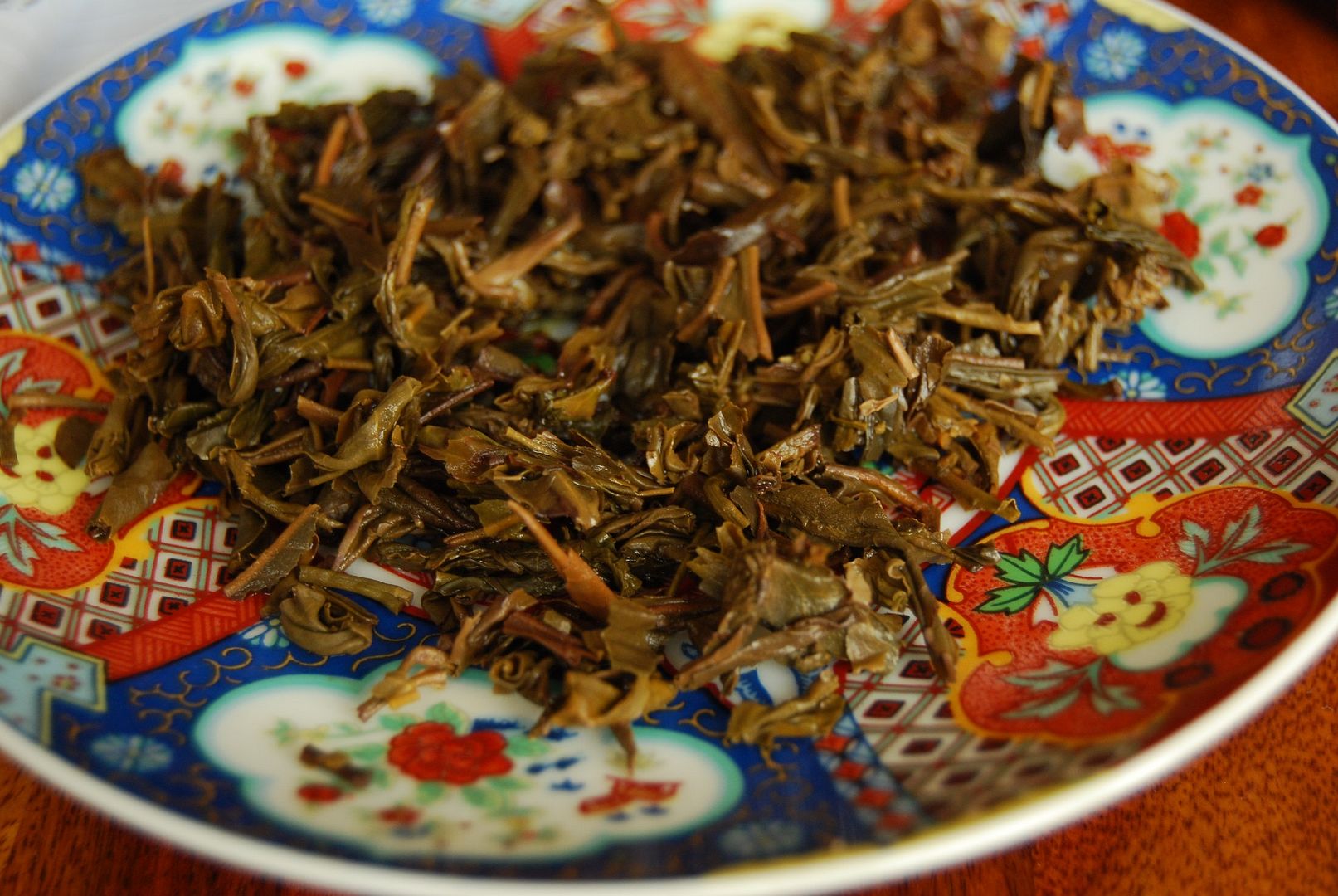
By the time we turn out the dry leaves, we encounter a fragmented mess - but this is Dayi, after all.  With its inclusion of huangpian [yellow flakes], it looks a little like the 70th anniversary cake from 2010.


2009 Dayi 69th Anniversary


However, this is where the similarity to Dayi cakes begins and ends.


2009 Dayi 69th Anniversary


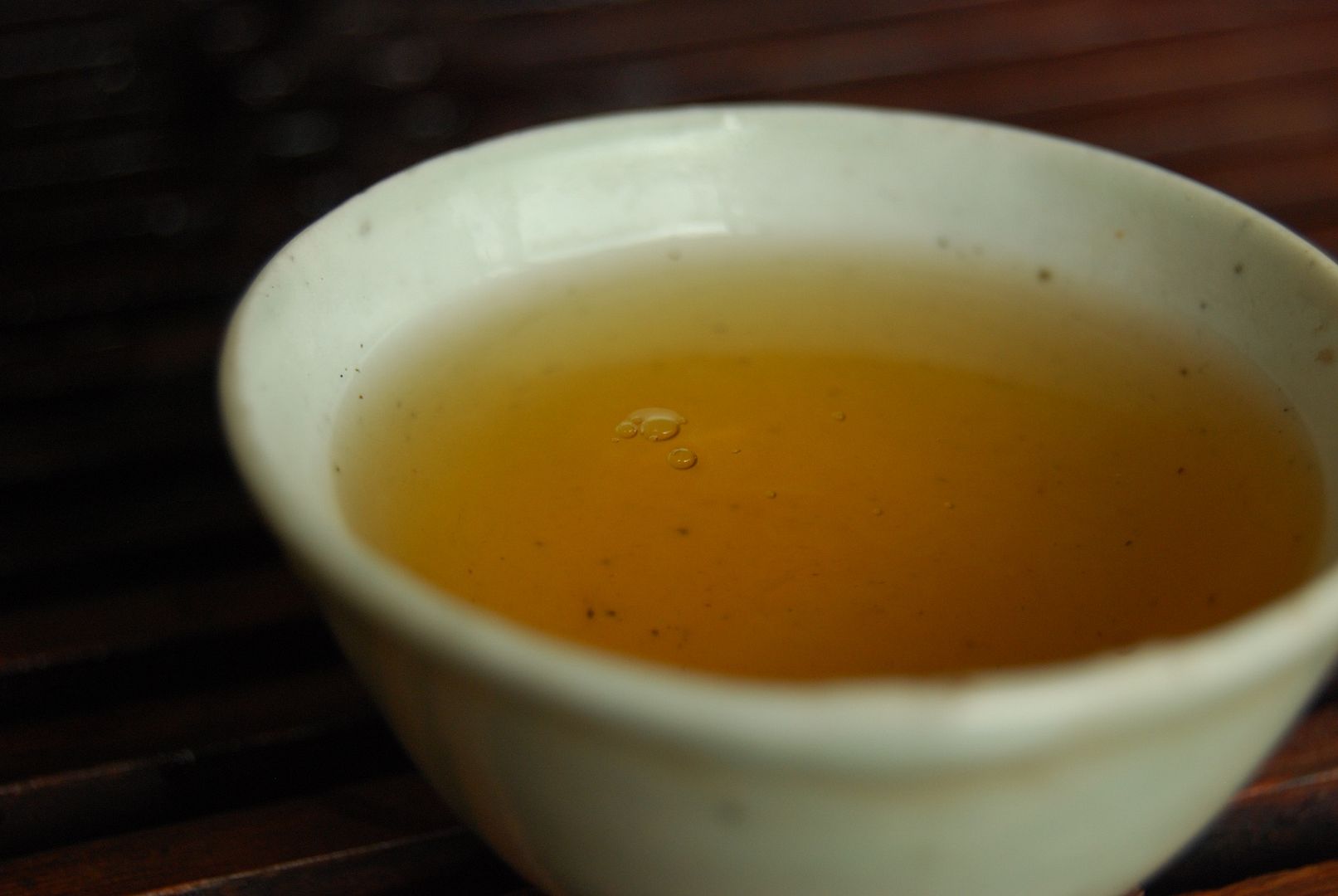
The soup turns out a little orange (pictured below), in correspondence with the fraction of red leaves that may be found in the maocha.  The scent is a little fishy, in the manner of Japanese greens, but there are several Menghai Tea Factory cakes that have this characteristic - some old.


2009 Dayi 69th Anniversary


This tea has the worryingly obvious characteristic of artificial agents at work in the mouth.  The tongue and roof of the mouth are numbed, but not in the pleasant manner of gushu leaves; clearly, for the low price (currently approx. $60) this is taidicha.  No, this numbness is aggressive, cloying, and very concerning.  Pesticide, fertiliser - I know not what, but it is absolutely antagonising.


2009 Dayi 69th Anniversary


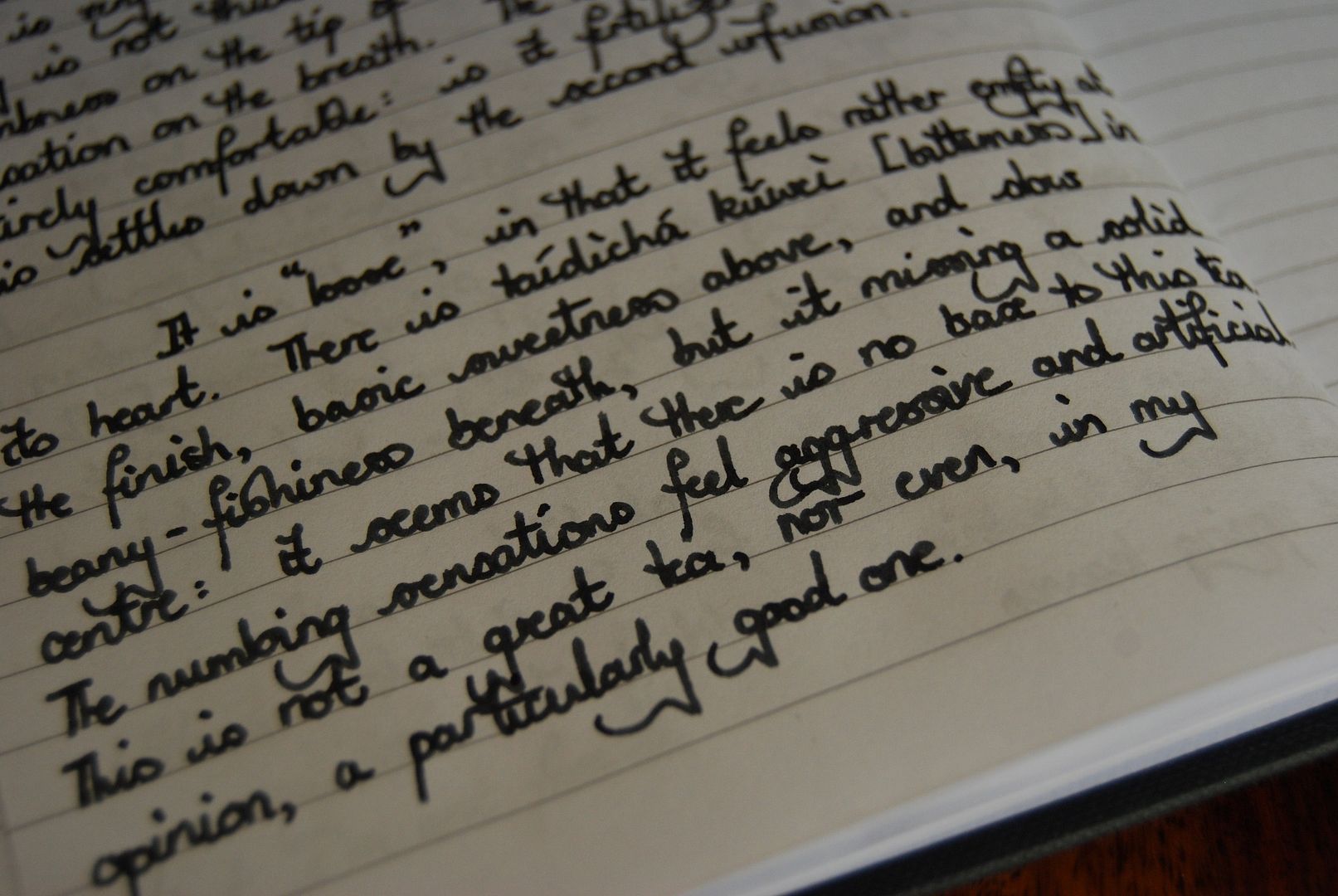
It is a "loose" tea, in that it feels rather empty in its heart.  There is taidicha kuwei [plantation bitterness] in the finish, a basic sweetness above, and slow characteristics of fishy-beaniness below - but it is missing a solid centre.  It seems that there is no base to this tea.

The numbing sensations feel aggressive, and artificial.  This is not a great tea, nor even, in my opinion, a particularly good one.


2009 Dayi 69th Anniversary


I abandon this cake after just a few infusions, marvelling at the very existence of a Dayi cake that I genuinely dislike.  This was sold by Dragon Teahouse, and so I have no reason to suspect that it is a fake, leading me to conclude that Dayi simply dropped the ball when it came to their 69th anniversary.

Grim indeed.

20 May, 2013

You Know Your Collection is Too Big When...

...you discover untasted cakes that you cannot remember buying.  According to my notes, this cost 60 RMB before overheads, from Taobao, in 2009.  The current price is quadruple that, in just four years.

P.s. Hi from Beijing.  I just landed and spent the afternoon drinking tea with PM of white2tea, who is 1x awesome chap, despite being American.


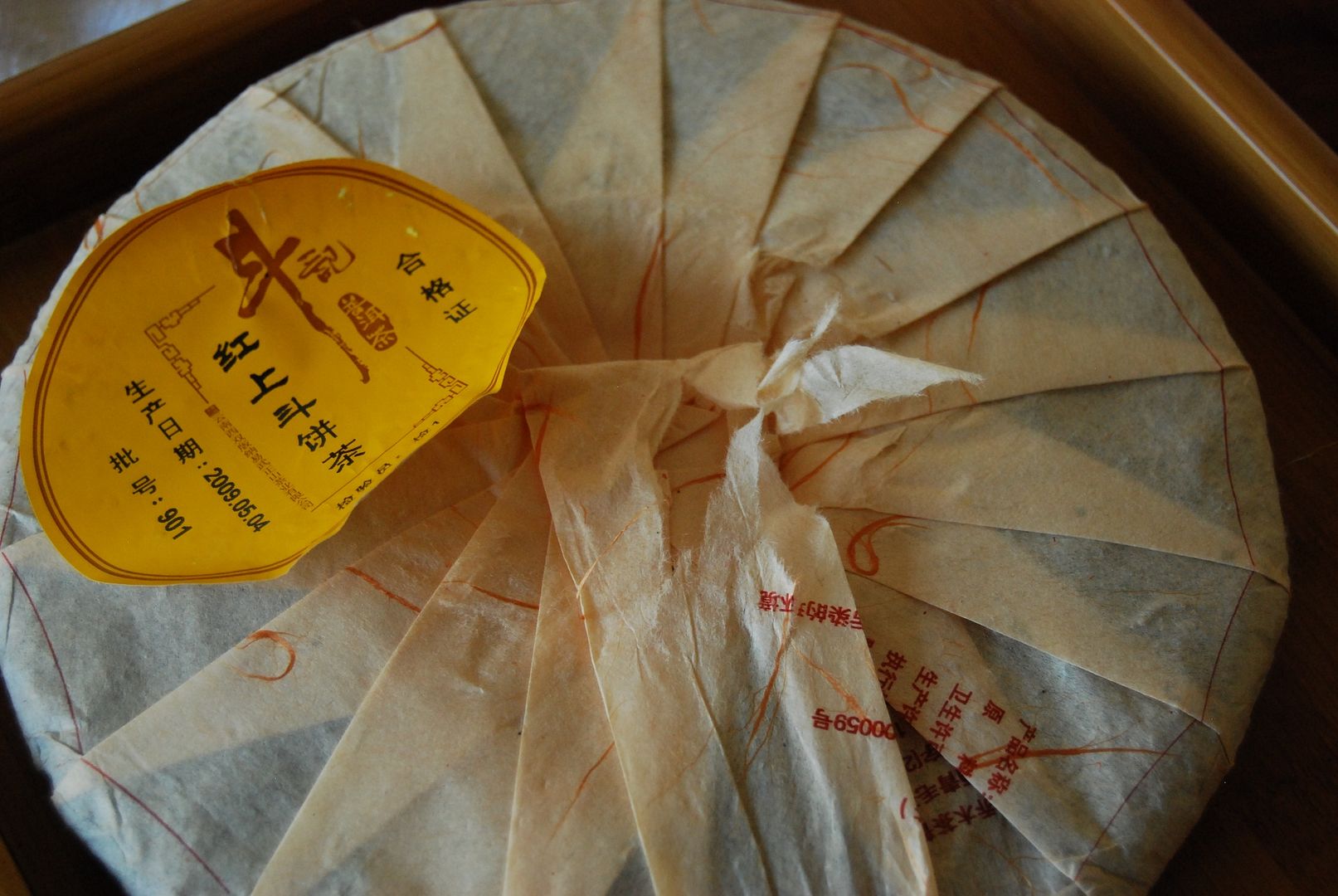
2009 Douji Hongshangdou


This is Basic Douji.  The blends are tasty, but I have no idea how they will age.  The 2008 version and 2012 version were both decent, but what really makes me happy about Douji from a few years ago is the low prices, combined with that reliability.  Obviously, they are not going to turn into frightfully amazing classics, but we can hope for a little something, given the strength of their backbone.


2009 Douji Hongshangdou


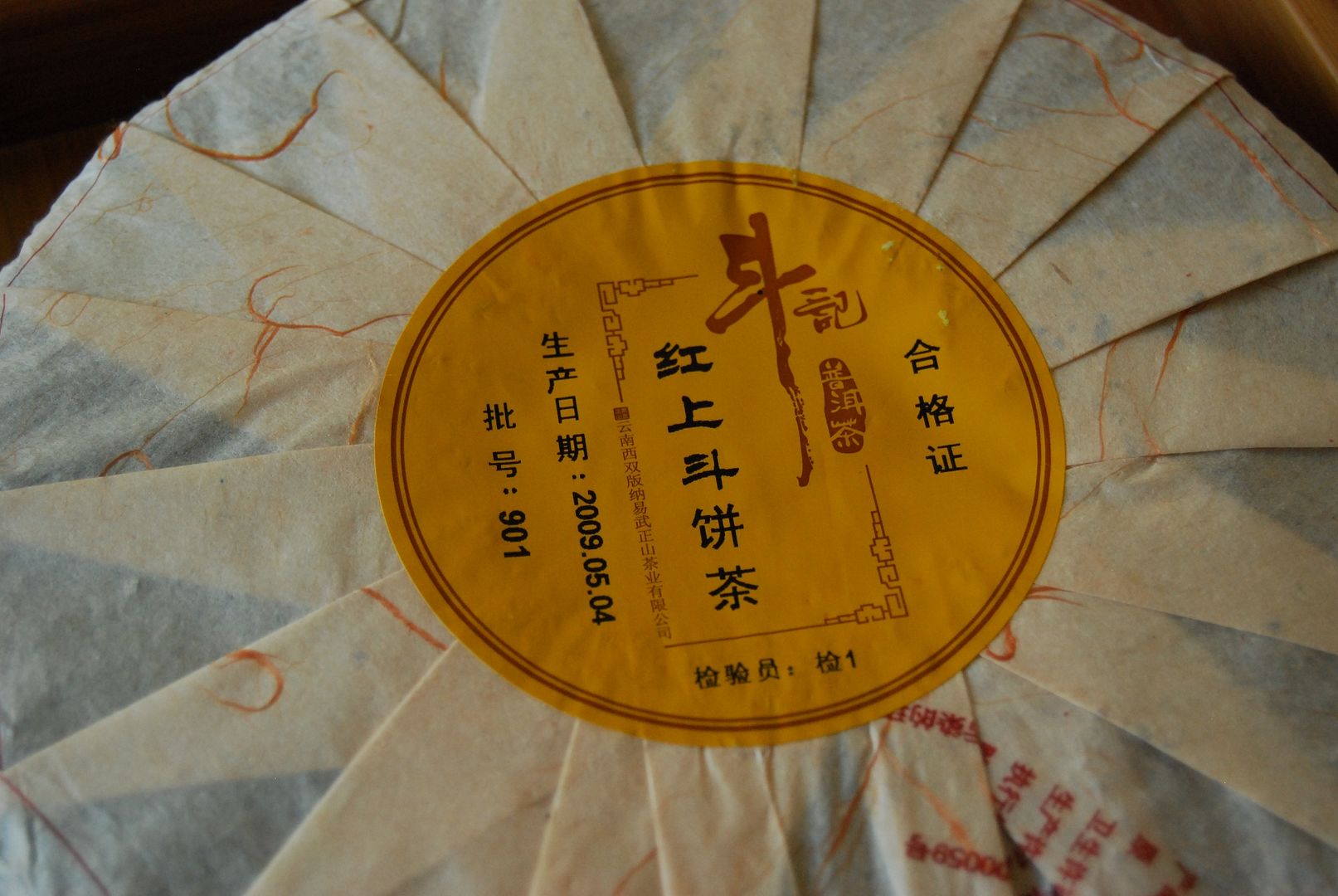
If you've ever tried to get into a Douji cake, you know the sheer agony of the images above and below.  Those big stickers cannot come off without major collateral damage!  Perhaps this is a misguided attempt at controlling for people tinkering with the contents of wrappers.


2009 Douji Hongshangdou


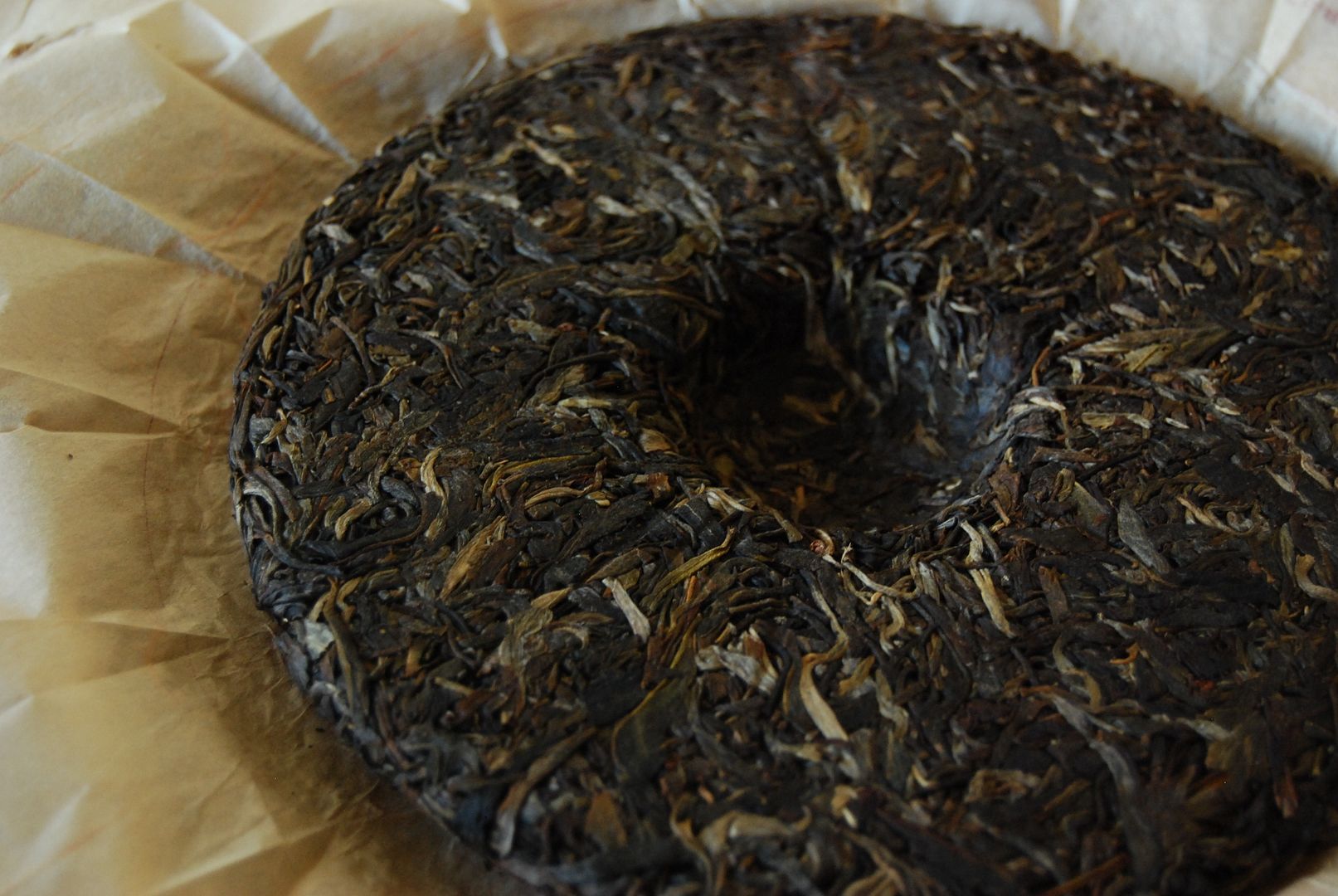
So, this is four years old.  The leaves are dark and mostly whole, as pictured below, and I am struck by the forthright aroma of the cake.  It really has a lot of activity.


2009 Douji Hongshangdou


The compression is just about right: one can withdraw leaves without too much trouble, but they are compressed enough to help the aging process.


2009 Douji Hongshangdou


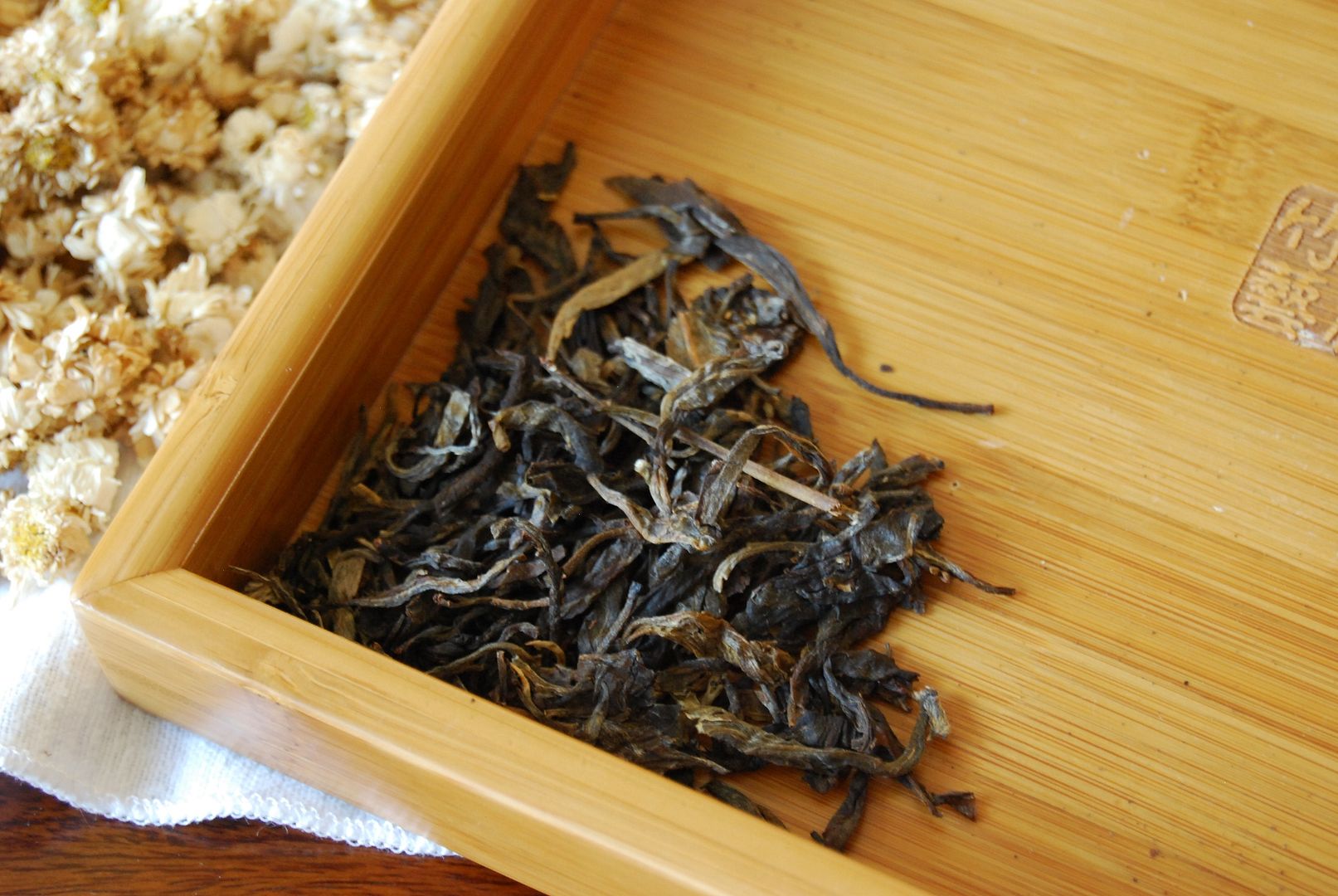
Shown below, the resulting leaves are long and luxurious - surprisingly so for a very humble blend.


2009 Douji Hongshangdou


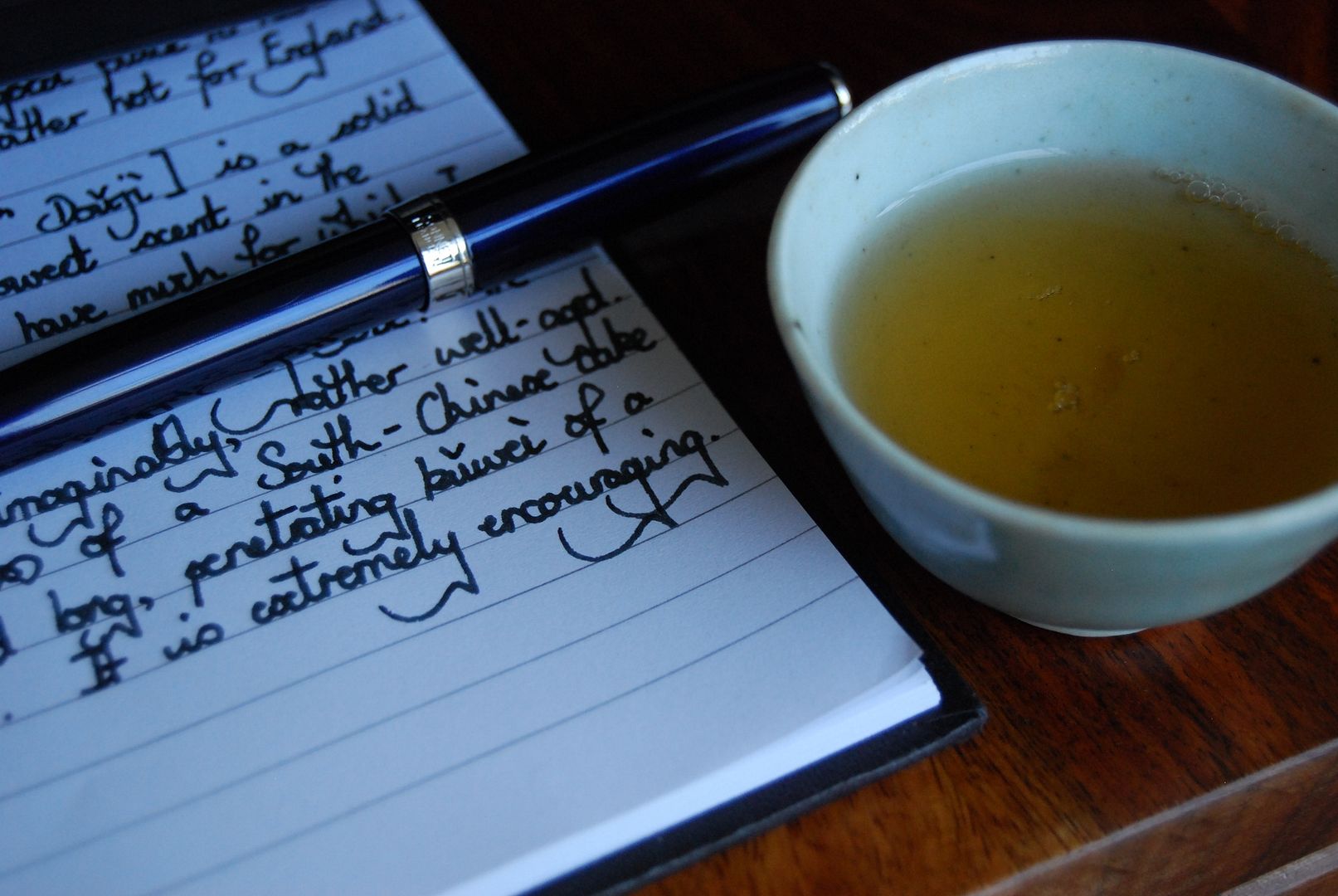
The soup is a heavy orange, and I assume (from the 2012 version) that this started off a similarly yellow colour.  Such a change in four years is quite exciting.  Exciting, I tell you!  (These are the sad thrills of the collector of pu'ercha, for which you must either forgive me, or be guilty of committing in yourself.)


2009 Douji Hongshangdou


This cake has been stored nowhere except for our house, and so it is a fascinating (and rather nerve-wracking) "control" for my experiments.  Happily, it has the dense sweetness of decent storage, with the endurance and long, penetrating kuwei [good bitterness] of a young cake.  It is extremely encouraging.


2009 Douji Hongshangdou


The leaves, shown above, are healthy and thick with little wastage, and no sign of weakness.


2009 Douji Hongshangdou


For a fundamentally basic cake, that cost next-to-nothing, this has come on incredibly well.  I allow myself a little hope for the remainder of our collection.

17 May, 2013

Now with Extra Keng

I am packing for Beijing, and it is strange: England is current 9 degrees Celsius. I am wearing thick trousers, a waistcoat, and a jacket.   I almost wore gloves yesterday.  Snow is forecast for next week.

Meanwhile, Beijing is 32 degrees. Crazy.


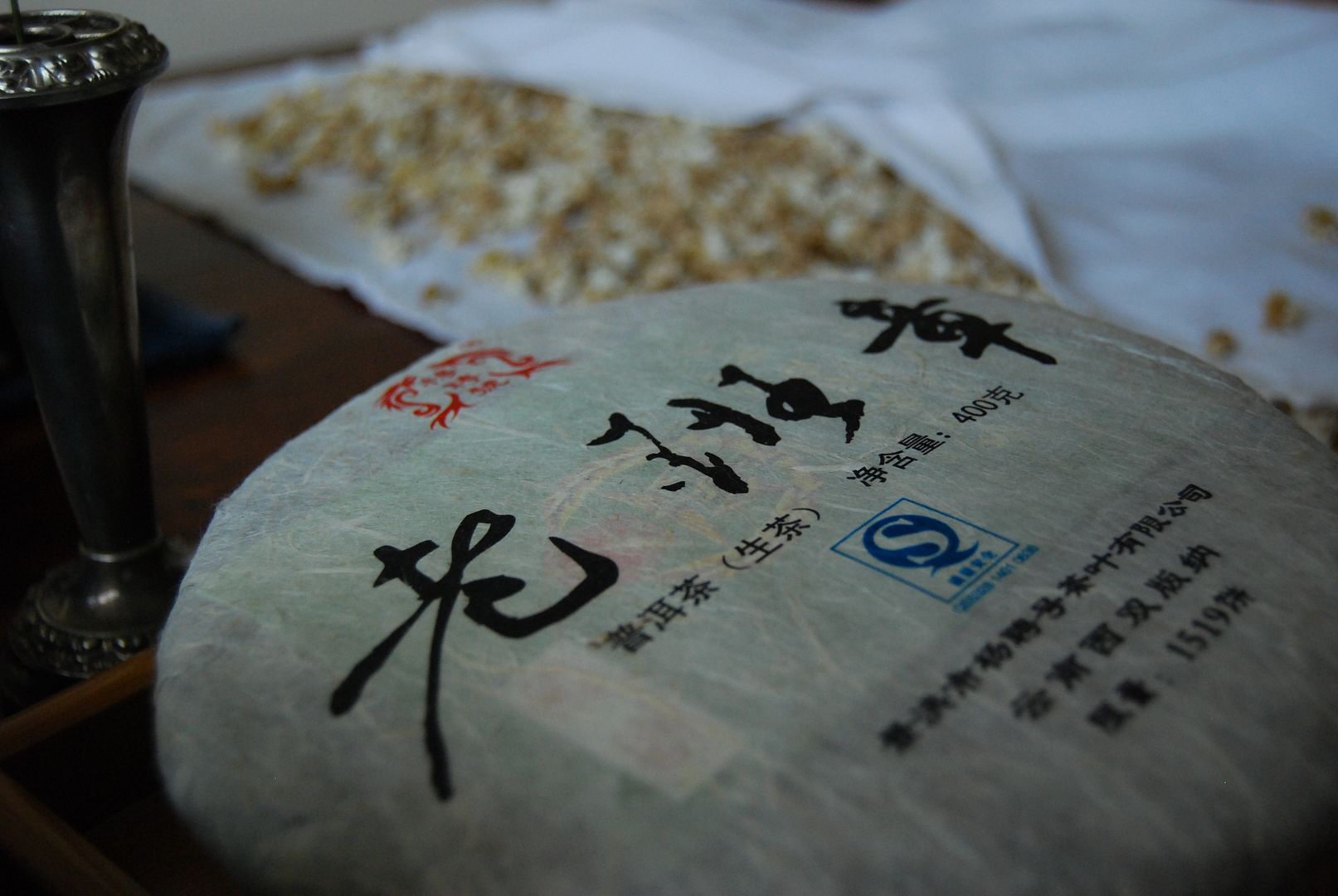
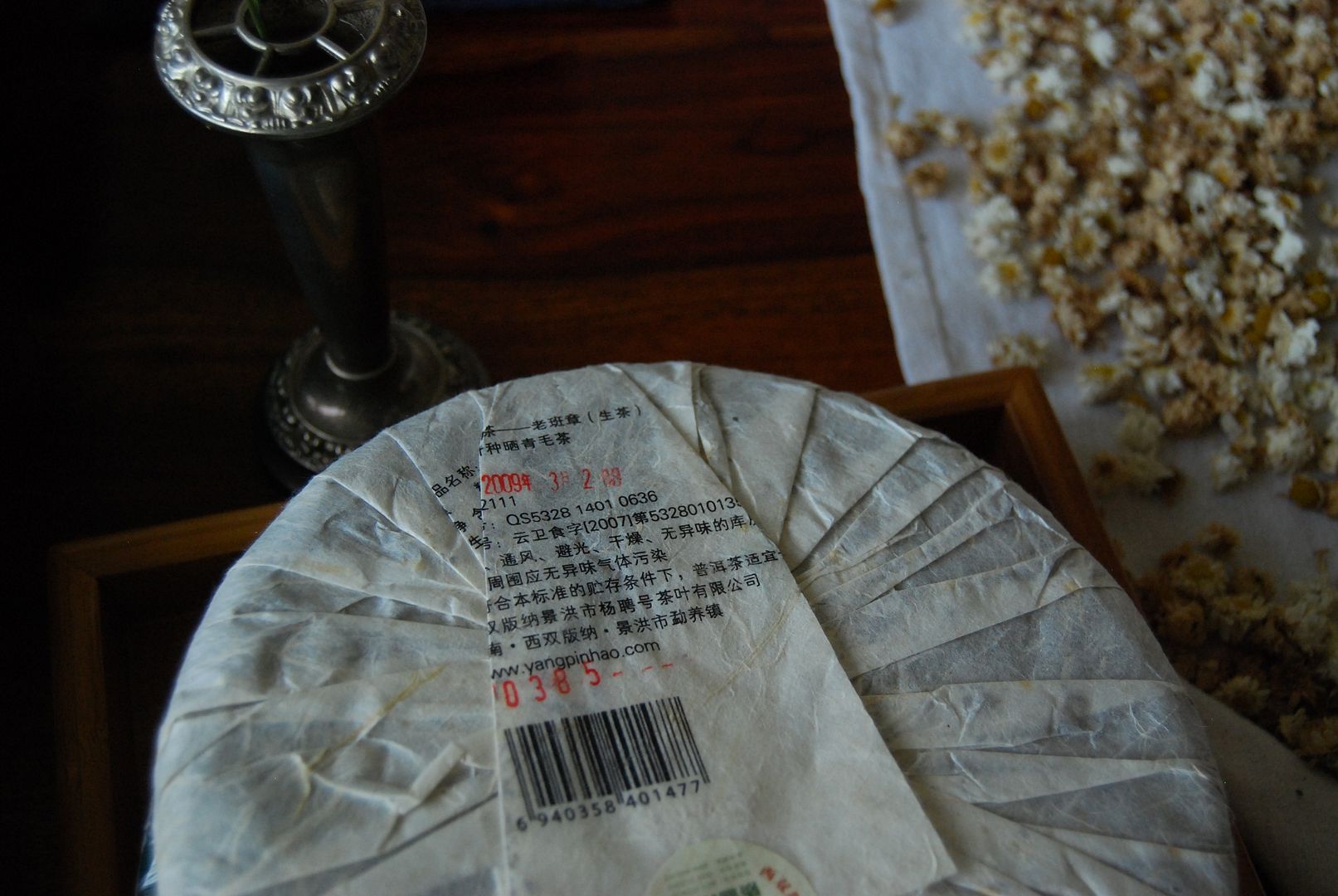
A cake provided generously by Keng, this is a Yangpinhao "Laobanzhang".


2009 Yangpinhao Laobanzhang


Needless to write, one has to be careful with "Laobanzhang".  Leaves from the village, by 2009, were (and remain) very expensive, and it is highly unlikely that a down-to-earth cake from Yangpinhao has much, if any, actual content deriving from the area that gives it its name.  Maybe the leaves came from Xinbanzhang, the neighbouring village, at best; maybe they came from the wider region surrounding the Banzhang area, perhaps more likely.


2009 Yangpinhao Laobanzhang


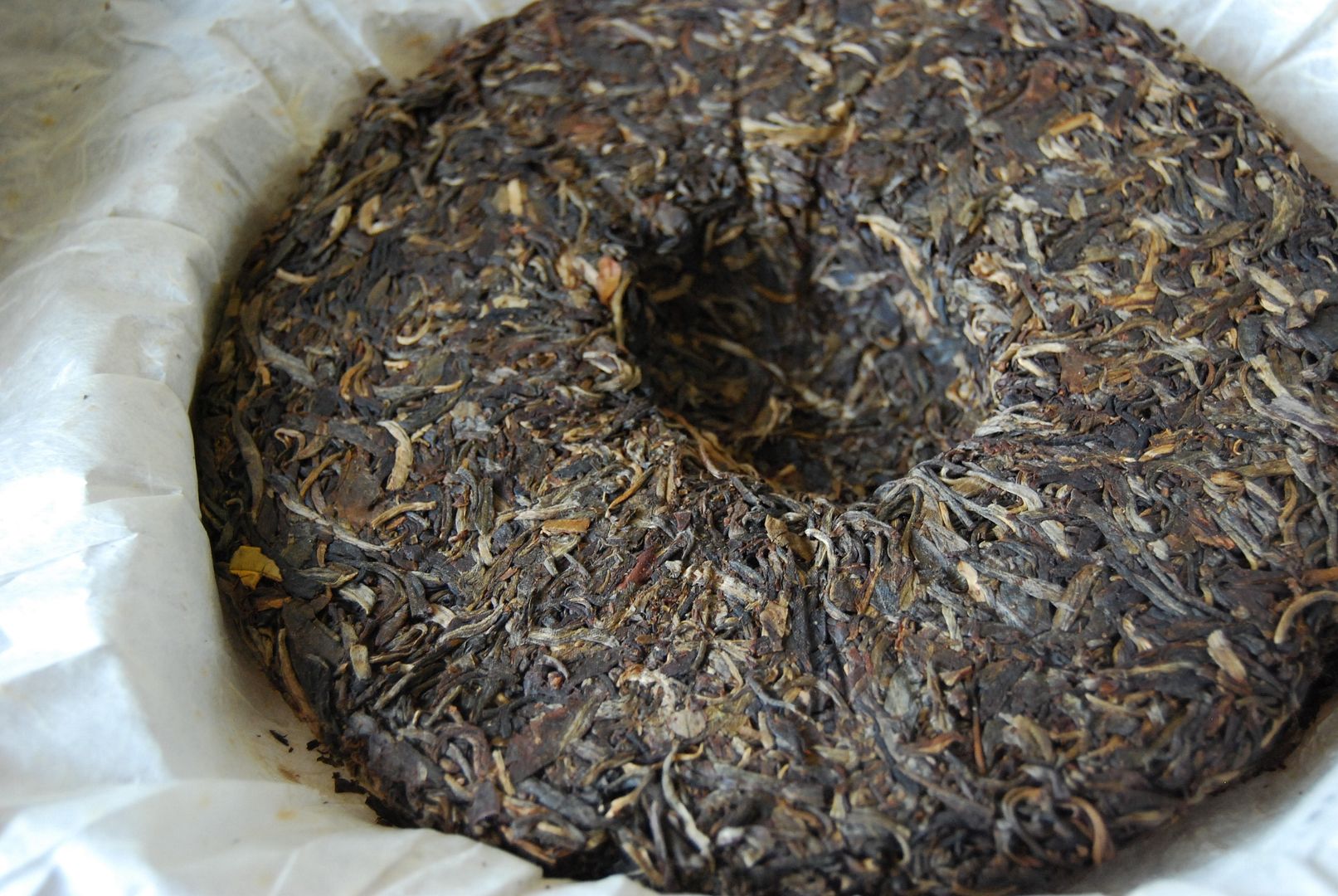
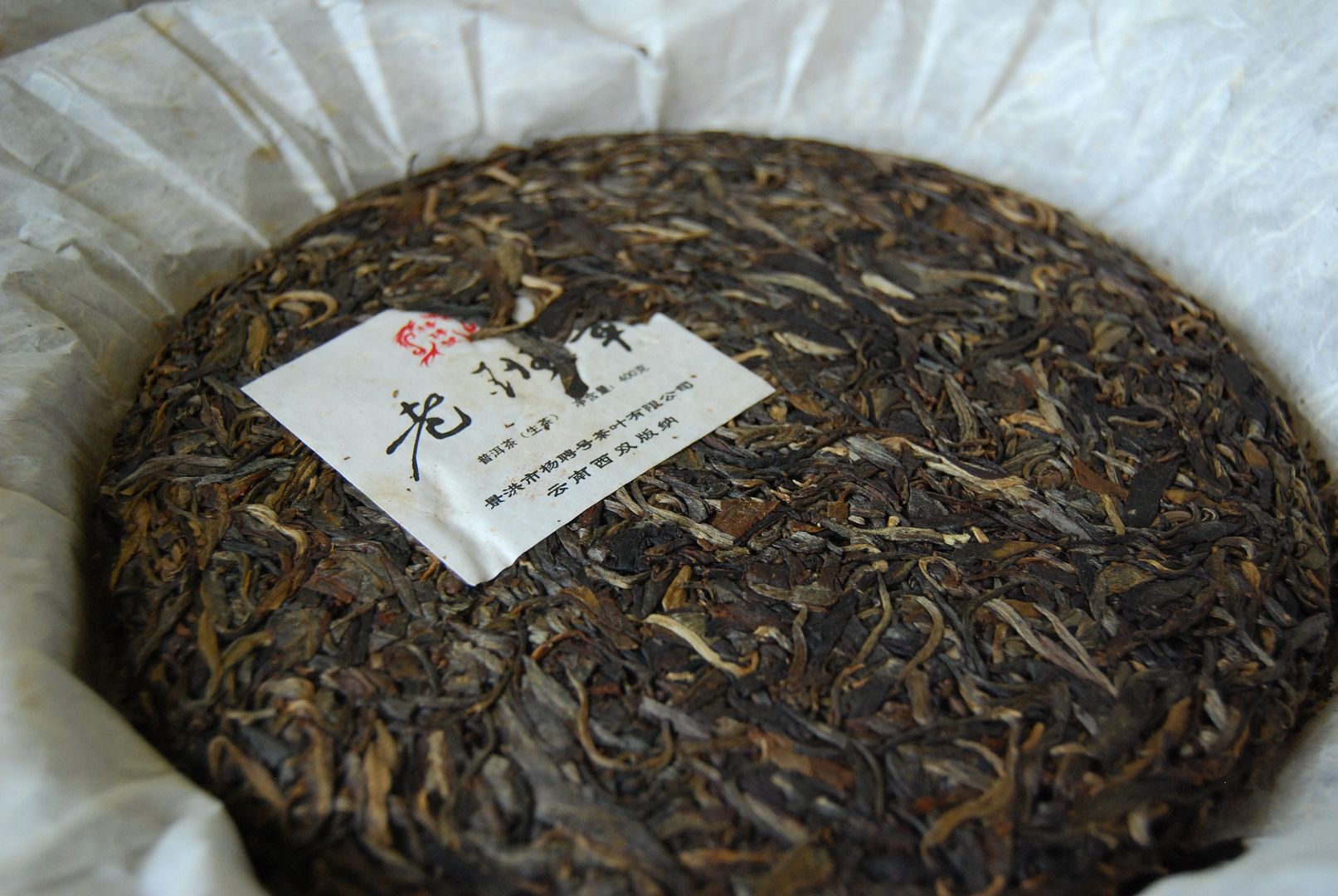
The large leaves of the cake, shown below, look very appealing to me, even as I sit at my desk and write about it in retrospect.  Some cakes demand to be picked up and brewed, and the images in this article give me such an impression.


2009 Yangpinhao Laobanzhang


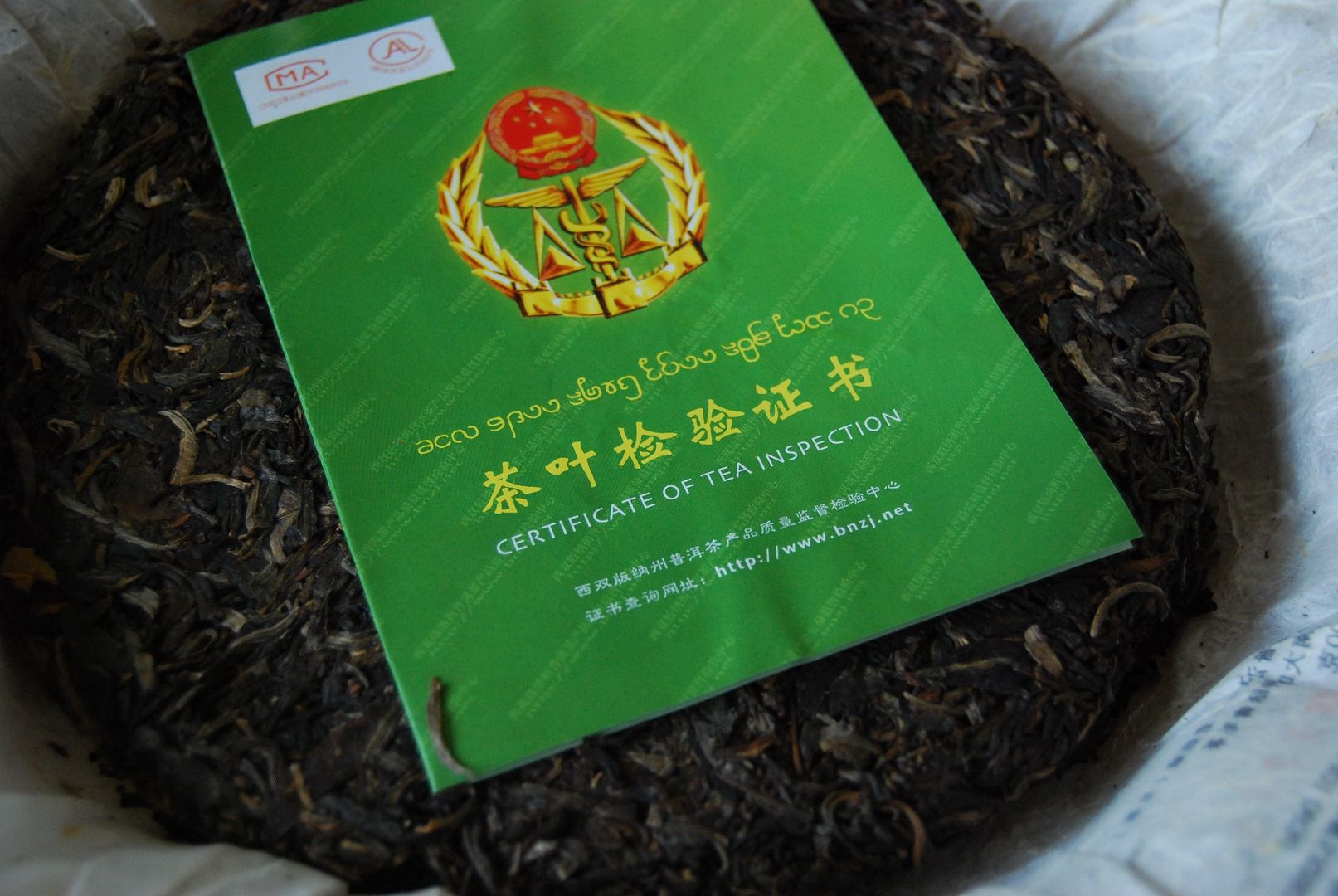
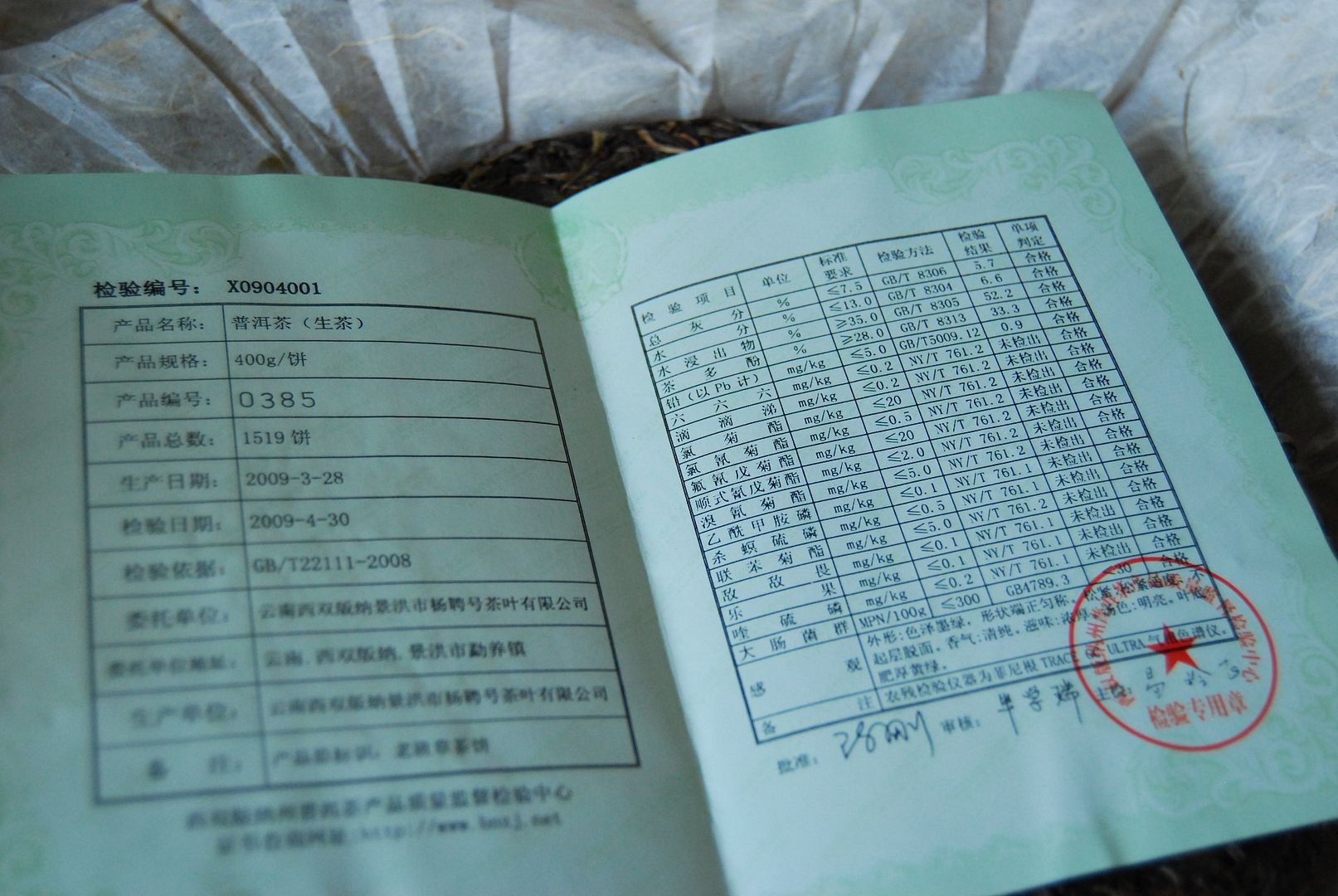
Yangpinhao must be rather proud of this cake, because it contains something in the way of paraphernalia, as pictured below.  A certificate of tea inspection!  I hope that it passed the inspection...


2009 Yangpinhao Laobanzhang


We can rest easy; there is below recommended levels of all of your favourite toxins, according to this card.  Thank heavens for stamped certificates...


2009 Yangpinhao Laobanzhang


Rhubarb aside, the cake looks very pleasant indeed.


2009 Yangpinhao Laobanzhang


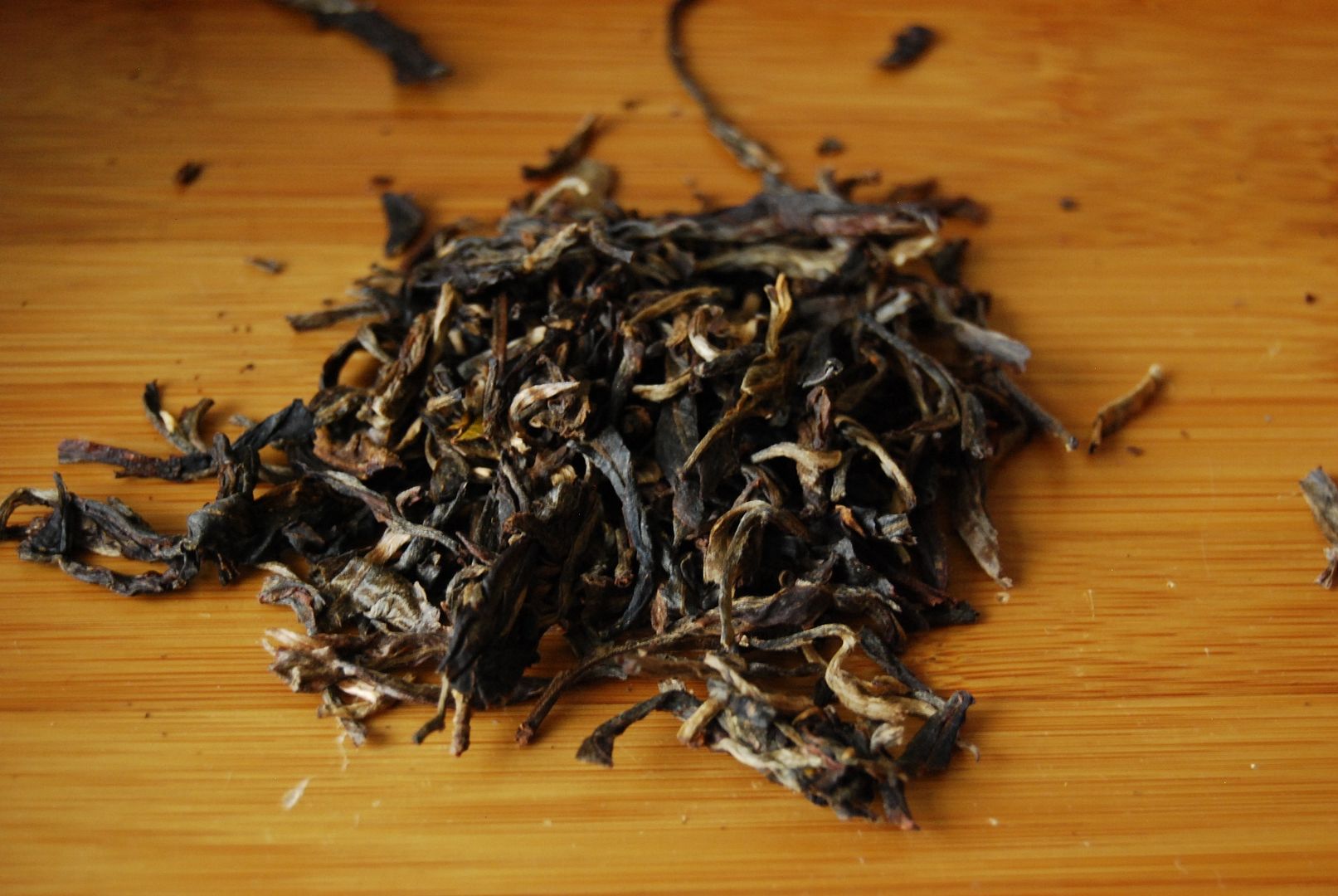
The compression is not-too-tight, not-too-loose, but just right.  I liberate leaves without damage.


2009 Yangpinhao Laobanzhang


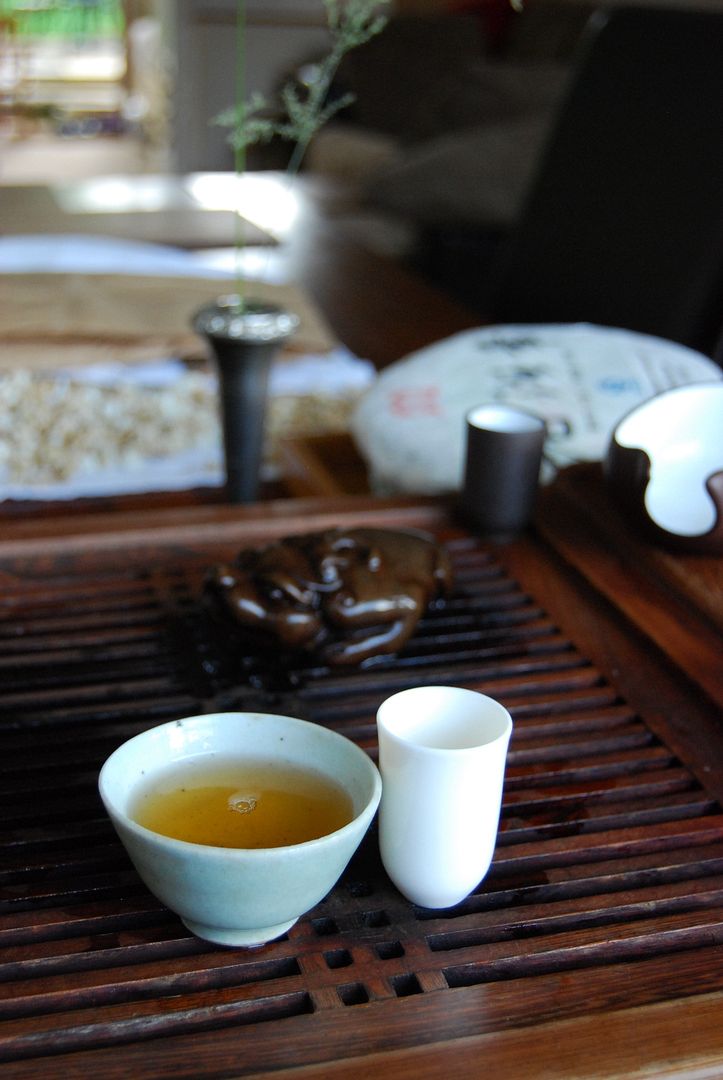
The tea opens with a decent sweetness not entirely dissimilar to, would you believe it?, Laobanzhang.  Have the cheeky monkeys at Yangpinhao somehow pulled off the unlikely?  The familiar sweetness rapidly inflates into a large, stubborn (but enjoyable) kuwei [good bitterness], and it is here that we find the body of the tea, and the presumed majority of its leaves.


2009 Yangpinhao Laobanzhang


We must reel in the rhetoric, for this is, as we should expect from the brand, solid but not likely to change the world.  Yangpinhao makes no claim to such grandeur, however, and they seem to cut a good line between price and quality.  Trade-offs have been made, inevitably, but the result is quite respectable.


2009 Yangpinhao Laobanzhang


This tea is at the better end of "mainstream", and is commended by its solid huigan [returning sweetness], and the comforting sensations afforded by its caffeine / chaqi.  I can feel myself thawing.


2009 Yangpinhao Laobanzhang


Next time you're browsing Taobaowang, keep an eye open for Yangpinhao bargains.  You might be surprised at exactly how much strength you can get for a very reasonable price.  If you happen to live in Singapore, as does Keng, then strong-yet-simple examples like this are a very safe bet for longer-term storage.