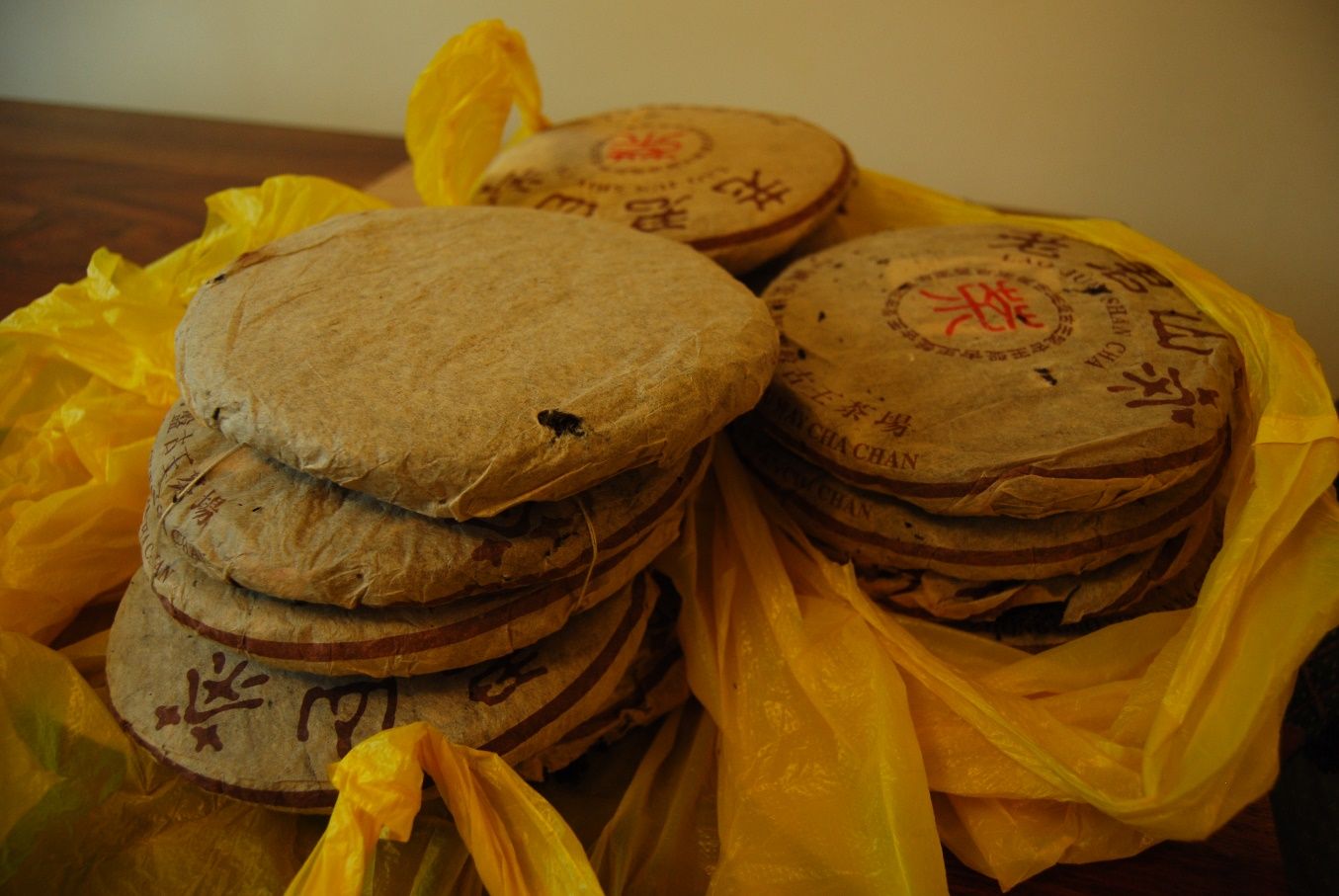
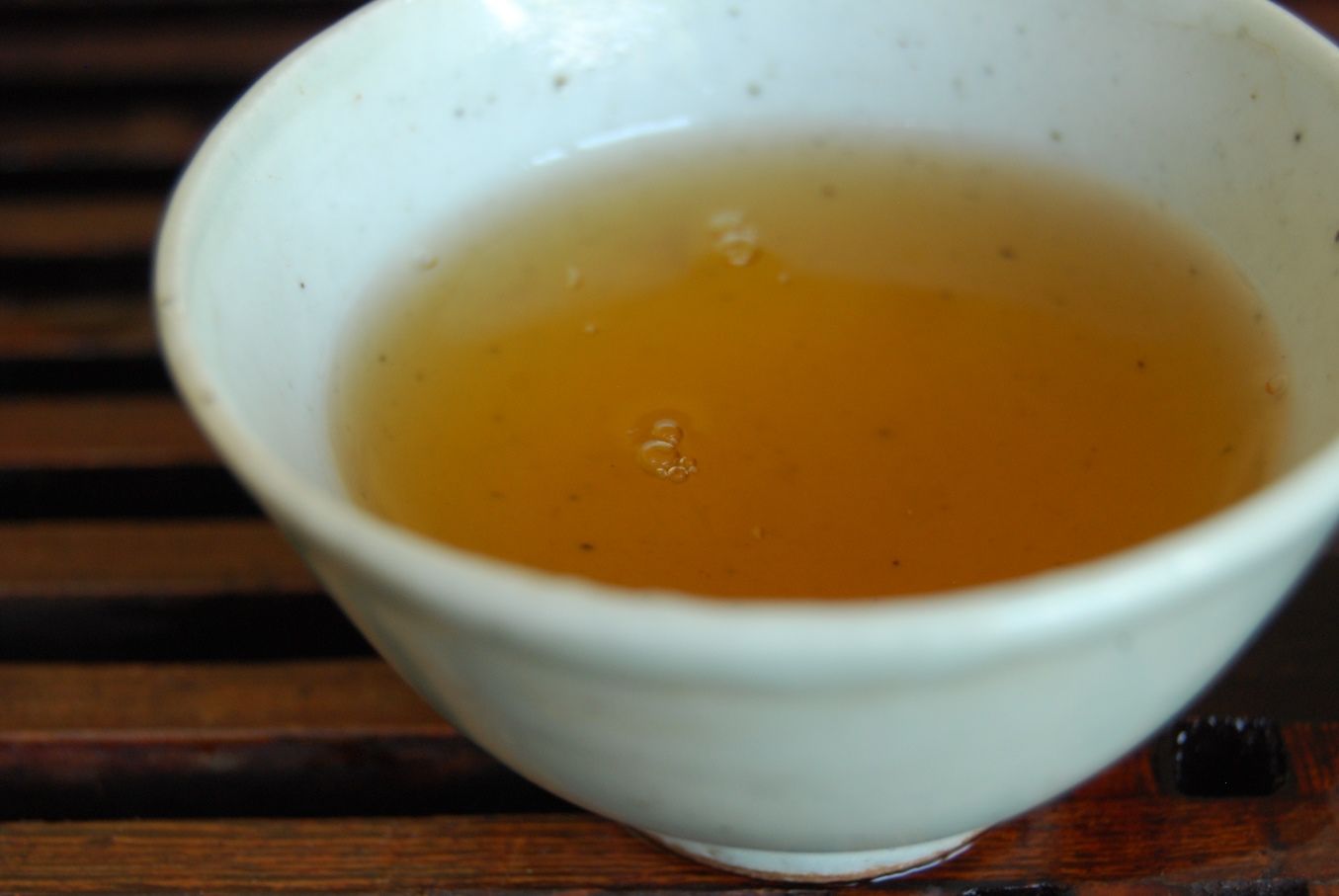
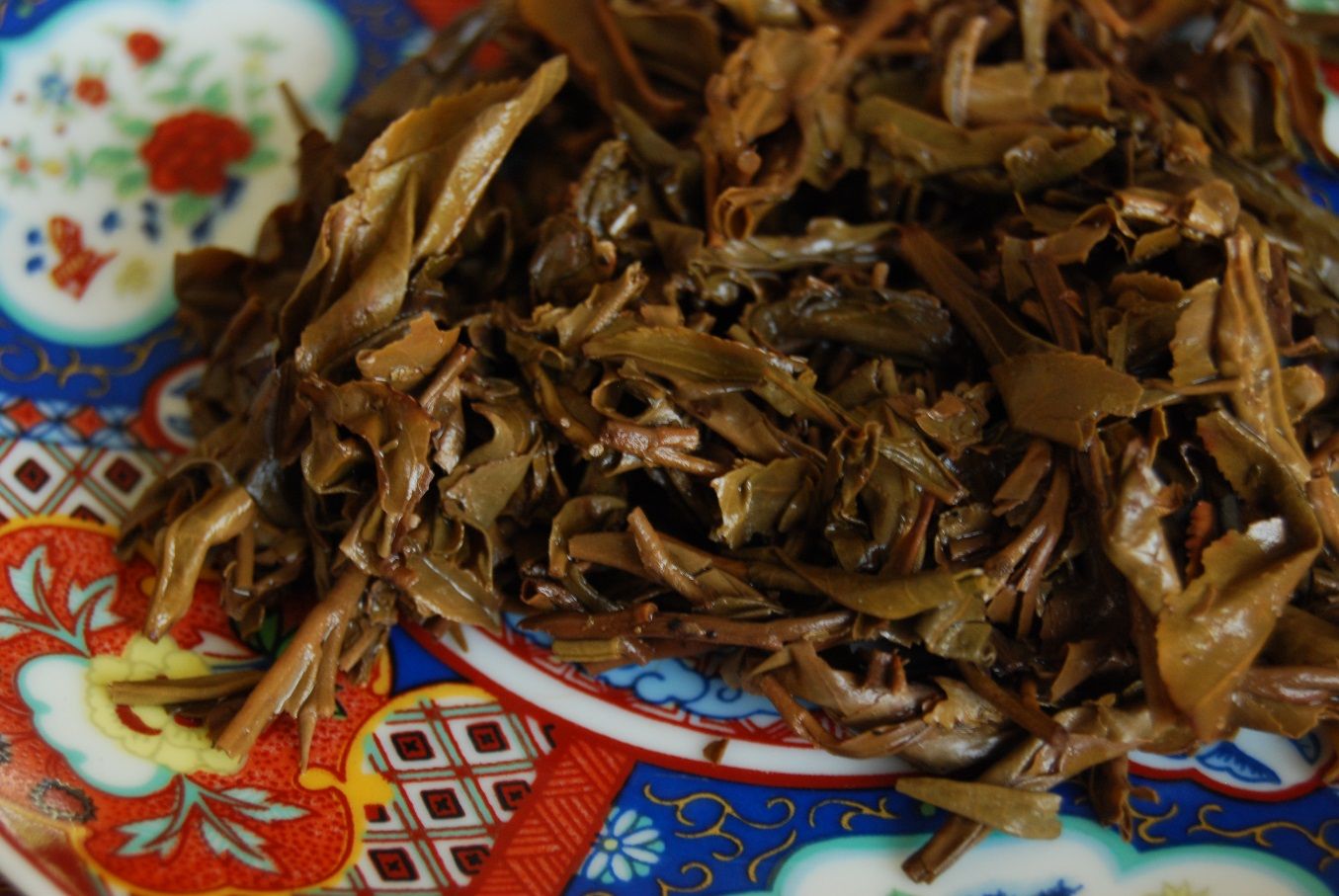
Like the ouroboros, I am turning in on myself and drinking a lot of my own cakes of late. This seems almost indecent, after a recent lifetime of continually trying new tea, and continually buying new cakes. However, sufficient time has passed that the game is afoot! Changes are apace.
This article is about two things: (i) cash money, and (ii) aging cakes.
If you've been here since the very beginning, Gentle Reader, or if you've read some of the older articles in the archives, you might remember that I started out writing articles for this humble site when I was but a graduate student. In those benighted days, when my every waking hour was lived within the shadow of The Thesis, I was being paid a "scholarship", which is to say, I was not rolling in disposable income. My university likes to trade on its name, which means it's almost preternaturally disposed to paying far below the going rate at all career levels. You might have experienced the same.
It is ab-so-lutely striking to read some of my old articles, in revisiting my teas, to learn what I considered to be quite a lot of money in those days. For example, check out the two teas below, which I have updated with recent tasting notes:
2007 XZH Longfeng
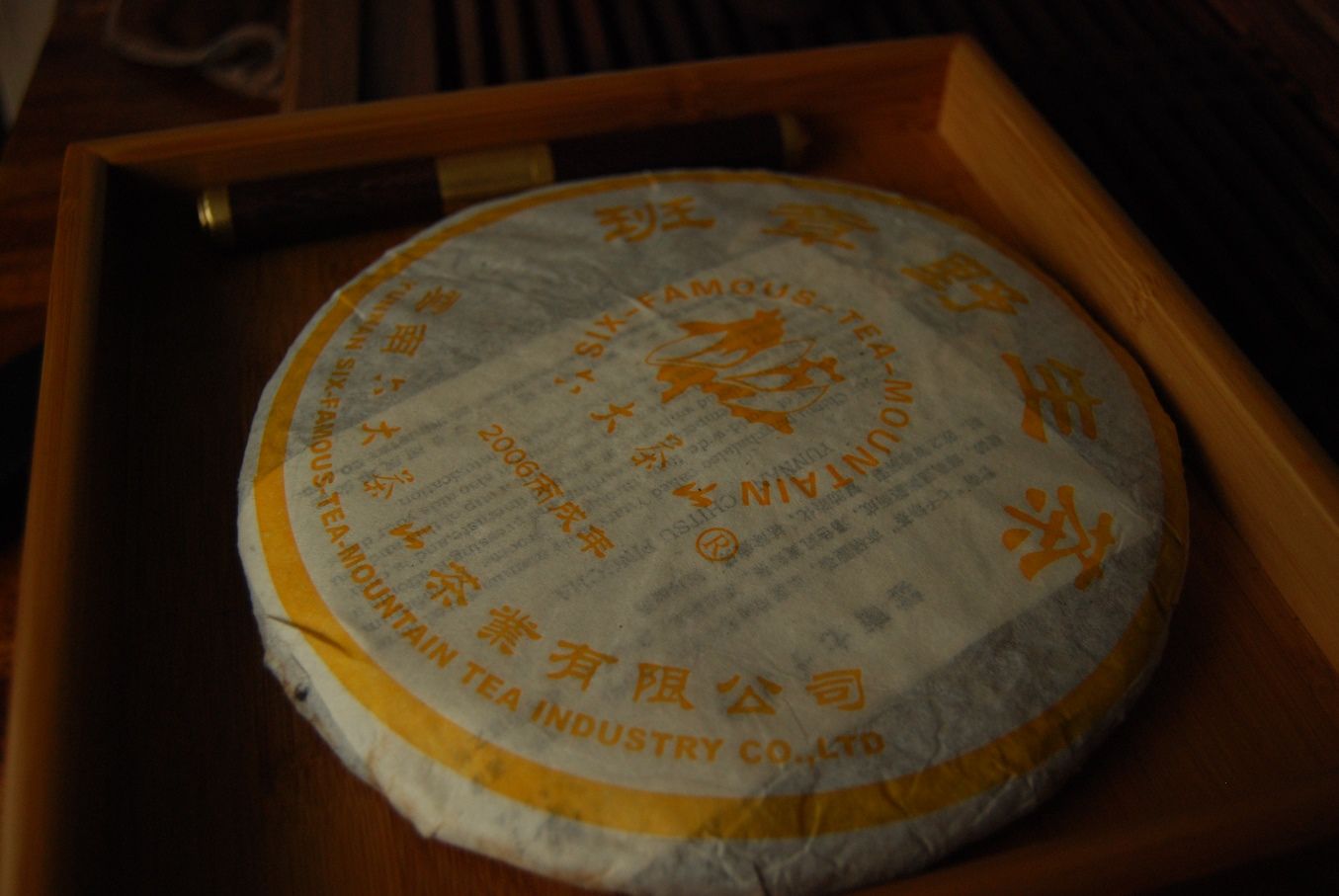
2006 Douji "Dayeqingbing"
These are cakes that were super, super cheap back in the day, at £23 and £13, respectively, for the 2007 XZH and the 2006 Douji. Taking the more expensive (!) of the two as an example, that £23 in 2007 is now approximately £28 in 2018, via inflation. Back then, as I take great delight in reading, the price was a matter of huge concern. These days, that gets me approximately 30 minutes of swimming class for one (not both) of my young children.
This is not to say that I have become entirely profligate, but merely: how our expectations have changed when it comes to tea-prices! How great is the distance in price between a "solid" cake at £13-£23 pounds and the modern equivalents!
(Note also the important fact that these are proper 357g bingcha, rather than the cheeky xiaobing that are now commonplace, such that vendors can reduce somewhat the effects of the enormously high "sticker price" for a 357g cake.)
Now, I'm not here to punch vendors in the metaphorical ganglia. As with all of us who've been around a little while, it might come as a surprise to learn that vendors are human beings, and that some of them are not (entirely) douchebags. Most of the time. Probably. (Love you, vendorchums.)
I used to take it as a personal insult that someone might want to be remunerated for sweating into their grey knitted underwear up a mosquito-laden mountain in Yunnan, etc. These days, I'm happy to see these folks turning a profit; after all, tea businesses need to be sustainable (i.e., making bank) otherwise there won't be any tea businesses. Heaven forbid we return to the dark days of Houde being the only place to buy tea (love you longtime, Houde).
However, expectations have changed, that much is clear.
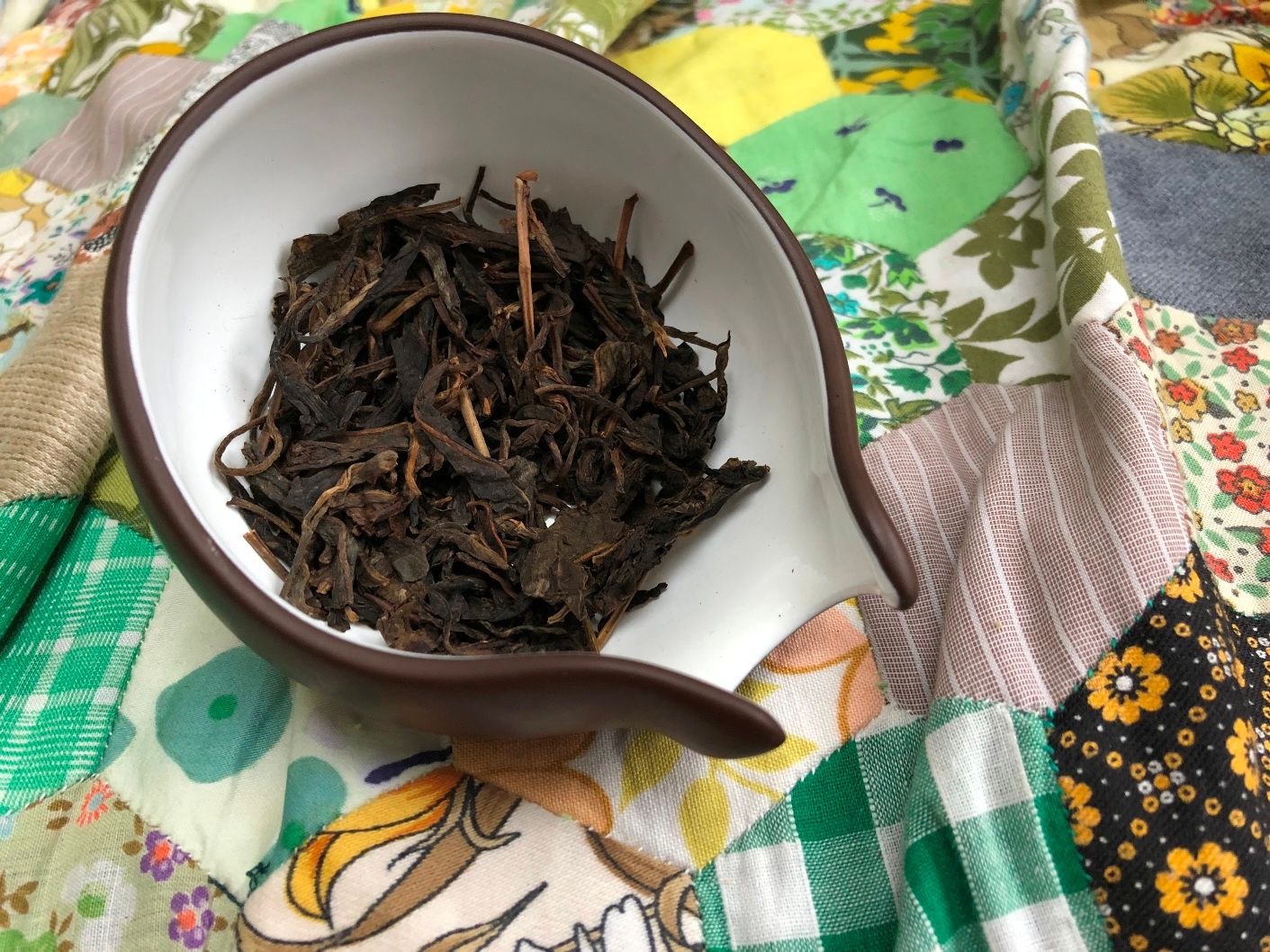
The irony is so very, very sweet! When prices were at their most affordable, my budgets were at their least amenable to purchase. Now that personal circumstances have changed, well... you know the price of modern bingcha as well as do I. It's not bad, it just is what it is.
So, prices are higher than they were, such is the outcome of a developed China (always a good thing) and a maturing market for pu'ercha (likewise a good thing). There's not much to be done on that front, except enjoy older tea when we have it.
Hence onto the second aspect of this article: the introspection of a tea writer, disappearing up his own proverbial collection. This is dangerous. I am thus writing about cakes that are quite probably not available any more and, if they are available, might be murderously expensive. Of course, half the fun in the teasphere is the shared experience of trying out cakes together, picking up tips on which one might buy next, and so on. That simply can't happen if some dude starts vanishing into his own shelves.
However, I hope it might be helpful. It's certainly turning out to be extremely instructive for me. The last time that I revisited cakes in any number was around half a decade ago, in 2013, typically much earlier even than that. So, we have a good number of years now from which to make our observations, form hypotheses, and maybe even draw a tentative conclusion or two.
From the above two articles, we might conclude that even quite basic teas (as those above) can do nicely with age. £23 and £13 are not objectively high prices, and the teas were almost certainly from plantations, in my opinion. That plantation character exists within the aged versions, but, like rancid ol' 7542 (which I adore), it has come out well. The raw strength of the early days has smoothed, mellowed, and become elongated into a very substantial sweetness that just continues on and on. The texture is much improved, too: these teas are thick, viscous fluids and they are rewarding. They are not dark teas, but they have the rounded character of sanded and varnished wood, in a good way. I like 'em.
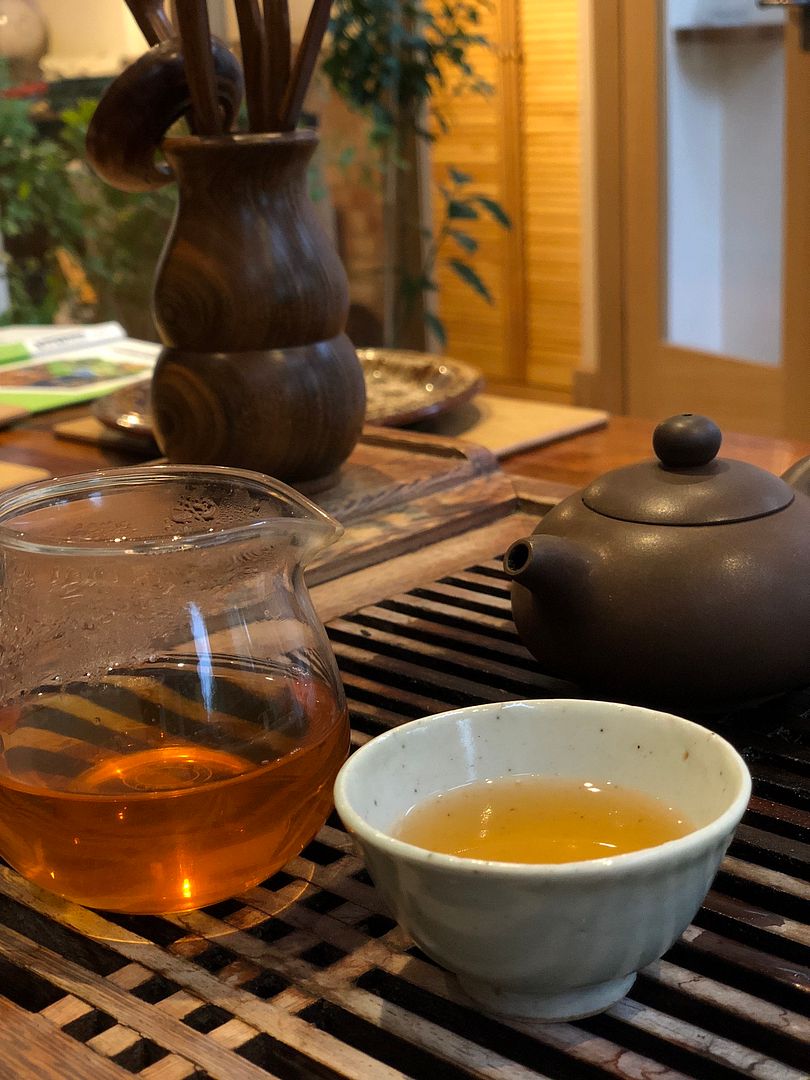
I am also able to draw some conclusions about English storage: as you might have read in the articles above, the sheer dampness of England, and Oxford in particular, is great for keeping these teas "fed" with moisture, such that they don't die. I believe that a lack of humidity is the death knell for pu'ercha, which I understand is commonly-received wisdom. However, British climates are not tropical: we don't have searing heat for much of the year (almost no houses have a.c., for example), and we get high(ish) temperatures for a short part of the year.
(Climate change might have something to say about that! As with most of the world, we're experiencing an unusual heatwave at the moment.)
The cooler temperatures mean that the teas, while staying nicely alive in the humidity, are not accelerating towards redness. Such is the price of not aging one's tea in the tropics. This is something that you can also see from humid-yet-cooler regions of China.
Heresy incoming: I did not choose my place to live based on its capacity to age pu'ercha. I know, what a newb! Thus, I mus live with the consequences. Happily, those consequences seem to be reasonable for tea, in that it's not dying and that it's getting somewhere - albeit slowly. If we are being generous, we might wonder if this is a similar effect to compressing one's tea extensively: tuocha age much more slowly than loose bingcha, of course. As with the prices, it is what it is.
A final conclusion concerns the "black" character beloved of some "house styles", which seems to originate, as far as I can tell, to the mid 2000s. Think of, for example, the recognisable house style of Xiaguan, as typified most clearly in its "FT" range, or, in the extreme, its "Baoyan" products for Tibet (from which perhaps the style originates, given that Baoyan is very much older than the mid 2000s). Douji cakes have a similar, but noticeably different, house style. There is processing afoot such that these teas start a little darker than they might otherwise - and, in the case of Xiaguan, very much more dark. This brings smokiness, richness, and, sometimes, a "tobacco" association.
When these cakes were being processed in this "black" manner, there was not a huge amount of evidence to say how they would age. We have older Baoyan, of course, but most of the FTs, Doujis, and the like come only from the mid 2000s. So, how do they do, after some 12 years?
I rather like the result. The power of youth has smoothed into the sweetness noted before, and the blackness lends a fragrant afterscent that is most complementary, in my opinion. The smokiness has gone, almost entirely, and we are left with dark fruits, old summerflowers, etc. Grab one for yourself and see if you agree.
P.s. Holy smoke: more than 7,000 views for recent articles suggests that the teasphere is very much larger than once it was. Hordes of drinkers, unite!
Showing posts with label 2006. Show all posts
30 July, 2018
11 July, 2014
Six Machine (Get On Up)
I am a hunter, Gentle Reader, a stalker. I ruthlessly track my victims throughout night and day, over the course of many weeks, perhaps months if necessary.
My prey: bargains.
Dirty great big tea bargains.
I believe it was a thread on Teachat that caused the alarm lights to begin flashing in my HQ. Recall the scene from Ghostbusters, in which a loud alarm bell rings in our heroes' premises, and where the New York-accented secretary shouts: "WE GOT ONE!"
That's almost exactly what happened. Replace the Ghostbusters' building with my laboratory, and replace the screaming secretary with me quietly clicking my mouse to open a new tab, and it's almost precisely the same.
I have got my purchase on, several times, with tuochatea.com in preceding millennia. I have never been disappointed, because they sell tea at prices that actively inhibit the secretion of the disappointment gland. I am saying that their prices are low. Low, low, low.
They're not quite "China price" low, but their teas have remained remarkably stable in price over the years. In a world in which cunning vendors routinely peruse their own back-catalogues, arbitrarily knocking up the prices every year, I truly respect folk like tuochatea.com, who seem to keep the prices almost flat - reflecting the price at purchase, rather than tracking the whimsy of modern-day inflations. That's a kind of business practice that makes me think of someone who likes to keep customers happy, and are "in it for the long run", rather than trying to make a quick killing on a new generation of drinkers before promptly disappearing into the sunset.
So, it would be fair to say that I totally dig tuochatea.com. Their tea may be as basic as corrugated cardboard, but at least it is priced nicely. Get it right, however, and you can really embargainate yourself significantly.
Now reminded of the existence of tuochatea.com, I decided to go mining for goodies. The first cake that was retrieved from the minecart was the 2006 6FTM "Bangweishan". (Product by-line: "IT'S BANGWEI OR THE HIGHWAY.")
To cut a long story short, this tea did not suck. It costs just 18 (eighteen) USD, which is, as I think I may have mentioned in passing, really rather low. Yes, it has been aged in Kunming, which is a little like saying "She has a great personality", but the price is 18 (eighteen) USD. 18!
That said, while this cake does not suck, it would be something of a stretch to say that it was really good. Time has not been kind to this cake - it is sagging under the eyes, and looking rather disheveled. You wouldn't have expected that, given that it is MUCHOS AROMATIC when stripped of its wrapper. The soup is a heavy orange, and it all looks good.
Then, you get the tangy, sweet, but "dark" flavour that reminds me of smoky Xiaguan modernity. It is strong, it is potent, and has a sense of its Simao-area origin. There is not much in the way of a finish, but it has something of the ol' kuwei going on, which is A Good Thing.
It is reliable, it is solid, and it is rather basic. It isn't quite the liquid ninjitsu of, let's say, the 2002 "White Whale", and I am rather luke-warm about it. If your shelves are not buckling under the strain of too much tea, then you might like to give it a look. It is cheap, and moderately cheerful. It also tastes a little like cereal-flavoured draincleaner and, for those that know me, that's a compliment.
With our bargain-sensors now calibrated appropriately, I send the mining team back underground to see if they can unearth some more goodies. They duly come back with the 2006 6FTM "Banzhang Raw".
The first sign that something is wrong - terribly, disconcertingly, bladder-constrictingly wrong - is that there is also a 2006 6FTM "Banzhang Organic". The latter was a bit more expensive than this cake's $28, but it was also sold out. So, I slapped down my twenty-eight bucks, rolled the dice, and took my chances.
If its sister cake was the "Banzhang Organic" then this must surely be, by elimination, the "Banzhang Inorganic". Stay with that name, because it will serve us well in subsequent paragraphs.
Now don't get me wrong: I love everything about modern China. I love the WHO-shattering counts of nanoparticles in the air that are so small that they can pass into the bloodstream; I love the food-scares; I love the chronic-obstructive pulmonary disorder that results from attempting to survive downwind from an unregulated industrial plant; I love the blessing that these facilities impart to the nearby water systems; I love the myriad challenges that ones physiology experiences throughout the modern Chinese experience. China rocks my world, and it also rocks my body's futile attempts at homeostasis.
I am just not entirely sure that I like these manifold charms manifesting themselves in my tea.
To say that this tea has been favoured by the presence of agrochemicals is something of an understatement. The farmers laid it on thick, and then sprayed it all over again for good measure. When, surely, everything was dead except for the bare tree itself, I imagine that the tea was thrice-sprayed just for good measure. I am happy to report that consumers of this 2006 "Banzhang Raw" now get to experience all of that hard work in the cup, for themselves, in the comfort of their own homes.
I would say "Don't touch this with a bargepole", but that is rather unfair to bargepoles. I wouldn't touch this tea through rubber gloves. I wouldn't touch this tea if it were hermetically sealed inside an ebola-containment chamber, and I was interacting with it only via the medium of some sort of complex robotic pincer.
This tea is not right, nor is it OK. I suggest that you give it a wide berth.
2,000 miles should be sufficient.
My prey: bargains.
Dirty great big tea bargains.
I believe it was a thread on Teachat that caused the alarm lights to begin flashing in my HQ. Recall the scene from Ghostbusters, in which a loud alarm bell rings in our heroes' premises, and where the New York-accented secretary shouts: "WE GOT ONE!"
That's almost exactly what happened. Replace the Ghostbusters' building with my laboratory, and replace the screaming secretary with me quietly clicking my mouse to open a new tab, and it's almost precisely the same.
The thread in question reminded me of Tuochatea.com (and God bless all who sail in her). This company has been around since before there were humans; early records indicate that the first customers of tuochatea.com were, in fact, trilobites with a penchant for tea-flavoured algae.
I have got my purchase on, several times, with tuochatea.com in preceding millennia. I have never been disappointed, because they sell tea at prices that actively inhibit the secretion of the disappointment gland. I am saying that their prices are low. Low, low, low.
They're not quite "China price" low, but their teas have remained remarkably stable in price over the years. In a world in which cunning vendors routinely peruse their own back-catalogues, arbitrarily knocking up the prices every year, I truly respect folk like tuochatea.com, who seem to keep the prices almost flat - reflecting the price at purchase, rather than tracking the whimsy of modern-day inflations. That's a kind of business practice that makes me think of someone who likes to keep customers happy, and are "in it for the long run", rather than trying to make a quick killing on a new generation of drinkers before promptly disappearing into the sunset.
So, it would be fair to say that I totally dig tuochatea.com. Their tea may be as basic as corrugated cardboard, but at least it is priced nicely. Get it right, however, and you can really embargainate yourself significantly.
Now reminded of the existence of tuochatea.com, I decided to go mining for goodies. The first cake that was retrieved from the minecart was the 2006 6FTM "Bangweishan". (Product by-line: "IT'S BANGWEI OR THE HIGHWAY.")
To cut a long story short, this tea did not suck. It costs just 18 (eighteen) USD, which is, as I think I may have mentioned in passing, really rather low. Yes, it has been aged in Kunming, which is a little like saying "She has a great personality", but the price is 18 (eighteen) USD. 18!
That said, while this cake does not suck, it would be something of a stretch to say that it was really good. Time has not been kind to this cake - it is sagging under the eyes, and looking rather disheveled. You wouldn't have expected that, given that it is MUCHOS AROMATIC when stripped of its wrapper. The soup is a heavy orange, and it all looks good.
Then, you get the tangy, sweet, but "dark" flavour that reminds me of smoky Xiaguan modernity. It is strong, it is potent, and has a sense of its Simao-area origin. There is not much in the way of a finish, but it has something of the ol' kuwei going on, which is A Good Thing.
It is reliable, it is solid, and it is rather basic. It isn't quite the liquid ninjitsu of, let's say, the 2002 "White Whale", and I am rather luke-warm about it. If your shelves are not buckling under the strain of too much tea, then you might like to give it a look. It is cheap, and moderately cheerful. It also tastes a little like cereal-flavoured draincleaner and, for those that know me, that's a compliment.
With our bargain-sensors now calibrated appropriately, I send the mining team back underground to see if they can unearth some more goodies. They duly come back with the 2006 6FTM "Banzhang Raw".
The first sign that something is wrong - terribly, disconcertingly, bladder-constrictingly wrong - is that there is also a 2006 6FTM "Banzhang Organic". The latter was a bit more expensive than this cake's $28, but it was also sold out. So, I slapped down my twenty-eight bucks, rolled the dice, and took my chances.
If its sister cake was the "Banzhang Organic" then this must surely be, by elimination, the "Banzhang Inorganic". Stay with that name, because it will serve us well in subsequent paragraphs.
Now don't get me wrong: I love everything about modern China. I love the WHO-shattering counts of nanoparticles in the air that are so small that they can pass into the bloodstream; I love the food-scares; I love the chronic-obstructive pulmonary disorder that results from attempting to survive downwind from an unregulated industrial plant; I love the blessing that these facilities impart to the nearby water systems; I love the myriad challenges that ones physiology experiences throughout the modern Chinese experience. China rocks my world, and it also rocks my body's futile attempts at homeostasis.
I am just not entirely sure that I like these manifold charms manifesting themselves in my tea.
To say that this tea has been favoured by the presence of agrochemicals is something of an understatement. The farmers laid it on thick, and then sprayed it all over again for good measure. When, surely, everything was dead except for the bare tree itself, I imagine that the tea was thrice-sprayed just for good measure. I am happy to report that consumers of this 2006 "Banzhang Raw" now get to experience all of that hard work in the cup, for themselves, in the comfort of their own homes.
I would say "Don't touch this with a bargepole", but that is rather unfair to bargepoles. I wouldn't touch this tea through rubber gloves. I wouldn't touch this tea if it were hermetically sealed inside an ebola-containment chamber, and I was interacting with it only via the medium of some sort of complex robotic pincer.
This tea is not right, nor is it OK. I suggest that you give it a wide berth.
2,000 miles should be sufficient.
31 March, 2014
Oxford Storage
There isn't such a thing, of course, but I fancy some (not all) of our cakes have benefited from a kind of storage that is neither dry nor wet, in the usual senses. Our old friend, the 2006 Xingshunxiang, started off cheap-and-very-cheerful (75 RMB!), had a quiet year when I last tried it, in 2010, and is now, in 2014, rocking the free world.
You would be most welcome to join us at the original thread for this tea.
30 December, 2013
Aging Tea: A Mixed Bag
I have been sampling my own shelves widely, of late, and have come to some conclusions on the relative merits of my cakes ability to age. (In each case, I have added notes to the original articles, which you are invited to inspect by following the corresponding links.)
The Good
The 7542-801 is quite good, although a little akin to a "dry storage" cake. The 7532-801 is better - it tastes more humid and more developed, and does not have the "dry storage" straw of the 7542-801. Oddly, the 7542-901 is absolutely first-class. Made just one year later, it is dark and heavy in that classical Dayi manner, and tastes very nicely aged indeed. I suspect that most people would enjoy it - they would certainly enjoy it for the sub-$10 price in 2009.
Another success story is our aging experiment in central China, where Chinese Mama and Baba have recently brought us a few tong from our stores there. The 1997 Laojunshan (pictured below), being one such cake brought to England, even though it is shupu, is heavy, round, and excessively sweet with old vanilla. I look forward to trying the shengpu that we have.
My post-viva Hongjie cakes, bought in 2009 in Maliandao, when my dear wife was unknowingly carrying Xiaohu, our eldest son, has come on very well (much like dear Xiaohu himself!). The change in the tea-leaves from their original green to a husky red-orange is very encouraging.
Finally, the 1996 Xiaguan bricks from Maliandao (pictured below) are coming on a treat - somehow, they are superdense carriers of vanilla and smooth huigan.
The Not-So-Good
Oddly, the 2003 Zitenglu Zipinhao [Wysteria Teahouse purple-label], pictured below, fits in this category. The original sample that I tried, stored in Singapore, stopped the clocks and was unfathomably excellent. The actual cake, stored in Taiwan, was less amazing. I managed to overcome some of this simply by using many more leaves of the Taiwanese-stored cake, which got it a little closer to the Singaporean version.
Perhaps most concerning of all, the 2011 Yunzhiyuan "Autumnal Xikong" (pictured below) has collapsed into tasting like purple tea. I am deeply concerned for its future, and will take this as a warning concerning the purchase of super-sweet, unaged autumnal cakes in future.
Tea is such an education, and an experiment in itself.
13 December, 2013
Yiwushan Clan
Today's article covers a week in the world of Yiwushan, in which I've been focussing on getting to know some of the various villages, as my almost-depleted bag of samples allows. The motivating tea for this excursion was a sample generously provided by Prof. GV, who is now departed for an old British trading colony attached to the south of China. I suspect that his access to good tea has improved accordingly.
This is, as far as I can make out, "2006 Eight Pcs", or that could be "2006 Eight Pos". I suspect the former. Eight pieces? Pieces-of-eight, pirate style? If the good professor happens to be reading, perhaps he might be able to shed some light on this.
Funnily enough, I brewed this tea as a remedy for washing away the sins of a pesticide-laden cake in the previous session. The leaves have a dense and sweet aroma of good ol' Yiwushan that promises tongue redemption.
PIECES-OF-EIGHT turns out to be a spicy-sweet Yiwu with some warmth and decency in the straightforward style typical of the region. It has some backbone that keeps it going; even though I crammed a large quantity of leaves into the pot, I am rewarded with stability and sweetness, without scaling any heights of grandeur. It definitely put me in the mood for more Yiwushan tea, however, and that formed the focus of my sessions over the few days following.
Scraping the bottom of my sample bag for residue, I came across a packet of tea kindly provided by Eugene of Tea Urchin, when the on-line shop opened some time ago. It looks as if Eugene has gone on to good things; the samples that I tried previously had the disadvantage of all being autumnal, and were consequently a little underwhelming.
Intriguingly, this tea is sold as being "Wangong" tea, although the product description reveals it is Dingjiazhai. This is sort-of, kind-of the eastern Yiwushan region, and often classified as "Mansashan". Wangong is rather sexy, as far as tea locations go, Dingjiazhai is about as sexy as old corduroy. Don't get me wrong, I love me my corduroy.
This is an autumnal cake from "Xinshenglihao", a brand so minor that it does not appear in the mighty BABELCARP, long may she reign over us. I found the Xinshenglihao "Xikong" to be good, but a bit simple compared with the competition from Yunnan Sourcing.
What you get for your $49/200g here, which is quite a lot for an autumnal cake, is some dark, sweet soup with a cooling penetration. It is, unsurprisingly, warm and rounded in the autumnal "guhua" style, without the aggression of springtime tea - this could be acceptable if you're looking for a muted drink-it-now cake, but will prove a hinderance to aging. There is little complexity but there is, at least, comfort. There is just an edge of kuwei [good bitterness], dimmed. By the fourth infusion, this cake has collapsed into mediocre Dingjiazhai territory.
Days later, I went into a session with the 2012 "Early Yiwu" cake from Yunnan Sourcing ready to be underwhelmed.
Scott has demonstrated, over the course of the years, that he knows how to pick good cakes. I am always wary of "early season" cakes, however, because the emphasis is on rushing to market, and this can sometimes correspond to the sacrificing of quality. Scott has made this using leaves from Yibi and Luoshuidong, where I can honestly say that I don't think I've ever had a good pu'ercha cake from Luoshuidong. Hence the feeling of impending doom.
You have to go into pu'ercha with an open mind. The first few infusions of this tea were so watery that I was ready to confirm my schlerotic prejudice almost immediately. Thankfully, I soldiered on.
It turns out that this tea really needs four infusions to reach maximum speed. This is quite unusual in young tea, which is usually deceptively pleasant in the first two infusions, and which may then easily collapse after the third. If you're lucky, the tea will stay pleasant. This cake, however, bucked the trend, and actually got better during those first four infusions, until it peaked and remained stable. This is a characteristic shared by some of my favourite teas, and hints at the fact that the leaves might actually have quite a lot of density, in some sense, that needs some coaxing to turn into strong soup.
Eventually, the soup turns a thick yellow. By this time, the straightforward, almost empty, Yiwushan sweetness has swollen into something thick and proper. It has a heavy solidity that I appreciate, and the sweetness continues out until the ninth or tenth infusion. So, in this case, as so frequently occurs, my prior assumptions turned out to be false, and I should learn to give the tea its time in the sun. At $24/250g, it is quite nicely priced, too.
This was an article about Yiwushan, which I have totally misrepresented, because I want to finish with a tale of the 2010 Longfeng "Phoenix", which actually comes from Jieliang (near Laoman'e), in the Bulangshan region.
There was some soap-opea drama associated with the Longfeng brand, involving a cross-over with Yunnan Sourcing, as far as I recall, and which I hope to ignore as my tolerance for drama is extremely limited.
Much better to consider, the tea leaves (pictured below) are fragmented, and a little dark, but have the heavy scent of good sweetness.
This tea, as with the "Early Yiwu" cake described above, starts slow and watery. However, by the third infusion, it delivers a razor-sharp edge of sheer metallic kuwei that is unmistakeably "Bulangshan". I love it. The sensations in the mouth are simultaenously cold, which reinforces the "cold steel" feeling of this cake.
The core of sweetness develops as the perfect foil to the cold-steel kuwei. "This pure antisocial hatred is rather refreshing, and I am happy to brew it again and again."
I'm sure that this cake isn't available any more, but I loved its deadly ruthlessness. Fine stuff, and a great way to end a week that was otherwise spent pottering around in the sweet comfort of Yiwushan.
22 November, 2013
Quick Test: Do You Have a Soul?
IF
you can make it to 1'30" or beyond in this track without falling completely in love with it
THEN
you probably have no soul.
ENDIF
The long, beautiful leaves (shown above) have a low, sweet scent of clean storage.
you can make it to 1'30" or beyond in this track without falling completely in love with it
THEN
you probably have no soul.
ENDIF
Ockham's Chainsaw
If, at any point, you thought about Tetris, then you probably need to give yourself a good slap, as well as attend confession. This is great music, pure and simple, playing through the medium of retro chiptune. Some great things come in packages that you might not expect. The world is full of things like this, tea being but one example.
Both of the teas covered in this article come under the heading of "cakes pressed using old maocha". You may or may not agree with this practice. All I ask is, as with the chiptune epic track linked above, just keep an open mind.
Daxueshan is the mountain in Yongde county of Lincang diqu. Its price is high (£85) but Mr. Essence seems impressed by its laoshu [old tree] qualities. It was stored in Kunming, and Mr. Essence notes that it has not aged as much as its cousin, which we will cover in the second half of this article.
The long leaves, pictured above, have an excellent scent of rich, sweet tobacco. It could be as good as is claimed.
The reticent storage of Kunming has worked to the advantage of this tea. Maocha, stored as maocha (that is, in its loose-leaf format) can dissipate rapidly. This is one of the reasons that cakes are still pressed, long after the needs for horse-born transport have passed. The slower aging in Kunming has caused the dissipation to be less rapid than it otherwise would have been, and the cake therefore retains some of its energy.
The soup is heavy and full, pushing into all corners of the mouth from the outset, with a good, malty base. This tea tastes particularly comforting after the happy tiredness induced from a long session at the swimming pool with Xiaohu. It is a good tea, and it lasts well. The price is up for the usual debate.
You may remember the fictitious village of "Qishenggu" that resulted in the 2012 version. Mr. Essence prefers not to disclose the actual origin of this tea.
This 2007 version was, like the Daxueshan, pressed in 2013. However, in this case, the maocha was stored in... wherever "Qishenggu" happens to be. Presumably, it is not Kunming (heh), because the aging has been more rapid.
The long, beautiful leaves (shown above) have a low, sweet scent of clean storage.
The orange soup is the same colour as our English-stored 2007s. There are low, quiet scents around the edges of the wenxiangbei [aroma cup]. Like the scent, it exists in the mouth around the edges of my senses. Heavy and thick, it has the comforting feeling of old tea.
There is the consequent emptiness in the leaves that comes with storing maocha, exacerbated by the more humid and warm storage of "Qishenggu". With more leaves added to the pot, in an attempt to compensate, a sharpness develops - that of clean pine. Unafraid, I eventually end up with the entire sample bag in the pot. The tea seems impossible to overbrew, such is its low ceiling. It remains sharp and smooth, with some low maltiness, however. At £45, this is one of Essence of Tea's cheapest teas.
If you are looking for a recommendation made with certainty, and you passed the "are you in possession of a soul" test mentioned at the outset of this article, then you would do well to look at the above album. Great pu'ercha music, like pu'ercha itself, comes from unexpected places.
08 November, 2013
Progress Bar: 6FTM and Shuangjiang Mengku
I often get asked for recommendations...
At the risk of being fatuous, I recommend going back to 2006 and buying this cake for £9. It's great: humble, strong, and aging well.
While on the subject of cakes that taste as if they have been aged in Singapore...
At the risk of being fatuous, I recommend going back to 2006 and buying this cake for £9. It's great: humble, strong, and aging well.
While on the subject of cakes that taste as if they have been aged in Singapore...
...the 2004 Shuangjiang Mengku "Daxueshan" is just that, and a gracious gift from ST, when he visited me with his family during the summer. Thanks again both for the visit and for the delightful cake.
25 October, 2013
Catharsis
I have been drinking plenty of bad tea lately. As has become my recent custom, I now seek redemption by way of the excellent samples kindly provided by Elven, my craftworld-travelling teachum from Singapore.
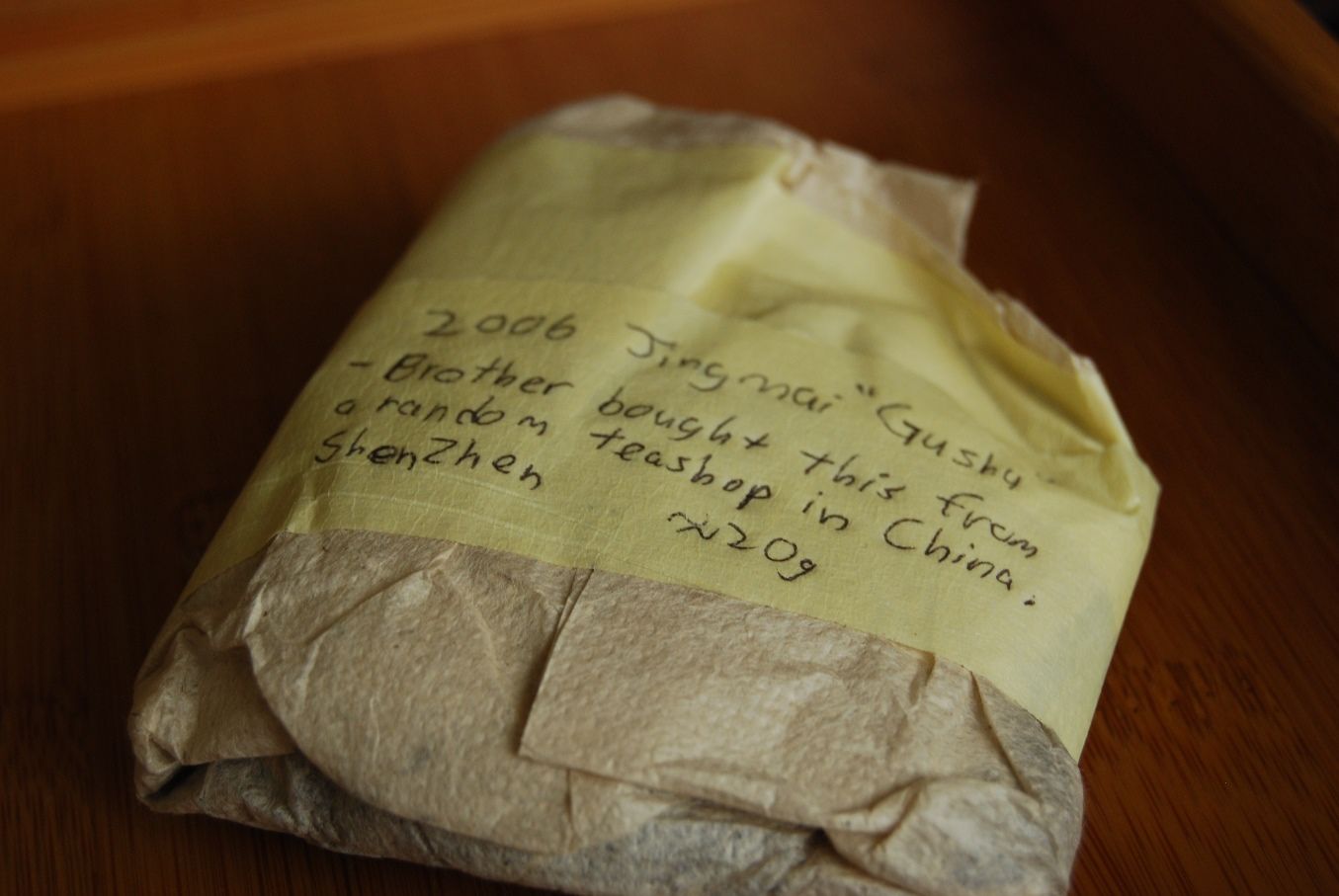
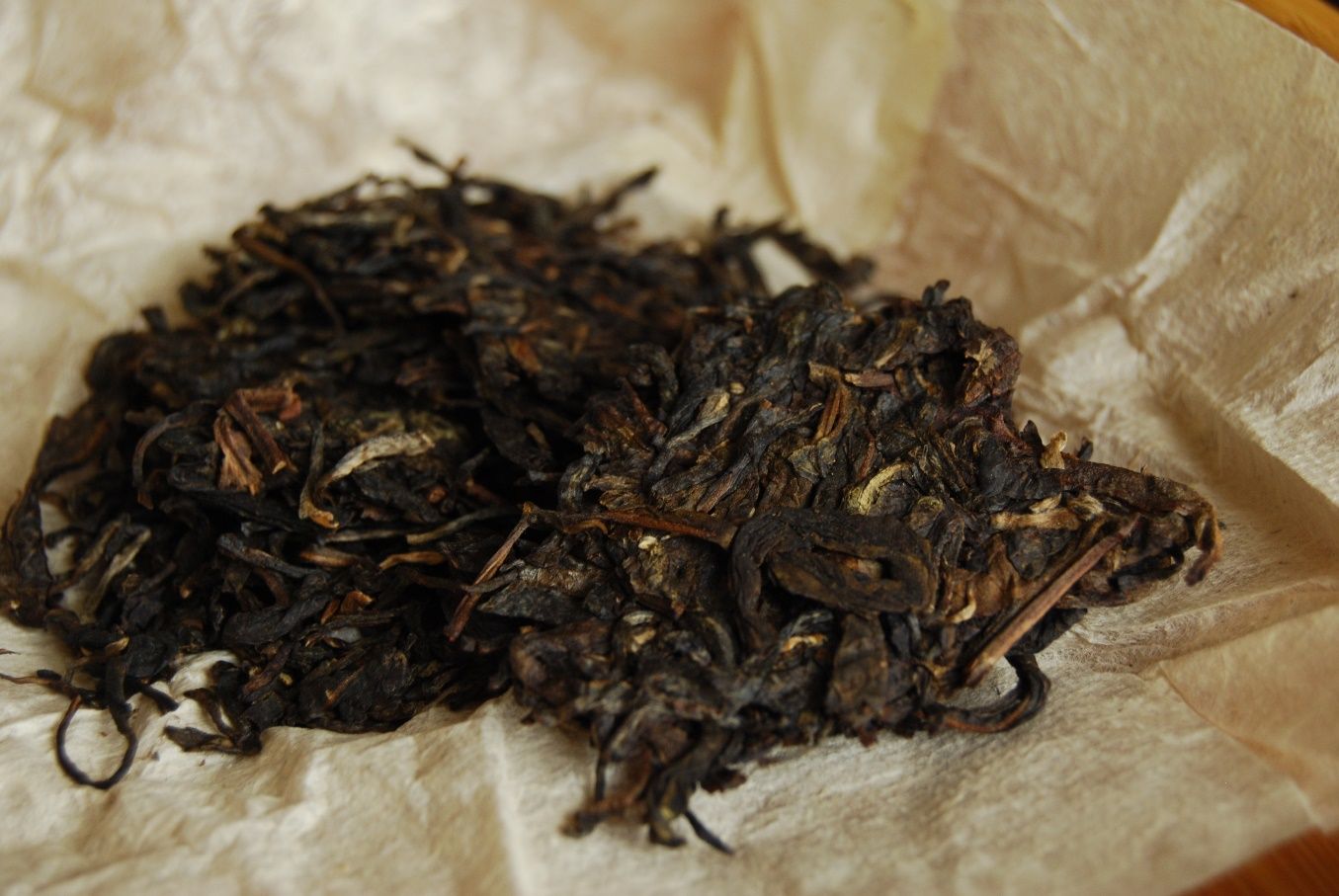
The first of two cathartic experiences is a 2006 "Jingmaishan Gushu" [ancient tree], brought by Elven's DNA-bearing replicate in "a random teashop in Shenzhen".
Jingmaishan is north of the usual pu'ercha areas, being found in Lancang county (zizhizian, fact fans) in Simao diqu. It is also rather a well-explored place, which tea-makers like to visit because of its well-established tradition of produced accessible, sweet "lanxiang" [orchid-scent] teas.
I don't usually like Jingmaishan tea. There is something just a bit "off" with it, according to my tastes. I don't quite enjoy all of that ever-so-slightly-nutty sweetness.
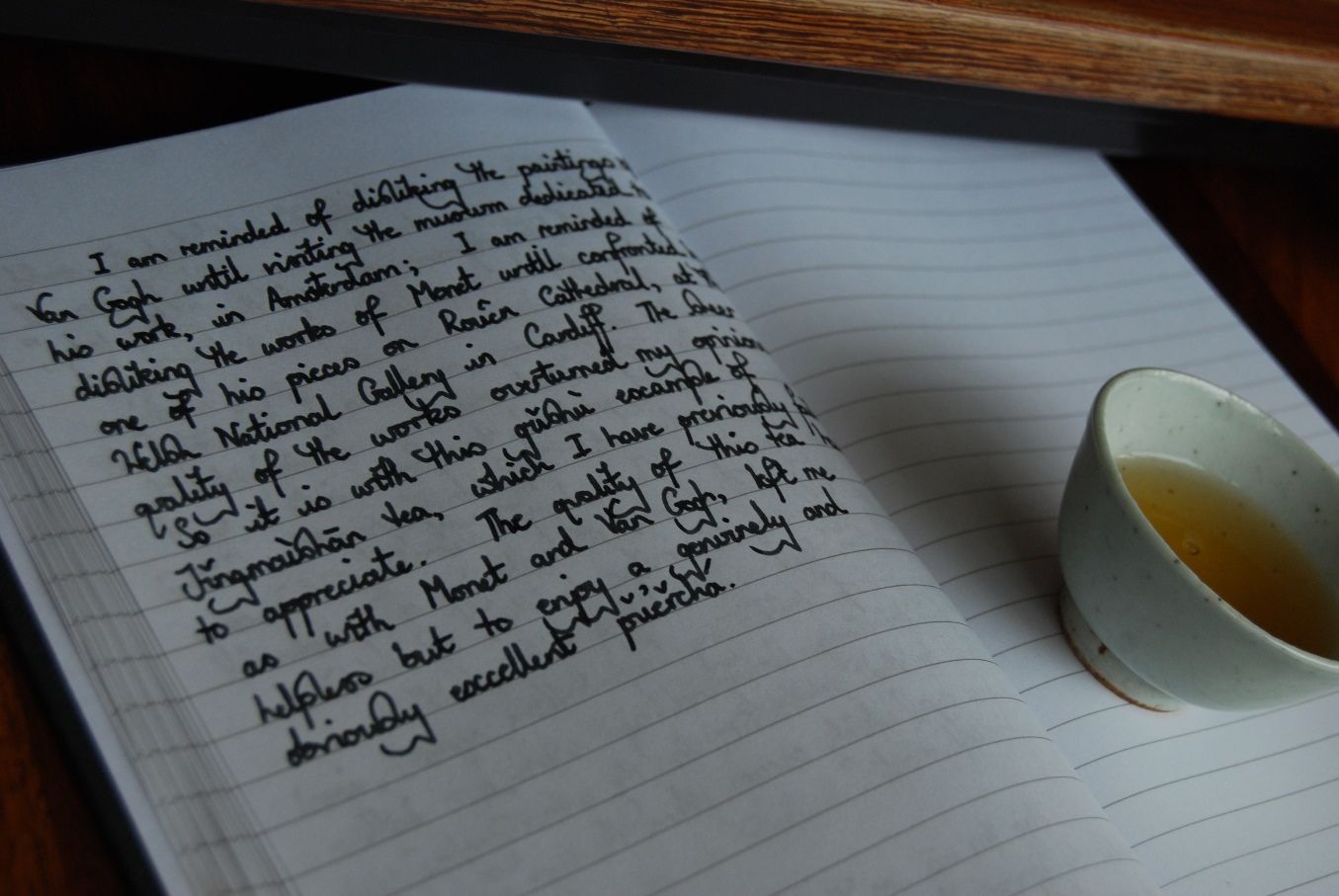
This tea reminded me of my long-time dislike of the paintings of Van Gogh. I strongly disliked his work - until I visited the Van Gogh museum in Amsterdam. Coming face-to-canvas with his work just overwhelmed my opinion, and suddenly I came to appreciate that which I had previously disliked.
Similarly, I used to completely dislike the Impressionism of Monet. I simply could not understand how quite so many people could appreciate his sludgy messes. Then, I accompanied a girlfriend of the time to Cardiff, and spent the morning in the Welsh National Gallery. There hung one of Monet's (very many) paintings of Rouen Cathedral. Suddenly, something "clicked", and I found that I could no longer dislike his work.
In both cases, Van Gogh and Monet, the exposure to the sheer quality of the work destroyed my prejudice. I was forced to change my mind, when confronted by the works themselves. It was an undeniable and profound experience in both cases. To this day, I look upon the works of both artists with a new-found respect and appreciation that came from enjoying their artwork first-hand.
This tea reminded me of my long-time dislike of the paintings of Van Gogh. I strongly disliked his work - until I visited the Van Gogh museum in Amsterdam. Coming face-to-canvas with his work just overwhelmed my opinion, and suddenly I came to appreciate that which I had previously disliked.
Similarly, I used to completely dislike the Impressionism of Monet. I simply could not understand how quite so many people could appreciate his sludgy messes. Then, I accompanied a girlfriend of the time to Cardiff, and spent the morning in the Welsh National Gallery. There hung one of Monet's (very many) paintings of Rouen Cathedral. Suddenly, something "clicked", and I found that I could no longer dislike his work.
In both cases, Van Gogh and Monet, the exposure to the sheer quality of the work destroyed my prejudice. I was forced to change my mind, when confronted by the works themselves. It was an undeniable and profound experience in both cases. To this day, I look upon the works of both artists with a new-found respect and appreciation that came from enjoying their artwork first-hand.
This Jingmaishan tea is very similar. While I suspect that it will not convert me into being a lover of Jingmaishan teas, it has demonstrated that tea from this region can be excellent.
Perhaps that is all that I wished to write about this tea. Its random nature suggests that we will be able neither to trace its true identity nor to buy any more of it, and so its effect on my mind will remain one of sweet conversion to a region of which I thought little in the past.
As if a good day could get no better, the sister of my dear wife then cooked us huoguo [hot pot] for lunch.
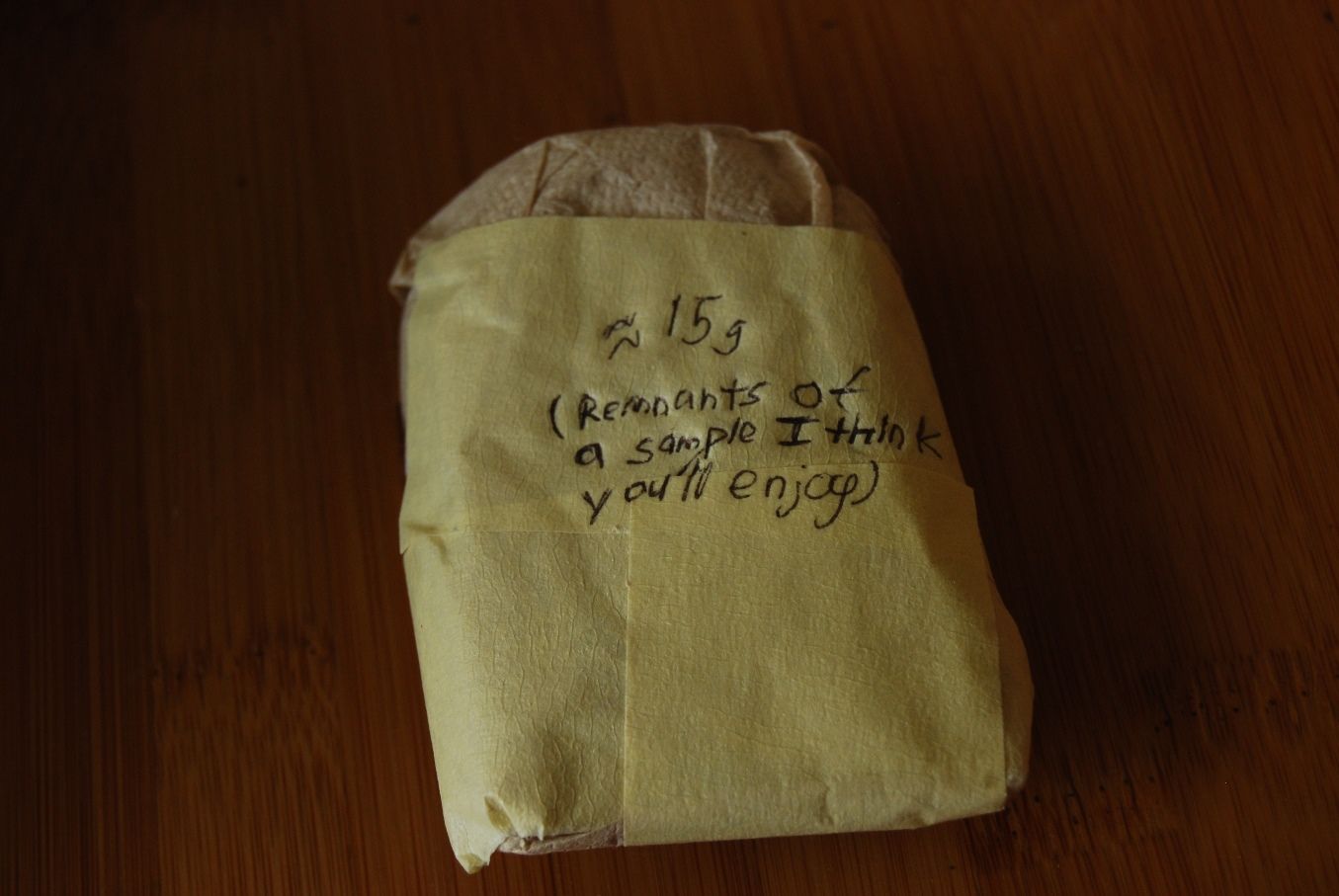
Later in the week, I encountered a mysteriously-labelled sample:
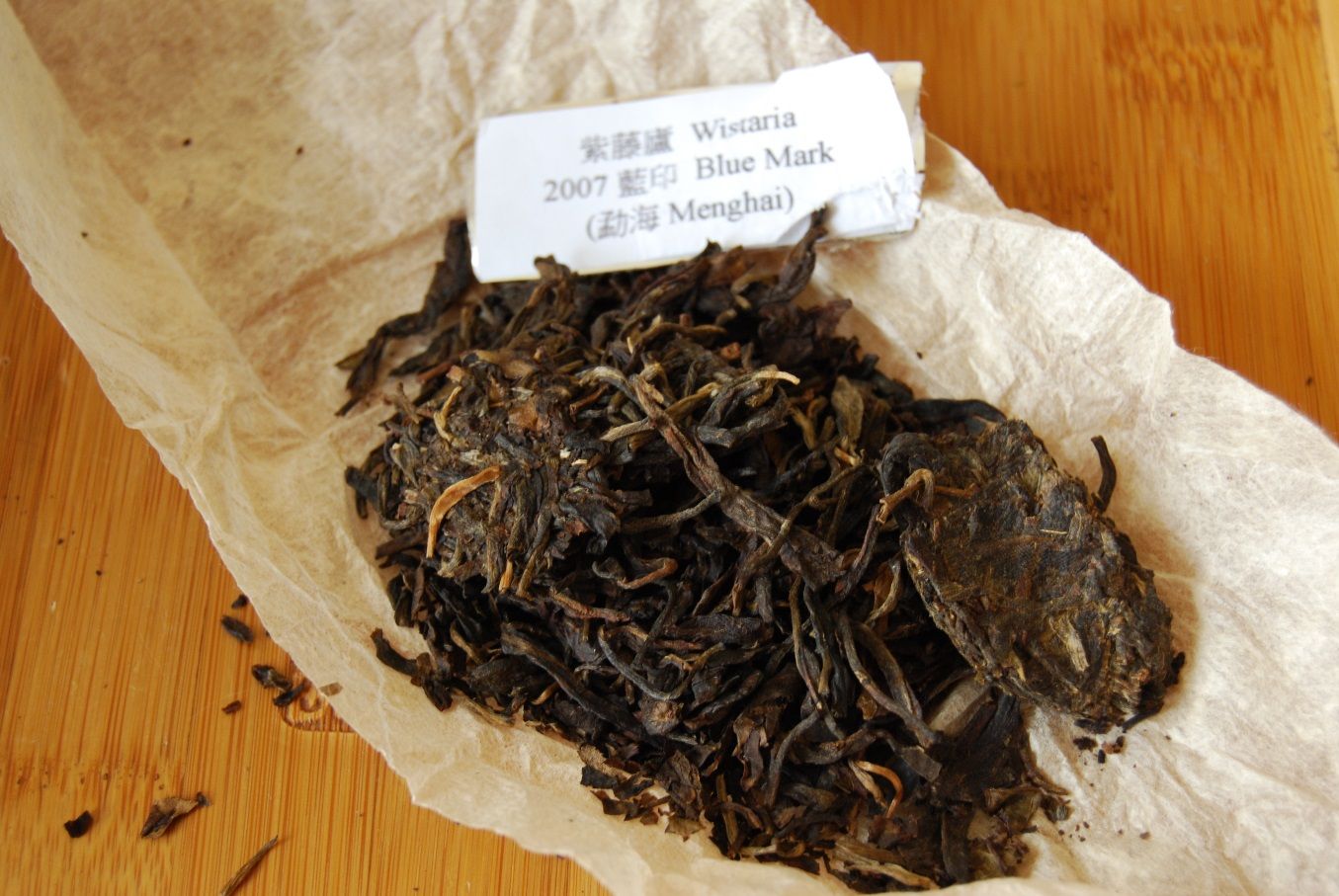
"Ho ho!" thought I, as opening the rustic paper of the outer wrapper revealed that this was, in fact, the 2007 "Lanyin" [blue-label] cake from the Wisteria Teahouse of Taiwan.
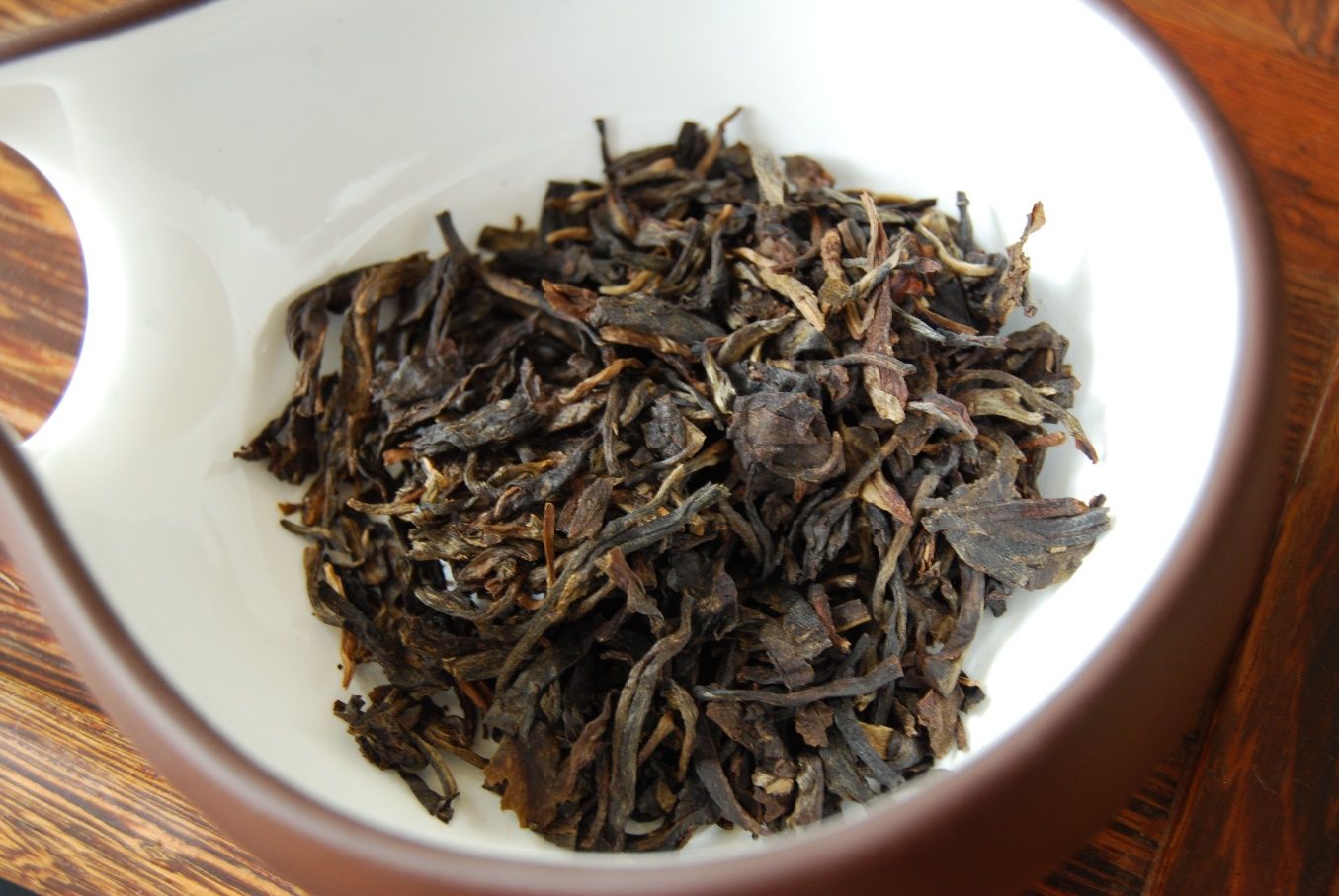
This cake is attributed to the Menghai region; the leaves are small and fragmented, with the colouring consonant with their six years of age.
Looking at the sheer solidity of the orange soup in the photograph below instantly brings to mind the charms of this rather special tea.
It is as intensely, and bizarrely, fragrant as the 2003 Zipinhao. Heaven knows how such a unique quality comes about. Its soup, as shown so accurately below, is a heavy orange that tends towards red as the air acts upon it. My mouth waters at the aroma alone.
There is the dense pine of clean aging, not unlike that which is imparted by storage here in my home city. The body is challenging, and highly shengjin [mouth-watering]. It is a rare opportunity and a treat: the tongue vibrates, the throat resonates with sweetness, even while I spend minutes waiting for the tetsubin to boil water for the next infusion.
With thanks to Elven for both of these samples, I hope very much that you come across something similar to each, Gentle Reader, for they are remarkable indeed and will be remembered.
Subscribe to:
Posts (Atom)