It's a small world. The tea-world is especially small, as I'm sure you know. One of my teachums, ST, lives in Singapore. "One of my friends is sending her daughter to law school at your university, and will be there next week", he wrote.
Days later, I find myself walking to the Lodge of my college to meet ST's friend and her daughter, recently arrived from Singapore. Such a small world...
"We thought you were one of the students!" she said. I take it as a compliment. Before five minutes had passed, we were tucked up in the SCR drinking Assam.
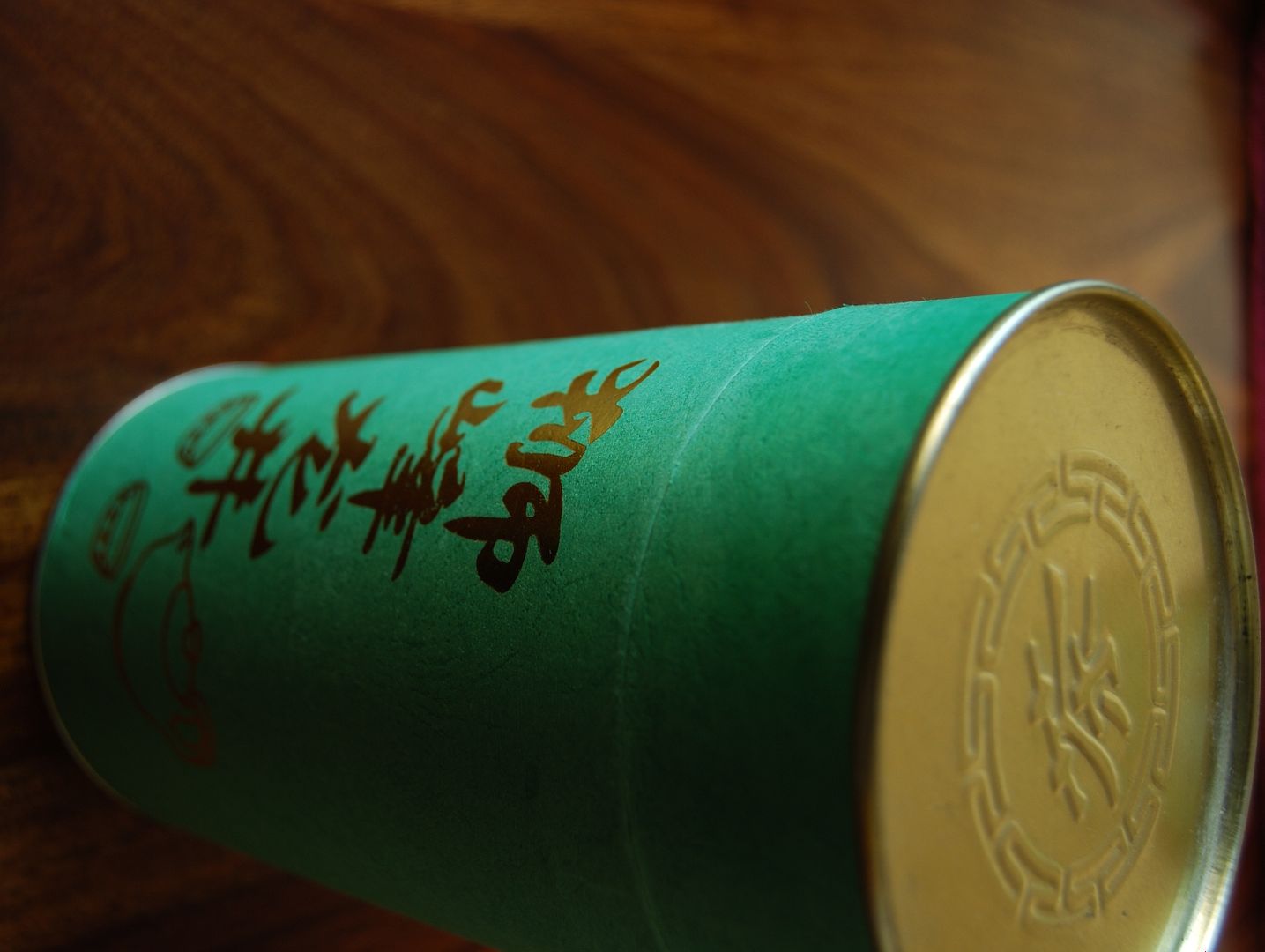
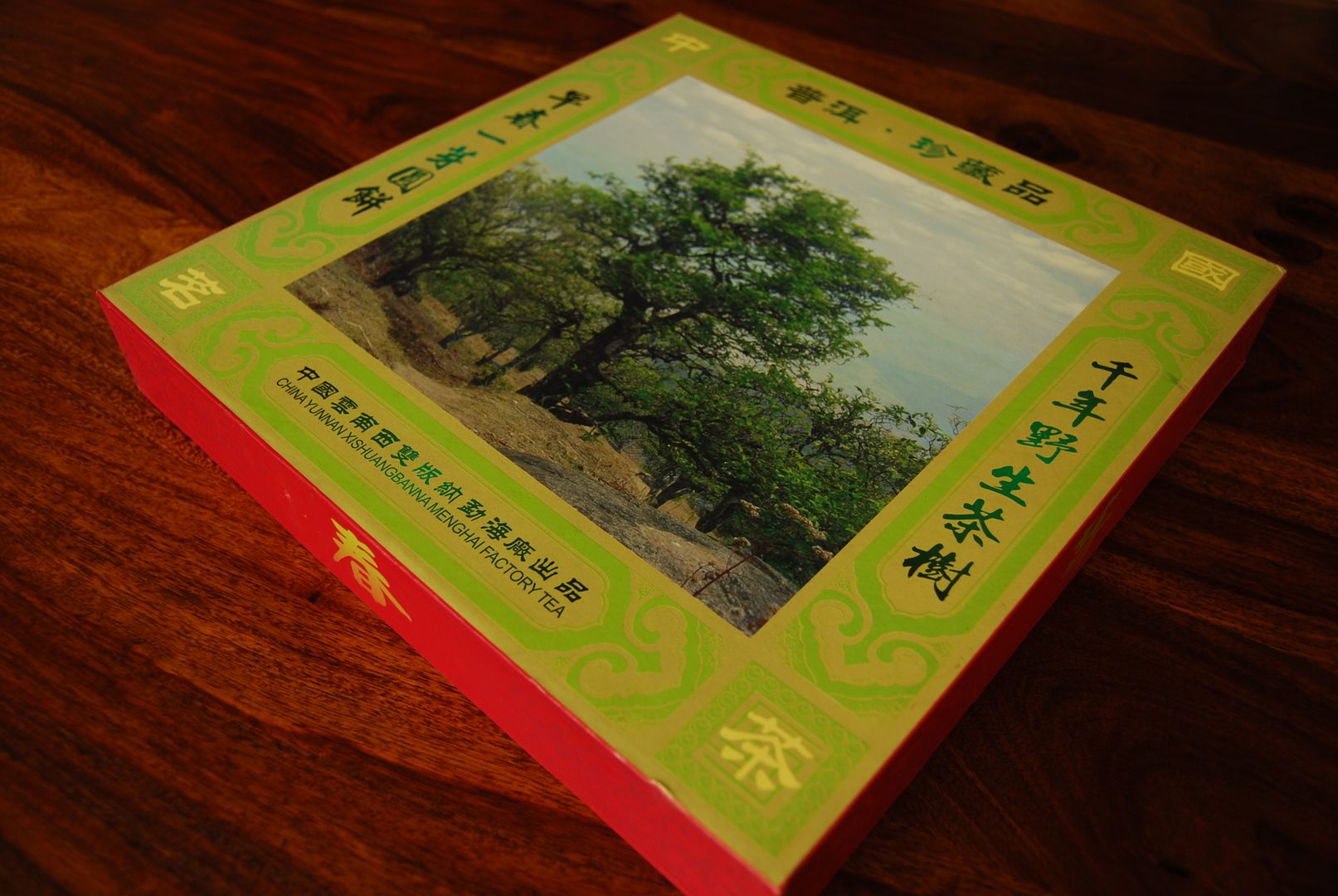
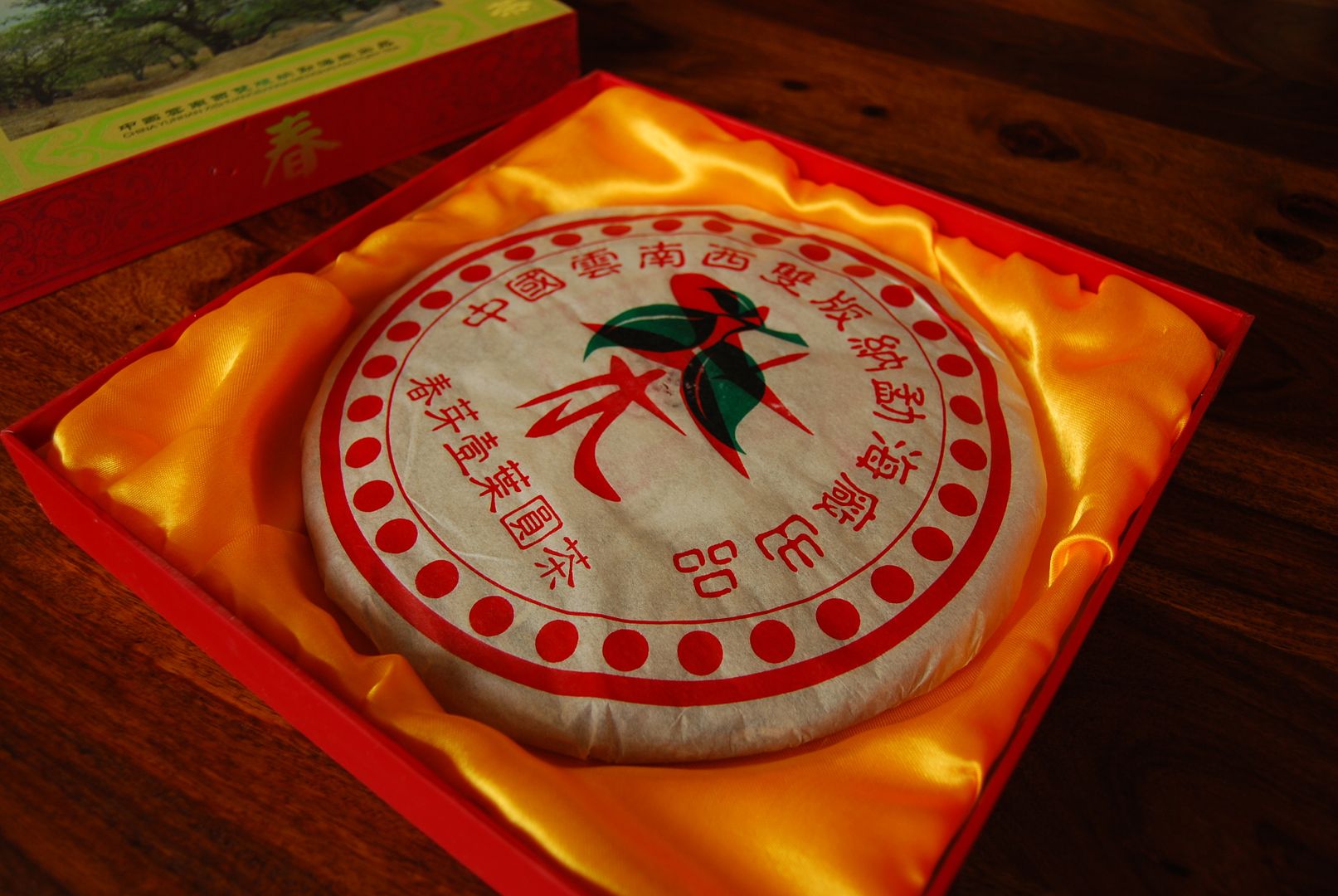
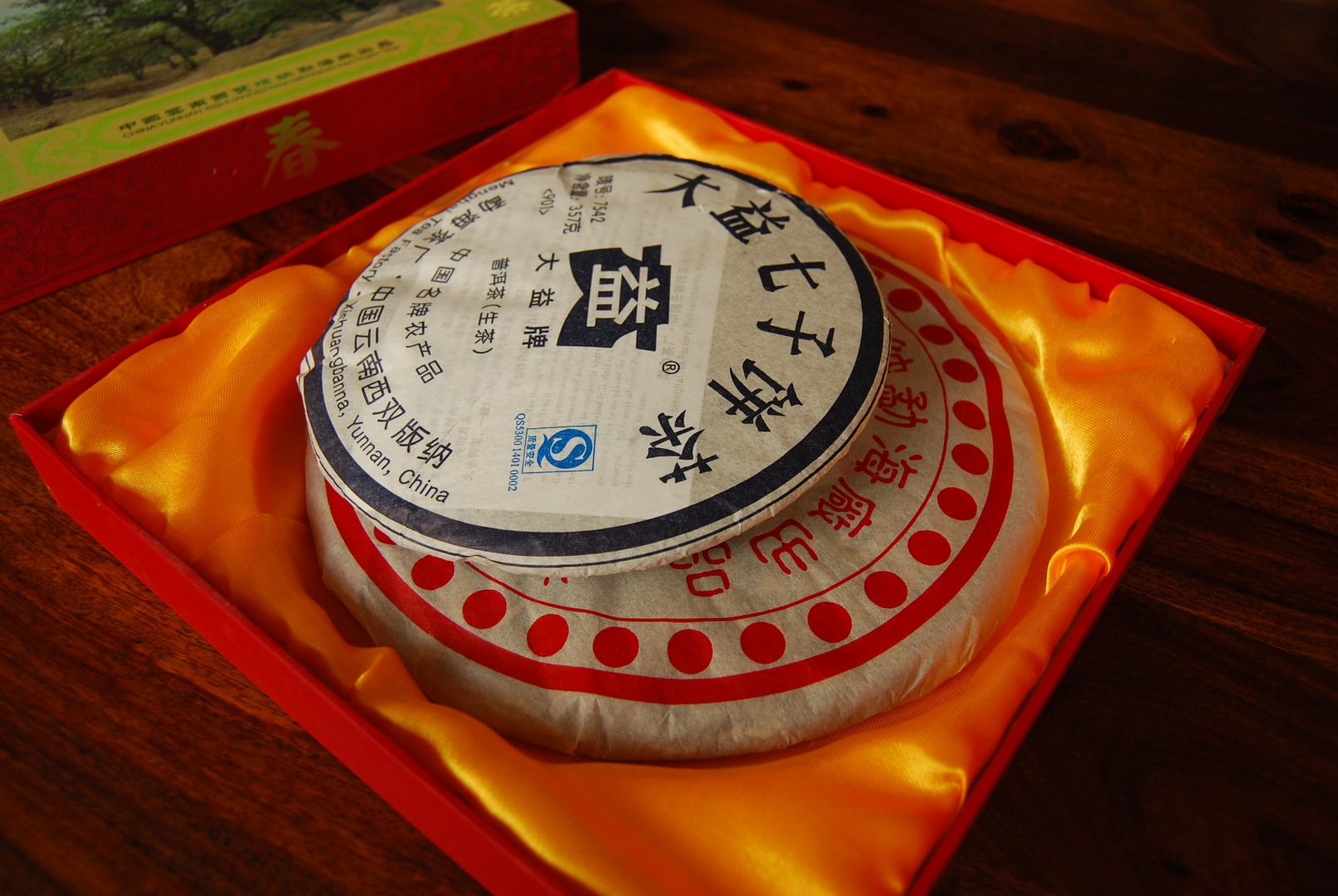
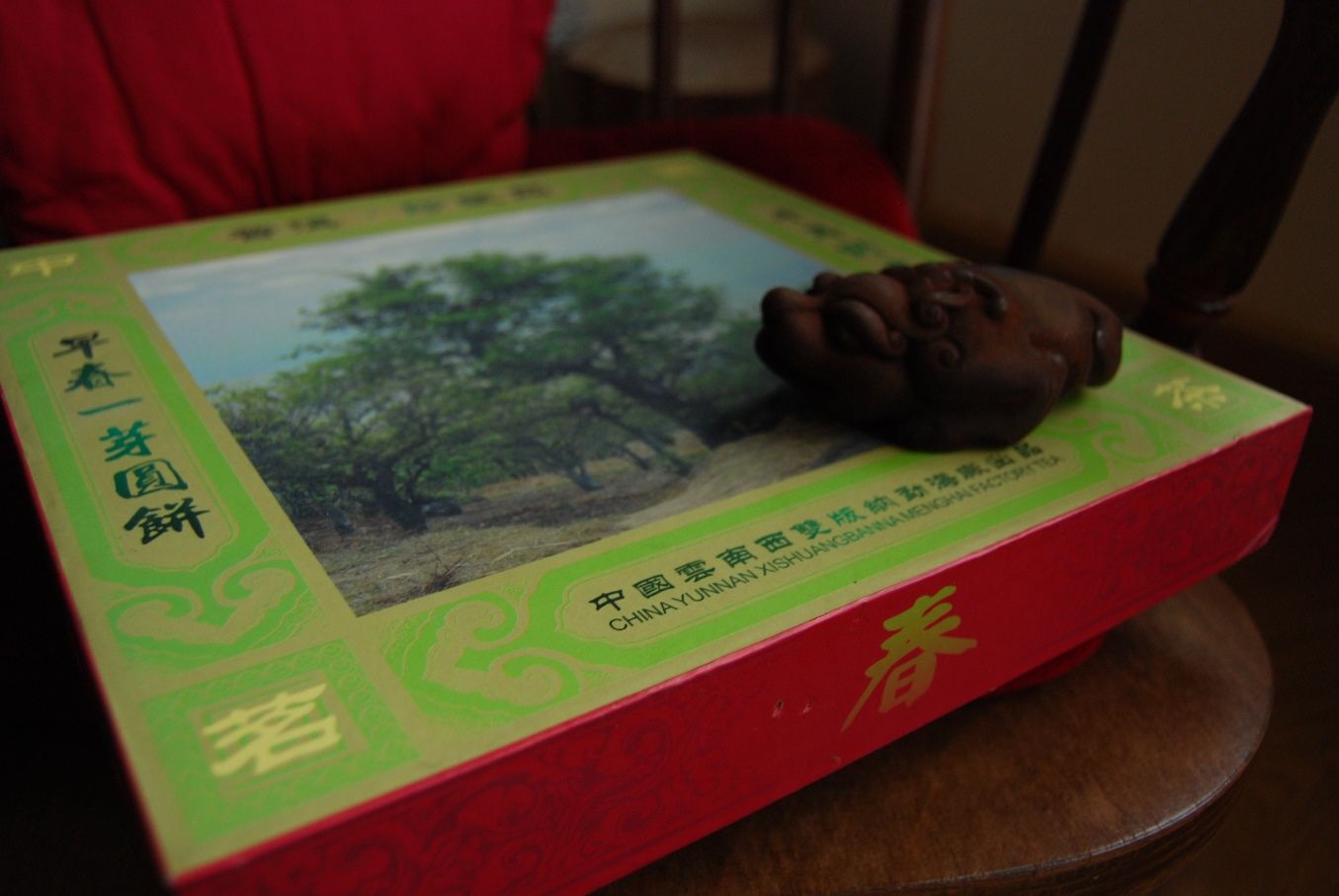
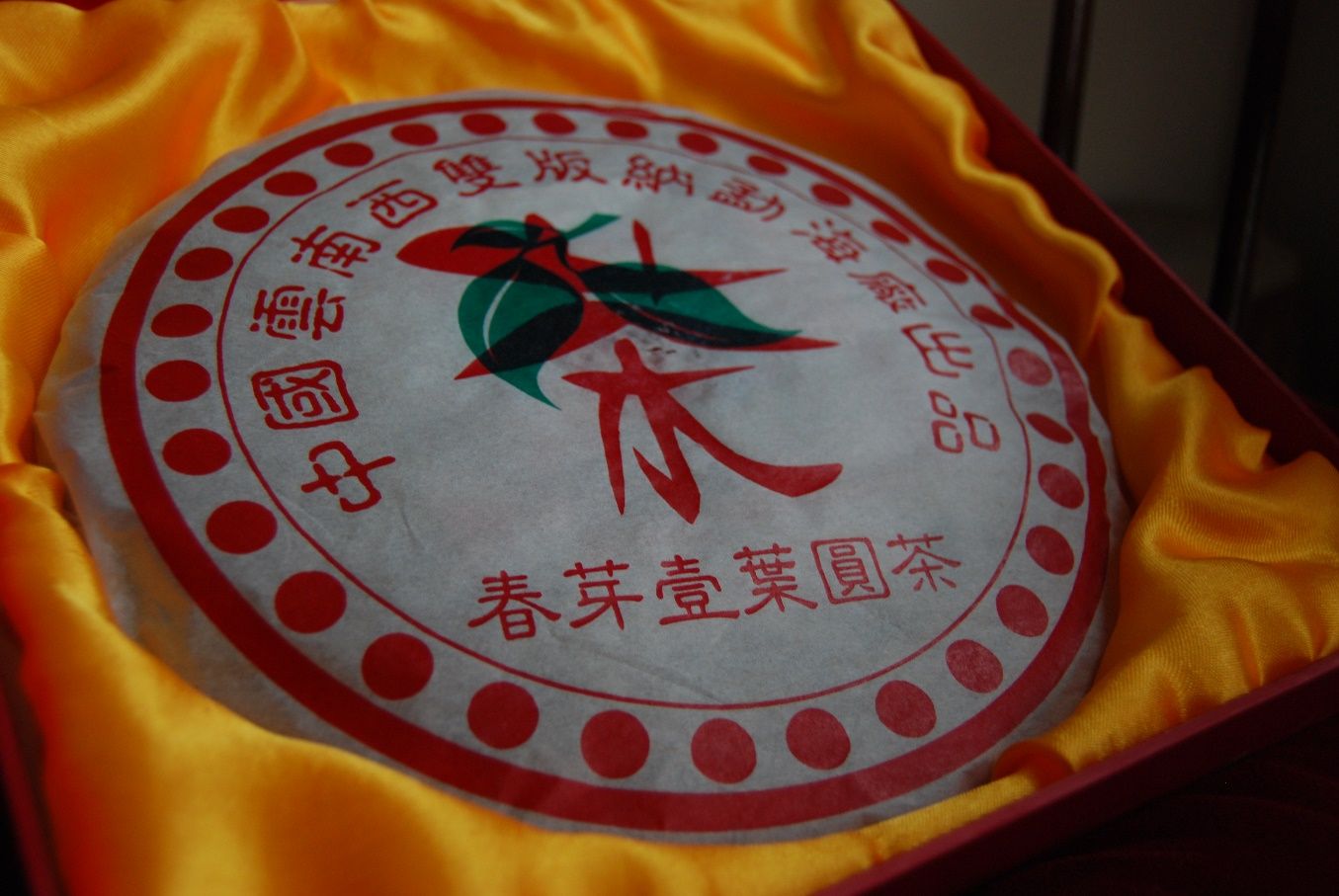
ST had asked the two Singaporean ladies to pass on the above to me - and what a treat it is. Thanks very much indeed! This is a Menghai special production, with not a "Dayi" in sight.
It's also rather sizeable, as you can see from the comparison below with a standard Dayi.
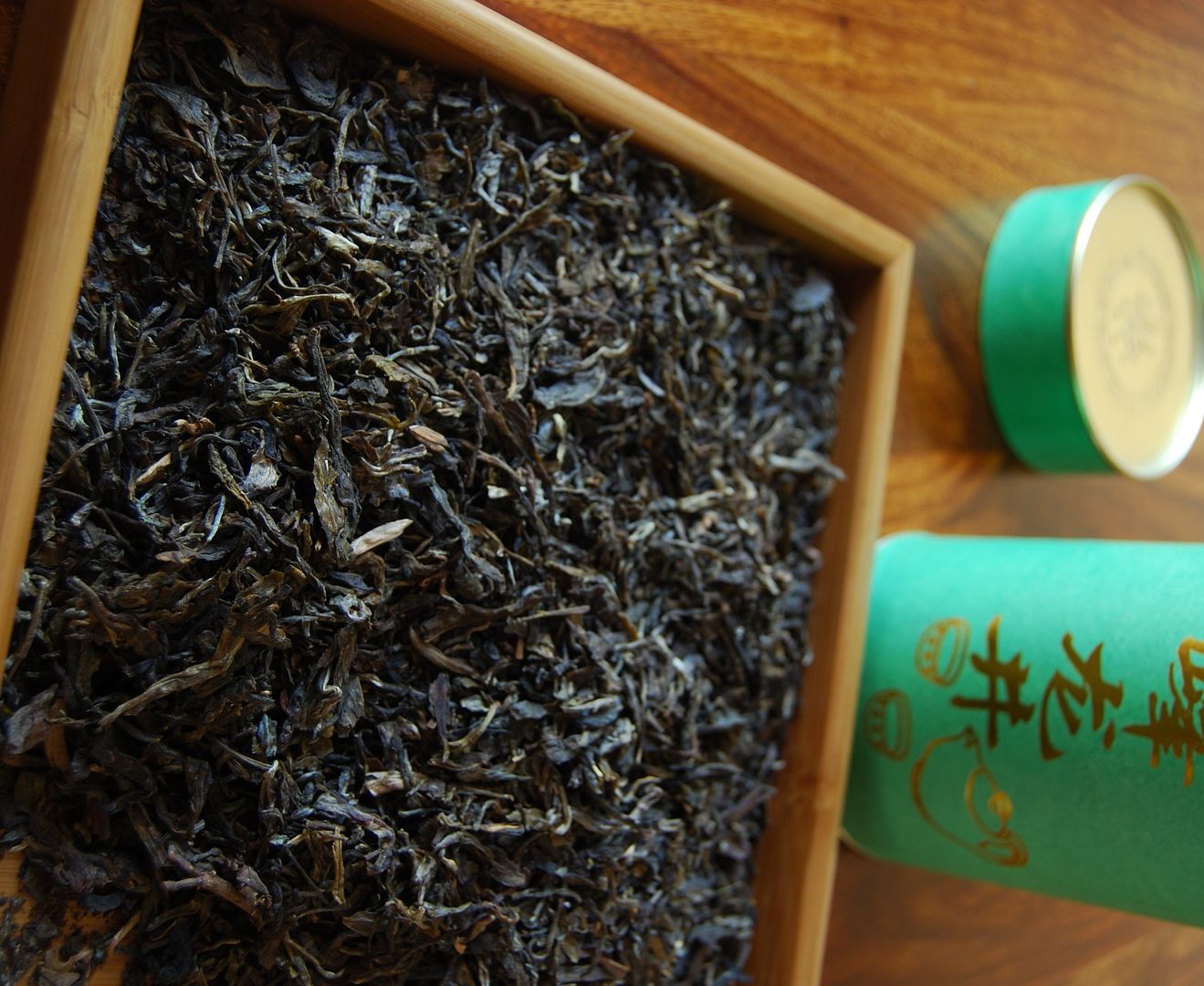
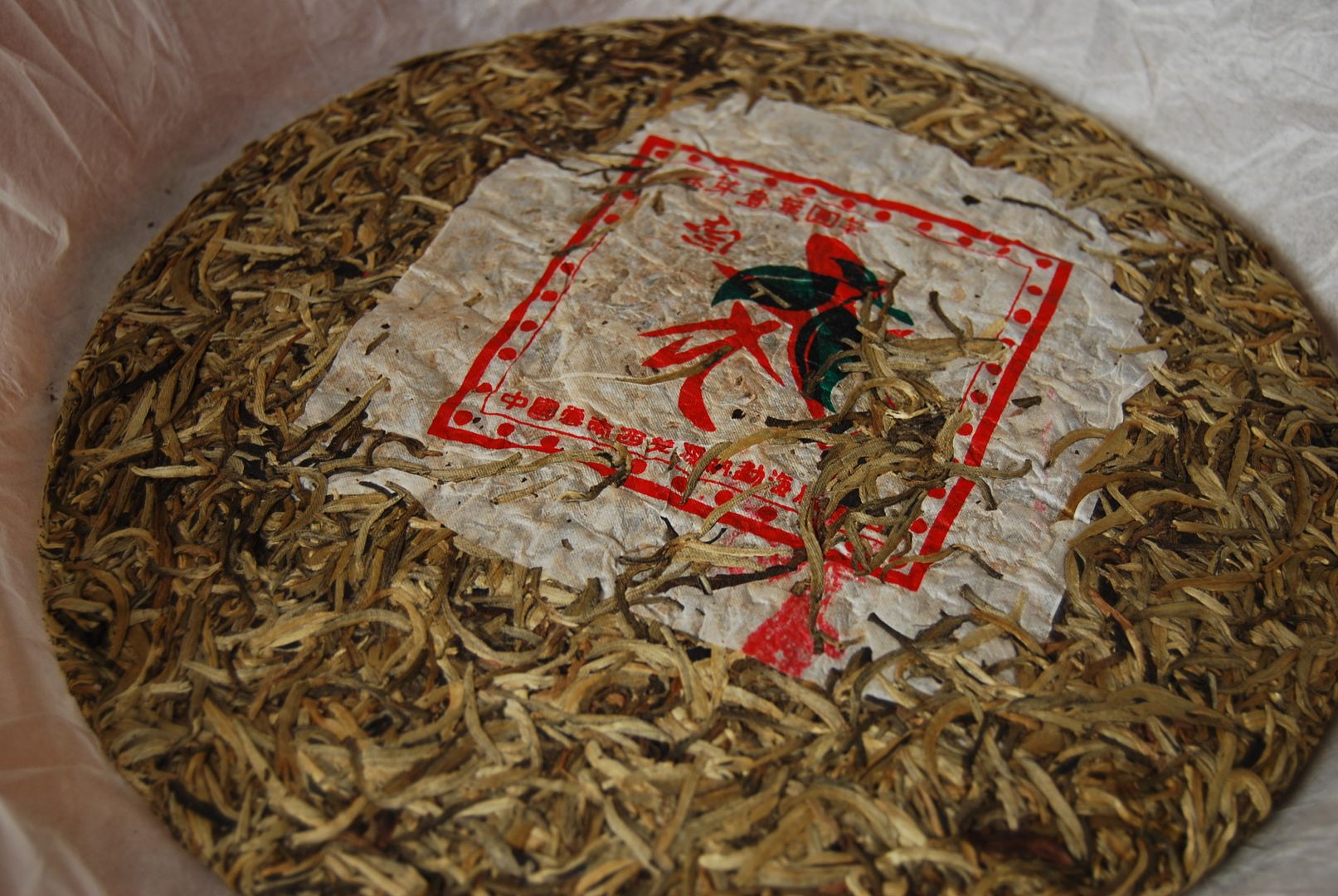
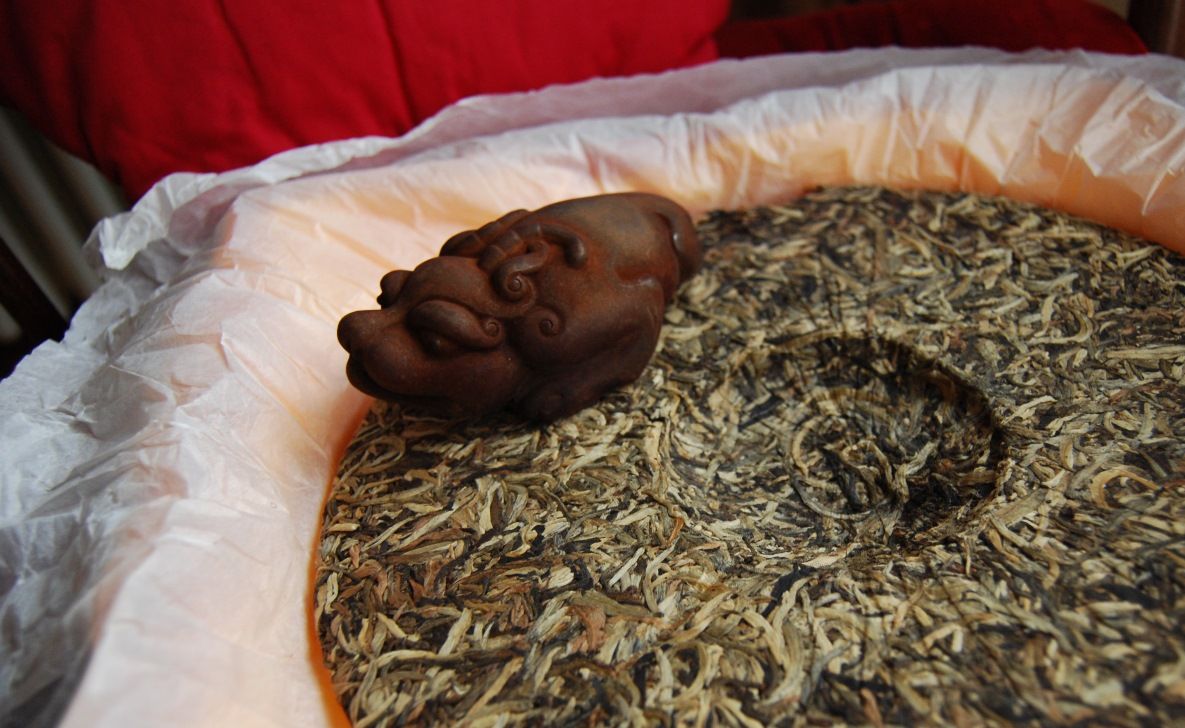
The fresh scent of the tea gives away its "yinhao"-esque status, which you can see below. The entire face of the cake is covered in tips, which run a little way into the cake, before turning into darker basis leaves.
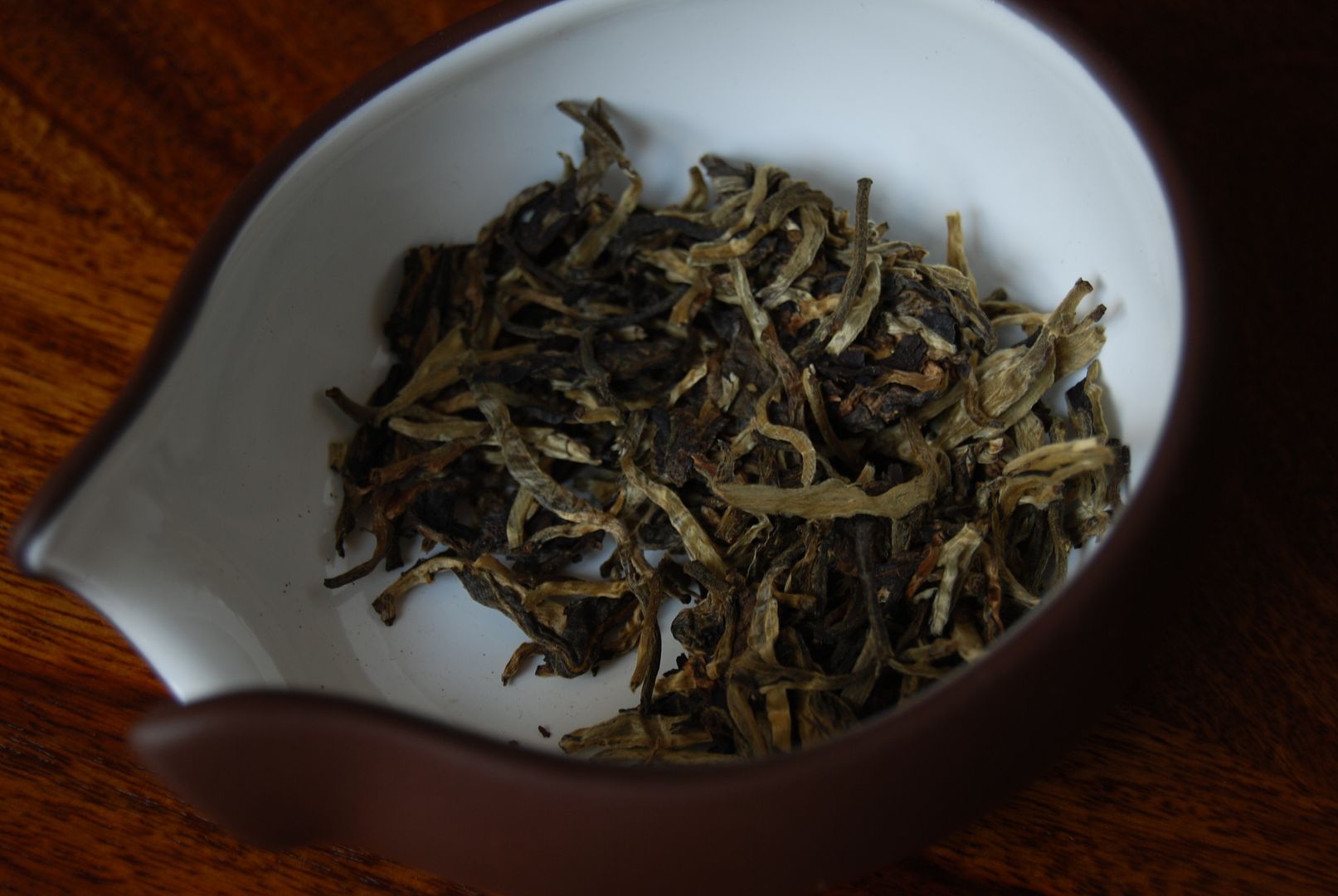
Easily separated, it is a 50-50 blend of tips and darker leaves.
Sometimes, the darker leaves in yinhao blends are pre-oxidised, or "reddened", in the wulong manner. Happily, that didn't happen here: the dark leaves are clean shengpu, which is quite unusual (and much preferred). The freshness of the shengpu mixes well with the creaminess of the tips, and gives it a complexity that yinhao usually lacks.
The whole tea tastes rather like sweet pine, exactly as you'd hope a 6-year-old shengpu would taste. While lighter than ordinary shengpu, due to the tips, it is exceedingly enjoyable. Thanks to its enormous size, I don't see Lei and me finishing this in a hurry!
Thanks again to ST for the lovely gift, and welcome to his friend and daughter for the Michaelmas term.
Addendum
March, 2014
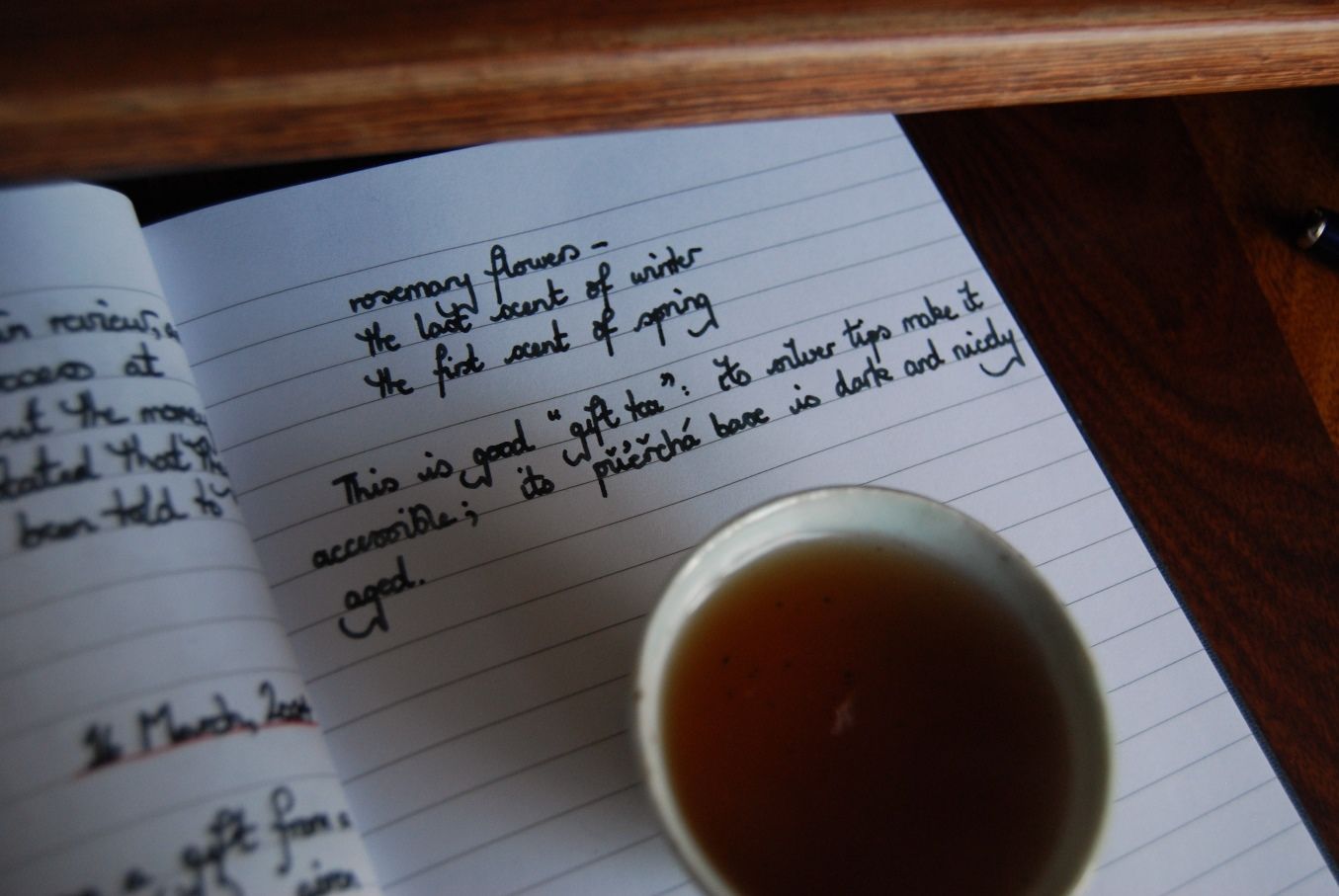
This "one-bud round-tea" was a gift from a friend of ST. I remember their family coming to join me in my college at the time (Somerville). The old SCR there reminds me rather of my dear departed grandmother's house: all tall clocks and big sofas.
This large box, due to its size, has been the foundation for a large pile of other boxes. I thought it high time to revisit this tea, after five years have passed. How has the collection of silver-leaves aged?
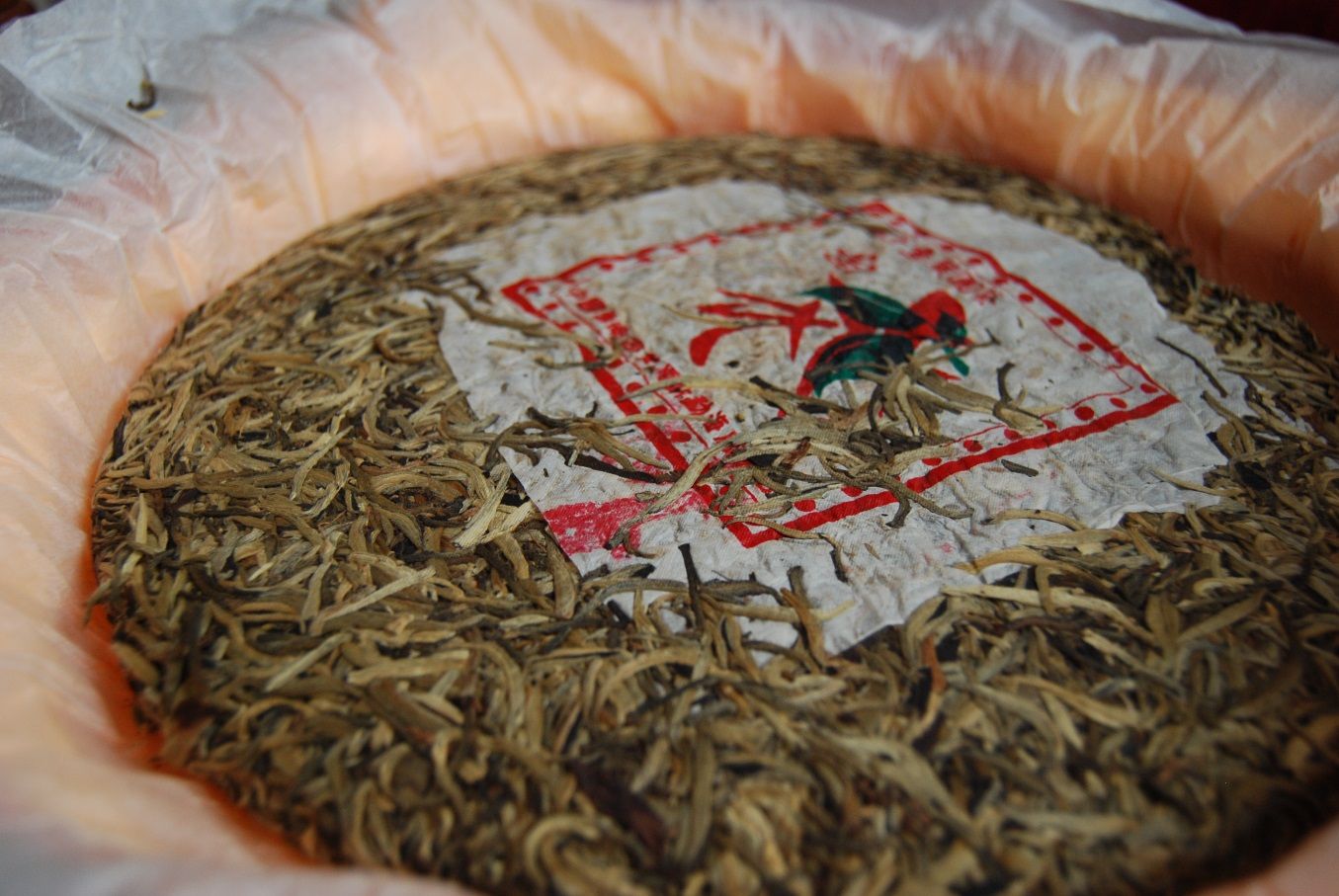
The leaves look a touch darker - the basis leaves, that is. The silver leaves look largely unchanged, as you might surmise from a comparison of the photograph below with those above.
The scent has come on nicely, and we are now treated with a rich, sweet, rather humid pungency.
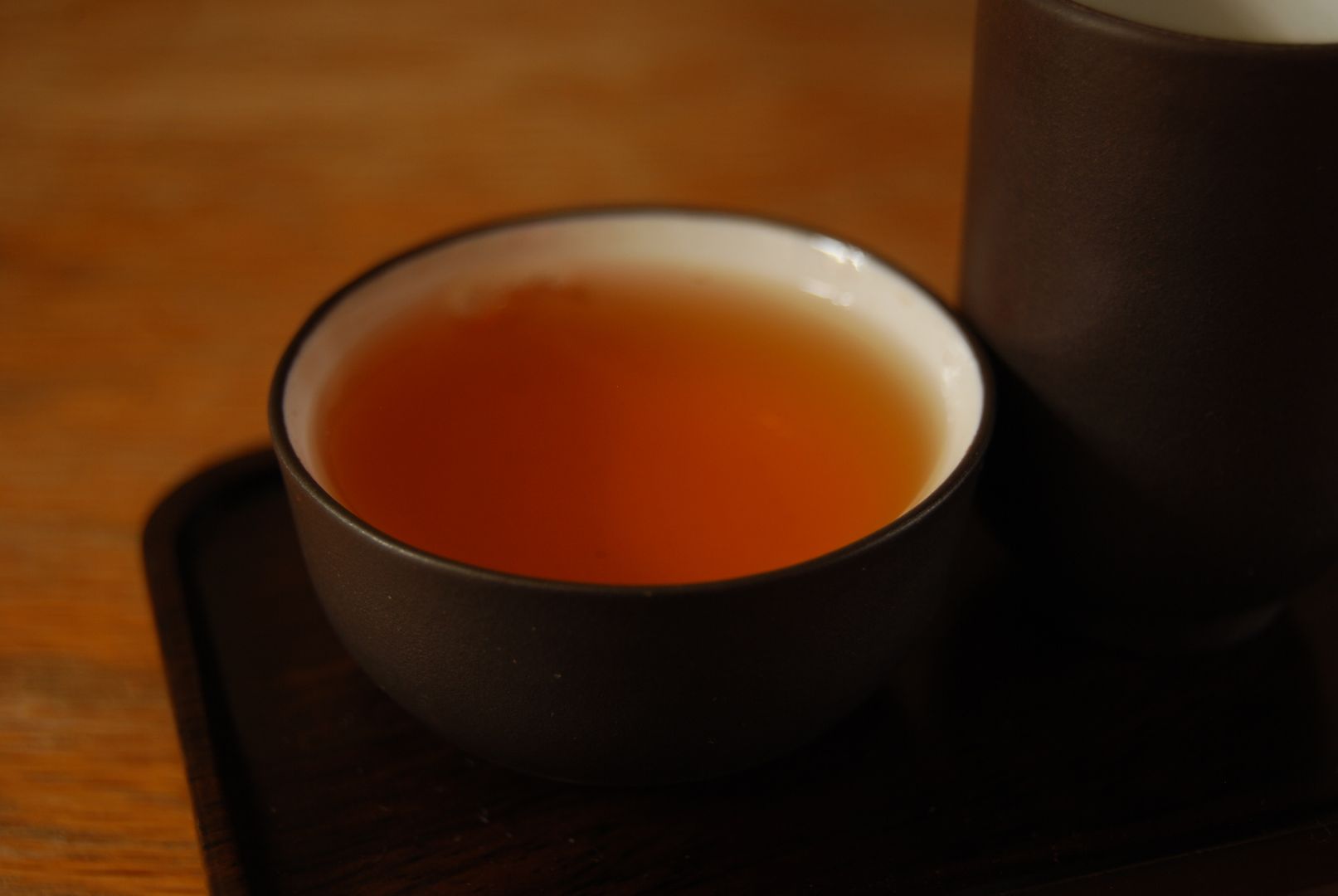
Five years on, the yellow-orange soup has darkened noticeably to orange-red. There is a welcome density, and a rich woodiness, to its thick soup that is commendable. Surprisingly, now at eleven years of age, there is also a note of sweet pollen about it - I would have expected such transients to disappear more promptly, and their inclusion is welcome.
Also evident is the rich maltiness of a cake that has found its way around the corner, departing adolescence and entering a new stage of its life. So it remains for a dozen infusions, holding up remarkably well to repeated brewing. I am reminded that Menghai can be very reliable.
After five years, this cake has come on nicely, and noticeably. The student, whom ST's family were here to welcome to the university, has probably long-since graduated. This tea remains a fine memory of that welcome visit.