I plunged into a hitherto-forgotten zone within my tearegions, to discover a sample that looks as if (from the handwriting) that it may have been generously provided by either by South-American teachum, ME, or my eastern central Eurochum, TA. Or maybe JT. Or or or.
It is not at all easy to find information concerning the "2010 Shikunmu". Its name looks vaguely Japanese, and some judicious Googling suggests that it was A Thing several years ago, despite now being completely unavailable everywhere. Gentle Reader, if you happen to be sitting on a stash of facts concerning Shikunmu, I would welcome any data that you might be able to throw our way.
"I cannot build a house without bricks - I need data!"
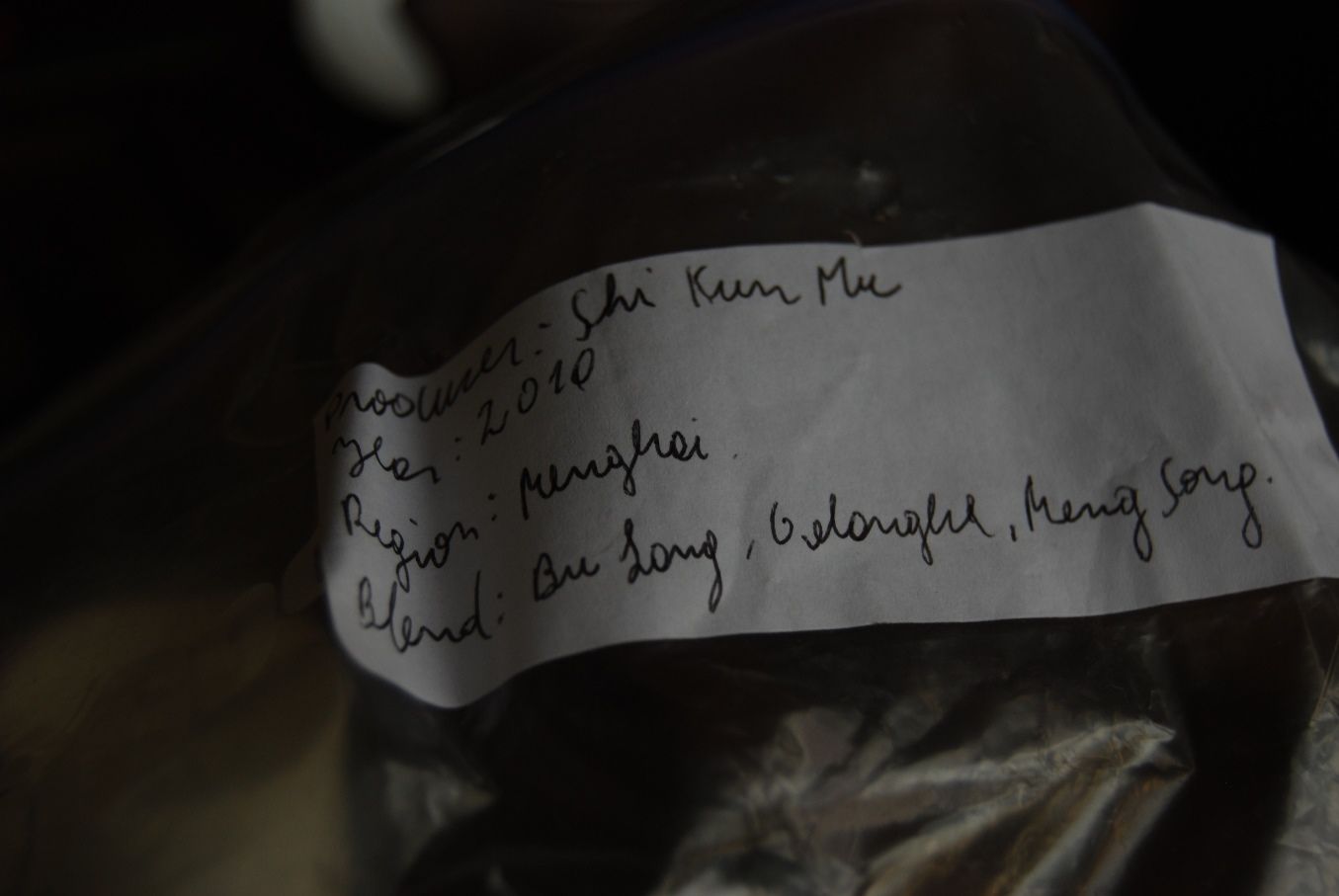
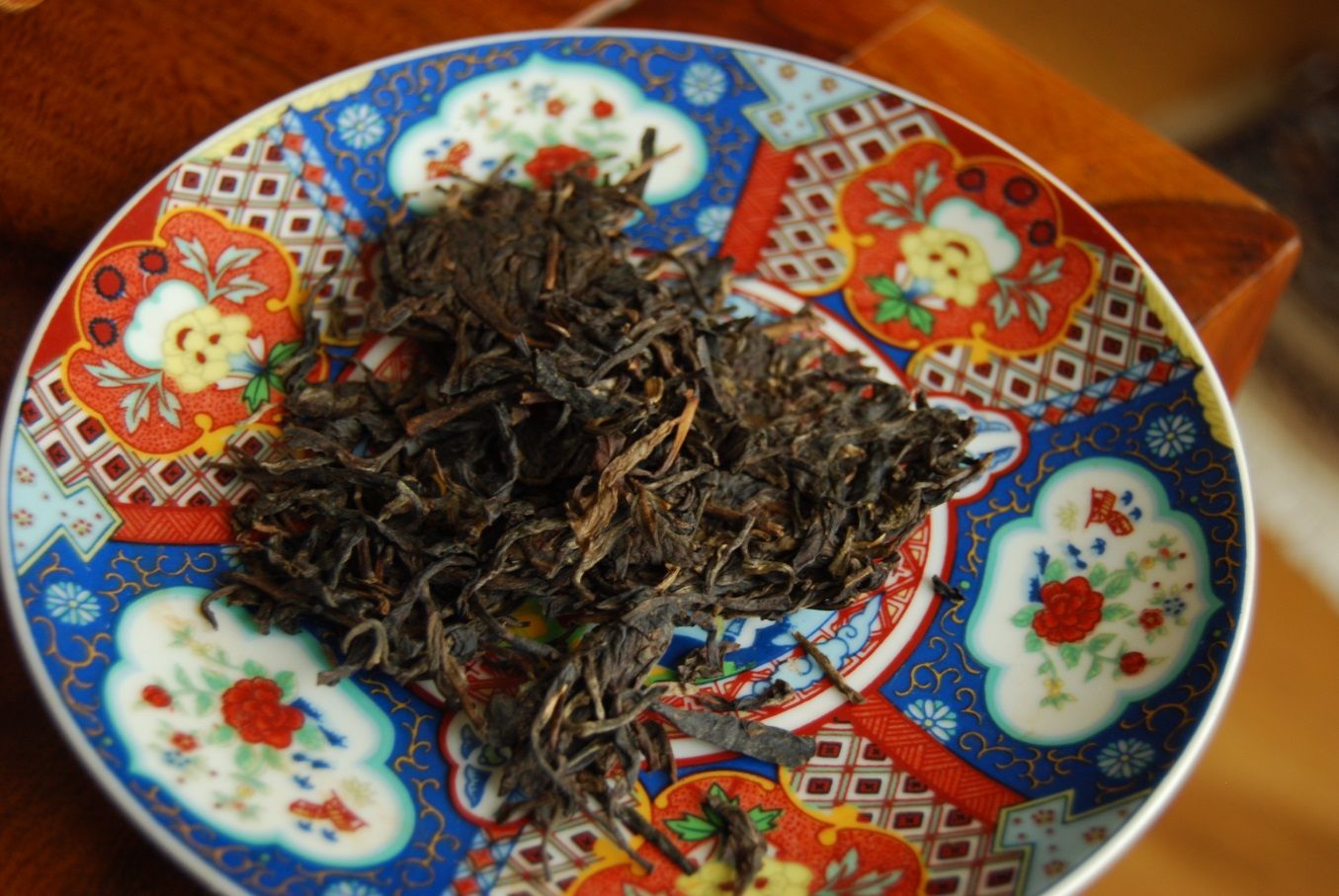
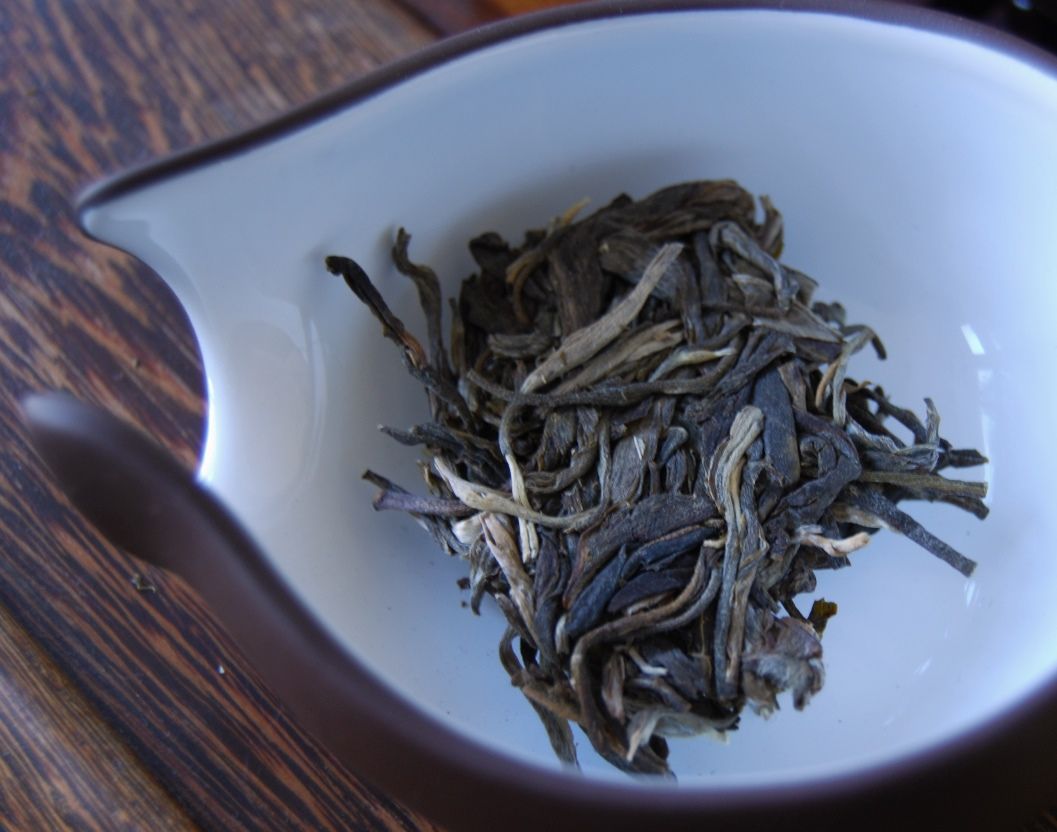
The original note on the sample-bag indicates that this tea is made from Bulangshan (boom), Gelanghe (twang), and Mengsongshan (thump). How they all work together as a melange we have yet to determine. Certainly, the twiddly maocha looks rather pleasing to the eye, as pictured above.

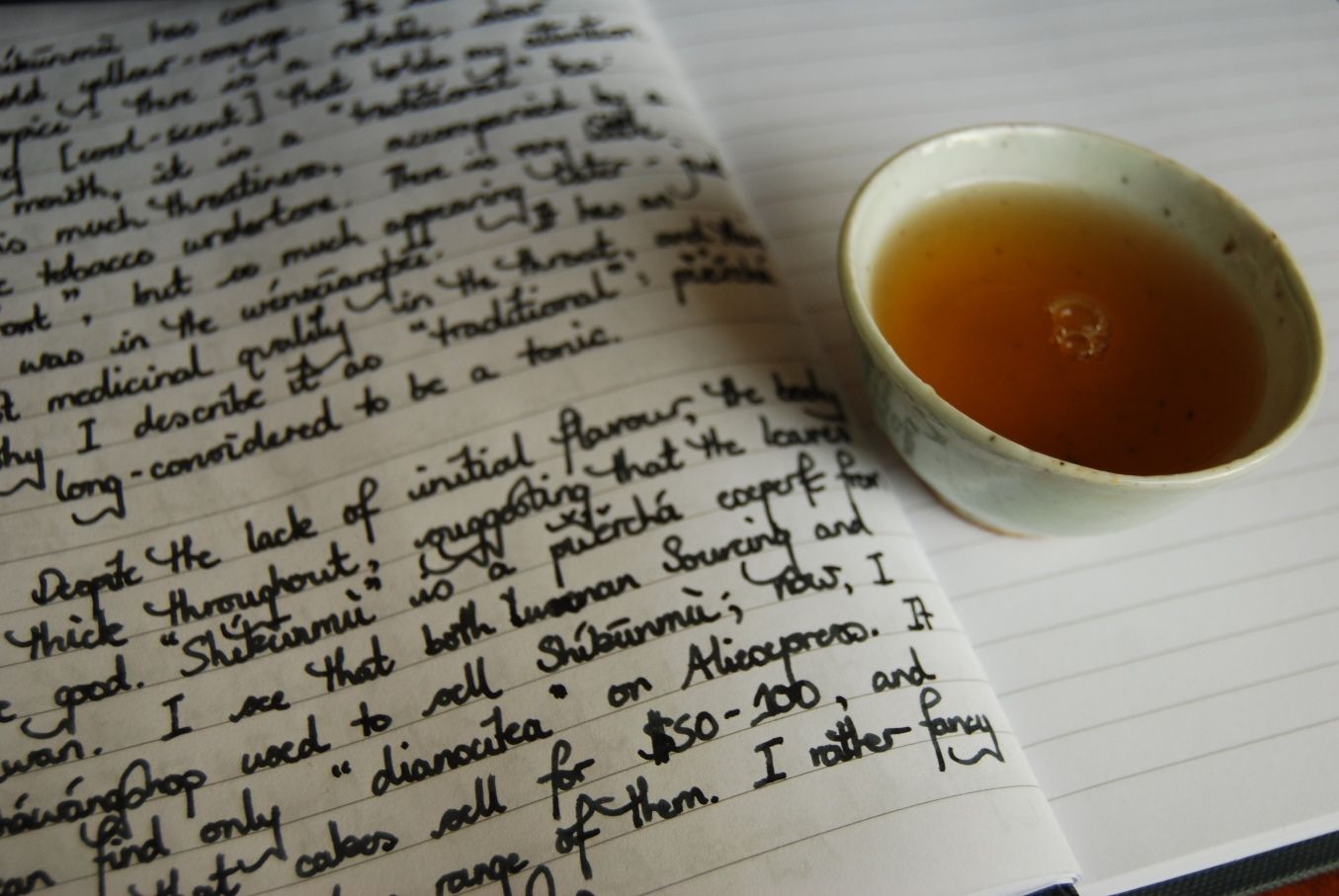
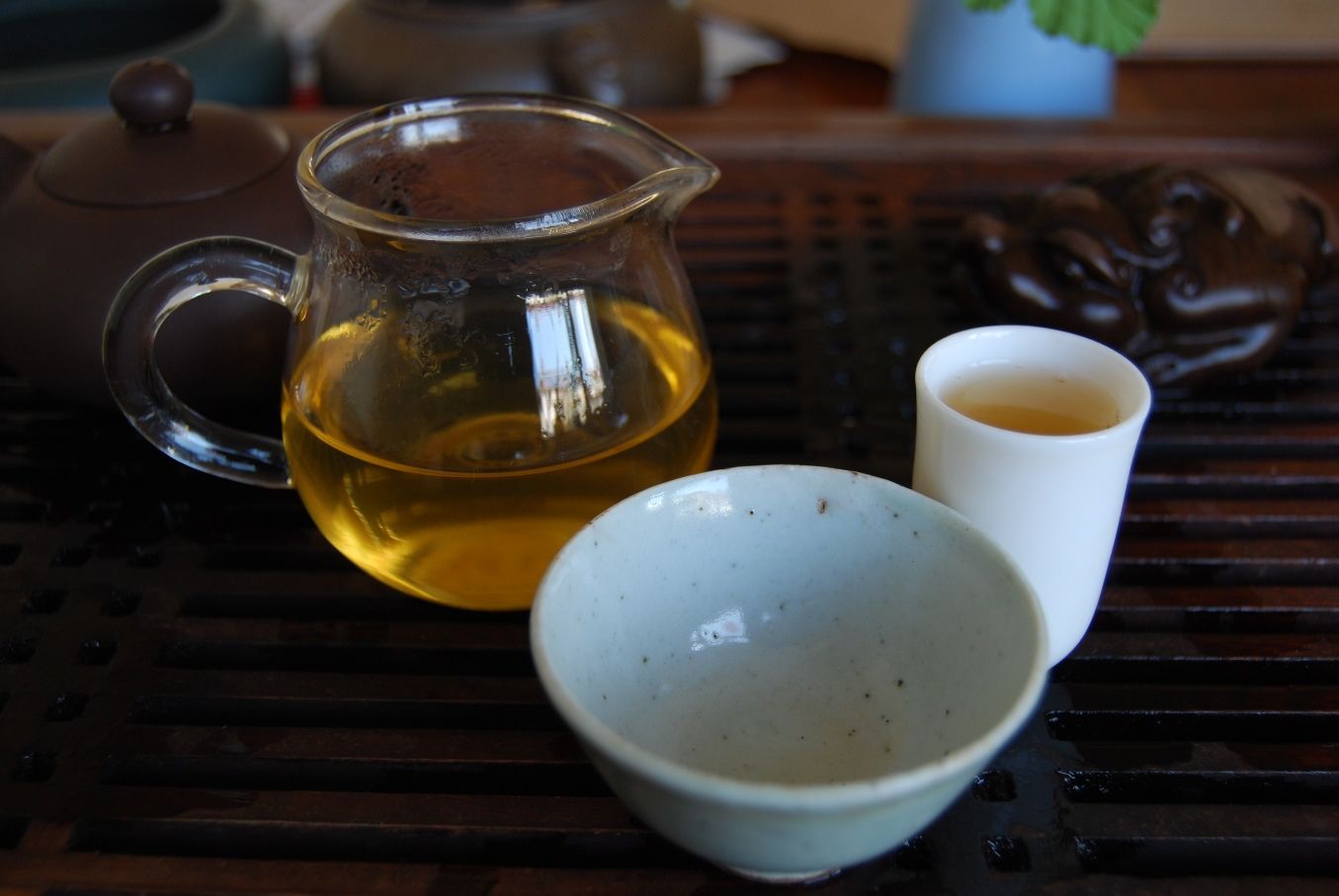
This brews a confident, clean, bold yellow-orange, as shown here. I think you'll agree that it looks rather decent. Its scent is gentle, warm spice - there is a notable, slow lengxiang [cooling scent] that holds my attention. In the mouth, this is a "traditional" tea (which is a very good thing): there is much throatiness, accompanied by a definite tobacco undertone. There is very little "up front", as suggested by the wenxiangbei [aroma cup], but so much appearing later. It has an almost medicinal quality in the throat, and this is why I describe it as "traditional": pu'ercha was long considered to be a tonic.
Despite the lack of initial flavour, the body is thick throughout, suggesting that the leaves are good. "Shikunmu" is some sort of pu'ercha expert ("MASTER") from Taiwan. I see that both Yunnan Sourcing and Chawangshop used to sell Shikunmu; now, I can find only "Dianxitea" on Aliexpress. It seems that cakes sold by the latter are in the range $50-100, and that there exists quite a range of them. I rather fancy trying some recent examples.
By the fourth infusion, the base of this tea has swollen into a heavy, straw-like sweetness; I appreciate its inertia, and the fact that it takes several infusions to "get the ball rolling". This is a slow, heavy, and quite tasty tea with excellent density in the throat.
If I ever get around it, I will check out Dianxitea in more detail. I suspect, by the time this article reaches publication, that I will have entirely forgotten about it, and so it will serve as a convenient reminder...